Taxonomy & Classification
- Kingdom
- Animalia
- Phylum
- Chordata
- Class
- Mammalia
- Order
- Artiodactyla
- Family
- Bovidae
- Genus
- Capra
- Species
- Capra aegagrus hircus

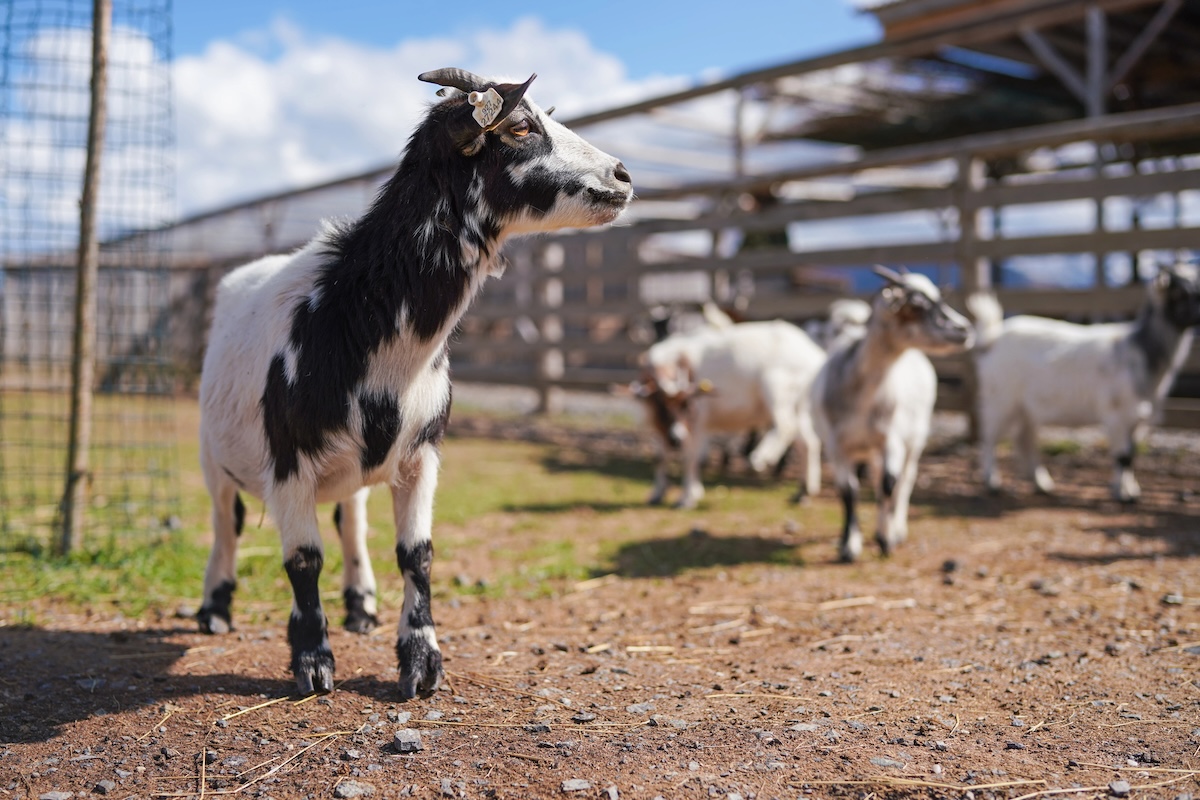 Photo Credit: lubo.ivanko on Deposit Photos
In the sun-drenched fields of America, the American Pygmy Goat, scientifically known as Capra aegagrus hircus, prances with an infectious energy that captures the hearts of all who encounter it. These pint-sized goats, standing only 15 to 20 inches tall, are a delightful sight as they frolic among the wildflowers and grassy patches, their sturdy little bodies bouncing with every playful leap. With their expressive eyes and charming personalities, they embody a spirit of curiosity and joy that draws both scientists and nature enthusiasts into their world.
What makes the American Pygmy Goat truly captivating is not just its adorable appearance but also its remarkable adaptability. These goats thrive in a variety of habitats, from rocky hillsides to open plains, showcasing their ability to navigate diverse environments with ease. Their playful antics and social nature make them a joy to observe, as they engage in spirited games of chase and exploration. As we delve deeper into the life of the American Pygmy Goat, we will uncover the secrets of their diet, behavior, and the vital role they play in their ecosystems, revealing why these small creatures are so much more than just charming companions.
The American Pygmy Goat holds a special place in the tree of life, showcasing the incredible diversity of the animal kingdom. This small, charming goat is a member of the Bovidae family, which includes larger relatives like cows and bison. What sets the American Pygmy Goat apart is not just its petite size but also its friendly demeanor and playful nature. These goats are often kept as pets and are known for their curious personalities, making them beloved companions for families and farmers alike.
| Taxonomic Rank | Scientific Name | Meaning & Significance |
|---|---|---|
| Kingdom | Animalia | This name comes from the Latin word “animalis,” meaning “having breath,” which reflects the living, breathing nature of all animals. |
| Phylum | Chordata | Derived from the Latin “chorda,” meaning “string,” this term refers to animals with a notochord, a flexible rod that supports the body during development. |
| Class | Mammalia | This name comes from “mamma,” the Latin word for “breast,” highlighting the defining feature of mammals: females produce milk to nourish their young. |
| Order | Artiodactyla | From the Greek “artios,” meaning “even,” and “daktulos,” meaning “finger,” this order includes animals with an even number of toes, like goats and sheep. |
| Family | Bovidae | This name is derived from “bos,” the Latin word for “cow,” representing the family of hoofed animals that includes both domestic and wild species. |
| Genus | Capra | From the Latin word for “goat,” this genus encompasses various goat species, emphasizing their shared characteristics and behaviors. |
Understanding the American Pygmy Goat’s classification reveals much about its evolutionary journey. As a member of the Bovidae family, it shares a common ancestor with other hoofed animals, showcasing adaptations that have allowed it to thrive in diverse environments. Its small size and sociable nature are traits that have evolved over time, making it well-suited for domestication and companionship. This classification not only highlights its biological connections but also underscores the rich tapestry of life that continues to evolve around us.
The American Pygmy Goat’s evolutionary journey is a captivating tale that stretches back thousands of years. These small goats are descendants of larger wild goats, with their lineage tracing back to the ancient domestication of goats around 10,000 years ago in the Fertile Crescent, a region in the Middle East. Over time, selective breeding and adaptation to various environments shaped the American Pygmy Goat into the delightful companion we know today.
The ancestors of the American Pygmy Goat were likely larger, wild species such as the Nubian and African pygmy goats. As humans began to domesticate goats for milk, meat, and companionship, they selected for smaller size and friendly temperaments. This process of domestication led to significant changes in their physical and behavioral traits. The American Pygmy Goat emerged in the United States in the 1950s, bred from African pygmy goats brought over by explorers and farmers. This new breed was prized for its compact size, playful nature, and adaptability to various living conditions.
The adaptations of the American Pygmy Goat have played a crucial role in its survival and popularity. Their small size and friendly nature make them perfect companions, while their hardiness ensures they can thrive in various environments. These traits not only help them live comfortably alongside humans but also allow them to flourish in diverse habitats, showcasing the remarkable interplay between evolution and domestication. As they continue to charm families and farmers alike, the American Pygmy Goat stands as a testament to the wonders of evolution and the bond between humans and animals.
The American Pygmy Goat is a delightful bundle of joy, standing at just 15 to 20 inches tall. With a sturdy yet compact body, these goats have a playful demeanor that matches their petite stature. Their short legs support a robust frame, giving them a solid appearance that is both endearing and practical. The combination of their small size and lively personality makes them a favorite among goat enthusiasts and families alike.
| Feature | Description |
|---|---|
| Height | 15-20 inches |
| Weight | 30-90 lbs |
| Skin Type | Fur |
| Most Distinctive Feature | Small size |
These physical traits work together to create a goat that is not only adorable but also well-suited for its environment. Their small size allows them to navigate through tight spaces and rocky terrains with ease, making them agile foragers. The fur covering their bodies provides warmth and protection from the elements, ensuring they stay comfortable in various weather conditions. Together, these features help the American Pygmy Goat thrive in both domestic settings and the wild, showcasing their adaptability and charm.
The American Pygmy Goat thrives in a variety of habitats that reflect its adaptable nature. Picture rolling hillsides, rocky terrains, and open plains where these lively goats can frolic and explore. They are often found in farmland settings, where they can graze on lush grasses and enjoy the sunshine. This charming little goat is perfectly at home in environments that offer both shelter and space to roam.
These goats prefer climates that are mild and temperate, making them well-suited for many regions across the United States. They enjoy areas with plenty of sunshine, which helps them stay warm and active. While they can tolerate cooler temperatures, they thrive best in environments that don’t experience extreme weather. A mix of grassy fields and rocky outcrops provides them with the perfect playground and grazing ground.
American Pygmy Goats have developed several adaptations that help them flourish in their chosen habitats. Their sturdy hooves allow them to navigate rocky terrains with ease, while their compact size makes it simple for them to squeeze into tight spaces. Additionally, their playful and curious nature encourages them to explore their surroundings, which is essential for their well-being. These adaptations not only help them survive but also allow them to enjoy a vibrant and active life in the great outdoors.
The daily life of an American Pygmy Goat is a lively mix of play, exploration, and social interaction. As the sun rises, these spirited little goats begin their day with a burst of energy. They graze on grass and browse on shrubs, using their nimble bodies to reach tasty leaves. Throughout the day, they engage in playful antics, leaping and climbing on rocks or logs, showcasing their agility. This playful behavior is not just for fun; it helps them develop strength and coordination, essential for their survival in the wild.
Socially, American Pygmy Goats are incredibly engaging animals. They thrive in herds, where they form strong bonds with one another. Within their groups, they establish a hierarchy, which helps maintain order and reduces conflicts. These goats communicate through a variety of sounds, from bleats to grunts, each conveying different messages. When one goat spots a potential threat, it may emit a warning call, prompting the others to stay alert. This social structure not only fosters companionship but also enhances their ability to respond to dangers in their environment.
| Behavior Type | Description |
|---|---|
| Activity Patterns | American Pygmy Goats are most active during the day, engaging in grazing, climbing, and playing. They often take short naps in the afternoon to recharge. |
| Social Structure | These goats live in herds, establishing a social hierarchy that helps maintain peace and order within the group. |
| Communication Methods | They use a range of vocalizations, including bleats and grunts, to communicate with each other, signaling everything from hunger to alerting others of danger. |
The behaviors of American Pygmy Goats are not just charming; they are vital for their survival. By living in herds, they benefit from the safety of numbers, making it harder for predators to target them. Their playful nature helps them develop the skills needed to navigate their environment, while their communication keeps the group informed and cohesive. Together, these behaviors create a dynamic and resilient community, ensuring that each goat thrives in its daily life.
The American Pygmy Goat is a herbivore, which means it primarily eats plants. These little goats have a varied diet that includes grasses, leaves, and shrubs. They are natural foragers, using their keen sense of smell and nimble bodies to navigate through their environment in search of tasty treats. Their playful nature often leads them to explore new areas, munching on whatever green delights they can find.
| Dietary Aspect | Details |
|---|---|
| Diet Type | Herbivore |
| Favorite Foods | Grasses, leaves, shrubs, and hay |
| Prey Items | None, as they are not predators |
| Hunting/Foraging Strategies | Foraging by grazing and browsing, using their agility to reach various plants |
This diverse diet plays a crucial role in the ecology of the American Pygmy Goat. By grazing on different types of vegetation, they help maintain the health of their habitats, promoting plant growth and preventing overgrowth. Their foraging habits also shape their daily routines, as they spend a significant part of their day searching for food, which keeps them active and engaged in their surroundings. This not only supports their well-being but also contributes to the balance of the ecosystems they inhabit.
The mating behavior of American Pygmy Goats is as lively as their personalities. Breeding season typically occurs in the fall, when the days grow shorter and the air turns crisp. During this time, males, known as bucks, become more vocal and display their strength through playful sparring. They may also emit a strong scent to attract females, called does. This courtship ritual is a vibrant display of energy and enthusiasm, setting the stage for the arrival of new kids.
| Reproductive Aspect | Details |
|---|---|
| Gestation Period | 5 months |
| Litter Size | 1-3 kids |
| Age of Maturity | 2-4 months |
| Name of Young | Kid |
Once the kids are born, the care they receive from their mothers is crucial for their development. Does are attentive and nurturing, often cleaning their young immediately after birth to stimulate their first breaths. Kids are surprisingly agile and can stand and walk within just a few hours. As they grow, they learn to graze and socialize with other goats, developing their playful nature. By the time they reach sexual maturity at just a few months old, they are well on their way to becoming independent members of their lively herd. The bond between mother and kid is strong, ensuring that the next generation of American Pygmy Goats continues to thrive in their playful, spirited way.
The American Pygmy Goat occupies a unique position in the food web, serving as both a forager and a potential prey item. These small, agile goats are herbivores, munching on grasses and shrubs, but they also face threats from various predators. In the wild, their size and playful nature make them vulnerable, especially in areas where larger carnivores roam. Understanding their place in the ecosystem helps us appreciate the delicate balance of nature.
To survive against these threats, American Pygmy Goats have developed several clever defensive behaviors. They often stay in groups, which provides safety in numbers, making it harder for predators to single out an individual. When they sense danger, these goats can freeze in place, blending into their surroundings, or they may dash away with surprising speed. Their keen senses help them detect threats early, allowing them to escape before danger gets too close. With these strategies, they navigate the challenges of their environment, showcasing their resilience and adaptability.
A keystone species is an organism that plays a critical role in maintaining the structure of its ecosystem. Its presence or absence can significantly impact the environment and other species within it. The American Pygmy Goat, while not a traditional keystone species like wolves or sea otters, does contribute to its ecosystem in meaningful ways, particularly through its grazing habits and social behavior.
These small goats are herbivores, meaning they primarily eat plants. By grazing on grasses, leaves, and shrubs, they help control plant growth and promote biodiversity. This grazing behavior prevents certain plants from dominating the landscape, allowing a variety of species to thrive. In turn, this diversity supports a wider range of insects, birds, and other animals that rely on different plants for food and shelter.
Additionally, American Pygmy Goats are social animals that live in herds. Their group behavior fosters a dynamic social structure that can influence the movement and feeding patterns of other herbivores in the area. When they graze, they create open spaces in the vegetation, which can benefit other species that prefer less dense cover.
Moreover, their foraging habits can help aerate the soil, promoting healthier plant growth. As they move through their habitat, they disturb the ground, allowing seeds to settle and sprout more easily. This natural process can enhance the overall health of the ecosystem, making it more resilient to changes.
If American Pygmy Goats were to disappear from their ecosystems, the balance would be disrupted. Overgrown vegetation could lead to a decline in plant diversity, which would affect the animals that depend on those plants for food and shelter. Without their grazing, certain plants might take over, choking out others and reducing the overall health of the habitat. This ripple effect could lead to a less vibrant ecosystem, demonstrating just how interconnected all species are, even the small and seemingly simple ones like the American Pygmy Goat.
The American Pygmy Goat occupies a fascinating ecological niche as a small herbivore that plays a vital role in its environment. These lively goats are not just adorable companions; they actively shape their ecosystems by influencing plant growth and providing food for various predators. Their foraging habits help maintain the balance of plant life, ensuring that no single species dominates the landscape. This balance is crucial for the health of the entire ecosystem, as it allows for a diverse range of plants and animals to thrive together.
| Ecosystem Service | Impact |
|---|---|
| Grazing | Controls plant overgrowth, promoting biodiversity. |
| Soil Aeration | Hoof action helps to aerate the soil, improving water absorption. |
| Seed Dispersal | Helps in spreading seeds through their droppings, aiding plant reproduction. |
| Food Source | Serves as prey for larger predators, contributing to the food web. |
The American Pygmy Goat’s influence can be seen in various ways. For instance, as they graze on grasses and shrubs, they prevent certain plants from taking over, which allows a variety of species to flourish. This grazing behavior not only keeps the landscape diverse but also encourages new growth by allowing sunlight to reach the ground. Additionally, their hooves help to aerate the soil, making it easier for water to penetrate and nourish the roots of plants. This process is essential for maintaining healthy ecosystems, especially in rocky terrains and hilly areas where these goats thrive.
The broader ecological importance of the American Pygmy Goat cannot be overstated. By maintaining plant diversity and contributing to soil health, these goats support a wide range of other species, from insects to larger mammals. Their role as a food source for predators also highlights their place in the food web, illustrating how interconnected all life forms are within an ecosystem. In essence, the American Pygmy Goat is a small but mighty player in the natural world, reminding us that even the tiniest creatures can have a significant impact on their environment.
In the intricate web of life, symbiosis plays a vital role in shaping ecosystems. This term refers to the close interactions between different species, which can be beneficial, harmful, or neutral. These relationships can take many forms, such as mutualism, where both species gain advantages, parasitism, where one benefits at the expense of the other, and commensalism, where one species benefits while the other is neither helped nor harmed. The American Pygmy Goat, with its playful nature and social behavior, engages in various ecological partnerships that highlight the interconnectedness of life.
| Species/Type | Relationship Type | Description |
|---|---|---|
| Birds (e.g., sparrows) | Commensal | Birds often follow herds of American Pygmy Goats, feeding on insects disturbed by their grazing without affecting the goats. |
| Parasites (e.g., ticks) | Parasitic | Ticks can latch onto the goats, feeding on their blood, which can harm the goats by causing irritation and potential disease. |
| Plants (e.g., grasses) | Mutualistic | As herbivores, pygmy goats help control plant growth, which can benefit the ecosystem by promoting biodiversity. |
These relationships have evolved over time, shaped by the needs and behaviors of the species involved. The American Pygmy Goat’s interactions with birds and plants illustrate a balance where both parties can thrive. While the goats benefit from a healthier environment through reduced plant overgrowth, birds gain a reliable food source. However, the presence of parasites like ticks reminds us that not all relationships are beneficial. Understanding these dynamics helps us appreciate the delicate balance of nature and the roles each species plays in maintaining it.
The American Pygmy Goat is not just a cute companion; it’s a fascinating animal with a rich history and unique traits that make it stand out in the animal kingdom. Here are some surprising facts that will surely pique the interest of nature enthusiasts.
The American Pygmy Goat has a long and colorful history intertwined with human culture. Originally brought to the United States from Africa in the 1950s, these small goats quickly captured the hearts of farmers and families alike. Their playful nature and manageable size made them popular as pets and livestock. In many cultures, goats symbolize abundance and fertility, and the American Pygmy Goat is no exception. They have been featured in folklore and art, representing joy and companionship, while also serving practical purposes in agriculture.
Today, the relationship between American Pygmy Goats and humans continues to evolve. These goats are often kept for their friendly demeanor and are a favorite in petting zoos and educational farms, where they help teach children about animal care and responsibility. However, challenges exist, such as habitat loss and the need for proper care to prevent overbreeding. As more people embrace sustainable living, the demand for these goats as companions and small-scale livestock has increased, leading to a greater focus on responsible breeding and conservation efforts.
As we look to the future, the bond between American Pygmy Goats and humanity is likely to deepen. With a growing awareness of animal welfare and sustainable practices, more people are recognizing the importance of caring for these delightful creatures. By fostering a respectful and nurturing relationship, we can ensure that American Pygmy Goats continue to thrive alongside us, enriching our lives and ecosystems for generations to come.
The American Pygmy Goat currently holds a conservation status of “Not Listed,” which means it is not considered endangered or threatened at this time. This delightful breed has seen a stable population trend, primarily due to its popularity as a pet and farm animal. While they are not facing immediate risks, ongoing monitoring is essential to ensure their well-being and continued presence in our lives.
| Conservation Factor | Status/Details |
|---|---|
| IUCN Status | Not Listed |
| Population Estimates | Stable, specific numbers not available |
| Trend Direction | Stable |
Despite their current stable status, American Pygmy Goats face several potential threats. One of the main concerns is habitat loss, which can occur due to urban development and agricultural expansion. Additionally, as with many domesticated animals, they can be susceptible to health issues if not properly cared for. Overbreeding can also lead to genetic problems, which may affect their overall health and vitality.
Conservation efforts for the American Pygmy Goat focus on responsible breeding practices and education about their care. Organizations and breeders are working to promote awareness of the breed’s needs and ensure that they are raised in healthy environments. With continued attention and care, the outlook for these charming goats remains positive, allowing them to thrive alongside humans in both rural and urban settings.
| Question | Answer |
|---|---|
| What is the natural habitat of the American Pygmy Goat? | American Pygmy Goats thrive in rocky terrains, hillsides, plains, and farmland. They are adaptable animals that can live in various environments, but they particularly enjoy areas where they can climb and explore. |
| What do American Pygmy Goats eat? | These goats are herbivores, meaning they primarily eat plants. Their diet consists of grasses, hay, and various types of foliage, which provide them with the nutrients they need to stay healthy and energetic. |
| How do American Pygmy Goats behave? | American Pygmy Goats are known for their playful and curious nature. They are social animals that enjoy the company of other goats and can often be seen jumping, climbing, and interacting with their surroundings. |
| How do American Pygmy Goats reproduce? | Breeding typically occurs in the fall, and after a gestation period of about five months, female goats give birth to one to three kids. The kids are usually very lively and start to explore their environment shortly after birth. |
| What threats do American Pygmy Goats face? | While American Pygmy Goats are not currently listed as endangered, they can face threats from habitat loss and predators. Farmers and owners must ensure they provide safe environments to protect them from potential dangers. |
| What is a distinctive feature of the American Pygmy Goat? | The most distinctive feature of the American Pygmy Goat is its small size. They are one of the smallest goat breeds, making them popular as pets and for small farms. |
| Are American Pygmy Goats good pets? | Yes, American Pygmy Goats can make excellent pets! They are friendly, intelligent, and can form strong bonds with their human caregivers, making them delightful companions. |