Taxonomy & Classification
- Kingdom
- Animalia
- Phylum
- Chordata
- Class
- Sauropoda
- Order
- Sauropoda
- Family
- Diplodocoidea
- Genus
- Amphicoelia
- Species
- Amphicoelias Fragillimus

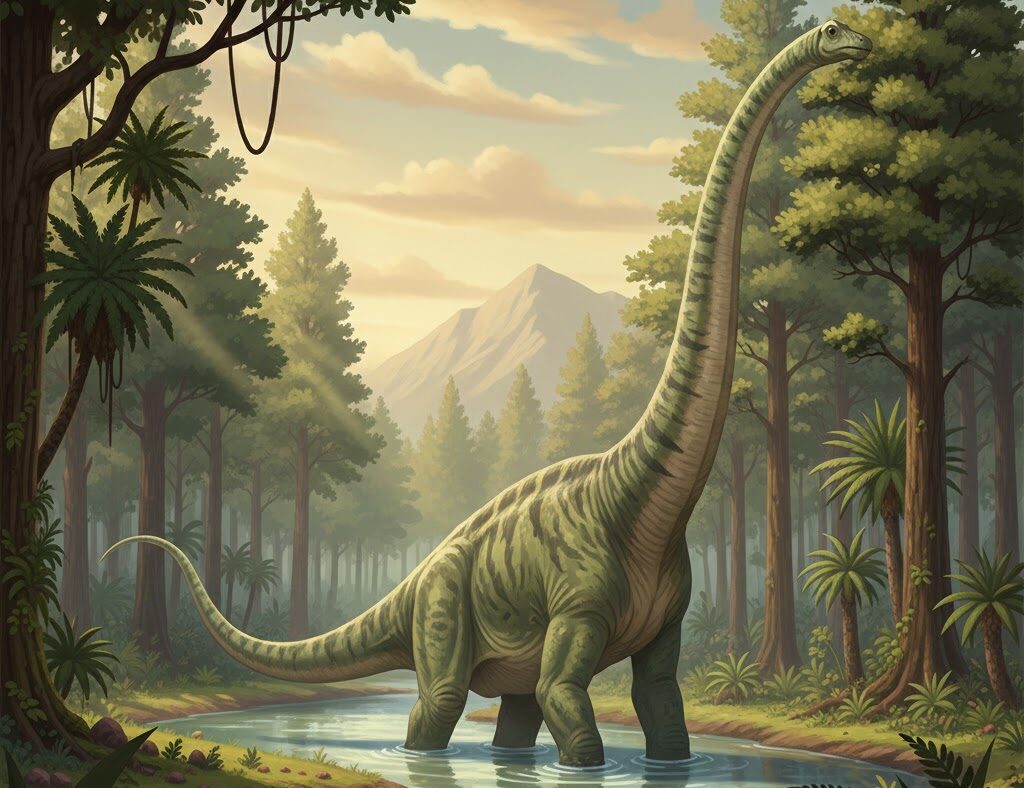 Photo Credit: AnimalsDiscovered
In the lush, green landscapes of the Late Jurassic period, a colossal giant named Amphicoelias fragillimus roamed the Earth, capturing the imagination of scientists and nature lovers alike. Imagine a creature so immense that its long neck stretched high above the treetops, allowing it to feast on the abundant ferns and conifers that carpeted the ground below. With a body that could reach lengths of over 100 feet, Amphicoelias fragillimus was not just a dinosaur; it was a living testament to the wonders of evolution, showcasing the extremes of size and adaptation in the animal kingdom.
What makes Amphicoelias fragillimus particularly intriguing is not just its staggering size, but also its unique skeletal structure. Its vertebrae were hollow, making its massive frame surprisingly lightweight for its scale. This adaptation allowed it to thrive in a world filled with lush vegetation, where it played a crucial role in shaping its ecosystem. As it lumbered through its habitat, this gentle giant would have left a lasting impact on the environment, influencing the growth of plants and the dynamics of other species. Join us as we delve deeper into the life of Amphicoelias fragillimus, exploring its diet, behavior, and the fascinating world it inhabited millions of years ago.
Amphicoelias fragillimus holds a special place in the tree of life, representing a fascinating chapter in the history of dinosaurs. This colossal sauropod, which roamed the Earth during the Late Jurassic period, is known for its impressive size, with estimates suggesting it could have reached lengths of over 100 feet! Amphicoelias is part of the Sauropoda order, which includes some of the largest land animals to ever exist. Its unique features, such as a long neck and a massive body, make it a standout among its relatives, showcasing the incredible diversity of life that once thrived on our planet.
| Taxonomic Rank | Scientific Name | Meaning & Significance |
|---|---|---|
| Kingdom | Animalia | This name signifies that Amphicoelias is part of the animal kingdom, which includes all multicellular organisms that are not plants, fungi, or bacteria. |
| Phylum | Chordata | Chordata means “having a notochord,” a flexible rod that supports the body, which is a key feature of all vertebrates, including Amphicoelias. |
| Order | Sauropoda | Sauropoda translates to “lizard feet,” referring to the large, column-like legs that supported these massive dinosaurs. |
| Family | Diplodocoidea | This family name is derived from “Diplodocus,” a well-known relative, highlighting the long necks and tails characteristic of these dinosaurs. |
| Genus | Amphicoelia | Amphicoelia means “both hollow,” which describes the unique structure of its vertebrae that were hollowed out, making them lighter and more efficient for supporting its enormous size. |
| Species | fragillimus | This species name means “the most fragile,” likely referring to the delicate nature of its vertebrae, which were discovered in a state that suggested they were easily broken. |
The classification of Amphicoelias fragillimus reveals much about its evolutionary journey. As a member of the Sauropoda order, it shares a lineage with other giant dinosaurs, showcasing how these magnificent creatures adapted to their environments over millions of years. The unique features that define Amphicoelias, such as its hollow vertebrae, illustrate the evolutionary innovations that allowed it to thrive in a world filled with challenges. Understanding its place in the tree of life not only highlights the diversity of ancient life forms but also helps us appreciate the complex web of relationships that connect all living beings today.
The story of Amphicoelias fragillimus unfolds during the Late Jurassic period, around 150 million years ago. This was a time when dinosaurs ruled the land, and the Earth was a lush, green paradise filled with diverse ecosystems. As one of the largest known dinosaurs, Amphicoelias was part of a group called sauropods, which were characterized by their long necks and massive bodies. These gentle giants roamed the vast landscapes, grazing on the abundant vegetation that flourished in their environment.
Amphicoelias fragillimus evolved from earlier, smaller dinosaurs, adapting to its surroundings in remarkable ways. Its ancestors were already beginning to develop long necks, which allowed them to reach high into trees for food. Over time, these adaptations became more pronounced, leading to the incredible size and shape of Amphicoelias. The evolution of its long neck and tail helped it balance its massive body, while its lightweight bones, filled with air sacs, made it easier to move despite its size. This evolutionary journey highlights the transition from smaller, more agile dinosaurs to the colossal forms that would dominate the Jurassic landscape.
These adaptations were crucial for Amphicoelias fragillimus’s survival in a world filled with competition. Its long neck provided a feeding advantage, while its lightweight bones allowed it to thrive despite its massive size. By evolving into one of the largest dinosaurs, Amphicoelias could roam vast areas in search of food, ensuring it had enough to eat in a changing environment. This combination of traits not only helped it survive but also made it a dominant presence in the Jurassic world.
Imagine a creature so immense that it seems to stretch the very limits of nature. Amphicoelias fragillimus, one of the largest dinosaurs ever known, boasts a long, elongated body that could reach lengths of over 100 feet. Its massive frame is supported by thick, sturdy legs, allowing it to traverse the lush landscapes of the Late Jurassic period with surprising grace. The neck, long and flexible, extends high above the ground, giving this giant a commanding view of its surroundings. With a tail that could whip through the air like a giant pendulum, Amphicoelias was not just a sight to behold but a true titan of its time.
| Feature | Description |
|---|---|
| Size | Over 100 feet long, making it one of the largest dinosaurs. |
| Color | Likely a muted palette of greens and browns, helping it blend into its environment. |
| Skin Type | Covered in scales, providing protection and possibly aiding in temperature regulation. |
| Neck | Long and flexible, allowing it to reach high vegetation. |
| Tail | Massive and powerful, used for balance and possibly communication. |
The features of Amphicoelias fragillimus work together in a remarkable way to enhance its survival. Its enormous size not only deters predators but also allows it to reach high foliage that smaller herbivores cannot access. The scales covering its body serve as armor against the elements and potential threats, while the long neck enables it to graze on a variety of plants. The powerful tail could be used for balance as it navigated uneven terrain or even as a means of communication with others of its kind. Together, these adaptations paint a picture of a creature perfectly suited to thrive in its prehistoric world.
Amphicoelias fragillimus thrived in a world that was rich with life and lush vegetation. Picture vast, open landscapes filled with towering ferns and conifer trees, where the air was thick with humidity and the ground was soft with decaying plant matter. This giant dinosaur roamed the floodplains and river valleys, where it could easily find the abundant plant life it needed to sustain its massive size. The environment was a vibrant tapestry of greens, with the sounds of other dinosaurs echoing in the distance, creating a lively backdrop for this colossal creature.
The climate of Amphicoelias fragillimus’s habitat was warm and humid, typical of the Late Jurassic period. This environment provided the perfect conditions for the lush vegetation that the dinosaur relied on for food. The temperatures were likely mild, with plenty of rainfall to keep the landscape thriving. Such a climate not only supported the growth of massive plants but also created a rich ecosystem where many other species could flourish alongside this giant.
To survive in its specific habitat, Amphicoelias fragillimus developed several adaptations. Its long neck allowed it to reach high into the trees for leaves and branches, while its massive body helped it to store energy from the abundant plant life. The dinosaur’s size also provided protection from predators, making it a dominant presence in its environment. By evolving to thrive in this lush, humid world, Amphicoelias fragillimus became a true giant of its time, perfectly suited to its surroundings.
As the sun rises over the lush landscapes of the Late Jurassic period, Amphicoelias fragillimus begins its day in a world teeming with life. This gigantic sauropod, with its long neck and massive body, spends much of its time foraging for food. It grazes on the abundant vegetation, using its specialized teeth to strip leaves from tall trees and ferns. With a daily routine that revolves around eating, drinking, and moving, Amphicoelias is well-adapted to its environment, often traveling great distances in search of the best feeding grounds.
Socially, Amphicoelias fragillimus is not a solitary creature. These dinosaurs likely traveled in groups, which provided safety in numbers. By moving together, they could protect themselves from predators that roamed the same territory. Within these herds, individuals may have formed bonds, communicating through low-frequency sounds that traveled long distances. This social structure not only helped them find food more efficiently but also allowed them to care for their young, ensuring the survival of the next generation.
| Behavior Type | Description |
|---|---|
| Feeding | Amphicoelias spent most of its day grazing on ferns and conifer leaves, using its long neck to reach high vegetation. |
| Social Structure | These dinosaurs likely traveled in herds, providing safety from predators and enhancing foraging efficiency. |
| Communication | They may have used low-frequency sounds to communicate over long distances, helping maintain group cohesion. |
In this dynamic world, the behaviors of Amphicoelias fragillimus are crucial for survival. By foraging in groups, they maximize their chances of finding food while minimizing the risk of becoming prey. Their social interactions not only strengthen bonds within the herd but also ensure that the young are protected and nurtured. In the grand tapestry of the Jurassic ecosystem, these behaviors weave together the threads of life, allowing Amphicoelias to thrive in a world filled with challenges.
Amphicoelias fragillimus was a true giant of the Jurassic world, and its diet reflected its massive size. As a herbivore, this colossal dinosaur primarily feasted on a variety of plants. Its long neck allowed it to reach high into the treetops, munching on leaves and branches that many other animals could not access. This feeding behavior not only provided it with the necessary nutrients but also helped shape the vegetation in its environment, as it would often strip trees of their foliage.
| Dietary Aspect | Details |
|---|---|
| Diet Type | Herbivore |
| Favorite Foods | Leaves, ferns, and conifer needles |
| Prey Items | N/A (as a herbivore, it does not hunt) |
| Hunting/Foraging Strategies | Utilizes its long neck to reach high vegetation and graze on abundant plant life |
The diet of Amphicoelias fragillimus played a crucial role in its daily life and the ecosystem around it. By consuming vast amounts of plant material, it helped maintain the balance of its environment, preventing any one species of plant from dominating. This feeding strategy also meant that Amphicoelias had to spend a significant portion of its day foraging for food, moving from one area to another in search of the tastiest greens. In doing so, it contributed to the health of the prehistoric landscape, ensuring that it remained vibrant and full of life.
Mating behavior in Amphicoelias fragillimus likely revolved around the seasonal availability of food and the need for suitable nesting sites. During the breeding season, which may have coincided with warmer months when vegetation was abundant, these massive dinosaurs would gather in groups. Males would display their size and strength to attract females, engaging in displays that showcased their impressive stature. This courtship ritual was essential for ensuring successful mating and the continuation of their lineage.
| Reproductive Aspect | Details |
|---|---|
| Gestation Period | Approximately 12-14 months |
| Litter Size | 1-2 eggs |
| Age of Maturity | 15-20 years |
| Name of Young | Hatchlings |
Once the eggs were laid, the young hatchlings would emerge, small but already equipped with instincts to survive in their lush environment. Parental care in Amphicoelias fragillimus was likely minimal, as is common among many large dinosaurs. However, it is possible that mothers stayed close to their young for a time, providing protection from predators. As the hatchlings grew, they would begin to graze on vegetation, learning to navigate their surroundings. Over the years, they would develop into the magnificent adults that roamed the Earth, continuing the legacy of their ancient ancestors.
Amphicoelias fragillimus, a giant of the Late Jurassic, occupied a significant position in its ecosystem. As a massive herbivore, it primarily fed on the abundant vegetation of its time, which placed it high in the food web. However, being large does not mean being invulnerable. Even the mightiest can face threats from predators and environmental challenges.
To survive these dangers, Amphicoelias fragillimus likely relied on its sheer size as a primary defense. Its massive bulk would deter many potential predators, while its long neck allowed it to reach high foliage, minimizing competition for food. Additionally, living in herds could provide safety in numbers, as group dynamics often help protect individuals from attacks. These strategies would have been essential for thriving in a world filled with both threats and opportunities.
A keystone species is a vital part of its ecosystem, playing a role that affects many other organisms. If removed, the entire ecosystem could change dramatically. Amphicoelias fragillimus, one of the largest dinosaurs to ever roam the Earth, likely held a keystone role in its environment during the Late Jurassic period. As a massive herbivore, it influenced plant life and the animals that depended on those plants for survival.
Amphicoelias fragillimus had a significant impact on its ecosystem through its feeding habits. By consuming vast amounts of vegetation, it helped shape the plant communities around it. This feeding behavior would have encouraged new growth, allowing various plant species to thrive. Additionally, its movement through the dense forests would have created pathways, making it easier for other animals to navigate the landscape.
Moreover, the waste produced by Amphicoelias fragillimus acted as a natural fertilizer, enriching the soil and promoting plant growth. This nutrient cycling is crucial for maintaining healthy ecosystems. The presence of such a large herbivore would have also influenced the behavior and population dynamics of smaller herbivores and predators, creating a balanced food web.
If Amphicoelias fragillimus were to disappear, the consequences would be profound. The plants it fed on could become overgrown, leading to a decline in biodiversity. Smaller herbivores might struggle to find food, and predators that relied on these herbivores would face food shortages. The entire ecosystem could become unbalanced, demonstrating just how crucial this giant dinosaur was to its world.
Amphicoelias fragillimus, a giant herbivorous dinosaur, played a crucial role in shaping its ecosystem during the Late Jurassic period. As one of the largest dinosaurs known, its immense size and dietary habits influenced the plant life around it. By consuming vast amounts of vegetation, Amphicoelias helped maintain the balance of its environment, ensuring that no single plant species dominated the landscape. This created a diverse habitat that supported a variety of other organisms, from smaller herbivores to predators that relied on them for food.
| Ecosystem Service | Impact |
|---|---|
| Vegetation Control | Prevents overgrowth of certain plant species, promoting biodiversity. |
| Nutrient Cycling | Through waste, it returns nutrients to the soil, enriching the ecosystem. |
| Habitat Creation | Its feeding habits create open spaces that benefit smaller animals. |
| Seed Dispersal | Helps in spreading plant seeds, aiding in plant reproduction. |
The influence of Amphicoelias fragillimus extended beyond just its immediate surroundings. By munching on the abundant ferns and conifers, it not only shaped the plant community but also created habitats for smaller creatures. For instance, the open areas it created allowed smaller herbivores to thrive, which in turn attracted predators. This dynamic interaction among species helped maintain a balanced food web, where each organism played a part in the survival of the others.
The broader ecological importance of Amphicoelias fragillimus cannot be overstated. As a keystone species, its presence was vital for the health of its ecosystem. If it had vanished, the entire structure of the environment could have shifted dramatically, leading to a decline in biodiversity. By understanding the role of such magnificent creatures, we gain insight into the delicate balance of nature and the interconnectedness of all living things, both past and present.
Symbiosis is a captivating concept in nature, where different species interact in ways that can be beneficial, harmful, or neutral. These ecological relationships are essential for the balance of ecosystems, allowing various organisms to thrive together. For instance, some species may help each other find food or shelter, while others might rely on one another for protection. Understanding these connections can reveal the intricate web of life that existed millions of years ago, including the relationships that might have involved the colossal Amphicoelias fragillimus.
| Species/Type | Relationship Type | Description |
|---|---|---|
| Ferns | Mutualistic | Amphicoelias fragillimus likely fed on ferns, which benefited from the dinosaur’s grazing as it helped in seed dispersal and nutrient cycling. |
| Insects | Commensal | Small insects may have lived on or around Amphicoelias, gaining protection from predators while the dinosaur remained unaffected. |
| Predatory Dinosaurs | Parasitic | While not a direct relationship, smaller predatory dinosaurs may have targeted the young or weak individuals of Amphicoelias, impacting its population. |
These relationships likely evolved over time as species adapted to their environments and each other. The mutualistic bond with ferns, for example, would have been beneficial for both parties, as the dinosaur’s feeding habits helped the plants thrive. Meanwhile, the presence of insects around Amphicoelias illustrates how even the largest creatures can provide shelter for smaller organisms. Understanding these interactions not only sheds light on the life of Amphicoelias fragillimus but also highlights the interconnectedness of all living things in an ecosystem.
Amphicoelias fragillimus is a true giant of the dinosaur world, and its story is filled with surprises that even seasoned nature enthusiasts might not know. This colossal creature roamed the Earth during the Late Jurassic period, leaving behind a legacy that continues to intrigue scientists and dinosaur lovers alike.
Amphicoelias fragillimus, a colossal dinosaur from the Late Jurassic period, has captured the imagination of many throughout history. Although this giant lived millions of years ago, its remains have sparked curiosity and wonder in cultures around the world. Early paleontologists, fascinated by the sheer size of its fossils, often compared it to modern-day giants, igniting stories and myths about enormous creatures that once roamed the Earth. This dinosaur’s legacy continues to influence art, literature, and even popular culture, reminding us of the incredible diversity of life that has existed on our planet.
Today, the relationship between Amphicoelias fragillimus and humanity is primarily one of discovery and conservation. While we cannot interact with this long-extinct species directly, studying its fossils helps scientists understand the ecosystems of the past and the evolutionary history of dinosaurs. This knowledge is crucial for modern conservation efforts, as it provides insights into how large herbivores like Amphicoelias might have interacted with their environment. By learning about these ancient giants, we can better appreciate the importance of protecting the habitats of today’s large animals, ensuring that they thrive in a world that is rapidly changing.
Looking ahead, the relationship between Amphicoelias fragillimus and humanity will likely continue to evolve as new discoveries are made. As we uncover more about this magnificent dinosaur, we deepen our understanding of the natural world and our place within it. By studying the past, we can inspire future generations to appreciate and protect the incredible diversity of life that still exists today. The story of Amphicoelias fragillimus serves as a reminder of the importance of conservation and the interconnectedness of all living beings, both past and present.
Amphicoelias fragillimus, a titan of the Late Jurassic period, is classified as extinct. This means that there are no living individuals of this species today. While it once roamed the Earth, its population has dwindled to zero, leaving behind only fossilized remains that tell the story of its grandeur. The extinction of such a magnificent creature highlights the fragility of life on our planet and serves as a reminder of the ever-changing nature of ecosystems.
| Conservation Factor | Status/Details |
|---|---|
| IUCN Status | Extinct |
| Population Estimates | None |
| Trend Direction | Decreasing (extinct) |
The main threats that led to the extinction of Amphicoelias fragillimus are not entirely clear, but they likely included significant environmental changes during the Late Jurassic period. These changes could have involved shifts in climate, habitat loss, and competition with other species for food and resources. As the Earth transformed, the lush landscapes that supported these massive herbivores may have diminished, making survival increasingly difficult.
Despite the fact that Amphicoelias fragillimus is no longer with us, its story continues to inspire conservation efforts aimed at protecting the habitats of living species. By studying the past, scientists can better understand the factors that lead to extinction and work to prevent similar fates for today’s endangered animals. The lessons learned from the life and times of Amphicoelias fragillimus remind us of the importance of preserving biodiversity and maintaining healthy ecosystems for future generations.
| Question | Answer |
|---|---|
| What was the habitat of Amphicoelias Fragillimus? | Amphicoelias Fragillimus lived in what is now North America during the Late Jurassic period. It thrived in lush, forested areas near rivers and floodplains, where it could find plenty of vegetation to eat. |
| What did Amphicoelias Fragillimus eat? | This giant dinosaur was a herbivore, meaning it primarily ate plants. Its diet likely consisted of leaves, ferns, and other types of vegetation that were abundant in its environment. |
| How did Amphicoelias Fragillimus behave? | While we can't observe Amphicoelias Fragillimus directly, scientists believe it was a social creature that may have traveled in herds. This behavior could have helped protect it from predators and allowed it to find food more efficiently. |
| How did Amphicoelias Fragillimus reproduce? | Like other dinosaurs, Amphicoelias Fragillimus likely laid eggs. The exact details of its reproductive behavior are still a mystery, but it probably built nests to protect its eggs until they hatched. |
| What were the threats to Amphicoelias Fragillimus? | During its time, Amphicoelias Fragillimus faced threats from large predators, such as carnivorous dinosaurs. Additionally, environmental changes, like shifts in climate or habitat loss, could have impacted its survival. |
| What are some interesting characteristics of Amphicoelias Fragillimus? | Amphicoelias Fragillimus is known for being one of the largest dinosaurs ever discovered, with estimates suggesting it could reach lengths of over 100 feet! Its long neck and massive body allowed it to reach high vegetation, making it a unique giant of its time. |
| Why is Amphicoelias Fragillimus considered extinct? | Amphicoelias Fragillimus is considered extinct because it has not been seen for millions of years, and no living descendants exist today. The extinction of this species is part of the larger story of dinosaur extinction that occurred around 65 million years ago. |