Taxonomy & Classification
- Kingdom
- Animalia
- Phylum
- Chordata
- Class
- Aves
- Order
- Suliformes
- Family
- Anhingidae
- Genus
- Anhinga
- Species
- Anhinga anhinga

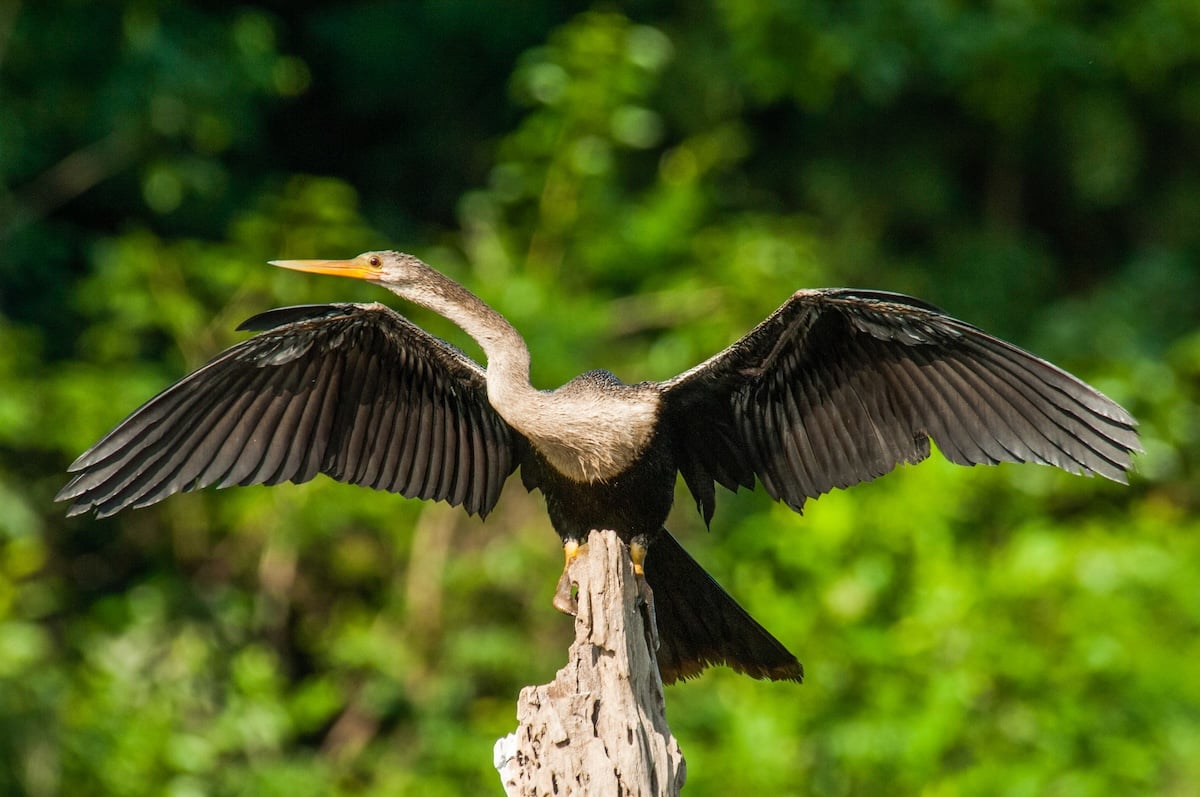 Photo Credit: vitormarigo on Deposit Photos
In the shimmering wetlands of the southeastern United States, the Anhinga, scientifically known as Anhinga anhinga, glides gracefully through the air, its long, slender neck resembling that of a snake. This striking bird, often called the “snakebird,” captivates onlookers with its unique silhouette and remarkable hunting skills. With a sharp, yellow bill designed for spearing fish, the Anhinga is a master of its watery domain, diving beneath the surface to catch its prey with precision. As it emerges, droplets of water cascade off its sleek body, showcasing its beautiful plumage that glistens in the sunlight.
What makes the Anhinga particularly fascinating to scientists and nature enthusiasts alike is its remarkable adaptation to life in the water. Unlike many birds, the Anhinga has a unique way of drying its wings after a swim, often seen perched on a branch with its wings outstretched, soaking up the sun. This behavior not only helps it maintain its feathers but also highlights its role as a keystone species in its ecosystem. By controlling fish populations and serving as a food source for other wildlife, the Anhinga plays a vital part in the intricate web of life that thrives in wetlands. As we explore the world of the Anhinga, we will uncover its behaviors, diet, and the challenges it faces in a changing environment, inviting readers of all ages to appreciate this extraordinary bird.
The Anhinga, often called the “snakebird” for its long neck and streamlined body, occupies a fascinating niche in the tree of life. This bird belongs to the kingdom Animalia and is classified under the phylum Chordata, which includes all animals with a backbone. What sets the Anhinga apart is its unique hunting technique; it dives underwater to catch fish, using its sharp beak to spear its prey. This behavior, along with its striking appearance, makes it a captivating subject for both birdwatchers and scientists alike.
| Taxonomic Rank | Scientific Name | Meaning & Significance |
|---|---|---|
| Kingdom | Animalia | From the Latin word “animalis,” meaning “having breath,” highlighting the living nature of these organisms. |
| Phylum | Chordata | Derived from the Greek “chordē,” meaning “string,” referring to the notochord, a flexible rod that supports the body in all chordates during some stage of development. |
| Class | Aves | From the Latin word for “bird,” emphasizing the unique characteristics of feathered creatures. |
| Order | Suliformes | From the Latin “sulidae,” which refers to the family of gannets and boobies, indicating a connection to aquatic birds. |
| Family | Anhingidae | Named after the genus Anhinga, which comes from a Native American word meaning “devil bird,” reflecting its eerie, snake-like appearance. |
| Genus | Anhinga | From the Tupi word “anhinga,” meaning “snake bird,” again highlighting its long neck and swimming style. |
The classification of the Anhinga reveals much about its evolutionary journey. As a member of the order Suliformes, it shares ancestry with other aquatic birds, showcasing adaptations that allow it to thrive in wetland environments. Its lineage traces back through various stages of evolution, connecting it to ancient reptiles and even dinosaurs. This rich history not only illustrates the Anhinga’s unique adaptations but also highlights the intricate web of life that links all living organisms. Understanding where the Anhinga fits in the tree of life helps us appreciate the diversity and complexity of the natural world.
The evolutionary journey of the Anhinga stretches back millions of years, weaving through the tapestry of life on Earth. This bird, often referred to as the “snakebird” due to its long neck and sleek body, belongs to a lineage that has adapted to a variety of environments. The Anhinga’s ancestors emerged during the late Cretaceous period, around 100 million years ago, when the world was dominated by dinosaurs. As the planet changed, so did the Anhinga, evolving through significant transitions that shaped its current form.
Anhingas are part of the family Anhingidae, which is closely related to other waterbirds like herons and pelicans. Their ancestors were likely similar to modern-day cormorants, sharing a common ancestor that lived in aquatic habitats. Over time, Anhingas developed specialized features that set them apart. One major transition was the evolution of their long, slender necks, which allow them to hunt fish with precision. Another key change was the development of their unique feathers, which are less waterproof than those of other diving birds. This adaptation helps them dive and swim efficiently, but it also means they must dry their wings after swimming, often seen perched with their wings spread wide.
The adaptations of the Anhinga have been crucial for its survival in diverse aquatic environments. Its long neck and sharp bill make it a formidable hunter, while its unique feather structure allows it to dive effectively. By nesting in colonies, Anhingas also enhance their chances of raising young in safety. These evolutionary traits not only showcase the Anhinga’s ability to thrive in its habitat but also highlight the intricate connections between form, function, and survival in the natural world.
The Anhinga presents a striking silhouette that captures the eye and sparks curiosity. With its long, S-shaped neck and streamlined body, this bird glides gracefully through its watery habitat. Its slender form is perfectly adapted for swimming, allowing it to dive beneath the surface with ease. The Anhinga’s overall appearance is both elegant and functional, making it a master of its aquatic domain.
| Feature | Description |
|---|---|
| Weight | 2.7 lbs |
| Skin Type | Feathers |
| Most Distinctive Feature | Long S-shaped neck |
These features work together to enhance the Anhinga’s survival in its environment. The long neck allows it to reach underwater prey while remaining mostly hidden, a clever strategy for hunting. Its lightweight body helps it maneuver swiftly through water, while its feathers are specially designed to dry quickly after diving. This combination of traits not only aids in catching fish but also ensures that the Anhinga can thrive in its wetland home, showcasing the beauty of nature’s design.
The Anhinga thrives in vibrant wetlands, where the air is thick with the sounds of nature and the water glistens under the sun. These birds are often found gliding over marshes, estuaries, and other freshwater environments, where they can dive and hunt for fish. Their preferred habitats are rich in aquatic plants and teeming with life, providing both shelter and food. Picture a serene landscape dotted with reeds and lily pads, where the Anhinga can be seen perched on a branch, drying its wings after a swim.
The Anhinga enjoys warm climates, often found in regions where temperatures are mild to hot. These birds prefer areas with plenty of open water, as they rely on it for hunting. Wetlands and marshes provide the perfect environment, as they are rich in fish and other aquatic creatures. The Anhinga is also sensitive to changes in its habitat, thriving in places that maintain a balance of water and vegetation.
Adapted to its watery world, the Anhinga has developed several unique traits that help it survive. Its long neck and sharp beak are perfect for catching fish, while its ability to dive underwater allows it to pursue prey with ease. Unlike many birds, the Anhinga does not have waterproof feathers, which means it must dry its wings after swimming. This adaptation helps it stay buoyant while hunting, making it a skilled predator in its lush, wetland home.
The Anhinga’s day begins with the sun rising over its watery home, casting shimmering reflections on the surface. As a skilled swimmer, this bird dives beneath the water to hunt for fish, its primary food source. Anhingas are known for their impressive hunting technique, where they use their long necks to spear fish with precision. After a successful catch, they often spend time drying their wings in the sun, as their feathers are not waterproof. This behavior is essential for maintaining their ability to fly and dive effectively.
Socially, Anhingas are quite communal. They prefer to nest in colonies, which means they build their homes close to one another in trees or shrubs near water. This group living offers safety in numbers, as it helps protect them from predators. Within these colonies, Anhingas communicate through a variety of calls and displays, strengthening their bonds and coordinating activities. Their social structure is vital for raising young, as adults often help each other by watching over the chicks.
| Behavior Type | Description |
|---|---|
| Hunting | Anhingas dive underwater to catch fish, using their long necks to spear their prey. |
| Wing Drying | After diving, they spread their wings to dry in the sun, which is crucial for flight. |
| Colonial Nesting | They build nests in groups, providing safety and support for raising their young. |
| Communication | Anhingas use various calls and body language to interact with each other in their colonies. |
The behaviors of Anhingas are finely tuned to ensure their survival in the wild. By hunting in water and drying their wings, they maintain their physical abilities. Living in colonies not only provides safety from predators but also fosters cooperation among adults, which is essential for the success of their young. This blend of individual skill and social structure makes the Anhinga a fascinating example of adaptation in the natural world.
The Anhinga is a carnivore, which means it primarily eats meat. This bird has a particular fondness for fish, but its diet also includes amphibians, crawfish, shrimp, and crabs. With its sharp eyesight and impressive diving skills, the Anhinga is a master at hunting in the water. It often swims with just its neck and head above the surface, allowing it to stealthily approach its prey before making a swift dive to catch it.
| Dietary Aspect | Details |
|---|---|
| Diet Type | Carnivore |
| Favorite Foods | Fish, amphibians, crawfish, shrimp, crabs |
| Prey Items | Small fish, frogs, crustaceans |
| Hunting/Foraging Strategies | Stealthy swimming, diving, and using sharp eyesight |
The Anhinga’s diet plays a crucial role in its daily routine and the ecosystem it inhabits. By feeding on various aquatic creatures, it helps maintain the balance of the food web in its environment. This bird’s hunting habits not only provide it with the energy needed for survival but also influence the populations of its prey, showcasing the interconnectedness of life in wetlands. As the Anhinga dives and glides through the water, it embodies the delicate dance of nature, where every meal is a part of a larger story.
As the breeding season approaches, Anhingas engage in captivating courtship displays. Males often perform elaborate rituals, including head bobbing and wing spreading, to attract potential mates. These displays are not just for show; they help establish territory and signal readiness to breed. The breeding season typically occurs in the warmer months, when food is abundant, allowing these birds to focus on raising their young.
| Reproductive Aspect | Details |
|---|---|
| Gestation Period | About 28 to 30 days |
| Litter Size | 3 to 5 eggs |
| Age of Maturity | 1 to 2 years |
| Name of Young | Chicks |
Once the eggs hatch, both parents take an active role in caring for their chicks. The young Anhingas are born covered in downy feathers and are completely dependent on their parents for food and protection. As they grow, they develop their swimming and diving skills, learning to hunt for themselves. Parental care is crucial during this time, as the parents provide not only nourishment but also guidance. By the time they reach maturity, these young birds are ready to take on the world, equipped with the skills they need to thrive in their aquatic habitats.
The Anhinga plays a vital role in its ecosystem, often found near water bodies where it hunts for fish. As a skilled predator, it sits near the top of its food web, but it is not without its own set of challenges. While it expertly navigates its aquatic environment, the Anhinga faces various threats that can impact its survival.
To defend itself against these dangers, the Anhinga has developed several clever strategies. When threatened, it often relies on its ability to dive underwater, where it can remain hidden from predators. Additionally, its long neck allows it to blend into the reeds and grasses along the water’s edge, making it less visible. By being aware of its surroundings and using its swimming skills, the Anhinga can navigate the challenges of its environment, ensuring its place in the delicate balance of nature.
A keystone species is a vital part of its ecosystem, meaning its presence and activities have a significant impact on the environment and other living things. The Anhinga, often called the “snakebird,” qualifies as a keystone species due to its role in maintaining the balance of its wetland habitat. By influencing the populations of fish and other aquatic creatures, the Anhinga helps shape the community of life around it.
The Anhinga’s hunting habits are a key factor in its ecological impact. As a skilled predator, it primarily feeds on fish, but it also consumes amphibians and crustaceans. By preying on these species, the Anhinga helps control their populations, preventing any one group from becoming too dominant. This balance is crucial for the health of the wetland ecosystem, as it allows for a diverse range of species to thrive. Additionally, the Anhinga’s nesting behavior contributes to the ecosystem. These birds often nest in colonies, which can create a unique microhabitat that supports various other species, from insects to small mammals.
The Anhinga also plays a role in nutrient cycling. When it dives for fish, it often brings nutrients from the depths of the water column to the surface, where they can be utilized by plants and other organisms. This process enriches the ecosystem, promoting the growth of aquatic vegetation that provides shelter and food for many other species. Furthermore, the Anhinga’s presence can attract other birds and wildlife, creating a vibrant community that relies on the interconnectedness of all its members.
If the Anhinga were to disappear from its habitat, the effects would ripple through the ecosystem. Fish populations could surge unchecked, leading to overgrazing of aquatic plants and a decline in water quality. This imbalance would not only affect the Anhinga’s prey but also the many species that rely on those plants for food and shelter. The loss of this bird would disrupt the delicate web of life in wetlands, highlighting just how crucial the Anhinga is to maintaining the health and diversity of its environment.
The Anhinga, often known as the “snakebird,” plays a crucial role in its ecosystem, particularly in wetlands, marshes, and estuaries. This bird is a master of its environment, using its unique hunting skills to maintain the balance of aquatic life. By preying on fish and other small creatures, the Anhinga helps regulate fish populations, ensuring that no single species dominates the ecosystem. This balance is essential for the health of the entire habitat, as it supports a diverse range of plants and animals.
| Ecosystem Service | Impact |
|---|---|
| Predation | Controls fish populations, preventing overpopulation and promoting biodiversity. |
| Nutrient Cycling | Contributes to nutrient cycling through its waste, enriching the water and supporting plant growth. |
| Habitat Creation | Builds nests in colonies, which can provide shelter for other species. |
| Indicator Species | Serves as an indicator of wetland health, as its presence reflects the quality of the ecosystem. |
The Anhinga’s influence extends beyond just its role as a predator. By diving underwater to catch fish, it stirs up sediment, which can help distribute nutrients throughout the water column. This process supports the growth of aquatic plants, which in turn provide oxygen and habitat for other wildlife. Additionally, the Anhinga often nests in colonies, creating a bustling community that can offer shelter to various birds and small mammals. These interactions highlight the interconnectedness of life in wetlands, where each species plays a part in the larger story of the ecosystem.
The broader ecological importance of the Anhinga cannot be overstated. As a keystone species, its presence is vital for maintaining the health and stability of wetland ecosystems. By regulating fish populations and contributing to nutrient cycling, the Anhinga supports a rich tapestry of life that includes not only fish but also amphibians, insects, and plants. Protecting this remarkable bird and its habitat is essential for preserving the intricate balance of nature, ensuring that future generations can continue to marvel at the wonders of wetlands and the life they support.
In the intricate web of life, symbiosis refers to the close interactions between different species, which can take many forms. These relationships can be mutualistic, where both species benefit, parasitic, where one benefits at the other’s expense, or commensal, where one benefits while the other is neither helped nor harmed. The Anhinga, a skilled swimmer and hunter, engages in various ecological partnerships that highlight the interconnectedness of nature. These relationships not only enhance the survival of the Anhinga but also contribute to the health of its wetland habitat.
| Species/Type | Relationship Type | Description |
|---|---|---|
| Fish | Mutualistic | The Anhinga helps control fish populations, which can benefit the overall health of the aquatic ecosystem. |
| Herons and Egrets | Commensal | These birds often nest near Anhingas, benefiting from the protection offered by the Anhinga’s presence while not affecting the Anhinga. |
| Leeches | Parasitic | Leeches may attach to the Anhinga, feeding on its blood, which can weaken the bird but does not usually lead to its death. |
The evolution of these relationships showcases the adaptability of the Anhinga and its companions. Over time, these species have developed ways to coexist, often leading to benefits that enhance their survival. For instance, the mutualistic relationship with fish helps maintain a balanced ecosystem, while the presence of herons and egrets near Anhingas provides a safe nesting environment. Understanding these connections deepens our appreciation for the delicate balance of nature and the roles each species plays in sustaining it.
The Anhinga, often called the “snakebird,” is a captivating water bird that showcases some truly surprising traits. From its unique hunting techniques to its fascinating adaptations, this bird is full of wonders that will intrigue nature lovers of all ages.
<liInterestingly, Anhingas have a unique way of communicating with each other. They produce a variety of sounds, including a low, croaking call, which can be heard during courtship or when they feel threatened, helping them maintain social bonds and warn others of danger.
<liThese birds are often seen perched on branches with their wings spread wide, a behavior that not only helps them dry off but also plays a role in their mating rituals. Males will display their striking plumage to attract females, showcasing their health and vitality.
<liAnhingas are highly adaptable and can thrive in a range of wetland habitats, from freshwater lakes to coastal marshes. This flexibility allows them to find food and nesting sites in various environments, making them resilient to changes in their surroundings.
<liThe Anhinga’s long, S-shaped neck is not just for show; it serves a practical purpose. This unique shape allows the bird to maneuver easily while hunting underwater, making it a highly effective predator in its aquatic world.
The Anhinga, often referred to as the “snakebird,” has a rich history intertwined with human culture. Indigenous peoples in the Americas have long recognized this bird’s striking appearance and unique hunting skills. In some cultures, the Anhinga symbolizes adaptability and resourcefulness, reflecting its ability to thrive in wetland environments. Historical encounters often involved admiration for its graceful diving and fishing techniques, which have inspired stories and folklore. As people began to settle near wetlands, they observed the Anhinga’s role in the ecosystem, leading to a deeper appreciation of its significance in nature.
Today, the relationship between Anhingas and humans is complex and multifaceted. While many people enjoy watching these birds in their natural habitats, conflicts can arise, especially in areas where human activities encroach on wetlands. Conservation efforts are underway to protect the Anhinga’s habitats, as these ecosystems face threats from pollution, development, and climate change. Some communities have embraced the Anhinga as a symbol of local wildlife, promoting eco-tourism and educational programs. However, in agricultural areas, Anhingas can sometimes be seen as pests, as they may compete with fish populations that are important for local fisheries.
As we look to the future, the relationship between Anhingas and humanity holds promise and challenges. With increased awareness of environmental issues, more people are advocating for the protection of wetlands, recognizing their importance not just for Anhingas but for countless other species. Education and conservation efforts can help bridge the gap between human activities and wildlife needs. By fostering a sense of stewardship for these ecosystems, we can ensure that the Anhinga continues to thrive alongside us, enriching our natural world for generations to come.
The Anhinga, often known as the “snakebird,” currently holds a conservation status of Least Concern according to the International Union for Conservation of Nature (IUCN). This means that, for now, the species is not facing an immediate threat of extinction. With an estimated population size of around 2 million individuals, the Anhinga appears to be thriving in its natural habitats. However, while the overall population is stable, local declines can occur due to environmental changes.
| Conservation Factor | Status/Details |
|---|---|
| IUCN Status | Least Concern |
| Estimated Population Size | 2,000,000 |
| Population Trend | Stable |
Despite its current stable status, the Anhinga faces several threats that could impact its future. Habitat loss is a significant concern, as wetlands and marshes are often drained for agriculture or urban development. Pollution from agricultural runoff can also degrade water quality, affecting the fish and other prey that Anhingas rely on for food. Additionally, climate change poses a long-term risk, altering the delicate ecosystems where these birds thrive.
Conservation efforts are underway to protect the Anhinga and its habitats. Organizations are working to restore wetlands and promote sustainable land use practices that benefit both wildlife and local communities. Public awareness campaigns help educate people about the importance of preserving these ecosystems. With continued efforts, the outlook for the Anhinga remains positive, allowing future generations to enjoy the sight of this graceful bird gliding through the water.
| Question | Answer |
|---|---|
| What is the habitat of the Anhinga? | Anhingas thrive in wetlands, marshes, and estuaries. These watery environments provide them with plenty of fish, their main food source, and places to perch and dry their wings after swimming. |
| What do Anhingas eat? | Anhingas are carnivores, meaning they primarily eat meat. Their diet mainly consists of fish, but they may also catch small amphibians and crustaceans, using their sharp beaks to spear their prey underwater. |
| How do Anhingas behave? | Anhingas are known for their unique swimming style, where they glide just below the water's surface, with only their long necks and heads visible. They are also social birds, often seen in groups, and they display interesting courtship behaviors during mating season. |
| How do Anhingas reproduce? | Anhingas typically nest in colonies, often in trees near water. The female lays 3 to 5 eggs, which both parents help to incubate, and after about 25 to 30 days, the chicks hatch and are cared for by both parents. |
| What threats do Anhingas face? | While Anhingas are currently classified as Least Concern, they still face threats from habitat loss due to wetland drainage and pollution. Climate change also poses risks by altering their habitats and food availability. |
| What is a distinctive feature of the Anhinga? | The Anhinga is easily recognized by its long, S-shaped neck, which helps it maneuver while swimming and hunting. This unique shape, along with its striking plumage, makes it a fascinating bird to observe. |
| Can Anhingas fly? | Yes, Anhingas are strong fliers. They have long, pointed wings that allow them to soar gracefully, often seen gliding over water or flying to new feeding grounds. |