Taxonomy & Classification
- Kingdom
- Animalia
- Phylum
- Chordata
- Class
- Aves
- Order
- Apodiformes
- Family
- Trochilidae
- Genus
- Calypte
- Species
- Calypte anna

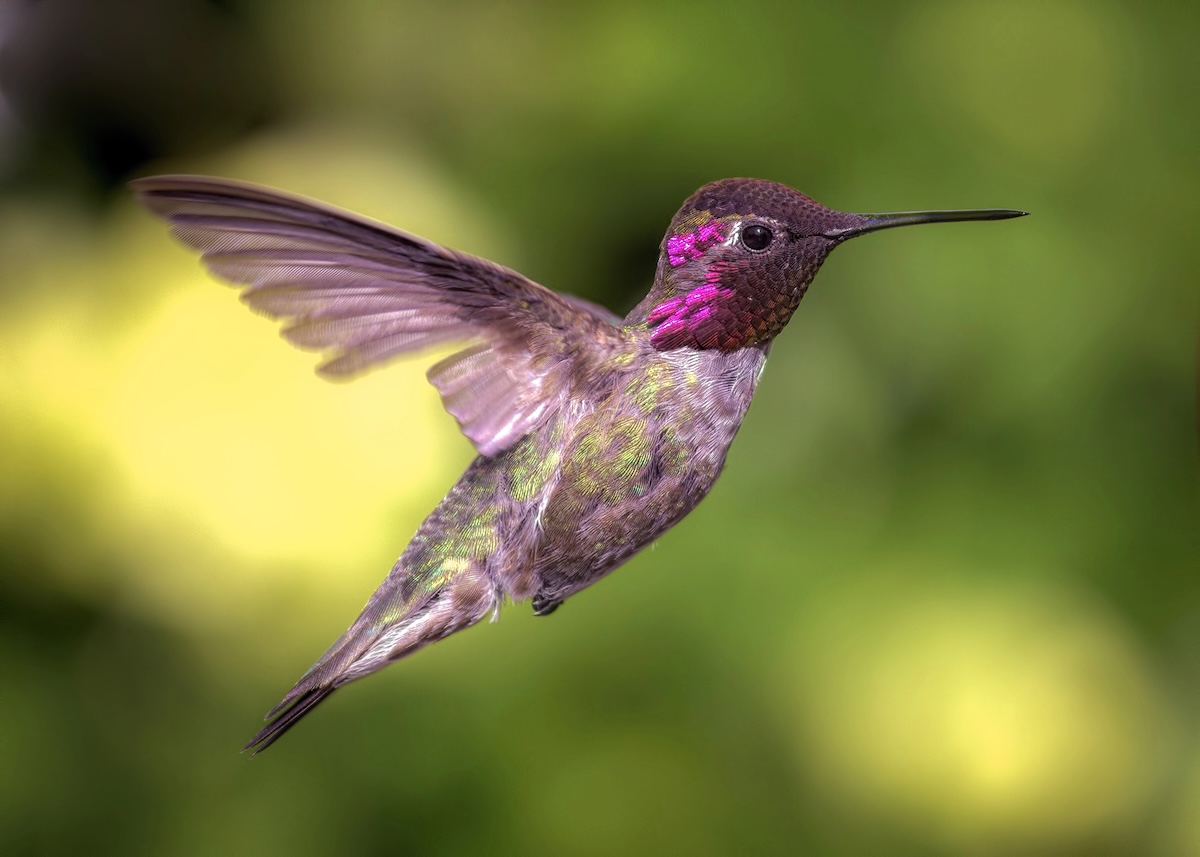 Photo Credit: Backyard-Photography on Deposit Photos
In the sun-drenched woodlands of the western United States and parts of Mexico, the Anna’s Hummingbird, scientifically known as Calypte anna, flits gracefully among vibrant flowers. With its striking rosy red crown and iridescent green body, this tiny bird is a living jewel, captivating the hearts of nature lovers and scientists alike. Measuring just 3 to 4 inches in length, it may be small, but its presence is anything but insignificant. The Anna’s Hummingbird is not only a marvel of color and agility but also plays a crucial role in its ecosystem as a pollinator, helping plants reproduce while feeding on their nectar.
As dawn breaks, the air fills with the sound of rapid wingbeats as Anna’s Hummingbird begins its day. These energetic birds dart from blossom to blossom, showcasing their remarkable flying skills. They can hover in mid-air, a feat made possible by their unique wing structure, which allows them to beat their wings in a figure-eight pattern. This incredible ability, combined with their vibrant plumage, makes them a favorite subject for birdwatchers and photographers. The Anna’s Hummingbird’s lively antics and essential role in nature remind us of the intricate connections that bind all living things together, inviting us to explore the wonders of the natural world.
The Anna’s Hummingbird is a dazzling member of the animal kingdom, nestled within the intricate web of life. Taxonomically, it belongs to the Kingdom Animalia, which includes all animals, and it is classified under the Phylum Chordata, known for animals with a backbone. This tiny bird is part of the Class Aves, which encompasses all birds, and it falls under the Order Apodiformes, a group characterized by their incredible flying abilities. The Anna’s Hummingbird is particularly special because it is one of the few hummingbirds that can thrive in cooler climates, showcasing its adaptability. With its vibrant plumage and remarkable hovering skills, this bird captures the imagination of birdwatchers and nature enthusiasts alike.
| Taxonomic Rank | Scientific Name | Meaning & Significance |
|---|---|---|
| Kingdom | Animalia | This name comes from the Latin word “animalis,” meaning “having breath” or “living.” It signifies all living creatures, including the Anna’s Hummingbird. |
| Phylum | Chordata | Derived from the Greek word “chordē,” meaning “string,” this name refers to animals with a notochord, a flexible rod that supports the body, which is a key feature in the development of vertebrates. |
| Class | Aves | This term comes from the Latin word for “bird.” It highlights the unique characteristics of birds, such as feathers and beaks, which are essential for their survival and flight. |
| Order | Apodiformes | From the Greek “apous,” meaning “without feet,” this name reflects the short legs of these birds, which are adapted for their aerial lifestyle rather than walking. |
| Family | Trochilidae | This name is derived from the Greek word “trochilos,” meaning “small bird.” It emphasizes the tiny size and agile nature of hummingbirds, including the Anna’s. |
| Genus | Calypte | Originating from the Greek word “kaluptein,” meaning “to cover,” this name refers to the bird’s iridescent feathers that can appear to change color in different lights, creating a stunning visual effect. |
Understanding the Anna’s Hummingbird’s classification reveals much about its evolutionary journey. As a member of the Trochilidae family, it shares a lineage with other hummingbirds, showcasing adaptations that allow for incredible flight capabilities and energy-efficient feeding habits. Its unique position within the Apodiformes order highlights the evolutionary innovations that have enabled these birds to thrive in diverse environments. The Anna’s Hummingbird not only represents a fascinating chapter in the story of avian evolution but also serves as a reminder of the intricate connections that bind all living organisms in the tapestry of life.
The evolutionary journey of Anna’s Hummingbird, scientifically known as Calypte anna, stretches back millions of years, intertwining with the rich tapestry of avian history. Hummingbirds, as a group, emerged around 22 million years ago in the Americas, evolving from small, insect-eating ancestors. These tiny birds adapted to a variety of environments, leading to the dazzling diversity we see today, including the vibrant Anna’s Hummingbird.
The ancestors of Anna’s Hummingbird were likely small, agile birds that thrived in lush, flowering habitats. Over time, they developed specialized traits that allowed them to exploit nectar-rich flowers, a primary food source. This shift marked a significant evolutionary transition, as these birds became increasingly reliant on floral resources. Their bodies adapted to become more streamlined, enhancing their ability to hover and maneuver with precision. The evolution of their long, slender bills allowed them to reach deep into flowers, while their rapid wing beats, which can exceed 50 beats per second, enabled them to hover in place and access nectar efficiently.
The adaptations of Anna’s Hummingbird have been crucial for its survival in a competitive environment. Their specialized bills and agile flight allow them to access food sources that many other birds cannot reach, giving them an edge in foraging. The high metabolism supports their energetic lifestyle, while their vibrant plumage plays a dual role in attracting mates and blending into their surroundings. Together, these traits have helped Anna’s Hummingbird thrive in diverse habitats, from coastal gardens to mountainous regions, showcasing the wonders of evolution in action.
The Anna’s Hummingbird is a small yet striking bird that captures the eye with its vibrant colors and agile movements. With a body length of about 3 to 4 inches, it is a true marvel of nature, showcasing a sleek form that allows for incredible aerial maneuvers. Its iridescent feathers shimmer in the sunlight, creating a dazzling display of colors that can shift from green to gold, depending on the angle of the light. This tiny bird is not just a pretty sight; its lightweight structure, weighing only 3 to 6 grams, is perfectly designed for rapid flight and hovering.
| Feature | Description |
|---|---|
| Weight | 3-6 grams |
| Skin Type | Feathers |
| Most Distinctive Feature | Rosy red crown |
The combination of its lightweight body and vibrant plumage serves multiple purposes in the wild. The Anna’s Hummingbird’s feathers not only provide insulation but also play a crucial role in attracting mates, as the bright colors signal health and vitality. Its ability to hover in place while feeding on nectar from flowers is made possible by its specialized wing structure, allowing it to dart from bloom to bloom with ease. This remarkable adaptation not only aids in feeding but also helps in pollination, making the Anna’s Hummingbird an essential player in its ecosystem.
The Anna’s Hummingbird thrives in a vibrant tapestry of habitats that reflect its lively nature. Picture sun-drenched open woodlands, where tall trees sway gently in the breeze, and colorful shrubs burst with flowers. This little bird flits among the blossoms, sipping nectar with its long, specialized tongue. It also loves gardens, where humans plant a variety of flowers, creating a buffet of sweet treats. Coastal areas near water are another favorite spot, where the salty air mingles with the sweet scent of blooming plants.
The climate where Anna’s Hummingbird makes its home is typically mild and temperate. It enjoys areas with warm summers and cool winters, which allow for a steady supply of flowers throughout the year. These birds are often found in regions that receive plenty of sunshine, as this helps the flowers bloom and produce nectar. They prefer environments that are not too dry, as they rely on a variety of plants for food and shelter.
Adaptation is key to the survival of Anna’s Hummingbird in its chosen habitats. Its ability to hover in mid-air allows it to access nectar from flowers that other birds might find difficult to reach. The bird’s iridescent feathers not only dazzle the eye but also help it blend into the colorful surroundings, providing some camouflage from predators. Additionally, its high metabolism requires it to consume large amounts of nectar daily, making the abundance of flowering plants in its habitat essential for its survival.
As dawn breaks, Anna’s Hummingbird begins its day with a flurry of activity. These tiny birds are known for their energetic lifestyle, darting from flower to flower in search of nectar, their primary food source. With their rapid wing beats, which can reach up to 80 beats per second, they hover gracefully, sipping sweet liquid from blossoms. Throughout the day, they engage in a variety of behaviors, including preening their feathers to keep them in top condition and defending their territory from other hummingbirds. Their keen sense of sight helps them locate the brightest and most fragrant flowers, ensuring they get the best nutrition available.
Socially, Anna’s Hummingbirds are quite solitary. Unlike some bird species that thrive in flocks, these hummingbirds prefer to go it alone. They establish and defend their own territories, which can be rich in food sources. While they may occasionally tolerate the presence of other hummingbirds, they are known to engage in aggressive displays to protect their space. Communication among them is primarily through vocalizations and aerial displays, where they perform dazzling dives and rapid movements to assert dominance or attract potential mates. This solitary nature allows them to focus on their survival without the distractions of group dynamics.
| Behavior Type | Description |
|---|---|
| Feeding | Anna’s Hummingbirds feed on nectar from flowers, using their long, specialized tongues to extract the sweet liquid. |
| Territorial Defense | They fiercely protect their feeding areas from other hummingbirds, often engaging in aerial displays to assert dominance. |
| Communication | These birds communicate through a mix of chirps and whistles, as well as through impressive flight maneuvers. |
| Preening | Regularly preening helps maintain their feathers, ensuring they remain waterproof and aerodynamically efficient. |
The behaviors of Anna’s Hummingbird are finely tuned to ensure their survival in a competitive environment. By being solitary, they reduce competition for food and can focus on their own needs. Their territorial nature allows them to secure the best feeding grounds, while their vibrant displays and vocalizations help them communicate effectively. All these activities are essential for thriving in the wild, showcasing the intricate balance of nature that supports these remarkable little birds.
Anna’s Hummingbird has a diverse diet that primarily consists of nectar, but it also enjoys a variety of small insects and spiders. This tiny bird is an omnivore, meaning it eats both plant and animal matter. With its long, specialized bill, the hummingbird expertly extracts nectar from flowers, which provides it with the sugars needed for energy. In addition to nectar, Anna’s Hummingbird supplements its diet with tiny spiders and insects, which are rich in protein and essential for its growth and health.
| Dietary Aspect | Details |
|---|---|
| Diet Type | Omnivore |
| Favorite Foods | Nectar from flowers |
| Prey Items | Tiny spiders and insects |
| Hunting/Foraging Strategies | Darts from flower to flower, using its long bill to reach nectar |
This varied diet plays a crucial role in the ecology of Anna’s Hummingbird. By feeding on nectar, these birds help pollinate flowers, allowing plants to reproduce and thrive. Their energetic foraging habits also mean they need to consume large amounts of food daily, which keeps them constantly on the move. This daily routine not only supports their high metabolism but also contributes to the health of their ecosystems, making them vital players in the natural world.
As spring arrives, the air fills with the vibrant energy of courtship among Anna’s Hummingbirds. Males perform dazzling aerial displays, showcasing their iridescent feathers to attract females. They engage in rapid dives and intricate flight patterns, creating a spectacle that is both beautiful and essential for mating. Once a female selects a mate, the breeding season begins, and she will take on the primary responsibility for nesting and raising the young.
| Reproductive Aspect | Details |
|---|---|
| Gestation Period | About 14 to 23 days |
| Litter Size | Typically 2 eggs |
| Age of Maturity | 1 year |
| Name of Young | Chick, Hatchling, or Nestling |
After the eggs hatch, the female Anna’s Hummingbird becomes a dedicated caregiver. She feeds her tiny chicks a mixture of nectar and insects, providing them with the nutrients they need to grow strong. The nest, often built in a sheltered location, is a cozy cradle for the young, who will remain dependent on their mother for several weeks. As they develop, the chicks will begin to grow feathers and learn to fly, eventually leaving the nest to explore the world on their own. This journey from hatchling to independent adult is a remarkable transformation, showcasing the resilience and adaptability of these enchanting birds.
The Anna’s Hummingbird occupies a vital role in its ecosystem, serving as both a pollinator and a prey species. This tiny bird flits from flower to flower, sipping nectar and helping plants reproduce. However, it is also part of the food web, meaning it has its own set of predators that threaten its survival. Understanding these dangers is crucial for appreciating the delicate balance of nature.
To defend itself against these threats, the Anna’s Hummingbird employs a variety of clever strategies. Its small size allows it to dart quickly and change direction in mid-air, making it a challenging target for predators. Additionally, it often seeks refuge in dense foliage, where it can hide from larger birds. By being vigilant and using its agility, the Anna’s Hummingbird enhances its chances of survival in a world filled with dangers.
A keystone species is a vital part of its ecosystem, meaning its presence has a significant impact on the environment and other living things. The Anna’s Hummingbird, with its unique behaviors and interactions, qualifies as a keystone species. This tiny bird plays a crucial role in pollination, helping many plants reproduce and thrive in its habitat.
One of the most important ways Anna’s Hummingbird influences its ecosystem is through its role as a pollinator. As it flits from flower to flower, sipping nectar, it inadvertently transfers pollen, which is essential for plant reproduction. This process not only helps flowers produce seeds but also supports the entire food web. Many animals, including insects and larger mammals, rely on these plants for food and shelter. Without the hummingbird’s pollination efforts, many of these plants could decline, leading to a ripple effect throughout the ecosystem.
Additionally, Anna’s Hummingbird contributes to the balance of its environment by controlling insect populations. While it primarily feeds on nectar, it also consumes small insects and spiders. By keeping these populations in check, the hummingbird helps maintain a healthy ecosystem. If insect numbers were to rise unchecked, they could damage plants and disrupt the food chain, affecting many other species.
If Anna’s Hummingbird were to disappear, the consequences would be significant. Many plants that rely on this bird for pollination could struggle to reproduce, leading to fewer flowers and fruits. This decline would not only affect the plants themselves but also the animals that depend on them for food and shelter. The entire ecosystem could become unbalanced, demonstrating just how crucial this small bird is to the health of its environment.
The Anna’s Hummingbird plays a crucial role in its ecosystem, acting as a vibrant thread in the fabric of life. This small bird, with its dazzling plumage and energetic behavior, occupies an ecological niche that revolves around pollination and pest control. By flitting from flower to flower, it not only feeds on nectar but also transfers pollen, which is essential for plant reproduction. This interaction helps maintain the health and diversity of the plant community, making the Anna’s Hummingbird a key player in its environment.
| Ecosystem Service | Impact |
|---|---|
| Pollination | Helps plants reproduce by transferring pollen, leading to fruit and seed production. |
| Pest Control | Feeds on small insects and spiders, helping to keep pest populations in check. |
| Food Source | Serves as prey for larger birds and other predators, contributing to the food web. |
The influence of the Anna’s Hummingbird extends beyond its immediate actions. For instance, as it visits various flowers, it encourages a diverse range of plant species to thrive. This diversity is vital for creating habitats that support other wildlife. Additionally, by consuming small insects, the hummingbird helps regulate their populations, which can otherwise explode and disrupt the balance of the ecosystem. In gardens and natural areas alike, the presence of these birds often signals a healthy environment, rich in both flora and fauna.
The broader ecological importance of the Anna’s Hummingbird cannot be overstated. As a keystone species, its activities support not just the plants it pollinates but also the myriad of creatures that depend on those plants for food and shelter. By fostering biodiversity, the Anna’s Hummingbird helps create resilient ecosystems that can withstand environmental changes. In this way, this tiny bird is not just a beautiful sight to behold; it is a vital contributor to the health and stability of its surroundings, reminding us of the interconnectedness of all living things.
In the intricate dance of nature, symbiosis plays a vital role in shaping the relationships between different species. Symbiosis refers to the close interactions between organisms, which can be beneficial, harmful, or neutral. These ecological relationships can take many forms, such as mutualism, where both species gain advantages, parasitism, where one benefits at the other’s expense, and commensalism, where one species benefits while the other is neither helped nor harmed. Anna’s Hummingbird, with its vibrant presence, engages in various partnerships that highlight the interconnectedness of life.
| Species/Type | Relationship Type | Description |
|---|---|---|
| Flowering Plants | Mutualistic | Anna’s Hummingbird feeds on nectar, helping to pollinate the flowers in return. |
| Insects (like aphids) | Parasitic | While feeding on nectar, Anna’s Hummingbird may inadvertently disturb aphids, which can harm the plants. |
| Other Birds | Commensal | Anna’s Hummingbird may share feeding areas with other birds, benefiting from the same resources without affecting them. |
These relationships have evolved over time, shaped by the needs and behaviors of the species involved. The mutualistic bond between Anna’s Hummingbird and flowering plants is particularly fascinating, as it allows both to thrive. The hummingbird gets a vital food source, while the plants benefit from the pollination that helps them reproduce. Understanding these connections not only highlights the beauty of nature but also emphasizes the importance of preserving these delicate ecosystems, where every species plays a role in the grand tapestry of life.
The Anna’s Hummingbird is a captivating little bird that brings a splash of color and energy to its environment. With its dazzling rosy red crown and remarkable behaviors, this tiny avian marvel is full of surprises that will delight nature enthusiasts of all ages.
The relationship between Anna’s Hummingbird and humanity is rich and varied, steeped in history and cultural significance. Native to the western United States and parts of Mexico, these vibrant birds have long captured the imagination of people. In many cultures, hummingbirds symbolize joy, love, and beauty. Their dazzling colors and remarkable flying abilities have inspired art, folklore, and even poetry. Historically, indigenous peoples revered these tiny creatures, often associating them with spiritual messages and the essence of life itself.
Today, our interactions with Anna’s Hummingbird continue to evolve, reflecting both harmony and conflict. As urban areas expand, these birds often find themselves in gardens and parks, where they are welcomed by those who plant nectar-rich flowers. However, habitat loss due to development poses a significant threat to their populations. Conservation efforts are underway to protect their natural habitats and ensure that these enchanting birds continue to thrive. While some people enjoy observing them in their backyards, others may inadvertently create challenges, such as using pesticides that can harm the insects these birds rely on for food.
As we look to the future, the relationship between Anna’s Hummingbird and humanity holds promise. By fostering a deeper understanding of these remarkable birds, we can create environments that support their survival. With continued efforts in conservation and education, we can ensure that future generations will not only witness the beauty of Anna’s Hummingbird but also appreciate the vital role they play in our ecosystems. Together, we can nurture a world where both humans and hummingbirds thrive in harmony.
The conservation status of Anna’s Hummingbird is currently classified as “Least Concern” by the International Union for Conservation of Nature (IUCN). This means that, at present, the species is not facing any immediate threat of extinction. With an estimated population size of around 1.5 million individuals, Anna’s Hummingbird is thriving in its natural habitats. Population trends indicate stability, allowing these vibrant birds to continue their energetic lifestyles across the western United States and parts of Mexico.
| Conservation Factor | Status/Details |
|---|---|
| IUCN Status | Least Concern |
| Estimated Population Size | 1.5 million |
| Population Trend | Stable |
Despite its stable status, Anna’s Hummingbird faces several threats that could impact its future. Habitat loss is a significant concern, as urban development and agricultural expansion can reduce the availability of flowering plants that provide essential nectar. Additionally, climate change poses a risk by altering the timing of blooming flowers, which may not align with the hummingbirds’ breeding and feeding cycles. These challenges highlight the delicate balance of ecosystems and the importance of maintaining healthy habitats.
Conservation efforts are underway to ensure that Anna’s Hummingbird continues to thrive. Organizations are working to protect and restore habitats, promoting the planting of native flowers that attract these birds. Public awareness campaigns also encourage people to create hummingbird-friendly gardens, providing food sources and safe spaces for these tiny aviators. With ongoing efforts and community involvement, the outlook for Anna’s Hummingbird remains positive, allowing future generations to enjoy the beauty and wonder of this remarkable species.
| Question | Answer |
|---|---|
| What is the habitat of Anna's Hummingbird? | Anna's Hummingbird thrives in open woodlands, shrubs, and gardens. They are often found near coastal areas close to water, where they can easily find food and nesting sites. |
| What does Anna's Hummingbird eat? | This tiny bird is an omnivore, meaning it eats both plants and insects. Its diet mainly consists of nectar from flowers, which provides energy, along with small insects and spiders for protein. |
| How does Anna's Hummingbird behave? | Anna's Hummingbird is known for its energetic and acrobatic flight. They can hover in place, fly backward, and even dive at high speeds, making them fascinating to watch. |
| How do Anna's Hummingbirds reproduce? | During mating season, male Anna's Hummingbirds perform elaborate courtship displays to attract females. After mating, the female builds a small nest, usually in a tree or shrub, where she lays two eggs and raises the chicks alone. |
| What threats do Anna's Hummingbirds face? | While Anna's Hummingbird is currently listed as Least Concern, they still face threats from habitat loss and climate change. Urban development can reduce their natural habitats, making it harder for them to find food and nesting sites. |
| What is a distinctive feature of Anna's Hummingbird? | One of the most striking features of Anna's Hummingbird is its rosy red crown. This vibrant coloration is especially prominent in males and is used to attract mates during the breeding season. |
| Can Anna's Hummingbirds migrate? | Yes, Anna's Hummingbirds are known to migrate, although some may stay in their habitats year-round if conditions are favorable. They typically move to warmer areas during colder months to ensure a steady food supply. |