Taxonomy & Classification
- Kingdom
- Animalia
- Phylum
- Chordata
- Class
- Reptilia
- Order
- Squamata
- Family
- Dactyloidae
- Genus
- Anolis

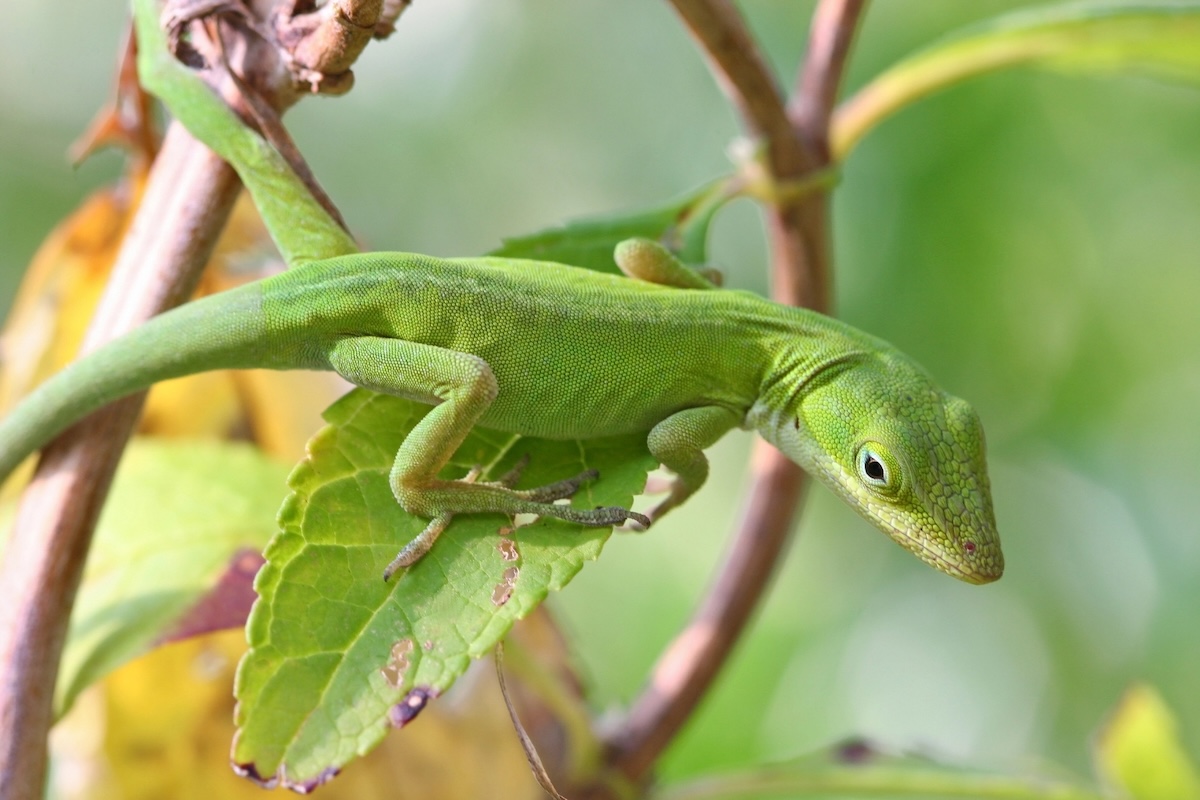 Photo Credit: JillLang on Deposit Photos
In the lush, sun-drenched forests of the Caribbean and the southeastern United States, the Anole lizard, scientifically known as Anolis, scurries about with a lively grace that captures the imagination. With its vibrant green and brown hues, this small reptile blends seamlessly into its leafy surroundings, making it a master of disguise. The Anole’s most distinctive feature is its colorful throat sac, or dewlap, which males puff out during courtship displays, creating a dazzling spectacle that draws the attention of potential mates. This charming display, along with their quick movements and ability to change color, makes Anole lizards a favorite among scientists and nature enthusiasts alike.
As you watch an Anole basking on a branch, you might notice how it expertly navigates its environment, darting from leaf to leaf in search of insects. These agile creatures are not just skilled hunters; they also play a vital role in their ecosystems, helping to control insect populations. Their fascinating behaviors and adaptations, such as their ability to cling to vertical surfaces and their remarkable camouflage, provide endless opportunities for exploration and discovery. Join us as we delve deeper into the world of the Anole lizard, uncovering the secrets of its life cycle, diet, and the important role it plays in the natural world.
The Anole lizard, belonging to the family Dactyloidae, is a captivating member of the animal kingdom that showcases the incredible diversity of life on Earth. These small, agile reptiles are primarily found in the Americas, particularly in tropical and subtropical regions. What sets Anoles apart is their remarkable ability to change color, a skill that helps them communicate and adapt to their surroundings. This fascinating trait, along with their specialized toe pads that allow them to cling to surfaces, makes them a standout example of evolutionary adaptation.
| Taxonomic Rank | Scientific Name | Meaning & Significance |
|---|---|---|
| Kingdom | Animalia | This name signifies that Anoles are part of the vast group of multicellular organisms that are primarily heterotrophic, meaning they consume other organisms for energy. |
| Phylum | Chordata | Chordata refers to animals that have a notochord, a flexible rod that supports the body. In Anoles, this structure is present during their development, highlighting their place in the animal lineage. |
| Class | Reptilia | Reptilia indicates that Anoles are reptiles, characterized by their scaly skin and ability to lay eggs. This class includes alligators, snakes, and turtles, showcasing a wide range of adaptations. |
| Order | Squamata | Squamata means “scaly,” which is fitting for Anoles as they possess scales that protect their bodies and help them retain moisture in their often humid habitats. |
| Family | Dactyloidae | Dactyloidae comes from the Greek word “dactylos,” meaning “finger,” referring to the lizards’ unique toe pads that allow them to grip surfaces with ease. |
| Genus | Anolis | The name Anolis is derived from the Spanish word “anolis,” which refers to a type of lizard. This genus encompasses a wide variety of species, each adapted to their specific environments. |
Understanding the taxonomic classification of the Anole lizard reveals much about its evolutionary journey. As members of the Dactyloidae family, Anoles have adapted to a variety of ecological niches, showcasing their ability to thrive in diverse environments. Their unique adaptations, such as color-changing abilities and specialized toe pads, not only highlight their survival strategies but also reflect the intricate web of life that connects all living organisms. By studying these lizards, we gain insight into the processes of evolution and the remarkable ways species can adapt to their surroundings over time.
The evolutionary journey of the Anole lizard, a member of the family Dactyloidae, stretches back millions of years. These small reptiles first appeared during the late Eocene epoch, around 34 million years ago. Over time, they adapted to various environments, leading to the diverse species we see today, particularly in the Caribbean and parts of the southeastern United States. Their story is one of survival, adaptation, and the remarkable ability to thrive in changing habitats.
Anole lizards are believed to have evolved from a common ancestor shared with other lizards. This ancestor likely had a more generalized body shape and lifestyle. As they spread across different islands and regions, they underwent significant changes. One major transition was the development of specialized toe pads, which allowed them to climb and cling to various surfaces with ease. This adaptation was crucial for escaping predators and finding food in the trees. Another important change was the evolution of their colorful dewlaps—flaps of skin under their throats. These dewlaps are used for communication, especially during mating displays, helping them attract partners and establish territory.
The adaptations of Anole lizards have been key to their survival in diverse environments. Their ability to climb and cling to surfaces has opened up a world of opportunities for finding food and escaping danger. The colorful dewlaps not only enhance their chances of reproduction but also help them establish dominance in their territories. With size variations and camouflage, these lizards can thrive in different habitats, showcasing the incredible power of evolution in shaping life on Earth.
The Anole lizard is a small yet striking reptile that captures the eye with its vibrant colors and agile movements. Ranging in height from half an inch to two inches, these lizards are often seen darting across branches or basking in the sun. Their slender bodies are covered in smooth scales, which help them blend into their surroundings. One of the most captivating aspects of the Anole is the dewlap, a colorful flap of skin found on the neck of males. This feature not only adds to their charm but also plays a crucial role in communication and mating displays.
| Feature | Description |
|---|---|
| Height | 0.5 in. – 2 in. |
| Skin Type | Scales |
| Most Distinctive Feature | Brightly colored dewlap on the neck of males |
The combination of their small size and colorful dewlap serves important survival purposes. The dewlap is not just for show; it helps males attract females and establish territory by displaying their vibrant colors. This visual communication is essential in the dense environments where Anole lizards live, allowing them to signal to each other without making noise. Their scaled skin provides protection and helps them regulate body temperature, making them well-suited for life in warm, tropical habitats. Together, these features create a perfect blend of beauty and functionality, allowing the Anole lizard to thrive in its environment.
The Anole lizard thrives in a variety of habitats, painting a lively picture of life in the warm, sun-drenched environments of the Americas. You can often find these little reptiles basking on tree branches, darting among the leaves, or clinging to the walls of homes. Their vibrant colors blend beautifully with the greens and browns of their surroundings, making them a delightful sight for anyone lucky enough to spot them. Whether in lush forests, urban gardens, or tropical landscapes, Anole lizards are masters of their domain.
The Anole lizard prefers warm climates, thriving in areas where temperatures are consistently mild to hot. These lizards are often found in regions with high humidity, which helps them stay hydrated. They enjoy environments that provide plenty of sunlight, as they are ectothermic, meaning they rely on external heat sources to regulate their body temperature. This need for warmth and moisture makes tropical and subtropical regions ideal for their survival.
Adaptation is key to the Anole lizard’s success in its varied habitats. With their ability to change color, they can blend into their surroundings, helping them avoid predators. Their long, sticky toes allow them to climb effortlessly on different surfaces, from tree trunks to smooth walls. This versatility not only aids in escaping danger but also helps them hunt for insects, their primary food source. By evolving these traits, Anole lizards have become well-suited to thrive in the diverse environments they call home.
As the sun rises, the Anole lizard begins its day with a burst of energy. These lively reptiles are most active during the warm daylight hours, darting around their territory in search of food and basking spots. They often perch on branches or leaves, soaking up the sun’s rays to warm their bodies. This is crucial because, like many reptiles, Anoles are ectothermic, meaning they rely on external heat sources to regulate their body temperature. Throughout the day, they hunt for small insects, using their quick reflexes to snap up a tasty meal.
Anole lizards are not just solitary creatures; they have a rich social life that adds excitement to their daily routines. Males are particularly known for their vibrant displays, puffing out their colorful throat sacs to attract females and establish dominance over other males. This behavior is part of their social structure, where hierarchy plays a significant role. You might see them engaging in head-bobbing or push-up displays, which are forms of communication that signal their readiness to mate or defend their territory. Females, on the other hand, are more discreet, often choosing their mates based on these displays and the quality of the territory.
| Behavior Type | Description |
|---|---|
| Activity Patterns | Anoles are diurnal, meaning they are active during the day. They spend time basking in the sun and hunting for insects. |
| Social Structure | Males establish territories and display dominance through colorful throat sacs and physical displays. Females are more selective in mate choice. |
| Communication Methods | Head-bobbing and push-up displays are common among males to attract females and assert dominance. These visual signals are crucial for social interactions. |
The behaviors of Anole lizards are finely tuned to ensure their survival in the wild. By basking in the sun, they maintain the energy needed for hunting and social interactions. Their vibrant displays not only attract mates but also help them establish territories, reducing conflicts with other males. This combination of active foraging, social communication, and strategic territory management allows Anoles to thrive in their environments, showcasing the intricate balance of life in the animal kingdom.
The Anole lizard has a diverse diet that primarily consists of insects, making it an omnivore. These small reptiles are skilled hunters, using their quick reflexes and keen eyesight to spot and capture their prey. They often hunt by waiting patiently on a branch or leaf, then darting out to snatch up insects with their sticky tongues. This feeding behavior not only provides them with essential nutrients but also plays a crucial role in controlling insect populations in their habitats.
| Dietary Aspect | Details |
|---|---|
| Diet Type | Omnivore |
| Favorite Foods | Insects, including flies, ants, and beetles |
| Prey Items | Small insects and occasionally plant matter |
| Hunting/Foraging Strategies | Ambush hunting and active foraging |
The Anole lizard’s diet significantly influences its role in the ecosystem. By preying on insects, it helps maintain a balance in the local food web, preventing any one species from becoming too dominant. This not only supports the health of its environment but also shapes the lizard’s daily routine, as it must constantly search for food while also being vigilant against predators. The interplay between its diet and behavior highlights the intricate connections that define life in the wild.
During the breeding season, which typically occurs in the warmer months, male Anole lizards engage in a captivating courtship display. They puff out their colorful throat sacs, known as dewlaps, to attract females. This vibrant display not only showcases their health and vitality but also helps establish territory among competing males. Once a female is impressed, she will mate with the male, and the process of reproduction begins.
| Reproductive Aspect | Details |
|---|---|
| Gestation Period | Approximately 4 to 6 weeks |
| Litter Size | 1 to 10 eggs |
| Age of Maturity | 18 months |
| Name of Young | Hatchlings |
After mating, the female lays her eggs in a safe, hidden spot, often burying them in moist soil or leaf litter. The eggs incubate for about four to six weeks before hatching into tiny, independent hatchlings. These young lizards are miniature versions of their parents, ready to explore their surroundings almost immediately. While Anole lizards do not provide parental care after the eggs hatch, the hatchlings are equipped with the skills they need to survive on their own, quickly learning to hunt and evade predators as they grow into adulthood.
The Anole lizard plays a vital role in its ecosystem, serving as both predator and prey. These small reptiles feast on insects, helping to control pest populations. However, they are also a tasty snack for a variety of larger animals, making them an important link in the food web. Their presence supports the balance of life in their habitats, but it also means they face numerous dangers.
To survive these threats, Anole lizards have developed some clever defensive behaviors. When faced with danger, they can quickly dart into the underbrush or climb high into trees, using their agility to escape. Some species can even change color to blend in with their surroundings, a skill known as camouflage. Additionally, if caught, they can shed their tails to distract predators, allowing them a chance to flee. These survival strategies highlight the Anole lizard’s adaptability and resilience in the wild.
A keystone species is a vital part of its ecosystem, meaning its presence and activities have a significant impact on the environment and other living things. The Anole lizard, with its dynamic role in the food web, qualifies as a keystone species. By controlling insect populations and serving as prey for larger animals, these lizards help maintain the balance of their habitats.
Anole lizards are skilled hunters, primarily feeding on insects. This diet helps keep pest populations in check, which is crucial for the health of plants and other animals in their environment. For example, by consuming a variety of insects, Anoles prevent overpopulation of certain species that could otherwise damage vegetation. This, in turn, supports the overall health of the ecosystem, allowing plants to thrive and providing food and shelter for other creatures.
Moreover, Anole lizards are an important food source for various predators, including birds and snakes. Their presence supports these larger animals, which rely on them for sustenance. If Anole lizards were to disappear, the predators that depend on them would struggle to find enough food, potentially leading to a decline in their populations as well. This ripple effect could disrupt the entire food web, causing unforeseen consequences for many species.
If Anole lizards were to vanish from their ecosystems, the consequences could be severe. Without these lizards to manage insect populations, certain pests could proliferate, leading to plant damage and a decline in vegetation. This would not only affect the plants but also the animals that rely on them for food and shelter. The loss of Anoles would create a domino effect, disrupting the delicate balance of life in their habitats and potentially leading to the decline of other species. In essence, the Anole lizard is a small but mighty player in the grand theater of nature.
The Anole lizard occupies a crucial ecological niche, acting as both predator and prey in its environment. These small reptiles are agile hunters, primarily feeding on insects, which helps regulate pest populations. By controlling these insect numbers, Anole lizards contribute to the health of their ecosystems, ensuring that plant life can thrive without being overwhelmed by herbivorous pests. Their presence also supports a diverse food web, as they serve as a meal for larger predators, including birds and snakes.
| Ecosystem Service | Impact |
|---|---|
| Pest Control | Helps maintain balance by reducing insect populations. |
| Food Source | Provides nourishment for various predators, supporting biodiversity. |
| Seed Dispersal | May aid in the spread of plant seeds through their movement. |
| Habitat Structuring | Influences vegetation growth patterns by their foraging behavior. |
Anole lizards influence their surroundings in several specific ways. For instance, by consuming a variety of insects, they help keep the populations of these pests in check, which can prevent damage to plants and crops. Additionally, as they move through their habitats, they may inadvertently assist in seed dispersal, allowing new plants to grow in different areas. This movement can create a more diverse plant community, which in turn supports a wider range of animal species. Their vibrant displays during courtship also attract attention, contributing to the visual richness of their ecosystems.
The broader ecological importance of Anole lizards cannot be overstated. As a keystone species, their activities shape the environment in ways that benefit many other organisms. By controlling insect populations and serving as a food source for larger animals, they help maintain the delicate balance of their ecosystems. This balance is essential for the health of the entire community, showcasing how even the smallest creatures can have a significant impact on the world around them. The Anole lizard is a perfect example of nature’s interconnectedness, reminding us that every species plays a role in the grand tapestry of life.
In the intricate web of life, symbiosis plays a vital role, connecting different species in various ways. Symbiosis refers to the close and often long-term interactions between different biological species. These relationships can be mutualistic, where both species benefit, parasitic, where one benefits at the expense of the other, or commensal, where one benefits while the other is neither helped nor harmed. The Anole lizard, with its vibrant colors and agile movements, engages in several fascinating partnerships that highlight the complexity of ecological relationships.
| Species/Type | Relationship Type | Description |
|---|---|---|
| Ants | Mutualistic | Anole lizards often share their habitat with ants. The ants help protect the lizards from predators, while the lizards may help control the ant population by eating other insects that compete for resources. |
| Birds | Commensal | Some birds, like the bananaquit, may follow Anole lizards to catch insects that are disturbed as the lizards move through the foliage. The lizards are unaffected by this relationship. |
| Fungi | Parasitic | In some cases, Anole lizards can be hosts to parasitic fungi that can affect their health. While the fungi benefit from the lizard’s body, the lizard may suffer from reduced fitness. |
The evolution of these relationships showcases the adaptability and interconnectedness of life. Over time, Anole lizards have developed these partnerships to enhance their survival and thrive in their environments. Mutualistic relationships, like those with ants, provide protection and food resources, while commensal interactions with birds highlight the benefits of living in a diverse ecosystem. Even parasitic relationships, though challenging, can drive evolutionary changes that lead to greater resilience in the Anole lizard population. Understanding these connections helps us appreciate the delicate balance of nature and the roles each species plays in maintaining it.
The Anole lizard is a small but captivating reptile that showcases a variety of surprising traits and behaviors. These agile creatures are not just colorful; they have some remarkable adaptations that make them stand out in the animal kingdom.
The Anole lizard has a long history of interaction with humans, particularly in the Caribbean and parts of the southeastern United States. These small reptiles have often been admired for their vibrant colors and unique behaviors, making them a part of local folklore and cultural stories. In many Caribbean cultures, Anoles symbolize agility and adaptability, traits that resonate with the human experience. Their presence in gardens and homes has led to a fascination that bridges the gap between nature and human life, as people often enjoy watching these lively lizards dart about.
Today, the relationship between Anole lizards and humans is multifaceted. On one hand, these lizards are celebrated for their role in controlling insect populations, which can be beneficial for gardens and homes. On the other hand, urban development and habitat destruction pose significant threats to their populations. Conservation efforts are underway in some areas to protect their habitats and ensure that these colorful reptiles continue to thrive alongside human communities. Interestingly, some people have even taken to keeping Anoles as pets, appreciating their beauty and the joy they bring.
Looking ahead, the future of the Anole lizard and its relationship with humanity will depend on our commitment to coexistence. As urban areas expand, finding ways to preserve their natural habitats will be crucial. Education about the ecological importance of Anoles can foster appreciation and encourage conservation efforts. By understanding and respecting these small reptiles, we can ensure that they continue to thrive in our backyards and beyond, enriching our lives with their vibrant presence.
The Anole lizard, a vibrant and agile reptile, currently holds a conservation status of “Least Concern” according to the International Union for Conservation of Nature (IUCN). This means that, overall, Anole lizards are not facing immediate threats to their survival. Their populations are stable in many areas, allowing them to thrive in diverse habitats across the Americas. However, local populations may experience fluctuations due to environmental changes and habitat loss.
| Conservation Factor | Status/Details |
|---|---|
| IUCN Status | Least Concern |
| Population Estimates | Stable in many regions |
| Trend Direction | Stable |
Despite their overall stable status, Anole lizards face several threats that can impact specific populations. Habitat destruction, primarily due to urban development and deforestation, poses a significant risk. As humans expand into natural areas, the lizards lose their homes and food sources. Additionally, climate change can alter their habitats, affecting their survival. Invasive species, such as predatory animals or competing lizards, can also disrupt local ecosystems, putting pressure on native Anole populations.
Conservation efforts are underway to protect Anole lizards and their habitats. Organizations are working to preserve natural areas and promote sustainable land use practices. Education and awareness campaigns help communities understand the importance of these lizards in their ecosystems. With continued efforts, the outlook for Anole lizards remains positive, as they adapt to changing environments and maintain their role in the vibrant tapestry of life.
| Question | Answer |
|---|---|
| What is the habitat of the Anole Lizard? | Anole lizards are commonly found in warm, tropical regions, particularly in the Caribbean and parts of the southern United States. They thrive in forests, gardens, and even urban areas, often basking on tree branches or walls where they can easily catch sunlight. |
| What do Anole Lizards eat? | Anole lizards are omnivores, which means they eat both plants and animals. Their diet mainly consists of insects like crickets and flies, but they also enjoy nectar from flowers and small fruits, making them important for pollination. |
| How do Anole Lizards behave? | Anole lizards are known for their active and agile nature. They are excellent climbers and often display territorial behavior, especially males who use their colorful dewlaps to attract females and ward off rivals. |
| How do Anole Lizards reproduce? | During the breeding season, male Anole lizards perform elaborate displays to attract females. After mating, the female lays eggs in a hidden spot, usually in moist soil or leaf litter, and the eggs hatch in about 6 to 8 weeks. |
| What threats do Anole Lizards face? | While Anole lizards are currently classified as Least Concern, they face threats from habitat loss due to urban development and climate change. Invasive species, such as certain snakes and larger lizards, can also pose a danger to their populations. |
| What is a unique characteristic of Anole Lizards? | One of the most distinctive features of Anole lizards is the brightly colored dewlap found on males. This flap of skin can be extended and is used in courtship displays and to establish territory, showcasing their vibrant colors to attract mates. |
| Can Anole Lizards change color? | Yes, Anole lizards can change color, although not as dramatically as some other reptiles. They typically shift between shades of green and brown, which helps them blend into their surroundings and avoid predators. |