Taxonomy & Classification
- Kingdom
- Animalia
- Phylum
- Annelida
- Class
- Polychaeta
- Order
- Phyllodocida
- Family
- Polynoidae
- Genus
- Eulagisca
- Species
- Eulagisca gigantea

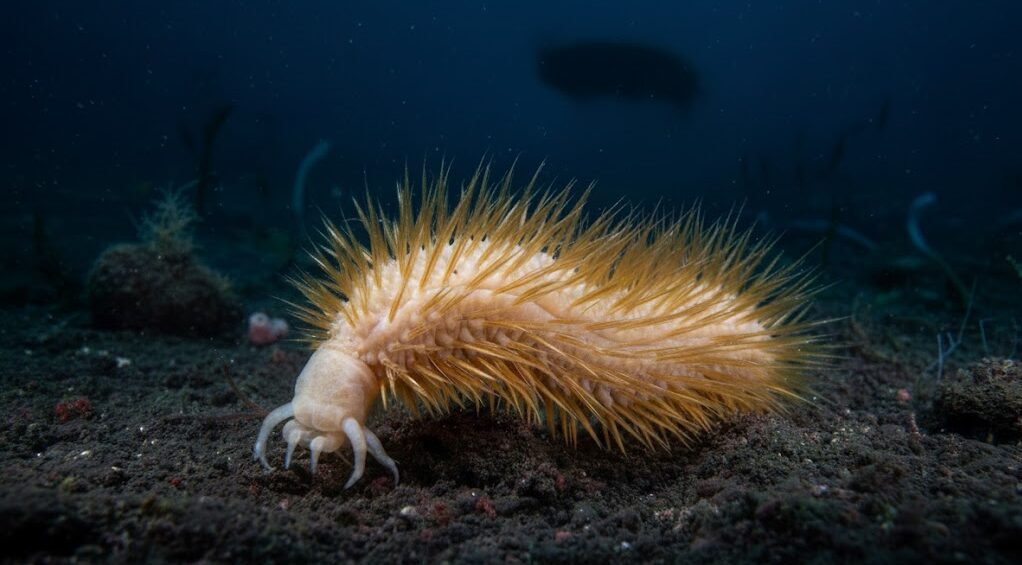 Photo Credit: AnimalsDiscovered
In the frigid waters of the Southern Ocean, the Antarctic scale worm, known scientifically as Eulagisca, weaves its way through a world of ice and mystery. Picture a landscape where sunlight barely penetrates the deep blue, creating an otherworldly atmosphere. Here, the Antarctic scale worm thrives, its elongated body reaching up to 10 centimeters in length, adorned with shimmering scales that glisten like tiny jewels. These scales not only give the worm its name but also serve a purpose, helping it navigate the soft sediments of its icy home.
What makes Eulagisca particularly captivating to scientists and nature lovers alike is its role in the delicate balance of the Antarctic ecosystem. As a carnivore, this remarkable worm feasts on smaller marine creatures, playing a vital part in the food web. Its unique adaptations allow it to survive in one of the harshest environments on Earth, showcasing the incredible resilience of life. With each burrow it digs and every meal it consumes, the Antarctic scale worm contributes to the intricate tapestry of life beneath the ice, inviting us to explore the wonders of this hidden world.
The Antarctic scale worm, scientifically known as Eulagisca, occupies a distinctive niche in the tree of life. This intriguing organism belongs to the kingdom Animalia, which encompasses all animals, and is classified under the phylum Annelida, known for its segmented worms. What sets the Antarctic scale worm apart is its adaptation to the frigid waters of the Southern Ocean, where it thrives in extreme conditions. With its unique body structure and lifestyle, this worm showcases the incredible diversity of life that can flourish in some of the planet’s harshest environments.
| Taxonomic Rank | Scientific Name | Meaning & Significance |
|---|---|---|
| Kingdom | Animalia | The name means “animals” in Latin, highlighting the diverse group of living organisms that share certain characteristics, such as being multicellular and capable of movement. |
| Phylum | Annelida | This term comes from the Latin word “annellus,” meaning “little ring,” referring to the segmented body structure of these worms. |
| Class | Polychaeta | Derived from Greek, “poly” means “many” and “chaeta” means “bristles,” indicating the numerous bristle-like structures that adorn the bodies of these worms, aiding in movement and sensing their environment. |
| Order | Phyllodocida | This name is based on the Greek word “phyllon,” meaning “leaf,” and “docos,” meaning “form,” which reflects the leaf-like appendages found on some members of this order. |
| Family | Polynoidae | The name comes from the Greek word “polus,” meaning “many,” and “noos,” meaning “mind,” suggesting a connection to the complex behaviors and adaptations of these worms. |
| Genus | Eulagisca | This name combines “eu,” meaning “good” or “true,” with “lagisca,” which refers to the worm’s scale-like structures, emphasizing its distinctive features. |
The classification of the Antarctic scale worm reveals much about its evolutionary journey. As a member of the Annelida phylum, it shares a common ancestry with other segmented worms, showcasing the adaptability of life forms over millions of years. Its specific adaptations to the cold, nutrient-rich waters of Antarctica highlight how organisms can evolve unique traits to survive in specialized habitats. This worm not only contributes to the biodiversity of its ecosystem but also serves as a reminder of the intricate connections that exist within the natural world.
The evolutionary journey of the Antarctic scale worm, known scientifically as Eulagisca, stretches back millions of years, tracing its roots to ancient marine environments. These fascinating worms belong to the family Polynoidae, which has adapted to life in the frigid waters of the Southern Ocean. As the Earth underwent dramatic climatic shifts, these organisms evolved to thrive in one of the most extreme habitats on the planet.
Ancestral forms of scale worms were likely more generalized in their habitat preferences, living in warmer, more temperate waters. Over time, as the Antarctic region became increasingly isolated and colder, these worms underwent significant evolutionary changes. They developed specialized adaptations that allowed them to survive in the icy depths, where food sources are scarce and conditions are harsh. The transition from their warmer-water ancestors to the Antarctic scale worm involved not just physical changes, but also behavioral adaptations that enhanced their survival in a challenging ecosystem.
These adaptations have been vital for the Antarctic scale worm’s survival in one of the planet’s most extreme environments. By evolving a body structure suited for life on the ocean floor, developing protective scales, and enhancing their feeding mechanisms, these worms have carved out a niche that allows them to flourish where many others cannot. Their ability to tolerate freezing temperatures further ensures their place in the delicate balance of the Antarctic ecosystem, showcasing the incredible power of evolution in shaping life on Earth.
In the icy depths of the Antarctic waters, the Antarctic scale worm, or Eulagisca, presents a striking appearance that captures the imagination. This elongated creature can reach up to 10 centimeters in height, showcasing a body that is both flexible and resilient. Its most distinctive features are the overlapping scales that shimmer like tiny armor plates, giving it a unique texture. The golden bristles that adorn its body add a touch of brilliance, contrasting beautifully with the cold, dark ocean environment.
| Feature | Description |
|---|---|
| Height | 10 cm |
| Skin Type | Bristled hairs |
| Most Distinctive Feature | Overlapping scales and golden bristles |
The combination of overlapping scales and golden bristles serves multiple purposes for the Antarctic scale worm. The scales provide protection against predators, acting like a shield in the frigid waters. Meanwhile, the bristles may help the worm navigate through its environment, allowing it to grip surfaces and move efficiently. Together, these features not only enhance its survival but also make it a captivating inhabitant of one of the planet’s most extreme ecosystems.
In the frigid waters of Antarctica and the Southern Ocean, the Antarctic scale worm finds its home in a world that feels almost otherworldly. Picture a vast expanse of deep blue, where sunlight barely penetrates and the temperature hovers just above freezing. Here, at depths ranging from 1,706 to 2,198 feet (520 to 670 meters), the environment is both harsh and beautiful, with icy currents swirling around rocky substrates and the occasional flurry of snowflakes drifting down from above. This underwater realm is teeming with life, yet it remains a place of solitude and mystery.
The climate in this deep-sea habitat is extreme, characterized by low temperatures and high pressures. The waters are cold, often just a few degrees above freezing, creating a challenging environment for most organisms. However, the Antarctic scale worm thrives in these conditions, relying on the nutrient-rich waters that flow through this region. The cold temperatures help to slow down the metabolism of the worm, allowing it to conserve energy while it navigates its dark, icy home.
Adaptations are key to the survival of the Antarctic scale worm in such a demanding habitat. Its body is designed to withstand the high pressures found at great depths, and its unique physiology allows it to efficiently extract oxygen from the cold water. The worm’s ability to tolerate low temperatures means it can remain active when many other marine species are dormant. This remarkable resilience enables the Antarctic scale worm to flourish in a place where few can survive, making it a true marvel of the deep sea.
In the icy waters of Antarctica, the daily life of the Antarctic scale worm, or Eulagisca, is a blend of survival and adaptation. These worms spend their days burrowing into the soft sediment of the ocean floor, where they can find food and shelter. They are primarily nocturnal, meaning they are most active at night. During this time, they emerge from their burrows to hunt for small organisms, such as tiny crustaceans and other marine invertebrates. Their elongated bodies allow them to navigate through the sediment with ease, using their bristle-like structures to help them grip the ocean floor.
While the Antarctic scale worm is mostly solitary, it does exhibit some interesting behaviors when it comes to social interactions. These worms do not form large groups or colonies, but they can sometimes be found in close proximity to one another, especially in areas rich in food. When they encounter each other, they may engage in brief interactions, which can include touching with their bodies. This behavior is thought to be a way of communicating or establishing territory, even if they prefer to live alone.
| Behavior Type | Description |
|---|---|
| Activity Patterns | Nocturnal foraging, burrowing into sediment during the day. |
| Social Structure | Primarily solitary, with occasional proximity to others. |
| Communication Methods | Physical contact, possibly to establish territory or interact. |
The behaviors of the Antarctic scale worm are finely tuned to ensure its survival in a challenging environment. By being nocturnal, it avoids predators that are more active during the day, while its burrowing habits provide both food access and protection. Although it may not seek out companionship, the occasional interactions with fellow worms help maintain a balance in its habitat. This combination of solitary living and strategic foraging allows the Antarctic scale worm to thrive in the frigid depths of the Southern Ocean, showcasing the wonders of life in extreme conditions.
The Antarctic scale worm, known scientifically as Eulagisca, is a carnivore that thrives in the cold, nutrient-rich waters of the Southern Ocean. This fascinating worm has a taste for a variety of marine life, including pantopoda sea spiders and small fish. It employs a clever strategy to obtain its food: by burrowing into the soft sediment of the ocean floor, it can ambush unsuspecting prey that swims or crawls by. This feeding behavior not only showcases its adaptability but also highlights its role as a predator in the delicate Antarctic ecosystem.
| Dietary Aspect | Details |
|---|---|
| Diet Type | Carnivore |
| Favorite Foods | Pantopoda sea spiders, small fish, and other marine life |
| Prey Items | Various small marine organisms |
| Hunting/Foraging Strategies | Burrows into sediment to ambush prey |
The diet of the Antarctic scale worm plays a crucial role in shaping its ecology and daily routine. By preying on small marine animals, it helps maintain the balance of the ecosystem, ensuring that no single species dominates. This worm’s feeding habits also influence its behavior, as it must constantly navigate its environment to find food while avoiding larger predators. In this icy world, the Antarctic scale worm exemplifies the intricate connections that define life beneath the waves.
In the chilly embrace of the Antarctic waters, the mating rituals of the Antarctic scale worm, or Eulagisca, are a captivating spectacle. During the breeding season, which typically occurs in the summer months when the waters are slightly warmer, these worms engage in a unique form of courtship. Males and females come together, often forming tangled masses, as they exchange sperm. This process is essential for fertilization, allowing the next generation of scale worms to emerge in the frigid depths of their home.
| Reproductive Aspect | Details |
|---|---|
| Gestation Period | Unknown |
| Litter Size | Unknown |
| Age of Maturity | Unknown |
| Name of Young | Larvae |
Once the eggs are fertilized, they develop into larvae, which are tiny and free-swimming. These larvae drift in the ocean currents, feeding on microscopic organisms as they grow. The journey from larva to adult is a remarkable transformation, as they gradually adapt to their environment. While specific details about parental care in Eulagisca are not well-documented, it is believed that once the larvae settle on the ocean floor, they begin to take on the characteristics of adult scale worms. This process allows them to thrive in the icy depths, eventually becoming part of the intricate tapestry of life in the Antarctic ecosystem.
The Antarctic scale worm, or Eulagisca, plays a vital role in the food web of its icy habitat. As a carnivorous organism, it feeds on smaller marine creatures, helping to maintain the balance of life in the Southern Ocean. However, this fascinating worm is not at the top of the food chain; it faces various threats from predators that seek it out as a meal.
To survive these dangers, the Antarctic scale worm has developed several clever defensive strategies. It often burrows into the soft sediment, creating a safe haven from predators. This behavior not only provides shelter but also allows the worm to blend in with its surroundings, making it harder for hungry eyes to spot it. Additionally, the scale worm’s tough, scaly skin can deter some attackers, giving it a fighting chance in the harsh and competitive environment of the Antarctic waters.
A keystone species is an organism that has a disproportionately large impact on its environment relative to its abundance. These species play critical roles in maintaining the structure of an ecosystem. The Antarctic scale worm, known scientifically as Eulagisca, qualifies as a keystone species due to its significant influence on the marine food web in the frigid waters of Antarctica and the Southern Ocean.
The ecological impact of the Antarctic scale worm is profound. As a carnivore, it preys on smaller marine organisms, helping to regulate their populations. This predation is essential for maintaining a balanced ecosystem, as it prevents any one species from becoming too dominant. For example, by feeding on small invertebrates, the scale worm ensures that these populations do not explode, which could lead to overgrazing of algae and other primary producers.
Moreover, the scale worm contributes to nutrient cycling in its habitat. When it consumes prey, it breaks down organic matter, which releases nutrients back into the sediment. This process supports the growth of various microorganisms and plants, creating a rich environment for other marine life. The scale worm’s burrowing behavior also aerates the sediment, allowing oxygen to reach deeper layers, which is vital for the survival of many benthic organisms.
If the Antarctic scale worm were to disappear, the consequences could be dire. Without this keystone species, the populations of smaller marine organisms could surge, leading to imbalances in the ecosystem. Overgrazing of algae and other primary producers would likely occur, disrupting the entire food web. This could ultimately result in a decline in biodiversity, affecting not only the scale worm’s immediate environment but also the larger marine ecosystem that relies on a delicate balance of species. The loss of the Antarctic scale worm would echo through the icy waters, illustrating just how interconnected life can be in even the most extreme habitats.
The Antarctic scale worm, known scientifically as Eulagisca, plays a crucial role in its icy ecosystem. Living in the frigid waters of Antarctica and the Southern Ocean, this remarkable worm thrives at depths of 1,706 to 2,198 feet (520 to 670 meters). As a carnivore, it feeds on smaller marine organisms, helping to regulate their populations. By doing so, the Antarctic scale worm shapes the community of life around it, influencing everything from nutrient cycling to the overall health of the seafloor environment.
| Ecosystem Service | Impact |
|---|---|
| Prey for larger animals | Provides a food source for fish and other marine predators. |
| Bioturbation | Mixes sediments, enhancing nutrient availability for other organisms. |
| Population control | Regulates the numbers of smaller marine species, maintaining balance. |
| Habitat creation | Burrowing activities create spaces for other organisms to inhabit. |
The influence of the Antarctic scale worm extends beyond its immediate diet. By consuming smaller marine creatures, it helps keep their populations in check, preventing any one species from overwhelming the ecosystem. Additionally, as these worms burrow into the soft sediment, they mix the layers of the ocean floor. This bioturbation process not only aerates the sediment but also makes nutrients more accessible to other organisms, promoting a diverse and thriving community. The burrows they create can even serve as habitats for other small marine life, showcasing their role as ecosystem engineers.
The broader ecological importance of the Antarctic scale worm cannot be overstated. As a keystone species, it supports the intricate web of life in one of the planet’s most extreme environments. By maintaining balance and promoting biodiversity, the Antarctic scale worm ensures that its ecosystem remains resilient against changes, whether they come from natural shifts or human impacts. Understanding the role of such organisms helps us appreciate the delicate connections that sustain life in our oceans, reminding us of the importance of protecting these unique habitats.
In the intricate web of life beneath the icy waters of Antarctica, symbiosis plays a vital role in shaping ecological relationships. Symbiosis refers to the close interactions between different species, which can be beneficial, harmful, or neutral. These relationships can take many forms, such as mutualism, where both species gain advantages, parasitism, where one benefits at the other’s expense, and commensalism, where one species benefits while the other is neither helped nor harmed. The Antarctic scale worm, or Eulagisca, engages in various partnerships that highlight the complexity of life in this extreme environment.
| Species/Type | Relationship Type | Description |
|---|---|---|
| Microalgae | Mutualistic | The Antarctic scale worm may host microalgae in its tissues, providing the worm with additional nutrients while the algae benefit from a safe habitat. |
| Small fish | Commensal | Small fish may seek shelter among the scale worm’s burrows, gaining protection from predators without affecting the worm. |
| Predatory fish | Parasitic | While not a direct parasite, predatory fish can negatively impact the scale worm population by preying on them, affecting their numbers. |
The evolution of these relationships is a testament to the adaptability of life in extreme conditions. Over time, the Antarctic scale worm has developed partnerships that enhance its survival and reproductive success. By hosting microalgae, it taps into a source of nutrients that might otherwise be scarce in its cold habitat. Meanwhile, the presence of small fish in its burrows illustrates how species can coexist, benefiting from each other’s presence without direct competition. Understanding these connections helps us appreciate the delicate balance of life in the Southern Ocean and the importance of each species in maintaining the health of their ecosystem.
The Antarctic scale worm, scientifically known as Eulagisca, is a captivating inhabitant of the icy depths of the Southern Ocean. With its unique adaptations and intriguing behaviors, this worm offers a glimpse into the wonders of life in extreme environments.
The Antarctic scale worm, known scientifically as Eulagisca, has a history that intertwines with human exploration and curiosity. Early encounters with this remarkable organism occurred during expeditions to the icy waters of Antarctica, where scientists and explorers marveled at its unusual form and behavior. Cultural significance emerged as these worms became symbols of the extreme and often mysterious life that thrives in one of the planet’s harshest environments. They have inspired stories and scientific inquiry, highlighting the resilience of life in extreme conditions.
Today, the relationship between humans and the Antarctic scale worm is evolving, particularly in the context of conservation efforts. As climate change threatens the delicate ecosystems of the Southern Ocean, researchers are increasingly focused on understanding the role of Eulagisca in its habitat. Conflicts arise as human activities, such as fishing and pollution, impact these fragile environments. While there are no current efforts to domesticate the scale worm, its unique biology may hold secrets for scientific advancements, including potential applications in biotechnology.
The future of the relationship between humans and the Antarctic scale worm is filled with potential. As we continue to explore the depths of the Southern Ocean, our understanding of this unique organism will deepen. This knowledge can lead to better conservation strategies, ensuring that the Antarctic scale worm and its ecosystem remain intact for generations to come. By fostering a sense of stewardship for these remarkable creatures, we can help preserve the wonders of our planet’s most extreme environments.
The Antarctic scale worm, scientifically known as Eulagisca, currently holds a conservation status of “Least Concern” according to the International Union for Conservation of Nature (IUCN). This means that, at present, the species is not facing any immediate threat of extinction. Population estimates for these worms are not precisely quantified, but they are believed to be stable across their range in the Southern Ocean. This stability suggests that the Antarctic scale worm continues to thrive in its cold, nutrient-rich habitat.
| Conservation Factor | Status/Details |
|---|---|
| IUCN Status | Least Concern |
| Population Estimates | Stable, not precisely quantified |
| Trend Direction | Stable |
Despite its current stable status, the Antarctic scale worm faces several threats that could impact its future. Climate change is a significant concern, as rising ocean temperatures and changing ice conditions can alter its habitat. Additionally, human activities such as fishing and pollution in the Southern Ocean may disrupt the delicate balance of this ecosystem. These factors could potentially affect the availability of food and suitable living conditions for the scale worm.
Conservation efforts are crucial to ensuring the long-term survival of the Antarctic scale worm and its habitat. Researchers and conservationists are actively monitoring the health of marine ecosystems in the Southern Ocean. By studying the impacts of climate change and human activities, they aim to develop strategies to protect these unique environments. The outlook for the Antarctic scale worm remains positive, provided that ongoing conservation measures are implemented to safeguard its icy home.
| Question | Answer |
|---|---|
| Where does the Antarctic scale worm live? | The Antarctic scale worm is found in the frigid waters of Antarctica and the Southern Ocean. It typically resides at depths between 1,706 to 2,198 feet, which is about 520 to 670 meters below the surface. |
| What does the Antarctic scale worm eat? | This fascinating creature is a carnivore, meaning it primarily eats other animals. Its diet consists of small invertebrates, which it captures using its unique bristles and scales. |
| How does the Antarctic scale worm behave? | The Antarctic scale worm is known for its active hunting behavior. It uses its overlapping scales and golden bristles to navigate through the ocean floor, searching for prey. |
| How does the Antarctic scale worm reproduce? | Reproduction in Antarctic scale worms is not fully understood, but they are believed to reproduce sexually. Like many marine creatures, they may release eggs and sperm into the water, where fertilization occurs. |
| What threats do Antarctic scale worms face? | Currently, Antarctic scale worms are classified as Least Concern, meaning they are not facing immediate threats. However, changes in ocean temperature and pollution could potentially impact their habitat in the future. |
| What is a unique characteristic of the Antarctic scale worm? | One of the most distinctive features of the Antarctic scale worm is its overlapping scales, which provide protection. Additionally, its golden bristles not only help with movement but also make it visually striking in the dark ocean depths. |
| How do Antarctic scale worms contribute to their ecosystem? | Antarctic scale worms play an important role in the marine ecosystem by helping to control the population of small invertebrates. Their feeding habits also contribute to the nutrient cycling in the ocean floor, supporting other marine life. |