Taxonomy & Classification
- Kingdom
- Animalia
- Phylum
- Chordata
- Class
- Actinopterygii
- Order
- Osteoglossiformes
- Family
- Arapaimidae
- Genus
- Arapaima

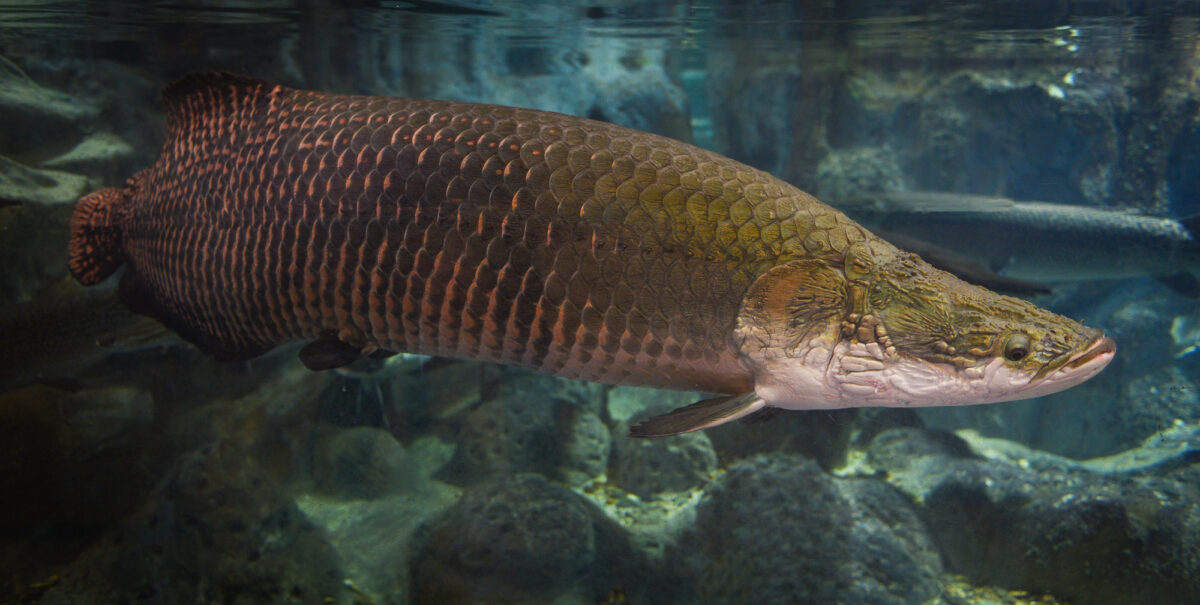 Photo Credit: poringdown on Deposit Photos
In the heart of the Amazon River basin swims the Arapaima gigas, a true giant of the freshwater world. Imagine gliding through the murky waters of this vibrant ecosystem, where the air is thick with humidity and the sounds of wildlife echo all around. Suddenly, you catch a glimpse of a massive fish, its elongated body shimmering in the dappled sunlight filtering through the dense canopy above. The Arapaima can grow up to an astonishing 15 feet long and weigh as much as 485 pounds, making it one of the largest freshwater fish on the planet. Its striking appearance, with a broad, flat head and a sleek, streamlined body, captures the imagination of scientists and nature lovers alike.
What makes the Arapaima particularly captivating is not just its size, but its unique adaptations to life in the Amazon. This remarkable fish is an air-breather, meaning it must surface every 15 to 20 minutes to gulp air, thanks to its specialized swim bladder that functions like a lung. This adaptation allows it to thrive in the oxygen-poor waters of the river, where many other fish struggle to survive. As a keystone species, the Arapaima plays a crucial role in maintaining the balance of its ecosystem, feeding on a variety of fish, insects, and seeds. Its presence is vital for the health of the Amazon, making it a fascinating subject for conservationists and researchers who seek to understand and protect this incredible creature and its habitat.
The Arapaima gigas, often simply called arapaima, holds a special place in the tree of life. This giant fish, native to the Amazon River basin, is not only one of the largest freshwater fish in the world but also a fascinating example of evolutionary adaptation. Belonging to the family Arapaimidae, it showcases unique features such as a streamlined body and a specialized swim bladder that allows it to breathe air. This adaptation is crucial for survival in the often low-oxygen waters of its habitat. The arapaima’s impressive size and distinctive characteristics make it a standout member of the animal kingdom.
| Taxonomic Rank | Scientific Name | Meaning & Significance |
|---|---|---|
| Kingdom | Animalia | This name signifies that arapaima is part of the animal kingdom, which includes all multicellular organisms that are not plants, fungi, or bacteria. |
| Phylum | Chordata | Chordata means “having a notochord,” a flexible rod that supports the body, which all vertebrates, including arapaima, possess at some stage of development. |
| Class | Actinopterygii | This class includes ray-finned fishes, characterized by their bony spines or rays in their fins, which help them navigate through water. |
| Order | Osteoglossiformes | This order is known for its bony tongues, which are used to help capture prey, a feature that highlights the arapaima’s unique feeding adaptations. |
| Family | Arapaimidae | This family includes only the arapaima and its close relatives, emphasizing its distinct evolutionary path within the fish world. |
| Genus | Arapaima | The genus name is derived from the indigenous word for this fish, reflecting its cultural significance and the local knowledge of its existence. |
| Species | gigas | This species name means “giant,” aptly describing the arapaima’s impressive size, which can reach lengths of up to 15 feet! |
Understanding the arapaima’s classification reveals much about its evolutionary history. As a member of the Osteoglossiformes order, it shares a lineage with some of the most ancient fish species, dating back over 200 million years. This deep-rooted ancestry highlights the arapaima’s resilience and adaptability in a changing environment. Its unique adaptations, such as air-breathing capabilities and a specialized diet, showcase how this remarkable fish has evolved to thrive in the diverse ecosystems of the Amazon. The arapaima is not just a giant fish; it is a living testament to the wonders of evolution and the intricate connections within the natural world.
The evolutionary journey of the Arapaima gigas stretches back millions of years, weaving through the rich tapestry of life in the Amazon River basin. This ancient fish belongs to a lineage that has adapted and thrived in freshwater environments, showcasing a remarkable ability to survive in a dynamic ecosystem. The Arapaima’s ancestors date back to the Cretaceous period, around 100 million years ago, when the world was a very different place, filled with dinosaurs and lush, tropical landscapes.
The Arapaima’s evolutionary story is marked by significant transitions that have shaped its current form. Its ancestors were part of a group known as Osteoglossidae, which includes bony-tongued fish. Over time, these fish developed unique adaptations to their environment, such as the ability to breathe air. This adaptation was crucial for survival in the oxygen-poor waters of the Amazon, allowing them to thrive where other fish might struggle. As the climate and habitats changed, the Arapaima evolved to become one of the largest freshwater fish, reaching lengths of up to 15 feet. This size not only helps deter predators but also allows it to access a wider range of food sources.
The adaptations of the Arapaima have been vital for its survival in the ever-changing Amazon River basin. By developing the ability to breathe air, it can thrive in waters where oxygen levels fluctuate dramatically. Its large size not only deters potential threats but also enables it to dominate its feeding niche. With strong scales for protection and an efficient feeding strategy, the Arapaima has carved out a successful existence in one of the most biodiverse ecosystems on the planet. This fascinating fish continues to be a testament to the power of evolution and adaptation in the natural world.
The Arapaima is a breathtaking sight, a true giant of the Amazon River. With its elongated body and impressive size, it can grow up to 4.5 meters (15 feet) long and weigh between 200 to 220 kilograms (440 to 485 pounds). Its streamlined shape allows it to glide gracefully through the water, while its broad, flat head gives it a distinctive profile. The arapaima’s skin is covered in tough, bony scales that shimmer in shades of gray and green, helping it blend into the murky waters of its habitat.
| Feature | Description |
|---|---|
| Size | Can reach lengths of up to 4.5 meters (15 feet) |
| Weight | Typically weighs between 200 kg and 220 kg (440 lbs – 485 lbs) |
| Skin Type | Covered in tough, bony scales |
| Color | Shades of gray and green, aiding in camouflage |
These physical features are not just for show; they play vital roles in the arapaima’s survival. The large size and streamlined body help it navigate the complex waterways of the Amazon, while the tough scales protect it from predators and environmental hazards. The coloration allows it to blend into the riverbed, making it less visible to both prey and threats. Together, these adaptations make the arapaima a master of its aquatic domain, perfectly suited to thrive in one of the most biodiverse ecosystems on the planet.
The Arapaima gigas thrives in the lush, vibrant waters of the Amazon River basin, a region teeming with life. Picture a winding river surrounded by dense rainforests, where the air is thick with humidity and the sounds of wildlife echo through the trees. The waters here are slow-moving and often filled with floating vegetation, creating a perfect environment for this magnificent fish. The interplay of sunlight filtering through the canopy and the rich, dark waters provides a unique habitat that supports a diverse ecosystem.
Arapaimas prefer warm, freshwater environments, typically found in areas where the temperature ranges from 24 to 30 degrees Celsius (75 to 86 degrees Fahrenheit). These fish are also sensitive to their surroundings, requiring a habitat with plenty of oxygen. The seasonal flooding of the Amazon basin creates a dynamic environment, where the water levels rise and fall, influencing the availability of food and shelter. This fluctuation is crucial for their survival, as it allows them to access different areas for feeding and breeding.
To thrive in this ever-changing habitat, the Arapaima has developed several fascinating adaptations. Its ability to breathe air is one of its most remarkable traits, allowing it to survive in oxygen-poor waters. This fish has a specialized swim bladder that functions like a lung, enabling it to gulp air at the surface. Additionally, its large size and powerful body help it navigate through the dense vegetation and swift currents of the Amazon. These adaptations not only enhance its survival but also make it a key player in the intricate web of life within its watery home.
The Arapaima gigas leads a life that is both intriguing and essential to its survival in the Amazon River basin. These magnificent fish are primarily solitary, spending their days gliding through the water, searching for food. They are known to surface every 15 to 20 minutes to breathe air, as they possess a specialized swim bladder that functions like a lung. This adaptation allows them to thrive in oxygen-poor waters, making them well-suited for their environment. Their diet mainly consists of fish, crustaceans, and even fruits that fall into the water, showcasing their opportunistic feeding habits.
While Arapaima are generally solitary, they do exhibit interesting social behaviors during certain times of the year, particularly during the breeding season. Males and females come together to mate, and the male often takes on a protective role, guarding the nest where the female lays her eggs. This brief social interaction highlights the importance of cooperation for reproduction, even in a species that typically prefers solitude. Communication among Arapaima is subtle; they use body language and low-frequency sounds to signal their presence to one another, especially during mating.
| Behavior Type | Description |
|---|---|
| Feeding | Arapaima primarily feed on fish, crustaceans, and fruits, using their size and strength to capture prey. |
| Breathing | They surface every 15 to 20 minutes to gulp air, thanks to their swim bladder that acts like a lung. |
| Social Structure | Generally solitary, but they come together during breeding season for mating and nest protection. |
| Communication | They communicate through body language and low-frequency sounds, especially during mating rituals. |
The behaviors of the Arapaima gigas are finely tuned to ensure their survival in the challenging environment of the Amazon. Their solitary feeding habits allow them to efficiently hunt for food without competition, while their brief social interactions during breeding ensure the continuation of their species. By mastering the art of breathing and communication, these giants of the river navigate their world with grace and purpose, embodying the delicate balance of life in one of the planet’s most biodiverse ecosystems.
The Arapaima gigas is an omnivore, which means it enjoys a varied diet that includes both plant and animal matter. This impressive fish primarily feeds on fish, insects, and seeds, making it a versatile eater in its lush Amazonian habitat. The arapaima uses its large mouth to capture prey, often employing a strategy of ambush. It can be seen lurking near the surface of the water, waiting for unsuspecting fish or insects to swim by before striking with remarkable speed and precision.
| Dietary Aspect | Details |
|---|---|
| Diet Type | Omnivore |
| Favorite Foods | Fish, insects, seeds |
| Prey Items | Smaller fish, aquatic insects, and plant seeds |
| Hunting/Foraging Strategies | Ambush predator, lurking near the surface to catch prey |
The diet of the arapaima plays a crucial role in its ecological niche within the Amazon River basin. By consuming a variety of foods, it helps maintain the balance of the aquatic ecosystem. Its feeding habits also influence the populations of smaller fish and insects, ensuring that no single species dominates the environment. This dynamic relationship with its surroundings shapes the arapaima’s daily routine, as it must constantly adapt to the availability of food in its ever-changing habitat.
When it comes to reproduction, the Arapaima gigas has some captivating behaviors. The breeding season typically occurs during the rainy months, when the water levels rise in the Amazon River. This is a time of abundance, and the fish are ready to mate. Males attract females by performing elaborate courtship displays, which include swimming in circles and making bubbling sounds. Once a female is interested, they engage in a dance-like ritual that leads to spawning.
| Reproductive Aspect | Details |
|---|---|
| Gestation Period | Approximately 4 to 6 weeks |
| Litter Size | Up to 20 eggs |
| Age of Maturity | About 3 to 4 years |
| Name of Young | Fry |
After the eggs are laid, the male takes on a protective role. He guards the nest and ensures the safety of the eggs until they hatch into tiny fry. This parental care is crucial, as the young fish are vulnerable to predators. Once the fry emerge, they stay close to their father for a while, learning to navigate their watery world. As they grow, they gradually become more independent, eventually maturing into the magnificent giants that roam the Amazon’s depths. This nurturing behavior highlights the strong bond between the Arapaima and its young, showcasing the importance of family in the animal kingdom.
The Arapaima gigas occupies a crucial role in the Amazon River’s food web. As one of the largest freshwater fish, it is both a predator and prey. While it hunts smaller fish and aquatic creatures, it also faces threats from various predators and human activities. This delicate balance highlights the importance of the arapaima in maintaining the health of its ecosystem.
To survive these dangers, the arapaima has developed several defensive behaviors. It often relies on its size and strength to deter potential predators. Additionally, it can be quite elusive, using the dense underwater vegetation of the Amazon to hide from threats. By staying aware of its surroundings and using its powerful swimming abilities, the arapaima navigates the challenges of its environment, ensuring its survival in a world filled with dangers.
A keystone species is a vital part of its ecosystem, playing a unique role that affects many other organisms. The Arapaima gigas, a giant fish found in the Amazon River basin, qualifies as a keystone species due to its significant impact on the aquatic environment. Its presence helps maintain the balance of the ecosystem, influencing both the population dynamics of other species and the overall health of its habitat.
The Arapaima’s diet is diverse, consisting of fish, insects, and seeds. By consuming a variety of food sources, it helps control the populations of smaller fish and invertebrates, preventing any one species from becoming too dominant. This balance is crucial for maintaining biodiversity in the Amazon’s complex web of life. Additionally, as a large predator, the Arapaima provides a food source for larger animals, including humans, who rely on it for sustenance. Its role in the food web illustrates how interconnected life is in the Amazon.
Moreover, the Arapaima contributes to nutrient cycling within its habitat. As it feeds and excretes waste, it releases nutrients back into the water, promoting the growth of aquatic plants. These plants, in turn, provide oxygen and habitat for countless other species. The Arapaima’s movements through the water also help stir up sediments, which can enhance the availability of nutrients for other organisms. This dynamic interaction showcases the Arapaima’s essential role in sustaining the health of its ecosystem.
If the Arapaima were to disappear, the consequences would ripple throughout the ecosystem. Without this giant fish, smaller fish populations could explode, leading to overgrazing of aquatic plants. This imbalance would reduce oxygen levels in the water, harming other species that depend on a healthy environment. The loss of the Arapaima would not only disrupt the food web but could also threaten the livelihoods of local communities that rely on it for food and income. The delicate balance of life in the Amazon River basin hinges on the presence of this remarkable fish.
The Arapaima gigas, a giant fish of the Amazon River basin, plays a crucial role in its ecosystem. As a keystone species, it helps maintain the balance of life in its watery home. By feeding on a variety of organisms, including fish, insects, and seeds, the arapaima influences the population dynamics of these species. Its presence affects not only the aquatic life but also the surrounding environment, showcasing how interconnected all living things are in this vibrant ecosystem.
| Ecosystem Service | Impact |
|---|---|
| Predation | Controls populations of smaller fish and aquatic organisms, preventing overpopulation. |
| Nutrient Cycling | Contributes to nutrient distribution in the water through its feeding habits and waste. |
| Habitat Creation | Creates spaces for other species by stirring up sediment and influencing plant growth. |
| Food Source | Serves as a vital food source for larger predators, including birds and mammals. |
The influence of the arapaima extends beyond its immediate feeding habits. For instance, as it swims through the waters, it stirs up sediment, which can help distribute nutrients throughout the ecosystem. This process supports the growth of aquatic plants, which in turn provide shelter and food for various species. Additionally, the arapaima’s size and presence attract larger predators, creating a dynamic food web that sustains multiple levels of life in the Amazon.
The broader ecological importance of the Arapaima gigas cannot be overstated. By maintaining the balance of species and contributing to nutrient cycling, this giant fish supports the health of the entire Amazon River ecosystem. Its role as a keystone species highlights the intricate connections between organisms and their environment, reminding us that every creature, no matter how large or small, plays a part in the grand tapestry of life. Protecting the arapaima and its habitat is essential for preserving the rich biodiversity of the Amazon, ensuring that this vibrant ecosystem continues to thrive for generations to come.
In the intricate web of life within the Amazon River basin, the Arapaima gigas engages in various ecological relationships that highlight the beauty of symbiosis. Symbiosis refers to the close interactions between different species, which can be beneficial, harmful, or neutral. These relationships are essential for the survival and health of ecosystems, as they help species adapt, thrive, and maintain balance in their environments. The Arapaima, with its impressive size and unique behaviors, forms connections with other organisms that illustrate the complexity of life in the Amazon.
| Species/Type | Relationship Type | Description |
|---|---|---|
| Remora fish | Mutualistic | Remoras attach themselves to the Arapaima, gaining protection and transportation while helping to keep the Arapaima’s skin clean by eating parasites. |
| Various aquatic plants | Commensal | Plants growing near or on the Arapaima’s habitat benefit from the nutrients released by the fish, while the Arapaima is unaffected. |
| Smaller fish species | Parasitic | Some smaller fish may latch onto the Arapaima, feeding on its skin or mucus, which can harm the Arapaima over time. |
These relationships have evolved over time, shaped by the needs and behaviors of the species involved. The mutualistic bond between the Arapaima and remora fish showcases how cooperation can lead to benefits for both parties. Meanwhile, the commensal relationships with aquatic plants highlight how some species can thrive without impacting others. However, the parasitic interactions remind us that not all relationships are beneficial. Understanding these connections helps us appreciate the delicate balance of life in the Amazon and the importance of each species in maintaining the health of their shared environment.
The Arapaima gigas, a giant fish of the Amazon River, is full of surprises that even the most seasoned nature enthusiasts might not know. This incredible creature has adapted in remarkable ways to thrive in its lush, vibrant habitat.
The Arapaima gigas, a colossal fish of the Amazon River, has long been intertwined with human culture and history. Indigenous peoples have revered this magnificent creature for centuries, viewing it as a symbol of strength and abundance. The arapaima’s impressive size and unique characteristics have inspired myths and stories, making it a significant part of local folklore. Historically, these fish have been a vital food source, providing sustenance for communities living along the riverbanks. Their scales and bones have also been used in traditional crafts, showcasing the deep connection between the arapaima and the people of the Amazon.
In modern times, the relationship between arapaima and humanity has evolved, reflecting both challenges and opportunities. As overfishing and habitat destruction threaten their populations, conservation efforts have become crucial. Some communities have turned to sustainable practices, such as fish farming, to help protect wild populations while still benefiting from this valuable resource. However, conflicts can arise when fishing practices clash with conservation goals, leading to a delicate balance between human needs and wildlife preservation. Education and awareness are key to fostering a harmonious relationship, ensuring that both the arapaima and the people who depend on it can thrive.
Looking ahead, the future of the relationship between arapaima and humanity holds promise if approached with care and respect. By prioritizing sustainable practices and fostering a deeper understanding of this remarkable fish, we can ensure that the arapaima continues to thrive in the Amazon River. As we learn more about its ecological role and cultural significance, we can work together to protect this ancient species for generations to come. The journey of the arapaima and humanity is one of shared responsibility, where both can flourish in harmony.
The Arapaima gigas, a giant fish native to the Amazon River basin, currently faces a precarious future. Its conservation status is classified as “Data Deficient,” which means that there isn’t enough information to fully assess its population trends or the extent of its decline. However, anecdotal evidence suggests that the numbers of these magnificent fish are decreasing, primarily due to overfishing and habitat loss. As a keystone species, the health of the Arapaima is closely tied to the overall well-being of its ecosystem, making its conservation critical.
| Conservation Factor | Status/Details |
|---|---|
| IUCN Status | Data Deficient |
| Population Estimates | Unknown, but likely decreasing |
| Trend Direction | Decreasing |
The main threats to the Arapaima gigas stem from human activities. Overfishing is a significant concern, as these fish are highly sought after for their meat and scales. Additionally, habitat destruction due to deforestation and pollution in the Amazon River basin further jeopardizes their survival. As the river’s ecosystem becomes increasingly compromised, the delicate balance that supports the Arapaima and countless other species is at risk.
Conservation efforts are underway to protect the Arapaima and its habitat. Various organizations are working to establish sustainable fishing practices and promote awareness about the importance of this species. Some regions have even implemented fishing bans during breeding seasons to allow populations to recover. The outlook for the Arapaima gigas hinges on continued conservation initiatives and the commitment of local communities to safeguard their natural environment. With concerted efforts, there is hope that this extraordinary fish can thrive once more in the waters of the Amazon.
| Question | Answer |
|---|---|
| What is the habitat of the Arapaima? | The Arapaima is primarily found in the Amazon River basin in South America. It prefers slow-moving waters like lakes, floodplains, and rivers, where it can easily navigate and find food. |
| What does the Arapaima eat? | Arapaima are omnivores, meaning they eat both plants and animals. Their diet includes fish, crustaceans, and various aquatic plants, making them adaptable to their environment. |
| How does the Arapaima behave in the wild? | Arapaima are known for their unique behavior of surfacing to breathe air, as they have a specialized swim bladder that functions like a lung. They are generally solitary fish but can sometimes be seen in small groups, especially during breeding season. |
| How does reproduction occur in Arapaima? | During the breeding season, male Arapaima attract females by creating nests in shallow waters. After mating, the female lays eggs, and the male guards the nest until the eggs hatch, showing a strong parental instinct. |
| What threats do Arapaima face? | Arapaima are currently facing threats from overfishing and habitat destruction due to human activities. Their conservation status is listed as Data Deficient, meaning we need more information to fully understand their population trends and needs. |
| What are some interesting characteristics of the Arapaima? | Arapaima can grow to be one of the largest freshwater fish in the world, reaching lengths of up to 15 feet! They are also known for their striking appearance, with a long, streamlined body and shiny, reflective scales. |
| How long can Arapaima live? | Arapaima can live for several decades, with some individuals reaching ages of up to 20 years or more in the wild. Their longevity is partly due to their ability to adapt to various environmental conditions. |