Taxonomy & Classification
- Kingdom
- Animalia
- Phylum
- Chordata
- Class
- Mammalia
- Order
- Carnivora
- Family
- Canidae
- Genus
- Vulpes
- Species
- Vulpes lagopus

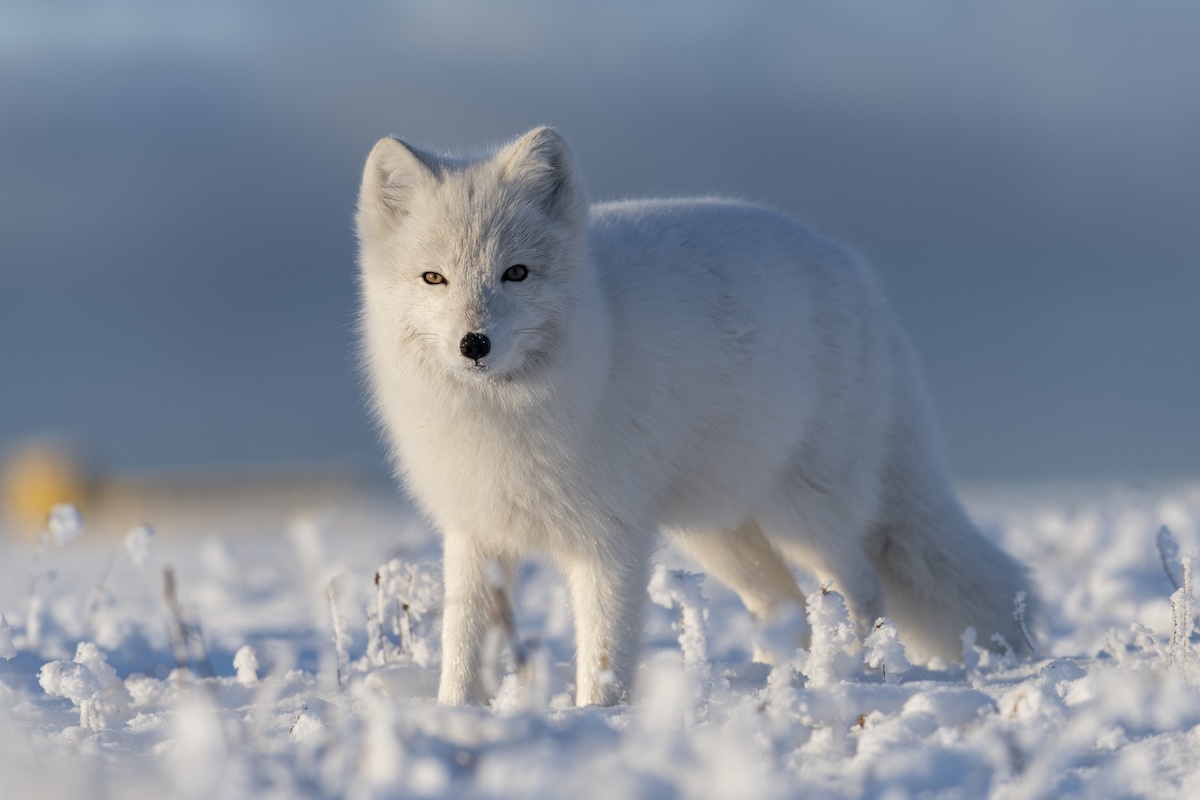 Photo Credit: Alexey_Seafarer at Deposit Photos
In the heart of the Arctic tundra, where the landscape is a dazzling expanse of white, lives the Arctic fox, scientifically known as Vulpes lagopus. This small but mighty creature is a master of survival, perfectly adapted to one of the harshest environments on Earth. With its thick, fluffy coat that changes from a brilliant white in winter to a warm brown in summer, the Arctic fox is not just a sight to behold; it is a marvel of nature’s ingenuity. Its compact body and bushy tail help it retain heat, while its keen senses allow it to hunt for food beneath the snow, making it a fascinating subject for scientists and nature lovers alike.
Imagine a crisp winter morning, the sun rising over a frozen landscape, casting a soft glow on the snow-covered ground. The Arctic fox emerges from its den, its nose twitching as it sniffs the air for the scent of lemmings or voles hiding just below the surface. This clever little predator uses its sharp hearing to detect the faintest movements beneath the snow, showcasing its remarkable hunting skills. As it bounds across the icy terrain, the Arctic fox embodies resilience and adaptability, traits that have allowed it to thrive in an environment where few others can. Join us as we explore the life of this enchanting animal, uncovering its behaviors, diet, and the vital role it plays in the Arctic ecosystem.
The Arctic fox, known scientifically as Vulpes lagopus, occupies a special place in the animal kingdom. As a member of the Canidae family, which includes dogs, wolves, and other foxes, this small mammal is uniquely adapted to survive in some of the harshest environments on Earth. With its thick, white fur that changes color with the seasons, the Arctic fox is a master of camouflage, blending seamlessly into its snowy surroundings. This clever adaptation not only helps it evade predators but also aids in hunting small mammals and birds in its frigid habitat.
| Taxonomic Rank | Scientific Name | Meaning & Significance |
|---|---|---|
| Kingdom | Animalia | This name signifies that the Arctic fox is part of the vast group of multicellular organisms known as animals, which are characterized by their ability to move and respond to their environment. |
| Phylum | Chordata | Chordata means “having a notochord,” a flexible rod that supports the body. This group includes all animals with a backbone, highlighting the Arctic fox’s place among more complex life forms. |
| Class | Mammalia | Mammalia refers to mammals, which are warm-blooded animals that have fur or hair and typically give live birth. The Arctic fox’s fur is a key feature that helps it maintain body heat in freezing temperatures. |
| Order | Carnivora | Carnivora, meaning “meat-eaters,” includes animals that primarily consume meat. The Arctic fox’s diet consists of small mammals, birds, and even carrion, showcasing its adaptability as a hunter. |
| Family | Canidae | Canidae, or the dog family, includes animals like wolves and domestic dogs. The Arctic fox shares traits with its relatives, such as social behavior and vocalizations, which enhance its survival. |
| Genus | Vulpes | Vulpes is the Latin word for “fox.” This genus encompasses various species of foxes, emphasizing the Arctic fox’s distinct characteristics, such as its bushy tail and pointed ears. |
| Species | Vulpes lagopus | The species name lagopus means “hare-footed,” referring to the Arctic fox’s furry paws that help it walk on snow, providing insulation and traction in its icy habitat. |
Understanding the Arctic fox’s classification reveals much about its evolutionary journey. As a member of the Canidae family, it shares a common ancestor with other canids, adapting over time to thrive in the extreme conditions of the Arctic. Its unique physical traits, such as its thick fur and specialized paws, are not just fascinating features; they are essential adaptations that have allowed it to survive and flourish in a challenging environment. This classification not only highlights the Arctic fox’s place in the natural world but also underscores the intricate connections between species and their habitats throughout evolutionary history.
The evolutionary journey of the Arctic fox, or Vulpes lagopus, stretches back millions of years, tracing its lineage through the icy landscapes of the Northern Hemisphere. This small but resilient member of the Canidae family has adapted to some of the harshest environments on Earth. Its ancestors roamed the planet during the Pleistocene epoch, a time marked by dramatic climate shifts and the expansion of ice sheets. As the world changed, so did the Arctic fox, evolving traits that would allow it to thrive in frigid temperatures and scarce food resources.
The Arctic fox’s ancestors were likely similar to other fox species, but as they migrated northward, they faced new challenges. Over time, they developed a thick, insulating coat that changes color with the seasons, providing camouflage against the snow in winter and the tundra in summer. This adaptation not only helps them avoid predators but also aids in hunting. Their body size shrank compared to their ancestors, a phenomenon known as “dwarfism,” which is common in animals living in isolated, cold environments. This smaller size helps conserve heat, making them more efficient in their chilly habitats.
The adaptations of the Arctic fox are not just fascinating; they are essential for survival in one of the planet’s most extreme climates. Each trait, from its thick fur to its ability to change color, plays a vital role in helping this clever animal navigate the challenges of its icy home. By evolving to be both resourceful and resilient, the Arctic fox has carved out a niche in the Arctic ecosystem, showcasing the incredible power of evolution in shaping life on Earth.
The Arctic fox is a small yet sturdy animal, perfectly adapted to the frigid landscapes of its home. With a compact body structure, it measures about the size of a domestic cat, but its thick fur and bushy tail give it a more robust appearance. This fox is built for survival in extreme cold, with a rounded body that minimizes heat loss and short legs that help it navigate through snow. Its small ears are another clever adaptation, reducing the amount of heat that escapes from its body.
| Feature | Description |
|---|---|
| Weight | 1.4 kg – 9.4 kg (3 lbs – 21 lbs) |
| Skin Type | Fur |
| Color | Seasonally changes from white in winter to brown or gray in summer |
| Tail | Long and bushy, helps with balance and warmth |
| Eyes | Dark and expressive, providing excellent vision in low light |
The Arctic fox’s features work together like a well-designed survival kit. Its thick fur not only keeps it warm but also changes color with the seasons, providing camouflage against the snowy backdrop in winter and the earthy tones of summer. The bushy tail serves multiple purposes: it acts as a warm blanket when curled up and helps with balance while navigating the icy terrain. With its keen eyesight, this fox can spot prey even in the dim light of the Arctic twilight. Each characteristic is a testament to the Arctic fox’s ability to thrive in one of the harshest environments on Earth.
The Arctic fox thrives in some of the most breathtaking and challenging environments on Earth. Picture vast, snowy landscapes where the ground is often blanketed in a thick layer of ice. These foxes roam the tundra, a unique ecosystem characterized by its cold temperatures, short growing seasons, and limited vegetation. Here, the sun barely rises in winter, casting a soft, ethereal glow over the frozen terrain, while summer brings a burst of life as flowers bloom and the snow melts away.
The climate where Arctic foxes live is harsh and unforgiving. Temperatures can plummet to minus 50 degrees Fahrenheit in winter, making it one of the coldest habitats on the planet. The environment is often windy, with blizzards sweeping across the tundra, creating a landscape that can change in an instant. Despite these extreme conditions, the Arctic fox has adapted to survive, relying on its thick fur and fat reserves to keep warm.
These clever animals have developed remarkable adaptations to thrive in their icy homes. Their fur changes color with the seasons, turning white in winter to blend in with the snow and brown or gray in summer to match the earth. This camouflage helps them hunt for food and avoid predators. Additionally, their small ears and compact bodies minimize heat loss, allowing them to conserve warmth in the frigid air. The Arctic fox is a true survivor, perfectly suited to its polar forest regions.
The Arctic fox leads a life that is both challenging and captivating, shaped by the harsh conditions of its icy habitat. Each day begins with the rising sun, casting a soft glow over the snow-covered landscape. As the temperatures drop, the fox emerges from its den, a cozy burrow dug into the snow. Its daily activities revolve around foraging for food, which can include small mammals like lemmings, birds, and even carrion. The Arctic fox is a master of adaptation, using its keen sense of hearing to locate prey hidden beneath the snow. This clever hunter often employs a unique pouncing technique, leaping high into the air before diving down to catch its meal.
While Arctic foxes are primarily solitary animals, they do exhibit interesting social behaviors, especially during the breeding season. Males and females come together to mate, forming a temporary bond that lasts until the pups are born. After the pups arrive, both parents play a role in raising them, teaching essential survival skills. Although they may not form packs like wolves, Arctic foxes communicate through a variety of vocalizations, body language, and scent marking. These methods help them establish territory and find mates, ensuring that they can thrive in their frigid environment.
| Behavior Type | Description |
|---|---|
| Foraging | Hunting for small mammals, birds, and carrion, often using keen hearing to locate prey beneath the snow. |
| Social Structure | Primarily solitary, but forms temporary pairs during the breeding season for raising pups. |
| Communication | Utilizes vocalizations, body language, and scent marking to establish territory and attract mates. |
The behaviors of the Arctic fox are finely tuned to ensure its survival in one of the most extreme environments on Earth. By mastering the art of hunting and developing effective communication methods, these foxes can navigate their icy world with skill and grace. Their solitary nature allows them to be resourceful, while their temporary social bonds during breeding ensure the continuation of their lineage. In this way, the Arctic fox exemplifies the delicate balance of life in the wild, where every behavior plays a crucial role in the quest for survival.
The Arctic fox is a cunning carnivore, primarily feeding on small mammals that scurry beneath the snow. Its diet mainly consists of lemmings, voles, and hares, which are abundant in its icy habitat. This clever fox has developed a variety of hunting techniques to catch its prey, including pouncing on unsuspecting rodents hidden under the snow. In addition to these small animals, Arctic foxes also enjoy a seasonal treat of berries and insects, adding a splash of variety to their diet.
| Dietary Aspect | Details |
|---|---|
| Diet Type | Carnivore |
| Favorite Foods | Lemmings, voles, hares |
| Prey Items | Small rodents, berries, insects |
| Hunting/Foraging Strategies | Pouncing on prey, scavenging, seasonal foraging |
The Arctic fox’s diet plays a crucial role in its ecology and daily life. By preying on small mammals, it helps control their populations, which in turn affects the entire ecosystem. The fox’s ability to adapt its diet with the changing seasons ensures its survival in a harsh environment. This flexibility not only shapes its daily routine but also highlights the interconnectedness of life in the Arctic, where every meal is a vital part of the circle of life.
As winter melts into spring in the Arctic, the mating season for the Arctic fox begins. During this time, males and females engage in a series of playful and affectionate behaviors, including chasing and vocalizations. These interactions help strengthen their bond, which is essential for raising their young. The breeding season typically occurs from late March to early May, when the days grow longer and food becomes more accessible. After a successful courtship, the female will prepare a den, often in a hillside or a snowbank, where she will give birth to her kits.
| Reproductive Aspect | Details |
|---|---|
| Gestation Period | About 52 days |
| Litter Size | Average of 5 |
| Age of Maturity | About 10 months |
| Name of Young | Kit |
Once the kits are born, the female Arctic fox takes on the primary role of caregiver. She stays close to the den, nursing her young and keeping them warm. The male assists by bringing food to the den, ensuring that the family is well-fed. As the kits grow, they begin to explore their surroundings, learning essential survival skills through play and observation. By the time they reach about 10 months of age, they are ready to venture out on their own, equipped with the knowledge and instincts needed to thrive in their icy home. This nurturing process is vital, as it helps the young foxes adapt to the challenges of their environment, ensuring the continuation of their species.
The Arctic fox plays a vital role in its ecosystem, sitting near the top of the food web in its frigid habitat. As a skilled predator, it helps control populations of small mammals like lemmings and voles. However, this clever fox is not without its own challenges. It faces various threats from both natural predators and environmental changes, which can impact its survival.
To defend itself against these dangers, the Arctic fox has developed several clever survival strategies. It uses its thick fur for insulation and camouflage, blending seamlessly into the snowy landscape. When threatened, it can dig quickly into the snow to create a burrow, providing a safe hiding spot. Additionally, its keen sense of hearing allows it to detect predators from a distance, giving it a chance to escape. These adaptations help the Arctic fox navigate the challenges of its icy world, ensuring its place in the delicate balance of the Arctic ecosystem.
A keystone species is an organism that has a disproportionately large impact on its environment relative to its abundance. In simpler terms, if you remove a keystone species from an ecosystem, it can cause significant changes, often leading to the collapse of that ecosystem. The Arctic fox, or Vulpes lagopus, qualifies as a keystone species in its polar habitat due to its crucial role in maintaining the balance of the ecosystem.
The Arctic fox is a skilled predator, primarily hunting small mammals like lemmings, voles, and hares. By keeping these populations in check, the fox helps prevent overgrazing of vegetation, which can lead to habitat degradation. For instance, when lemming numbers are high, they can consume vast amounts of plant life. The Arctic fox’s predation ensures that these populations remain stable, allowing the plant life to thrive and support other species in the ecosystem.
Additionally, the Arctic fox is known to scavenge on the remains of larger animals, such as seals, left behind by polar bears. This scavenging behavior not only provides the fox with food but also helps recycle nutrients back into the ecosystem. By consuming carrion, the Arctic fox plays a part in the nutrient cycle, which is essential for the health of the tundra environment.
Moreover, the presence of Arctic foxes can influence the behavior of other species. For example, their hunting activities can affect the foraging patterns of smaller mammals, leading to a more diverse and balanced community. This dynamic interaction showcases how the Arctic fox contributes to the overall health and stability of its ecosystem.
If the Arctic fox were to disappear, the consequences could be dire. Without this predator, populations of small mammals could explode, leading to overgrazing and a decline in plant life. This, in turn, would affect other animals that rely on those plants for food and shelter. The delicate balance of the Arctic ecosystem would be disrupted, potentially leading to a collapse that could affect not just the fox, but countless other species that share its icy home. The Arctic fox is not just a charming inhabitant of the tundra; it is a vital player in the intricate web of life that sustains this unique environment.
The Arctic fox, or Vulpes lagopus, plays a crucial role in its polar ecosystem, acting as both predator and prey. This small carnivore thrives in the harsh conditions of the Arctic, where it has adapted to survive in extreme cold. By hunting small mammals like lemmings and voles, the Arctic fox helps regulate their populations, ensuring a balance in the food web. Its presence influences not just the animals it preys upon, but also the broader community of species that share its icy habitat.
| Ecosystem Service | Impact |
|---|---|
| Population Control | Regulates numbers of small mammals, preventing overpopulation. |
| Scavenging | Clears away carrion, which helps reduce disease spread. |
| Soil Aeration | Digging for food aerates the soil, promoting plant growth. |
| Food Source | Serves as prey for larger predators, contributing to the food web. |
The Arctic fox’s influence extends beyond its immediate hunting habits. For instance, when it hunts lemmings, it not only keeps their population in check but also affects the vegetation in the area. Lemmings feed on plants, so when their numbers are controlled, the plant life can flourish. Additionally, the Arctic fox often scavenges on carcasses left by larger predators, which helps keep the environment clean and reduces the risk of disease. Its digging behavior while searching for food also aerates the soil, allowing nutrients to circulate and supporting the growth of various plant species.
The ecological importance of the Arctic fox cannot be overstated. As a keystone species, its presence is vital for maintaining the balance of its ecosystem. If Arctic foxes were to disappear, the populations of small mammals could explode, leading to overgrazing and a decline in plant life. This, in turn, would affect other animals that rely on those plants for food and shelter. By understanding the Arctic fox’s role, we gain insight into the delicate interconnections that sustain life in one of the planet’s most extreme environments.
In the intricate web of life, symbiosis refers to the close relationships between different species that can benefit one or both parties involved. These ecological partnerships can take various forms, including mutualism, where both species gain advantages; commensalism, where one benefits while the other is neither helped nor harmed; and parasitism, where one organism benefits at the expense of another. The Arctic fox, a resilient inhabitant of the polar regions, engages in several fascinating relationships with other species, showcasing the interconnectedness of life in its icy habitat.
| Species/Type | Relationship Type | Description |
|---|---|---|
| Snowy Owl | Commensalism | The Arctic fox often benefits from the hunting success of snowy owls. When these owls catch prey, the fox may scavenge leftovers, gaining a meal without competing for the hunt. |
| Lemmings | Mutualism | While lemmings are a primary food source for Arctic foxes, their burrowing activities help aerate the soil and promote plant growth, which in turn supports the fox’s habitat. |
| Arctic Hare | Mutualism | Arctic hares and foxes share the same habitat, and while they compete for food, their presence helps maintain a balanced ecosystem, ensuring that both species can thrive. |
These relationships have evolved over time, shaped by the harsh conditions of the Arctic environment. The Arctic fox has adapted to take advantage of the resources available, whether through scavenging or benefiting from the activities of other species. Each partnership plays a role in maintaining the delicate balance of the ecosystem, illustrating how interconnected life can be, even in the most extreme habitats. By understanding these relationships, we gain insight into the resilience and adaptability of the Arctic fox and its companions in the wild.
The Arctic fox is a true marvel of nature, perfectly adapted to survive in one of the harshest environments on Earth. Here are some surprising facts that showcase its incredible abilities and behaviors.
The Arctic fox has long been intertwined with human history, particularly among Indigenous peoples of the Arctic regions. For centuries, these resilient animals have been a source of inspiration and sustenance. Their soft, warm fur was highly valued for clothing, providing essential protection against the biting cold. In many cultures, the Arctic fox is woven into folklore and traditions, symbolizing adaptability and cunning. These encounters have fostered a deep respect for the fox, as it embodies the spirit of survival in one of the planet’s most extreme environments.
Today, the relationship between Arctic foxes and humans is complex and evolving. As climate change alters their habitat, conservation efforts are becoming increasingly important. Organizations are working to protect these foxes from habitat loss and declining prey populations. However, conflicts can arise, especially in areas where human activities encroach on their territory. Some communities have even explored the idea of domestication, though this remains a challenging endeavor due to the fox’s wild nature and specific needs. Balancing conservation with human interests is crucial for the future of the Arctic fox.
As we look to the future, the relationship between Arctic foxes and humanity will require careful stewardship. With the ongoing challenges posed by climate change, it is vital to foster a deeper understanding of these remarkable animals. By promoting conservation and respecting their natural habitats, we can ensure that Arctic foxes continue to thrive alongside us. This partnership can lead to a more harmonious coexistence, where both humans and Arctic foxes benefit from a healthy, balanced ecosystem.
The Arctic fox, known for its stunning white winter coat and adaptability to extreme cold, currently holds a conservation status of “Least Concern” according to the International Union for Conservation of Nature (IUCN). This means that, overall, the species is not facing immediate extinction threats. However, population trends can vary by region, and some local populations may be experiencing declines due to environmental changes and human activities.
| Conservation Factor | Status/Details |
|---|---|
| IUCN Status | Least Concern |
| Population Estimates | Stable in many areas, but local declines noted |
| Trend Direction | Generally stable, but some populations declining |
Despite its overall stable status, the Arctic fox faces several significant threats. Climate change is perhaps the most pressing issue, as rising temperatures lead to habitat loss and changes in prey availability. Additionally, increased competition from larger predators, such as red foxes, has been observed in some areas. Human activities, including hunting and habitat encroachment, further complicate the challenges these resilient animals must navigate.
Conservation efforts are underway to ensure the Arctic fox continues to thrive in its icy domain. Protected areas and wildlife reserves play a crucial role in safeguarding their habitats. Researchers are also studying population dynamics and the impacts of climate change to develop effective strategies for conservation. With continued awareness and action, there is hope that the Arctic fox will remain a vibrant part of the Arctic ecosystem for generations to come.
| Question | Answer |
|---|---|
| Where do Arctic foxes live? | Arctic foxes are found in polar forest regions, particularly in the Arctic tundra. This cold environment is perfect for them, as they have thick fur that keeps them warm in freezing temperatures. |
| What do Arctic foxes eat? | As carnivores, Arctic foxes primarily eat small mammals like lemmings and voles. They are also known to scavenge on leftover carcasses from larger predators, making them adaptable hunters. |
| How do Arctic foxes behave? | Arctic foxes are known for their playful and curious nature. They often hunt alone or in pairs, and they are excellent diggers, using their sharp claws to find food buried under the snow. |
| How do Arctic foxes reproduce? | During the breeding season, which occurs in late winter, Arctic foxes form monogamous pairs. After a gestation period of about 52 days, the female gives birth to a litter of 5 to 10 kits, which she raises in a den. |
| What threats do Arctic foxes face? | While Arctic foxes are currently classified as Least Concern, they face threats from climate change, which affects their habitat. Additionally, they can be impacted by hunting and competition with larger predators like polar bears. |
| What are some interesting characteristics of Arctic foxes? | One fascinating feature of Arctic foxes is their ability to change fur color with the seasons. In winter, their fur is white to blend in with the snow, while in summer, it turns brown or gray to match the tundra. |
| How do Arctic foxes stay warm in the cold? | Arctic foxes have several adaptations to keep warm, including a thick, multi-layered coat and furry soles on their feet. These features help insulate them against the harsh Arctic climate. |