Taxonomy & Classification
- Kingdom
- Animalia
- Phylum
- Chordata
- Class
- Amphibia
- Order
- Anura
- Family
- Leptodactylidae
- Genus
- Ceratophrys
- Species
- Ceratophrys Ornata

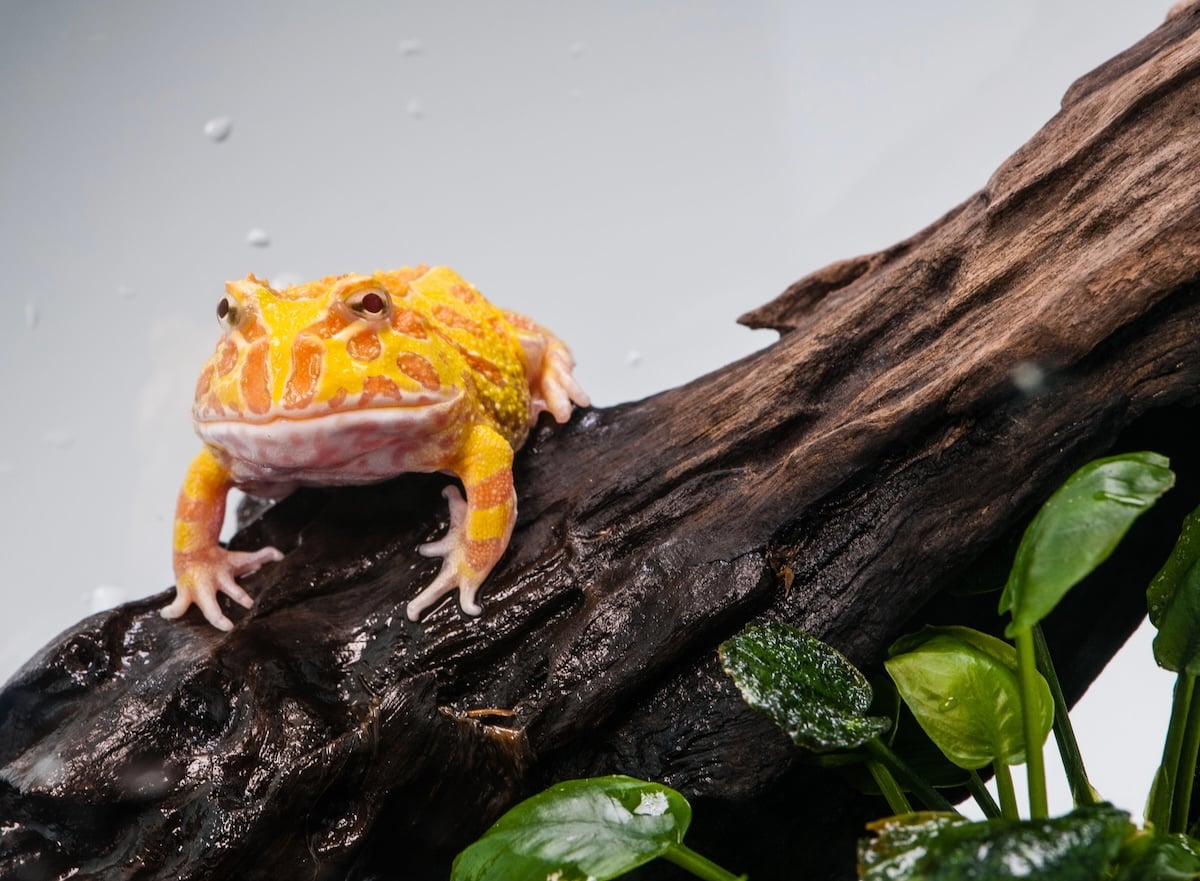 Photo Credit: stockphotopluak at Deposit Photos
In the heart of South America’s lush rainforests, the Argentine Horned Frog, known scientifically as Ceratophrys ornata, reigns as a captivating inhabitant of its vibrant ecosystem. Imagine a warm, humid day where the air is alive with the sounds of chirping insects and rustling leaves. Here, among the thick foliage and shimmering pools of water, this stout amphibian blends seamlessly into its surroundings, its earthy tones and distinctive horn-like projections above its eyes making it a master of disguise.
What truly sets the Argentine Horned Frog apart is its impressive size and voracious appetite. Weighing between 320 to 480 grams, it is one of the heftiest frogs in the world, and its wide mouth is perfectly designed for capturing prey. This remarkable predator is not picky; it will feast on anything that moves, from insects to small mammals, showcasing its role as a key player in the food web. Scientists and nature enthusiasts alike are drawn to this amphibian not just for its striking appearance, but also for its fascinating behaviors and the vital role it plays in maintaining the balance of its rainforest home. As we explore the life of the Argentine Horned Frog, we will uncover the secrets of its survival, its unique adaptations, and the intricate relationships it shares with its environment.
The Argentine Horned Frog, scientifically known as Ceratophrys ornata, occupies a distinctive place in the tree of life. This amphibian belongs to the class Amphibia, which includes frogs, toads, and salamanders. What sets the Argentine Horned Frog apart is its striking appearance and voracious appetite. With its broad, flattened body and horn-like projections above its eyes, it looks like a tiny dinosaur! This unique morphology not only helps it blend into its environment but also plays a role in its predatory lifestyle, making it a fascinating subject of study in the animal kingdom.
| Taxonomic Rank | Scientific Name | Meaning & Significance |
|---|---|---|
| Kingdom | Animalia | This name signifies that the Argentine Horned Frog is part of the vast group of multicellular organisms that are primarily heterotrophic, meaning they consume other organisms for energy. |
| Phylum | Chordata | Chordata refers to animals that have a notochord, a flexible rod that supports the body. In frogs, this structure is present during their early development. |
| Class | Amphibia | Amphibia means “double life,” highlighting the frog’s ability to live both in water and on land during different life stages. |
| Order | Anura | Anura translates to “without a tail,” which is a defining characteristic of frogs and toads as adults. |
| Family | Leptodactylidae | This family name means “slender fingers,” referring to the long, slender toes found in many of its members, although the Argentine Horned Frog has a more robust build. |
| Genus | Ceratophrys | Ceratophrys combines Greek words meaning “horned” and “toad,” aptly describing the frog’s distinctive horn-like features. |
| Species | ornata | This species name means “ornate” or “decorated,” reflecting the frog’s striking coloration and patterns that help it camouflage in its natural habitat. |
Understanding the Argentine Horned Frog’s classification reveals much about its evolutionary journey. As a member of the amphibians, it shares a common ancestor with other frogs and toads, showcasing the adaptations that have allowed it to thrive in diverse environments. Its unique physical traits, such as the horn-like projections and its robust body, are not just for show; they are evolutionary adaptations that enhance its survival as a predator. By studying its place in the tree of life, we gain insights into the complex relationships among species and the fascinating history of life on Earth.
The evolutionary journey of the Argentine Horned Frog, or Ceratophrys ornata, stretches back millions of years, intertwining with the rich tapestry of amphibian history. This species is part of the Leptodactylidae family, which has adapted to various environments across South America. As we explore its lineage, we uncover a story of survival and adaptation that has shaped this fascinating amphibian into what it is today.
The ancestors of the Argentine Horned Frog emerged during the late Cretaceous period, around 100 million years ago. These early amphibians were quite different from modern frogs, often resembling lizards more than the sleek jumpers we see today. Over time, as the climate and ecosystems evolved, so did these creatures. The transition from a more generalized body form to the stout, robust shape of the Argentine Horned Frog allowed it to thrive in diverse habitats, from wetlands to grasslands. This evolution was marked by the development of specialized features, such as a broader mouth and powerful jaws, enabling it to consume a wider range of prey.
These adaptations have been vital for the Argentine Horned Frog’s survival in a world filled with challenges. The ability to camouflage and ambush prey allows it to thrive in competitive environments, while its powerful jaws ensure it can tackle a variety of food sources. The burrowing behavior provides a refuge from harsh conditions, and vocalizations play a crucial role in reproduction. Together, these traits illustrate how evolution has finely tuned this amphibian to navigate the complexities of its ecosystem, ensuring its place in the natural world.
The Argentine Horned Frog is a striking amphibian that captures attention with its stout, rounded body and impressive size. This frog can weigh between 320 to 480 grams, which is about as heavy as a small cat! Its broad, flattened shape gives it a robust appearance, while its short limbs and large head contribute to its distinctive look. The most eye-catching feature is its horn-like projections above the eyes, which add a touch of whimsy to its already bold presence.
| Feature | Description |
|---|---|
| Size | Weight ranges from 320 to 480 grams (11.2 to 17 ounces), making it one of the larger frog species. |
| Color | Typically features a mix of earthy tones, including greens, browns, and yellows, which help it blend into its surroundings. |
| Skin Type | Covered in a unique, hair-like texture that aids in moisture retention and camouflage. |
| Eyes | Large and bulging, positioned on top of the head, providing excellent vision for spotting prey. |
These physical traits work together to create a master of disguise in its natural habitat. The earthy colors and hair-like skin not only help the Argentine Horned Frog blend seamlessly into the leaf litter and mud of its environment, but they also assist in retaining moisture, which is crucial for survival in its often humid surroundings. With its impressive size and formidable appearance, this frog is not just a passive resident of its ecosystem; it is an active predator, using its keen eyesight to spot potential meals and its robust body to capture them. In the wild, every feature plays a role in ensuring this amphibian thrives in its unique niche.
The Argentine Horned Frog thrives in lush, vibrant environments that are teeming with life. Picture a warm, tropical rainforest where the air is thick with humidity and the sounds of nature fill the atmosphere. These frogs are often found near slow-moving waters, such as swamps and marshes, where they can easily blend into their surroundings. The dense foliage provides both shelter and hunting grounds, making it an ideal home for this fascinating amphibian.
This amphibian prefers a climate that is consistently warm and humid, typical of tropical regions. The average temperature in its habitat usually hovers around 20 to 30 degrees Celsius (68 to 86 degrees Fahrenheit). Rainfall is abundant, creating a moist environment that is crucial for the frog’s survival. These conditions not only support the growth of vegetation but also ensure that water sources remain plentiful, which is vital for breeding and feeding.
The Argentine Horned Frog has developed several adaptations that help it thrive in these specific habitats. Its camouflaged skin allows it to blend seamlessly into the leaf litter and mud, making it less visible to predators. Additionally, its stout body and powerful legs enable it to ambush prey effectively, while its ability to tolerate high humidity levels helps it stay hydrated in its warm environment. These traits make the Argentine Horned Frog a true master of its tropical domain.
The Argentine Horned Frog leads a life that is both intriguing and essential for its survival. During the day, these frogs often remain hidden among the leaves and debris of their lush rainforest habitat. They are primarily nocturnal, meaning they are most active at night. As dusk falls, they emerge to hunt for food, using their keen sense of smell to locate insects and other small creatures. Their powerful jaws and quick reflexes make them effective predators, allowing them to capture prey with surprising speed.
Socially, the Argentine Horned Frog tends to be solitary. Unlike some amphibians that thrive in groups, these frogs prefer to keep to themselves. This solitary lifestyle helps them avoid competition for food and reduces the risk of attracting predators. When they do encounter one another, it is usually during the breeding season, where males will call out to attract females. Their vocalizations are a crucial part of their mating rituals, showcasing their presence and readiness to mate.
| Behavior Type | Description |
|---|---|
| Activity Patterns | Nocturnal foraging for insects and small prey, primarily active at night. |
| Social Structure | Solitary, with interactions mainly during the breeding season. |
| Communication Methods | Males use vocal calls to attract females during mating season. |
The behaviors of the Argentine Horned Frog are finely tuned to ensure its survival in a competitive environment. By being nocturnal, it avoids the heat of the day and reduces the risk of dehydration. Its solitary nature minimizes competition for food, while its vocal calls during mating season help ensure the continuation of its species. Each aspect of its daily life is a testament to the adaptability and resilience of this fascinating amphibian.
The Argentine Horned Frog is a true carnivore, meaning it primarily eats meat. This amphibian has a voracious appetite and is known for its impressive hunting skills. With its wide mouth and strong jaws, it can capture a variety of prey, including worms, roaches, and insects. The frog’s feeding behavior is quite fascinating; it often waits patiently for its next meal to come close before launching a quick and powerful strike. This ambush tactic allows it to catch unsuspecting prey with ease.
| Dietary Aspect | Details |
|---|---|
| Diet Type | Carnivore |
| Favorite Foods | Worms, roaches, and various insects |
| Prey Items | Small invertebrates |
| Hunting/Foraging Strategies | Ambush predator; waits for prey to approach |
The diet of the Argentine Horned Frog plays a crucial role in its ecology and daily routine. By consuming a variety of small invertebrates, it helps control insect populations in its habitat. This not only benefits the frog but also contributes to the overall health of the ecosystem. Its hunting strategy, which relies on patience and precision, allows it to thrive in the vibrant environments it calls home. As it navigates its lush surroundings, the Argentine Horned Frog exemplifies the delicate balance of predator and prey in nature.
As the warm rains of the breeding season arrive, the Argentine Horned Frog begins its courtship rituals. Males call out with deep, resonant croaks to attract females, creating a symphony of sounds that fills the air. This vocal display is not just for show; it helps establish territory and signals readiness to mate. Once a female selects a mate, the pair engages in amplexus, a mating embrace where the male clings to the female’s back. This position ensures that when the female lays her eggs, the male can fertilize them immediately, increasing the chances of successful reproduction.
| Reproductive Aspect | Details |
|---|---|
| Gestation Period | About 2 to 3 weeks |
| Litter Size | Approximately 1,500 eggs |
| Age of Maturity | 6 to 12 months |
| Name of Young | Tadpoles |
After the eggs are laid, they hatch into tiny tadpoles, which are fully aquatic and rely on their gills to breathe. These young frogs grow rapidly, feeding on algae and small organic matter in the water. As they develop, they undergo metamorphosis, a fascinating transformation where they gradually develop legs and lose their tails. This process can take several weeks to months, depending on environmental conditions. Once they emerge as juvenile frogs, they begin to explore their surroundings, eventually becoming independent adults. Interestingly, the Argentine Horned Frog does not provide parental care after the eggs are laid, so the young must rely on their instincts and adaptability to thrive in their vibrant, yet challenging, habitat.
The Argentine Horned Frog plays a vital role in its ecosystem, sitting comfortably in the middle of the food web. As a carnivorous amphibian, it preys on insects, small mammals, and even other frogs. However, it is not without its own set of challenges. This frog faces various predators and environmental threats that can impact its survival.
To defend itself against these dangers, the Argentine Horned Frog has developed several survival strategies. Its stout body and camouflaged skin help it blend into the forest floor, making it harder for predators to spot. When threatened, it can also puff up its body to appear larger and more intimidating. Additionally, its powerful jaws and sharp teeth allow it to defend itself if caught. These adaptations are crucial for navigating the challenges of its vibrant yet perilous habitat.
A keystone species is an organism that has a disproportionately large impact on its environment relative to its abundance. In the case of the Argentine Horned Frog, or Ceratophrys ornata, it does indeed play a keystone role in its ecosystem. This amphibian is not just another inhabitant of the rainforest; its presence and activities significantly shape the biological community around it.
The Argentine Horned Frog is a voracious carnivore, preying on a variety of smaller animals, including insects and even other frogs. By controlling the populations of these prey species, it helps maintain a balance in the ecosystem. For instance, if the frog were to disappear, the number of insects could explode, leading to overgrazing of plants and a decline in vegetation health. This, in turn, would affect other animals that rely on those plants for food and shelter.
Moreover, the Argentine Horned Frog serves as a food source for larger predators, such as birds and snakes. Its role in the food web is crucial; it connects various levels of the ecosystem. When it thrives, it supports the health of its predators, ensuring that the entire community remains robust and diverse.
The frog also contributes to nutrient cycling in its habitat. As it consumes prey and excretes waste, it returns essential nutrients to the soil, promoting plant growth. This process is vital for maintaining the lush, vibrant environment of the rainforest, which supports countless other species.
If the Argentine Horned Frog were to vanish from its ecosystem, the consequences could be dire. The balance of the food web would be disrupted, leading to an overabundance of insects and a decline in plant life. This would not only affect the frog’s predators but also the myriad of other species that depend on a healthy rainforest environment. The loss of this amphibian would echo through the ecosystem, highlighting just how interconnected life truly is.
The Argentine Horned Frog, known scientifically as Ceratophrys ornata, plays a crucial role in its ecosystem, particularly within the lush rainforests and tropical swamplands of South America. This amphibian occupies a unique ecological niche as a carnivore, meaning it primarily feeds on other animals. By preying on insects, small mammals, and even other frogs, it helps regulate these populations, ensuring a balanced environment. Its presence is vital for maintaining the health of its habitat, as it contributes to the intricate web of life that supports countless other species.
| Ecosystem Service | Impact |
|---|---|
| Population Control | Regulates the numbers of insects and small animals, preventing overpopulation. |
| Nutrient Cycling | Contributes to the decomposition process through its feeding habits, enriching the soil. |
| Food Source | Serves as prey for larger predators, supporting the food web. |
The Argentine Horned Frog’s influence extends beyond its immediate diet. For instance, by consuming a variety of insects, it helps control pest populations that could otherwise damage plant life. This, in turn, supports the growth of vegetation, which is essential for other animals in the ecosystem. Additionally, as it hunts and consumes prey, it contributes to nutrient cycling. The waste produced by the frog enriches the soil, promoting healthy plant growth and sustaining the vibrant rainforest environment.
The broader ecological importance of the Argentine Horned Frog cannot be overstated. As a keystone species, its presence is essential for the stability of its ecosystem. The balance it helps maintain among various species ensures that the rainforest remains a thriving habitat for countless organisms. By understanding the role of the Argentine Horned Frog, we gain insight into the delicate interconnections that define our natural world, reminding us of the importance of preserving these unique ecosystems for future generations.
In the intricate web of life, symbiosis refers to the close interactions between different species, which can take many forms. These relationships can be mutualistic, where both species benefit, parasitic, where one benefits at the other’s expense, or commensal, where one benefits while the other is neither helped nor harmed. The Argentine Horned Frog, known scientifically as Ceratophrys ornata, engages in various ecological partnerships that highlight the complexity of its rainforest and tropical swamp habitat. These interactions not only shape the lives of the frogs but also influence the broader ecosystem in which they thrive.
| Species/Type | Relationship Type | Description |
|---|---|---|
| Small insects (e.g., crickets) | Mutualistic | The Argentine Horned Frog benefits by consuming these insects for food, while the insects help control their own populations in the environment. |
| Parasites (e.g., certain worms) | Parasitic | Some parasites may attach to the frog, drawing nutrients from its body, which can weaken the frog over time. |
| Plants (e.g., ferns and mosses) | Commensal | The frog often hides among plants, gaining protection from predators while the plants are unaffected by the frog’s presence. |
The evolution of these relationships is a testament to nature’s adaptability and resilience. Over time, the Argentine Horned Frog has developed strategies to thrive alongside other species, whether by forming beneficial partnerships or navigating challenges posed by parasites. These interactions not only enhance the frog’s survival but also contribute to the health of its ecosystem. By understanding these connections, we gain insight into the delicate balance of life in the rainforest, where every species plays a role in the grand tapestry of nature.
The Argentine Horned Frog, known scientifically as Ceratophrys ornata, is a captivating amphibian that boasts some truly surprising traits. This remarkable creature is not just another frog; it has a variety of adaptations and behaviors that make it stand out in the animal kingdom.
The Argentine Horned Frog is a true testament to the wonders of evolution, showcasing how life adapts in extraordinary ways to thrive in diverse environments.
The Argentine Horned Frog, or Ceratophrys ornata, has a rich history intertwined with human culture, particularly in South America. Indigenous peoples have long recognized this amphibian’s striking appearance and unique behaviors, often incorporating it into local folklore and traditions. The frog’s impressive size and vibrant colors have made it a subject of fascination, symbolizing strength and resilience in various cultures. Historical encounters with this species have sparked curiosity and admiration, leading to its representation in art and storytelling.
In modern times, the relationship between humans and the Argentine Horned Frog has evolved significantly. Conservation efforts are underway to protect its natural habitats, which are increasingly threatened by deforestation and urbanization. However, conflicts can arise as humans encroach on these environments, leading to habitat loss for the frogs. Additionally, some people have taken an interest in keeping these frogs as pets, which raises questions about domestication and the ethical implications of removing them from their natural ecosystems. This duality of admiration and concern highlights the complexity of our interactions with this remarkable amphibian.
Looking ahead, the future of the relationship between humans and the Argentine Horned Frog will depend on our commitment to conservation and education. As awareness grows about the importance of preserving biodiversity, there is hope that we can foster a more harmonious coexistence. By respecting their habitats and understanding their ecological roles, we can ensure that this fascinating amphibian continues to thrive alongside us in the vibrant ecosystems of South America.
The Argentine Horned Frog, or Ceratophrys ornata, currently holds a conservation status of “Least Concern” according to the International Union for Conservation of Nature (IUCN). This means that, at present, the species is not facing an immediate threat of extinction. However, while the overall population is stable, localized declines have been observed in certain areas due to environmental changes.
| Conservation Factor | Status/Details |
|---|---|
| IUCN Status | Least Concern |
| Population Estimates | Stable, but localized declines noted |
| Trend Direction | Stable overall |
The main threats to the Argentine Horned Frog include habitat loss and degradation, primarily due to deforestation and agricultural expansion. As rainforests are cleared for farming or urban development, these frogs lose their natural homes, which are essential for their survival. Additionally, pollution from pesticides and other chemicals can harm their delicate ecosystems, affecting their health and reproductive success.
Conservation efforts are underway to protect the Argentine Horned Frog and its habitat. Organizations are working to promote sustainable land use practices and restore degraded areas. Education and awareness campaigns are also crucial, helping local communities understand the importance of preserving these unique amphibians. With continued efforts, the outlook for the Argentine Horned Frog remains hopeful, as it continues to thrive in many parts of its range.
| Question | Answer |
|---|---|
| What is the natural habitat of the Argentine Horned Frog? | The Argentine Horned Frog thrives in rainforest and tropical swamplands. These environments provide the moisture and cover it needs to stay hidden from predators and to hunt for food. |
| What does the Argentine Horned Frog eat? | This frog is a carnivore, meaning it primarily eats meat. Its diet consists of insects, small rodents, and even other frogs, making it a skilled ambush predator. |
| How does the Argentine Horned Frog behave? | Argentine Horned Frogs are known for their calm demeanor, often sitting still for long periods. They are also quite territorial and will defend their space from other frogs. |
| How do Argentine Horned Frogs reproduce? | During the breeding season, males call out to attract females. After mating, the female lays hundreds of eggs in water, which hatch into tadpoles that eventually develop into adult frogs. |
| What threats do Argentine Horned Frogs face? | While currently listed as Least Concern, these frogs face threats from habitat destruction and pollution. As rainforests are cut down, their homes are lost, making it harder for them to survive. |
| What are some interesting characteristics of the Argentine Horned Frog? | One fascinating feature is its horn-like projections above its eyes, which help it blend into its surroundings. Additionally, it can change color slightly based on its environment, enhancing its camouflage. |
| Can Argentine Horned Frogs be kept as pets? | Yes, they can be kept as pets, but they require specific care, including a suitable habitat and diet. Potential owners should research their needs thoroughly to ensure a healthy and happy frog. |