Taxonomy & Classification
- Kingdom
- Animalia
- Phylum
- Arthropoda
- Class
- Arachnida
- Order
- Scorpiones
- Family
- Buthidae
- Genus
- Centruriodes
- Species
- Centruroides sculpturatus

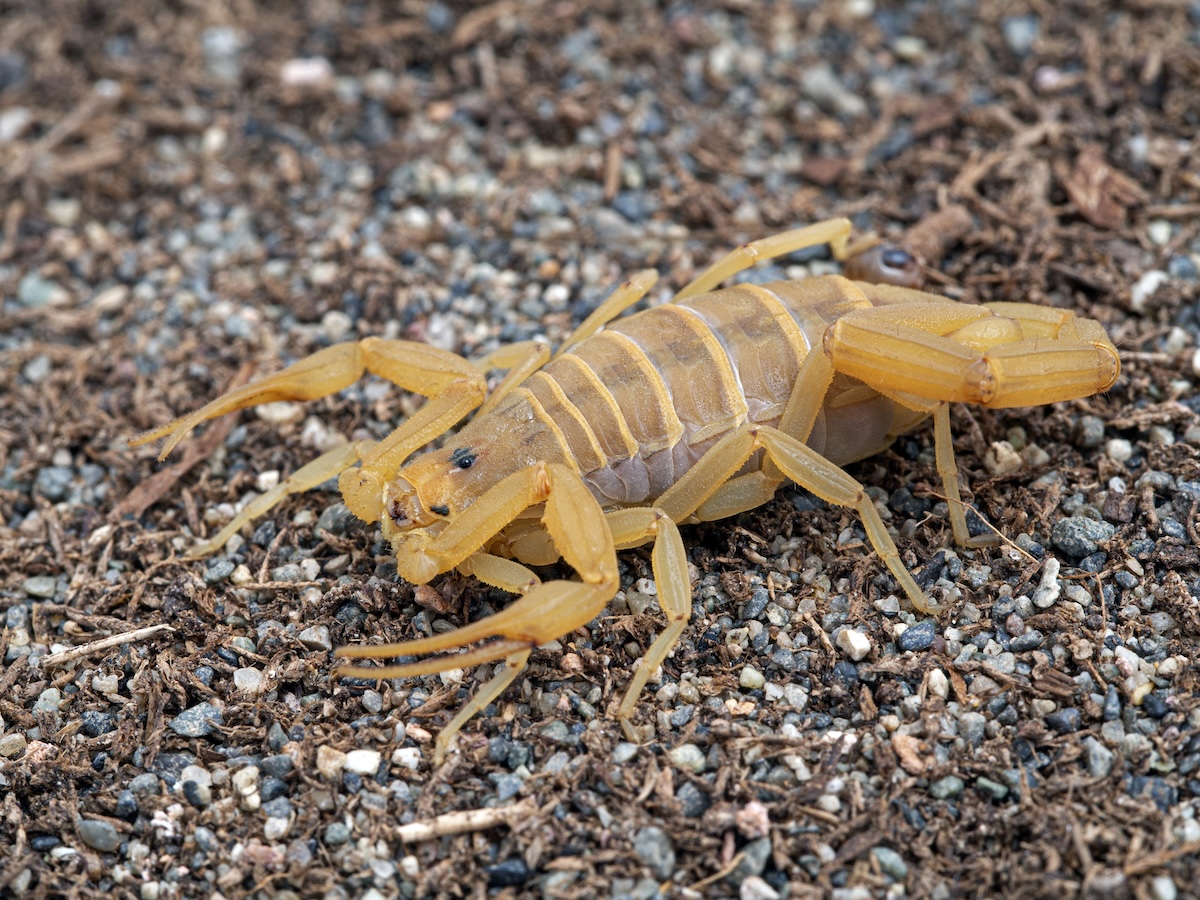 Photo Credit: EWTC at Deposit Photos
In the sun-baked deserts of the American Southwest, the Arizona Bark Scorpion, or Centruriodes sculpturatus, scuttles across the sandy terrain, a master of survival in one of the harshest environments on Earth. With its slender, segmented body and long, curved tail tipped with a venomous stinger, this small arachnid is both captivating and formidable. Its ability to blend seamlessly into the rocky landscape makes it a true marvel of nature, intriguing scientists and nature lovers alike. The scorpion’s potent venom, while dangerous to its prey, plays a crucial role in the delicate balance of the desert ecosystem.
As dusk falls, the Arizona Bark Scorpion emerges from its hiding spots, ready to hunt. Its keen senses help it detect the slightest movements, allowing it to pounce on unsuspecting insects and other small creatures. This nocturnal lifestyle not only showcases its predatory skills but also highlights its adaptability to the extreme temperatures of the desert. With a life cycle filled with fascinating behaviors, from intricate mating dances to its role as both predator and prey, the Arizona Bark Scorpion is a vital player in its ecosystem, reminding us of the intricate connections that sustain life in the wild.
The Arizona Bark Scorpion, scientifically known as Centruriodes sculpturatus, holds a special place in the animal kingdom due to its intriguing adaptations and potent venom. As a member of the phylum Arthropoda, which includes insects, spiders, and crustaceans, this scorpion showcases the incredible diversity of life on Earth. What sets it apart is not just its ability to thrive in the arid deserts of Arizona, but also its unique features, such as its slender body and the distinctive bark-like texture of its exoskeleton. This scorpion is not only a survivor in harsh environments but also a fascinating example of evolutionary success.
| Taxonomic Rank | Scientific Name | Meaning & Significance |
|---|---|---|
| Kingdom | Animalia | This name signifies that the Arizona Bark Scorpion is part of the vast group of multicellular organisms that are primarily heterotrophic, meaning they consume other organisms for energy. |
| Phylum | Arthropoda | Derived from Greek, meaning “jointed feet,” this classification highlights the scorpion’s segmented body and jointed appendages, which are key features of this diverse group. |
| Class | Arachnida | This term comes from the Greek word for spider, indicating that scorpions, along with spiders and ticks, share common characteristics like eight legs and a two-part body structure. |
| Order | Scorpiones | Named after the Latin word for scorpion, this order includes all scorpions, which are known for their distinctive pincers and stingers, adaptations for hunting and defense. |
| Family | Buthidae | This family name is derived from the Greek word “buthus,” meaning scorpion, and it includes some of the most venomous scorpions, highlighting the Arizona Bark Scorpion’s potent sting. |
| Genus | Centruriodes | This name is linked to the Latin word “centrum,” meaning center, and “uridae,” referring to the tail, emphasizing the scorpion’s notable tail structure that ends in a venomous stinger. |
The classification of the Arizona Bark Scorpion reveals much about its evolutionary journey. As a member of the Buthidae family, it shares a lineage with some of the most venomous scorpions, showcasing adaptations that have allowed it to thrive in its environment. Its unique physical traits, such as its specialized stinger and jointed limbs, are not just for show; they are essential tools for survival. Understanding its place in the tree of life helps us appreciate the intricate connections between species and the remarkable ways they have evolved to adapt to their surroundings.
The evolutionary journey of the Arizona Bark Scorpion, or Centruriodes sculpturatus, stretches back millions of years, tracing its lineage to ancient arachnids that roamed the Earth long before the dinosaurs. These early ancestors emerged during the Silurian period, around 430 million years ago, evolving from simple marine creatures into complex terrestrial forms. Over time, they adapted to various environments, leading to the diverse group of scorpions we see today.
The ancestors of the Arizona Bark Scorpion were likely similar to other primitive arachnids, with simple body structures and basic predatory skills. As they transitioned to land, they developed key adaptations that allowed them to thrive in arid environments. One major evolutionary leap was the development of a hard exoskeleton, which provided protection against predators and helped retain moisture. This was crucial for survival in the hot, dry deserts of the American Southwest. Another significant change was the evolution of specialized appendages, such as pincers, which became more robust for capturing prey and defending against threats. Over time, these scorpions also honed their venom delivery system, allowing them to immobilize prey quickly and efficiently.
These adaptations have been vital for the Arizona Bark Scorpion’s survival in its harsh desert habitat. The combination of a protective exoskeleton, effective venom, and powerful pincers allows it to thrive as a predator while minimizing the risks from larger animals. Its ability to hunt at night further enhances its chances of finding food while avoiding danger. Through millions of years of evolution, the Arizona Bark Scorpion has become a master of its environment, showcasing the incredible power of natural selection.
The Arizona Bark Scorpion is a small but striking inhabitant of the desert landscape. With a body that measures less than a quarter of an inch in height, this scorpion is a master of camouflage, blending seamlessly into its arid surroundings. Its exoskeleton, a hard outer shell that protects its body, glistens under the sun, showcasing a range of earthy tones. The most eye-catching feature is its two pedipalps, which resemble crab claws, giving it a fierce appearance despite its petite size. These pincers are not just for show; they play a crucial role in hunting and defense.
| Feature | Description |
|---|---|
| Height | Less than 0.25 inches |
| Weight | 2 ounces |
| Skin Type | Exoskeleton |
| Most Distinctive Feature | 2 pedipalps like “crab claws” |
The combination of its small size and formidable pincers allows the Arizona Bark Scorpion to thrive in its harsh environment. The exoskeleton not only provides protection from predators but also helps retain moisture, which is vital in the dry desert. Its claw-like pedipalps are perfect for capturing prey, while the scorpion’s ability to blend into the sandy terrain makes it a stealthy hunter. Together, these features create a well-adapted survivor, perfectly suited to the challenges of desert life.
The Arizona Bark Scorpion thrives in the sun-drenched expanses of the desert, where the landscape is a tapestry of golden sands, rugged rocks, and sparse vegetation. This scorpion is often found nestled among the crevices of rocks or hidden beneath the dry leaves and debris that scatter the ground. The warm, arid environment provides the perfect backdrop for its life, where it can hunt and hide from predators. As the sun sets, the desert transforms into a cooler realm, but the bark scorpion remains active, taking advantage of the night to scuttle about in search of food.
The climate in these regions is characterized by hot summers and mild winters, with very little rainfall throughout the year. The Arizona Bark Scorpion is well-suited to this environment, as it can tolerate extreme temperatures that can soar above 100 degrees Fahrenheit during the day. The dry conditions mean that water is scarce, but this scorpion has adapted to survive on minimal moisture, often obtaining the water it needs from its prey.
Adaptations are key to the Arizona Bark Scorpion’s survival in such a challenging habitat. Its ability to blend into the sandy and rocky surroundings helps it avoid detection from both predators and prey. Additionally, its nocturnal lifestyle allows it to escape the harsh daytime heat, while its potent venom is an effective tool for capturing small insects and other arthropods. These traits make the Arizona Bark Scorpion a true survivor in the unforgiving desert landscape.
The Arizona Bark Scorpion leads a life filled with intriguing daily activities that revolve around survival in its arid desert habitat. As the sun rises, these scorpions emerge from their hiding spots, often under rocks or in crevices, to bask in the warmth. They are primarily nocturnal, meaning they are most active at night when temperatures cool down. During the day, they seek refuge from the scorching sun, resting in the shade to conserve moisture and energy. As night falls, they venture out to hunt for insects, their primary food source, using their keen sense of touch and specialized pedipalps to detect movement in the dark.
Socially, Arizona Bark Scorpions exhibit fascinating group dynamics. They are known for their colonial nesting behavior, which means they often live in close proximity to one another. This social structure provides several advantages, such as increased protection from predators and the ability to share warmth during cooler nights. While they are generally solitary hunters, they can tolerate the presence of others, especially in their communal dens. Communication among these scorpions occurs through subtle movements and pheromones, chemical signals that convey information about territory and mating readiness.
| Behavior Type | Description |
|---|---|
| Activity Patterns | Nocturnal foraging for insects, resting during the day to avoid heat. |
| Social Structure | Colonial nesting, living in groups for protection and warmth. |
| Communication Methods | Use of pheromones and body movements to convey messages. |
The behaviors of the Arizona Bark Scorpion are finely tuned to ensure its survival in a challenging environment. By being active at night, they avoid the harsh daytime heat, while their social structure offers safety in numbers. Their ability to communicate effectively helps them navigate their world, whether it’s finding a mate or establishing territory. Together, these behaviors create a resilient lifestyle that allows the Arizona Bark Scorpion to thrive in the desert’s unforgiving landscape.
The Arizona Bark Scorpion is a true carnivore, meaning it primarily eats meat. This scorpion has a taste for a variety of small creatures, including insects, spiders, centipedes, and even other scorpions. With its keen hunting skills, it uses its powerful pincers and venomous sting to capture and subdue its prey. The scorpion’s diet is not just about survival; it plays a crucial role in maintaining the balance of its desert ecosystem.
| Dietary Aspect | Details |
|---|---|
| Diet Type | Carnivore |
| Favorite Foods | Insects, spiders, centipedes, and other scorpions |
| Prey Items | Crickets, beetles, and various small arthropods |
| Hunting/Foraging Strategies | Ambush predator; uses pincers to grasp prey and venom to immobilize it |
The diet of the Arizona Bark Scorpion significantly influences its role in the desert ecosystem. By preying on various insects and arachnids, it helps control their populations, preventing any one species from becoming too dominant. This balance is essential for the health of the desert environment. Additionally, the scorpion’s nocturnal hunting habits allow it to avoid the harsh daytime heat, making it a well-adapted predator in its arid home.
The mating rituals of the Arizona Bark Scorpion are as captivating as the desert landscape it inhabits. During the breeding season, which typically occurs in the warmer months, males engage in a fascinating courtship dance. They grasp the female’s pincers and perform a series of intricate movements, often leading her to a suitable location for mating. This delicate dance not only showcases their strength and agility but also helps ensure that the female is receptive to the male’s advances.
| Reproductive Aspect | Details |
|---|---|
| Gestation Period | 9 months |
| Litter Size | Typically 25-35 scorplings |
| Age of Maturity | 1 year |
| Name of Young | Scorplings |
After mating, the female Arizona Bark Scorpion carries her developing scorplings inside her body for about nine months. Once they are ready to emerge, she gives birth to a lively brood of 25 to 35 tiny scorplings. These little ones are born live, which is quite special since many other arachnids lay eggs. The mother provides a safe haven for her young, allowing them to climb onto her back for protection. As they grow, the scorplings undergo several molts, shedding their exoskeletons to accommodate their growing bodies. This nurturing behavior ensures that the young scorpions have the best chance to thrive in their harsh desert environment, gradually maturing into independent adults by the time they reach one year of age.
The Arizona Bark Scorpion plays a crucial role in its desert ecosystem, serving as both predator and prey. This small but mighty arachnid helps control insect populations, while also being a food source for various animals. Its position in the food web highlights the delicate balance of life in the arid landscapes it calls home.
To survive against these threats, the Arizona Bark Scorpion has developed several clever defensive behaviors. Its ability to blend into the desert environment makes it hard for predators to spot. When threatened, it can deliver a painful sting, using its venom as a last resort. Additionally, this scorpion is nocturnal, meaning it is most active at night when many of its predators are less active. These strategies help it navigate the dangers of its desert home, ensuring its survival in a challenging world.
A keystone species is an organism that has a disproportionately large impact on its environment relative to its abundance. In the case of the Arizona Bark Scorpion, or Centruriodes sculpturatus, it certainly qualifies as a keystone species in its desert ecosystem. This small arachnid plays a vital role in maintaining the balance of its habitat, influencing the populations of various other species and contributing to the overall health of the ecosystem.
The Arizona Bark Scorpion is a carnivore, meaning it primarily feeds on other animals, including insects, spiders, and even other scorpions. By preying on these creatures, it helps regulate their populations, preventing any one species from becoming too dominant. For example, if the scorpion were to disappear, the number of insects could skyrocket, leading to overgrazing of vegetation and a cascade of negative effects throughout the food web. Additionally, the scorpion itself serves as a food source for larger predators, such as birds and mammals, linking it to multiple levels of the food chain.
Moreover, the Arizona Bark Scorpion exhibits colonial nesting behavior, which means it often shares its habitat with others of its kind. This social structure can enhance the survival of the species by providing safety in numbers. When they gather in groups, they can better defend against predators and increase their chances of finding food. This communal aspect also contributes to the overall biodiversity of the desert, as it creates a more complex and interconnected ecosystem.
If the Arizona Bark Scorpion were to vanish from its desert home, the consequences could be severe. Without this crucial predator, insect populations would likely explode, leading to increased competition for resources among other species. This imbalance could disrupt the entire ecosystem, affecting plants, animals, and even the soil quality. The loss of the scorpion would ripple through the food web, demonstrating just how interconnected life is in the desert. The Arizona Bark Scorpion may be small, but its role is anything but insignificant.
The Arizona Bark Scorpion, known scientifically as Centruriodes sculpturatus, plays a vital role in its desert ecosystem. As a carnivore, it helps maintain the balance of life by controlling the populations of various insects and other small creatures. This scorpion is not just a predator; it is also a prey item for larger animals, making it an essential link in the food web. By fulfilling these roles, the Arizona Bark Scorpion contributes to the overall health and stability of its environment.
| Ecosystem Service | Impact |
|---|---|
| Population Control | Regulates the numbers of insects and other small animals, preventing overpopulation. |
| Food Source | Serves as a meal for larger predators, such as birds and mammals, supporting biodiversity. |
| Soil Aeration | Through its burrowing activities, it helps aerate the soil, promoting plant growth. |
| Indicator Species | Reflects the health of the ecosystem, as changes in its population can signal environmental shifts. |
The Arizona Bark Scorpion’s influence can be seen in various ways. For instance, by preying on insects like crickets and beetles, it helps keep these populations in check, which is crucial for the health of desert plants. If insect numbers were to explode, they could damage vegetation, leading to a cascade of negative effects throughout the ecosystem. Additionally, the scorpion’s burrowing behavior not only provides it with shelter but also helps aerate the soil, allowing water and nutrients to reach plant roots more effectively. This interaction supports the growth of desert flora, which in turn provides habitat and food for other wildlife.
The broader ecological importance of the Arizona Bark Scorpion cannot be overstated. As a keystone species, its presence or absence can significantly impact the entire desert ecosystem. By controlling insect populations and serving as a food source for larger animals, it helps maintain a delicate balance that supports a diverse array of life. Understanding the role of this small but mighty arachnid reminds us of the interconnectedness of all living things and the importance of preserving the ecosystems they inhabit.
In the intricate web of life, symbiosis refers to the close interactions between different species, which can take on various forms. These relationships can be mutualistic, where both species benefit; parasitic, where one benefits at the expense of the other; or commensal, where one benefits while the other is neither helped nor harmed. The Arizona Bark Scorpion, a fascinating inhabitant of the desert, engages in several ecological relationships that highlight the complexity of its environment. Understanding these partnerships not only reveals the scorpion’s role in its ecosystem but also showcases the interconnectedness of life in the arid landscapes it calls home.
| Species/Type | Relationship Type | Description |
|---|---|---|
| Desert Ants | Mutualistic | Arizona Bark Scorpions and desert ants often share burrows. The ants help keep the burrow clean, while the scorpions provide protection from predators. |
| Small Rodents | Parasitic | While not a direct parasite, the scorpion can be harmful to small rodents that may accidentally disturb it, leading to potential stings. |
| Various Insects | Commensal | Insects that live in the same habitat may benefit from the scorpion’s hunting activities, as it helps control their populations without directly affecting the scorpion. |
These relationships have evolved over time, shaped by the demands of survival in a harsh desert environment. The mutualistic bond with desert ants exemplifies how species can work together for mutual benefit, enhancing their chances of survival. Meanwhile, the scorpion’s interactions with small rodents and insects illustrate the delicate balance of predator and prey dynamics. Each relationship plays a crucial role in maintaining the health of the ecosystem, demonstrating that even the smallest creatures can have a significant impact on their surroundings. Through these partnerships, the Arizona Bark Scorpion not only thrives but also contributes to the vibrant tapestry of life in the desert.
The Arizona Bark Scorpion is a captivating creature that thrives in the harsh desert environment of the American Southwest. Its unique adaptations and behaviors make it a subject of fascination for nature enthusiasts of all ages.
The Arizona Bark Scorpion, known scientifically as Centruroides sculpturatus, has a long history of interaction with humans, particularly among the indigenous peoples of the American Southwest. For centuries, these scorpions have been woven into local folklore and cultural practices. Some tribes viewed them as symbols of protection, while others recognized their potential danger. The scorpion’s potent venom, which can cause severe pain and discomfort, has made it a subject of both fear and respect. This duality reflects humanity’s complex relationship with nature, where admiration and caution often coexist.
In modern times, interactions between the Arizona Bark Scorpion and humans have evolved. While many people still fear these arachnids, they also play a role in scientific research and education. Conservation efforts focus on understanding their ecological importance, as they help control insect populations in their desert habitats. However, conflicts arise when scorpions venture into human dwellings, leading to encounters that can result in painful stings. Some communities have developed strategies to manage these interactions, emphasizing coexistence rather than eradication.
Looking ahead, the future of the relationship between humans and the Arizona Bark Scorpion will likely continue to evolve. As urban areas expand into natural habitats, understanding and respecting these creatures will be crucial. Education and awareness can help reduce fear and promote coexistence, allowing both humans and scorpions to thrive. By appreciating the role of the Arizona Bark Scorpion in the ecosystem, we can foster a more harmonious relationship with this fascinating arachnid.
The Arizona Bark Scorpion, known scientifically as Centruroides sculpturatus, currently holds a status of “Least Concern” according to the International Union for Conservation of Nature (IUCN). This means that, at present, the species is not facing immediate threats of extinction. Population estimates suggest that they are stable, with no significant declines reported. However, ongoing monitoring is essential to ensure that their numbers remain healthy, especially as environmental changes occur.
| Conservation Factor | Status/Details |
|---|---|
| IUCN Status | Least Concern |
| Population Estimates | Stable |
| Trend Direction | Stable |
Despite their current stable status, the Arizona Bark Scorpion faces several threats that could impact its future. Habitat loss due to urban development and agricultural expansion poses a significant risk. As humans encroach on their natural environments, these scorpions may find it increasingly difficult to find shelter and food. Additionally, climate change is altering the desert ecosystems they inhabit, potentially affecting their survival and reproduction rates.
Conservation efforts for the Arizona Bark Scorpion are focused on habitat preservation and public education. Organizations are working to protect desert habitats from overdevelopment and to raise awareness about the importance of these scorpions in the ecosystem. As long as these efforts continue, the outlook for the Arizona Bark Scorpion remains positive. By fostering a greater understanding of their role in the environment, we can help ensure that these fascinating arachnids thrive for generations to come.
| Question | Answer |
|---|---|
| Where do Arizona Bark Scorpions live? | Arizona Bark Scorpions are commonly found in deserts, particularly in the southwestern United States. They prefer warm, dry environments where they can hide under rocks, in crevices, or even in human structures. |
| What do Arizona Bark Scorpions eat? | These scorpions are carnivores, meaning they primarily eat other animals. Their diet consists mainly of insects, such as crickets and beetles, which they capture using their strong pincers, called pedipalps. |
| How do Arizona Bark Scorpions behave? | Arizona Bark Scorpions are nocturnal, which means they are most active at night. During the day, they hide to avoid the heat, and at night, they hunt for food and mate. |
| How do Arizona Bark Scorpions reproduce? | These scorpions have a unique courtship ritual that can last several hours. After mating, the female carries her young on her back until they are ready to fend for themselves, which can take several weeks. |
| What are the threats to Arizona Bark Scorpions? | Arizona Bark Scorpions face threats from habitat loss due to urban development and climate change. Additionally, they are preyed upon by larger animals, such as birds and mammals, which can impact their populations. |
| What is an interesting characteristic of Arizona Bark Scorpions? | One of the most distinctive features of Arizona Bark Scorpions is their two large pedipalps, which look like crab claws. These pincers help them catch prey and defend themselves from predators. |
| Are Arizona Bark Scorpions dangerous to humans? | While their sting can be painful and cause discomfort, Arizona Bark Scorpions are not typically lethal to healthy adults. However, their venom can be more dangerous to young children, the elderly, or those with allergies. |