Taxonomy & Classification
- Kingdom
- Animalia
- Phylum
- Chordata
- Class
- Reptilia
- Order
- Squamata
- Family
- Viperidae
- Genus
- Crotalus
- Species
- Crotalus cerberus

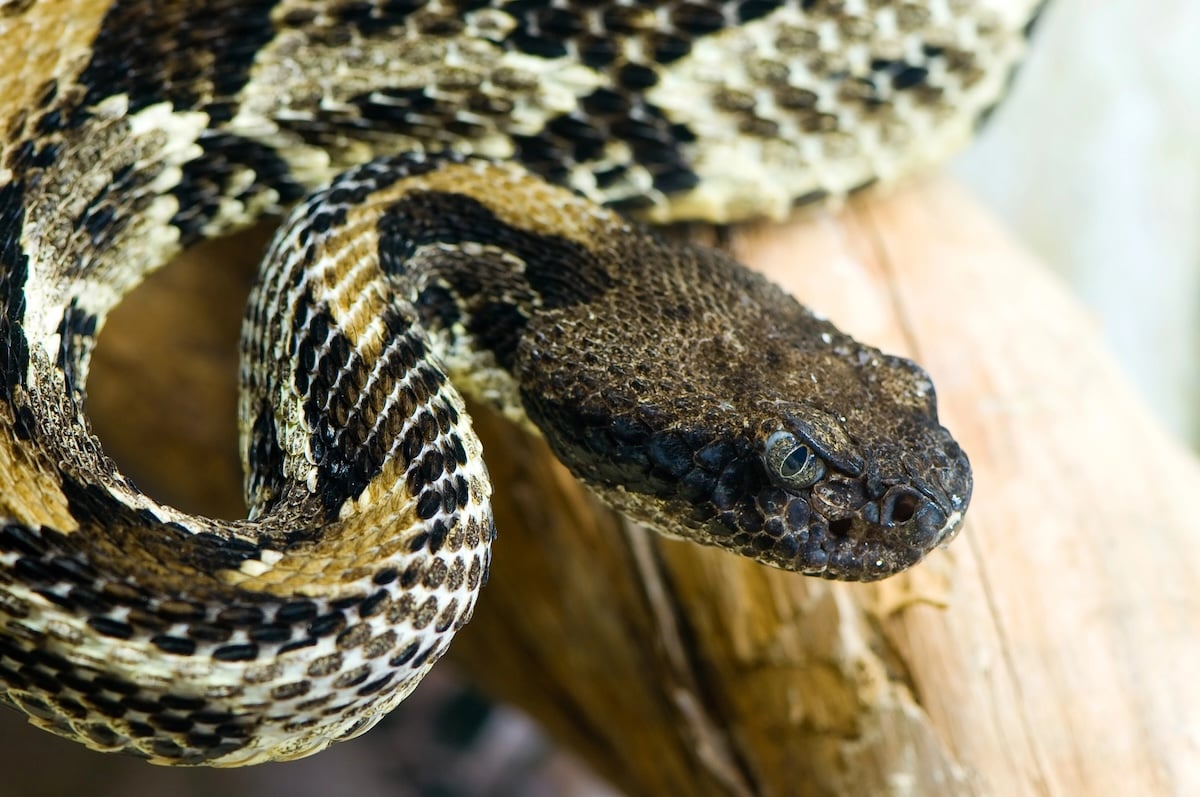 Photo Credit: arievdwolde at Deposit Photos
In the sun-soaked deserts of the American Southwest, the Arizona Black Rattlesnake, or Crotalus cerberus, slithers through its rugged domain, a master of camouflage against the rocky terrain. With its glossy black scales glistening in the sunlight, this striking reptile can grow up to four feet long, showcasing a robust body that is both powerful and agile. Its most distinctive feature, the rattle at the end of its tail, serves as a warning to potential threats, a unique adaptation that has fascinated scientists and nature enthusiasts alike. This rattle, made of keratin—the same material as our hair and nails—produces a distinctive sound that echoes through the desert, signaling its presence to those who dare to approach.
As the Arizona Black Rattlesnake navigates its environment, it plays a crucial role in the delicate balance of its ecosystem. This snake is not just a predator; it helps control populations of small mammals, lizards, and amphibians, ensuring that the desert remains vibrant and healthy. Its diurnal lifestyle means it is most active during the day, basking on warm rocks or sandy surfaces, soaking up the sun’s rays. With its keen senses and strategic hunting techniques, the Arizona Black Rattlesnake embodies the spirit of survival in a harsh landscape, captivating all who are lucky enough to witness its graceful movements. Join us as we explore the life of this remarkable snake, uncovering the secrets of its behavior, diet, and the vital role it plays in the ecosystem.
The Arizona Black Rattlesnake, scientifically known as Crotalus cerberus, occupies a significant place in the tree of life. This striking reptile belongs to the family Viperidae, which includes many of the world’s most venomous snakes. What sets the Arizona Black Rattlesnake apart is not just its distinctive dark coloration, which helps it blend into its desert surroundings, but also its unique adaptations for survival in arid environments. With a rattle at the end of its tail, this snake has a built-in warning system that alerts potential threats, showcasing the incredible ways animals have evolved to thrive in their habitats.
| Taxonomic Rank | Scientific Name | Meaning & Significance |
|---|---|---|
| Kingdom | Animalia | This rank includes all animals, highlighting the Arizona Black Rattlesnake as a member of the diverse animal kingdom. |
| Phylum | Chordata | Chordata means “having a notochord,” a flexible rod that supports the body, which is a key feature of all vertebrates, including this snake. |
| Class | Reptilia | Reptilia refers to reptiles, a group characterized by their scaly skin and ability to lay eggs on land, traits that help them thrive in various environments. |
| Order | Squamata | Squamata means “scaly,” which is fitting for snakes and lizards, emphasizing their unique skin texture that aids in moisture retention. |
| Family | Viperidae | This family includes vipers and pit vipers, known for their long, hinged fangs that allow them to deliver venom effectively to their prey. |
| Genus | Crotalus | Crotalus is derived from the Greek word for “bell,” referring to the rattle on the tail that produces a warning sound when threatened. |
| Species | cerberus | The species name cerberus is inspired by the three-headed dog from Greek mythology, symbolizing the snake’s formidable presence and defensive capabilities. |
Understanding the taxonomic classification of the Arizona Black Rattlesnake reveals much about its evolutionary journey. As a member of the Viperidae family, it shares a lineage with other venomous snakes, showcasing adaptations that have developed over millions of years. Its unique features, from its rattle to its coloration, are not just for show; they are essential tools for survival in the harsh desert landscape. This classification helps us appreciate the intricate web of life and the remarkable ways in which species have evolved to meet the challenges of their environments.
The evolutionary journey of the Arizona Black Rattlesnake, or Crotalus cerberus, stretches back millions of years, intertwining with the rich tapestry of life on Earth. This species is part of a lineage that has adapted to the harsh environments of the southwestern United States, showcasing the incredible power of evolution. As we explore its ancestry, we uncover a story of survival, adaptation, and the relentless march of time.
The ancestors of the Arizona Black Rattlesnake can be traced to ancient reptiles that roamed the Earth long before the dinosaurs. These early serpents were likely non-venomous and relied on their speed and camouflage to evade predators. Over time, as the environment changed and competition increased, some of these reptiles evolved venomous traits, allowing them to subdue prey more effectively. This transition marked a significant evolutionary leap, as venom became a powerful tool for hunting and defense. The Arizona Black Rattlesnake, with its distinctive black coloration, is a product of this evolutionary process, having adapted to blend into its rocky desert habitat while also developing a rattle as a warning signal to potential threats.
These adaptations have been crucial for the Arizona Black Rattlesnake’s survival in a challenging landscape. The combination of venom, camouflage, and sensory abilities enables it to hunt effectively while minimizing risks from predators. As it navigates the rocky outcrops and arid expanses of its home, this snake exemplifies the wonders of evolution, showcasing how life can adapt and thrive in even the harshest conditions.
The Arizona Black Rattlesnake is a striking sight, embodying the rugged beauty of the desert landscape it calls home. With a robust body that can reach lengths of up to four feet, this snake is both powerful and agile. Its sleek, elongated form is covered in smooth, shiny scales that glisten under the sun, giving it a polished appearance. The deep black coloration, often accented with lighter bands or spots, allows it to blend seamlessly into the rocky terrain, making it a master of camouflage.
| Feature | Description |
|---|---|
| Size | Can grow up to 4 feet long |
| Color | Primarily black with lighter bands or spots |
| Skin Type | Smooth, shiny scales |
| Body Structure | Robust and elongated, designed for agility |
These physical features work together to enhance the Arizona Black Rattlesnake’s survival in its harsh environment. The dark coloration not only helps it blend into the shadows of rocky outcrops but also aids in absorbing heat from the sun, which is crucial for a cold-blooded animal that relies on external warmth to regulate its body temperature. The smooth scales reduce friction as it moves, allowing for swift and silent navigation through its arid habitat. Together, these adaptations make the Arizona Black Rattlesnake a formidable predator and a master of its desert domain.
The Arizona Black Rattlesnake thrives in a captivating blend of habitats that reflect the diverse landscapes of the American Southwest. Picture a sun-drenched environment where rugged mountains meet sprawling forests, and the ground is blanketed with rich leaf litter. This snake often finds refuge among the shadows of trees and shrubs, where it can bask in the warmth of the sun while remaining hidden from potential predators and prey alike. The interplay of light and shade creates a perfect setting for this striking reptile to navigate its world.
The climate in these regions is typically warm and dry, with temperatures soaring during the day and cooling off at night. The Arizona Black Rattlesnake prefers areas that offer a mix of sun and shade, allowing it to regulate its body temperature effectively. These snakes are often found in elevations ranging from 3,000 to 7,000 feet, where the air is crisp and the environment is rich with the scents of the forest floor. The leaf litter not only provides camouflage but also helps retain moisture, creating a microhabitat that supports their lifestyle.
Adaptation is key to the survival of the Arizona Black Rattlesnake in its chosen habitats. Its dark coloration helps it absorb heat from the sun, while its ability to blend into the leaf litter makes it a master of stealth. This camouflage is crucial for both hunting and evading larger predators. Additionally, the snake’s behavior of basking in the sun during the day and becoming more active at night allows it to take advantage of cooler temperatures while hunting for small mammals and birds. These adaptations ensure that the Arizona Black Rattlesnake remains a vital part of its ecosystem, perfectly suited to the challenges of its environment.
The Arizona Black Rattlesnake leads a life that is both active and strategic, primarily during the daylight hours. As a diurnal species, it emerges with the sun, basking on warm rocks or sandy surfaces to soak up heat. This behavior is essential for regulating its body temperature, as reptiles are ectothermic, meaning they rely on external sources to warm up. Throughout the day, these snakes hunt for small mammals, birds, and lizards, using their keen senses to detect movement and vibrations in their environment. Their hunting style is stealthy, often involving a slow, calculated approach before striking with precision.
Socially, the Arizona Black Rattlesnake exhibits semi-social behavior, which means they can be found in loose groups, especially during the cooler months. While they are not as communal as some other snake species, they do share basking spots and sometimes hibernate together in dens. This social structure allows them to benefit from the warmth generated by their bodies, making it easier to survive in cooler temperatures. Communication among these snakes is subtle but effective; they use body language and pheromones—chemical signals—to convey information about territory and mating readiness.
| Behavior Type | Description |
|---|---|
| Activity Patterns | Active during the day, basking in the sun and hunting for food. |
| Social Structure | Semi-social, often found in loose groups, especially during hibernation. |
| Communication Methods | Utilizes body language and pheromones to communicate with others. |
The behaviors of the Arizona Black Rattlesnake are finely tuned to ensure its survival in the harsh desert environment. By being active during the day, it maximizes its hunting opportunities while avoiding the extreme heat of midday. Its semi-social nature allows for shared warmth and safety in numbers, which is crucial during colder months. Through effective communication, these snakes can maintain their territories and find mates, ensuring the continuation of their species. Each aspect of their daily life is a testament to their adaptability and resilience in a challenging habitat.
The Arizona Black Rattlesnake is a carnivore, meaning it primarily eats meat. This snake has a varied diet that includes lizards, amphibians, small mammals, and even the occasional bird. Its feeding behavior is quite strategic; it relies on a combination of stealth and patience to catch its prey. By blending into its surroundings, the rattlesnake can ambush unsuspecting animals, striking with precision when the moment is right.
| Dietary Aspect | Details |
|---|---|
| Diet Type | Carnivore |
| Favorite Foods | Lizards, amphibians, small mammals, and occasionally birds |
| Prey Items | Common lizards, frogs, rodents, and small birds |
| Hunting/Foraging Strategies | Ambush predator; relies on camouflage and quick strikes |
The diet of the Arizona Black Rattlesnake plays a crucial role in its ecology and daily routine. By preying on a variety of animals, it helps maintain the balance of the ecosystem, controlling populations of its prey species. This not only supports the health of the environment but also influences the snake’s behavior, as it must constantly adapt to find food. The hunt is an essential part of its day, shaping its movements and interactions within the vibrant desert landscape.
The mating season for the Arizona Black Rattlesnake typically occurs in the spring, around April to June. During this time, males engage in a fascinating courtship ritual, which often involves wrestling with one another to establish dominance and attract females. Once a male successfully impresses a female, they will mate, and the female will store the male’s sperm until she is ready to fertilize her eggs. This unique reproductive strategy allows her to time the birth of her young for optimal conditions.
| Reproductive Aspect | Details |
|---|---|
| Gestation Period | Approximately 4 to 5 months |
| Litter Size | Typically 5 to 15 neonates |
| Age of Maturity | About 2 to 3 years |
| Name of Young | Neonate |
After giving birth, the female Arizona Black Rattlesnake provides no further care for her young. The neonates are born live, fully formed, and ready to fend for themselves. These tiny snakes, measuring about 10 to 12 inches long, are equipped with venom and instinctively know how to hunt. As they grow, they will shed their skin several times, a process called ecdysis, which helps them grow and develop into the striking adults they are destined to become. Though they start life on their own, these young snakes will eventually learn to navigate their environment and thrive in the wild, continuing the cycle of life in the desert.
The Arizona Black Rattlesnake plays a crucial role in its ecosystem, sitting comfortably in the middle of the food web. As a predator, it helps control populations of small mammals, lizards, and amphibians, ensuring a balanced environment. However, this striking snake is not without its challenges. It faces various threats that can impact its survival and well-being.
To defend itself against these dangers, the Arizona Black Rattlesnake has developed several survival strategies. Its dark coloration provides excellent camouflage among the rocky desert terrain, allowing it to blend in and avoid detection. When threatened, it can rattle its tail, producing a warning sound that often deters potential predators. If that doesn’t work, it can strike quickly, using its venom to incapacitate prey or defend itself. By employing these tactics, the Arizona Black Rattlesnake continues to thrive in its challenging environment, showcasing the resilience of nature.
A keystone species is an organism that has a disproportionately large impact on its environment relative to its abundance. In the case of the Arizona Black Rattlesnake, or Crotalus cerberus, it certainly qualifies as a keystone species. This snake plays a vital role in maintaining the balance of its ecosystem, particularly in the arid landscapes of the American Southwest.
The Arizona Black Rattlesnake is a carnivore, which means it primarily feeds on other animals. By preying on small mammals, lizards, and amphibians, it helps regulate their populations. This predation prevents any one species from becoming too dominant, which could lead to overgrazing or depletion of vegetation. For example, if the snake were to disappear, the populations of its prey could explode, leading to significant changes in the plant life and overall health of the ecosystem.
Additionally, the Arizona Black Rattlesnake serves as a food source for larger predators, such as birds of prey and coyotes. This connection illustrates the snake’s role in the food web, where energy and nutrients flow from one organism to another. By being both a predator and prey, the rattlesnake helps sustain a diverse range of wildlife in its habitat.
If the Arizona Black Rattlesnake were to vanish from its environment, the consequences could be severe. Without this snake, the populations of its prey would likely surge, leading to overgrazing and a decline in plant diversity. This shift could disrupt the entire ecosystem, affecting not just the plants and animals directly involved, but also the larger community of life that depends on a balanced environment. The disappearance of such a key player would ripple through the food web, illustrating just how interconnected all species are in the natural world.
The Arizona Black Rattlesnake, known scientifically as Crotalus cerberus, plays a vital role in shaping its ecosystem. As a carnivore, this snake helps maintain the balance of various animal populations in its habitat. By preying on small mammals, lizards, and amphibians, it regulates these species’ numbers, preventing overpopulation and ensuring a healthy environment. This balance is crucial for the overall health of the desert ecosystems where it resides, as it influences the dynamics of the food web.
| Ecosystem Service | Impact |
|---|---|
| Population Control | Regulates numbers of small mammals and lizards, preventing overpopulation. |
| Prey for Other Species | Serves as a food source for larger predators, contributing to the food web. |
| Soil Health | Through its predation, it helps maintain a balance that supports plant life and soil quality. |
| Indicator Species | Reflects the health of the ecosystem, signaling changes in environmental conditions. |
The influence of the Arizona Black Rattlesnake extends beyond its immediate prey. For instance, by keeping the populations of rodents in check, it indirectly supports the growth of vegetation. Healthy plant life is essential for many other species, including insects and birds, which rely on these plants for food and shelter. Additionally, the rattlesnake itself becomes a meal for larger predators, such as hawks and coyotes, creating a ripple effect throughout the food web. This interconnectedness highlights how one species can impact many others in its environment.
Understanding the broader ecological importance of the Arizona Black Rattlesnake reveals its role as a keystone species. Keystone species are those that have a disproportionately large effect on their environment relative to their abundance. By controlling prey populations and serving as a food source for larger animals, the Arizona Black Rattlesnake helps maintain the delicate balance of its ecosystem. Protecting this remarkable snake is essential not only for its survival but also for the health of the entire desert ecosystem it inhabits.
In the intricate web of life, symbiosis refers to the close interactions between different species, which can take on various forms. These relationships can be mutualistic, where both species benefit; parasitic, where one benefits at the expense of the other; or commensal, where one benefits while the other is neither helped nor harmed. The Arizona Black Rattlesnake, with its striking appearance and ecological significance, engages in several fascinating partnerships that illustrate the complexity of nature.
| Species/Type | Relationship Type | Description |
|---|---|---|
| Small mammals (e.g., rodents) | Mutualistic | The presence of Arizona Black Rattlesnakes helps control rodent populations, which can lead to healthier ecosystems. In turn, these mammals provide a food source for the snakes. |
| Birds of prey (e.g., hawks) | Commensal | Hawks may benefit from the hunting activities of the rattlesnake, as they can spot prey that the snake flushes out. The snake, however, is unaffected by the hawks’ presence. |
| Parasites (e.g., ticks) | Parasitic | Ticks can latch onto the Arizona Black Rattlesnake, feeding on its blood. This relationship is harmful to the snake, as it can lead to health issues. |
These relationships have evolved over time, shaped by the needs and behaviors of the species involved. The Arizona Black Rattlesnake’s role as a predator helps maintain balance in its ecosystem, while its interactions with other species highlight the interconnectedness of life. By understanding these partnerships, we gain insight into how species adapt and thrive together, showcasing the beauty and complexity of nature’s design.
The Arizona Black Rattlesnake is a captivating reptile that embodies the spirit of the American Southwest. With its striking appearance and intriguing behaviors, this snake has many secrets waiting to be uncovered.
The Arizona Black Rattlesnake, or Crotalus cerberus, has long been a part of the cultural landscape of the American Southwest. Historically, Indigenous peoples revered this snake, often incorporating it into their folklore and spiritual practices. The rattlesnake’s distinctive rattle served as a warning, symbolizing both danger and respect. In many cultures, it represents transformation and resilience, embodying the harsh yet beautiful desert environment. As settlers moved into the region, encounters with this striking reptile became more common, leading to a mix of fear and fascination that continues to this day.
In modern times, the relationship between humans and the Arizona Black Rattlesnake has evolved significantly. Conservation efforts are underway to protect this species and its habitat, as urban development and habitat loss pose serious threats. While some people still view rattlesnakes with apprehension, many are learning to appreciate their ecological role as predators that help control rodent populations. Unfortunately, conflicts can arise when these snakes venture into residential areas, leading to calls for removal. However, education about their importance and behavior is helping to reduce fear and promote coexistence.
As we look to the future, the relationship between humans and the Arizona Black Rattlesnake holds promise. With increased awareness and education, more people are beginning to see these snakes not as threats, but as vital components of their ecosystems. By fostering a sense of respect and understanding, we can ensure that both humans and rattlesnakes can thrive together in the beautiful landscapes of the Southwest. The journey ahead will require collaboration and compassion, but it is one that can lead to a harmonious coexistence with this remarkable species.
The Arizona Black Rattlesnake, known scientifically as Crotalus cerberus, currently holds a conservation status of “Not Listed” according to the International Union for Conservation of Nature (IUCN). This means that there is not enough data to determine its risk of extinction. While population estimates are not precisely known, the species appears to be stable in its natural habitat. However, ongoing monitoring is essential to ensure that any potential threats do not impact its numbers in the future.
| Conservation Factor | Status/Details |
|---|---|
| IUCN Status | Not Listed |
| Population Estimates | Not precisely known |
| Trend Direction | Stable |
Despite its current stability, the Arizona Black Rattlesnake faces several threats that could impact its future. Habitat loss due to urban development and agriculture is a significant concern, as these activities can fragment the snake’s natural environment. Additionally, road mortality is a danger, as these snakes often cross roads in search of food or mates. Climate change also poses a long-term threat, potentially altering the ecosystems where they thrive.
Conservation efforts for the Arizona Black Rattlesnake are crucial to maintaining its population and habitat. Organizations and wildlife agencies are working to monitor the species and its environment, ensuring that any changes are addressed promptly. Public education about the importance of this snake in the ecosystem can also foster a greater appreciation and protection for it. With continued efforts, the outlook for the Arizona Black Rattlesnake remains hopeful, as it continues to play a vital role in the rich tapestry of life in the American Southwest.
| Question | Answer |
|---|---|
| What is the habitat of the Arizona Black Rattlesnake? | The Arizona Black Rattlesnake prefers habitats like forests and areas with plenty of leaf litter. These environments provide cover and places to hunt for food, as well as spots to hide from predators. |
| What does the Arizona Black Rattlesnake eat? | This snake is a carnivore, meaning it primarily eats other animals. Its diet mainly consists of small mammals, birds, and sometimes lizards, which it captures using its quick strikes and venom. |
| How does the Arizona Black Rattlesnake behave? | Arizona Black Rattlesnakes are generally solitary creatures, preferring to live alone except during mating season. They are known for their defensive behavior, often rattling their tails to warn potential threats before striking. |
| How does the Arizona Black Rattlesnake reproduce? | These snakes are ovoviviparous, which means they give birth to live young rather than laying eggs. Mating typically occurs in the spring, and females can give birth to a litter of 5 to 20 baby snakes in late summer. |
| What threats do Arizona Black Rattlesnakes face? | While the Arizona Black Rattlesnake is not currently listed as endangered, it faces threats from habitat destruction and human activity. Road construction and urban development can reduce their natural habitats, making it harder for them to find food and shelter. |
| What are some interesting characteristics of the Arizona Black Rattlesnake? | This snake is known for its striking black coloration, which helps it blend into its forested environment. Additionally, it has a distinctive rattle at the end of its tail, which it uses as a warning signal to potential threats. |
| How can you identify an Arizona Black Rattlesnake? | Arizona Black Rattlesnakes are easily identified by their dark, almost black scales and the characteristic rattle on their tails. They also have a triangular-shaped head, which is wider than their neck, making them stand out among other snakes. |