Taxonomy & Classification
- Kingdom
- Animalia
- Phylum
- Chordata
- Class
- Actinopterygii
- Order
- Siluriformes
- Family
- Loricariidae

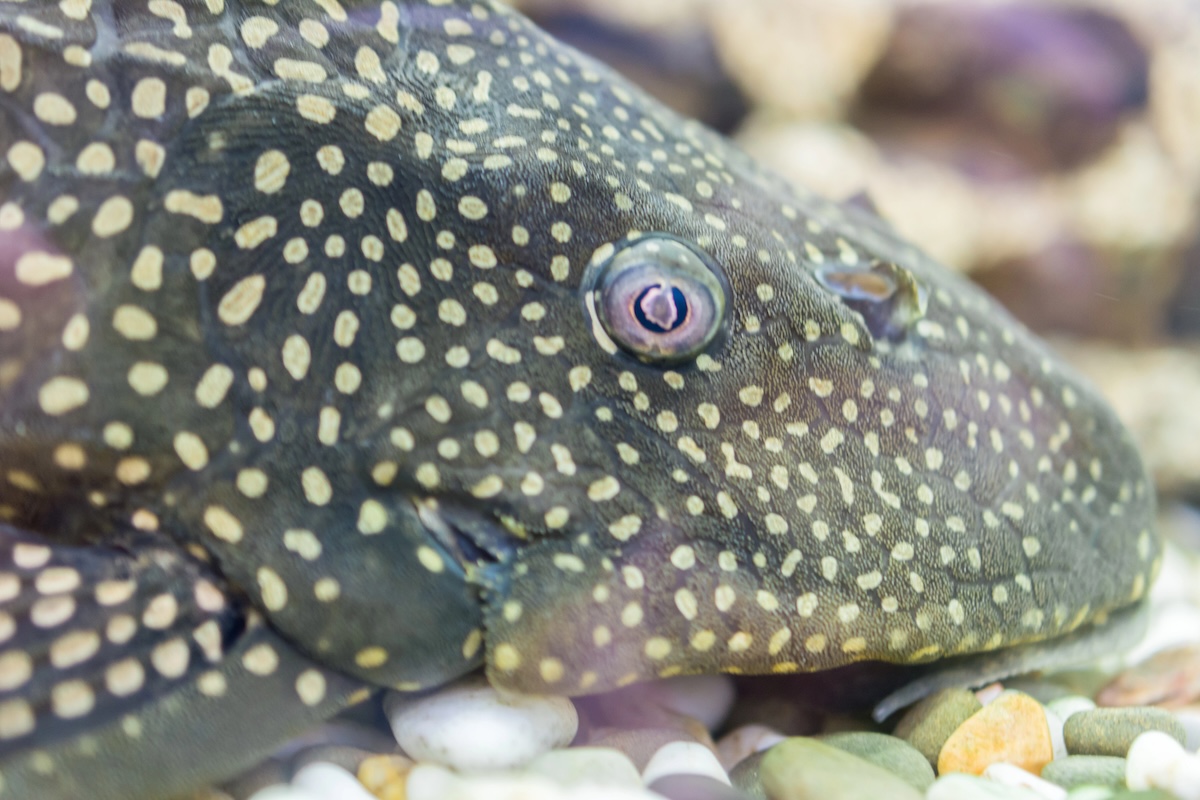 Photo Credit: habar2005 at Deposit Photos
In the winding rivers and lush wetlands of South America, the Armored Catfish, scientifically known as Hypostomus, glides gracefully through the water. With its stout body covered in bony plates, this fish resembles a miniature tank, perfectly adapted to its environment. These tough, protective scales not only shield it from predators but also give it a unique appearance that captures the attention of scientists and nature lovers alike. As it navigates the underwater world, the Armored Catfish plays a crucial role in maintaining the health of its ecosystem, making it a fascinating subject of study.
Imagine a sun-dappled riverbank, where the gentle current stirs the vibrant green algae clinging to rocks and plants. Here, the Armored Catfish thrives, using its specialized mouth to scrape away the algae and keep the river clean. This herbivorous diet helps to balance the aquatic environment, showcasing the fish’s importance beyond its striking looks. As researchers delve into the life of the Armored Catfish, they uncover not just its physical adaptations but also its behaviors and interactions within the ecosystem, revealing a complex and captivating world beneath the surface.
The Armored Catfish, a member of the family Loricariidae, holds a special place in the animal kingdom due to its distinctive bony plates that cover its body. This unique feature not only provides protection from predators but also gives it a striking appearance. Found primarily in freshwater habitats across South America, these fish are known for their ability to thrive in various environments, from slow-moving rivers to still ponds. Their adaptability and specialized feeding habits, which include scraping algae off surfaces, make them an intriguing subject of study in the world of aquatic life.
| Taxonomic Rank | Scientific Name | Meaning & Significance |
|---|---|---|
| Kingdom | Animalia | This name signifies that Armored Catfish belong to the broad group of multicellular organisms that are heterotrophic, meaning they consume organic material for energy. |
| Phylum | Chordata | Chordata refers to animals that have a notochord, a flexible rod that supports the body. In fish, this structure is replaced by the backbone during development. |
| Class | Actinopterygii | This class includes ray-finned fishes, characterized by their fin structure, which is supported by bony spines. This adaptation allows for greater maneuverability in water. |
| Order | Siluriformes | Siluriformes, or catfishes, are named after the Latin word for cat, “cattus,” due to their whisker-like barbels that resemble a cat’s whiskers, aiding in their sensory perception. |
| Family | Loricariidae | The name Loricariidae comes from the Latin “lorica,” meaning armor, which perfectly describes the bony plates that protect these fish and give them their armored appearance. |
Understanding the taxonomic classification of the Armored Catfish reveals much about its evolutionary journey. As a member of the diverse group of ray-finned fishes, it shares a common ancestry with many other aquatic species. The unique adaptations, such as its protective armor and specialized feeding habits, highlight how these fish have evolved to survive in their specific environments. This classification not only helps scientists understand the relationships between different species but also sheds light on the ecological roles that Armored Catfish play in their habitats, contributing to the balance of freshwater ecosystems.
The evolutionary journey of the Armored Catfish stretches back millions of years, tracing its roots to the ancient waters of South America. This fascinating fish belongs to the family Loricariidae, which emerged during the late Cretaceous period, around 100 million years ago. Over time, these fish adapted to their environments, evolving unique features that helped them thrive in diverse aquatic habitats.
The ancestors of the Armored Catfish were likely small, soft-bodied fish that inhabited freshwater rivers and streams. As they faced various environmental challenges, such as predation and competition for food, they began to develop bony plates, a significant evolutionary transition. These plates, made of a tough material called bone, provided protection against predators. Additionally, the evolution of specialized mouthparts allowed them to graze on algae and detritus, making them efficient scavengers in their ecosystems.
The adaptations of the Armored Catfish have been vital for their survival in the ever-changing landscapes of freshwater ecosystems. Their bony armor not only shields them from predators but also allows them to occupy niches that other fish might avoid. With specialized feeding habits and the ability to thrive in low-oxygen environments, these fish have carved out a successful existence, showcasing the power of evolution in shaping life in our planet’s waters.
The Armored Catfish presents an intriguing sight, with its stout body and a protective layer of bony plates that give it a rugged appearance. This fish is built for resilience, showcasing a robust form that can reach up to three pounds. Its shape is somewhat flattened, allowing it to navigate through the riverbeds and rocky crevices of its South American habitat with ease. The combination of its sturdy build and unique armor makes it a standout in the aquatic world.
| Feature | Description |
|---|---|
| Size | Can grow up to 3 pounds |
| Color | Typically features earthy tones, often brown or greenish, which help it blend into its surroundings |
| Skin Type | Covered in bony plates that provide protection from predators |
| Body Shape | Flattened body that aids in maneuverability in tight spaces |
The features of the Armored Catfish work together like a well-designed suit of armor, allowing it to thrive in its environment. The bony plates not only shield it from potential threats but also help it cling to surfaces in fast-moving waters. Its coloration provides excellent camouflage among rocks and plants, making it less visible to both predators and prey. This combination of strength and stealth is a perfect example of nature’s ingenuity, ensuring the Armored Catfish can survive and flourish in its aquatic realm.
The Armored Catfish thrives in a world of freshwater rivers, streams, and lakes, often found in the lush, vibrant ecosystems of South America. Picture a winding river, its banks lined with dense vegetation, where sunlight filters through the leaves, casting playful shadows on the water’s surface. Here, the Armored Catfish glides gracefully among submerged rocks and fallen branches, using its tough, bony armor to navigate through its watery home. This habitat is not just a backdrop; it is a bustling community teeming with life, where the catfish plays a vital role in the aquatic food web.
The Armored Catfish prefers warm waters, typically thriving in temperatures ranging from 22 to 28 degrees Celsius (72 to 82 degrees Fahrenheit). It is often found in areas with slow-moving currents, where the water is rich in organic material and nutrients. These fish are also adaptable to slightly brackish waters, which are a mix of fresh and saltwater, allowing them to inhabit a variety of environments. The presence of plants and submerged structures is crucial, as they provide shelter and breeding grounds, making these habitats ideal for the Armored Catfish.
Over time, the Armored Catfish has developed several adaptations that help it flourish in its specific habitats. Its bony plates not only offer protection from predators but also help it blend into the rocky riverbeds and muddy bottoms. The catfish’s ability to feed on algae and detritus—decaying organic matter—allows it to thrive in environments where food sources may be limited. Additionally, its specialized mouth is designed for scraping surfaces, making it an efficient forager in its aquatic world. These adaptations ensure that the Armored Catfish remains a resilient and integral part of its ecosystem.
The daily life of the Armored Catfish is a blend of quiet exploration and purposeful feeding. As the sun rises, these fish begin their day by foraging along the riverbed, using their sensitive barbels—whisker-like structures on their faces—to detect food hidden in the substrate. They primarily feed on algae, detritus, and small invertebrates, which they scrape off rocks and plants with their specialized mouths. Throughout the day, they navigate their freshwater habitats, often seeking out shaded areas to rest and avoid predators.
While Armored Catfish are generally solitary creatures, they do exhibit interesting social behaviors during certain times. When food is plentiful, you might find a few of them gathering in the same area, sharing the bounty of algae and organic matter. They communicate with each other through subtle body movements and changes in position, signaling their intentions without the need for loud sounds. This social interaction, though limited, helps them establish a loose hierarchy, allowing them to coexist peacefully in their environment.
| Behavior Type | Description |
|---|---|
| Feeding | Armored Catfish forage along the riverbed, using their barbels to locate food like algae and small invertebrates. |
| Social Interaction | While mostly solitary, they gather in small groups when food is abundant, communicating through body movements. |
| Resting | They often seek shaded areas to rest during the day, helping them avoid predators and conserve energy. |
These behaviors are crucial for the Armored Catfish’s survival. By foraging effectively and occasionally interacting with others, they maximize their chances of finding food while minimizing risks from predators. Their ability to adapt to their environment, whether by seeking shelter or forming temporary groups, ensures they thrive in the diverse ecosystems of South America.
The Armored Catfish primarily follows a herbivorous diet, meaning it mainly eats plant material. These fish are skilled foragers, using their specialized mouths to scrape algae and other vegetation off rocks and surfaces in their freshwater habitats. Their unique feeding behavior allows them to thrive in environments where other fish might struggle to find food. By grazing on the abundant plant life, they play a crucial role in maintaining the health of their ecosystems.
| Dietary Aspect | Details |
|---|---|
| Diet Type | Herbivore |
| Favorite Foods | Algae, aquatic plants, and detritus (decaying organic matter) |
| Prey Items | Primarily plant material; occasionally small invertebrates |
| Hunting/Foraging Strategies | Scraping algae off surfaces using specialized mouths and barbels |
This plant-based diet not only shapes the Armored Catfish’s daily routine but also influences the ecosystem around it. By consuming algae and other vegetation, these fish help control algal blooms, which can otherwise overwhelm aquatic environments. Their foraging activities contribute to nutrient cycling, making them essential players in their habitats. As they glide along the riverbeds, they not only satisfy their hunger but also support the delicate balance of life in their watery world.
When it comes to reproduction, the Armored Catfish has some interesting behaviors. During the breeding season, which typically occurs in warmer months, males become quite active. They attract females by creating nests in the substrate, often using their bodies to clear away debris. Once a female is interested, she will lay her eggs in the nest, and the male will fertilize them. This courtship ritual is not just about finding a mate; it’s a crucial part of ensuring the survival of their young.
| Reproductive Aspect | Details |
|---|---|
| Gestation Period | Approximately 4-6 days |
| Litter Size | Up to 100 eggs |
| Age of Maturity | 4-6 months |
| Name of Young | Fry |
After the eggs hatch, the fry, which are tiny and vulnerable, begin their journey in the world. The male Armored Catfish plays a vital role in their early development. He guards the nest and protects the young from potential predators. As the fry grow, they start to explore their surroundings, learning to forage for food. This nurturing behavior helps ensure that the young fish develop the skills they need to thrive in their aquatic environment, eventually maturing into independent adults ready to continue the cycle of life.
The Armored Catfish plays a vital role in its aquatic ecosystem, often found near the bottom of rivers and lakes. As a herbivore, it primarily feeds on algae and plant matter, helping to maintain the balance of its environment. However, this fish is not at the top of the food chain. It faces various predators and threats that can impact its survival.
To defend itself against these dangers, the Armored Catfish relies on its tough, bony plates, which act as a shield against predators. When threatened, it can also use its ability to hide among rocks and vegetation, blending into its surroundings. Additionally, its strong fins allow it to quickly dart away from danger. These survival strategies help the Armored Catfish navigate the challenges of its watery world, ensuring it can continue to thrive in its habitat.
A keystone species is an organism that has a disproportionately large impact on its environment relative to its abundance. In simpler terms, if you remove a keystone species, the entire ecosystem can change dramatically. The Armored Catfish, with its unique feeding habits and ecological interactions, qualifies as a keystone species in its freshwater habitats. By playing a crucial role in maintaining the balance of its ecosystem, this fish helps ensure that many other species can thrive.
The Armored Catfish primarily feeds on algae and plant matter, which helps control algal growth in rivers and lakes. By keeping algae in check, these fish prevent overgrowth that can lead to oxygen depletion in the water, a condition harmful to many aquatic organisms. Additionally, their foraging behavior stirs up sediment on the riverbed, which can enhance nutrient cycling. This process allows other plants and organisms to access essential nutrients, promoting a healthier ecosystem overall.
Moreover, the Armored Catfish serves as a food source for various predators, including larger fish and birds. This connection highlights its role in the food web, where it supports the survival of other species. By providing nourishment to these predators, the Armored Catfish helps maintain the balance of the aquatic community. Its presence also encourages biodiversity, as a variety of species can coexist in a healthy environment.
If the Armored Catfish were to disappear, the consequences could be severe. Without this fish, algal blooms could proliferate unchecked, leading to oxygen depletion and the death of many aquatic organisms. The loss of a key food source would also disrupt the food web, potentially causing declines in predator populations. Overall, the absence of the Armored Catfish would create a ripple effect, destabilizing the entire ecosystem and threatening the survival of numerous species that depend on a balanced aquatic environment.
The Armored Catfish occupies a vital ecological niche in freshwater ecosystems, particularly in South America. This fish is not just a resident of rivers and lakes; it plays a significant role in maintaining the health of its environment. By feeding primarily on algae and plant matter, the Armored Catfish helps control algal blooms, which can otherwise overwhelm aquatic habitats. Its unique adaptations, such as a specialized mouth for scraping surfaces, allow it to thrive in various freshwater settings, contributing to the balance of its ecosystem.
| Ecosystem Service | Impact |
|---|---|
| Algae Control | Prevents excessive growth of algae, promoting clearer water. |
| Habitat Modification | Scrapes surfaces, creating microhabitats for other organisms. |
| Nutrient Cycling | Breaks down plant material, enriching the sediment with nutrients. |
| Food Source | Serves as prey for larger fish and birds, supporting the food web. |
The influence of the Armored Catfish extends beyond its immediate feeding habits. For instance, as it grazes on algae, it not only keeps the water clear but also creates small patches of bare substrate. These areas can become hotspots for other aquatic life, such as invertebrates and young fish, which rely on these microhabitats for shelter and food. Additionally, by breaking down plant material, the Armored Catfish enriches the sediment, making it more fertile and beneficial for the growth of aquatic plants. This process is crucial for maintaining a balanced ecosystem where various species can thrive.
The broader ecological importance of the Armored Catfish cannot be overstated. As a keystone species, its presence helps sustain the intricate web of life in freshwater habitats. Without the Armored Catfish, the delicate balance of these ecosystems could be disrupted, leading to overgrowth of algae and a decline in water quality. By understanding and appreciating the role of this remarkable fish, we can better protect the ecosystems it supports, ensuring that they remain vibrant and healthy for generations to come.
In the intricate web of life, many species form partnerships that enhance their survival and well-being. These relationships can be classified into three main types: mutualism, where both species benefit; commensalism, where one species benefits while the other is neither helped nor harmed; and parasitism, where one species benefits at the expense of another. The Armored Catfish, known for its tough exterior and herbivorous diet, engages in various ecological relationships that illustrate the beauty of symbiosis in nature.
| Species/Type | Relationship Type | Description |
|---|---|---|
| Algae | Mutualistic | The Armored Catfish feeds on algae, helping to keep the water clean while benefiting from a nutritious food source. |
| Freshwater Shrimp | Commensal | Freshwater shrimp often share the same habitat as Armored Catfish, benefiting from the shelter provided by the catfish without affecting them. |
| Leeches | Parasitic | Leeches may attach to the Armored Catfish, feeding on its blood, which can weaken the fish but does not usually lead to its death. |
These relationships have evolved over time, shaped by the needs and behaviors of the species involved. The Armored Catfish has adapted to thrive in its environment, forming beneficial partnerships that enhance its survival. By feeding on algae, it not only sustains itself but also contributes to a healthier ecosystem. Meanwhile, the presence of shrimp in its habitat illustrates how different species can coexist, each playing a role in the vibrant tapestry of life. Understanding these connections helps us appreciate the delicate balance of nature and the importance of every creature, big or small.
The Armored Catfish is a captivating fish that not only boasts a tough exterior but also exhibits some truly surprising behaviors and adaptations. Let’s dive into some intriguing facts about this remarkable species.
The Armored Catfish has a long and storied relationship with humanity, dating back to ancient times. Indigenous peoples of South America have revered this fish for its unique adaptations and ecological importance. In many cultures, the Armored Catfish symbolizes resilience and adaptability, traits that resonate deeply with communities that rely on rivers for sustenance. These fish have been featured in local folklore and art, showcasing their significance beyond mere survival.
Today, interactions between Armored Catfish and humans are multifaceted. On one hand, these fish are often kept in aquariums, where their fascinating behaviors and algae-eating habits make them popular among fish enthusiasts. However, they also face challenges due to habitat destruction and pollution, which threaten their populations. Conservation efforts are underway to protect their natural habitats, but conflicts arise when these fish invade local waterways, sometimes disrupting ecosystems and competing with native species. This duality of admiration and conflict highlights the complex nature of our relationship with the Armored Catfish.
Looking ahead, the future of the Armored Catfish and humanity will depend on our ability to balance appreciation with responsibility. As we learn more about their ecological roles and the challenges they face, we can foster a relationship that promotes both conservation and coexistence. By protecting their habitats and understanding their needs, we can ensure that these remarkable fish continue to thrive alongside us in the vibrant ecosystems they call home.
The Armored Catfish, a resilient inhabitant of South America’s freshwater ecosystems, currently holds a conservation status of “Least Concern” according to the International Union for Conservation of Nature (IUCN). This means that, at present, the species is not facing immediate threats of extinction. Population estimates suggest that these fish are relatively stable, allowing them to thrive in their natural habitats. However, ongoing monitoring is essential to ensure that their numbers remain healthy as environmental changes occur.
| Conservation Factor | Status/Details |
|---|---|
| IUCN Status | Least Concern |
| Population Estimates | Stable |
| Trend Direction | Stable |
Despite their current stable status, Armored Catfish face several threats that could impact their future. Habitat destruction is a significant concern, as rivers and lakes are often altered for agriculture, urban development, and dam construction. Pollution from agricultural runoff and industrial waste can also degrade water quality, affecting the health of these fish and their food sources. Additionally, overfishing in some areas poses a risk, as these fish are sometimes caught for the aquarium trade or local consumption.
Conservation efforts are underway to protect the Armored Catfish and its habitat. Organizations are working to promote sustainable fishing practices and restore natural waterways. Education programs aim to raise awareness about the importance of preserving freshwater ecosystems. With continued efforts and community involvement, the outlook for the Armored Catfish remains positive, ensuring that this fascinating fish can continue to thrive in its vibrant aquatic world.
| Question | Answer |
|---|---|
| What is the natural habitat of Armored Catfish? | Armored Catfish are typically found in freshwater environments, such as rivers, lakes, and ponds. They can also tolerate brackish water, which is a mix of fresh and saltwater, allowing them to thrive in various aquatic ecosystems. |
| What do Armored Catfish eat? | These fish are herbivores, meaning they primarily eat plant material. Their diet consists of algae, aquatic plants, and detritus, which is decomposing organic matter that provides essential nutrients. |
| How do Armored Catfish behave in their environment? | Armored Catfish are known for their peaceful nature and often live in groups. They are bottom dwellers, using their armored bodies to navigate through rocky or muddy substrates while foraging for food. |
| How do Armored Catfish reproduce? | During breeding season, male Armored Catfish will create nests in the substrate where females can lay their eggs. After fertilization, the males guard the eggs until they hatch, showing a level of parental care that is quite fascinating. |
| What threats do Armored Catfish face? | While Armored Catfish are currently classified as Least Concern, they can face threats from habitat destruction and pollution. Changes in water quality and the introduction of invasive species can also impact their populations. |
| What are some interesting characteristics of Armored Catfish? | One of the most striking features of Armored Catfish is their bony plates, which provide protection from predators. They also have a unique ability to breathe air, allowing them to survive in low-oxygen environments by gulping air at the surface. |
| Can Armored Catfish be kept in aquariums? | Yes, Armored Catfish are popular in home aquariums due to their hardy nature and interesting behavior. They require a spacious tank with plenty of hiding spots and plants to mimic their natural habitat. |