Taxonomy & Classification
- Kingdom
- Animalia
- Phylum
- Chordata
- Class
- Mammalia
- Order
- Embrithopoda
- Family
- Arsinoitheriidae
- Genus
- Arsinoitherium
- Species
- Arsinoitherium

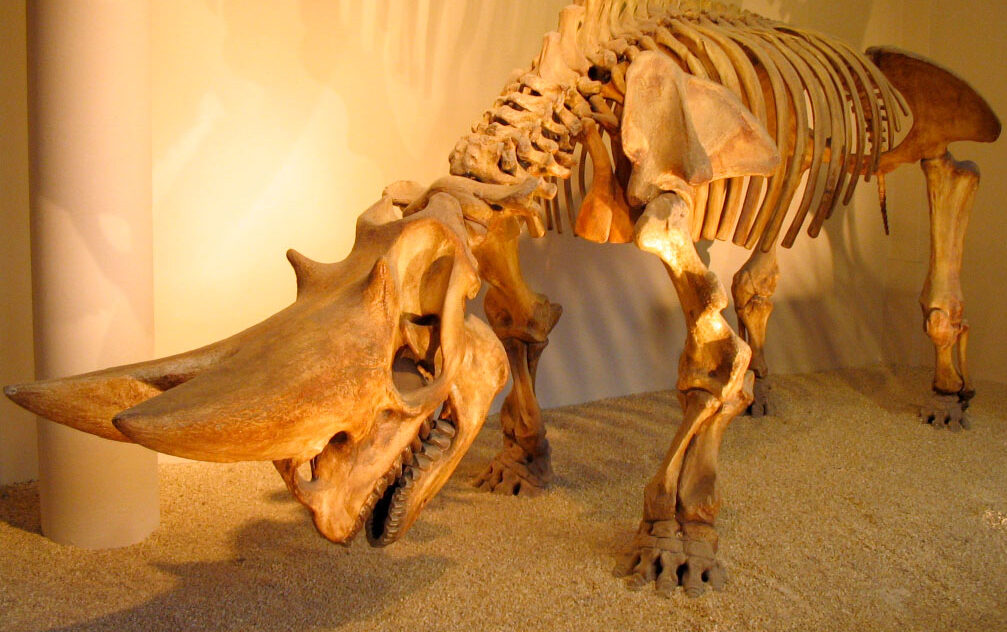 "Arsinoitherium zitteli" by Aram Dulyan (User:Aramgutang) is licensed under CC BY 2.5
In the lush, vibrant landscapes of the late Eocene epoch, a colossal mammal known as Arsinoitherium, or “the horned beast of Arsinoe,” roamed the Earth. Imagine a creature that stood as tall as a modern rhinoceros, with a robust body and sturdy legs that could navigate the marshy terrain with ease. Its most striking features included two prominent horns on its forehead, which gave it a unique appearance that has intrigued scientists and nature enthusiasts alike. These horns, along with its massive size, paint a picture of a creature that was both formidable and fascinating, a true giant of its time.
As Arsinoitherium grazed on the abundant vegetation, it played a crucial role in its ecosystem, shaping the landscape around it. Picture a world filled with shallow waters and sprawling marshlands, where the air buzzed with the sounds of chirping insects and the rustle of leaves. This ancient herbivore thrived in a habitat rich with life, feeding on leaves, fruits, and other plants that flourished in its environment. The story of Arsinoitherium is not just about its impressive size and distinctive features; it also reveals the intricate connections between species and their habitats, showcasing how this remarkable mammal contributed to the balance of its ecosystem millions of years ago.
Arsinoitherium is a captivating member of the animal kingdom, nestled within the order Embrithopoda. This ancient mammal roamed the Earth during the late Eocene epoch, around 37 to 33 million years ago. What sets Arsinoitherium apart is its unusual combination of features, including its massive size and distinctive horn-like structures on its head. These traits make it a fascinating subject for paleontologists studying the evolution of mammals. While it may look somewhat like a cross between a rhinoceros and a hippo, Arsinoitherium belongs to a group of mammals that are quite different from any living species today.
| Taxonomic Rank | Scientific Name | Meaning & Significance |
|---|---|---|
| Kingdom | Animalia | This name signifies that Arsinoitherium is part of the vast group of multicellular organisms known as animals. |
| Phylum | Chordata | Chordata means “having a notochord,” a flexible rod that supports the body, which is a key feature of all vertebrates, including Arsinoitherium. |
| Class | Mammalia | Mammalia refers to mammals, animals that possess mammary glands to feed their young, a trait that connects Arsinoitherium to modern mammals. |
| Order | Embrithopoda | This order name means “heavy foot,” highlighting the robust limbs of Arsinoitherium, which supported its large body. |
| Family | Arsinoitheriidae | Named after the genus, this family includes similar ancient mammals, emphasizing their unique evolutionary path. |
| Genus | Arsinoitherium | The name translates to “Arsinoe beast,” named after the ancient Egyptian city of Arsinoe, where fossils were first discovered, linking it to its geographic history. |
The classification of Arsinoitherium reveals much about its evolutionary history. As a member of the Embrithopoda order, it showcases a unique branch of mammals that diverged from the more familiar lineages we see today. Its adaptations, such as its size and specialized features, provide insights into the environmental conditions of its time and how mammals evolved to thrive in diverse habitats. By studying Arsinoitherium, scientists can better understand the complex web of life that has shaped the animal kingdom over millions of years.
The story of Arsinoitherium unfolds during the late Eocene epoch, a time when the Earth was teeming with diverse life forms. This ancient mammal lived approximately 37 to 33 million years ago, in a world that was vastly different from today. The climate was warm, and lush forests covered much of the land, providing a rich habitat for many species. As part of the family Arsinoitheriidae, Arsinoitherium represents a fascinating chapter in the evolutionary tale of mammals.
Arsinoitherium is believed to have evolved from earlier ancestors that were part of a group known as Embrithopoda. These ancestors were large, herbivorous mammals that adapted to their environments in unique ways. Over time, Arsinoitherium developed distinct features that set it apart from its relatives. One major transition was the development of its large, horn-like structures on its head, which likely played a role in social interactions and defense against predators. Additionally, its robust body and strong limbs suggest that it was well-adapted for traversing the dense vegetation of its habitat, allowing it to graze on a variety of plants.
These adaptations were crucial for Arsinoitherium’s survival in its environment. The large horns not only helped in social interactions but also provided a means of defense against predators. Strong limbs allowed it to navigate through dense foliage, ensuring it could find food and evade threats. Its specialized teeth enabled it to efficiently consume a variety of plants, making the most of the resources available in its lush habitat. Together, these features illustrate how Arsinoitherium was well-equipped to thrive in the dynamic ecosystems of the late Eocene.
Arsinoitherium presents an awe-inspiring sight, reminiscent of a massive, prehistoric rhinoceros. This colossal mammal boasted a robust body, supported by sturdy legs that could carry its impressive weight of around 5,511 pounds. Its smooth skin glistened under the sun, giving it a sleek appearance that contrasted with its formidable size. The most striking feature of Arsinoitherium was undoubtedly the two prominent horns that adorned its head, adding an air of majesty and power to its already imposing figure.
| Feature | Description |
|---|---|
| Weight | Approximately 5,511 pounds |
| Skin Type | Smooth, providing a sleek appearance |
| Most Distinctive Feature | Two prominent horns on its head |
The combination of Arsinoitherium’s massive size and distinctive horns likely played a crucial role in its survival. The horns could have been used for defense against predators or in battles with other members of its species, establishing dominance and securing mating rights. Its smooth skin may have helped regulate body temperature, allowing it to thrive in the warm climates of its time. Together, these features not only made Arsinoitherium a formidable presence in its environment but also a fascinating example of evolutionary adaptation.
Arsinoitherium thrived in lush, vibrant environments that were rich in life. Picture a landscape dotted with shallow waters and sprawling marshlands, where the air is filled with the sounds of chirping insects and the rustle of reeds swaying in the gentle breeze. These habitats were often teeming with vegetation, providing ample food sources for this enormous mammal. The warm, humid conditions of these wetlands created a perfect setting for Arsinoitherium to roam and forage.
The climate in these regions was typically warm and wet, ideal for the growth of dense plant life. The marshlands provided a rich ecosystem, where water and land met, creating a diverse habitat. This environment not only supported a variety of flora but also attracted numerous other animals, making it a bustling hub of activity. The consistent warmth and moisture were crucial for Arsinoitherium, as they thrived in conditions that allowed for abundant food and shelter.
To adapt to these specific habitats, Arsinoitherium developed features that suited its environment perfectly. Its large size and sturdy legs enabled it to navigate through marshy terrain with ease, while its strong teeth were designed for grazing on the tough, fibrous plants that grew in these wetlands. This ancient mammal was well-equipped to thrive in a world where water and land intertwined, showcasing the incredible ways life can adapt to its surroundings.
Arsinoitherium led a life that revolved around the lush, green landscapes of its time. Each day began with the rising sun, casting warm light over the marshy habitats where these massive mammals roamed. They spent their mornings foraging for food, munching on a variety of vegetation, including leaves, shrubs, and aquatic plants. With their strong, sturdy legs, they moved gracefully through the wetlands, using their large, flat teeth to grind down tough plant material. As the day progressed, they would often take breaks to wallow in the cool, muddy waters, which helped keep their skin moist and protected from the sun.
Socially, Arsinoitherium was likely a creature of community. These animals probably formed small groups, allowing them to benefit from the safety of numbers. Living in herds would have provided protection against predators, as well as opportunities for social interaction. Within these groups, individuals may have established bonds, communicating through a range of sounds and body language. This social structure would have been essential for raising young and sharing knowledge about food sources and safe areas.
| Behavior Type | Description |
|---|---|
| Foraging | Arsinoitherium spent much of its day searching for and eating a variety of plants, including leaves and aquatic vegetation. |
| Wallowing | To keep cool and protect their skin, these mammals often wallowed in mud or shallow water, which also helped them avoid parasites. |
| Group Living | They likely lived in small herds, providing safety in numbers and fostering social bonds among individuals. |
| Communication | Arsinoitherium may have used vocalizations and body language to communicate with one another, helping to maintain group cohesion. |
The behaviors of Arsinoitherium were finely tuned to ensure their survival in a dynamic environment. By foraging in groups, they maximized their chances of finding food while minimizing the risk of becoming prey. Their social interactions not only strengthened bonds within the herd but also facilitated the sharing of vital information about resources and threats. Through these daily activities, Arsinoitherium thrived in its lush habitat, leaving a lasting mark on the ancient world.
Arsinoitherium was a dedicated herbivore, meaning it primarily fed on plants. This ancient mammal had a diet that consisted mainly of leaves, fruits, and other vegetation found in its lush, marshy habitat. With its large size and strong teeth, Arsinoitherium was well-equipped to munch on tough, fibrous plants. It likely spent much of its day foraging for food, using its keen sense of smell to locate the tastiest greens.
| Dietary Aspect | Details |
|---|---|
| Diet Type | Herbivore |
| Favorite Foods | Leaves, fruits, and fibrous plants |
| Prey Items | None, as it was not a predator |
| Hunting/Foraging Strategies | Foraged in marshy areas, using smell to find food |
The diet of Arsinoitherium played a crucial role in shaping its ecology and daily routine. By consuming vast amounts of vegetation, it helped maintain the balance of its environment, preventing overgrowth and promoting biodiversity. Its foraging habits likely influenced the plant life around it, as well as the other animals that shared its habitat. This ancient mammal’s lifestyle was a vital part of the ecosystem, demonstrating how interconnected life can be in the natural world.
Mating behavior in Arsinoitherium likely revolved around specific breeding seasons, much like many modern mammals. During these times, males would compete for the attention of females, showcasing their strength and size. This competition could involve displays of dominance, such as vocalizations or physical posturing. Once a male successfully attracted a female, they would mate, setting the stage for the next generation of these fascinating creatures.
| Reproductive Aspect | Details |
|---|---|
| Gestation Period | Approximately 10 to 12 months |
| Litter Size | Usually one |
| Age of Maturity | About 2 to 3 years |
| Name of Young | Calf |
After birth, parental care was crucial for the survival of young Arsinoitherium. The calves would rely on their mothers for nourishment, receiving milk that provided essential nutrients for growth. As they matured, these young mammals would learn vital skills from their parents, such as foraging for food and navigating their lush habitats. This nurturing environment helped them develop into strong adults, ready to thrive in the vibrant ecosystems of their time.
Arsinoitherium occupied a unique position in its ancient ecosystem, serving as a large herbivore that played a crucial role in the food web. As a massive plant-eater, it helped shape the vegetation of its lush, marshy habitat. However, being a large herbivore also meant that it faced various dangers from predators and environmental challenges.
To defend itself against these threats, Arsinoitherium likely relied on its size and strength. With its robust body and powerful legs, it could charge at potential predators, using its weight to intimidate or fend off attackers. Additionally, its herbivorous diet allowed it to thrive in areas rich in vegetation, providing ample food sources to sustain itself. By staying in groups, these ancient mammals may have also benefited from social behaviors, helping to keep watch for dangers in their environment.
A keystone species is an organism that has a disproportionately large impact on its environment relative to its abundance. These species help maintain the structure of an ecosystem, influencing the types and numbers of other species. Arsinoitherium, an ancient herbivore that roamed the Earth millions of years ago, qualifies as a keystone species in its ecosystem. Its role as a large plant-eater allowed it to shape the landscape and influence the dynamics of the habitats it inhabited.
Arsinoitherium thrived in lush marshlands and shallow waters, where it fed on a variety of vegetation. By consuming large amounts of plant material, it helped control the growth of certain plant species, preventing any one type from dominating the landscape. This grazing behavior promoted biodiversity, allowing a variety of plants to flourish. In turn, this diverse plant life provided habitats and food for numerous other species, from insects to smaller mammals.
Moreover, as a large herbivore, Arsinoitherium likely played a role in nutrient cycling. When it grazed, it not only consumed plants but also contributed to the soil’s health through its waste. This waste enriched the soil, promoting the growth of more vegetation, which further supported the ecosystem. Additionally, its movements through the marshy terrain may have created pathways that other animals could use, enhancing connectivity within the habitat.
If Arsinoitherium were to disappear from its ecosystem, the effects would be profound. Without this large herbivore, certain plant species could become overly dominant, leading to a decline in plant diversity. This shift would ripple through the food web, affecting not only the plants but also the animals that depend on them for food and shelter. The overall health of the ecosystem would decline, demonstrating just how crucial Arsinoitherium was to maintaining the balance of its environment.
Arsinoitherium, a fascinating herbivore from the late Eocene epoch, played a vital role in shaping its ecosystem. This massive mammal thrived in lush marshlands and shallow waters, where it fed on a variety of plants. By munching on leaves and fruits, Arsinoitherium helped maintain the balance of plant life in its environment. Its presence influenced not just the vegetation but also the other animals that shared its habitat, making it a key player in the ancient ecosystem.
| Ecosystem Service | Impact |
|---|---|
| Vegetation Management | Controls plant growth by feeding on various species, preventing overgrowth. |
| Soil Aeration | Its movement through marshy areas helps aerate the soil, promoting healthy plant growth. |
| Seed Dispersal | As it consumes fruits, Arsinoitherium aids in spreading seeds, contributing to plant diversity. |
| Habitat Creation | By grazing, it creates open spaces that benefit other species, allowing for a diverse ecosystem. |
Arsinoitherium’s influence on its environment can be seen in various ways. For instance, as it grazed on the abundant vegetation, it prevented certain plant species from dominating the landscape. This grazing behavior allowed a variety of plants to flourish, which in turn supported a diverse array of insects and smaller animals. Additionally, its large size and movement through the marshy terrain helped to aerate the soil, making it easier for new plants to take root and grow. This dynamic interaction with its surroundings illustrates how one species can significantly impact the entire ecosystem.
The broader ecological importance of Arsinoitherium cannot be overstated. As a keystone species, it played a crucial role in maintaining the structure and health of its environment. By managing vegetation, aerating soil, and promoting biodiversity, Arsinoitherium helped create a thriving habitat for countless other organisms. Its legacy reminds us of the interconnectedness of life and the vital roles that even the largest herbivores play in sustaining the delicate balance of ecosystems. Understanding these relationships helps us appreciate the complexity of nature and the importance of preserving such ecosystems today.
In the intricate web of life, symbiosis refers to the close interactions between different species, which can take on various forms. These relationships can be mutualistic, where both species benefit, parasitic, where one benefits at the other’s expense, or commensal, where one benefits while the other is neither helped nor harmed. Understanding these connections helps us appreciate how species like Arsinoitherium interacted with their environment and other organisms during the late Eocene epoch.
| Species/Type | Relationship Type | Description |
|---|---|---|
| Various plants | Mutualistic | Arsinoitherium fed on leaves and fruits, helping plants by spreading their seeds through its droppings. |
| Insects (e.g., beetles) | Commensal | Insects may have lived on or around Arsinoitherium, benefiting from its presence without affecting it. |
| Predatory mammals | Parasitic | While Arsinoitherium was a large herbivore, young or weak individuals could have been preyed upon by larger carnivores. |
These relationships evolved over time, shaped by the needs and behaviors of the species involved. For instance, the mutualistic bond between Arsinoitherium and the plants it consumed not only provided nourishment for the mammal but also aided in the plants’ reproduction. Meanwhile, the presence of insects around Arsinoitherium illustrates how different species can coexist, each finding their niche in the ecosystem. Understanding these dynamics reveals the complexity of ancient environments and highlights the interconnectedness of life, a theme that continues to resonate in today’s ecosystems.
Arsinoitherium is a fascinating ancient mammal that roamed the Earth millions of years ago, and it has some surprising traits that make it stand out in the animal kingdom.
Arsinoitherium, an ancient mammal that roamed the Earth millions of years ago, has captured the imagination of scientists and history enthusiasts alike. While it is long extinct, this remarkable creature has left its mark on human culture through fossil discoveries and artistic representations. Early encounters with its remains have sparked curiosity about prehistoric life, leading to a deeper understanding of evolution and the ecosystems of the past. In various cultures, Arsinoitherium has been depicted in art and literature, symbolizing the grandeur of the ancient world and the mysteries that lie beneath our feet.
Today, the relationship between humans and the legacy of Arsinoitherium is primarily one of scientific exploration and conservation. While we cannot interact with this extinct species directly, studying its fossils helps us understand the environmental changes that have occurred over millions of years. This knowledge is crucial as we face modern challenges like climate change and habitat loss. By learning from the past, we can better protect the ecosystems that still exist today, ensuring that the lessons of ancient species like Arsinoitherium inform our conservation efforts.
Looking ahead, the future of our relationship with the legacy of Arsinoitherium is filled with potential. As we continue to uncover more about this ancient mammal, we can draw parallels to current species facing extinction. By fostering a sense of wonder and responsibility towards our planet’s history, we can inspire future generations to protect the biodiversity that remains. The story of Arsinoitherium serves as a reminder of the delicate balance of life and the importance of preserving our natural world for years to come.
Arsinoitherium, a remarkable ancient mammal, is classified as extinct. This means that there are no living individuals of this species today. Once roaming the Earth during the late Eocene epoch, Arsinoitherium has left behind a rich fossil record that helps scientists understand its life and environment. Unfortunately, the population trends for this species are no longer applicable, as it has vanished from our planet.
| Conservation Factor | Status/Details |
|---|---|
| IUCN Status | Extinct |
| Population Estimates | None (extinct) |
| Trend Direction | N/A |
The main threats that led to the extinction of Arsinoitherium are not entirely clear, as it lived millions of years ago. However, like many prehistoric species, it likely faced challenges from climate change and habitat loss. As the Earth’s climate shifted, the lush environments that supported its life may have changed dramatically, making survival increasingly difficult. Additionally, competition with other herbivores for food resources could have played a role in its decline.
Today, there are no conservation efforts aimed at Arsinoitherium, as it is long gone. However, studying its fossils helps scientists learn about the ecosystems of the past and the factors that can lead to extinction. By understanding these ancient species, we can better protect the wildlife that still exists today. The story of Arsinoitherium serves as a reminder of the importance of preserving our planet’s biodiversity and the delicate balance of life that sustains it.
| Question | Answer |
|---|---|
| What was the habitat of Arsinoitherium? | Arsinoitherium lived in shallow water and marshlands. These environments provided plenty of vegetation, which was essential for its diet as a herbivore. |
| What did Arsinoitherium eat? | As a herbivore, Arsinoitherium primarily fed on plants. Its diet likely included soft leaves, aquatic plants, and other vegetation found in its marshy habitat. |
| What were the distinctive features of Arsinoitherium? | One of the most striking features of Arsinoitherium was its two horns on its head. These horns may have been used for defense or possibly for display during mating rituals. |
| How did Arsinoitherium behave? | While we can't observe Arsinoitherium directly, scientists believe it was a social animal. It likely lived in groups, which can help protect against predators and assist in finding food. |
| How did Arsinoitherium reproduce? | Like many mammals, Arsinoitherium would have given birth to live young. The specifics of its reproductive behavior are not well-documented, but it likely cared for its young until they were old enough to fend for themselves. |
| What were the threats to Arsinoitherium? | As an extinct species, Arsinoitherium faced threats from environmental changes and competition for food. Habitat loss and climate shifts could have played significant roles in its extinction. |
| What is the conservation status of Arsinoitherium? | Arsinoitherium is classified as extinct. It lived millions of years ago, and while it thrived in its time, it eventually disappeared from the Earth. |