Taxonomy & Classification
- Kingdom
- Animalia
- Phylum
- Chordata
- Class
- Actinopterygii
- Order
- Osteoglossiformes
- Family
- Osteoglossidae
- Genus
- Scleropages
- Species
- Scleropages formosus

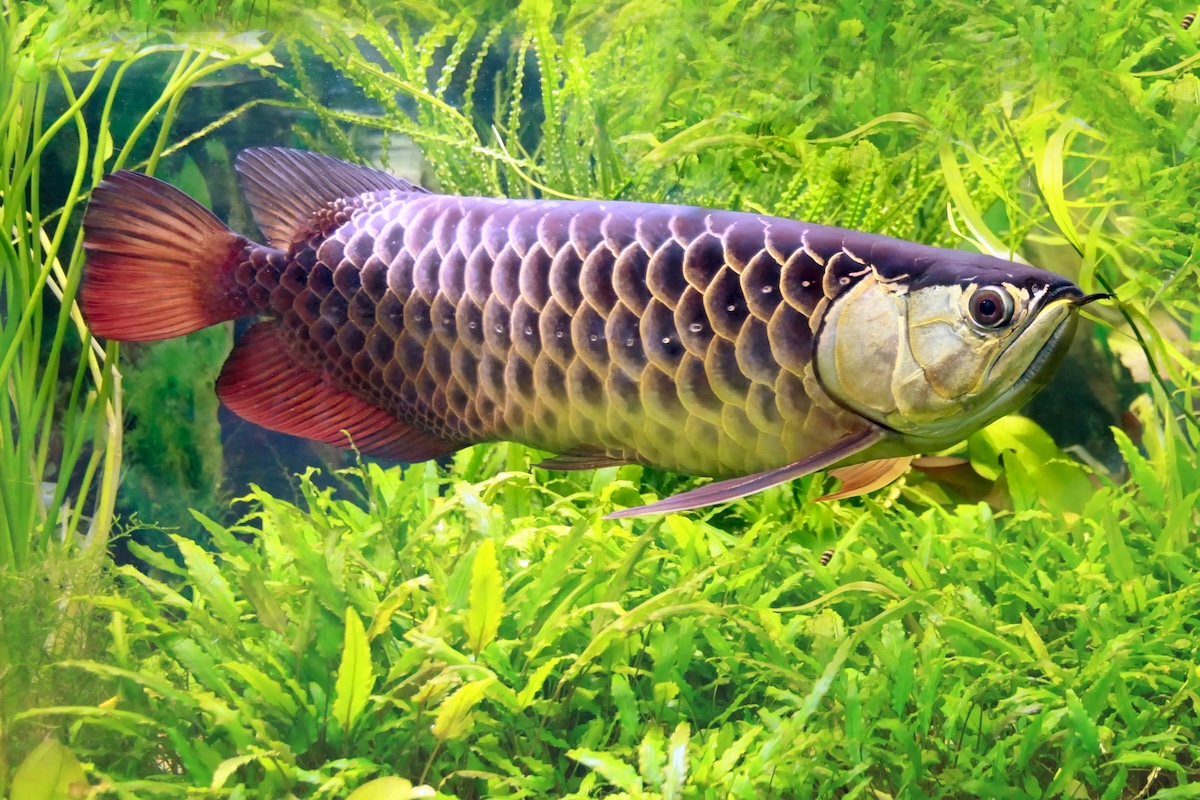 Photo Credit: geniuslady at Deposit Photos
In the shimmering waters of Southeast Asia, the Asian Arowana, scientifically known as Scleropages formosus, glides gracefully through its lush habitat. Often called the “dragon fish” for its elongated body and shimmering scales, this captivating creature is a sight to behold. With its vibrant colors ranging from silver to deep red, the Asian Arowana stands out against the backdrop of dense vegetation and winding rivers. Its long, flowing fins and sharp, keen eyes give it an air of elegance and power, making it a favorite among both scientists and nature enthusiasts.
As it navigates the tranquil waters, the Asian Arowana showcases its unique hunting skills, preying on smaller fish and insects with remarkable precision. This carnivorous fish is not just a beautiful sight; it plays a crucial role in its ecosystem, helping to maintain the balance of life in its aquatic environment. The Asian Arowana’s fascinating behaviors, from its solitary lifestyle to its elaborate courtship rituals during breeding season, reveal a complex world that invites curiosity and admiration. As we dive deeper into the life of this extraordinary fish, we will explore its habitat, diet, and the challenges it faces in the wild, all while uncovering the secrets that make the Asian Arowana a true marvel of nature.
The Asian Arowana, a captivating fish often referred to as the “dragon fish,” holds a special place in the tree of life. It belongs to the kingdom Animalia, which includes all animals, and is classified under the phylum Chordata, meaning it has a backbone. This stunning fish is part of the class Actinopterygii, which encompasses ray-finned fishes, known for their bony structures and diverse forms. What sets the Asian Arowana apart is its ancient lineage and unique adaptations, such as its ability to leap out of the water and its striking, metallic scales that shimmer in various colors. This fish is not just a pretty face; it has a rich evolutionary history that connects it to some of the earliest fish species.
| Taxonomic Rank | Scientific Name | Meaning & Significance |
|---|---|---|
| Kingdom | Animalia | Derived from the Latin word “animalis,” meaning “having breath” or “living.” This classification includes all living organisms that are not plants or fungi. |
| Phylum | Chordata | From the Latin “chorda,” meaning “string” or “cord,” referring to the notochord, a flexible rod that supports the body in the early stages of development. |
| Class | Actinopterygii | Meaning “ray-finned,” this class includes fish with fins supported by bony rays, allowing for a wide range of movement and adaptability in aquatic environments. |
| Order | Osteoglossiformes | This name comes from Greek roots meaning “bony tongue,” which refers to the unique structure of the fish’s tongue that is often covered in teeth. |
| Family | Osteoglossidae | Similar to the order, this family name also highlights the bony tongue feature, emphasizing its evolutionary significance in feeding and communication. |
| Genus | Scleropages | From Greek, meaning “hard page,” which refers to the tough, bony scales that protect the fish and contribute to its striking appearance. |
The classification of the Asian Arowana reveals much about its evolutionary journey. As a member of the Osteoglossidae family, it shares traits with ancient fish that have thrived for millions of years. This lineage showcases the adaptability and resilience of the Asian Arowana, allowing it to survive in diverse habitats across Southeast Asia. Its unique features, such as the bony tongue and shimmering scales, not only enhance its beauty but also reflect its evolutionary adaptations to both predation and environmental challenges. Understanding its place in the animal kingdom helps us appreciate the intricate web of life and the remarkable history that shapes each species.
The evolutionary journey of the Asian Arowana stretches back millions of years, tracing its lineage to ancient freshwater fish that swam in the waters of Southeast Asia. This captivating fish, scientifically known as Scleropages, is part of the Osteoglossidae family, which has roots that can be traced to the Cretaceous period, around 100 million years ago. Over time, these fish adapted to their environments, leading to the diverse forms we see today.
The ancestors of the Asian Arowana were likely similar to other bony fish, but they began to develop unique features that set them apart. One major transition occurred as they evolved to thrive in freshwater habitats, leading to adaptations that enhanced their survival in rivers and lakes. Their bodies became more streamlined, allowing for agile movement through the water. Additionally, they developed specialized air-breathing capabilities, which enabled them to survive in oxygen-poor environments. This adaptation was crucial, as it allowed them to exploit a variety of habitats and food sources.
The adaptations of the Asian Arowana have played a vital role in its survival and success in diverse aquatic environments. By developing the ability to breathe air, it can thrive in habitats where other fish might struggle. Its streamlined body and long fins enhance its agility, allowing it to hunt effectively and escape from threats. The striking colors not only serve a purpose in attracting mates but also help it blend into its surroundings, providing an extra layer of protection. Together, these features illustrate how evolution has shaped the Asian Arowana into a resilient and adaptable species, capable of thriving in the ever-changing waters of its Southeast Asian home.
The Asian Arowana is a stunning fish that captures the imagination with its elongated body and graceful fins. Its sleek form glides through the water like a shimmering arrow, showcasing a blend of elegance and power. With a length that can reach up to 90 centimeters (about 35 inches), this fish is not just a sight to behold but also a marvel of nature’s design. Its most striking feature is the bright, lustrous scales that reflect light in a dazzling array of colors, making it look almost otherworldly as it swims.
| Feature | Description |
|---|---|
| Weight | Up to 6.8 kg (15 lbs) |
| Skin Type | Scales |
| Most Distinctive Feature | Bright lustrous scales |
These features work together to create a fish that is not only beautiful but also well-adapted to its environment. The lustrous scales serve a dual purpose: they help the Asian Arowana blend into the shimmering waters of its Southeast Asian habitat while also providing protection against predators. The streamlined body allows for swift movement, enabling it to dart away from danger or chase after prey. In the world of aquatic life, the Asian Arowana stands out as a symbol of grace and resilience, perfectly crafted for survival in its watery realm.
The Asian Arowana thrives in the lush, vibrant waters of Southeast Asia, where it calls rivers and swamps its home. Picture a serene landscape filled with winding waterways, surrounded by dense vegetation and the sounds of nature. These habitats are often rich in plant life, providing the perfect backdrop for this elegant fish to navigate and hunt. The water is typically calm, allowing the Arowana to glide effortlessly, showcasing its beauty and agility.
The climate in these regions is generally warm and humid, with temperatures often ranging from 75 to 86 degrees Fahrenheit (24 to 30 degrees Celsius). The Asian Arowana prefers freshwater environments, where the water is slightly acidic to neutral. These conditions are essential for its health and well-being, as they support the growth of the plants and microorganisms that form the base of its diet.
To thrive in its specific habitats, the Asian Arowana has developed several adaptations. Its long, streamlined body allows it to maneuver swiftly through the water, while its keen eyesight helps it spot prey among the shadows of submerged plants. Additionally, the Arowana has a unique ability to gulp air from the surface, which is particularly useful in oxygen-poor waters. This remarkable adaptation ensures that it can survive and flourish in the diverse ecosystems of Southeast Asia.
The Asian Arowana leads a life that is both solitary and purposeful. Each day, it glides through its freshwater habitat, often exploring the depths of rivers and swamps. This fish is known for its keen hunting skills, using its sharp eyesight to spot prey like insects and smaller fish. As the sun rises, the Arowana becomes more active, darting through the water with agility. It spends much of its time swimming near the surface, where it can easily catch its favorite snacks.
While the Asian Arowana is primarily a solitary creature, it does exhibit interesting behaviors when it comes to its environment. These fish are known to be territorial, often claiming specific areas of their habitat. When they encounter other Arowanas, they may display a range of behaviors, from aggressive posturing to more subtle forms of communication. This can include body movements and changes in color, which help convey their mood or intentions. Although they prefer to be alone, these interactions are crucial for establishing boundaries and maintaining their space.
| Behavior Type | Description |
|---|---|
| Activity Patterns | Active during the day, hunting near the water’s surface for insects and smaller fish. |
| Social Structure | Primarily solitary, but can exhibit territorial behavior when encountering other Arowanas. |
| Communication Methods | Uses body movements and color changes to express mood and establish territory. |
The behaviors of the Asian Arowana are finely tuned to ensure its survival in the wild. By being active during the day, it maximizes its chances of finding food while avoiding larger predators. Its solitary nature allows it to maintain control over its territory, reducing competition for resources. Through effective communication, even in a solitary lifestyle, the Arowana can navigate its environment with confidence, ensuring it thrives in the vibrant ecosystems of Southeast Asia.
The Asian Arowana is a carnivore, meaning it primarily eats meat. This fish has a diverse diet that includes a variety of prey items, showcasing its adaptability in the wild. With its keen eyesight and agile movements, the Asian Arowana hunts for food both near the water’s surface and deeper in the aquatic environment. It often employs a strategy of ambush, waiting patiently for unsuspecting prey to come close before striking with precision.
| Dietary Aspect | Details |
|---|---|
| Diet Type | Carnivore |
| Favorite Foods | Insects, frogs, spiders, lizards, birds, bats |
| Prey Items | Small fish, crustaceans, and various invertebrates |
| Hunting/Foraging Strategies | Ambush predator, often striking from hiding spots |
The diet of the Asian Arowana plays a crucial role in its ecology and daily routine. By preying on a variety of animals, it helps maintain the balance of its ecosystem, controlling populations of insects and small vertebrates. This not only supports the health of its habitat but also influences the behavior of other species in the area. As it hunts, the Asian Arowana showcases its agility and intelligence, making each feeding session an essential part of its life in the vibrant waters of Southeast Asia.
The mating behavior of the Asian Arowana is as captivating as the fish itself. During the breeding season, which typically occurs in the rainy months, males and females engage in elaborate courtship displays. The male often showcases his vibrant colors and performs intricate swimming patterns to attract a mate. Once a pair has formed, they will select a suitable nesting site, usually in shallow waters among submerged vegetation, where they can lay their eggs safely.
| Reproductive Aspect | Details |
|---|---|
| Gestation Period | Approximately 2-3 weeks |
| Litter Size | Up to 30 eggs |
| Age of Maturity | 1-2 years |
| Name of Young | Fry |
After the eggs are laid, the male takes on a crucial role in parental care. He guards the nest and ensures the eggs are safe from predators. Once the eggs hatch, the fry emerge, tiny and vulnerable, but they are not left to fend for themselves. The male continues to protect them, guiding them to suitable feeding areas. As the fry grow, they begin to develop their striking colors and unique patterns, gradually transforming into the stunning adults they will become. This nurturing behavior highlights the strong bond between the parents and their young, showcasing the importance of care in the early stages of life.
The Asian Arowana occupies a significant position in its aquatic food web, primarily as a predator. This fish, with its sharp eyesight and agile movements, hunts smaller fish and insects, playing a crucial role in maintaining the balance of its ecosystem. However, despite its prowess as a hunter, the Asian Arowana faces numerous dangers that threaten its survival.
To defend itself against these threats, the Asian Arowana employs several survival strategies. Its sleek body allows for quick escapes from predators, while its ability to leap out of the water can startle potential threats. Additionally, the fish often seeks refuge in dense vegetation, where it can hide from both predators and human activities. By adapting to its environment and using its natural instincts, the Asian Arowana continues to navigate the challenges it faces in the wild.
A keystone species is an organism that plays a critical role in maintaining the structure of its ecosystem. Its presence or absence can significantly impact the environment and the other species that inhabit it. The Asian Arowana, often called the “dragon fish,” qualifies as a keystone species due to its position as a top predator in its freshwater habitat. By controlling the populations of smaller fish and insects, it helps maintain a balanced ecosystem in the rivers and swamps of Southeast Asia.
The ecological impact of the Asian Arowana is profound. As a carnivore, it primarily feeds on smaller fish and various aquatic insects. This predatory behavior helps regulate the populations of these species, preventing any one group from becoming too dominant. For example, if the Asian Arowana were to decline in numbers, the populations of smaller fish could explode, leading to overgrazing of aquatic plants and a decline in water quality. This ripple effect can disrupt the entire food web, affecting not just fish but also birds and other wildlife that rely on these habitats.
Moreover, the Asian Arowana contributes to nutrient cycling within its ecosystem. As it hunts and consumes prey, it also produces waste that enriches the water, providing essential nutrients for plants and microorganisms. This process supports the growth of aquatic vegetation, which in turn offers shelter and food for various species, creating a thriving community in the water.
If the Asian Arowana were to disappear, the consequences would be significant. The balance of its ecosystem would be thrown into disarray, leading to overpopulation of smaller fish and insects. This could result in the degradation of aquatic plants, which are vital for oxygen production and habitat structure. Ultimately, the loss of the Asian Arowana would not only affect the species that directly depend on it but could also lead to a decline in overall biodiversity, making the ecosystem less resilient to changes and challenges.
The Asian Arowana, often called the “dragon fish,” plays a vital role in its ecosystem, particularly in the rivers and swamps of Southeast Asia. As a carnivore, it occupies a unique ecological niche, where it helps regulate the populations of smaller fish and aquatic insects. This balance is crucial for maintaining the health of its habitat, as it ensures that no single species dominates the ecosystem. By controlling prey populations, the Asian Arowana contributes to the overall biodiversity of its environment, making it a key player in the aquatic food web.
| Ecosystem Service | Impact |
|---|---|
| Population Control | Regulates the numbers of smaller fish and insects, preventing overpopulation. |
| Nutrient Cycling | Contributes to nutrient cycling through its feeding habits, which supports plant growth. |
| Habitat Structure | Influences the physical structure of its habitat by interacting with aquatic vegetation. |
| Food Source | Serves as prey for larger predators, linking different levels of the food web. |
The Asian Arowana’s influence can be seen in various ways. For instance, by preying on smaller fish, it helps maintain a balanced ecosystem, allowing diverse species to thrive. This balance is essential for the health of aquatic plants, which rely on stable fish populations to flourish. Additionally, the Arowana’s feeding habits contribute to nutrient cycling, as its waste products enrich the water, promoting the growth of algae and other aquatic plants. These plants, in turn, provide shelter and food for countless other organisms, creating a vibrant underwater community.
The broader ecological importance of the Asian Arowana cannot be overstated. As a keystone species, its presence is crucial for the stability of its ecosystem. When the Asian Arowana thrives, it supports a rich tapestry of life, from the tiniest microorganisms to larger predators. Conversely, if its population declines, the ripple effects can lead to imbalances that threaten the entire aquatic environment. By understanding the role of the Asian Arowana, we gain insight into the delicate interconnections that sustain life in our planet’s waterways.
In the intricate web of life, symbiosis refers to the close interactions between different species, which can take on various forms. These relationships can be mutualistic, where both species benefit, parasitic, where one benefits at the other’s expense, or commensal, where one benefits while the other is neither helped nor harmed. The Asian Arowana, a striking fish native to the rivers and swamps of Southeast Asia, engages in several fascinating ecological relationships that highlight the complexity of its environment.
| Species/Type | Relationship Type | Description |
|---|---|---|
| Cleaner Fish | Mutualistic | Cleaner fish, such as certain species of wrasse, remove parasites and dead skin from the Asian Arowana, benefiting from the food source while keeping the Arowana healthy. |
| Leeches | Parasitic | Leeches attach to the Arowana, feeding on its blood, which can weaken the fish and make it more vulnerable to disease. |
| Water Plants | Commensal | Water plants provide shelter and breeding grounds for smaller fish and invertebrates, which in turn can attract prey for the Arowana without affecting the plants. |
The evolution of these relationships showcases the dynamic interactions that have developed over time. The Asian Arowana has adapted to its environment, forming partnerships that enhance its survival and health. Mutualistic relationships, like those with cleaner fish, illustrate how cooperation can lead to greater success in the wild. Meanwhile, parasitic interactions remind us of the challenges that come with living in a shared habitat. Understanding these connections not only enriches our knowledge of the Asian Arowana but also highlights the delicate balance of ecosystems where every species plays a role.
The Asian Arowana, often called the “dragon fish,” is a captivating species that enchants both aquarists and nature lovers alike. With its shimmering scales and intriguing behaviors, this fish has a lot more to offer than meets the eye.
The Asian Arowana, often celebrated as a symbol of prosperity and good fortune, has a rich history intertwined with human culture. For centuries, this striking fish has been revered in various Asian traditions, particularly in Chinese culture, where it is believed to bring luck and wealth. Ancient texts and folklore often depict the Arowana as a dragon, a creature associated with power and success. This cultural significance has led to its presence in homes and businesses, where it is often kept in aquariums as a talisman of good fortune.
In modern times, the relationship between the Asian Arowana and humanity has evolved, reflecting both conservation efforts and challenges. As demand for this fish has surged, particularly in the aquarium trade, it has faced threats from overfishing and habitat loss. Conservationists are now working diligently to protect wild populations and their habitats, recognizing the need to balance human interest with ecological sustainability. Additionally, some enthusiasts have taken to breeding Arowanas in captivity, which helps reduce pressure on wild stocks while allowing people to enjoy these magnificent fish responsibly.
As we look to the future, the relationship between the Asian Arowana and humanity stands at a crossroads. With increased awareness of environmental issues and the importance of biodiversity, there is hope for a more harmonious coexistence. By prioritizing sustainable practices and respecting the natural habitats of these extraordinary fish, we can ensure that future generations will continue to appreciate the beauty and cultural significance of the Asian Arowana. Together, we can foster a world where both humans and wildlife thrive.
The Asian Arowana, often celebrated for its beauty and cultural significance, is currently classified as Endangered. This status reflects a concerning decline in its population, primarily due to habitat loss and overfishing. While exact population numbers are difficult to determine, the trend indicates a worrying decrease, prompting urgent conservation efforts to protect this iconic species.
| Conservation Factor | Status/Details |
|---|---|
| IUCN Status | Endangered |
| Estimated Population Size | Unknown |
| Population Trend | Decreasing |
The main threats to the Asian Arowana are significant and multifaceted. Habitat destruction, primarily due to deforestation and pollution, has severely impacted the rivers and swamps where these fish thrive. Additionally, the demand for Asian Arowanas in the aquarium trade has led to overfishing, further exacerbating their decline. These pressures not only threaten the fish itself but also disrupt the delicate balance of the ecosystems they inhabit.
Conservation efforts are underway to help safeguard the future of the Asian Arowana. Various organizations are working to protect its natural habitats and regulate fishing practices. Awareness campaigns aim to educate the public about the importance of this species and the need for sustainable practices. With continued efforts and support, there is hope that the Asian Arowana can recover and once again flourish in its native waters.
| Question | Answer |
|---|---|
| What is the natural habitat of the Asian Arowana? | The Asian Arowana is found in the rivers and swamps of Southeast Asia. These fish prefer slow-moving waters where they can hide among plants and debris, making them feel safe from predators. |
| What does the Asian Arowana eat? | As a carnivore, the Asian Arowana primarily feeds on insects, small fish, and crustaceans. Their diet is rich in protein, which helps them grow strong and maintain their vibrant colors. |
| How does the Asian Arowana behave in the wild? | Asian Arowanas are known for their graceful swimming and curious nature. They often explore their surroundings and can be quite social with other fish, especially during feeding times. |
| How do Asian Arowanas reproduce? | Asian Arowanas are mouthbrooders, meaning the female lays eggs, and the male carries them in his mouth until they hatch. This unique behavior helps protect the young fish from predators during their early development. |
| What threats do Asian Arowanas face? | Asian Arowanas are classified as endangered due to habitat loss and overfishing. Pollution and the destruction of their natural environments also pose significant risks to their survival. |
| What is a distinctive feature of the Asian Arowana? | The most striking characteristic of the Asian Arowana is its bright, lustrous scales. These scales can come in various colors, including gold, red, and silver, making them highly sought after in the aquarium trade. |
| Why are Asian Arowanas considered lucky in some cultures? | In many Asian cultures, the Asian Arowana is believed to bring good luck and prosperity. This belief has made them popular as pets, and many people keep them in aquariums to attract positive energy. |