Taxonomy & Classification
- Kingdom
- Animalia
- Phylum
- Arthropoda
- Class
- Insecta
- Order
- Hymenoptera
- Family
- Vespidae
- Genus
- Vespa
- Species
- Vespa mandarinia

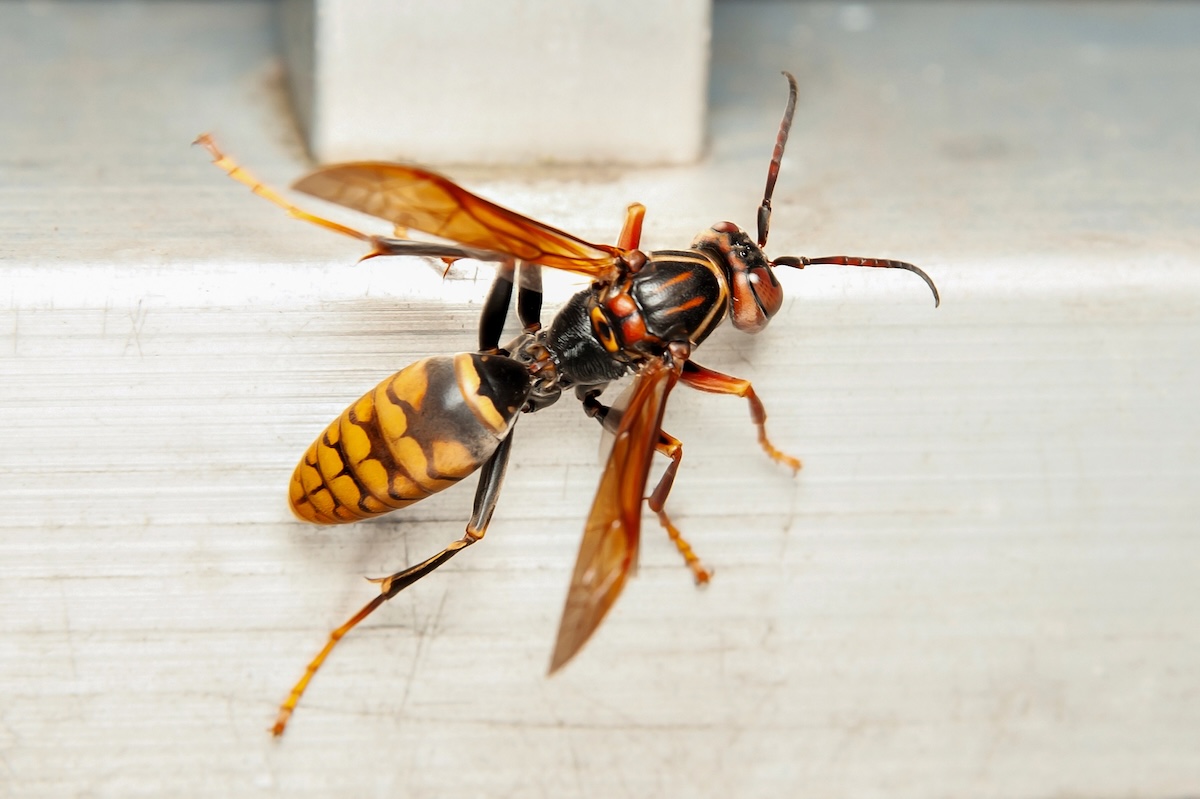 Photo Credit: SergioYoneda at Deposit Photos
In the lush woodlands of Asia, the Asian Giant Hornet, scientifically known as Vespa mandarinia, reigns as a formidable presence. With its striking yellow and black striped body, which can grow up to two inches long, this hornet captures the attention of anyone lucky enough to spot it. Its large, powerful wings create a distinctive buzz as it navigates through the dense foliage, hunting for prey and defending its territory. This hornet is not just a sight to behold; it plays a crucial role in its ecosystem, making it a subject of fascination for scientists and nature enthusiasts alike.
As the sun rises, the Asian Giant Hornet begins its daily routine, darting between flowers and trees in search of food. Its diet primarily consists of other insects, particularly honeybees, which it skillfully hunts. This predatory behavior is vital for maintaining the balance of the ecosystem, as it helps control insect populations. However, the hornet’s impressive size and potent sting have also made it a source of fear for many. Understanding the life of Vespa mandarinia offers a glimpse into the complex relationships within nature, where beauty and danger often coexist. Join us as we explore the captivating world of the Asian Giant Hornet, uncovering its behaviors, habitat, and the vital role it plays in the environment.
The Asian Giant Hornet, scientifically known as Vespa mandarinia, holds a distinctive place in the tree of life. As a member of the animal kingdom, it belongs to the phylum Arthropoda, which includes all insects, arachnids, and crustaceans. This hornet is particularly notable for its size, being the largest hornet species in the world, with a wingspan that can reach up to three inches. Its impressive stature and striking appearance, with bold orange and black markings, make it a subject of both fascination and concern, especially as it has gained attention for its impact on honeybee populations.
| Taxonomic Rank | Scientific Name | Meaning & Significance |
|---|---|---|
| Kingdom | Animalia | This term means “animals” and includes all multicellular organisms that are heterotrophic, meaning they consume organic material for energy. |
| Phylum | Arthropoda | Derived from Greek, meaning “jointed feet,” this group is characterized by their segmented bodies and exoskeletons, which provide protection and support. |
| Class | Insecta | This class includes all insects, which are defined by their three-part bodies, compound eyes, and six legs, showcasing incredible diversity and adaptability. |
| Order | Hymenoptera | Meaning “membranous wings,” this order includes bees, wasps, and ants, known for their complex social structures and behaviors. |
| Family | Vespidae | This family encompasses wasps and hornets, recognized for their ability to sting and their role as predators and scavengers in ecosystems. |
| Genus | Vespa | From Latin, meaning “wasp,” this genus includes various species of social wasps, highlighting their communal living and nesting habits. |
| Species | mandarinia | This name is derived from the Mandarin language, reflecting the hornet’s native range in East Asia, particularly in regions where Mandarin is spoken. |
Understanding the Asian Giant Hornet’s classification reveals much about its evolutionary journey. As a member of the Vespidae family, it shares a lineage with other social insects that have developed complex behaviors and adaptations over millions of years. Its size and predatory nature suggest a successful evolutionary strategy, allowing it to thrive in various environments. The hornet’s role in ecosystems, particularly its impact on honeybee populations, underscores the interconnectedness of species and the delicate balance of nature. By studying its taxonomy, we gain insights into the evolutionary pressures that have shaped this impressive insect and its place in the world.
The evolutionary journey of the Asian Giant Hornet, or Vespa mandarinia, stretches back millions of years, intertwining with the history of wasps and their ancestors. These insects belong to the family Vespidae, which has been around since the late Cretaceous period, roughly 100 million years ago. As the world changed, so did these hornets, adapting to new environments and challenges, leading to the formidable species we see today.
The ancestors of the Asian Giant Hornet were likely smaller, less aggressive wasps that lived in social colonies. Over time, as they evolved, they developed larger body sizes and more complex social structures. This transition allowed them to become more efficient hunters and gatherers, preying on other insects to feed their young. The shift from solitary living to a more communal lifestyle marked a significant evolutionary leap, enabling them to defend their nests more effectively and thrive in diverse habitats.
The adaptations of the Asian Giant Hornet have been crucial for its survival in a variety of environments. Their size and powerful stinger deter many potential threats, while their social structure allows them to work together to protect their nests and raise their young. By honing their foraging skills, they ensure a steady food supply, which is vital for the growth of their colonies. These evolutionary traits not only help them thrive in the wild but also make them a fascinating subject of study for entomologists and nature enthusiasts alike.
The Asian Giant Hornet is an impressive sight, commanding attention with its formidable presence. This insect boasts a robust body that can reach up to two inches in length, making it one of the largest hornets in the world. Its striking appearance is characterized by a blend of rich amber and deep black hues, creating a bold contrast that is both beautiful and intimidating. The hornet’s body is covered in a hard shell, which provides protection against predators and environmental challenges. With its large, compound eyes and powerful mandibles, this hornet is not just a visual marvel but also a highly efficient predator.
| Feature | Description |
|---|---|
| Size | Up to 2 inches (5 cm) in length |
| Color | Amber and black, with a distinctive yellow-orange face |
| Skin Type | Hard shell that protects against threats |
| Eyes | Large, compound eyes for excellent vision |
| Mandibles | Powerful jaws for hunting and defending |
The combination of size, color, and physical features of the Asian Giant Hornet plays a crucial role in its survival. The hard shell not only shields it from potential dangers but also helps it withstand the rigors of its environment. Its large eyes enhance its ability to spot prey and navigate through its habitat, while the powerful mandibles are essential for capturing food and defending its nest. Together, these characteristics make the Asian Giant Hornet a formidable predator, perfectly adapted to thrive in its ecosystem.
The Asian Giant Hornet thrives in dense woodlands, where towering trees create a lush canopy overhead. These habitats are often rich with biodiversity, providing a vibrant backdrop of greenery and a variety of flowering plants. The hornets build their nests in the hollows of trees or underground, taking advantage of the natural shelter that these environments offer. The sounds of rustling leaves and chirping birds fill the air, creating a lively atmosphere that is both serene and bustling with life.
The Asian Giant Hornet prefers a temperate climate, which means it enjoys warm summers and cooler winters. These insects are often found in areas where the temperature can fluctuate, allowing them to thrive during the warmer months when food sources are abundant. They require environments that provide both shelter and access to nectar-rich flowers, which are essential for their diet. The combination of these climatic conditions and the availability of resources makes dense woodlands an ideal home for them.
Adaptation is key to the survival of the Asian Giant Hornet in its woodland habitat. These hornets have developed strong social structures, living in colonies that can number in the hundreds. Their ability to forage for food and defend their nests against predators showcases their resilience. Additionally, their impressive size and powerful stingers help them thrive in competitive environments, allowing them to establish dominance over other insects. This adaptability ensures that they can continue to flourish in the diverse ecosystems of Eastern Asia.
The Asian Giant Hornet, or Vespa mandarinia, leads a busy life filled with activity from dawn until dusk. As a diurnal species, these hornets are most active during the day. Their daily routine includes foraging for food, building and maintaining their nests, and caring for their young. They often fly in and out of their nests, which are typically located in trees or shrubs, gathering nectar and hunting for insects to feed their growing larvae. This constant movement is essential for their survival, as they need to provide enough food for the entire colony.
Social behavior is a cornerstone of the Asian Giant Hornet’s life. These hornets live in colonies, which can number in the hundreds. Each colony has a queen, who is responsible for laying eggs, while the worker hornets take on various roles, such as foraging, nest building, and protecting the hive. Communication among the hornets is vital; they use pheromones, which are chemical signals, to convey messages about food sources or threats. This teamwork ensures that the colony functions smoothly, with each hornet playing a part in the overall success of their community.
| Behavior Type | Description |
|---|---|
| Foraging | Asian Giant Hornets search for food, including nectar and other insects, to feed their colony. |
| Colony Structure | Each colony consists of a queen, workers, and larvae, with specific roles for each member. |
| Communication | They use pheromones to share information about food sources and potential dangers. |
| Nest Maintenance | Workers are responsible for building and repairing the nest, ensuring a safe environment for the colony. |
The behaviors of the Asian Giant Hornet are finely tuned to ensure their survival in a complex ecosystem. By working together in a colony, they can efficiently gather food, protect their home, and raise their young. This social structure not only enhances their chances of survival but also allows them to thrive in their natural habitat. Each hornet plays a crucial role, demonstrating the power of teamwork in the animal kingdom.
The Asian Giant Hornet is a carnivore, meaning it primarily eats other animals. Its diet mainly consists of various insects, with a particular fondness for honeybees. These hornets are skilled hunters, using their powerful mandibles to capture and subdue their prey. They often hunt in groups, which allows them to take down larger targets and gather food more efficiently. This social hunting behavior is crucial for their survival, especially when feeding their growing larvae back at the nest.
| Dietary Aspect | Details |
|---|---|
| Diet Type | Carnivore |
| Favorite Foods | Honeybees, various insects |
| Prey Items | Bees, wasps, and other insects |
| Hunting/Foraging Strategies | Group hunting, using powerful mandibles |
The diet of the Asian Giant Hornet plays a significant role in its ecological niche. By preying on honeybees and other insects, these hornets help regulate insect populations, which can have a cascading effect on the ecosystem. Their hunting activities also influence their daily routines, as they must balance foraging with the needs of their colony. This intricate relationship with their environment highlights the importance of the Asian Giant Hornet in maintaining the balance of nature.
The mating behavior of the Asian Giant Hornet is a captivating spectacle that occurs during the warmer months, typically in late summer to early fall. During this breeding season, males engage in elaborate courtship displays to attract females. Once a female selects a mate, they will mate, and the female will begin the process of establishing a new colony. This is a crucial time for the species, as the future of the colony depends on successful reproduction.
| Reproductive Aspect | Details |
|---|---|
| Gestation Period | Approximately 2 weeks |
| Litter Size | Up to 30 eggs |
| Age of Maturity | 1 year |
| Name of Young | Larvae |
After the eggs hatch, the female hornet takes on the role of caregiver, nurturing the larvae until they mature into adult hornets. The larvae are fed a diet of protein-rich food, which the mother collects from her hunting expeditions. This parental care is vital, as it ensures the young grow strong enough to survive and eventually take on roles within the colony. As the larvae develop, they undergo a transformation, emerging as fully formed adults ready to join the colony’s activities, continuing the cycle of life for the Asian Giant Hornet.
The Asian Giant Hornet, or Vespa mandarinia, plays a significant role in its ecosystem, primarily as a predator. It sits near the top of the food web, where it helps control populations of other insects, particularly honeybees. However, despite its formidable size and hunting prowess, the Asian Giant Hornet faces several dangers that threaten its survival.
To defend against these threats, the Asian Giant Hornet employs a variety of survival strategies. When faced with predators, they can become aggressive, using their powerful stingers to protect themselves and their nests. Additionally, they often build their nests in high, secluded areas, making it harder for birds and other predators to reach them. By adapting to their environment and utilizing their size and strength, these hornets continue to navigate the challenges of their world.
A keystone species is an organism that has a disproportionately large impact on its environment relative to its abundance. This means that if it were removed, the ecosystem would change dramatically. The Asian Giant Hornet, or Vespa mandarinia, does play a keystone role in its ecosystem, particularly in the dense woodlands it inhabits. Its presence influences the populations of other species, making it a crucial player in maintaining ecological balance.
One of the most significant ways the Asian Giant Hornet impacts its ecosystem is through its predatory behavior. As a carnivore, it primarily hunts other insects, including honeybees. This predation helps regulate the populations of these insects, preventing any one species from becoming too dominant. For example, by keeping honeybee numbers in check, the hornet indirectly supports the health of flowering plants that rely on bees for pollination. This balance is vital for the overall health of the woodland ecosystem.
Additionally, the Asian Giant Hornet contributes to nutrient cycling. When it preys on other insects, it not only controls their populations but also returns nutrients to the soil when it decomposes. This process enriches the soil, promoting plant growth and supporting a diverse array of life. Furthermore, the hornet’s nesting behavior can create habitats for other organisms. Abandoned nests may provide shelter for various small animals and insects, enhancing biodiversity in the area.
If the Asian Giant Hornet were to disappear from its ecosystem, the effects could be profound. Without this predator, populations of certain insects, like honeybees, could surge uncontrollably. This imbalance might lead to over-pollination of some plants while others suffer from lack of pollination, disrupting the entire food web. The loss of the hornet would not only affect the insects it preys upon but could also ripple through the ecosystem, impacting plants, animals, and even the health of the woodland itself. In essence, the Asian Giant Hornet is a vital thread in the intricate tapestry of its environment.
The Asian Giant Hornet, known scientifically as Vespa mandarinia, occupies a crucial ecological niche in its habitat. As a top predator in the insect world, it plays a significant role in regulating the populations of other insects, particularly honeybees. This predatory behavior not only helps maintain balance within the ecosystem but also influences the dynamics of plant pollination, as honeybees are vital for many flowering plants. By controlling insect populations, the Asian Giant Hornet contributes to the overall health of its woodland environment.
| Ecosystem Service | Impact |
|---|---|
| Population Control | Regulates the numbers of various insect species, preventing overpopulation. |
| Pollination Influence | Affects the pollination rates of plants by preying on honeybees. |
| Food Source | Serves as prey for larger animals, contributing to the food web. |
| Decomposition | Helps break down organic matter by preying on dead insects. |
The impact of the Asian Giant Hornet extends beyond just its role as a predator. For instance, by hunting honeybees, these hornets can influence the availability of these important pollinators for flowering plants. This can lead to changes in plant reproduction and growth, which in turn affects the entire woodland ecosystem. Additionally, the hornet’s presence can attract larger predators, such as birds, that rely on them for food, further intertwining their role in the food web.
Understanding the broader ecological importance of the Asian Giant Hornet reveals how interconnected life is in the woodland. As a keystone species, its presence or absence can lead to significant changes in the ecosystem. If the Asian Giant Hornet were to disappear, we might see a surge in honeybee populations, which could disrupt the balance of pollination and plant growth. This highlights the delicate dance of life in nature, where every species, no matter how intimidating, plays a vital role in maintaining the harmony of its environment.
In the intricate web of life, symbiosis refers to the close interactions between different species, which can take on various forms. These relationships can be mutualistic, where both species benefit, parasitic, where one benefits at the expense of the other, or commensal, where one benefits while the other is neither helped nor harmed. The Asian Giant Hornet, known scientifically as Vespa mandarinia, engages in several fascinating ecological relationships that highlight the complexity of nature.
| Species/Type | Relationship Type | Description |
|---|---|---|
| Honeybees | Parasitic | The Asian Giant Hornet preys on honeybees, raiding their hives to feed its young. This relationship is harmful to the honeybees, as the hornets can decimate entire colonies. |
| Plants (Nectar-producing) | Mutualistic | While searching for nectar, Asian Giant Hornets inadvertently pollinate flowers, helping plants reproduce. In return, they gain a food source. |
| Other Insects (e.g., smaller wasps) | Commensal | Some smaller insects may benefit from the presence of Asian Giant Hornets by scavenging leftover food or using their nests for shelter without affecting the hornets. |
These relationships have evolved over time, shaped by the needs and behaviors of the species involved. The Asian Giant Hornet’s predatory nature has developed as a survival strategy, allowing it to thrive in its dense woodland habitat. Meanwhile, the mutualistic interactions with plants demonstrate how interconnected life can be, as one species’ quest for sustenance can inadvertently support another’s growth. Understanding these dynamics not only enriches our knowledge of the Asian Giant Hornet but also highlights the delicate balance of ecosystems where every species plays a role.
The Asian Giant Hornet, known scientifically as Vespa mandarinia, is a creature that sparks both curiosity and caution. With its impressive size and intriguing behaviors, this hornet is more than just a fearsome insect; it plays a vital role in its ecosystem. Here are some surprising facts that will captivate nature enthusiasts of all ages.
The Asian Giant Hornet, or Vespa mandarinia, has a long history of encounters with humans, particularly in Asia, where it has been both revered and feared. In some cultures, these hornets are seen as symbols of strength and resilience, often appearing in folklore and traditional medicine. However, their potent sting and aggressive nature have also made them a source of anxiety for many. Historical records show that these hornets have been known to attack in swarms, leading to serious injuries and even fatalities. This duality of admiration and fear highlights the complex relationship between humans and this formidable insect.
In recent years, the interactions between the Asian Giant Hornet and humanity have evolved significantly. As these hornets have made headlines for their invasions into new territories, particularly in North America, conservationists and researchers have become increasingly concerned. While some people view them as a threat to honeybee populations and local ecosystems, others are fascinated by their role in nature. Efforts to manage their populations often lead to conflicts, as beekeepers strive to protect their hives from these predators. Additionally, there are ongoing discussions about the potential for domestication, as some cultures utilize hornets for their venom in traditional medicine.
As we look to the future, the relationship between the Asian Giant Hornet and humanity will likely continue to be a balancing act. With climate change and globalization altering ecosystems, these hornets may expand their range even further. This presents both challenges and opportunities for coexistence. By fostering a deeper understanding of their ecological role and addressing the concerns they raise, we can work towards a future where humans and Asian Giant Hornets can share the environment more harmoniously. The journey ahead will require curiosity, respect, and a commitment to learning from one another.
The Asian Giant Hornet, or Vespa mandarinia, currently holds a conservation status of Near Threatened. This means that while it is not yet at a critical level, its population is facing challenges that could lead to further decline if not addressed. The exact population size remains unknown, making it difficult to gauge the full extent of its situation. However, trends suggest that habitat loss and other pressures could be impacting their numbers.
| Conservation Factor | Status/Details |
|---|---|
| IUCN Status | Near Threatened |
| Estimated Population Size | Unknown |
| Population Trend | Potential decline |
The main threats to the Asian Giant Hornet include habitat destruction and competition with other species. As forests are cleared for agriculture and urban development, these hornets lose their natural homes. Additionally, they face challenges from invasive species and changing climates, which can disrupt their food sources and nesting sites. These factors combined create a precarious situation for the hornet, making it essential to monitor their populations closely.
Conservation efforts are underway to better understand and protect the Asian Giant Hornet. Researchers are studying their behavior and habitats to develop strategies that can help mitigate the threats they face. Public awareness campaigns are also important, as educating communities about the role of these hornets in ecosystems can foster coexistence. With continued efforts, there is hope that the Asian Giant Hornet can stabilize its population and thrive in its natural environment.
| Question | Answer |
|---|---|
| What is the habitat of the Asian Giant Hornet? | Asian Giant Hornets prefer dense woodlands where they can find plenty of trees and shrubs. These areas provide shelter and nesting sites, which are crucial for their survival. |
| What do Asian Giant Hornets eat? | These hornets are carnivores, meaning they primarily eat other insects. They are known to hunt honeybees, which they capture and bring back to their nests to feed their larvae. |
| How do Asian Giant Hornets behave? | Asian Giant Hornets are social insects that live in colonies. They can be aggressive when defending their nests, especially if they feel threatened, and they communicate with each other through pheromones, which are chemical signals. |
| How do Asian Giant Hornets reproduce? | In the spring, a fertilized queen emerges from hibernation to start a new colony. She lays eggs that develop into workers, and these workers help care for the next generation of eggs laid by the queen. |
| What threats do Asian Giant Hornets face? | Asian Giant Hornets are currently classified as Near Threatened due to habitat loss and human activities. They also face competition from other species and threats from pesticides used to control their populations. |
| What are some interesting characteristics of Asian Giant Hornets? | These hornets are the largest in the world, with some individuals reaching up to 2 inches in length. They have distinctive orange and black markings, and their powerful stingers can deliver a painful venom that can be dangerous to humans. |
| How do Asian Giant Hornets impact the ecosystem? | Asian Giant Hornets play a role in controlling the populations of other insects, particularly honeybees. However, their predation can also lead to declines in bee populations, which are vital for pollination and healthy ecosystems. |