Taxonomy & Classification
- Kingdom
- Animalia
- Phylum
- Arthropoda
- Class
- Insecta
- Order
- Coleoptera
- Family
- Cerambycidae
- Genus
- Anoplophora
- Species
- Anoplophora glabripennis

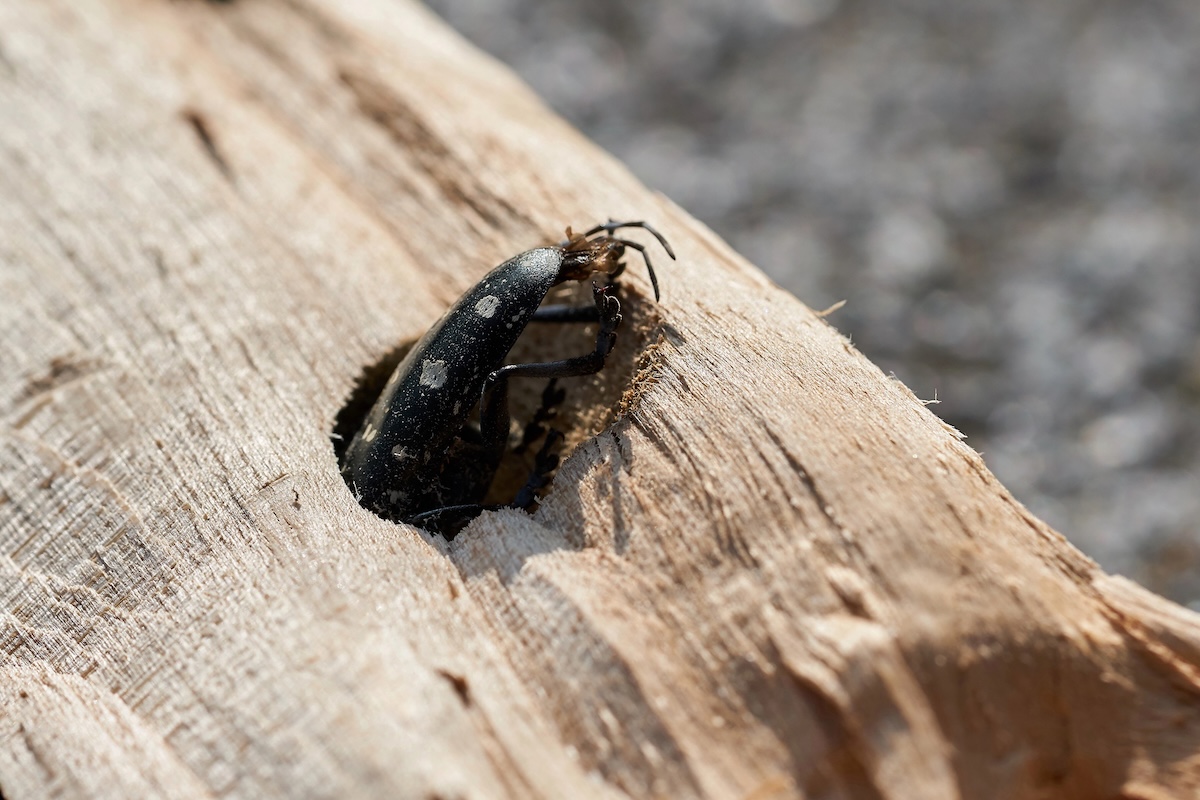 Photo Credit: heiko119 at Deposit Photos
In the heart of lush, temperate forests, the Asian Longhorn Beetle, or Anoplophora glabripennis, makes its home among the towering trees. With its striking black body adorned with bold white spots and long, curved antennae that can stretch even longer than its body, this beetle is a true marvel of nature. As it navigates the bark of hardwood trees like maples and elms, it captures the attention of both curious onlookers and dedicated scientists alike. The Asian Longhorn Beetle is not just a pretty face; it plays a vital role in its ecosystem, helping to break down dead wood and recycle nutrients back into the soil.
What makes the Asian Longhorn Beetle particularly intriguing is its life cycle and behavior. During the warmer months, these beetles engage in elaborate courtship rituals, where males display their impressive antennae to attract females. Their diet primarily consists of the wood and bark of hardwood trees, which they chew through with powerful jaws. However, this feeding habit can also lead to significant challenges for forests, as infestations can weaken and even kill trees. As we explore the world of the Asian Longhorn Beetle, we will uncover the delicate balance it maintains within its habitat, the threats it faces, and the fascinating adaptations that have allowed it to thrive in diverse environments.
The Asian Longhorn Beetle, scientifically known as Anoplophora glabripennis, occupies a fascinating niche in the tree of life. This beetle belongs to the kingdom Animalia, which includes all animals, and is part of the phylum Arthropoda, home to creatures with exoskeletons, segmented bodies, and jointed legs. As an insect, it falls under the class Insecta, which is characterized by having three main body parts: the head, thorax, and abdomen. What sets the Asian Longhorn Beetle apart is its striking appearance, featuring long antennae that can be even longer than its body, and a glossy black shell adorned with white spots. This unique combination of features not only makes it visually captivating but also plays a role in its survival and reproduction.
| Taxonomic Rank | Scientific Name | Meaning & Significance |
|---|---|---|
| Kingdom | Animalia | The name means “animals” in Latin, highlighting the diverse group of living organisms that share certain characteristics, such as being multicellular and capable of movement. |
| Phylum | Arthropoda | This term comes from Greek, meaning “jointed feet,” which refers to the jointed limbs and segmented bodies of creatures in this group, including insects, arachnids, and crustaceans. |
| Class | Insecta | Derived from the Latin word for “cut,” this name reflects the segmented body structure of insects, which is divided into distinct sections. |
| Order | Coleoptera | This name means “sheath-winged” in Greek, referring to the hard outer wings that protect the delicate hind wings and body of beetles. |
| Family | Cerambycidae | Commonly known as longhorn beetles, this name comes from the Greek word “kerambyx,” which refers to the long antennae that many members of this family possess. |
| Genus | Anoplophora | This name is derived from Greek, meaning “without a ridge,” which describes the smooth body shape of these beetles, distinguishing them from others. |
| Species | glabripennis | This Latin term means “smooth wing,” referring to the shiny, unmarked appearance of the beetle’s elytra, or wing covers. |
The classification of the Asian Longhorn Beetle reveals much about its evolutionary journey. As a member of the Cerambycidae family, it shares a lineage with other longhorn beetles, which have adapted to various environments and developed unique traits over millions of years. Its smooth body and long antennae are not just for show; they play crucial roles in navigation and mating. Understanding its taxonomic position helps scientists trace the beetle’s adaptations and ecological roles, shedding light on the intricate web of life that connects all organisms on our planet.
The Asian Longhorn Beetle, or Anoplophora glabripennis, has a rich evolutionary history that stretches back millions of years. This beetle is part of the Cerambycidae family, which is known for its long antennae and wood-boring habits. The evolutionary journey of this species is intertwined with the forests it inhabits, showcasing how life adapts to changing environments over time.
The ancestors of the Asian Longhorn Beetle likely emerged during the late Cretaceous period, around 100 million years ago. These early beetles were smaller and less specialized than their modern descendants. As forests expanded and diversified, so did the beetles. Over time, they developed longer antennae, which help them navigate through dense foliage and locate mates. This adaptation was crucial as it allowed them to thrive in their arboreal habitats, where communication and sensory perception are vital for survival.
The adaptations of the Asian Longhorn Beetle have played a significant role in its survival. Long antennae allow it to communicate effectively in the thick canopies of trees, while wood-boring larvae provide both nourishment and safety. The ability to camouflage helps it evade predators, and endothermic behavior ensures it remains active even in cooler temperatures. Together, these traits have enabled the Asian Longhorn Beetle to thrive in diverse environments, showcasing the intricate dance of evolution in the natural world.
The Asian Longhorn Beetle is a striking insect that captures attention with its bold appearance. Its elongated body, typically measuring about one to two inches long, is sleek and shiny, often displaying a deep black hue. This glossy exterior is adorned with distinctive white spots that create a stunning contrast, making the beetle stand out against the bark of trees where it often resides. One of its most eye-catching features is its long, slender antennae, which can be twice the length of its body. These impressive appendages not only enhance its visual appeal but also serve important functions in its environment.
| Feature | Description |
|---|---|
| Size | 1 to 2 inches long |
| Color | Deep black with white spots |
| Skin Type | Glossy and smooth |
| Distinctive Feature | Long antennae, twice the size of their bodies |
The combination of the Asian Longhorn Beetle’s striking coloration and its elongated antennae plays a crucial role in its survival. The glossy black body helps it blend into the shadows of tree bark, providing camouflage from predators. Meanwhile, the long antennae are not just for show; they are sensory organs that help the beetle detect changes in its environment, such as the presence of food or potential threats. Together, these features create a well-adapted insect that thrives in its forest habitat, showcasing the beauty and complexity of nature’s designs.
The Asian Longhorn Beetle thrives in lush, temperate forests where towering trees create a canopy of green. These habitats are often rich in hardwood species, such as maples, elms, and birches, which provide both food and shelter. Picture a sun-dappled forest floor, where the air is filled with the sounds of rustling leaves and chirping birds. This vibrant ecosystem is not just a home for the beetle; it’s a bustling community of life, where every organism plays a role in the delicate balance of nature.
The Asian Longhorn Beetle prefers a climate that is warm and humid, typical of temperate regions. It thrives in areas with distinct seasons, where summer temperatures can rise significantly, allowing the beetle to grow and reproduce. These beetles are particularly fond of moist environments, which help them find the right trees to lay their eggs. The combination of warm weather and ample rainfall creates the perfect conditions for their life cycle to flourish.
Adaptation is key for the Asian Longhorn Beetle, allowing it to thrive in its chosen habitats. Its ability to bore into the wood of trees is a remarkable skill that not only provides food but also a safe place for its larvae to develop. The beetle’s long antennae help it navigate through the dense forest, while its tough exoskeleton protects it from predators. By evolving to exploit the resources of hardwood trees, the Asian Longhorn Beetle has carved out a niche that ensures its survival in a world full of challenges.
The Asian Longhorn Beetle leads a life that is both active and solitary, primarily during the day. As a diurnal insect, it spends its hours exploring the towering trees of its forest habitat. With its long antennae and strong mandibles, this beetle is on a quest for food, primarily munching on the wood of hardwood trees like maples and elms. During the day, it can often be seen crawling along the bark, searching for the perfect spot to lay its eggs. This daily routine is essential for its survival, as it ensures that the beetle has enough resources to thrive and reproduce.
While the Asian Longhorn Beetle is mostly solitary, it does have some interesting social behaviors when it comes to mating. Males will often engage in a display to attract females, showcasing their impressive size and vibrant coloration. This courtship ritual is crucial, as it helps ensure that the strongest genes are passed on to the next generation. Once a female selects a mate, she will lay her eggs in the crevices of trees, where the larvae will have a safe place to develop. Although they do not form large groups, their interactions during mating season are vital for the continuation of their species.
| Behavior Type | Description |
|---|---|
| Activity Patterns | Active during the day, searching for food and suitable egg-laying sites on hardwood trees. |
| Social Structure | Primarily solitary, with brief interactions during mating season. |
| Communication Methods | Males display size and color to attract females, engaging in courtship rituals. |
The behaviors of the Asian Longhorn Beetle are finely tuned to ensure its survival in the wild. By being active during the day, it maximizes its chances of finding food and mates. The solitary nature of its lifestyle allows it to avoid competition for resources, while the courtship displays help maintain genetic diversity within the population. Each of these behaviors plays a crucial role in the beetle’s life cycle, ensuring that it can thrive in its forest home.
The Asian Longhorn Beetle is primarily a herbivore, meaning it feeds on plant material. Its favorite foods include the wood and bark of various hardwood trees, particularly maples, elms, and birches. This beetle has specialized mouthparts that allow it to bore into the wood, where it consumes the inner layers of the tree. By doing so, it not only nourishes itself but also plays a role in the ecosystem by helping to break down dead or dying trees.
| Dietary Aspect | Details |
|---|---|
| Diet Type | Herbivore |
| Favorite Foods | Wood and bark of hardwood trees, especially maples, elms, and birches |
| Prey Items | None, as it does not consume other animals |
| Hunting/Foraging Strategies | Bores into wood using specialized mouthparts to access inner tree layers |
This diet significantly influences the Asian Longhorn Beetle’s role in its environment. By feeding on trees, it helps in the natural process of decomposition, which is vital for nutrient cycling in forests. Additionally, its wood-boring habits can lead to tree damage, making it an important species to monitor in forest health. The daily routine of this beetle revolves around finding suitable trees to feed on, ensuring it has the energy needed for its active lifestyle.
The mating behavior of the Asian Longhorn Beetle is a captivating spectacle that unfolds during the warmer months, typically from late spring to early summer. Males engage in a series of courtship rituals, which may include tapping their antennae against the female’s body. This communication helps establish a bond between the pair. Once a female accepts a male’s advances, they mate, and the female begins the process of laying her eggs in suitable host trees, ensuring the next generation has the best chance of survival.
| Reproductive Aspect | Details |
|---|---|
| Gestation Period | Approximately 10 to 14 days |
| Litter Size | 20 to 30 eggs |
| Age of Maturity | About 1 year |
| Name of Young | Larvae |
After the eggs hatch, the larvae emerge and begin their life inside the tree, where they will spend most of their early development. These young beetles are voracious eaters, feeding on the wood and bark of their host trees. As they grow, they undergo several molts, shedding their skin to accommodate their increasing size. This process can take several months, and once they reach maturity, they will emerge from the tree as adult beetles, ready to continue the cycle of life. The Asian Longhorn Beetle’s life cycle is a remarkable journey from egg to larva to adult, showcasing the intricate connections between these insects and their forest habitats.
The Asian Longhorn Beetle plays a crucial role in its ecosystem, primarily as a herbivore that feeds on the wood and bark of hardwood trees. This feeding behavior can have significant impacts on tree health, making the beetle both a vital part of the food web and a potential threat to forest ecosystems. As it burrows into trees, it creates habitats for other organisms, but it can also weaken trees, making them more susceptible to disease and other pests.
To survive these dangers, the Asian Longhorn Beetle has developed several defensive strategies. Its hard exoskeleton provides a tough barrier against predators, while its ability to blend into the bark of trees helps it avoid detection. Additionally, when threatened, it can quickly retreat into the safety of its burrow, making it harder for predators to reach it. These adaptations allow the beetle to navigate the challenges of its environment while continuing to play its role in the ecosystem.
A keystone species is an organism that has a disproportionately large impact on its environment relative to its abundance. These species play critical roles in maintaining the structure of an ecosystem. The Asian Longhorn Beetle, or Anoplophora glabripennis, is not typically classified as a keystone species. However, its presence does influence the health and dynamics of the forests it inhabits, particularly through its interactions with trees.
The Asian Longhorn Beetle primarily feeds on the wood and bark of hardwood trees, such as maples, elms, and birches. By boring into these trees, the beetle creates tunnels that can weaken and eventually kill the trees. This feeding behavior can lead to significant changes in forest composition. For instance, when a tree dies, it opens up space for new plants to grow, which can increase biodiversity. However, if the beetle population becomes too large, it can lead to widespread tree mortality, disrupting the balance of the ecosystem.
Moreover, the beetle serves as a food source for various predators, including birds and other insects. This connection highlights its role in the food web, where the health of one species can affect many others. Additionally, the decaying wood left behind by dead trees provides habitat for fungi and other decomposers, which are essential for nutrient cycling in the forest.
If the Asian Longhorn Beetle were to disappear, the effects could ripple through the ecosystem. Without this beetle, certain tree species might become overly dominant, leading to reduced biodiversity. The absence of its feeding activity would also mean fewer opportunities for new plants to establish themselves, potentially stifling the growth of a diverse understory. Furthermore, the predators that rely on the beetle for food would face challenges, possibly leading to declines in their populations. In essence, while the Asian Longhorn Beetle may not be a keystone species, its role in the ecosystem is still significant and interconnected.
The Asian Longhorn Beetle, known scientifically as Anoplophora glabripennis, plays a vital role in its ecosystem, particularly in temperate forests. As a herbivore, this beetle primarily feeds on the wood and bark of hardwood trees, such as maples, elms, and birches. By doing so, it helps shape the forest structure and influences the health of these trees. The beetle’s activities create opportunities for other organisms, making it an important player in the intricate web of life within its habitat.
| Ecosystem Service | Impact |
|---|---|
| Tree Mortality | Facilitates the natural cycle of tree death and decay, providing habitats for other species. |
| Soil Enrichment | Decomposing wood enriches the soil, promoting plant growth and biodiversity. |
| Habitat Creation | Creates openings in the forest canopy, allowing sunlight to reach the forest floor. |
| Food Source | Serves as a food source for various predators, including birds and other insects. |
The influence of the Asian Longhorn Beetle extends beyond its immediate feeding habits. For instance, when it burrows into the bark of trees, it creates tunnels that can weaken the tree structure, leading to its eventual decline. This process not only affects the individual trees but also opens up space for new plants to grow, fostering a diverse understory. Additionally, the decaying wood left behind after a tree dies becomes a habitat for fungi and insects, which are essential for nutrient cycling in the forest ecosystem.
Understanding the broader ecological importance of the Asian Longhorn Beetle reveals its role as a keystone species. By facilitating tree mortality and creating habitats for other organisms, it helps maintain the balance of its ecosystem. This beetle’s activities contribute to the dynamic processes that sustain forest health, making it a crucial component of biodiversity. In essence, the Asian Longhorn Beetle is not just a simple insect; it is a vital architect of its environment, shaping the lives of countless other species in the process.
In the intricate web of life, symbiosis refers to the close and often long-term interactions between different species. These relationships can take many forms, including mutualism, where both species benefit, parasitism, where one benefits at the expense of the other, and commensalism, where one benefits while the other is neither helped nor harmed. The Asian Longhorn Beetle, or Anoplophora glabripennis, engages in various ecological relationships that highlight the complexity of its role in the environment. Understanding these interactions helps us appreciate how species coexist and influence one another in their habitats.
| Species/Type | Relationship Type | Description |
|---|---|---|
| Fungi (e.g., wood-decaying fungi) | Mutualistic | The beetle larvae feed on decaying wood, which provides nutrients for the fungi. In return, the fungi help break down the wood, making it easier for the beetles to digest. |
| Predatory insects (e.g., wasps) | Parasitic | Some wasps lay their eggs in or on the beetle larvae. The wasp larvae consume the beetle larvae, benefiting the wasps while harming the beetles. |
| Birds (e.g., woodpeckers) | Commensal | Woodpeckers may feed on the beetles, benefiting from a food source. The beetles are harmed, but this relationship does not significantly affect the overall beetle population. |
These relationships have evolved over time, shaped by the needs and survival strategies of each species involved. The Asian Longhorn Beetle’s interactions with fungi illustrate a mutualistic bond that enhances nutrient cycling in forests, while the parasitic relationship with wasps highlights the delicate balance of predator and prey. Commensal relationships with birds show how different species can share the same habitat, each playing a role in the ecosystem. By understanding these connections, we gain insight into the dynamic nature of ecosystems and the importance of preserving the delicate balance of life.
The Asian Longhorn Beetle is a captivating insect that not only enchants with its striking appearance but also plays a significant role in its ecosystem. Here are some surprising facts that reveal just how extraordinary this beetle truly is.
The Asian Longhorn Beetle, known scientifically as Anoplophora glabripennis, has a long history of encounters with humans that stretches back centuries. Originating from East Asia, this striking beetle has made its way to various parts of the world, including North America and Europe. In many cultures, beetles have been symbols of strength and resilience, often appearing in art and folklore. However, the arrival of the Asian Longhorn Beetle in new regions has sparked concern due to its potential to damage hardwood trees, leading to significant ecological and economic implications.
Today, the relationship between the Asian Longhorn Beetle and humanity is complex, marked by both conflict and conservation efforts. As this beetle burrows into the wood of trees like maples and elms, it can weaken and ultimately kill these vital plants, which are important for both ecosystems and human activities. In response, various countries have implemented strict measures to control its spread, including quarantines and tree removal programs. On the flip side, researchers are studying the beetle’s biology and behavior to develop better management strategies, highlighting a commitment to understanding and coexisting with this insect.
As we look to the future, the relationship between the Asian Longhorn Beetle and humanity will likely continue to evolve. With ongoing research and conservation efforts, there is hope for a balanced coexistence. By understanding the ecological role of this beetle and implementing effective management strategies, we can protect our forests while respecting the natural world. The journey ahead will require collaboration and innovation, reminding us that even the smallest creatures can have a significant impact on our environment and our lives.
The Asian Longhorn Beetle, or Anoplophora glabripennis, currently faces a precarious situation in terms of conservation. While it is not officially listed by the International Union for Conservation of Nature (IUCN), its populations are under threat due to habitat loss and invasive species. The overall trend for this beetle is concerning, as its natural habitats are increasingly fragmented, leading to a decline in numbers in certain regions.
| Conservation Factor | Status/Details |
|---|---|
| IUCN Status | Not Listed |
| Population Estimates | Unknown, but declining in some areas |
| Trend Direction | Concerning decline |
The main threats to the Asian Longhorn Beetle stem from human activities. Deforestation, which is the clearing of forests for agriculture or urban development, significantly reduces the beetle’s habitat. Additionally, the introduction of invasive species can disrupt local ecosystems, making it harder for the Asian Longhorn Beetle to thrive. These factors combined create a challenging environment for this beetle, pushing it closer to the brink in some areas.
Conservation efforts are underway to protect the Asian Longhorn Beetle and its habitat. Organizations are working to raise awareness about the importance of preserving temperate forests, which are crucial for the beetle’s survival. By promoting sustainable forestry practices and monitoring populations, conservationists hope to stabilize and eventually increase the numbers of this fascinating insect. The outlook remains cautious, but with continued efforts, there is hope for a brighter future for the Asian Longhorn Beetle.
| Question | Answer |
|---|---|
| What is the habitat of the Asian Longhorn Beetle? | The Asian Longhorn Beetle prefers hardwood forests, where it can find its favorite trees to feed on. They are often found in areas with maples, elms, and willows, as these trees provide the best food and shelter for their larvae. |
| What do Asian Longhorn Beetles eat? | These beetles are herbivores, meaning they primarily eat plant material. They feed on the wood and bark of trees, using their strong jaws to chew through the tough outer layers to reach the softer inner wood. |
| How do Asian Longhorn Beetles behave? | Asian Longhorn Beetles are generally solitary creatures, spending most of their time on or inside trees. They are most active during warm months and can often be seen crawling on tree trunks or flying short distances in search of food. |
| How do Asian Longhorn Beetles reproduce? | During mating season, female Asian Longhorn Beetles lay their eggs in the bark of trees. Once the eggs hatch, the larvae burrow into the wood, where they will grow and develop for several months before emerging as adults. |
| What threats do Asian Longhorn Beetles face? | While they are not currently listed as endangered, Asian Longhorn Beetles can be threatened by habitat loss due to deforestation and urban development. Additionally, they can be affected by natural predators and diseases that target wood-boring insects. |
| What are some interesting characteristics of the Asian Longhorn Beetle? | One of the most distinctive features of the Asian Longhorn Beetle is its long antennae, which can be twice the length of its body! These long feelers help them navigate their environment and find mates, making them quite unique among beetles. |
| How do Asian Longhorn Beetles impact their environment? | Asian Longhorn Beetles can have a significant impact on their environment, especially when they infest trees. Their feeding habits can weaken and eventually kill trees, which can disrupt local ecosystems and affect other wildlife that depend on those trees for habitat. |