Taxonomy & Classification
- Kingdom
- Animalia
- Phylum
- Arthropoda
- Class
- Insecta
- Order
- Coleoptera
- Family
- Scarabaeidae
- Genus
- Chalcosoma
- Species
- Chalcosoma atlas

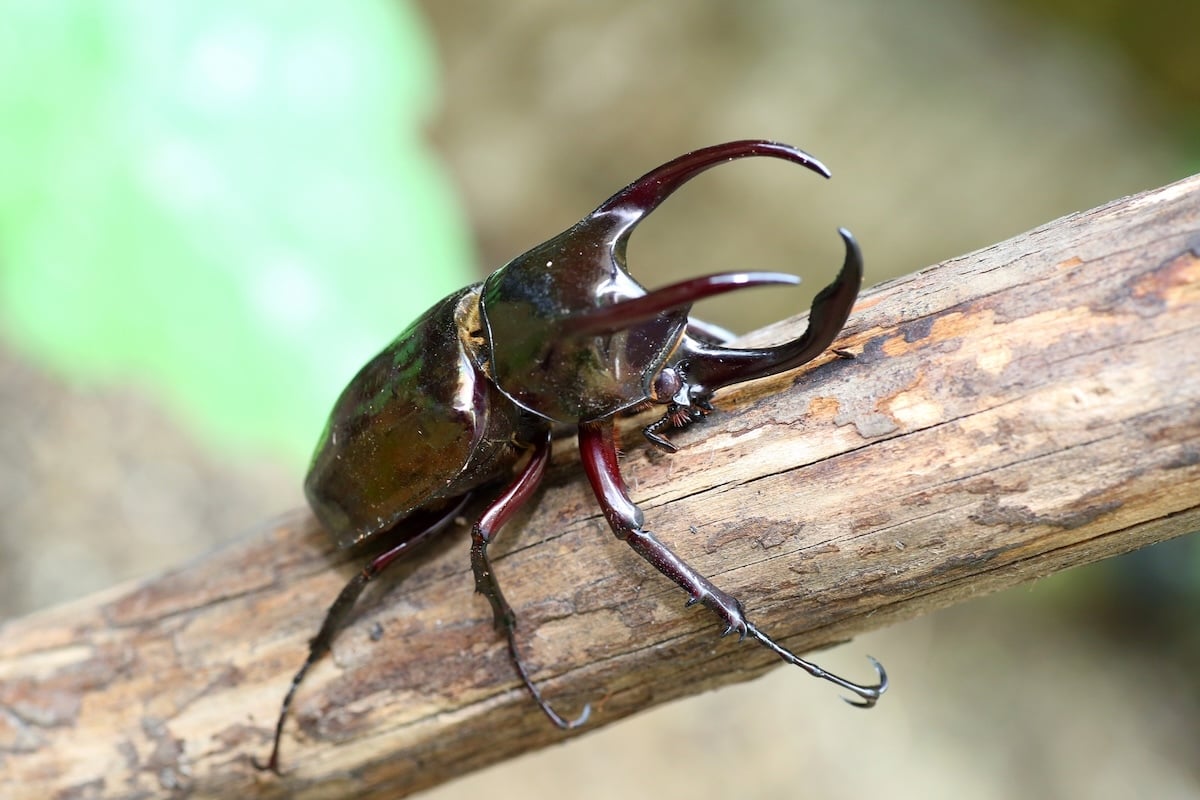 Photo Credit: feather0510 at Deposit Photos
In the heart of Southeast Asia’s lush tropical rainforests, the Atlas Beetle, or Chalcosoma atlas, reigns as a true giant among insects. With its impressive size, reaching up to 4.5 inches long, this beetle is not just a sight to behold but a marvel of nature’s design. Its robust body is adorned with striking horns that curl majestically, giving it a regal appearance that captures the imagination of both scientists and nature lovers alike. These distinctive features are not merely for show; they play a crucial role in the beetle’s life, especially during the mating season when males engage in dramatic displays to attract females.
As the sun sets and the forest comes alive with the sounds of chirping insects and rustling leaves, the Atlas Beetle emerges from its hiding spots, ready to explore its vibrant world. This nocturnal creature thrives in the humid air, feasting on decaying wood and rotting fruit, which provide essential nutrients for its growth. The Atlas Beetle’s role in the ecosystem is vital, as it helps break down organic matter, contributing to the health of its rainforest home. With its fascinating behaviors and ecological importance, the Atlas Beetle invites us to delve deeper into the wonders of the natural world, revealing the intricate connections that sustain life in these rich habitats.
The Atlas Beetle, known scientifically as Chalcosoma atlas, holds a prominent position in the animal kingdom, showcasing the incredible diversity of life on Earth. This impressive insect belongs to the phylum Arthropoda, which includes all invertebrates with jointed legs, such as spiders and crabs. What sets the Atlas Beetle apart is its striking size and the magnificent horns that adorn the males, resembling the mighty Atlas from Greek mythology. These horns are not just for show; they play a crucial role in battles for mates, making this beetle a true symbol of strength and resilience in the natural world.
| Taxonomic Rank | Scientific Name | Meaning & Significance |
|---|---|---|
| Kingdom | Animalia | This name signifies that the Atlas Beetle is part of the vast group of multicellular organisms that are primarily heterotrophic, meaning they consume organic material for energy. |
| Phylum | Arthropoda | Derived from the Greek words “arthron” (joint) and “pous” (foot), this classification highlights the jointed limbs that are a defining feature of insects, spiders, and crustaceans. |
| Class | Insecta | This term comes from the Latin word “insectum,” meaning “cut into,” which refers to the segmented body structure of insects, including the Atlas Beetle. |
| Order | Coleoptera | From the Greek “koleos” (sheath) and “pteron” (wing), this name indicates that beetles have hardened forewings that protect their delicate hindwings. |
| Family | Scarabaeidae | This family name comes from the Latin “scarabaeus,” meaning “scarab,” which refers to the sacred beetles of ancient Egypt, known for their association with rebirth and transformation. |
| Genus | Chalcosoma | Derived from the Greek “chalcos” (copper) and “soma” (body), this name reflects the metallic sheen of the beetle’s exoskeleton, which can appear in shades of green and bronze. |
Understanding the Atlas Beetle’s classification reveals much about its evolutionary journey. As a member of the Scarabaeidae family, it shares a lineage with other beetles that have adapted to various ecological niches. The unique features of the Atlas Beetle, such as its impressive size and distinctive horns, are not just for display; they are adaptations that have evolved over time to enhance survival and reproduction. This fascinating insect serves as a reminder of the intricate web of life and the evolutionary processes that shape the diversity we see in the natural world today.
The Atlas Beetle, or Chalcosoma atlas, has a captivating evolutionary story that stretches back millions of years. This remarkable insect is part of the Scarabaeidae family, which includes many other beetles. The journey of the Atlas Beetle begins in the lush forests of Southeast Asia, where its ancestors thrived in a warm, humid environment. Over time, these beetles adapted to their surroundings, evolving traits that would help them survive and flourish.
The ancestors of the Atlas Beetle were likely smaller and less specialized than the ones we see today. As they evolved, they developed larger bodies and impressive horns, which are used in battles for mates. This transition to larger size and the development of these striking features are thought to be driven by sexual selection, where females prefer mates with more prominent horns. This evolutionary pressure led to the Atlas Beetle becoming one of the largest beetles in the world, with some individuals reaching up to 4.5 inches in length.
The adaptations of the Atlas Beetle have been crucial for its survival in a competitive world. Its size and horns not only help in attracting mates but also in defending against rivals. The strong exoskeleton provides protection from predators, while the larval stage contributes to the health of its environment. Together, these traits have allowed the Atlas Beetle to thrive in its tropical habitat, showcasing the wonders of evolution in action.
The Atlas Beetle is a true marvel of nature, boasting a striking and formidable appearance. Its body is robust and elongated, reaching lengths of up to 4.5 inches, making it one of the largest beetles in the world. The most eye-catching feature is its impressive horns, which can be as long as the beetle’s body itself. These horns, which resemble a warrior’s helmet, are not just for show; they play a crucial role in battles for mates. The beetle’s exoskeleton, a hard outer shell that protects its body, glistens in shades of deep black and rich brown, often adorned with a subtle metallic sheen that catches the light beautifully.
| Feature | Description |
|---|---|
| Size | Up to 4.5 inches long |
| Color | Deep black and rich brown with a metallic sheen |
| Skin Type | Exoskeleton, providing protection and support |
| Horns | Long, curved structures used in mating displays and fights |
The Atlas Beetle’s impressive features work together to enhance its survival in the wild. The exoskeleton not only shields it from predators but also helps it retain moisture in its tropical habitat. The striking horns serve a dual purpose: they attract potential mates and deter rivals during mating season. This combination of size, color, and physical adaptations makes the Atlas Beetle not just a sight to behold, but also a master of its environment, showcasing the intricate balance of beauty and function in the animal kingdom.
The Atlas Beetle thrives in the lush, vibrant world of tropical rainforests, where the air is thick with humidity and the canopy is alive with the sounds of chirping insects and rustling leaves. These forests are a tapestry of green, filled with towering trees, colorful flowers, and a rich undergrowth that provides both food and shelter. The dappled sunlight filters through the leaves, creating a magical atmosphere that is perfect for this impressive beetle to roam and thrive.
In these tropical habitats, the climate is warm and wet, with temperatures often hovering between 70 and 90 degrees Fahrenheit. Rainfall is abundant, providing the moisture that keeps the forest floor rich in organic matter. This environment is essential for the Atlas Beetle, as it relies on decaying wood and leaf litter for food. The constant warmth and humidity create a perfect breeding ground for the beetle’s larvae, ensuring the continuation of its life cycle.
The Atlas Beetle has developed several adaptations that help it thrive in these specific habitats. Its strong, curved horns are not just for show; they play a crucial role in battles with other males for territory and mates. Additionally, its dark, glossy exoskeleton helps it blend into the shadows of the forest, providing camouflage from predators. By being well-suited to its environment, the Atlas Beetle can navigate the complex layers of the rainforest, making the most of the resources available to it.
The Atlas Beetle, or Chalcosoma atlas, leads a life filled with intriguing activities, primarily during the night. As a nocturnal insect, it emerges under the cover of darkness to explore its tropical rainforest habitat. With its impressive size and strength, the Atlas Beetle spends its evenings searching for food, which mainly consists of decaying plant matter. This diet helps recycle nutrients back into the ecosystem. During its nightly adventures, it may also engage in digging and burrowing, using its powerful mandibles to create tunnels in the soft earth.
While the Atlas Beetle is generally solitary, it does exhibit some interesting social behaviors, especially during mating season. Males often display their impressive horns to attract females, showcasing their strength and fitness. This display is crucial, as it helps females choose the strongest mates, ensuring that their offspring inherit desirable traits. Although they prefer to live alone, these beetles can sometimes be found in close proximity to one another, particularly when food sources are abundant. Their interactions are brief and focused, as they quickly return to their solitary routines.
| Behavior Type | Description |
|---|---|
| Activity Patterns | Nocturnal foraging for decaying plant matter, digging tunnels in the soil. |
| Social Structure | Primarily solitary, with brief interactions during mating season. |
| Communication Methods | Visual displays, particularly by males showcasing their horns to attract females. |
The behaviors of the Atlas Beetle are finely tuned to ensure its survival in the wild. By being nocturnal, it avoids many daytime predators, allowing it to forage safely. Its solitary nature helps reduce competition for food, while the impressive displays during mating season ensure that only the strongest genes are passed on to the next generation. This combination of strategies not only supports individual survival but also contributes to the overall health of the rainforest ecosystem.
The Atlas Beetle primarily follows a herbivorous diet, which means it mainly eats plant material. This fascinating insect has a particular fondness for decaying wood and rotting fruit, which provide essential nutrients for its growth and development. By feeding on these organic materials, the Atlas Beetle plays a vital role in breaking down and recycling nutrients back into the ecosystem.
| Dietary Aspect | Details |
|---|---|
| Diet Type | Herbivore |
| Favorite Foods | Decaying wood, rotting fruit |
| Prey Items | None (as a herbivore) |
| Hunting/Foraging Strategies | Forages for decaying plant matter, often found on the forest floor |
This diet not only sustains the Atlas Beetle but also shapes its ecological role. By consuming decaying materials, it helps decompose organic matter, enriching the soil and promoting plant growth. This process is crucial in maintaining the health of its tropical rainforest habitat. As the Atlas Beetle goes about its nightly foraging, it contributes to a cycle of life that supports countless other species, making it an essential player in its vibrant ecosystem.
The mating behavior of the Atlas Beetle is as impressive as its size. During the breeding season, which typically occurs in the warm, humid months, males engage in a dramatic display to attract females. They use their large horns to wrestle with other males, showcasing their strength and dominance. Once a male successfully impresses a female, they mate, and the female begins the process of laying eggs.
| Reproductive Aspect | Details |
|---|---|
| Gestation Period | Approximately 3 to 4 weeks |
| Litter Size | 20 to 30 eggs |
| Age of Maturity | 6 to 12 months |
| Name of Young | larvae |
After the eggs hatch, the young larvae emerge and begin their journey of growth. These larvae are soft and white, resembling small grubs, and they feed on decaying wood and organic matter, which provides them with the nutrients they need to develop. The larvae undergo several molts, shedding their skin as they grow larger. Eventually, they will pupate, entering a transformative stage before emerging as adult Atlas Beetles. While the female does not provide direct care after laying her eggs, the environment she chooses for them is crucial, as it ensures the larvae have access to food and shelter as they grow into magnificent adults.
The Atlas Beetle, Chalcosoma atlas, plays a vital role in its ecosystem, nestled within the intricate web of life in tropical rainforests. As a herbivore, it primarily feeds on decaying plant matter, contributing to the decomposition process that enriches the soil. However, this large beetle is not at the top of the food chain; it faces various threats from predators and environmental challenges that can impact its survival.
To defend itself against these dangers, the Atlas Beetle employs several clever strategies. Its impressive size and formidable horns can deter potential predators, making it a less appealing target. Additionally, the beetle’s dark coloration helps it blend into the forest floor, providing camouflage from watchful eyes. When threatened, it may also play dead, a tactic that can confuse predators and give it a chance to escape. Through these adaptations, the Atlas Beetle continues to thrive in its vibrant, yet perilous, rainforest home.
A keystone species is an organism that has a disproportionately large impact on its environment relative to its abundance. This means that if it were removed, the ecosystem would change dramatically. The Atlas Beetle, or Chalcosoma atlas, is not typically classified as a keystone species, but it does play an important role in its tropical rainforest habitat.
The Atlas Beetle contributes to its ecosystem primarily through its feeding habits. As a herbivore, it consumes decaying wood and rotting fruit, which helps break down organic matter. This process is crucial for nutrient cycling, as it returns essential nutrients back to the soil, promoting plant growth. Additionally, by feeding on decaying materials, the Atlas Beetle helps control the population of fungi and bacteria, maintaining a balance in the ecosystem.
Moreover, the Atlas Beetle serves as a food source for various predators, including birds and small mammals. Its presence supports the food web, which is the interconnected network of who-eats-who in an ecosystem. Without the Atlas Beetle, these predators might struggle to find enough food, leading to a ripple effect throughout the food chain.
If the Atlas Beetle were to disappear, the consequences could be significant. The decomposition process would slow down, leading to a buildup of organic waste. This could result in poorer soil quality, affecting plant growth and, in turn, the animals that rely on those plants for food. The loss of this beetle could disrupt the delicate balance of the rainforest ecosystem, highlighting how even the smallest creatures can have a big impact on their environment.
The Atlas Beetle, known scientifically as Chalcosoma atlas, plays a vital role in the tropical rainforests of Southeast Asia. This impressive insect occupies an ecological niche as a herbivore, primarily feeding on decaying wood and rotting fruit. By breaking down this organic matter, the Atlas Beetle helps recycle nutrients back into the soil, promoting plant growth and maintaining the health of its lush environment. Its nocturnal lifestyle allows it to interact with various other species, contributing to the complex web of life in its habitat.
| Ecosystem Service | Impact |
|---|---|
| Nutrient Recycling | Breaks down decaying plant material, enriching the soil. |
| Soil Aeration | Burrowing behavior helps aerate the soil, improving water infiltration. |
| Food Source | Serves as prey for various predators, supporting the food chain. |
| Pollination | May assist in pollinating certain plants while feeding. |
The Atlas Beetle’s influence extends beyond its immediate feeding habits. By decomposing dead plant matter, it not only enriches the soil but also creates habitats for other organisms, such as fungi and microorganisms. These tiny life forms thrive in the nutrient-rich environment, further enhancing the ecosystem’s diversity. Additionally, the burrowing activities of the Atlas Beetle help aerate the soil, allowing water and air to reach plant roots more effectively. This process is crucial for the growth of the towering trees and vibrant underbrush that characterize tropical rainforests.
The broader ecological importance of the Atlas Beetle cannot be overstated. As a keystone species, its presence is essential for maintaining the balance of its ecosystem. If the Atlas Beetle were to disappear, the effects would ripple through the food web, potentially leading to declines in plant health and the animals that depend on those plants for survival. By understanding the Atlas Beetle’s role, we gain insight into the intricate connections that sustain life in one of the planet’s most biodiverse environments.
In the intricate tapestry of nature, symbiosis refers to the close and often long-term interactions between different species. These relationships can take many forms, including mutualism, where both species benefit, parasitism, where one benefits at the expense of the other, and commensalism, where one benefits while the other is neither helped nor harmed. The Atlas Beetle, a fascinating inhabitant of tropical rainforests, engages in various ecological relationships that highlight the interconnectedness of life in its vibrant habitat.
| Species/Type | Relationship Type | Description |
|---|---|---|
| Fungi | Mutualistic | The Atlas Beetle helps fungi by breaking down decaying wood, which provides nutrients for the fungi. In return, the fungi help decompose organic matter, enriching the soil. |
| Microorganisms | Mutualistic | Microorganisms in the beetle’s gut assist in digesting tough plant materials. This relationship allows the beetle to extract more nutrients from its herbivorous diet. |
| Predatory insects | Commensal | While the Atlas Beetle is not directly involved with predatory insects, its presence can attract them. These predators may help control other pest populations in the area, indirectly benefiting the beetle’s environment. |
The evolution of these relationships showcases the adaptability and resilience of the Atlas Beetle and its partners. Over time, these species have developed ways to coexist and thrive together, enhancing their survival in the competitive and dynamic ecosystem of the rainforest. By breaking down organic matter and supporting nutrient cycles, the Atlas Beetle not only benefits itself but also plays a crucial role in maintaining the health of its environment, demonstrating the beauty of nature’s interconnected web.
The Atlas Beetle is not just a giant among insects; it’s a fascinating marvel of nature with some surprising traits that will intrigue both young explorers and seasoned nature enthusiasts alike.
The Atlas Beetle, known scientifically as Chalcosoma atlas, has long captivated human imagination and culture. In various regions of Southeast Asia, this impressive insect has been featured in folklore and art, symbolizing strength and resilience. Ancient cultures revered the Atlas Beetle for its size and striking appearance, often associating it with power and protection. Historical encounters with this beetle have sparked curiosity and admiration, leading to its representation in jewelry and decorative items. As people have interacted with these remarkable insects, they have woven the Atlas Beetle into the rich tapestry of human culture.
Today, the relationship between humans and the Atlas Beetle is multifaceted. While some people admire these beetles as exotic pets, others engage in conservation efforts to protect their natural habitats. Unfortunately, habitat destruction due to deforestation poses a significant threat to the Atlas Beetle’s survival. In some areas, these beetles are also collected for the pet trade, which can lead to conflicts between conservationists and collectors. However, there are ongoing initiatives aimed at educating the public about the importance of preserving these insects and their ecosystems, highlighting the need for a balanced coexistence.
As we look to the future, the relationship between humans and the Atlas Beetle holds both promise and challenges. With increasing awareness of environmental issues, there is hope that more people will recognize the importance of protecting these magnificent insects and their habitats. By fostering a sense of stewardship, we can ensure that the Atlas Beetle continues to thrive in the wild while also enriching our lives through cultural and educational connections. Together, we can create a world where both humans and the Atlas Beetle coexist harmoniously, celebrating the wonders of nature.
The Atlas Beetle, scientifically known as Chalcosoma atlas, currently holds a conservation status of “Least Concern” according to the International Union for Conservation of Nature (IUCN). This means that, at present, the species is not facing immediate threats of extinction. Population estimates suggest that the Atlas Beetle remains relatively stable, although specific numbers can be challenging to determine due to its habitat in dense tropical rainforests. Overall, the trend for this magnificent beetle appears to be positive, allowing it to thrive in its natural environment.
| Conservation Factor | Status/Details |
|---|---|
| IUCN Status | Least Concern |
| Population Estimates | Stable, specific numbers not well-documented |
| Trend Direction | Positive |
The main threats to the Atlas Beetle primarily stem from habitat loss due to deforestation and land conversion for agriculture. As tropical rainforests are cleared for farming or urban development, the natural habitats of these beetles are diminished. Additionally, climate change poses a risk by altering the delicate ecosystems where they thrive. These factors can disrupt their food sources and breeding grounds, making it crucial to monitor their populations closely.
Conservation efforts for the Atlas Beetle focus on habitat preservation and sustainable land-use practices. By protecting the rainforests where these beetles live, we can help ensure their survival for future generations. Organizations and local communities are working together to promote awareness about the importance of biodiversity and the role of insects like the Atlas Beetle in maintaining healthy ecosystems. With continued efforts, the outlook for this impressive beetle remains hopeful, allowing it to continue its vital role in the tropical rainforest.
| Question | Answer |
|---|---|
| Where do Atlas Beetles live? | Atlas Beetles are found in the tropical rainforests of Southeast Asia. These lush environments provide the perfect conditions for their growth and development, with plenty of food and shelter. |
| What do Atlas Beetles eat? | Atlas Beetles are herbivores, which means they primarily eat plant material. They enjoy munching on decaying wood and leaves, which provide them with the nutrients they need to thrive. |
| How do Atlas Beetles behave? | Atlas Beetles are known for their impressive strength and unique behaviors. Males often engage in battles using their large horns to compete for mates, showcasing their strength and dominance. |
| How do Atlas Beetles reproduce? | During mating season, male Atlas Beetles use their horns to attract females. After mating, the female lays her eggs in decaying wood, where the larvae will have plenty of food to grow. |
| What threats do Atlas Beetles face? | While Atlas Beetles are currently classified as Least Concern, they still face threats from habitat loss due to deforestation. As their rainforest homes are destroyed, their populations can decline. |
| What are some interesting characteristics of Atlas Beetles? | One of the most fascinating features of Atlas Beetles is their size; they can grow up to 4.5 inches long! Their impressive horns are not just for show; they help them in fights and in attracting mates. |
| How long do Atlas Beetles live? | Atlas Beetles typically live for about 3 to 6 months as adults. However, their larvae can spend up to a year developing before they emerge as fully grown beetles. |