Taxonomy & Classification
- Kingdom
- Animalia
- Phylum
- Arthropoda
- Class
- Insecta
- Order
- Lepidoptera
- Family
- Saturniidae
- Genus
- Attacus
- Species
- Attacus atlas

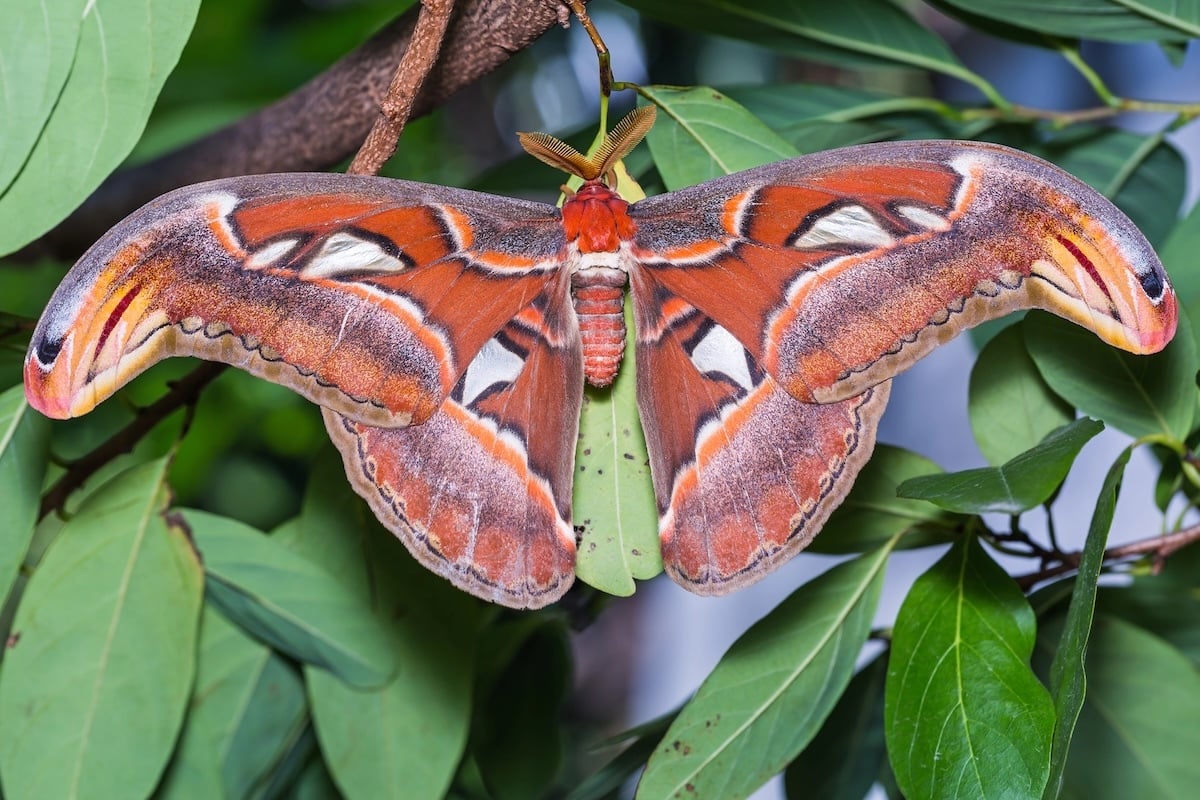 Photo Credit: teptong at Deposit Photos
In the heart of Southeast Asia, where the sun filters through the dense canopy of dry tropical forests, the Atlas Moth, or Attacus atlas, emerges as a true marvel of nature. With a wingspan that can stretch up to an astonishing 12 inches, this giant moth is not just large; it is a living canvas of intricate patterns and colors. Its wings, adorned with shades of brown, orange, and cream, mimic the leaves and bark of its surroundings, allowing it to blend seamlessly into the lush environment. This remarkable camouflage is essential for evading predators, making the Atlas Moth a master of disguise in its vibrant habitat.
Scientists and nature enthusiasts alike are captivated by the Atlas Moth for more than just its size. Its unique life cycle and feeding habits set it apart from many other insects. Unlike most moths that sip nectar, the adult Atlas Moth does not eat at all, relying instead on the energy stored from its caterpillar stage. This fascinating adaptation raises questions about survival and evolution, drawing researchers into the depths of its biology. As we explore the world of the Atlas Moth, we will uncover the secrets of its life, its role in the ecosystem, and the delicate balance it maintains within its tropical home.
The Atlas Moth, known scientifically as Attacus atlas, holds a prominent position in the animal kingdom, classified within the Kingdom Animalia. This magnificent moth is part of the Phylum Arthropoda, which includes all invertebrates with exoskeletons, like insects and spiders. What sets the Atlas Moth apart is its impressive wingspan, which can reach up to 10 to 12 inches, making it one of the largest moths in the world. Its striking patterns and colors not only captivate the eye but also serve as a form of camouflage, helping it blend into its tropical forest habitat.
| Taxonomic Rank | Scientific Name | Meaning & Significance |
|---|---|---|
| Kingdom | Animalia | This term means “animals” in Latin, highlighting the Atlas Moth’s classification as a living organism that consumes organic material and is capable of movement. |
| Phylum | Arthropoda | Derived from Greek, meaning “jointed feet,” this name refers to the segmented body and jointed limbs that characterize all arthropods, including the Atlas Moth. |
| Class | Insecta | This term comes from the Latin word for “cut into pieces,” which describes the segmented body structure of insects, including the Atlas Moth’s distinct head, thorax, and abdomen. |
| Order | Lepidoptera | From the Greek words for “scale” and “wing,” this name refers to the tiny scales that cover the wings of moths and butterflies, giving them their vibrant colors and patterns. |
| Family | Saturniidae | This family name is derived from Saturn, the Roman god of agriculture, reflecting the large size and often impressive appearance of these moths, including the Atlas Moth. |
| Genus | Attacus | From the Greek word for “to be brave,” this name signifies the moth’s impressive size and bold presence in its environment. |
Understanding the Atlas Moth’s classification reveals much about its evolutionary journey. As a member of the Lepidoptera order, it shares a lineage with butterflies and other moths, showcasing the incredible diversity of adaptations that have evolved over millions of years. The Atlas Moth’s size and unique features, such as its striking wing patterns, are not just for show; they play crucial roles in survival and reproduction. This classification helps scientists trace the evolutionary paths that have led to the rich tapestry of life we see today, highlighting the interconnectedness of all species within the vast tree of life.
The Atlas Moth, scientifically known as Attacus atlas, has a captivating evolutionary history that stretches back millions of years. This giant moth belongs to the family Saturniidae, which is known for its large and often colorful members. The evolutionary journey of the Atlas Moth is a tale of adaptation and survival, shaped by the changing environments of Southeast Asia, where it thrives today.
The ancestors of the Atlas Moth were likely smaller and less colorful than their modern descendants. Over time, as they evolved, they developed larger wingspans and more intricate patterns. This transformation was not just for show; it played a crucial role in their survival. The Atlas Moth’s ancestors faced various predators, and those that could blend into their surroundings or mimic other species had a better chance of surviving and reproducing. This led to the development of their impressive size and striking wing patterns, which can resemble the eyes of snakes, deterring potential threats.
The adaptations of the Atlas Moth have been vital for its survival in the wild. Its large wingspan not only aids in flight but also helps it navigate through dense forests. The ability to camouflage and mimic other creatures provides a clever defense against predators, ensuring that these magnificent moths can thrive in their natural habitats. By evolving these traits, the Atlas Moth has successfully carved out a niche in the rich tapestry of life in Southeast Asia, showcasing the wonders of nature’s ingenuity.
The Atlas Moth is a breathtaking spectacle of nature, boasting an impressive wingspan that can reach up to 12 inches, making it one of the largest moths in the world. Its body is robust and sturdy, covered in a hard exoskeleton that provides both protection and structure. The wings are the true stars of this moth, adorned with intricate patterns that resemble the delicate brushstrokes of an artist. The overall impression is one of grandeur and elegance, as the moth glides gracefully through its tropical forest habitat.
| Feature | Description |
|---|---|
| Size | Wingspan can reach up to 12 inches (30 cm) |
| Color | Rich brown with striking white and orange markings |
| Skin Type | Exoskeleton, providing protection and support |
| Distinctive Feature | Large wings with patterns that mimic the appearance of snakes |
The Atlas Moth’s features work together in a remarkable way to enhance its survival. The large wings not only allow for impressive flight but also serve as a form of camouflage. When resting on tree bark, the moth’s colors and patterns help it blend into its surroundings, making it less visible to predators. Additionally, the exoskeleton provides a sturdy defense against environmental challenges. Together, these adaptations create a perfect harmony, allowing the Atlas Moth to thrive in its lush, tropical environment.
The Atlas Moth thrives in the lush, vibrant landscapes of Southeast Asia, where it finds its perfect home among dry tropical forests, shrublands, and secondary forests. Imagine walking through a sun-dappled forest, where the air is warm and filled with the sweet scent of blooming flowers. Here, the Atlas Moth flutters gracefully, blending in with the colorful foliage and basking in the dappled sunlight that filters through the trees. This enchanting environment provides not only a place to live but also a rich source of food and shelter.
The climate in these regions is typically warm and humid, with temperatures often soaring above 75 degrees Fahrenheit (24 degrees Celsius). The Atlas Moth prefers areas where rainfall is abundant, as this supports the lush vegetation it relies on for survival. These moths thrive in environments that experience distinct wet and dry seasons, allowing them to time their life cycles with the availability of food sources, such as the leaves of specific host plants.
To adapt to its tropical habitat, the Atlas Moth has developed several fascinating traits. Its large wings not only help it glide gracefully through the forest but also provide excellent camouflage against the bark of trees and the colorful leaves. This clever disguise protects it from predators, while its ability to thrive in warm, humid conditions ensures it can find food and reproduce successfully. The Atlas Moth’s life is a beautiful dance with nature, perfectly attuned to the rhythms of its environment.
The Atlas Moth leads a life that is both intriguing and essential to its survival. During the day, these magnificent insects often rest on tree trunks or leaves, blending seamlessly into their surroundings. This camouflage helps them avoid predators. As dusk approaches, they become more active, fluttering around in search of mates and food. Their primary diet consists of tree sap, which they sip through their long, straw-like mouthparts. This feeding behavior is crucial, as it provides the energy they need for reproduction and flight.
While the Atlas Moth is primarily solitary, it does engage in social behaviors during mating season. Males are known to release pheromones, which are chemical signals that attract females from great distances. Once a female is located, the male performs a series of aerial displays to impress her. These displays are not just about showing off; they also help establish territory and ensure that the strongest genes are passed on to the next generation. Although they may not form large groups, their interactions during mating are vital for the continuation of their species.
| Behavior Type | Description |
|---|---|
| Feeding | Atlas Moths primarily feed on tree sap, using their long mouthparts to sip the sugary liquid. |
| Mating Rituals | Males attract females by releasing pheromones and performing aerial displays to showcase their strength. |
| Camouflage | During the day, they rest on tree trunks or leaves, blending in to avoid predators. |
| Solitary Nature | While they are mostly solitary, they engage in social interactions during the mating season. |
The behaviors of the Atlas Moth are finely tuned to ensure their survival in the wild. By resting during the day and becoming active at night, they minimize the risk of predation. Their ability to blend into their environment is a clever adaptation that protects them from hungry eyes. Additionally, their mating rituals not only help them find partners but also strengthen the genetic health of their population. Each of these behaviors plays a crucial role in the life cycle of the Atlas Moth, allowing it to thrive in the vibrant ecosystems of Southeast Asia.
The Atlas Moth primarily feeds on plant materials, making it a herbivore. As an adult, it has a rather unique feeding behavior. Unlike many other moths that might sip nectar from flowers, the Atlas Moth does not eat at all during its brief adult life. Instead, it relies on the energy stored in its body from the larval stage, when it consumed a variety of leaves. This means that the moth’s diet is crucial during its caterpillar phase, as it prepares for its short adult life.
| Dietary Aspect | Details |
|---|---|
| Diet Type | Herbivore |
| Favorite Foods | Leaves from trees such as the guava and citrus |
| Prey Items | None, as it does not hunt |
| Hunting/Foraging Strategies | As an adult, it does not forage; relies on stored energy |
This diet, established during the caterpillar stage, shapes the Atlas Moth’s ecology and daily routine significantly. Since adult Atlas Moths do not eat, they focus on reproduction and finding mates. Their energy reserves from their larval diet allow them to survive long enough to fulfill their life cycle, which is typically just a few weeks. This fascinating adaptation highlights the importance of their early feeding habits, as they must consume enough nutrients to sustain themselves through their brief adult phase.
When it comes to the mating rituals of the Atlas Moth, the process is as grand as the moth itself. During the breeding season, which typically occurs in the warm months, male Atlas Moths take to the skies, searching for females. They use their keen sense of smell to detect pheromones, which are chemical signals released by females to attract mates. Once a male finds a female, he performs a captivating aerial display, fluttering around her to impress. If she is receptive, they will mate, and the female will soon begin the process of laying her eggs.
| Reproductive Aspect | Details |
|---|---|
| Gestation Period | 4 Weeks (in the pupal stage) |
| Average Litter Size | 200-300 |
| Age of Sexual Maturity | 60-90 minutes after leaving the pupal stage |
| Name of Young | Larva |
After mating, the female Atlas Moth lays her eggs on the leaves of suitable host plants. Once the eggs hatch, the young, known as larvae, emerge and begin their journey of growth. These larvae are voracious eaters, munching on leaves to fuel their development. As they grow, they will shed their skin several times, a process called molting. This allows them to accommodate their increasing size. After about four weeks, the larvae will enter the pupal stage, where they will undergo a remarkable transformation into adult moths. During this time, they are safe and hidden, preparing for their grand debut into the world as one of nature’s most magnificent insects.
The Atlas Moth, a stunning giant of the insect world, plays a vital role in its ecosystem. As a herbivore, it primarily feeds on plant materials, which places it in a unique position within the food web. While it contributes to the health of its environment by helping to pollinate plants, it also faces various threats from predators eager to make it their next meal.
To survive these dangers, the Atlas Moth has developed some clever defensive strategies. One of its most effective tactics is its incredible camouflage. By resting on tree trunks or leaves, it blends in with its surroundings, making it hard for predators to spot. Additionally, its large wings, adorned with eye-like patterns, can startle potential threats, giving the moth a chance to escape. These adaptations help the Atlas Moth navigate the challenges of its environment, ensuring its survival in the wild.
A keystone species is an organism that has a disproportionately large impact on its environment relative to its abundance. These species play critical roles in maintaining the structure of an ecological community. The Atlas Moth, or Attacus atlas, while not a traditional keystone species like wolves or sea otters, does contribute to its ecosystem in significant ways, particularly in the lush landscapes of Southeast Asia where it resides.
The Atlas Moth primarily feeds on plant materials, which means it plays a role in the plant community by influencing the growth and health of certain plants. By consuming leaves, it can help control plant populations, allowing for a diverse range of species to thrive. This herbivorous diet also means that the Atlas Moth serves as a food source for various predators, including birds and small mammals. In this way, it helps support the food web, connecting different species and maintaining balance within its habitat.
Moreover, the Atlas Moth’s life cycle contributes to nutrient cycling in its environment. When these moths lay their eggs, the resulting caterpillars feed on leaves, and their waste products return nutrients to the soil. This process enriches the ground, promoting healthy plant growth. Additionally, the moths themselves, with their striking appearance, can attract attention from other species, including pollinators, which are essential for many plants to reproduce.
If the Atlas Moth were to disappear from its ecosystem, the effects could ripple through the food web. Predators that rely on the moth for sustenance might struggle to find enough food, leading to declines in their populations. Additionally, without the Atlas Moth’s herbivorous activities, certain plant species could become overabundant, potentially choking out other plants and reducing biodiversity. This loss of variety could destabilize the entire ecosystem, demonstrating just how interconnected life is in the natural world.
The Atlas Moth, or Attacus atlas, occupies a vital ecological niche in the dry tropical forests and shrublands of Southeast Asia. As one of the largest moths in the world, it plays a significant role in its environment, influencing both plant life and the animal community around it. By feeding on various plant materials, the Atlas Moth helps shape the vegetation structure, which in turn supports a diverse array of other species. Its presence is a testament to the interconnectedness of life in these vibrant ecosystems.
| Ecosystem Service | Impact |
|---|---|
| Pollination | Helps in the reproduction of certain plants by transferring pollen. |
| Food Source | Serves as a food source for predators like birds and bats. |
| Leaf Consumption | Regulates plant growth by consuming leaves, promoting new growth. |
| Habitat Structure | Contributes to the habitat complexity, supporting various organisms. |
The Atlas Moth’s influence extends beyond its own life cycle. For instance, as it feeds on leaves, it not only helps control the growth of certain plants but also encourages the emergence of new foliage. This new growth can attract other herbivores, creating a bustling community of life. Additionally, the moth serves as a crucial food source for various predators, including birds and bats, which rely on it for sustenance. In this way, the Atlas Moth is woven into the fabric of its ecosystem, supporting a web of life that thrives on balance and interdependence.
The broader ecological importance of the Atlas Moth cannot be overstated. As a keystone species, its presence helps maintain the structure and health of its habitat. By facilitating plant reproduction and providing nourishment for other animals, the Atlas Moth contributes to the overall biodiversity of its environment. This intricate dance of life highlights how even the smallest creatures can have a profound impact on the world around them, reminding us of the delicate balance that sustains our planet’s ecosystems.
In the intricate web of life, symbiosis refers to the close and often long-term interactions between different species. These relationships can take many forms, including mutualism, where both species benefit, parasitism, where one benefits at the expense of the other, and commensalism, where one benefits while the other is neither helped nor harmed. The Atlas Moth, with its impressive size and unique lifestyle, engages in various ecological relationships that highlight the interconnectedness of nature.
| Species/Type | Relationship Type | Description |
|---|---|---|
| Ants | Mutualistic | Some species of ants protect the Atlas Moth’s larvae from predators in exchange for a sugary substance secreted by the larvae. |
| Plants (Host Plants) | Mutualistic | The Atlas Moth feeds on the leaves of certain plants, which helps the plants by promoting new growth while providing nourishment for the moth. |
| Parasitoid Wasps | Parasitic | These wasps lay their eggs inside the Atlas Moth’s larvae, leading to the larvae’s eventual death as the wasp larvae consume them. |
The evolution of these relationships showcases the dynamic nature of ecosystems. Over time, the Atlas Moth and its partners have adapted to thrive together, creating a balance that benefits all involved. The mutualistic relationships, like those with ants and host plants, enhance survival and reproduction, while the parasitic interactions remind us of the harsh realities of nature. Each connection plays a role in shaping the life of the Atlas Moth, illustrating how every species, no matter how large or small, contributes to the rich tapestry of life on Earth.
The Atlas Moth is not just a giant among moths; it’s a marvel of nature with some truly surprising traits that will captivate anyone interested in the animal kingdom.
The Atlas Moth, known for its stunning size and beauty, has long captured the imagination of people across cultures. Historically, these magnificent insects have been featured in folklore and art, symbolizing transformation and the ephemeral nature of life. In many Southeast Asian cultures, the Atlas Moth is revered, often associated with good fortune and spiritual significance. Its impressive wingspan and striking patterns have made it a subject of fascination, inspiring stories and legends that celebrate its grandeur.
In contemporary times, the relationship between the Atlas Moth and humanity has evolved, reflecting both conservation efforts and challenges. As deforestation and habitat loss threaten their populations, conservationists are working to protect the lush environments where these moths thrive. However, there are also conflicts, as some communities view the moths as pests that damage crops. Interestingly, the Atlas Moth has found a place in the world of silk production, with some farmers cultivating them for their silk, which is prized for its quality. This blend of admiration and conflict highlights the complex dynamics at play in our interactions with this remarkable species.
Looking ahead, the future of the Atlas Moth and humanity’s relationship with it will depend on our ability to balance conservation with the needs of local communities. As awareness grows about the ecological importance of these moths, there is hope that more people will appreciate their beauty and role in nature. By fostering a deeper understanding and respect for the Atlas Moth, we can work together to ensure that this magnificent creature continues to thrive alongside us in the vibrant ecosystems of Southeast Asia.
The Atlas Moth, a breathtaking giant of the insect world, currently holds a conservation status of “Not Listed” according to the International Union for Conservation of Nature (IUCN). This means that, as of now, there are no specific conservation measures in place for this species. However, population trends are not well-documented, making it challenging to assess whether their numbers are increasing, decreasing, or stable. The lack of comprehensive data highlights the need for further research to understand their population dynamics better.
| Conservation Factor | Status/Details |
|---|---|
| IUCN Status | Not Listed |
| Population Estimates | Unknown |
| Trend Direction | Uncertain |
Despite their majestic appearance, Atlas Moths face several threats that could impact their future. Habitat loss is a significant concern, primarily due to deforestation and land conversion for agriculture. As their natural environments shrink, these moths may struggle to find suitable places to live and reproduce. Additionally, climate change poses a risk by altering the ecosystems they depend on, potentially affecting their food sources and breeding patterns.
Conservation efforts for the Atlas Moth are still in their infancy, but there is hope for the future. Raising awareness about the importance of preserving their habitats is crucial. Local communities and conservation organizations are beginning to recognize the value of these magnificent moths, not just for their beauty but also for their role in the ecosystem. By promoting sustainable land use and protecting natural areas, we can help ensure that the Atlas Moth continues to thrive in the vibrant landscapes of Southeast Asia. With continued efforts, there is potential for a brighter future for this extraordinary species.
| Question | Answer |
|---|---|
| Where does the Atlas Moth live? | The Atlas Moth is found in dry tropical forests, shrubland, and secondary forests across Southeast Asia. Countries like Indonesia, Malaysia, and Thailand are home to these magnificent creatures, where they thrive in warm, humid environments. |
| What does the Atlas Moth eat? | As an herbivore, the Atlas Moth primarily feeds on the leaves of various plants. Its caterpillars enjoy munching on the foliage of trees like the guava and the citrus, which provide the nutrients they need to grow. |
| What are some interesting behaviors of the Atlas Moth? | Atlas Moths are known for their impressive flight capabilities, often gliding gracefully through the air. They are mostly nocturnal, meaning they are active at night, and they use their large wings to camouflage themselves against tree bark during the day. |
| How does the Atlas Moth reproduce? | During mating season, male Atlas Moths use their keen sense of smell to locate females, who release pheromones, or chemical signals, to attract them. After mating, the female lays hundreds of eggs on the leaves of host plants, ensuring that the caterpillars have plenty to eat when they hatch. |
| What threats do Atlas Moths face? | While the Atlas Moth is not currently listed as endangered, it faces threats from habitat loss due to deforestation and human activities. Additionally, they are sometimes preyed upon by birds and other predators, which can impact their populations. |
| What is the most distinctive feature of the Atlas Moth? | The Atlas Moth is famous for its large wings, which can span up to 10 inches across! Their wings are adorned with beautiful brown and white markings that resemble the shape of a snake, helping to scare off potential predators. |
| How long do Atlas Moths live? | Adult Atlas Moths have a relatively short lifespan, typically living only about two weeks. During this time, they focus on mating and laying eggs, as they do not eat in their adult stage. |