Taxonomy & Classification
- Kingdom
- Animalia
- Phylum
- Chordata
- Class
- Reptilia
- Order
- Squamata
- Family
- Gekkonidae

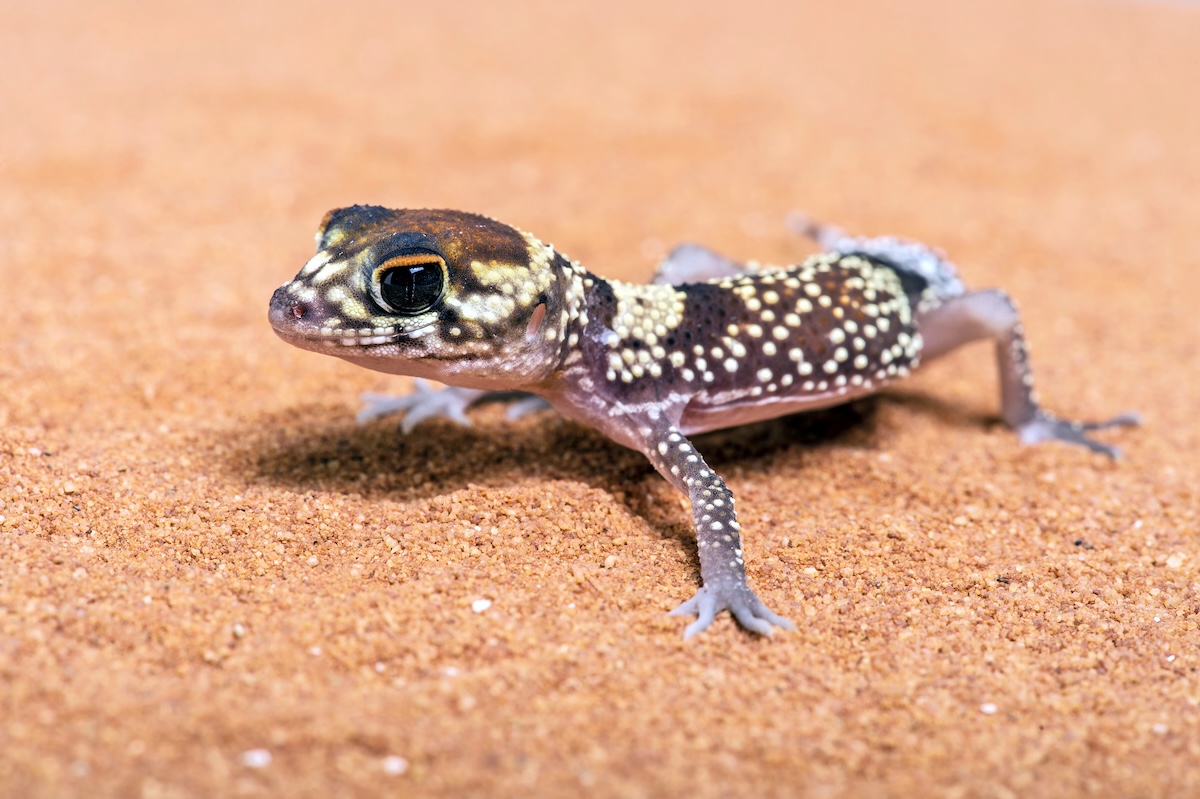 Photo Credit: davemhuntphoto at Deposit Photos
In the heart of Australia’s sun-drenched landscapes, the Australian gecko, scientifically known as Nephrurus, scuttles across rocky outcrops and sandy deserts. This small lizard, measuring just 5 to 10 inches long, is a master of camouflage, blending seamlessly with its surroundings thanks to its earthy tones and textured skin. As the sun sets and the stars begin to twinkle in the vast sky, these nocturnal creatures come alive, showcasing their remarkable adaptations that have fascinated scientists and nature enthusiasts alike.
With large, expressive eyes that shine in the moonlight, the Australian gecko is not just a pretty face. Its unique ability to climb smooth surfaces and its specialized toe pads allow it to navigate its environment with ease. This little lizard plays a vital role in its ecosystem, helping to control insect populations while also serving as prey for larger animals. As we explore the life of the Australian gecko, we will uncover the secrets of its behavior, diet, and the intricate relationships it shares with its habitat, revealing why this small reptile is a true gem of the Australian wilderness.
The Australian gecko, a member of the Gekkonidae family, holds a special place in the animal kingdom. This small lizard is not just another reptile; it showcases a variety of adaptations that make it well-suited for life in Australia’s diverse environments. With its ability to climb smooth surfaces and its unique vocalizations, the Australian gecko stands out among its relatives. Its classification reveals much about its evolutionary journey, connecting it to a lineage that has thrived in various habitats across the globe.
| Taxonomic Rank | Scientific Name | Meaning & Significance |
|---|---|---|
| Kingdom | Animalia | This name signifies that the Australian gecko is part of the vast group of multicellular organisms known as animals, which are characterized by their ability to move and respond to their environment. |
| Phylum | Chordata | Chordata means “having a notochord,” a flexible rod that supports the body. This group includes all animals with a backbone, highlighting the gecko’s place among more complex life forms. |
| Class | Reptilia | Reptilia refers to reptiles, which are cold-blooded vertebrates that usually lay eggs. This classification emphasizes the gecko’s scaly skin and its adaptation to a life on land. |
| Order | Squamata | Squamata means “scaly,” a fitting name for lizards and snakes. It reflects the gecko’s distinctive skin texture, which helps it retain moisture and camouflage in its environment. |
| Family | Gekkonidae | The name Gekkonidae comes from the Malay word “gecko,” which refers to the sound these lizards make. This highlights the gecko’s unique vocal abilities, setting it apart from other reptiles. |
Understanding the Australian gecko’s taxonomic position not only reveals its biological traits but also tells a story of survival and adaptation. As a member of the Gekkonidae family, it shares a common ancestry with other geckos, showcasing how these reptiles have evolved to thrive in various ecosystems. This classification underscores the gecko’s role in the intricate web of life, illustrating how it has adapted to its environment while maintaining connections to its ancient relatives.
The evolutionary journey of the Australian gecko stretches back millions of years, intertwining with the rich tapestry of life on the continent. As Australia drifted away from the supercontinent Gondwana around 180 million years ago, it became a unique environment, shaping the species that would call it home. The ancestors of modern geckos began to emerge during the late Cretaceous period, around 100 million years ago, adapting to the diverse habitats that Australia offers, from arid deserts to lush rainforests.
The early ancestors of geckos were small, agile reptiles that thrived in a variety of environments. Over time, they developed key adaptations that allowed them to survive and flourish in Australia’s distinct ecosystems. One major transition was the evolution of their specialized toe pads, which enable them to climb smooth surfaces and navigate their arboreal habitats with ease. This adaptation likely arose as they began to exploit vertical spaces for food and shelter, allowing them to escape predators and find new sources of insects.
These adaptations have been vital for the survival of Australian geckos in their ever-changing environment. The ability to climb and hide has allowed them to evade predators, while their nocturnal habits help them avoid the harsh daytime heat. Their color-changing skin not only provides camouflage but also plays a role in social interactions. With the ability to regenerate their tails, they can escape dangerous situations and continue thriving. Together, these traits illustrate the incredible resilience and adaptability of the Australian gecko, making it a true survivor in the wild.
The Australian gecko is a small yet captivating lizard that embodies the spirit of its sun-drenched homeland. With a body that typically measures around 5 to 10 inches long, it is perfectly designed for agility and stealth. Its slender form is complemented by a long tail, which helps with balance as it scurries across rocky surfaces and tree branches. The gecko’s skin is smooth and often adorned with a variety of colors and patterns, allowing it to blend seamlessly into its surroundings. This camouflage is not just for show; it plays a crucial role in evading predators.
| Feature | Description |
|---|---|
| Weight | 1.6 to 2.82 ounces |
| Skin Type | Smooth skin that aids in camouflage |
| Most Distinctive Feature | Ability to climb up just about anything, including glass |
These physical traits work together to create a master of survival. The gecko’s lightweight body allows it to dart quickly away from danger, while its smooth skin helps it blend into the environment, making it less visible to both predators and prey. Its remarkable climbing ability, which enables it to scale vertical surfaces, opens up a world of opportunities for finding food and escaping threats. In the wild, these adaptations are not just impressive; they are essential for thriving in the diverse and often challenging landscapes of Australia.
The Australian gecko thrives in a variety of habitats across the sunburnt landscape of Australia. Picture a warm, dry environment where the sun shines brightly, illuminating rocky outcrops, sandy deserts, and lush forests. These adaptable lizards can often be found hiding among the crevices of rocks or nestled in the bark of trees, blending seamlessly into their surroundings. Their ability to thrive in such diverse settings makes them a common sight in both urban gardens and remote wilderness areas.
To flourish, Australian geckos prefer warm climates with plenty of sunlight. They are most active during the warmer months, taking advantage of the heat to hunt for insects and other small prey. These lizards are also quite resilient, able to tolerate periods of drought, which is common in many parts of Australia. They thrive in environments that offer both shelter and warmth, allowing them to regulate their body temperature effectively.
Over time, Australian geckos have developed several clever adaptations to survive in their habitats. Their ability to change color helps them blend into their surroundings, making it easier to evade predators. Additionally, their specialized toe pads allow them to climb and navigate various surfaces, from smooth tree trunks to rocky ledges. These traits not only enhance their survival but also showcase the incredible ways in which life can adapt to the challenges of the environment.
As the sun rises over the Australian landscape, the Australian gecko begins its daily routine. These small lizards are primarily nocturnal, meaning they are most active at night. During the day, they often find cozy spots to hide, like under rocks or in tree crevices, where they can stay cool and safe from predators. As dusk approaches, they emerge to hunt for insects, their primary food source. With keen eyesight and quick reflexes, they dart around, catching crickets and moths with their sticky tongues. This nightly adventure is not just about feeding; it’s also a time for exploration and establishing territory.
Socially, Australian geckos can be quite interesting. While they are often solitary creatures, they do exhibit some group behaviors, especially during mating season. Males may engage in displays to attract females, showcasing their vibrant colors and performing head-bobbing movements. These interactions can lead to temporary gatherings, where geckos communicate through body language and vocalizations, like soft chirps or clicks. This social dynamic is crucial for reproduction, as it helps ensure that the strongest genes are passed on to the next generation.
| Behavior Type | Description |
|---|---|
| Activity Patterns | Nocturnal foraging for insects, hiding during the day to avoid predators. |
| Social Structure | Primarily solitary, but can form temporary groups during mating season. |
| Communication Methods | Body language and vocalizations, including chirps and clicks, especially during courtship. |
In the wild, these behaviors are essential for survival. By being active at night, Australian geckos avoid many daytime predators, while their ability to communicate effectively during mating ensures the continuation of their species. Their clever adaptations and social interactions help them thrive in the diverse and often harsh environments of Australia, showcasing the intricate balance of life in the natural world.
The Australian gecko has a diverse diet that reflects its adaptability and resourcefulness. As an omnivore, it enjoys a mix of foods, primarily feasting on insects and smaller lizards. This little lizard is a skilled forager, using its keen eyesight and quick reflexes to hunt down its favorite snacks. When night falls, the gecko comes alive, scouring its environment for tasty morsels, making the most of its nocturnal lifestyle.
| Dietary Aspect | Details |
|---|---|
| Diet Type | Omnivore |
| Favorite Foods | Insects, smaller lizards, invertebrates |
| Prey Items | Crickets, moths, beetles, and other small creatures |
| Hunting/Foraging Strategies | Active at night, using keen eyesight to spot prey and quick movements to catch it |
This varied diet plays a crucial role in the Australian gecko’s ecology and daily routine. By consuming a range of prey, it helps control insect populations, contributing to the balance of its ecosystem. Its nocturnal foraging habits also allow it to avoid many daytime predators, ensuring its survival while it plays an important part in the food web. The gecko’s ability to adapt its diet based on availability showcases the intricate connections between species and their environments.
When it comes to reproduction, Australian geckos have some intriguing behaviors. The breeding season typically occurs during the warmer months, when temperatures rise and food becomes more abundant. Males often engage in a courtship display, which can include head bobbing and tail waving to attract females. Once a female is ready to mate, she will lay her eggs in a safe, hidden location, ensuring that they are protected from predators.
| Reproductive Aspect | Details |
|---|---|
| Gestation Period | 30 to 80 days |
| Litter Size | Typically 1 to 2 eggs |
| Age of Maturity | 1 to 2 years |
| Name of Young | Hatchling |
After the eggs hatch, the young geckos, known as hatchlings, emerge ready to face the world. These tiny lizards are independent from the moment they break free from their eggs, needing no parental care. They quickly learn to hunt for food and find shelter, developing their skills in the wild. As they grow, they will shed their skin several times, a process called molting, which helps them adapt to their changing size. Within a year or two, these hatchlings will reach sexual maturity, continuing the cycle of life for the Australian gecko.
The Australian gecko plays a vital role in its ecosystem, nestled within the food web as both predator and prey. These small lizards help control insect populations, feasting on a variety of bugs, while also serving as a meal for larger animals. This balance is crucial for maintaining the health of their habitats, where every creature has its part to play.
To survive against these dangers, Australian geckos have developed some clever defensive strategies. When threatened, they can quickly blend into their surroundings, using their natural camouflage to avoid detection. Some species can even drop their tails, a tactic that distracts predators while they make a hasty escape. By being active at night, they also reduce the chances of encountering daytime hunters. These adaptations help ensure that the Australian gecko continues to thrive in its diverse and challenging environment.
A keystone species is an organism that has a disproportionately large impact on its environment relative to its abundance. In other words, if it were to disappear, the entire ecosystem could change dramatically. The Australian gecko, with its unique role in the food web, qualifies as a keystone species. By controlling insect populations and serving as prey for larger animals, these small lizards help maintain the balance of their ecosystems.
The ecological impact of the Australian gecko is significant. As an omnivore, it primarily feeds on insects, including crickets and moths, which helps keep these populations in check. Without the gecko’s appetite for these pests, insect numbers could explode, leading to overgrazing of plants and disruption of the local flora. This, in turn, could affect other animals that rely on those plants for food and shelter.
Moreover, the Australian gecko is a source of food for various predators, including birds and snakes. By being part of the diet of these larger animals, geckos contribute to the energy flow within the ecosystem. Their presence supports a diverse range of wildlife, creating a rich tapestry of life that thrives on the interconnections between species.
If the Australian gecko were to vanish, the consequences could be severe. Insect populations would likely surge, leading to potential crop damage and a decline in plant health. This would not only affect the plants themselves but also the animals that depend on them for food and habitat. The ripple effects could destabilize the entire ecosystem, demonstrating just how crucial the Australian gecko is to its environment.
The Australian gecko occupies a crucial ecological niche in its environment, acting as both predator and prey. This small lizard plays a significant role in maintaining the balance of its ecosystem. By controlling insect populations, it helps prevent overpopulation of pests that could otherwise damage plants and disrupt the food chain. Additionally, as a food source for larger predators, the gecko contributes to the energy flow within its habitat, linking various levels of the food web.
| Ecosystem Service | Impact |
|---|---|
| Insect population control | Reduces pest numbers, protecting plant life |
| Food source for predators | Supports larger animals, maintaining food web balance |
| Soil aeration | Helps improve soil health through burrowing |
| Seed dispersal | Assists in plant reproduction by spreading seeds |
The influence of the Australian gecko extends beyond its immediate actions. For instance, by consuming a variety of insects, including moths and beetles, these lizards help regulate populations that could otherwise explode and lead to ecological imbalances. Their nocturnal habits mean they are active at night, which allows them to exploit food resources that are less available during the day. Furthermore, as they move through their habitats, they inadvertently aerate the soil, promoting healthier plant growth and contributing to the overall vitality of their ecosystem.
The broader ecological importance of the Australian gecko cannot be overstated. As a keystone species, its presence is vital for the health of its environment. If these lizards were to vanish, the ripple effects would be felt throughout the ecosystem, potentially leading to an increase in pest populations and a decline in plant health. This delicate balance highlights the interconnectedness of life in Australia, reminding us that even the smallest creatures can have a profound impact on the world around them.
In the intricate web of life, symbiosis plays a vital role in shaping ecosystems. Symbiosis refers to the close and often long-term interactions between different species. These relationships can take many forms, including mutualism, where both species benefit, commensalism, where one benefits while the other is neither helped nor harmed, and parasitism, where one species benefits at the expense of the other. The Australian gecko, with its adaptable nature, engages in various ecological partnerships that highlight the interconnectedness of life in its environment.
| Species/Type | Relationship Type | Description |
|---|---|---|
| Ants | Mutualistic | Australian geckos may benefit from the presence of ants, which help keep the area free of pests. In return, geckos can provide ants with protection from larger predators. |
| Birds | Commensal | Some birds may nest near gecko habitats, benefiting from the insects that geckos attract. The geckos are unaffected by the birds’ presence. |
| Ticks | Parasitic | Ticks can latch onto geckos, feeding on their blood. This relationship is harmful to the gecko, as it can lead to health issues. |
These relationships have evolved over time, shaped by the needs and behaviors of the species involved. Mutualistic partnerships, like that with ants, enhance the survival of both species, while commensal relationships allow for coexistence without direct competition. On the other hand, parasitic interactions, such as those with ticks, can pose challenges for the gecko’s health. Understanding these connections not only reveals the complexity of ecosystems but also emphasizes the importance of each species in maintaining the balance of their environment.
The Australian gecko is a small but extraordinary lizard that captures the imagination of nature lovers everywhere. With its unique adaptations and behaviors, this little reptile is full of surprises that reveal the wonders of evolution and the environment.
The Australian gecko has long been a part of the cultural fabric of Australia, with its presence woven into the stories and traditions of Indigenous peoples. These small lizards are often seen as symbols of adaptability and resilience, reflecting the harsh yet beautiful landscapes they inhabit. Historical encounters between humans and geckos have been marked by a sense of wonder, as these creatures are known for their unique ability to climb walls and ceilings, thanks to their specialized toe pads. In many Aboriginal cultures, geckos are featured in Dreamtime stories, serving as important figures that teach lessons about nature and survival.
In contemporary times, the relationship between Australian geckos and humans has evolved, focusing on conservation and coexistence. As urban areas expand, these lizards often find themselves in conflict with human activities, particularly when their habitats are threatened. However, many Australians appreciate the ecological role of geckos, recognizing their importance in controlling insect populations. Some communities have even embraced geckos as pets, fostering a deeper understanding of their behaviors and needs. This domestication can lead to a greater appreciation for wildlife, but it also raises questions about the impact on wild populations and their habitats.
As we look to the future, the relationship between Australian geckos and humanity holds promise. With growing awareness of environmental issues, more people are advocating for the protection of these lizards and their habitats. Education about the ecological roles of geckos can foster a sense of stewardship among communities. By embracing coexistence and understanding the delicate balance of nature, we can ensure that these remarkable reptiles continue to thrive alongside us in the vibrant landscapes of Australia.
The Australian gecko currently enjoys a conservation status of “Least Concern,” indicating that it is not facing immediate threats to its survival. With an estimated population size in the millions, these adaptable lizards are thriving across various habitats in Australia. While some species may experience localized pressures, the overall trend for the Australian gecko remains stable, allowing them to continue their important role in the ecosystem.
| Conservation Factor | Status/Details |
|---|---|
| IUCN Status | Least Concern |
| Estimated Population Size | Millions |
| Population Trend | Stable |
Despite their current stable status, Australian geckos face several threats that could impact their future. Habitat loss due to urban development and agriculture poses a significant risk, as these activities can destroy the natural environments where geckos thrive. Additionally, climate change is altering weather patterns, which can affect food availability and breeding cycles. Invasive species, such as cats and foxes, also pose a danger, as they prey on these small lizards, further stressing their populations.
Conservation efforts are underway to ensure the continued survival of Australian geckos. Organizations are working to protect their habitats and raise awareness about the importance of these lizards in the ecosystem. By promoting sustainable land use and supporting research on their populations, conservationists aim to maintain the health of gecko populations for generations to come. With ongoing efforts, the outlook for the Australian gecko remains positive, allowing these fascinating reptiles to continue their vital role in the natural world.
| Question | Answer |
|---|---|
| What is the habitat of the Australian Gecko? | Australian Geckos are found in a variety of habitats, including forests, grasslands, and even urban areas. They prefer warm climates and often seek shelter in crevices, under rocks, or inside buildings. |
| What do Australian Geckos eat? | These geckos are omnivores, meaning they eat both plants and animals. Their diet mainly consists of insects, such as crickets and moths, but they also enjoy fruits and nectar. |
| How do Australian Geckos behave? | Australian Geckos are mostly nocturnal, which means they are active at night. They are known for their agility and can climb almost any surface, including glass, thanks to their specialized toe pads. |
| How do Australian Geckos reproduce? | During the breeding season, male geckos attract females with vocalizations and displays. After mating, the female lays eggs, which she often hides in safe places to protect them from predators. |
| What threats do Australian Geckos face? | While Australian Geckos are currently classified as Least Concern, they face threats from habitat loss and invasive species. Urban development can destroy their natural habitats, making it harder for them to find food and shelter. |
| What is a unique characteristic of Australian Geckos? | One of the most distinctive features of Australian Geckos is their ability to climb almost anything. Their toe pads have tiny hair-like structures that allow them to stick to surfaces, making them excellent climbers. |
| Can Australian Geckos change color? | Yes, some species of Australian Geckos can change their color slightly to blend in with their surroundings. This ability helps them avoid predators and can also be a way to communicate with other geckos. |