Taxonomy & Classification
- Kingdom
- Animalia
- Phylum
- Chordata
- Class
- Mammalia
- Order
- Carnivora
- Family
- Canidae
- Genus
- Canis
- Species
- Canis lupus

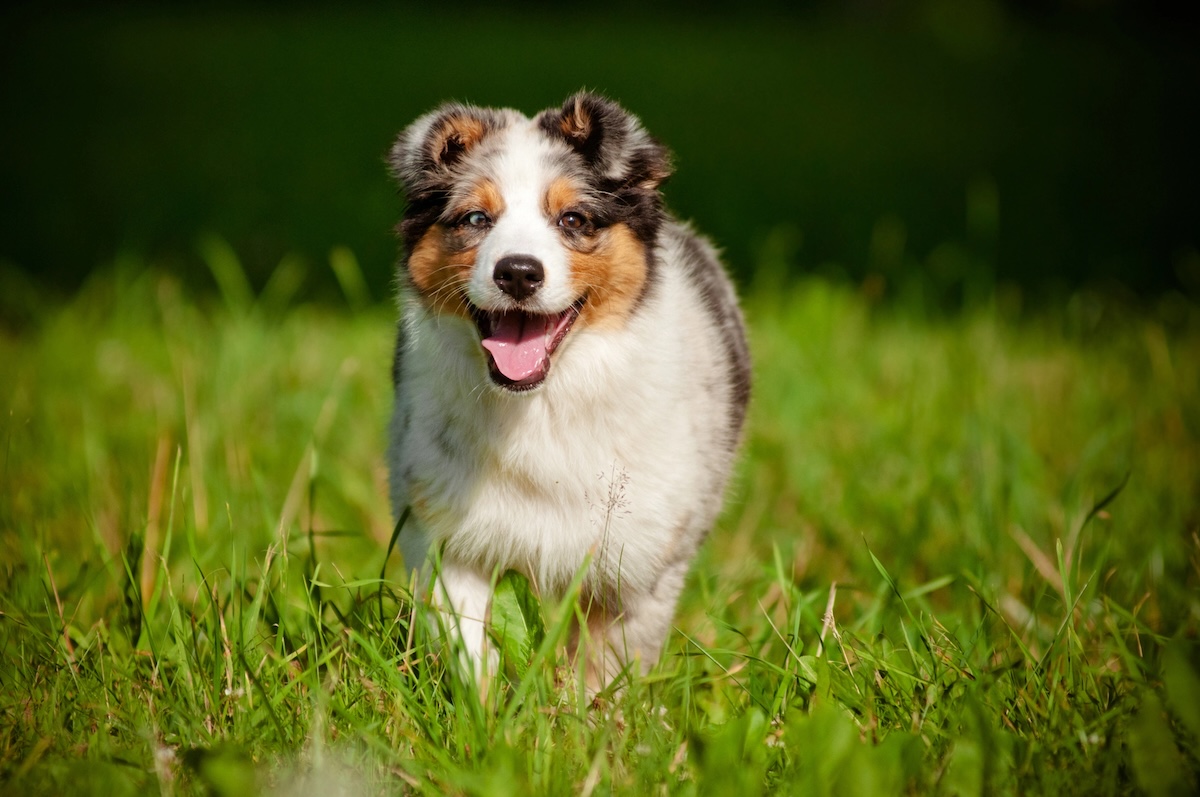 Photo Credit: ots photo at Deposit Photos
In the sun-drenched fields of the American West, the Australian Shepherd, or Canis lupus familiaris, dances through the tall grass with a grace that captivates all who watch. With its striking coat of merle patterns and bright, expressive eyes, this breed is not just a feast for the eyes but also a marvel of canine intelligence and agility. Originally bred to assist shepherds in herding livestock, the Aussie has evolved into a beloved companion known for its boundless energy and playful spirit. Its keen instincts and remarkable problem-solving skills make it a favorite among dog enthusiasts and scientists alike, who are drawn to its unique blend of beauty and brains.
Imagine a scene where the Australian Shepherd bounds across rolling hills, its tail wagging in excitement as it chases after a flock of sheep. This breed thrives in open spaces, where it can showcase its athleticism and intelligence. With a natural ability to understand commands and a desire to please, the Aussie is a true partner in adventure. Whether it’s herding, agility training, or simply playing fetch, these dogs are always ready for action. Their vibrant personalities and strong work ethic not only make them excellent companions but also highlight their important role in agricultural ecosystems, where they help manage livestock and maintain balance in the environment. As we explore the world of the Australian Shepherd, we will uncover the secrets behind its fascinating history, behavior, and the special bond it shares with humans.
The Australian Shepherd, often affectionately called the “Aussie,” holds a special place in the animal kingdom. This breed is classified within the Kingdom Animalia, which includes all animals, and it belongs to the Phylum Chordata, meaning it has a backbone. As a member of the Class Mammalia, it shares traits like warm-bloodedness and fur with other mammals. The Aussie is part of the Order Carnivora, which includes meat-eating animals, and it falls under the Family Canidae, the group that encompasses dogs, wolves, and foxes. What makes the Australian Shepherd particularly captivating is its intelligence and herding ability, traits that have been honed over generations to assist farmers and ranchers in managing livestock.
| Taxonomic Rank | Scientific Name | Meaning & Significance |
|---|---|---|
| Kingdom | Animalia | The name comes from the Latin word “animalis,” meaning “having breath” or “living.” This reflects the vital, breathing nature of all animals. |
| Phylum | Chordata | Derived from the Greek word “chordē,” meaning “string” or “cord,” this name highlights the presence of a notochord, a flexible rod that supports the body during development. |
| Class | Mammalia | This term comes from the Latin “mamma,” meaning “breast,” referring to the mammary glands that allow females to nurse their young. |
| Order | Carnivora | From the Latin “carnivorus,” meaning “meat-eating,” this classification emphasizes the dietary habits of many members of this group, including the Australian Shepherd’s ancestors. |
| Family | Canidae | Originating from the Latin “canis,” meaning “dog,” this family includes all dog-like mammals, showcasing the close relationships among these species. |
| Genus | Canis | This name also comes from the Latin word for “dog,” indicating the shared characteristics and behaviors of this group, including loyalty and social structures. |
Understanding the Australian Shepherd’s taxonomic classification reveals much about its evolutionary journey. As a member of the Canidae family, the Aussie shares a lineage with wolves and foxes, highlighting its instinctual traits and social behaviors. Its classification within the Carnivora order points to its ancestral roots as a hunter and herder, traits that have been refined through selective breeding. This rich evolutionary history not only shapes the Australian Shepherd’s physical characteristics but also its intelligence and adaptability, making it a beloved companion and working dog in many households today.
The Australian Shepherd, or “Aussie,” has a captivating evolutionary story that stretches back thousands of years. This breed, known for its intelligence and agility, is believed to have developed in the United States during the 19th century, but its roots can be traced to various herding dogs brought by Basque shepherds from Europe. These early dogs were bred to assist in managing livestock, leading to a blend of traits that would shape the Australian Shepherd we know today.
The ancestors of the Australian Shepherd were likely a mix of several herding breeds, including the Collie and the German Shepherd. These dogs were selected for their herding abilities, intelligence, and adaptability to different environments. Over time, as they were bred for specific tasks, they developed a keen sense of working with livestock, which required not only physical prowess but also a strong bond with their human handlers. This partnership was crucial for their success on farms and ranches.
The adaptations of the Australian Shepherd have played a vital role in its survival and success as a working dog. Their intelligence and strong work ethic ensure they can handle the demands of herding livestock, while their agility allows them to maneuver swiftly in the field. The versatile coat protects them from the elements, making them resilient in various environments. Additionally, their social nature fosters teamwork with humans, enhancing their effectiveness as herders. Together, these traits not only define the breed but also highlight the incredible journey of evolution that has shaped the Australian Shepherd into the beloved companion it is today.
The Australian Shepherd, or Aussie, is a striking dog that commands attention with its athletic build and vibrant personality. These dogs are medium-sized, typically weighing around 65 pounds, and they possess a well-proportioned body that exudes strength and agility. Their muscular frame is complemented by a graceful stance, making them look both powerful and nimble. With a lively expression and intelligent eyes, they seem ready for action at any moment, embodying the spirit of adventure that many dog lovers adore.
| Feature | Description |
|---|---|
| Size | Medium, typically around 65 pounds |
| Color | Varies widely, including merle, black, red, and combinations of these |
| Skin Type | Hair, with a thick double coat that provides insulation |
| Eyes | Often blue, brown, or even one of each, giving them a striking appearance |
| Ears | Medium-sized, often semi-erect or dropped, adding to their expressive look |
The combination of these features not only makes the Australian Shepherd visually captivating but also serves important survival purposes. Their thick double coat helps protect them from harsh weather, keeping them warm in cold climates and cool in the heat. The variety of colors and striking eyes can also play a role in communication, helping them express emotions and bond with their human companions. With their agile bodies and keen intelligence, Aussies are built for action, making them excellent herders and loyal partners in adventure.
The Australian Shepherd, often known as the “Aussie,” thrives in a variety of environments, but it truly flourishes in open spaces where it can run and play. Picture rolling hills, expansive ranches, and wide-open pastures dotted with grazing sheep. This breed was originally developed to assist shepherds in herding livestock, so it feels right at home in rural settings. The Aussie loves to be active, and its ideal habitat is one that allows for plenty of exercise and mental stimulation.
Aussies are adaptable dogs, but they do best in climates that offer a mix of sunshine and cool breezes. They enjoy moderate temperatures, as extreme heat or cold can be challenging for them. Their double coat, which consists of a soft underlayer and a tougher outer layer, helps them regulate their body temperature. This means they can stay comfortable whether they are working hard on a sunny day or enjoying a brisk walk in cooler weather.
Over time, the Australian Shepherd has developed several traits that help it thrive in these diverse habitats. Its keen intelligence and strong work ethic make it an excellent herder, while its agility allows it to navigate various terrains with ease. The breed’s social nature means it bonds closely with humans and other animals, making it a beloved companion on farms and ranches. With its playful spirit and boundless energy, the Aussie is not just a working dog; it’s a joyful part of the landscape wherever it calls home.
The daily life of an Australian Shepherd is a whirlwind of energy and enthusiasm. These dogs are known for their playful spirit and intelligence, which means their days are filled with activities that keep both their bodies and minds engaged. Mornings often start with a brisk walk or a run, allowing them to stretch their legs and soak in the sights and smells of their surroundings. After some exercise, they might enjoy a game of fetch or agility training, showcasing their natural athleticism and eagerness to learn. As the day unfolds, they balance playtime with moments of rest, always ready for the next adventure.
Social behavior is a key aspect of an Australian Shepherd’s life. These dogs thrive in a pack environment, whether that pack consists of humans, other dogs, or even other animals. They are known for their loyalty and protective instincts, often forming strong bonds with their families. Communication is vital in their social interactions; they use a mix of barks, body language, and even facial expressions to convey their feelings. This social structure helps them navigate their world, ensuring they remain connected and engaged with those around them.
| Behavior Type | Description |
|---|---|
| Activity Patterns | Australian Shepherds require regular exercise and mental stimulation, often engaging in activities like running, herding, and playing games. |
| Social Structure | These dogs are pack animals, forming strong bonds with their human families and other pets, which helps them feel secure and happy. |
| Communication Methods | Aussies communicate through a combination of vocalizations, body language, and facial expressions, allowing them to express their needs and emotions effectively. |
The behaviors of Australian Shepherds are not just for fun; they play a crucial role in their survival. By staying active and engaged, these dogs maintain their physical health and mental sharpness, which are essential for their well-being. Their social nature ensures they are part of a supportive group, helping them navigate challenges and build strong relationships. In essence, the daily activities and social dynamics of Australian Shepherds are finely tuned to help them thrive in both domestic and wild environments.
The Australian Shepherd is an omnivore, which means it enjoys a varied diet that includes both plant and animal sources. This adaptability in eating habits allows the Aussie to thrive in different environments, whether it’s on a ranch herding sheep or at home playing with its family. Typically, these dogs will consume a mix of high-quality dog food, which often contains meat, grains, and vegetables. Their keen sense of smell and intelligence help them locate food, whether it’s from their human companions or the occasional scavenging adventure.
| Dietary Aspect | Details |
|---|---|
| Diet Type | Omnivore |
| Favorite Foods | High-quality dog food, meats, vegetables, and grains |
| Prey Items | Small animals like rodents, birds, and insects |
| Hunting/Foraging Strategies | Using keen senses and intelligence to locate food, often scavenging |
This diverse diet not only fuels the Australian Shepherd’s energetic lifestyle but also plays a crucial role in its ecological interactions. By foraging and scavenging, these dogs help maintain balance in their environment, ensuring that populations of small animals remain in check. Their daily routine is shaped by their need for food, leading them to explore and engage with their surroundings, making every day an adventure filled with discovery.
When it comes to mating, Australian Shepherds exhibit behaviors that are both instinctual and social. The breeding season typically occurs in the spring and fall, aligning with the natural cycles of the environment. During this time, females go into heat, a period when they are receptive to mating. Males, driven by their instincts, will often display heightened energy and interest in females. This courtship can involve playful interactions and displays of affection, as both dogs communicate their readiness to mate.
| Reproductive Aspect | Details |
|---|---|
| Gestation Period | Approximately 63 days |
| Litter Size | Average of 7 puppies |
| Age of Maturity | About 6 to 12 months |
| Name of Young | Puppies |
Once the puppies are born, the nurturing role of the mother becomes crucial. Australian Shepherds are attentive parents, providing warmth, protection, and nourishment to their young. The puppies rely on their mother’s milk for the first few weeks of life, which is packed with essential nutrients. As they grow, they begin to explore their surroundings, developing their social skills and learning from their mother and siblings. By the time they reach maturity, usually around six to twelve months, these puppies are well-prepared to embrace the world, carrying forward the traits that make Australian Shepherds such beloved companions.
The Australian Shepherd, or Aussie, occupies a fascinating niche in the food web. While they are primarily domesticated dogs, their intelligence and agility allow them to navigate various environments, making them adept at avoiding potential dangers. In the wild, they might face threats from larger predators, but their role as herding dogs means they often work alongside humans, which provides them with a layer of protection.
To defend themselves against these threats, Australian Shepherds rely on their keen senses and quick reflexes. Their natural herding instincts kick in, allowing them to be alert and aware of their surroundings. When faced with danger, they may bark loudly to warn off predators or use their agility to escape. Additionally, their strong bond with humans often means they have a protective network, as owners are likely to intervene if they sense their Aussie is in trouble. This combination of instincts and human companionship helps ensure their survival in a world filled with challenges.
A keystone species is a vital part of its ecosystem, playing a unique role that affects many other organisms. If removed, the entire ecosystem could change dramatically. While the Australian Shepherd is a beloved breed known for its intelligence and agility, it does not qualify as a keystone species. This is primarily because it is a domesticated dog, and its impact on the ecosystem is largely shaped by human interaction rather than natural ecological processes.
However, Australian Shepherds do have an important role in the environments where they are active, especially in agricultural settings. These dogs are often used as herders, helping to manage livestock such as sheep and cattle. By guiding and protecting these animals, they help maintain the balance of the ecosystem on farms. For instance, their herding behavior can prevent overgrazing, which can lead to soil erosion and loss of plant life. This, in turn, supports a healthier habitat for other wildlife.
Moreover, Australian Shepherds are known for their high energy and playful nature, which encourages outdoor activity among their human companions. This interaction can lead to increased awareness and appreciation of local wildlife and ecosystems. When families engage with nature while walking their Aussies, they often become more invested in conservation efforts, which can benefit the environment as a whole.
If Australian Shepherds were to disappear, the effects would ripple through their environments. Farmers might struggle to manage their livestock effectively, leading to potential overgrazing and habitat degradation. This could harm not only the plants but also the diverse animal species that rely on those plants for food and shelter. Additionally, the loss of these dogs could diminish the bond between humans and nature, reducing community engagement in conservation efforts. In essence, while they may not be keystone species, Australian Shepherds contribute to the health and vibrancy of their ecosystems in meaningful ways.
The Australian Shepherd, often known as the “Aussie,” plays a significant role in shaping its ecosystem, particularly in agricultural settings. As a herding dog, it helps manage livestock, which in turn influences the health of grasslands and pastures. By guiding sheep and cattle, these dogs help maintain a balance in animal populations, ensuring that grazing does not overtax the land. This behavior not only supports the farmers who rely on them but also promotes biodiversity by allowing various plant species to thrive.
| Ecosystem Service | Impact |
|---|---|
| Livestock Management | Helps control animal populations, preventing overgrazing. |
| Soil Health | Encourages diverse plant growth, which improves soil quality. |
| Wildlife Interaction | Facilitates coexistence between domestic and wild species. |
| Human Support | Assists farmers, enhancing agricultural productivity. |
In practical terms, Australian Shepherds are often seen working alongside farmers, guiding flocks of sheep or herds of cattle across vast pastures. Their keen intelligence and agility allow them to respond quickly to commands, making them invaluable partners in managing livestock. This herding behavior not only keeps the animals safe but also helps maintain the health of the land. For instance, by directing grazing patterns, Aussies can prevent certain areas from being overgrazed, allowing grasses to recover and flourish. This, in turn, supports a variety of other wildlife that depend on healthy grasslands for food and shelter.
The broader ecological importance of the Australian Shepherd extends beyond just livestock management. By influencing how animals interact with their environment, these dogs help maintain the delicate balance of ecosystems. Their presence can lead to healthier landscapes, which support a diverse array of plant and animal life. In this way, the Aussie is not just a companion or a working dog; it is a key player in the intricate web of life that sustains our natural world.
In the intricate web of life, symbiosis refers to the close interactions between different species, which can take many forms. These relationships can be mutualistic, where both species benefit, parasitic, where one benefits at the other’s expense, or commensal, where one benefits while the other is neither helped nor harmed. The Australian Shepherd, known for its intelligence and versatility, engages in various ecological relationships that highlight the interconnectedness of life. Understanding these partnerships not only reveals the dynamics of ecosystems but also showcases the adaptability and resourcefulness of the Aussie.
| Species/Type | Relationship Type | Description |
|---|---|---|
| Livestock (e.g., sheep, cattle) | Mutualistic | Australian Shepherds help herd and manage livestock, ensuring their safety and well-being while receiving food and companionship in return. |
| Humans | Mutualistic | These dogs assist farmers and ranchers, providing valuable services in herding and protection, while humans offer care, shelter, and food. |
| Ticks | Parasitic | Ticks can latch onto Australian Shepherds, feeding on their blood, which can lead to health issues for the dogs. |
| Birds (e.g., cattle egrets) | Commensal | Birds may follow herds managed by Australian Shepherds, feeding on insects stirred up by the movement of the livestock without affecting the dogs. |
The evolution of these relationships has been shaped by the needs and behaviors of both the Australian Shepherd and the species it interacts with. Over time, these partnerships have developed to enhance survival and efficiency in their respective environments. For instance, the mutualistic bond between Australian Shepherds and livestock not only aids in herding but also fosters a sense of community among species. As these relationships continue to evolve, they highlight the importance of cooperation and adaptation in the natural world, reminding us that every species plays a role in the grand tapestry of life.
The Australian Shepherd, often called the “Aussie,” is a breed that captivates dog lovers and nature enthusiasts alike. With their vibrant personalities and remarkable abilities, these dogs have a rich history and fascinating traits that many may not know about.
The Australian Shepherd, often known as the “Aussie,” has a rich history intertwined with humanity. Originally bred in the United States in the 19th century, these dogs were developed to assist shepherds in herding livestock, particularly sheep. Their name might suggest a connection to Australia, but they actually gained popularity among American ranchers who admired their intelligence and work ethic. Over time, the Aussie has become a beloved companion, celebrated not just for its herding skills but also for its loyalty and playful nature. This bond has led to a cultural significance that extends beyond mere utility, as these dogs have become symbols of the adventurous spirit of the American West.
Today, the relationship between Australian Shepherds and humans continues to evolve. These dogs are not only cherished family pets but also play crucial roles in various fields, including therapy, search and rescue, and even competitive sports. Their high intelligence and eagerness to please make them excellent candidates for training, allowing them to assist in conservation efforts by helping to manage wildlife populations or participating in search missions. However, this close relationship can sometimes lead to conflict, especially when it comes to their herding instincts. An Aussie may instinctively try to herd children or other pets, which can create misunderstandings in a household. Nevertheless, with proper training and socialization, these interactions can be positive and enriching for both the dog and its human companions.
Looking ahead, the future of the Australian Shepherd and humanity appears bright. As our understanding of animal behavior and welfare improves, we can foster even stronger bonds with these remarkable dogs. With their versatility and intelligence, Aussies will likely continue to find new roles in our lives, whether as working partners or cherished companions. As we navigate the challenges of modern life, the Australian Shepherd will remain a steadfast friend, reminding us of the joy and connection that comes from sharing our lives with animals.
The Australian Shepherd, commonly known as the “Aussie,” currently holds a conservation status of “Not Listed.” This means that there are no specific conservation measures in place for this breed, as it is not considered endangered or threatened. Population trends for Australian Shepherds are generally stable, with a healthy number of these dogs found in homes across the globe. Their popularity as family pets and working dogs contributes to their steady presence in various communities.
| Conservation Factor | Status/Details |
|---|---|
| IUCN Status | Not Listed |
| Population Estimates | Stable, with no specific estimates available |
| Trend Direction | Stable |
Despite their stable status, Australian Shepherds face some challenges that could impact their well-being. One of the main threats is overbreeding, which can lead to health issues and genetic disorders. Additionally, as a breed that thrives on activity and mental stimulation, many Aussies may suffer from behavioral problems if not given enough exercise or engagement. This can lead to abandonment or neglect, which is a concern for animal welfare advocates.
Conservation efforts for the Australian Shepherd primarily focus on responsible breeding practices and education for potential owners. Organizations and breed clubs work to promote the health and well-being of the breed, encouraging owners to provide proper training and socialization. The outlook for the Australian Shepherd remains positive, as their popularity continues to grow, and awareness about their needs is increasing. With the right care and attention, these spirited dogs will continue to thrive in homes and communities around the world.
| Question | Answer |
|---|---|
| What is the natural habitat of Australian Shepherds? | Australian Shepherds are domesticated dogs, so they don't have a natural habitat like wild animals. However, they thrive in homes with plenty of space to run and play, as they were originally bred to work on farms and ranches. They enjoy environments where they can be active and engage in tasks. |
| What do Australian Shepherds eat? | Australian Shepherds are omnivores, which means they eat both plants and animals. A balanced diet for them typically includes high-quality dog food, which can contain meat, vegetables, and grains. It's important to provide them with the right nutrients to keep them healthy and energetic. |
| What is the behavior of Australian Shepherds like? | Australian Shepherds are known for their intelligence and high energy levels. They are very social and love to be around people and other animals. These dogs are also eager to please, which makes them great companions and excellent working dogs. |
| How do Australian Shepherds reproduce? | Like all dogs, Australian Shepherds reproduce through mating. The female goes into heat, which is a period when she can conceive. After mating, the gestation period lasts about 63 days, after which she gives birth to a litter of puppies, usually ranging from 6 to 8 pups. |
| What threats do Australian Shepherds face? | As a breed, Australian Shepherds are not considered endangered, so they don't face significant threats in the wild. However, they can be at risk for certain health issues, such as hip dysplasia and eye problems. Responsible breeding and regular veterinary care can help mitigate these risks. |
| What are some interesting characteristics of Australian Shepherds? | Australian Shepherds are known for their striking blue or multi-colored eyes, which can be quite captivating. They are also highly trainable and excel in various dog sports, including agility and herding competitions. Their playful and loyal nature makes them beloved family pets. |
| How much exercise do Australian Shepherds need? | Australian Shepherds require a lot of exercise due to their high energy levels. They need at least an hour of vigorous activity each day, which can include walks, runs, or playtime in a secure area. Without enough exercise, they may become bored and develop behavioral issues. |