Taxonomy & Classification
- Kingdom
- Animalia
- Phylum
- Chordata
- Class
- Mammalia
- Order
- Primates
- Family
- Daubentoniidae
- Genus
- Daubentonia
- Species
- Daubentonia madagascariensis

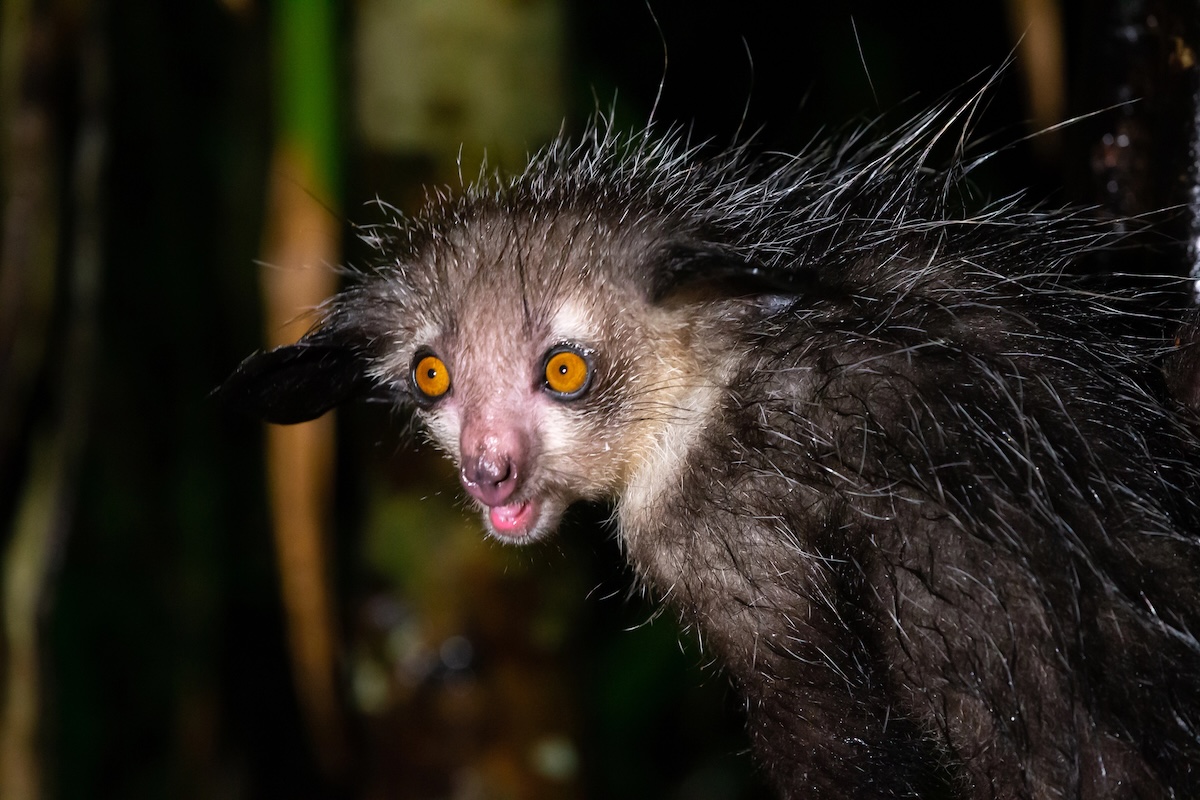 Photo Credit: 25ehaag6 on Deposit Photos
In the heart of Madagascar’s lush rainforests, the Aye-aye, or Daubentonia madagascariensis, emerges as a creature of wonder and intrigue. With its large, expressive eyes and long, bony fingers, this nocturnal primate seems to dance through the shadows, a master of its dark domain. The Aye-aye’s most distinctive feature is its elongated middle finger, which it uses like a tool to tap on tree bark, listening intently for the sounds of hidden insects. This unique method of foraging, known as percussive foraging, allows it to find food in the most unexpected places, making it a true marvel of adaptation.
As night blankets the forest, the Aye-aye’s world comes alive with the sounds of chirping crickets and rustling leaves. Its shaggy fur blends seamlessly with the dappled light filtering through the canopy, providing a perfect disguise from potential predators. Scientists and nature enthusiasts alike are captivated by this unusual primate, not only for its quirky appearance but also for its vital role in the ecosystem. The Aye-aye is a keystone species, meaning its presence helps maintain the balance of its habitat. As it forages for insects and seeds, it inadvertently aids in seed dispersal, contributing to the health of the forest. Join us as we delve deeper into the life of the Aye-aye, exploring its behaviors, diet, and the challenges it faces in a rapidly changing world.
The Aye-aye, a truly extraordinary member of the animal kingdom, occupies a unique position in the tree of life. Scientifically classified under the family Daubentoniidae, this primate is the only extant (meaning still living) representative of its genus, Daubentonia. What sets the Aye-aye apart is its unusual method of finding food, known as percussive foraging. This involves tapping on trees to locate grubs hidden beneath the bark, using its elongated middle finger to extract them. This remarkable adaptation not only showcases the Aye-aye’s specialized feeding habits but also highlights its evolutionary journey through the diverse world of primates.
| Taxonomic Rank | Scientific Name | Meaning & Significance |
|---|---|---|
| Kingdom | Animalia | This name signifies that the Aye-aye belongs to the broad group of multicellular organisms that are heterotrophic, meaning they consume organic material for energy. |
| Phylum | Chordata | Chordata refers to animals that have a notochord, a flexible rod that supports the body, at some stage of their development. This includes all vertebrates, like the Aye-aye. |
| Class | Mammalia | Mammalia indicates that the Aye-aye is a mammal, characterized by having fur and mammary glands that produce milk for their young. |
| Order | Primates | The term Primates encompasses a diverse group of mammals known for their large brains and complex behaviors, including humans, monkeys, and lemurs. |
| Family | Daubentoniidae | This family name honors the French naturalist Louis-Jean-Marie Daubenton, reflecting the Aye-aye’s unique evolutionary path among primates. |
| Genus | Daubentonia | Named after Daubenton, this genus includes only the Aye-aye, emphasizing its distinct characteristics and adaptations. |
The classification of the Aye-aye reveals much about its evolutionary history. As a member of the order Primates, it shares a common ancestor with other primates, but its unique adaptations, such as its specialized finger and foraging technique, illustrate how it has carved out a niche in its environment. The Aye-aye’s lineage, branching off from other primates, showcases the incredible diversity of life that has evolved over millions of years. This fascinating creature not only enriches our understanding of primate evolution but also reminds us of the intricate connections that bind all living organisms in the tapestry of life.
The evolutionary journey of the Aye-aye stretches back millions of years, weaving through the rich tapestry of life on Earth. This peculiar primate, native to Madagascar, is a living testament to the wonders of evolution, showcasing adaptations that have allowed it to thrive in its unique environment. The Aye-aye’s lineage can be traced to the early primates that roamed the planet, with its ancestors diverging from other primate groups around 60 million years ago.
The Aye-aye’s evolutionary story is marked by significant transitions that shaped its distinct characteristics. Early primates were small, tree-dwelling creatures that relied on their keen senses to navigate the forest canopy. Over time, some of these primates adapted to a nocturnal lifestyle, developing larger eyes to see in the dark. This shift allowed them to exploit food sources that were less accessible to daytime foragers. The Aye-aye, in particular, took this adaptation further, evolving a long, thin middle finger that is perfect for tapping on tree bark to find hidden insects. This specialized feeding technique, known as percussive foraging, is a remarkable example of how evolution can shape behavior and anatomy to meet environmental challenges.
The adaptations of the Aye-aye have been crucial for its survival in the diverse ecosystems of Madagascar. By developing specialized tools for foraging, such as its long finger and strong teeth, the Aye-aye can access food sources that many other animals cannot. Its nocturnal vision allows it to navigate the forest at night, avoiding competition and predators. These evolutionary traits not only highlight the Aye-aye’s unique place in the animal kingdom but also illustrate the incredible ways life can adapt to thrive in a variety of environments.
The Aye-aye is a captivating sight, a creature that seems to have stepped out of a storybook filled with wonders. With a body that measures about the size of a house cat, this primate is cloaked in dark, shaggy fur that gives it a somewhat mysterious appearance. Its large, expressive eyes shine brightly in the dim light of its forest home, while its long, bushy tail adds a touch of elegance to its silhouette. The most striking feature, however, is its elongated middle finger, which is not just long but also ends in a hooked claw, making it look like a tool designed for a specific purpose.
| Feature | Description |
|---|---|
| Weight | 2 kg – 2.7 kg (4 lbs – 6 lbs) |
| Skin Type | Fur |
| Most Distinctive Feature | Elongated middle finger with hooked claw |
The Aye-aye’s features are not just for show; they serve vital roles in its survival. The thick fur helps it blend into the dense foliage of Madagascar’s rainforests, providing camouflage from predators. Its large eyes are perfect for spotting food in low light, while the remarkable middle finger is a specialized tool for foraging. This finger allows the Aye-aye to tap on tree bark, listening for the sounds of insects hiding within. When it finds a meal, it uses that hooked claw to extract its tasty prize. Together, these adaptations make the Aye-aye a master of its environment, showcasing the incredible ways animals evolve to thrive in their habitats.
The Aye-aye thrives in the lush embrace of dense tropical rainforests, where towering trees create a vibrant canopy overhead. This enchanting habitat is alive with the sounds of chirping birds and rustling leaves, providing a rich tapestry of life. Sunlight filters through the leaves, casting dappled shadows on the forest floor, where a variety of plants and animals coexist in harmony. The Aye-aye’s home is not just a place to live; it is a bustling ecosystem filled with opportunities for foraging and exploration.
The climate in these rainforests is warm and humid, with temperatures often hovering between 70 and 90 degrees Fahrenheit. Rainfall is abundant, with some areas receiving over 100 inches of rain each year. This wet environment supports a diverse range of flora and fauna, creating a perfect backdrop for the Aye-aye’s unique lifestyle. The constant moisture helps sustain the trees and plants that provide food and shelter, making it an ideal setting for this intriguing primate.
Adapted to its rainforest home, the Aye-aye has developed some remarkable skills. Its long, thin middle finger is perfect for tapping on tree bark to locate grubs hiding beneath the surface. This behavior, known as percussive foraging, allows the Aye-aye to find food in places other animals might overlook. Additionally, its large eyes help it see in the dim light of the forest, making it a master of navigating its shadowy surroundings. These adaptations ensure that the Aye-aye not only survives but thrives in its vibrant, tropical habitat.
As night falls over the lush rainforests of Madagascar, the Aye-aye begins its daily activities. This nocturnal primate is most active after sunset, using its keen sense of hearing and large, sensitive ears to navigate the dark. With its long, thin middle finger, the Aye-aye taps on tree trunks to locate grubs hiding beneath the bark. Once it detects a sound, it skillfully gnaws a hole in the wood and uses that specialized finger to fish out its tasty meal. This unique foraging technique is essential for its survival, allowing it to find food that many other animals cannot reach.
While Aye-ayes are often seen alone, they can also be found in small groups, especially during mating season. Their social behavior is quite interesting; they communicate through a series of vocalizations and body language. When they encounter each other, they may engage in playful interactions or display dominance through posturing. However, they generally prefer solitude, which helps them avoid competition for food. This solitary lifestyle allows them to be stealthy hunters in their nighttime world, where every sound and movement counts.
| Behavior Type | Description |
|---|---|
| Activity Patterns | Nocturnal foraging, primarily tapping on trees to locate grubs. |
| Social Structure | Primarily solitary, but can form small groups during mating season. |
| Communication Methods | Vocalizations and body language to interact with others. |
The Aye-aye’s behaviors are finely tuned to ensure its survival in the wild. By being nocturnal, it avoids many predators that are active during the day. Its solitary nature allows it to be stealthy and efficient in finding food, while its unique foraging skills give it access to resources that others might miss. Together, these behaviors create a successful strategy for living in the vibrant yet challenging environment of Madagascar’s rainforests.
The Aye-aye has a diverse diet that reflects its adaptability and resourcefulness. As an omnivore, it enjoys a mix of foods, including seeds, insects, larvae, and fruit. This unique primate employs a fascinating feeding behavior known as percussive foraging. By tapping on tree trunks with its elongated middle finger, the Aye-aye listens for hollow sounds that indicate the presence of hidden insects or larvae beneath the bark. Once it identifies a promising spot, it gnaws a hole and uses its specialized finger to extract its meal.
| Dietary Aspect | Details |
|---|---|
| Diet Type | Omnivore |
| Favorite Foods | Seeds, insects, larvae, fruit |
| Prey Items | Insects and their larvae, particularly wood-boring beetles |
| Hunting/Foraging Strategies | Percussive foraging using its long middle finger to tap on trees |
This varied diet plays a crucial role in the Aye-aye’s ecology and daily routine. By consuming a wide range of foods, it helps control insect populations and contributes to seed dispersal in its forest habitat. Its nocturnal foraging habits allow it to avoid competition with other daytime feeders, making it a master of its nighttime domain. The Aye-aye’s unique feeding strategies not only showcase its adaptability but also highlight the intricate connections within the ecosystem of Madagascar’s rainforests.
When it comes to mating, Aye-ayes have a rather intriguing approach. These nocturnal primates typically breed during the warmer months, which is when food is plentiful and conditions are just right for raising young. Males often engage in vocal displays to attract females, using a series of calls that echo through the forest. Once a female is receptive, the pair will mate, and the journey of parenthood begins.
| Reproductive Aspect | Details |
|---|---|
| Gestation Period | 170 days |
| Average Litter Size | 1 |
| Age of Sexual Maturity | 2 – 3 years |
| Name of Young | Infant |
After the gestation period of about 170 days, a single infant is born. This little one is completely dependent on its mother for care and nourishment. Aye-aye mothers are attentive, often cradling their infants close to their bodies as they navigate the treetops. As the young Aye-aye grows, it begins to explore its surroundings, learning essential skills for survival. By the time they reach sexual maturity at around 2 to 3 years, these young primates are well-equipped to venture out on their own, continuing the cycle of life in the enchanting forests of Madagascar.
The Aye-aye plays a fascinating role in the food web of Madagascar’s rainforests. As a nocturnal primate, it occupies a niche that allows it to thrive on a diet of insects, seeds, and fruit. However, this unique position also makes it vulnerable to various predators and threats that can disrupt its survival.
To defend itself against these dangers, the Aye-aye has developed some clever survival strategies. Its large, sensitive ears help it detect potential threats in the dark, while its long, thin middle finger is perfect for tapping on tree bark to find hidden insects. When faced with danger, this primate can also rely on its agility to escape into the treetops, where it can blend into the shadows and evade predators. By using these adaptations, the Aye-aye continues to navigate the challenges of its environment, showcasing the resilience of life in the wild.
A keystone species is an organism that has a disproportionately large impact on its environment relative to its abundance. These species play critical roles in maintaining the structure of an ecosystem. The Aye-aye, with its unique feeding habits and ecological interactions, qualifies as a keystone species in its native Madagascar rainforest. By influencing the availability of resources and the dynamics of other species, the Aye-aye helps shape its ecosystem in significant ways.
One of the most notable impacts of the Aye-aye is its role in seed dispersal. As an omnivore, it consumes a variety of fruits and seeds, which are then excreted in different locations. This process helps to spread plant species throughout the forest, promoting biodiversity. Additionally, the Aye-aye’s foraging technique involves tapping on tree bark to locate insect larvae. This behavior not only provides the Aye-aye with food but also creates openings in the bark that can benefit other animals seeking shelter or food.
The Aye-aye also contributes to the health of its ecosystem by controlling insect populations. By feeding on wood-boring larvae, it helps to keep these populations in check, preventing them from overwhelming the trees. This natural pest control is vital for maintaining the balance of the forest, ensuring that trees can thrive and continue to provide habitat for countless other species.
If the Aye-aye were to disappear, the consequences could be profound. Without this primate, the dispersal of certain plant species would decline, potentially leading to reduced biodiversity in the rainforest. The balance of insect populations could also shift, resulting in overpopulation of pests that harm trees. This disruption could cascade through the ecosystem, affecting not only the plants and insects but also the many animals that rely on them for food and shelter. The loss of the Aye-aye would echo through the forest, illustrating just how interconnected life truly is.
The Aye-aye, a fascinating primate native to Madagascar, plays a crucial role in its ecosystem. This nocturnal creature occupies a unique ecological niche, primarily as a forager and seed disperser. By using its long, thin middle finger to tap on tree trunks, the Aye-aye can locate hidden insects and larvae, which it then extracts for food. This behavior not only sustains the Aye-aye but also influences the health of the forest by helping to control insect populations and facilitating the growth of various plant species.
| Ecosystem Service | Impact |
|---|---|
| Insect population control | Helps maintain balance in the ecosystem by reducing pest numbers. |
| Seed dispersal | Promotes plant diversity and forest regeneration. |
| Habitat creation | Creates cavities in trees that can be used by other species for nesting. |
The Aye-aye’s foraging habits have a ripple effect throughout its environment. For instance, by tapping on trees to find larvae, it creates small holes that can later serve as homes for other animals, such as birds and insects. Additionally, as it consumes fruits and seeds, the Aye-aye inadvertently scatters these seeds across the forest floor, aiding in the growth of new plants. This process not only supports the Aye-aye’s own food sources but also contributes to the overall health and diversity of the rainforest.
The broader ecological importance of the Aye-aye cannot be overstated. As a keystone species, its activities help maintain the structure and function of its habitat. By controlling insect populations and promoting plant growth, the Aye-aye ensures that the rainforest remains a vibrant and thriving ecosystem. Protecting this remarkable primate is essential, as its presence is vital for the health of Madagascar’s unique biodiversity.
In the intricate web of life, symbiosis refers to the close interactions between different species, which can take on various forms. These relationships can be mutualistic, where both species benefit; parasitic, where one benefits at the expense of the other; or commensal, where one benefits while the other is neither helped nor harmed. The Aye-aye, a fascinating primate from Madagascar, engages in several ecological relationships that highlight the complexity of its environment and the interconnectedness of life.
| Species/Type | Relationship Type | Description |
|---|---|---|
| Insects (e.g., wood-boring beetles) | Mutualistic | The Aye-aye helps control insect populations by foraging for larvae, which benefits the ecosystem by preventing overpopulation of these pests. |
| Fruit trees | Commensal | As the Aye-aye feeds on fruits, it inadvertently aids in seed dispersal, allowing new plants to grow, while the trees themselves are not affected. |
| Predators (e.g., snakes) | Parasitic | While not a direct relationship, the presence of predators can impact Aye-aye populations, as they may prey on young or vulnerable individuals. |
The evolution of these relationships showcases the adaptability of the Aye-aye and its role in the ecosystem. Over time, these interactions have developed to enhance survival and reproduction for the species involved. By foraging for insects, the Aye-aye not only secures its own food but also helps maintain a balanced ecosystem. Similarly, its role in seed dispersal supports the growth of new plants, which benefits the forest as a whole. These partnerships illustrate the delicate balance of nature, where every species plays a part in the grand story of life on Earth.
The Aye-aye is a truly captivating primate that sparks curiosity with its unusual features and behaviors. Native to Madagascar, this nocturnal creature has evolved some remarkable adaptations that set it apart from other animals. Here are some surprising facts that will intrigue nature enthusiasts of all ages.
The Aye-aye has long captured the imagination of humans, particularly in Madagascar, where it is both revered and misunderstood. Historically, this unusual primate has been woven into local folklore, often seen as a harbinger of bad luck or even death. In some cultures, its long, bony middle finger, used for tapping on trees to find insects, has led to superstitions that associate it with witchcraft. This cultural significance highlights the complex relationship between the Aye-aye and humanity, where admiration and fear coexist.
In contemporary times, interactions between Aye-ayes and humans have shifted towards conservation efforts, as this species faces threats from habitat loss and hunting. While some communities have begun to recognize the Aye-aye’s ecological importance, others still view it with suspicion. Conservationists are working to educate local populations about the Aye-aye’s role in the ecosystem, emphasizing its function as a seed disperser and pest controller. However, conflicts arise when Aye-ayes venture into agricultural areas, leading to tensions between protecting wildlife and safeguarding crops.
The future of the Aye-aye and humanity’s relationship holds promise, but it requires ongoing effort and understanding. As awareness grows about the importance of biodiversity and the unique roles species like the Aye-aye play in their ecosystems, there is hope for a more harmonious coexistence. By bridging cultural beliefs with scientific knowledge, we can foster a deeper appreciation for this extraordinary primate, ensuring that it continues to thrive in the wild for generations to come.
The Aye-aye is currently classified as endangered, with its population estimated to be between 1,000 and 10,000 individuals. This unique primate, native to Madagascar, faces significant challenges that have led to a decline in its numbers. While some areas may still harbor small populations, the overall trend is concerning, prompting conservationists to take action to protect this extraordinary species.
| Conservation Factor | Status/Details |
|---|---|
| IUCN Status | Endangered |
| Population Estimates | 1,000 – 10,000 |
| Trend Direction | Declining |
The main threats to the Aye-aye stem from habitat loss and human activities. Deforestation, driven by logging and agricultural expansion, has significantly reduced the Aye-aye’s natural habitat. As trees are cut down, these primates lose their homes and food sources, making survival increasingly difficult. Additionally, local superstitions often lead to the Aye-aye being killed when spotted, as some believe it brings bad luck. This combination of habitat destruction and negative perceptions poses a serious risk to their survival.
Conservation efforts are underway to help protect the Aye-aye and its habitat. Organizations are working to raise awareness about the importance of this species and the role it plays in the ecosystem. Protected areas are being established to safeguard the remaining populations, and education programs aim to change local attitudes towards the Aye-aye. With continued efforts and support, there is hope that this fascinating primate can thrive once again in the lush forests of Madagascar.
| Question | Answer |
|---|---|
| What is the habitat of the Aye-aye? | Aye-ayes live in dense, tropical rainforests, primarily found in Madagascar. These lush environments provide the perfect cover and food sources for this unique primate. |
| What does an Aye-aye eat? | Aye-ayes are omnivores, meaning they eat both plants and animals. Their diet includes fruits, seeds, and insects, particularly wood-boring larvae, which they find by tapping on trees with their long fingers. |
| How does the Aye-aye behave? | Aye-ayes are nocturnal, which means they are active at night. They are known for their unique foraging technique called percussive foraging, where they tap on tree bark to locate hidden insects. |
| How do Aye-ayes reproduce? | Aye-ayes typically have a gestation period of about 160 days, after which a single offspring is born. The young Aye-aye stays with its mother for several months, learning essential survival skills. |
| What threats do Aye-ayes face? | Aye-ayes are classified as endangered due to habitat loss and hunting. Deforestation for agriculture and logging has significantly reduced their living space, making survival increasingly difficult. |
| What is an interesting characteristic of the Aye-aye? | The Aye-aye's most distinctive feature is its elongated middle finger, which has a hooked claw. This unique adaptation allows them to extract insects from tree bark, showcasing their specialized feeding habits. |
| Are Aye-ayes social animals? | Aye-ayes are generally solitary creatures, preferring to live alone or in small family groups. They communicate through a variety of vocalizations and scent markings to establish territory. |