Taxonomy & Classification
- Kingdom
- Animalia
- Phylum
- Chordata
- Class
- Mammalia
- Order
- Artiodactyla
- Family
- Camelidae
- Genus
- Camelus
- Species
- Camelus Bactrianus

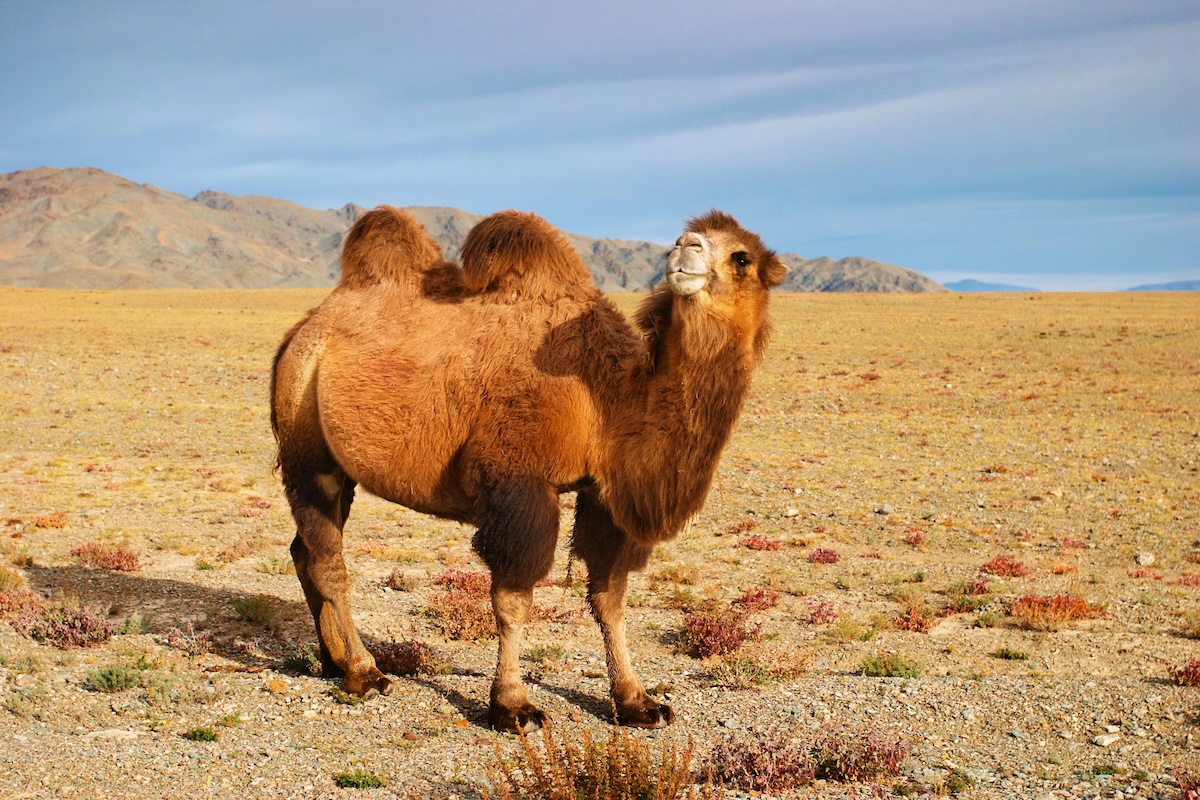 Photo Credit: muha04 at Deposit Photos
In the vast, sun-baked expanses of Central Asia, the Bactrian camel, or Camelus bactrianus, stands as a symbol of resilience and adaptability. With its two distinctive humps rising majestically against the backdrop of rolling sand dunes and rocky outcrops, this remarkable mammal is perfectly designed for life in one of the harshest environments on Earth. Its thick, shaggy coat not only provides warmth during the frigid nights but also protects it from the scorching sun during the day. As it ambles through its arid habitat, the Bactrian camel captures the imagination of scientists and nature enthusiasts alike, who marvel at its ability to thrive where few other creatures can.
What makes the Bactrian camel truly captivating is not just its striking appearance but also its incredible adaptations. These camels can go for long periods without water, drawing moisture from the tough desert plants they consume. Their unique physiology allows them to withstand extreme temperatures, ranging from blistering heat to icy cold. As they navigate their challenging surroundings, Bactrian camels play a vital role in their ecosystem, helping to maintain the balance of plant life and serving as a keystone species. With a history intertwined with human civilization, these magnificent animals have been trusted companions for thousands of years, carrying goods across the unforgiving terrain. Join us as we explore the fascinating world of the Bactrian camel, uncovering the secrets of its survival and the challenges it faces in a rapidly changing environment.
The Bactrian camel, known scientifically as Camelus bactrianus, holds a special place in the animal kingdom. This remarkable mammal is one of only two species of camels, the other being the dromedary camel. What sets the Bactrian camel apart is its two distinctive humps, which store fat that the animal can convert into energy when food is scarce. This adaptation is crucial for survival in the harsh, arid environments of Central Asia, where these camels roam. Their ability to thrive in extreme conditions, from scorching deserts to frigid winters, showcases their resilience and unique evolutionary adaptations.
| Taxonomic Rank | Scientific Name | Meaning & Significance |
|---|---|---|
| Kingdom | Animalia | This name signifies that Bactrian camels belong to the broad group of multicellular organisms that are heterotrophic, meaning they consume organic material for energy. |
| Phylum | Chordata | Chordata refers to animals that have a notochord, a flexible rod that supports the body. In camels, this structure is present during early development, highlighting their vertebrate lineage. |
| Class | Mammalia | Mammalia indicates that Bactrian camels are warm-blooded animals with fur and mammary glands, which allow females to nurse their young. |
| Order | Artiodactyla | This order includes even-toed ungulates, meaning animals that walk on an even number of toes. Bactrian camels have two main toes on each foot, adapted for walking on soft sand. |
| Family | Camelidae | Camelidae is the family that includes camels and llamas. The name comes from the Latin word for “camel,” reflecting their shared characteristics and adaptations. |
| Genus | Camelus | Camelus is derived from the Latin word for “camel,” emphasizing the unique features of these animals, such as their humps and ability to store fat. |
| Species | bactrianus | This species name honors the Bactria region of Central Asia, where these camels are native, linking them directly to their geographical roots. |
Understanding the Bactrian camel’s classification reveals much about its evolutionary journey. As a member of the Camelidae family, it shares a common ancestor with other camelids, which adapted to diverse environments over millions of years. The unique adaptations of the Bactrian camel, such as its dual humps and ability to endure extreme temperatures, illustrate how evolution shapes species to thrive in their specific habitats. This classification not only highlights the camel’s physical traits but also its role in the ecosystems of Central Asia, where it has been a vital resource for human communities for centuries.
The evolutionary journey of the Bactrian camel, or Camelus bactrianus, stretches back millions of years, tracing its roots to the ancient ancestors of modern camels. These ancestors roamed the earth during the late Eocene epoch, around 40 million years ago. Over time, they adapted to various environments, leading to the emergence of distinct species, including the Bactrian camel, which evolved to thrive in the harsh conditions of Central Asia’s deserts and steppes.
The Bactrian camel’s lineage can be traced to a group of early camelids that first appeared in North America. These ancestors gradually migrated across land bridges to Asia, where they faced new challenges. One significant transition occurred when these camels adapted to colder climates, developing a thick double coat to insulate against frigid temperatures. This adaptation was crucial for survival in the extreme conditions of the Gobi Desert, where temperatures can plummet at night.
The adaptations of the Bactrian camel have been vital for its survival in one of the most challenging environments on Earth. With the ability to store fat in its humps, it can go for days without food, while its thick fur keeps it warm during cold nights. The specialized feet allow it to navigate sandy landscapes with ease, and its remarkable water conservation abilities enable it to endure long stretches without drinking. Together, these traits make the Bactrian camel a true survivor, perfectly suited to its rugged habitat.
The Bactrian camel is a striking figure, standing tall and proud in the arid landscapes it calls home. With a height ranging from 1.7 to 2.1 meters (5.5 to 7 feet), this sturdy animal commands attention. Its broad, muscular body is built for endurance, allowing it to traverse vast deserts and rugged terrains. The most eye-catching feature is its two distinctive humps, which store fat, a vital energy reserve for survival in harsh conditions. Covered in thick, shaggy fur, the Bactrian camel is well-equipped to handle extreme temperatures, from scorching heat to biting cold.
| Feature | Description |
|---|---|
| Height | 1.7m – 2.1m (5.5ft – 7ft) |
| Weight | 600kg – 816kg (1,322lbs – 1,800lbs) |
| Skin Type | Fur |
These physical traits work together to create a resilient survivor in one of the planet’s most challenging environments. The Bactrian camel’s humps not only provide energy but also help regulate its body temperature, allowing it to thrive in both hot and cold climates. Its thick fur acts as insulation, protecting it from the elements while also keeping it cool during the day. This combination of features makes the Bactrian camel a true marvel of adaptation, perfectly suited to the demands of its desert habitat.
The Bactrian camel thrives in some of the most challenging environments on Earth, primarily found in vast deserts that are often close to water sources. Picture a landscape of rolling sand dunes, rocky plateaus, and sparse vegetation, where the sun blazes down during the day and temperatures can plummet at night. These camels are perfectly suited to this rugged terrain, where they roam in search of food and water, showcasing their resilience in a world that can be both beautiful and harsh.
The climate in these regions is extreme, with scorching summers and frigid winters. Bactrian camels are well-adapted to survive in temperatures that can soar above 40 degrees Celsius (104 degrees Fahrenheit) during the day and drop below freezing at night. Rainfall is scarce, often less than 200 millimeters (about 8 inches) a year, making water a precious resource. These camels have evolved to thrive in such conditions, relying on their unique adaptations to find sustenance and hydration.
To survive in their arid habitats, Bactrian camels have developed several remarkable adaptations. Their thick fur insulates them against the cold, while their ability to store fat in their iconic humps provides energy when food is scarce. They can also go for long periods without water, thanks to their efficient kidneys that minimize water loss. This incredible ability to endure extreme conditions makes the Bactrian camel a true survivor in the unforgiving deserts they call home.
The daily life of a Bactrian camel is a blend of resilience and adaptability, perfectly suited to the harsh environments they inhabit. These camels typically rise with the sun, beginning their day by grazing on the sparse vegetation that dots the arid landscape. They are primarily herbivores, munching on grasses, shrubs, and even tough desert plants. As the day heats up, they often seek shade to rest, conserving energy during the hottest hours. In the cooler evenings, they resume their foraging, continuing to search for food and water, which is vital for their survival.
Socially, Bactrian camels are known for their strong herd dynamics. They live in groups, which can range from a few individuals to larger herds. This social structure provides safety in numbers, as they can watch out for predators together. Within the herd, camels communicate through a variety of sounds, including grunts and moans, which help them maintain bonds and coordinate activities. They also engage in grooming behaviors, reinforcing social ties and ensuring the health of their companions. This social interaction is crucial, as it fosters cooperation and support among the members of the herd.
| Behavior Type | Description |
|---|---|
| Activity Patterns | Bactrian camels are primarily active during the cooler parts of the day, grazing in the early morning and late evening while resting during the heat of midday. |
| Social Structure | They live in herds, which provide safety and support, allowing them to work together to find food and avoid predators. |
| Communication Methods | Camels communicate using a range of sounds, including grunts and moans, and engage in grooming behaviors to strengthen social bonds. |
The behaviors of Bactrian camels are not just interesting; they are essential for their survival in the unforgiving desert. By living in herds, they enhance their chances of finding food and water while protecting each other from threats. Their ability to communicate and bond with one another fosters a sense of community that is vital in such a challenging environment. Through these daily activities and social interactions, Bactrian camels exemplify the power of cooperation and adaptability in the wild.
The Bactrian camel is a true herbivore, meaning it primarily eats plants. These incredible animals have adapted to thrive in harsh desert environments, where food can be scarce. They are known for their ability to consume a variety of vegetation, including tough grasses and thorny shrubs. With their strong lips and specialized teeth, Bactrian camels can easily grasp and chew on prickly plants that many other animals would avoid. This feeding behavior allows them to make the most of their arid surroundings, ensuring they can find enough to eat even in the most challenging conditions.
| Dietary Aspect | Details |
|---|---|
| Diet Type | Herbivore |
| Favorite Foods | Seeds, grass, thorny shrubs |
| Prey Items | None (strictly herbivorous) |
| Foraging Strategies | Using strong lips to grasp tough vegetation |
The diet of the Bactrian camel plays a crucial role in shaping its ecology and daily routine. By feeding on hardy plants, these camels help maintain the balance of their desert ecosystems. Their foraging habits can influence plant growth and distribution, allowing other species to thrive as well. Additionally, their ability to go long periods without water means they can travel great distances in search of food, making them essential players in the survival of their environment. This remarkable adaptability not only sustains the Bactrian camel but also supports the intricate web of life in the arid landscapes they inhabit.
When it comes to mating, Bactrian camels have a fascinating courtship ritual. The breeding season typically occurs in the spring, when the weather warms up and food becomes more plentiful. Males, known as bulls, engage in displays of strength and dominance to attract females, or cows. They may grunt, bellow, and even fight with other males to prove their worthiness. Once a female is ready to mate, she will signal her interest, and the pair will come together for a brief but important union.
| Reproductive Aspect | Details |
|---|---|
| Gestation Period | Approximately 13 months |
| Litter Size | 1 |
| Age of Maturity | 3 to 4 years |
| Name of Young | Calf |
After a long gestation period of about 13 months, a single calf is born. This young camel is quite independent from the start, able to stand and walk within a few hours of birth. The mother provides attentive care, nursing her calf for several months while teaching it essential survival skills. As the calf grows, it learns to graze on the tough desert vegetation that will sustain it throughout its life. By the time it reaches maturity at around three to four years, the young Bactrian camel is well-equipped to thrive in its harsh environment, ready to embark on its own adventures in the vast landscapes of Central Asia.
The Bactrian camel occupies a unique position in the food web of its arid habitat. As a large herbivore, it primarily feeds on tough desert vegetation, which helps maintain the balance of plant life in its ecosystem. While it is not at the top of the food chain, it plays a crucial role in supporting the animals that prey on it, as well as the plants it consumes. However, the Bactrian camel faces several dangers that threaten its survival in the wild.
To defend against these threats, Bactrian camels have developed several survival strategies. Their thick fur provides insulation against harsh weather, while their large size deters many potential predators. When faced with danger, they can run surprisingly fast for their size, reaching speeds of up to 40 miles per hour. Additionally, Bactrian camels are social animals, often found in groups, which helps them keep watch for predators. By staying alert and using their natural defenses, these resilient animals continue to thrive in their challenging environments.
A keystone species is an organism that plays a critical role in maintaining the structure of its ecosystem. This means that its presence and activities significantly influence the environment and other species within it. The Bactrian camel, with its unique adaptations and behaviors, qualifies as a keystone species in its arid habitat. By shaping the landscape and supporting various life forms, these camels help sustain the delicate balance of their ecosystem.
Bactrian camels are herbivores, meaning they primarily eat plants. Their grazing habits help control the growth of desert vegetation, preventing any one species from dominating the landscape. This is important because a diverse plant community supports a variety of other organisms, from insects to larger mammals. Additionally, as these camels move through their environment, they create pathways that other animals can use, facilitating movement and access to resources.
Moreover, Bactrian camels are known to dig for water sources, which can be a lifesaver for many other species in the harsh desert. Their ability to find and access water not only benefits them but also creates opportunities for other animals to drink. This behavior can lead to the establishment of small oases, which become vital habitats for various plants and animals.
The Bactrian camel also contributes to nutrient cycling in its ecosystem. When they graze, they consume a variety of plants, and their droppings return essential nutrients to the soil. This process enriches the ground, promoting healthy plant growth and supporting the entire food web.
If Bactrian camels were to disappear, the consequences would ripple through their ecosystem. Without these camels, vegetation could become overgrown, leading to a decline in plant diversity. This would affect the animals that rely on those plants for food and shelter. Additionally, the absence of their water-finding behavior could leave many species without access to this vital resource. Overall, the loss of Bactrian camels would disrupt the delicate balance of their desert environment, highlighting their importance as a keystone species.
The Bactrian camel, a fascinating inhabitant of the arid deserts, plays a vital role in shaping its ecosystem. This remarkable animal thrives in harsh environments, often found near water sources where few other species can survive. As a large herbivore, the Bactrian camel influences the landscape and the plant life around it, creating a unique ecological niche. Its ability to adapt to extreme conditions allows it to not only survive but also to contribute significantly to the health of its environment.
| Ecosystem Service | Impact |
|---|---|
| Grazing | Controls plant growth and promotes biodiversity by preventing any single species from dominating. |
| Seed Dispersal | Helps in the spread of various plant species through its droppings, aiding in plant reproduction. |
| Soil Aeration | Through their movement, they help to aerate the soil, improving water infiltration and nutrient cycling. |
| Food Source | Serves as prey for larger predators, contributing to the food web in their ecosystem. |
The Bactrian camel’s grazing habits are particularly influential. By feeding on tough desert vegetation, these camels help maintain a balance in plant communities. This grazing prevents overgrowth, allowing a variety of plant species to thrive. Additionally, as they move across the landscape, they inadvertently aid in soil aeration, which enhances the soil’s ability to retain water and nutrients. Their droppings also play a crucial role in seed dispersal, allowing new plants to grow in different areas, further enriching the ecosystem.
The broader ecological importance of the Bactrian camel cannot be overstated. As a keystone species, its presence supports a diverse range of life in the desert. By influencing plant growth and soil health, these camels help sustain not only their own populations but also the myriad of other species that depend on the same resources. In this way, the Bactrian camel exemplifies the interconnectedness of life in the desert, reminding us of the delicate balance that sustains ecosystems around the world.
In the intricate web of life, symbiosis refers to the close and often long-term interactions between different species. These relationships can take many forms, including mutualism, where both species benefit, commensalism, where one benefits while the other is neither helped nor harmed, and parasitism, where one species benefits at the expense of the other. The Bactrian camel, with its unique adaptations to harsh desert environments, engages in various ecological partnerships that highlight the interconnectedness of life in these arid landscapes.
| Species/Type | Relationship Type | Description |
|---|---|---|
| Desert plants (e.g., shrubs, grasses) | Mutualistic | The Bactrian camel helps disperse seeds through its droppings, promoting plant growth while feeding on their leaves and stems. |
| Birds (e.g., oxpeckers) | Commensal | Some birds may perch on camels to feed on parasites found on their skin, benefiting from a meal while the camel remains unaffected. |
| Insects (e.g., ticks) | Parasitic | Ticks and other parasites can latch onto the Bactrian camel, feeding on its blood and potentially harming its health. |
The evolution of these relationships showcases the adaptability and resilience of the Bactrian camel and its companions. Over time, these species have developed ways to coexist, benefiting from one another in a delicate balance. The camel’s role in seed dispersal not only aids plant life but also ensures its own food sources remain plentiful. Meanwhile, the presence of birds helps control parasites, creating a harmonious environment. Understanding these connections deepens our appreciation for the complexity of ecosystems and the vital roles each species plays in sustaining life.
The Bactrian camel, with its two distinctive humps, is a fascinating animal that has adapted to survive in some of the harshest environments on Earth. Here are some surprising facts that showcase the incredible abilities and history of this remarkable creature.
The Bactrian camel, with its two iconic humps, has been a vital companion to humans for thousands of years. Historically, these remarkable animals have traversed the vast deserts of Central Asia, serving as essential pack animals for traders along the Silk Road. This ancient trade route connected East and West, allowing for the exchange of goods, culture, and ideas. The Bactrian camel’s ability to endure extreme temperatures and travel long distances made it a symbol of resilience and adaptability. In many cultures, it is celebrated in folklore and art, representing strength and endurance in the face of adversity.
Today, the relationship between Bactrian camels and humans continues to evolve. While many are still domesticated and used for transportation and agricultural work, conservation efforts are increasingly important. Wild populations of Bactrian camels are critically endangered, primarily due to habitat loss and competition with livestock. In some regions, conflicts arise as humans encroach on their natural habitats, leading to a struggle for resources. However, dedicated conservationists are working to protect these magnificent animals and their ecosystems, ensuring that future generations can appreciate their unique role in our world.
As we look to the future, the bond between Bactrian camels and humanity holds great potential. With increased awareness of their ecological importance and the challenges they face, there is hope for a more harmonious relationship. By prioritizing conservation and sustainable practices, we can ensure that these incredible animals continue to thrive alongside us. Together, we can celebrate the rich history and bright future of the Bactrian camel, a true testament to the resilience of both nature and human ingenuity.
The Bactrian camel, known scientifically as Camelus bactrianus, is currently classified as Endangered on the IUCN Red List. This status reflects a significant decline in its population, primarily due to habitat loss and other human-related pressures. Estimates suggest that there are fewer than 1,000 individuals remaining in the wild, and their numbers continue to dwindle. Conservationists are working hard to reverse this trend, but the challenges are substantial.
| Conservation Factor | Status/Details |
|---|---|
| IUCN Status | Endangered |
| Population Estimates | Fewer than 1,000 individuals |
| Trend Direction | Declining |
The main threats to the Bactrian camel are habitat destruction, poaching, and competition with livestock for resources. As human populations expand, the natural habitats of these camels are being converted into agricultural land or urban areas. Additionally, illegal hunting poses a direct threat to their survival, while the increasing presence of domestic animals leads to competition for food and water, further straining their already limited resources.
Conservation efforts are underway to protect the Bactrian camel and its habitat. Organizations are working to establish protected areas and promote sustainable land use practices that benefit both wildlife and local communities. Captive breeding programs are also being implemented to help bolster the population. With continued dedication and awareness, there is hope that the Bactrian camel can recover and thrive once more in its native landscapes.
| Question | Answer |
|---|---|
| Where do Bactrian camels live? | Bactrian camels are found in the deserts of Central Asia, particularly in Mongolia and China. They prefer habitats close to water sources, as they need to drink regularly, even though they can survive long periods without water. |
| What do Bactrian camels eat? | These camels are herbivores, which means they primarily eat plants. Their diet consists of tough grasses, shrubs, and other desert vegetation, allowing them to thrive in harsh environments. |
| How do Bactrian camels behave in the wild? | Bactrian camels are social animals that often live in groups. They communicate with each other through a variety of sounds and body language, and they are known for their strong bonds within their herds. |
| How do Bactrian camels reproduce? | Female Bactrian camels typically give birth to one calf after a gestation period of about 13 months. The calves are able to stand and walk shortly after birth, which helps them stay safe from predators. |
| What threats do Bactrian camels face? | Bactrian camels are classified as endangered due to habitat loss, climate change, and hunting. Their populations are declining, making conservation efforts crucial for their survival. |
| What are some interesting characteristics of Bactrian camels? | Bactrian camels are easily recognized by their two humps, which store fat that the camels can use for energy when food is scarce. They are also well-adapted to extreme temperatures, able to withstand both hot deserts and cold winters. |
| How do Bactrian camels adapt to their environment? | These camels have several adaptations that help them survive in harsh conditions. Their thick fur insulates them from cold, while their unique nostrils can close to keep out sand during storms, showcasing their remarkable resilience. |