Taxonomy & Classification
- Kingdom
- Animalia
- Phylum
- Chordata
- Class
- Reptilia
- Order
- Squamata
- Family
- Elapidae
- Genus
- Bungarus
- Species
- Bungarus fasciatus

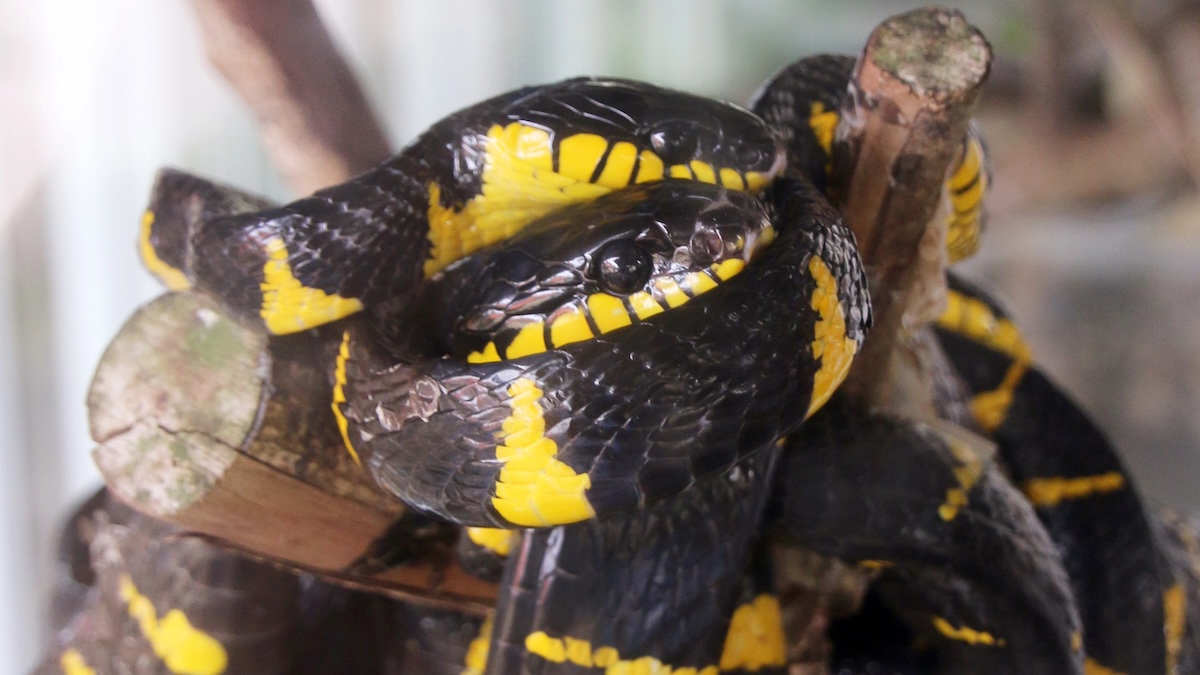 Photo Credit: sirius17 at Deposit Photos
In the heart of Southeast Asia, where the sun dips below the horizon and the jungle comes alive, the Banded Krait, or Bungarus fasciatus, slithers through the underbrush. This striking snake, adorned with bold black and yellow bands, is not just a visual marvel; it is a master of its nocturnal domain. As twilight descends, the Banded Krait emerges from its hiding spots, ready to hunt. Its slender body, which can stretch up to 1.5 meters (about 5 feet), glides silently over the forest floor, a living ribbon of color against the earthy backdrop.
What makes the Banded Krait particularly captivating to scientists and nature enthusiasts alike is its potent venom and unique behavior. Unlike many snakes that bask in the sun during the day, this species is primarily nocturnal, meaning it is most active at night. With keen eyesight and a diet that includes frogs, lizards, and other snakes, it plays a vital role in its ecosystem. The Banded Krait is not just a predator; it is a keystone species, helping to maintain the balance of life in its habitat. As we delve deeper into the world of this fascinating snake, we will explore its evolutionary history, lifestyle, and the intricate relationships it shares with its environment.
The Banded Krait, a strikingly beautiful snake, holds a special place in the animal kingdom due to its vibrant coloration and potent venom. Taxonomically, it belongs to the Kingdom Animalia, which includes all animals, and is classified under the Phylum Chordata, meaning it has a backbone. As a member of the Class Reptilia, it shares characteristics with other reptiles, such as scales and cold-bloodedness. The Banded Krait is part of the Order Squamata, which encompasses all lizards and snakes, and it belongs to the Family Elapidae, known for its highly venomous snakes, including cobras and mambas. Its genus, Bungarus, further highlights its unique traits, making it a fascinating subject for both scientists and nature enthusiasts alike.
| Taxonomic Rank | Scientific Name | Meaning & Significance |
|---|---|---|
| Kingdom | Animalia | This name signifies the broadest category of living organisms, encompassing all animals, which share common characteristics like mobility and complex nervous systems. |
| Phylum | Chordata | Derived from the Greek word “chord,” meaning string, this classification indicates that members have a notochord, a flexible rod that supports the body, at some stage of development. |
| Class | Reptilia | This term comes from the Latin word “reptilis,” meaning to creep or crawl, reflecting the movement style of reptiles, which includes snakes, lizards, and turtles. |
| Order | Squamata | From the Latin “squamatus,” meaning scaly, this order is characterized by the presence of scales, a defining feature of snakes and lizards. |
| Family | Elapidae | This name is derived from the Greek word “elaps,” referring to a type of snake, and it highlights the family’s members, which are known for their neurotoxic venom. |
| Genus | Bungarus | Originating from the Malay word for “snake,” this genus includes kraits, which are recognized for their distinctive banding and potent venom. |
The classification of the Banded Krait reveals much about its evolutionary journey. As a member of the Elapidae family, it shares a lineage with some of the most venomous snakes on the planet, showcasing adaptations that have allowed it to thrive in various environments. Its unique banding pattern not only serves as a warning to potential predators but also plays a role in its hunting strategy, allowing it to blend into its surroundings. Understanding its taxonomic position helps us appreciate the intricate web of life and the evolutionary processes that shape the diverse forms of life we see today.
The evolutionary journey of the Banded Krait, a member of the Elapidae family, stretches back millions of years. This snake, known for its bold black and yellow bands, has adapted to its environment in Southeast Asia, where it thrives in a variety of habitats. Understanding its evolution helps us appreciate how this species has developed the traits that make it both fascinating and formidable.
The ancestors of the Banded Krait likely emerged from early snake lineages that roamed the Earth during the late Cretaceous period, around 100 million years ago. These early snakes were simple in structure and behavior, primarily relying on their ability to hunt and evade predators. Over time, as the environment changed and new ecological niches appeared, snakes began to evolve specialized traits. The Banded Krait’s lineage diverged from other snakes, developing characteristics that would enhance its survival, such as potent venom for subduing prey and a striking coloration for both camouflage and warning.
The adaptations of the Banded Krait have been crucial for its survival in a world filled with challenges. Its venom not only aids in capturing prey but also deters potential threats, while its striking appearance serves as a warning to those who might consider it a meal. By being active at night, it reduces competition and predation risks, allowing it to thrive in diverse habitats. These evolutionary traits have enabled the Banded Krait to remain a successful predator in its ecological niche, showcasing the wonders of natural selection.
The Banded Krait is a stunning spectacle of nature, captivating anyone lucky enough to catch a glimpse. With a slender, elongated body that can reach lengths of up to 1.5 meters (about 5 feet), this snake is both graceful and intimidating. Its most striking feature is the bold pattern of black and yellow bands that wrap around its body, creating a vivid contrast that is hard to ignore. The smooth scales glisten in the light, enhancing its allure and making it a true marvel of the reptile world.
| Feature | Description |
|---|---|
| Size | Can grow up to 1.5 meters (about 5 feet) long |
| Color | Distinctive black and yellow bands |
| Skin Type | Smooth, shiny scales |
| Body Shape | Slender and elongated |
The combination of its striking coloration and sleek form serves multiple purposes in the wild. The bright bands act as a warning to potential predators, signaling that this snake is venomous and not to be trifled with. Meanwhile, its slender body allows it to navigate through dense vegetation and narrow crevices with ease, making it an adept hunter. Together, these features not only enhance its beauty but also play a crucial role in its survival, showcasing the intricate balance of form and function in the natural world.
The Banded Krait thrives in a variety of habitats that paint a vivid picture of its world. Imagine lush forests, where sunlight filters through the leaves, creating a dappled effect on the forest floor. These snakes can also be found in open plains, where grasses sway gently in the breeze, and in agricultural fields, where they might slither through rows of crops. Mangrove forests, with their tangled roots and brackish waters, provide another unique setting for this striking reptile. Each of these environments offers the Banded Krait a place to hunt and hide, making it a master of its domain.
The Banded Krait prefers warm, humid climates, which are typical of tropical and subtropical regions. These areas often experience significant rainfall, creating a moist environment that supports a rich diversity of plant and animal life. The temperature in these habitats usually remains warm year-round, allowing the Banded Krait to remain active and hunt for its prey, which includes small mammals, lizards, and other snakes. The combination of warmth and humidity is essential for the snake’s survival, as it helps regulate its body temperature and maintain hydration.
Adaptation is key to the Banded Krait’s success in these varied habitats. Its striking coloration not only serves as a warning to potential predators but also helps it blend into the dappled light of the forest or the shadows of tall grass. The snake’s slender body allows it to navigate through dense underbrush and tight spaces, making it an agile hunter. Additionally, its ability to thrive in both forested and open areas showcases its versatility, allowing it to exploit different food sources and evade threats. This adaptability is a testament to the Banded Krait’s evolutionary journey, enabling it to flourish in diverse environments.
As the sun sets and darkness blankets the landscape, the Banded Krait begins its nightly adventures. This snake is primarily nocturnal, meaning it is most active during the night. As twilight descends, it slithers out from its hiding spots, often found in leaf litter or under rocks, to hunt for food. With its keen sense of smell and excellent vision in low light, the Banded Krait searches for small prey, such as frogs, lizards, and even other snakes. Its striking black and yellow bands not only make it a beautiful sight but also help it blend into the shadows, making it a stealthy predator.
While the Banded Krait is mostly solitary, it does have interesting social behaviors during certain times of the year, particularly during mating season. Males may engage in competitive displays to attract females, showcasing their strength and agility. Although they prefer to live alone, these snakes can sometimes be found in small groups when basking in the sun or during the breeding season. Communication among Banded Kraits is subtle; they rely on body language and scent markings to convey their presence and intentions to one another.
| Behavior Type | Description |
|---|---|
| Activity Patterns | Nocturnal foraging for food, primarily at night. |
| Social Structure | Generally solitary, with occasional groupings during mating season. |
| Communication Methods | Uses body language and scent markings to interact with others. |
The behaviors of the Banded Krait are finely tuned to ensure its survival in the wild. By being active at night, it avoids many daytime predators and can hunt more effectively. Its solitary nature allows it to minimize competition for food, while its striking coloration provides camouflage against potential threats. These adaptations, combined with its unique social interactions during breeding, help the Banded Krait thrive in its environment, showcasing the intricate balance of life in the animal kingdom.
The Banded Krait is a carnivore, which means it primarily eats other animals. This snake has a diverse diet that includes a variety of prey, showcasing its adaptability as a hunter. With its keen eyesight and stealthy movements, the Banded Krait is an expert at locating and capturing its meals, often hunting at night when it is most active. Its diet consists of both reptiles and amphibians, making it a versatile predator in its ecosystem.
| Dietary Aspect | Details |
|---|---|
| Diet Type | Carnivore |
| Favorite Foods | Rat snakes, sunbeam snakes, rainbow water snakes, cat snakes, fish, skinks, frogs, and eggs |
| Prey Items | Reptiles and amphibians |
| Hunting/Foraging Strategies | Stealthy movements and keen eyesight, primarily nocturnal hunting |
The Banded Krait’s diet plays a crucial role in shaping its ecological niche. By preying on various reptiles and amphibians, it helps maintain the balance of these populations in its habitat. This snake’s hunting habits also influence its daily routine, as it must navigate its environment carefully to find food while avoiding potential predators. The interplay between its diet and behavior highlights the intricate connections within the natural world, showcasing how each species contributes to the health of its ecosystem.
When it comes to reproduction, the Banded Krait has a fascinating mating ritual that takes place during the warmer months. Mating typically occurs in the spring, when temperatures rise and food is plentiful. Males engage in a courtship display, which may involve intertwining their bodies and engaging in a dance-like movement to attract females. This vibrant display is not just for show; it helps ensure that the strongest and healthiest males get the chance to mate, passing on their genes to the next generation.
| Reproductive Aspect | Details |
|---|---|
| Gestation Period | Approximately 60 days |
| Litter Size | 4 to 12 eggs |
| Age of Maturity | 3 years |
| Name of Young | Hatchlings |
After the eggs are laid, the young Banded Kraits, known as hatchlings, emerge fully formed and ready to face the world. These little snakes are independent from the moment they hatch, which means they do not rely on parental care for survival. Instead, they must quickly learn to hunt and avoid predators. As they grow, they undergo a series of molts, shedding their skin to accommodate their increasing size. With time, patience, and a bit of luck, these hatchlings will mature into the striking adults that roam their habitats, continuing the cycle of life for this captivating species.
The Banded Krait plays a crucial role in its ecosystem, sitting near the top of the food web as a skilled predator. This snake primarily feeds on small animals, including frogs, lizards, and other snakes, helping to maintain the balance of its environment. However, like many species, it faces various dangers that threaten its survival.
To defend itself against these threats, the Banded Krait employs several survival strategies. Its striking coloration serves as a warning to potential predators, signaling that it is venomous and not to be trifled with. Additionally, this snake is known for its ability to remain still and blend into its surroundings, making it harder for predators to spot it. By using these tactics, the Banded Krait enhances its chances of evading danger and thriving in its natural habitat.
A keystone species is an organism that has a disproportionately large impact on its environment relative to its abundance. These species help maintain the structure of an ecosystem, influencing the types and numbers of other species present. The Banded Krait, with its role as a predator, qualifies as a keystone species in its habitat. By controlling the populations of its prey, this striking snake helps maintain a balance in the ecosystem.
The Banded Krait primarily feeds on small animals such as frogs, lizards, and other snakes. By preying on these creatures, it helps regulate their populations, preventing any one species from becoming too dominant. For example, if the Banded Krait were to disappear, the number of frogs and lizards could surge, leading to overgrazing of vegetation and a decline in plant diversity. This change could ripple through the ecosystem, affecting other animals that rely on those plants for food and shelter.
Additionally, the Banded Krait’s presence can influence the behavior of other species. Many animals, including potential competitors and prey, may alter their habits to avoid encounters with this venomous snake. This behavioral shift can create a more diverse and balanced community, as species adapt to coexist with the Banded Krait.
If the Banded Krait were to vanish from its ecosystem, the consequences could be severe. Without this predator, the populations of its prey could explode, leading to a cascade of ecological changes. Overpopulation of frogs and lizards could result in habitat degradation, as these animals consume too much vegetation. This decline in plant life would not only affect other species that depend on those plants but could also disrupt the entire food web, leading to a less stable and less diverse ecosystem. The loss of the Banded Krait would be felt far beyond its immediate surroundings, highlighting the vital role it plays in maintaining ecological balance.
The Banded Krait occupies a vital ecological niche, acting as both predator and prey within its environment. This striking snake, with its bold black and yellow bands, thrives in diverse habitats such as forests, open plains, and agricultural fields. As a nocturnal carnivore, it plays a crucial role in controlling populations of smaller animals, helping to maintain a balanced ecosystem. By regulating the numbers of its prey, the Banded Krait ensures that no single species dominates, which is essential for the health of its habitat.
| Ecosystem Service | Impact |
|---|---|
| Population Control | Regulates the numbers of small animals, preventing overpopulation. |
| Food Source | Serves as prey for larger predators, contributing to the food web. |
| Soil Health | By controlling rodent populations, it helps maintain soil integrity. |
| Seed Dispersal | Indirectly aids in plant growth by influencing animal behaviors that disperse seeds. |
The Banded Krait’s influence can be seen in various ways. For instance, by preying on rodents and small reptiles, it helps keep these populations in check. This is particularly important in agricultural areas, where unchecked rodent populations can damage crops. Additionally, the Banded Krait itself becomes a food source for larger predators, such as birds of prey and larger snakes, creating a dynamic food web. Its presence in the ecosystem supports a diverse range of species, each relying on the balance it helps maintain.
The broader ecological importance of the Banded Krait cannot be overstated. As a keystone species, it plays a critical role in maintaining the structure of its ecosystem. By influencing the populations of various animals, it helps ensure that the ecosystem remains healthy and resilient. The Banded Krait’s interactions with other species highlight the interconnectedness of life, reminding us that every creature, no matter how small, contributes to the intricate tapestry of nature.
In the intricate web of life, symbiosis plays a crucial role in shaping the relationships between different species. Symbiosis refers to the close interactions between organisms, which can be beneficial, harmful, or neutral. These relationships can take many forms, such as mutualism, where both species gain advantages; parasitism, where one benefits at the expense of the other; and commensalism, where one species benefits while the other is neither helped nor harmed. Understanding these connections helps us appreciate the delicate balance of ecosystems and the roles that various species, like the Banded Krait, play within them.
| Species/Type | Relationship Type | Description |
|---|---|---|
| Frogs | Mutualistic | The Banded Krait preys on frogs, helping control their population, while the frogs benefit from the presence of the snake, which can deter other predators. |
| Small mammals | Parasitic | While the Banded Krait hunts small mammals, it can also be a host for parasites, which may weaken the mammals but benefit from their presence. |
| Birds | Commensal | Birds may follow the Banded Krait to scavenge leftovers from its meals, benefiting from the snake’s hunting without affecting the snake. |
The evolution of these relationships is a testament to nature’s adaptability and resilience. Over time, species like the Banded Krait have developed strategies that not only enhance their survival but also influence the dynamics of their ecosystems. By preying on certain animals, the Banded Krait helps maintain a balance, preventing any one species from overwhelming the environment. Meanwhile, the interactions with other species, whether beneficial or neutral, highlight the interconnectedness of life. Each relationship contributes to the rich tapestry of biodiversity, showcasing how every organism, no matter how small, plays a part in the grand story of nature.
The Banded Krait is not just another snake; it’s a captivating marvel of nature that holds many secrets. With its striking black and yellow bands, this snake is as intriguing as it is beautiful. Here are some surprising facts that will surely pique the interest of nature enthusiasts.
The Banded Krait has long been a subject of intrigue and respect in various cultures, particularly in Southeast Asia, where it is often associated with local folklore and traditional medicine. Historical encounters with this striking snake have shaped human perceptions, leading to a mix of admiration and fear. In some cultures, the Banded Krait is seen as a symbol of power and protection, while in others, its venomous bite has made it a creature to be avoided. This duality reflects humanity’s complex relationship with nature, where beauty and danger coexist.
Today, interactions between humans and the Banded Krait are evolving, especially as conservation efforts gain momentum. While some communities still view this snake with trepidation, others are beginning to recognize its ecological importance. The Banded Krait plays a vital role in controlling populations of small animals, which helps maintain the balance of its ecosystem. Unfortunately, habitat destruction and human encroachment pose significant threats to its survival. In some regions, conflicts arise when these snakes venture into human settlements, leading to misunderstandings and sometimes fatal encounters. Education and awareness are crucial in fostering a more harmonious coexistence.
As we look to the future, the relationship between humans and the Banded Krait holds promise for growth and understanding. With increased awareness of the ecological roles these snakes play, there is potential for a shift in perception. By fostering respect and appreciation for the Banded Krait, we can work towards a future where humans and wildlife coexist more peacefully. This journey will require collaboration, education, and a commitment to preserving the delicate balance of our shared ecosystems.
The Banded Krait, with its stunning black and yellow bands, currently holds a conservation status of “Least Concern” according to the International Union for Conservation of Nature (IUCN). This means that, at present, the species is not facing an immediate threat of extinction. Population estimates suggest that the Banded Krait remains relatively stable across its range, which includes parts of Southeast Asia. However, ongoing monitoring is essential to ensure that this beautiful snake continues to thrive in its natural habitats.
| Conservation Factor | Status/Details |
|---|---|
| IUCN Status | Least Concern |
| Population Estimates | Stable |
| Trend Direction | Stable |
Despite its current stable status, the Banded Krait faces several threats that could impact its future. Habitat loss due to deforestation and urbanization poses a significant risk, as these activities reduce the natural environments where the snake thrives. Additionally, human encroachment can lead to increased encounters with people, which may result in the snake being killed out of fear or misunderstanding. Pollution and climate change also threaten the delicate ecosystems that support the Banded Krait and its prey.
Conservation efforts are underway to protect the Banded Krait and its habitats. Organizations are working to raise awareness about the importance of this species and its role in the ecosystem. By promoting sustainable land use practices and protecting natural habitats, conservationists aim to ensure that the Banded Krait continues to flourish. With ongoing efforts and public support, the outlook for this striking snake remains hopeful, allowing future generations to appreciate its beauty and ecological significance.
| Question | Answer |
|---|---|
| What is the habitat of the Banded Krait? | The Banded Krait is commonly found in forests, including mangrove forests, as well as open plains and agricultural fields. This snake enjoys areas where it can easily hide and hunt for its prey. |
| What does the Banded Krait eat? | As a carnivore, the Banded Krait primarily feeds on other animals, especially small snakes and lizards. Its diet is crucial for controlling the populations of these creatures in its ecosystem. |
| How does the Banded Krait behave? | The Banded Krait is known for being nocturnal, meaning it is most active at night. During the day, it often hides in burrows or under leaves to avoid predators and conserve energy. |
| How does the Banded Krait reproduce? | The Banded Krait lays eggs, which is typical for many snakes. After mating, the female can lay a clutch of around 10 to 20 eggs, which she will leave to hatch on their own. |
| What threats does the Banded Krait face? | While the Banded Krait is currently listed as Least Concern, it still faces threats from habitat destruction and human activities. Pollution and the use of pesticides can also impact its food sources and living conditions. |
| What are some interesting characteristics of the Banded Krait? | The Banded Krait is easily recognizable due to its striking black and yellow bands. This coloration not only makes it beautiful but also serves as a warning to potential predators about its venomous nature. |
| Is the Banded Krait dangerous to humans? | Yes, the Banded Krait is venomous, and its bite can be dangerous. However, it is generally shy and prefers to avoid humans, so bites are rare. |