Taxonomy & Classification
- Kingdom
- Animalia
- Phylum
- Chordata
- Class
- Mammalia
- Order
- Peramelemorphia
- Family
- Peramelidae
- Genus
- Perameles
- Species
- Perameles

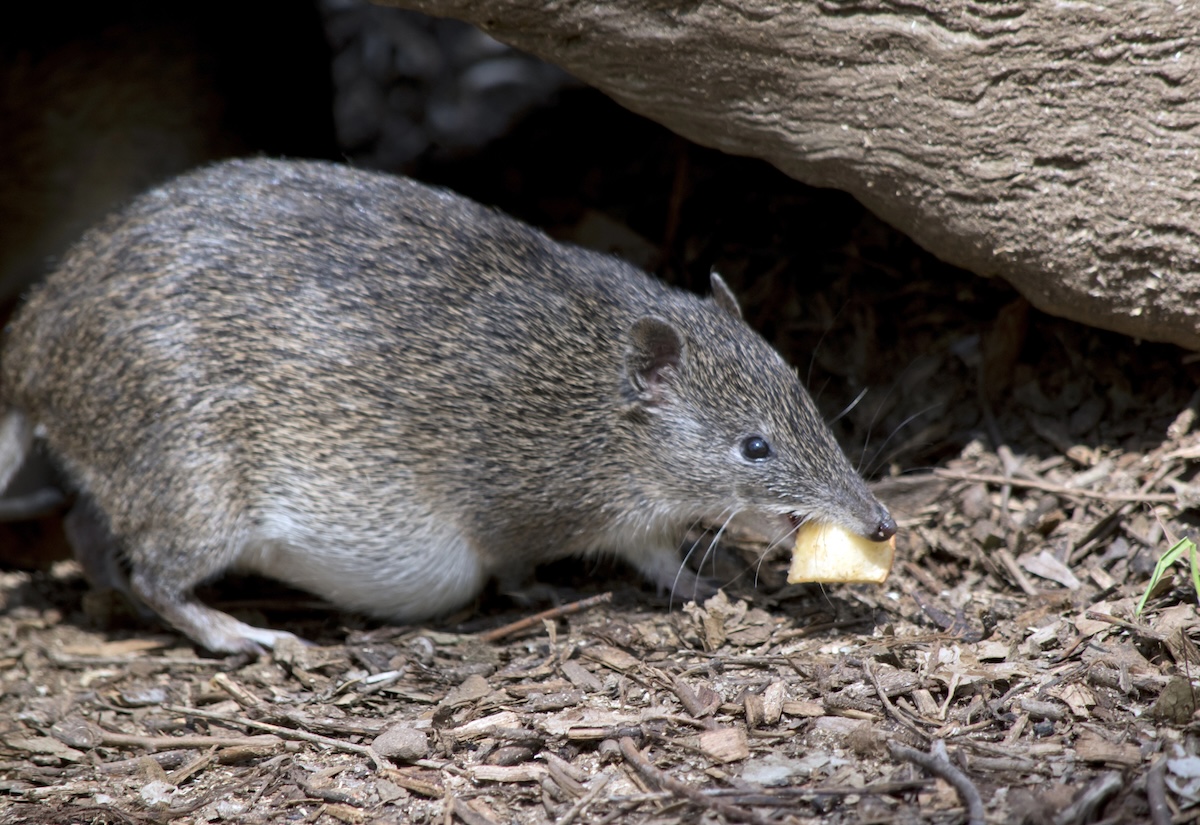 Photo Credit: ozflash at Deposit Photos
In the heart of Australia’s lush forests and tangled underbrush, the bandicoot, known scientifically as Peramelemorphia, scurries about, a small marsupial with a big personality. With its compact body, pointed snout, and large, expressive ears, this nocturnal creature is a master of disguise, blending seamlessly into its vibrant surroundings. As dusk falls, the bandicoot emerges from its burrow, ready to explore the world with its keen sense of smell, searching for tasty insects, roots, and fruits that make up its varied diet.
What makes the bandicoot particularly captivating to scientists and nature lovers alike is its unique role in the ecosystem. These small marsupials are not just adorable; they are vital players in their habitats, helping to control insect populations and disperse seeds. Their evolutionary history stretches back millions of years, making them a fascinating subject for study. As we delve deeper into the life of the bandicoot, we will uncover the secrets of its behavior, diet, and the challenges it faces in a rapidly changing world. Join us on this adventure to learn more about this remarkable little creature and its place in the tapestry of life.
The bandicoot is a small marsupial that occupies a special place in the animal kingdom. It belongs to the class Mammalia, which includes all mammals, and is part of the order Peramelemorphia, a group known for their unique adaptations. Bandicoots are particularly interesting because they are nocturnal foragers, meaning they are active at night and search for food in the dark. Their long snouts and sharp claws help them dig for insects and tubers, showcasing their specialized feeding habits. This combination of traits makes bandicoots a fascinating example of how animals adapt to their environments.
| Taxonomic Rank | Scientific Name | Meaning & Significance |
|---|---|---|
| Kingdom | Animalia | This name comes from the Latin word for “animal,” highlighting that bandicoots are part of the vast group of living organisms that are multicellular and capable of movement. |
| Phylum | Chordata | Derived from the Greek word “chordē,” meaning “string,” this classification indicates that bandicoots have a notochord, a flexible rod that supports their bodies during development. |
| Class | Mammalia | This term comes from the Latin “mamma,” meaning “breast,” referring to the fact that female bandicoots nurse their young with milk, a defining characteristic of mammals. |
| Order | Peramelemorphia | This name combines “peramelem,” which refers to the bandicoot’s unique features, and “morphia,” meaning “form,” indicating the distinct shape and structure of these marsupials. |
| Family | Peramelidae | Named after the genus Perameles, this family name emphasizes the shared characteristics of bandicoots, particularly their adaptations for digging and foraging. |
| Genus | Perameles | This scientific name translates to “near the badger,” reflecting the bandicoot’s resemblance to badgers in size and shape, even though they are not closely related. |
Understanding the bandicoot’s classification reveals much about its evolutionary journey. As a marsupial, it shares a common ancestor with other unique Australian animals, like kangaroos and koalas. This lineage highlights how bandicoots have adapted to their environments over millions of years, developing traits that allow them to thrive in diverse habitats. Their position in the tree of life not only showcases their biological uniqueness but also emphasizes the rich tapestry of life that exists on our planet.
The evolutionary journey of the bandicoot stretches back millions of years, weaving through the rich tapestry of life on Earth. These small marsupials first appeared around 50 million years ago, during the Eocene epoch, a time when the continents were shifting and the climate was changing. As they evolved, bandicoots adapted to various environments across Australia and New Guinea, showcasing their resilience and versatility.
The ancestors of modern bandicoots were likely small, nocturnal creatures that thrived in the lush forests of ancient Australia. Over time, they underwent significant changes, adapting to different habitats ranging from dense woodlands to open grasslands. One major transition was the development of their elongated snouts, which allowed them to forage for insects and other small invertebrates buried in the ground. This adaptation not only improved their foraging efficiency but also helped them exploit a niche that many other animals could not.
These adaptations have been crucial for the bandicoot’s survival in a world filled with challenges. Their ability to forage effectively, escape from predators, and reproduce successfully has allowed them to thrive in diverse environments. As they continue to navigate the changing landscapes of Australia and New Guinea, bandicoots remind us of the incredible power of evolution and the importance of adaptability in the natural world.
The bandicoot is a small yet captivating marsupial that captures the imagination with its compact body and lively demeanor. With a body length ranging from about 30 to 50 centimeters, these creatures are built for agility and speed. Their pointed snouts and large, rounded ears give them a curious and alert appearance, while their strong hind legs are perfect for quick bursts of movement. The bandicoot’s fur is soft and dense, providing both warmth and camouflage in its natural habitat.
| Feature | Description |
|---|---|
| Weight | 0.2kg – 1.6kg (0.4lbs – 3.5lbs) |
| Skin Type | Fur |
These physical features work together to enhance the bandicoot’s survival in the wild. Its lightweight body allows for swift movements, helping it evade predators and navigate through dense underbrush. The soft fur not only keeps the bandicoot warm but also helps it blend into its surroundings, making it less visible to both prey and predators. With its keen senses and agile form, the bandicoot is well-equipped to thrive in its environment, showcasing the beauty of adaptation in the animal kingdom.
The bandicoot thrives in a variety of lush environments, painting a vivid picture of life in the wild. These small marsupials are often found in dense forests, vibrant rainforests, and tangled jungles, where the undergrowth is rich and the canopy overhead is alive with sounds. The dappled sunlight filtering through the leaves creates a perfect setting for these energetic animals to forage and explore. Their habitats are filled with a mix of shrubs, grasses, and fallen leaves, providing both food and shelter.
In these regions, the climate plays a crucial role in the bandicoot’s lifestyle. They prefer areas with a temperate to tropical climate, where rainfall is abundant and temperatures are mild. This environment supports a rich diversity of plant life, which in turn attracts insects and other small creatures that make up the bandicoot’s diet. The humidity in rainforests and the varied terrain of forests provide the perfect conditions for these marsupials to thrive.
Adaptation is key to the bandicoot’s survival in these habitats. With their keen sense of smell and sharp claws, they are well-equipped to dig through the forest floor in search of food. Their fur, which can vary in color from sandy brown to dark gray, helps them blend into the leaf litter, making it easier to avoid predators. Additionally, their nocturnal habits allow them to be active during the cooler hours of the night, reducing the risk of overheating in warmer climates. These adaptations ensure that bandicoots not only survive but flourish in their vibrant homes.
As the sun rises, bandicoots begin their day in the cool, quiet hours of dawn. These small marsupials are primarily nocturnal, meaning they are most active at night. During the day, they rest in burrows or dense vegetation, staying safe from predators. When night falls, they emerge to forage for food, using their keen sense of smell to locate insects, worms, and roots. Bandicoots are known for their energetic digging, which helps them uncover tasty treats hidden beneath the soil. Their daily activities revolve around finding food and staying alert to any potential dangers in their surroundings.
While bandicoots are mostly solitary creatures, they do have interesting social behaviors. They establish territories that they mark with scent, which helps them communicate with other bandicoots. Although they prefer to live alone, they may occasionally come together during mating season. When they do interact, they use a variety of sounds and body language to express themselves. This social structure allows them to maintain their independence while still being aware of others in their environment.
| Behavior Type | Description |
|---|---|
| Activity Patterns | Bandicoots are nocturnal foragers, primarily active at night when they search for food. |
| Social Structure | They are mostly solitary, establishing territories marked by scent, but may interact during mating. |
| Communication Methods | Bandicoots communicate through sounds and body language, especially during social interactions. |
The behaviors of bandicoots are finely tuned to ensure their survival in the wild. By being nocturnal, they avoid many daytime predators, while their solitary nature allows them to efficiently gather food without competition. Their ability to communicate through scent and sounds helps them navigate their territories and find mates when necessary. Each aspect of their daily life is a testament to their adaptability, showcasing how these small marsupials thrive in diverse environments.
The bandicoot is an omnivore, which means it enjoys a varied diet that includes both plants and animals. These small marsupials are skilled foragers, using their keen sense of smell to locate food. They primarily hunt at night, scurrying through the underbrush in search of tasty insects, fruits, and seeds. Their sharp claws help them dig into the ground to uncover hidden treats, making them adept at finding food in their natural habitats.
| Dietary Aspect | Details |
|---|---|
| Diet Type | Omnivore |
| Favorite Foods | Insects, fruits, seeds |
| Prey Items | Various insects, including beetles and larvae |
| Hunting/Foraging Strategies | Using keen sense of smell and sharp claws to dig |
The bandicoot’s diverse diet plays a crucial role in its ecology and daily routine. By consuming a mix of insects and plant materials, these marsupials help control insect populations while also aiding in seed dispersal. This means that as they forage, they contribute to the health of their environment. Their nocturnal lifestyle allows them to avoid many predators while maximizing their foraging opportunities, making them well-adapted to thrive in their habitats.
When it comes to mating, bandicoots have a lively courtship that often takes place during the warmer months. Breeding season varies by species and location, but generally, it peaks in spring and summer. Males will compete for the attention of females, showcasing their strength and agility. Once a female is ready to mate, she will signal her interest, and the pair will engage in a series of playful interactions before the actual mating occurs. This energetic dance is not just for show; it helps ensure that the strongest genes are passed on to the next generation.
| Reproductive Aspect | Details |
|---|---|
| Gestation Period | About 12 days |
| Litter Size | 4 |
| Age of Maturity | 6 to 12 months |
| Name of Young | Joey |
After the brief gestation period, the female bandicoot gives birth to tiny, underdeveloped joeys. These little ones are born blind and hairless, measuring only about the size of a jellybean. Immediately after birth, the joeys crawl into their mother’s pouch, where they latch onto a teat and continue to grow. The pouch provides a safe and nurturing environment, allowing the joeys to develop for several weeks. As they mature, the young bandicoots will eventually leave the pouch and begin to explore their surroundings, learning essential survival skills from their mother. Parental care is crucial during this time, as the mother teaches her young how to forage for food and navigate their habitat, setting them on the path to becoming independent adults.
The bandicoot plays a vital role in its ecosystem, nestled within the food web as both a consumer and prey. As an omnivore, it helps control insect populations and disperse seeds, contributing to the health of its environment. However, this small marsupial is not without its challenges. It faces various predators and threats that can impact its survival.
To defend itself against these dangers, the bandicoot has developed several clever survival strategies. Its nocturnal lifestyle allows it to avoid many predators that hunt during the day. When threatened, bandicoots can quickly burrow into the ground, using their strong claws to dig fast and escape. Their keen sense of smell also helps them detect danger early, giving them a chance to flee before being spotted. Through these behaviors, bandicoots continue to navigate the challenges of their environment, showcasing their resilience in the wild.
A keystone species is an organism that has a disproportionately large impact on its environment relative to its abundance. This means that if it were removed, the ecosystem would change dramatically. Bandicoots, small marsupials found in forests and rainforests, do indeed play a keystone role in their ecosystems. Their activities help maintain the balance of their habitats, making them essential players in the natural world.
Bandicoots are omnivores, which means they eat both plants and animals. This diverse diet allows them to influence the populations of various species. For example, by foraging for insects and small invertebrates, bandicoots help control these populations, preventing any one species from becoming too dominant. Additionally, as they dig through the soil in search of food, they aerate the ground, which benefits plant growth. This digging behavior also helps with seed dispersal, as seeds can be moved to new locations where they may sprout and thrive.
Moreover, bandicoots serve as prey for larger predators, such as birds of prey and foxes. Their presence supports these predator populations, creating a balanced food web. When bandicoots thrive, they contribute to the overall health of their ecosystem, supporting a variety of life forms that depend on them for food and ecological functions.
If bandicoots were to disappear from their ecosystems, the consequences would be significant. Without these small marsupials, insect populations could explode, leading to overgrazing of plants and a decline in vegetation health. The loss of their seed dispersal role would hinder plant diversity, affecting the entire habitat. Additionally, predators that rely on bandicoots for food would struggle to find enough to eat, potentially leading to their decline as well. In essence, the absence of bandicoots would ripple through the ecosystem, causing a cascade of changes that could destabilize the entire environment.
The bandicoot occupies a vital ecological niche as a small marsupial that influences its environment in numerous ways. Found in forests, rainforests, and jungles, these creatures play a significant role in maintaining the balance of their ecosystems. As omnivores, bandicoots consume a variety of foods, including insects, plants, and small animals, which helps regulate populations of these organisms. Their foraging habits also contribute to soil health and seed dispersal, making them essential players in their habitats.
| Ecosystem Service | Impact |
|---|---|
| Soil Aeration | By digging for food, bandicoots help aerate the soil, allowing water and nutrients to penetrate more easily. |
| Seed Dispersal | As they consume fruits and seeds, bandicoots help spread plant species throughout their environment. |
| Pest Control | By eating insects and small animals, they help keep pest populations in check, benefiting other species. |
| Nutrient Cycling | Their waste products return nutrients to the soil, enriching it and supporting plant growth. |
Bandicoots influence their ecosystems in specific and impactful ways. For instance, when they dig in search of food, they not only aerate the soil but also create small burrows that can serve as homes for other creatures. Their diet, which includes a variety of insects and fruits, means they play a crucial role in controlling pest populations while also aiding in the growth of plants through seed dispersal. This interaction helps maintain the health and diversity of their habitats, showcasing the interconnectedness of life in these vibrant ecosystems.
The broader ecological importance of bandicoots cannot be overstated. As a keystone species, their presence supports a wide range of other organisms, from plants to predators. If bandicoots were to disappear, the balance of their ecosystems would be disrupted, leading to overpopulation of certain species and decline in others. By understanding and protecting these small marsupials, we can help preserve the intricate web of life that thrives in forests and jungles, ensuring that these ecosystems remain healthy and vibrant for generations to come.
In the intricate web of life, symbiosis plays a crucial role in shaping ecosystems. This term refers to the close interactions between different species, which can be beneficial, harmful, or neutral. These relationships can be mutualistic, where both species gain advantages; parasitic, where one benefits at the other’s expense; or commensal, where one species benefits while the other is neither helped nor harmed. Bandicoots, small marsupials found in forests and rainforests, engage in various ecological partnerships that highlight the complexity of their environment.
| Species/Type | Relationship Type | Description |
|---|---|---|
| Fungi | Mutualistic | Bandicoots help disperse fungal spores through their foraging activities, while fungi provide nutrients that benefit the bandicoots. |
| Ticks | Parasitic | Ticks attach to bandicoots to feed on their blood, which can weaken the host but does not usually lead to death. |
| Birds (e.g., scrub turkeys) | Commensal | Birds may follow bandicoots to scavenge leftover food, benefiting from the bandicoot’s foraging without affecting it. |
These relationships have evolved over time, shaped by the needs and behaviors of the species involved. Mutualistic partnerships, like those with fungi, enhance the survival of both organisms, creating a thriving ecosystem. Parasitic relationships, while often detrimental to the host, can also drive adaptations that strengthen the bandicoot’s resilience. Commensal interactions, such as those with birds, illustrate how different species can coexist and benefit from one another without direct competition. Together, these connections highlight the dynamic balance of nature, where every species plays a part in the grand story of life.
Bandicoots are small marsupials that may not be the first animals that come to mind when you think of wildlife, but they are full of surprises! These fascinating creatures have unique traits and behaviors that make them stand out in the animal kingdom.
The relationship between bandicoots and humans has a rich history that dates back to the time when Indigenous Australians first encountered these small marsupials. In many Aboriginal cultures, bandicoots hold significant cultural importance, often appearing in stories and art. These creatures symbolize resilience and adaptability, traits that resonate deeply with the human experience. As people settled in Australia, they began to notice the bandicoot’s role in the ecosystem, recognizing its value as both a forager and a prey species. This connection has fostered a sense of respect and curiosity about these unique animals.
Today, the interactions between bandicoots and humans are multifaceted, ranging from conservation efforts to conflicts over land use. As urban areas expand, bandicoots often find themselves in competition with humans for habitat. This can lead to conflicts, especially when bandicoots dig in gardens or invade agricultural lands. However, many conservationists are working hard to protect these marsupials, recognizing their importance in maintaining healthy ecosystems. Efforts include habitat restoration and public education about the ecological roles bandicoots play, such as controlling insect populations and dispersing seeds.
Looking ahead, the future of the relationship between bandicoots and humanity will depend on our ability to balance development with conservation. As we learn more about these fascinating marsupials, we can foster a deeper appreciation for their role in our ecosystems. By working together to protect their habitats and promote coexistence, we can ensure that bandicoots continue to thrive alongside us, enriching our natural world for generations to come.
The conservation status of bandicoots is currently classified as endangered. This means that their populations are declining and they face a high risk of extinction in the wild. Various species of bandicoots are experiencing different levels of threat, but overall, habitat loss and predation by introduced species have significantly impacted their numbers. Conservationists are working hard to monitor these populations and implement strategies to help them recover.
| Conservation Factor | Status/Details |
|---|---|
| IUCN Status | Endangered |
| Population Estimates | Varies by species; some populations are critically low |
| Trend Direction | Declining |
One of the main threats to bandicoots is habitat destruction, primarily due to urban development, agriculture, and land clearing. As forests and grasslands are converted into cities or farmland, bandicoots lose their homes and food sources. Additionally, introduced predators like cats and foxes pose a significant danger, as they hunt bandicoots and compete for resources. These challenges make survival increasingly difficult for these small marsupials.
Conservation efforts are underway to protect bandicoots and their habitats. Organizations are working to restore natural environments, control invasive species, and raise awareness about the importance of these animals. Some programs focus on breeding bandicoots in captivity and reintroducing them into the wild. With continued support and effective conservation strategies, there is hope for the future of bandicoots, allowing them to thrive once again in their natural habitats.
| Question | Answer |
|---|---|
| What is the habitat of a bandicoot? | Bandicoots are typically found in forests, rainforests, and jungles. They prefer areas with dense vegetation where they can easily hide from predators and find food. |
| What do bandicoots eat? | Bandicoots are omnivores, which means they eat both plants and animals. Their diet includes insects, worms, fruits, and roots, allowing them to thrive in various environments. |
| How do bandicoots behave in the wild? | Bandicoots are mostly nocturnal, meaning they are active at night. They are known for their curious nature and often forage for food by digging in the ground with their strong claws. |
| How do bandicoots reproduce? | Bandicoots have a unique reproductive system. Female bandicoots can give birth to several young at once, and the babies are born very small and underdeveloped, continuing to grow in the mother's pouch for several weeks. |
| What are the main threats to bandicoots? | Bandicoots face several threats, including habitat loss due to deforestation and urban development. They are also vulnerable to predation by introduced species like cats and foxes, which can significantly impact their populations. |
| What are some interesting characteristics of bandicoots? | One fascinating feature of bandicoots is their ability to dig quickly and efficiently. They have strong hind legs and a pointed snout, which helps them uncover food buried in the soil. |
| Are bandicoots endangered? | Yes, many species of bandicoots are considered endangered due to their declining populations. Conservation efforts are underway to protect their habitats and ensure their survival in the wild. |