Taxonomy & Classification
- Kingdom
- Animalia
- Phylum
- Chordata
- Class
- Mammalia
- Order
- Carnivora
- Family
- Canidae
- Genus
- Otocyon
- Species
- Otocyon megalotis

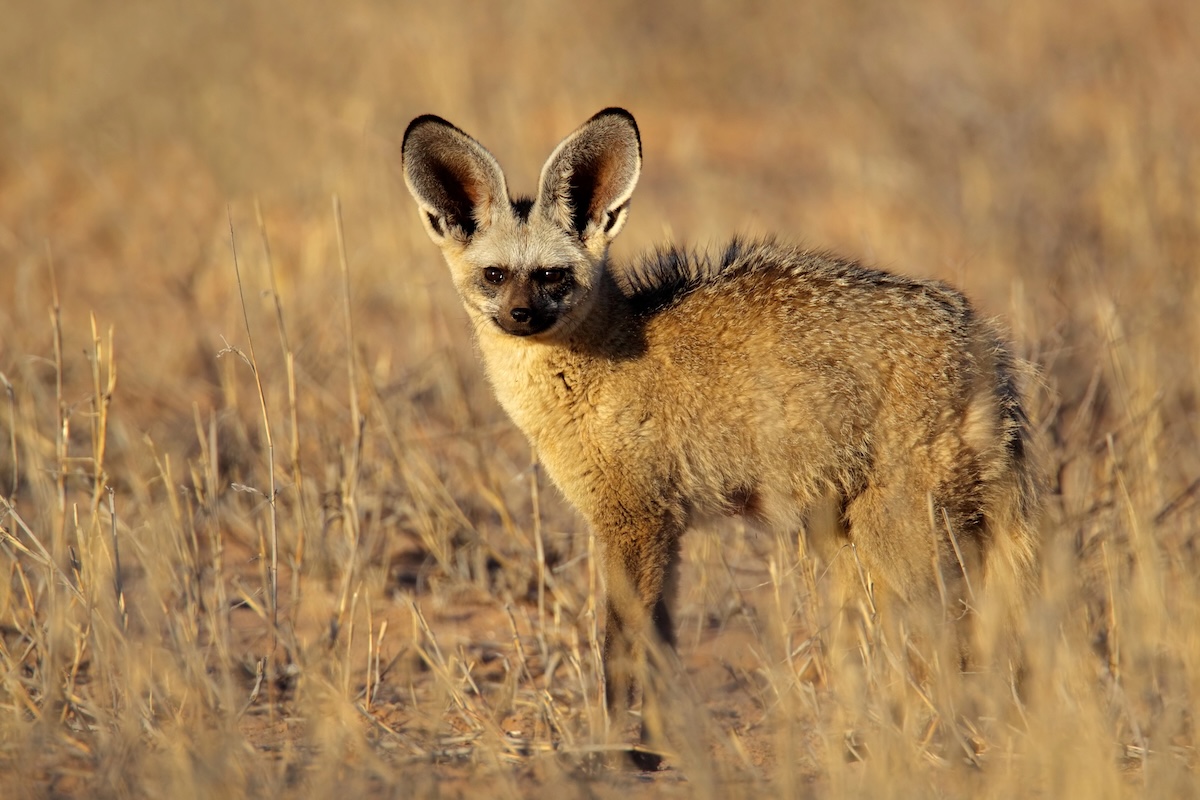 Photo Credit: EcoPic on Deposit Photos
In the sun-drenched savannas of Africa, the bat-eared fox, or Otocyon megalotis, dances through the tall grasses, its large, expressive ears perked up like radar dishes, ready to catch the faintest sounds of movement. This charming little mammal, standing about a foot tall, is a master of its environment, with a slender body built for agility and speed. Its striking appearance, with a coat of soft gray and a face that seems to wear a perpetual smile, captures the hearts of both scientists and nature enthusiasts alike. The bat-eared fox is not just a pretty face; it plays a vital role in its ecosystem, primarily feasting on insects like termites and beetles, which helps keep these populations in check.
As the golden sun rises over the horizon, the bat-eared fox emerges from its burrow, ready to greet the day. Picture a lively scene where these social creatures gather in small family groups, communicating with a series of chirps and barks that echo across the open landscape. Their keen sense of hearing allows them to detect the slightest rustle in the grass, guiding them to their next meal. This fascinating behavior, combined with their unique adaptations, makes the bat-eared fox a subject of study for ecologists and wildlife lovers. Join us as we explore the captivating world of Otocyon megalotis, uncovering the secrets of its life in the wild and the important role it plays in the delicate balance of the African savanna.
The bat-eared fox, a charming little mammal found in the savannas and grasslands of Africa, holds a special place in the animal kingdom. Taxonomically, it belongs to the family Canidae, which includes familiar animals like dogs and wolves. What sets the bat-eared fox apart is its oversized ears, which can be as long as its head! These ears are not just for show; they help the fox detect the faint sounds of insects, its primary food source. This unique adaptation showcases how evolution shapes animals to thrive in their environments.
| Taxonomic Rank | Scientific Name | Meaning & Significance |
|---|---|---|
| Kingdom | Animalia | This name signifies that the bat-eared fox is part of the vast group of multicellular organisms known as animals, which are distinct from plants and fungi. |
| Phylum | Chordata | Chordata means “having a notochord,” a flexible rod that supports the body. This group includes all animals with a backbone, highlighting the bat-eared fox’s place among vertebrates. |
| Class | Mammalia | Mammalia refers to mammals, characterized by features like fur and the ability to nurse their young with milk. The bat-eared fox, like all mammals, has these traits. |
| Order | Carnivora | Carnivora, meaning “meat-eaters,” includes animals that primarily consume meat. However, the bat-eared fox is an omnivore, showcasing the diversity within this order. |
| Family | Canidae | Canidae is the family of dogs, wolves, and foxes. The bat-eared fox shares common ancestors with these animals, which is evident in its social behavior and communication. |
| Genus | Otocyon | Otocyon translates to “ear of the owl,” a nod to its large ears that resemble those of an owl, emphasizing its keen sense of hearing. |
The classification of the bat-eared fox reveals much about its evolutionary journey. As a member of the Canidae family, it shares a lineage with other canids, suggesting that it has adapted to a unique niche in its environment. Its specialized diet and remarkable hearing abilities illustrate how species evolve distinct traits to survive and thrive. By understanding its taxonomic position, we gain insight into the bat-eared fox’s role in the ecosystem and the fascinating story of life on Earth.
The evolutionary journey of the bat-eared fox, scientifically known as Otocyon megalotis, stretches back millions of years. This small, agile mammal is a member of the Canidae family, which includes wolves, foxes, and domestic dogs. The bat-eared fox’s ancestors roamed the Earth during the late Miocene epoch, around 10 million years ago, when the climate began to shift, leading to the development of open grasslands and savannas. This change in habitat set the stage for the evolution of many species, including the bat-eared fox.
The bat-eared fox’s lineage diverged from other canids, adapting to a life that required keen senses and specialized feeding habits. Early ancestors likely had a more generalized diet, but as they evolved, they developed traits that allowed them to thrive in their specific environment. One major transition was the enlargement of their ears, which not only gives them their name but also enhances their ability to hear the faint sounds of insects underground. This adaptation was crucial as they began to rely heavily on a diet of termites and other insects, making them one of the few canids to specialize in such a food source.
The adaptations of the bat-eared fox have been vital for its survival in the wild. Its keen hearing and specialized diet allow it to thrive in environments where food can be scarce. The social structure of living in family groups enhances their foraging success and provides safety in numbers. With their excellent camouflage, they can blend into their surroundings, avoiding predators while hunting for their favorite snacks. These evolutionary traits not only showcase the bat-eared fox’s ability to adapt but also highlight the intricate connections between species and their environments.
The bat-eared fox is a delightful sight, with its large, expressive ears and slender body that seems perfectly designed for life in the open grasslands of Africa. Standing at about a foot tall at the shoulder, this small mammal has a lightweight frame that allows it to dart quickly across the terrain. Its fur is soft and dense, providing both warmth and camouflage among the grasses. The bat-eared fox’s long legs and bushy tail add to its agile appearance, making it look like a playful sprite of the savanna.
| Feature | Description |
|---|---|
| Size | About 1 foot tall at the shoulder |
| Color | Light brown to grayish fur with darker markings |
| Skin Type | Soft, dense fur |
| Most Distinctive Feature | Large ears that can be up to 5 inches long |
These striking features are not just for show; they play vital roles in the bat-eared fox’s survival. Those large ears are incredibly sensitive, allowing the fox to hear the faintest sounds of insects and small animals scurrying beneath the ground. This keen sense of hearing is essential for locating food, especially in the vast, open landscapes where they live. The fox’s coloration helps it blend into its surroundings, providing a layer of protection from predators. Together, these adaptations make the bat-eared fox a master of its environment, perfectly equipped to thrive in the wild.
The bat-eared fox thrives in the sun-drenched expanses of the African savanna and grasslands. Picture wide-open spaces dotted with tufts of grass, where the golden sun casts long shadows and the air is filled with the sounds of chirping insects and rustling leaves. These habitats are not just beautiful; they provide the perfect backdrop for the bat-eared fox’s lively antics and keen hunting skills.
The climate in these regions is typically warm and dry, with distinct wet and dry seasons. The bat-eared fox prefers areas where the grass is short, allowing it to spot its favorite snacks, like insects and small rodents, with ease. These open spaces also provide plenty of burrowing opportunities, which are essential for shelter and raising young. The foxes are well-suited to handle the fluctuations in temperature, enjoying the warmth of the day while finding cool refuge during the hotter hours.
Adaptation is key to the bat-eared fox’s survival in these environments. Its large ears, which can be nearly half the length of its head, are not just for show; they help the fox hear the faintest sounds of its prey underground. Additionally, their slender bodies allow them to dart quickly through the grass, making them agile hunters. By being active during twilight and nighttime, they avoid the heat of the day, showcasing their cleverness in navigating the challenges of their habitat.
The bat-eared fox leads a lively and engaging daily life, filled with activities that reflect its social nature and adaptability. As the sun rises over the African savanna, these small mammals emerge from their burrows, ready to explore their surroundings. Their day typically revolves around foraging for food, which mainly consists of insects, especially termites and beetles. With their keen sense of hearing, they can detect the faintest sounds of their prey, making them expert hunters. As dusk approaches, they become more active, taking advantage of the cooler temperatures to hunt and socialize.
Social behavior is a cornerstone of the bat-eared fox’s life. These foxes live in groups called skulk, which can range from a few individuals to larger family units. Within these groups, they exhibit strong bonds and cooperative behaviors. They communicate through a variety of sounds, including barks and whines, which help them stay connected while foraging or alerting each other to potential dangers. Grooming is also an important social activity, reinforcing relationships and keeping their fur clean and free of parasites.
| Behavior Type | Description |
|---|---|
| Activity Patterns | Active during the early morning and late afternoon, bat-eared foxes forage for insects and socialize in their groups. |
| Social Structure | Live in groups called skulk, which can include family members and other close individuals, promoting cooperation and safety. |
| Communication Methods | Use a range of vocalizations, including barks and whines, to communicate with each other, especially while foraging. |
The behaviors of bat-eared foxes are finely tuned to ensure their survival in the wild. By living in social groups, they can better protect each other from predators and increase their foraging efficiency. Their communication skills help them coordinate activities and alert one another to threats, while their foraging strategies allow them to exploit food resources effectively. Together, these behaviors create a dynamic and resilient lifestyle that enables bat-eared foxes to thrive in their natural habitat.
The bat-eared fox has a diet that primarily consists of insects, making it an insectivore. This clever little fox has developed specialized feeding behaviors to help it find and catch its favorite foods. With its keen sense of hearing, it can detect the faint sounds of insects scurrying beneath the ground. Once it locates a tasty meal, it uses its sharp teeth to dig into the soil, unearthing a variety of insects to munch on.
| Dietary Aspect | Details |
|---|---|
| Diet Type | Insectivore |
| Favorite Foods | Insects, particularly beetles and grasshoppers |
| Prey Items | Various insects found in the grasslands |
| Hunting/Foraging Strategies | Uses keen hearing to locate insects and digs to uncover them |
This insect-rich diet plays a crucial role in the bat-eared fox’s ecology and daily routine. By feeding on insects, these foxes help control insect populations, contributing to the balance of their ecosystem. Their foraging habits also mean they are active during the cooler parts of the day, allowing them to avoid the heat of the African sun while still finding plenty of food. This adaptability not only supports their survival but also highlights their important role in the vibrant tapestry of life in the savanna.
When it comes to romance in the wild, the bat-eared fox has its own charming ways. Mating typically occurs during the rainy season, which is a time when food is plentiful and conditions are just right for raising young. During this period, males and females engage in playful behaviors, including chasing and vocalizations, to strengthen their bond. This social interaction is crucial, as it helps them form a partnership that will last through the challenges of parenthood.
| Reproductive Aspect | Details |
|---|---|
| Gestation Period | 60-70 days |
| Average Litter Size | 3-6 |
| Name Of Young | Kits |
| Age of Maturity | 6-12 months |
Once the kits are born, the bat-eared fox parents take their roles very seriously. The mother is primarily responsible for nursing and caring for the young, while the father helps by bringing food to the den. The kits are born blind and helpless, relying entirely on their parents for survival. As they grow, they begin to explore their surroundings, learning essential skills like hunting and socializing. By the time they reach six to twelve months of age, these young foxes are ready to venture out on their own, equipped with the knowledge and instincts needed to thrive in the wild.
The bat-eared fox occupies a crucial role in the food web of its African habitat. As an insectivore, it primarily feeds on insects, particularly termites and beetles, which helps control these populations. However, this small fox is not at the top of the food chain. It faces various predators that threaten its survival, making it an important player in the balance of its ecosystem.
To evade these dangers, the bat-eared fox has developed several clever survival strategies. Its large ears are not just for show; they help it detect the faintest sounds of approaching predators. When threatened, these foxes often rely on their speed and agility to dart away into the tall grass, where they can hide from sight. Additionally, they are known to dig burrows, providing a safe haven from larger animals. By using these defensive behaviors, the bat-eared fox skillfully navigates the challenges of its environment, ensuring its place in the vibrant tapestry of life in the savanna.
A keystone species is an organism that plays a critical role in maintaining the structure of its ecosystem. Its presence and activities significantly influence the environment and the other species that inhabit it. The bat-eared fox, with its unique feeding habits and social behavior, qualifies as a keystone species in the African savanna and grassland ecosystems. By controlling insect populations and influencing the dynamics of their habitat, these foxes help maintain a balanced environment.
Bat-eared foxes primarily feast on insects, particularly termites and beetles. By consuming these insects, they help regulate their populations, preventing any one species from overwhelming the ecosystem. This is important because an unchecked insect population can lead to overgrazing of vegetation, which in turn affects other animals that rely on those plants for food and shelter. Additionally, the foxes’ foraging behavior aerates the soil, promoting healthier plant growth and contributing to the overall health of their habitat.
Moreover, bat-eared foxes are social animals that often live in family groups. Their communal living and cooperative foraging strategies enhance their efficiency in hunting insects. This social structure not only benefits the foxes but also creates a dynamic environment where other species can thrive. For example, their presence can attract birds of prey that hunt for the same insects, creating a diverse food web that supports various life forms.
If bat-eared foxes were to disappear from their ecosystem, the consequences could be significant. Without these foxes to keep insect populations in check, there could be a rapid increase in the number of termites and beetles. This surge would likely lead to overgrazing of vegetation, which would not only harm plant life but also disrupt the entire food web. Other animals that depend on the same plants for food and shelter would struggle to survive, leading to a decline in biodiversity. The loss of the bat-eared fox would create a ripple effect, demonstrating just how vital this small mammal is to the health of its ecosystem.
The bat-eared fox, a small yet impactful inhabitant of the African savanna and grasslands, plays a vital role in its ecosystem. This social creature thrives in open spaces, where it forages for insects and other small invertebrates. By doing so, it helps regulate insect populations, which can otherwise explode and disrupt the balance of its environment. The bat-eared fox’s unique adaptations, such as its keen sense of hearing and specialized diet, allow it to occupy a specific ecological niche, making it an essential player in the intricate web of life in its habitat.
| Ecosystem Service | Impact |
|---|---|
| Insect population control | Reduces the number of pests, benefiting plant life and other animals. |
| Soil aeration | Helps improve soil quality through digging and foraging activities. |
| Food source for predators | Serves as prey for larger carnivores, contributing to the food web. |
| Seed dispersal | May inadvertently aid in spreading seeds through its movements. |
The bat-eared fox’s diet primarily consists of insects, particularly termites and beetles. By consuming these creatures, it helps keep their populations in check, which is crucial for maintaining the health of the grasslands. For instance, a single bat-eared fox can eat thousands of termites in a week, preventing these insects from overwhelming the ecosystem. Additionally, as these foxes dig for food, they aerate the soil, allowing water and nutrients to penetrate deeper, which benefits plant growth. This digging behavior also creates small burrows that can be used by other animals, enhancing the habitat for various species.
In the grand scheme of the African savanna, the bat-eared fox is more than just a charming animal; it is a keystone species. Its activities not only support its own survival but also contribute to the overall health of its ecosystem. By controlling insect populations, improving soil quality, and serving as a food source for larger predators, the bat-eared fox helps maintain the delicate balance of life in its environment. This interconnectedness highlights the importance of every species, no matter how small, in shaping the world around us.
In the intricate web of life, many species form partnerships that benefit them in various ways. These relationships can be classified into three main types: mutualism, where both species gain; commensalism, where one benefits while the other is neither helped nor harmed; and parasitism, where one benefits at the expense of the other. The bat-eared fox, with its keen senses and social nature, engages in several of these ecological relationships, showcasing the interconnectedness of life in the African savanna.
| Species/Type | Relationship Type | Description |
|---|---|---|
| Termites | Mutualistic | Bat-eared foxes feed on termites, helping to control their populations. In return, the foxes benefit from a reliable food source. |
| Birds (e.g., oxpeckers) | Commensal | Birds may follow bat-eared foxes to catch insects disturbed by their movements. The birds gain food, while the foxes are unaffected. |
| Parasites (e.g., ticks) | Parasitic | Ticks and other parasites may latch onto bat-eared foxes, feeding on their blood. This relationship harms the foxes, as it can lead to health issues. |
These relationships have evolved over time, shaped by the needs and behaviors of the species involved. The bat-eared fox has adapted to thrive in its environment, forming beneficial partnerships that enhance its survival. By controlling insect populations, it plays a vital role in maintaining the balance of its ecosystem. Meanwhile, the interactions with birds and the challenges posed by parasites illustrate the complex dynamics of life in the wild. Understanding these connections helps us appreciate the delicate balance of nature and the importance of every species in the grand tapestry of life.
The bat-eared fox is a captivating little mammal that brings a unique charm to the African savanna. With its large ears and playful nature, this creature has some surprising traits that make it truly special.
The bat-eared fox has long captured the imagination of people living in and around its African habitat. Historically, these small mammals have been part of local folklore and cultural stories, often symbolizing cleverness and adaptability. Their distinctive large ears and playful demeanor have made them a subject of fascination for many. In some cultures, they are seen as tricksters, much like the coyote in Native American tales. This cultural significance highlights the deep connection between humans and wildlife, where animals often embody traits that resonate with human experiences.
Today, the relationship between bat-eared foxes and humans is complex and multifaceted. While these foxes are not domesticated, they face challenges due to habitat loss and human encroachment. As agriculture expands into their natural habitats, conflicts can arise, particularly when farmers perceive them as threats to livestock. However, conservation efforts are underway to protect these charming creatures and their ecosystems. Organizations are working to educate communities about the ecological benefits of bat-eared foxes, such as their role in controlling insect populations, which can help reduce pests that affect crops.
As we look to the future, the relationship between bat-eared foxes and humanity holds promise. With increased awareness and conservation efforts, there is hope for a harmonious coexistence. By understanding the ecological roles these foxes play and respecting their habitats, we can foster a relationship that benefits both humans and wildlife. The bat-eared fox, with its playful spirit and vital ecological contributions, can continue to thrive alongside us, reminding us of the beauty and complexity of the natural world.
The bat-eared fox, known scientifically as Otocyon megalotis, currently holds a conservation status of “Least Concern” according to the International Union for Conservation of Nature (IUCN). This means that, at present, the species is not facing an immediate threat of extinction. Population estimates suggest that these charming foxes are relatively stable across their range in sub-Saharan Africa, although localized declines may occur due to various environmental pressures.
| Conservation Factor | Status/Details |
|---|---|
| IUCN Status | Least Concern |
| Population Estimates | Stable, but localized declines may occur |
| Trend Direction | Stable overall |
Despite their current stable status, bat-eared foxes face several threats that could impact their populations in the future. Habitat loss is a significant concern, primarily due to agricultural expansion and urban development. As humans convert grasslands into farmland or cities, the natural habitats of these foxes shrink, making it harder for them to find food and shelter. Additionally, they are vulnerable to predation by larger carnivores and can be affected by diseases that spread through domestic animals.
Conservation efforts are underway to ensure the continued survival of the bat-eared fox. Protected areas in their native habitats help safeguard these animals from habitat destruction and provide safe spaces for them to thrive. Education and awareness programs are also crucial, as they encourage local communities to appreciate and protect the wildlife around them. With ongoing efforts and a stable population, the outlook for the bat-eared fox remains hopeful, allowing future generations to enjoy the playful antics of this delightful species.
| Question | Answer |
|---|---|
| Where do Bat-Eared Foxes live? | Bat-Eared Foxes are found in the African savanna and grasslands. These open areas provide them with plenty of space to hunt for food and dig their burrows. |
| What do Bat-Eared Foxes eat? | Bat-Eared Foxes are insectivores, which means they primarily eat insects. Their diet mainly consists of termites and beetles, but they will also munch on small mammals and fruits when available. |
| How do Bat-Eared Foxes behave? | These foxes are social animals and often live in small family groups. They are most active at night, using their keen sense of hearing to locate prey in the dark. |
| How do Bat-Eared Foxes reproduce? | Bat-Eared Foxes typically mate once a year, with a gestation period of about two months. The female usually gives birth to a litter of two to five pups, which are cared for by both parents. |
| What threats do Bat-Eared Foxes face? | While Bat-Eared Foxes are currently listed as Least Concern, they face threats from habitat loss and hunting. As human activities expand, their natural habitats are being altered, which can impact their populations. |
| What is a unique characteristic of Bat-Eared Foxes? | The most distinctive feature of Bat-Eared Foxes is their large ears, which can be up to five inches long! These ears help them hear the faint sounds of insects underground, making it easier to find food. |
| Can Bat-Eared Foxes be kept as pets? | Bat-Eared Foxes are wild animals and are not suitable as pets. They have specific needs and behaviors that are best suited for their natural habitat, and keeping them in captivity can be harmful to their well-being. |