Taxonomy & Classification
- Kingdom
- Animalia
- Phylum
- Chordata
- Class
- Actinopterygii
- Order
- Lophiiformes
- Family
- Ogcocephalidae
- Genus
- Ogcocephalus

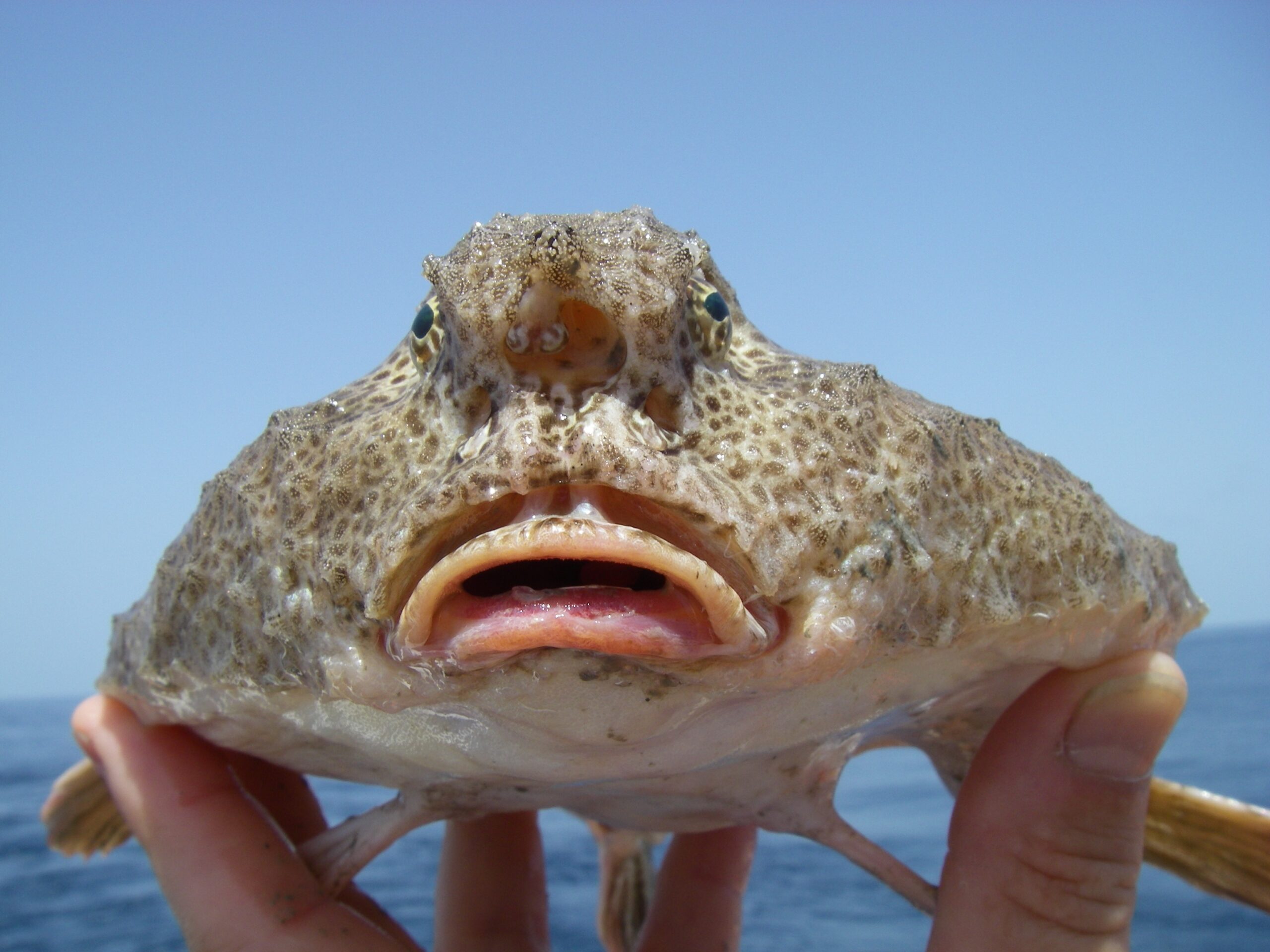 Photo Credit: NOAA Photo Library / Wikimedia
In the shimmering depths of the ocean, the batfish, scientifically known as Ogcocephalus, glides gracefully along the sandy seafloor. With its flat, rounded head and thin, elongated body, this extraordinary fish looks like a creature from a dream. Its unique shape allows it to blend seamlessly into its surroundings, making it a master of disguise among the coral reefs and rocky substrates it calls home. As it moves, the batfish uses its pectoral fins like wings, flapping gently to navigate the underwater world, which adds to its enchanting appearance.
What truly captivates scientists and nature enthusiasts alike is the batfish’s leisurely lifestyle and its role in the marine ecosystem. Unlike many of its speedy relatives, the batfish prefers to take its time, often resting on the ocean floor while waiting for unsuspecting prey to swim by. This carnivorous fish dines on a variety of small marine creatures, including shrimp and crabs, showcasing its adaptability in the diverse underwater landscape. As we dive deeper into the life of the batfish, we will explore its fascinating behaviors, its unique adaptations, and the vital role it plays in maintaining the balance of its ecosystem. Join us on this underwater adventure to uncover the secrets of the batfish and the vibrant world it inhabits.
Batfish are truly captivating members of the animal kingdom, sitting within the fascinating world of fish. They belong to the class Actinopterygii, which includes all ray-finned fishes. What sets batfish apart is their unusual appearance and behavior. With their flattened bodies and wing-like pectoral fins, they look more like a cross between a fish and a bat, hence their name. These adaptations allow them to “walk” along the ocean floor rather than swim, making them a unique sight in their underwater habitats.
| Taxonomic Rank | Scientific Name | Meaning & Significance |
|---|---|---|
| Kingdom | Animalia | This name signifies that batfish are part of the vast group of multicellular organisms that are primarily heterotrophic, meaning they consume organic material for energy. |
| Phylum | Chordata | Chordata refers to animals that have a notochord, a flexible rod that supports the body. In batfish, this structure is present during their early development. |
| Class | Actinopterygii | This class name means “ray-finned fish,” highlighting the bony rays that support their fins, a characteristic feature of this diverse group. |
| Order | Lophiiformes | Lophiiformes translates to “lophius form,” which refers to the distinctive shape of these fish, often characterized by their flattened bodies and unique lure structures. |
| Family | Ogcocephalidae | This family name comes from the genus Ogcocephalus, which means “head of a fish,” emphasizing the batfish’s unusual head shape and body structure. |
| Genus | Ogcocephalus | The genus name Ogcocephalus is derived from Greek, where “ogco” means “round” and “cephalus” means “head,” reflecting the batfish’s rounded head and body. |
Understanding where batfish fit in the tree of life reveals much about their evolutionary journey. Their unique adaptations, such as their ability to walk on the seafloor and their specialized body shape, suggest a long history of evolution in response to their environment. This classification not only highlights their distinct physical traits but also connects them to a broader lineage of fish, showcasing the incredible diversity and adaptability of life in our oceans.
The evolutionary journey of batfish stretches back millions of years, tracing its roots to ancient marine environments. These intriguing fish belong to the family Ogcocephalidae and the genus Ogcocephalus, which emerged during the late Cretaceous period, around 100 million years ago. As the oceans transformed, so did the batfish, adapting to their surroundings in ways that would ensure their survival in the ever-changing underwater world.
Batfish are descendants of more traditional fish, but they took a different evolutionary path. Over time, they developed a unique body shape that allows them to thrive on the ocean floor. Unlike many of their relatives, batfish have flattened bodies and elongated pectoral fins, which they use to “walk” along the seabed. This adaptation is particularly useful in their habitat, where they can blend in with the sandy or rocky substrate, avoiding predators while hunting for small invertebrates. Their specialized feeding mechanism, which includes a lure that attracts prey, showcases another significant evolutionary transition, allowing them to become effective ambush predators.
These evolutionary adaptations have been crucial for the batfish’s survival. By developing a body shape that allows them to walk rather than swim, they can explore their environment more effectively. Their unique feeding strategies, including the use of a bioluminescent lure, enable them to thrive in the depths of the ocean where light is scarce. Together, these traits not only help batfish evade predators but also make them successful hunters in their underwater realm.
Batfish present an enchanting sight beneath the waves, captivating anyone lucky enough to encounter them. With their flat, rounded heads and thin bodies, they seem almost otherworldly, gliding gracefully along the ocean floor. Their unusual shape allows them to blend seamlessly into their surroundings, making them masters of camouflage. This unique body structure not only aids in their survival but also gives them a distinctive appearance that sets them apart from other fish.
| Feature | Description |
|---|---|
| Size | Typically small, with some species reaching up to 12 inches in length. |
| Color | Often found in shades of brown, gray, or even vibrant colors, helping them blend into the ocean floor. |
| Skin Type | Rough, providing texture that can help with camouflage against rocky surfaces. |
| Most Distinctive Feature | The flat, rounded head and thin body, which allow for a unique swimming style and excellent hiding capabilities. |
These physical traits work together in a remarkable way to enhance the batfish’s survival in their underwater habitat. The flat, rounded head and thin body not only help them navigate through tight spaces but also allow them to remain hidden from predators. Their rough skin adds an extra layer of protection while blending into the rocky ocean floor. This combination of features makes batfish not just visually striking but also incredibly well-adapted to their environment, showcasing the wonders of evolution in the depths of the sea.
Batfish inhabit some of the most intriguing underwater landscapes, often found in the warm, shallow waters of the ocean. These fish prefer environments like coral reefs, sandy bottoms, and rocky substrates, where they can easily blend in with their surroundings. The vibrant colors and textures of these habitats provide both shelter and hunting grounds, making them ideal homes for batfish. Imagine a sun-drenched seafloor, dotted with corals and swaying sea grasses, where these curious fish can be seen “walking” along the ocean floor using their pectoral fins.
Batfish thrive in warm waters, typically preferring temperatures between 20 to 30 degrees Celsius (68 to 86 degrees Fahrenheit). They are often found at depths ranging from just a few meters to about 200 meters (656 feet). The clarity of the water is also important, as batfish rely on their keen eyesight to spot prey and avoid predators. These conditions create a vibrant ecosystem where batfish can flourish, surrounded by a rich diversity of marine life.
To survive in their specific habitats, batfish have developed some fascinating adaptations. Their flattened bodies and unique fins allow them to “walk” along the ocean floor, making it easier to navigate through complex environments like coral reefs. This ability helps them hunt for small invertebrates and crustaceans, which are their primary food sources. Additionally, their coloration often mimics the sandy or rocky substrates, providing excellent camouflage against predators. These clever adaptations ensure that batfish not only survive but thrive in their underwater homes.
Batfish lead a life that is both intriguing and leisurely, often spending their days in the warm, shallow waters of the ocean. These fish are not known for their speed; instead, they glide gracefully along the seafloor, using their unique pectoral fins to “walk” on the substrate. This slow-paced lifestyle allows them to search for food, primarily small invertebrates, which they find by sifting through the sand or lurking near coral structures. Their daily activities revolve around foraging, resting, and occasionally engaging in brief displays of movement to evade potential predators.
While batfish are primarily solitary creatures, they do exhibit interesting social behaviors during certain times. They may come together in small groups, especially during mating seasons, where they engage in courtship displays. These gatherings are not permanent; rather, they are temporary alliances formed for reproduction. Communication among batfish is subtle, relying on body movements and changes in color to signal their intentions to one another. This social dynamic, though limited, showcases their adaptability in navigating the challenges of their underwater world.
| Behavior Type | Description |
|---|---|
| Activity Patterns | Batfish glide along the seafloor, using their pectoral fins to walk and forage for small invertebrates. |
| Social Structure | Primarily solitary, batfish may form temporary groups during mating seasons. |
| Communication Methods | They communicate through subtle body movements and color changes to express intentions. |
The behaviors of batfish are finely tuned to ensure their survival in a complex marine environment. Their slow, deliberate movements help them avoid detection by predators while allowing them to hunt effectively. By forming temporary groups during mating, they increase their chances of reproduction, ensuring the continuation of their species. This blend of solitary and social behaviors highlights the batfish’s adaptability, making them a fascinating part of the ocean’s ecosystem.
Batfish are carnivorous, meaning they primarily eat other animals. Their diet consists of a variety of small marine creatures, including shrimp, crabs, snails, worms, and even smaller fish. These fish have developed unique feeding behaviors that allow them to capture their prey effectively. Instead of chasing after their food, batfish often use a more patient approach, waiting for unsuspecting prey to come close before striking. This method suits their slow-moving lifestyle and helps them conserve energy in their underwater world.
| Dietary Aspect | Details |
|---|---|
| Diet Type | Carnivore |
| Favorite Foods | Shrimp, crabs, snails, worms, and small fish |
| Prey Items | Small marine invertebrates and fish |
| Hunting/Foraging Strategies | Patient ambush, waiting for prey to come close |
This diet plays a crucial role in the batfish’s ecology and daily routine. By feeding on a variety of small animals, batfish help maintain the balance of their marine ecosystem. Their unique hunting strategy allows them to thrive in their habitats, ensuring they have enough energy to continue their leisurely lifestyle. As they glide through the water, batfish not only contribute to the health of their environment but also showcase the beauty of adaptation in the underwater world.
When it comes to mating, batfish have some interesting behaviors that make their breeding season quite a spectacle. During this time, males often engage in elaborate courtship displays to attract females. These displays can include swimming in circles and showcasing their vibrant colors. The breeding season typically aligns with warmer water temperatures, which can vary depending on their specific habitat. This is a crucial time for batfish, as successful mating leads to the continuation of their species.
| Reproductive Aspect | Details |
|---|---|
| Gestation Period | Unknown |
| Litter Size | Varies, often several dozen eggs |
| Age of Maturity | Approximately 2-3 years |
| Name of Young | Fry |
After the eggs are laid, batfish exhibit minimal parental care. The eggs are often left to develop on their own, which is common among many fish species. Once the fry hatch, they are tiny and vulnerable, relying on their instincts to find food and avoid predators. As they grow, these young batfish gradually develop the unique features that define their species. Over time, they transition from small fry into fully mature batfish, ready to embark on their own adventures in the ocean. This journey from hatchling to adult is a vital part of their life cycle, ensuring the survival of this captivating fish.
Batfish play a vital role in their underwater ecosystems, often serving as both predator and prey. Positioned within the food web, they feast on small marine creatures like shrimp and crabs, while also being targets for larger predators. This delicate balance keeps the ocean’s ecosystem healthy and thriving.
To survive against these threats, batfish have developed some clever defensive strategies. Their flat bodies allow them to blend seamlessly into the ocean floor, making it difficult for predators to spot them. Additionally, their slow, gliding movements help them avoid detection. When faced with danger, some batfish can even use their ability to bury themselves in sand or hide among rocks, ensuring they remain safe from hungry eyes. These adaptations are essential for their survival in a world filled with challenges.
A keystone species is an organism that has a disproportionately large impact on its environment relative to its abundance. This means that if a keystone species were to disappear, the entire ecosystem could change dramatically. Batfish, with their unique role in marine habitats, can indeed be considered a keystone species. Their presence influences the population dynamics of other marine creatures, making them essential for maintaining the balance of their underwater world.
Batfish are carnivores, primarily feeding on small marine animals like shrimp, crabs, and snails. By preying on these creatures, they help control their populations, preventing any one species from becoming too dominant. This predatory behavior is crucial for maintaining biodiversity in their habitats. For example, if batfish were to decline in numbers, the populations of their prey could explode, leading to overgrazing of algae and other important marine plants. This could disrupt the entire ecosystem, affecting not just the batfish but many other species that rely on a balanced environment.
Additionally, batfish serve as prey for larger predators, such as certain species of fish and seabirds. This dual role as both predator and prey helps to create a complex food web, where energy and nutrients flow through various levels of the ecosystem. Their unique adaptations, like their ability to camouflage with the ocean floor, also allow them to thrive in their environments, further supporting the intricate relationships among marine life.
If batfish were to vanish from their habitats, the consequences could be severe. The unchecked growth of their prey species could lead to significant changes in the ecosystem, such as the decline of important algae and coral populations. This would not only affect the batfish but also countless other marine organisms that depend on a healthy, balanced environment. The loss of batfish would ripple through the food web, demonstrating just how vital these fascinating fish are to the health of our oceans.
Batfish occupy a fascinating ecological niche in their underwater habitats, acting as both predators and prey. These unique fish are often found in warm, shallow waters, where they play a crucial role in maintaining the balance of marine ecosystems. By feeding on small marine creatures, batfish help regulate populations of these organisms, ensuring that no single species dominates the environment. This balance is essential for the health of coral reefs and other marine ecosystems, where a variety of species must coexist to thrive.
| Ecosystem Service | Impact |
|---|---|
| Predation | Controls populations of small marine animals, preventing overpopulation. |
| Prey for larger species | Serves as a food source for larger fish and marine mammals, contributing to the food web. |
| Habitat structure | Influences the physical environment by interacting with the substrate, which can affect other species. |
Batfish have a significant influence on their surroundings through their feeding habits and interactions with other marine life. For instance, by consuming small crustaceans and other invertebrates, they help maintain a balanced ecosystem. If batfish were to disappear, the populations of these smaller creatures could explode, leading to a decline in the health of coral reefs. Additionally, batfish themselves are an important food source for larger predators, such as groupers and sharks, which rely on them for sustenance. This interconnectedness highlights the vital role batfish play in the marine food web.
The broader ecological importance of batfish cannot be overstated. As a keystone species, their presence helps maintain the diversity and stability of their ecosystems. By regulating prey populations and serving as prey for larger animals, batfish contribute to the overall health of marine environments. Protecting these remarkable fish is essential not only for their survival but also for the well-being of the entire underwater community. In this way, batfish exemplify the intricate connections that define life in our oceans, reminding us of the delicate balance that sustains our planet’s biodiversity.
In the vibrant tapestry of ocean life, symbiosis plays a crucial role in shaping the relationships between different species. Symbiosis refers to the close interactions between organisms, which can be beneficial, harmful, or neutral. These relationships can take many forms, such as mutualism, where both species gain advantages, parasitism, where one benefits at the other’s expense, and commensalism, where one species benefits while the other is neither helped nor harmed. Understanding these connections helps us appreciate the complexity of marine ecosystems and the delicate balance that sustains them.
| Species/Type | Relationship Type | Description |
|---|---|---|
| Cleaner Shrimp | Mutualistic | Cleaner shrimp remove parasites and dead skin from batfish, benefiting both species. The batfish gets a cleaning service, while the shrimp gain food and a safe place to live. |
| Sea Anemones | Commensal | Some batfish may seek shelter among sea anemones. The batfish finds protection from predators, while the anemones are unaffected by the presence of the batfish. |
| Parasitic Worms | Parasitic | Parasitic worms can attach to batfish, feeding on their blood or tissues. This relationship harms the batfish, as it can lead to health issues and weakened conditions. |
These intricate relationships have evolved over time, shaped by the needs and behaviors of the species involved. Mutualistic partnerships, like that with cleaner shrimp, highlight how cooperation can enhance survival for both parties. Meanwhile, parasitic interactions remind us of the challenges organisms face in their environments. As batfish navigate their underwater world, these connections not only provide essential benefits but also illustrate the dynamic interplay of life beneath the waves. Understanding these relationships deepens our appreciation for the complexity of marine ecosystems and the importance of every species within them.
Batfish are truly enchanting creatures that swim through the warm, shallow waters of the ocean, showcasing some surprising traits that make them stand out in the marine world. Here are some intriguing facts that will surely captivate nature enthusiasts of all ages.
Batfish have long captured the imagination of humans, both in ancient cultures and modern times. Historical encounters with these unusual fish often sparked curiosity and wonder. In various coastal communities, batfish were sometimes seen as symbols of the ocean’s mysteries. Their unique appearance and behavior inspired folklore and stories, making them a part of the cultural tapestry in regions where they are found. As people began to explore the depths of the ocean, batfish became a subject of scientific study, revealing insights into marine ecosystems and the delicate balance of life beneath the waves.
Today, the relationship between batfish and humanity is evolving, particularly as we become more aware of the importance of marine conservation. While batfish are not typically targeted for fishing, their habitats are threatened by human activities such as pollution and climate change. Conservation efforts are underway to protect these unique fish and their environments. However, conflicts can arise when coastal development disrupts their natural habitats. In some areas, researchers are working to educate local communities about the ecological roles of batfish, fostering a sense of stewardship that encourages sustainable practices.
As we look to the future, the relationship between batfish and humanity holds promise. With increased awareness of environmental issues, there is a growing movement to protect marine life and habitats. By fostering a deeper understanding of batfish and their role in the ecosystem, we can inspire future generations to appreciate and safeguard these remarkable fish. Together, we can ensure that batfish continue to thrive in our oceans, enriching the biodiversity that is vital for a healthy planet.
The conservation status of batfish remains a bit of a mystery, as they have not yet been formally evaluated by the International Union for Conservation of Nature (IUCN). This means that there is no official classification regarding their risk of extinction. As a result, population trends are also unclear, leaving scientists and conservationists with many questions about how many batfish are swimming in our oceans today.
| Conservation Factor | Status/Details |
|---|---|
| IUCN Status | Not Evaluated |
| Estimated Population Size | Unknown |
| Population Trend | Unknown |
Despite their elusive nature, batfish face several threats that could impact their survival. One of the main concerns is habitat destruction, particularly due to human activities like coastal development and pollution. Coral reefs, where many batfish reside, are under pressure from climate change, which leads to coral bleaching and loss of biodiversity. Additionally, overfishing can disrupt the delicate balance of marine ecosystems, affecting not only batfish but also the smaller creatures they rely on for food.
Conservation efforts for batfish are still in their infancy, primarily because their population status is not well understood. However, protecting their habitats is crucial. Initiatives aimed at preserving coral reefs and reducing pollution can benefit batfish and many other marine species. As awareness grows about the importance of these unique fish, there is hope that more research will be conducted, leading to better conservation strategies. With the right efforts, we can ensure that batfish continue to thrive in the vibrant underwater world they call home.
| Question | Answer |
|---|---|
| What is the habitat of Batfish? | Batfish are typically found in deep ocean waters, often at depths of 30 to 300 meters. They prefer sandy or muddy bottoms where they can easily camouflage themselves from predators and hunt for food. |
| What do Batfish eat? | Batfish are carnivores, meaning they primarily eat other animals. Their diet consists mainly of small fish and invertebrates, which they catch using their unique hunting techniques. |
| How do Batfish behave? | Batfish are known for their unusual swimming style, which resembles walking on the ocean floor. They use their pectoral fins to "walk" along the substrate, making them quite unique among fish. |
| How do Batfish reproduce? | Batfish reproduce by laying eggs, which are fertilized externally. The eggs are often laid in clusters, and once they hatch, the young Batfish are left to fend for themselves in the vast ocean. |
| What threats do Batfish face? | Currently, Batfish are not evaluated for conservation status, but they may face threats from habitat destruction and pollution. As ocean environments change, their populations could be affected by these human-induced factors. |
| What is an interesting characteristic of Batfish? | One of the most distinctive features of Batfish is their flat, rounded head and thin body, which help them blend into their surroundings. This unique shape allows them to be excellent ambush predators. |
| Are Batfish social or solitary? | Batfish are generally solitary creatures, preferring to hunt and live alone. However, they may occasionally be seen in small groups, especially during breeding seasons. |