Taxonomy & Classification
- Kingdom
- Animalia
- Phylum
- Arthropoda
- Class
- Insecta
- Order
- Hemiptera
- Family
- Cimicidae
- Genus
- Cimex
- Species
- Cimex lectularius

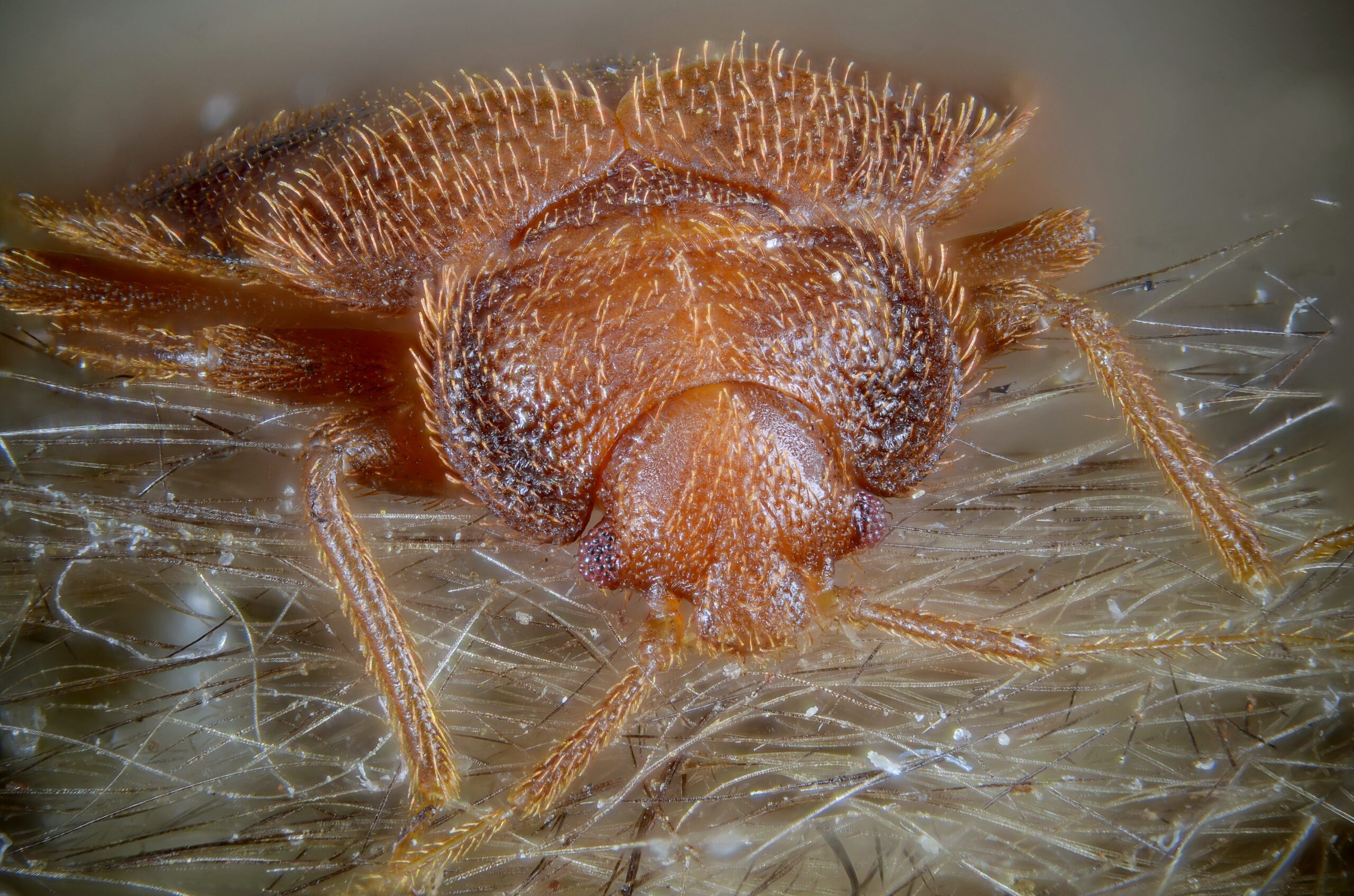 Photo Credit: Gilles San Martin from Namur, Belgium / Wikimedia
In the quiet corners of our homes, where shadows dance and the night unfolds, lives a tiny yet notorious inhabitant known as the bed bug, or Cimex lectularius. These small, wingless insects, measuring about 4.5 millimeters in length, are often overlooked, but their presence can turn a peaceful night into a restless ordeal. With their flat, oval-shaped bodies and reddish-brown hue, bed bugs are masters of disguise, blending seamlessly into the seams of mattresses and the cracks of bed frames. Their ability to hide in plain sight makes them both fascinating and frustrating, capturing the attention of scientists and curious nature enthusiasts alike.
Bed bugs thrive in environments that offer warmth and shelter, making our cozy bedrooms the perfect habitat. As nocturnal creatures, they come alive under the cover of darkness, embarking on their nightly quest for a meal—human blood. This unique feeding behavior, along with their complex mating rituals, adds layers to their already intriguing lives. Despite their reputation as unwelcome guests, bed bugs play a surprisingly intricate role in our ecosystems, influencing the balance of life around them. As we delve deeper into the world of Cimex lectularius, we uncover not just the challenges they pose, but also the remarkable adaptations that have allowed them to survive alongside humans for thousands of years.
Bed bugs, those tiny, elusive pests that can turn a peaceful night into a restless ordeal, belong to a fascinating branch of the animal kingdom. Taxonomically, they sit within the Kingdom Animalia, which includes all animals, and they are classified under the Phylum Arthropoda, known for its joint-legged invertebrates like insects and spiders. What makes bed bugs particularly interesting is their place in the Order Hemiptera, often called “true bugs.” This order is characterized by their specialized mouthparts, which are adapted for piercing and sucking. Bed bugs are not just nuisances; they have a long history of cohabitation with humans, showcasing their adaptability and resilience.
| Taxonomic Rank | Scientific Name | Meaning & Significance |
|---|---|---|
| Kingdom | Animalia | This name means “animals” in Latin, highlighting the diverse group of living organisms that share certain biological characteristics. |
| Phylum | Arthropoda | Derived from Greek, meaning “jointed feet,” this term refers to the jointed limbs and segmented bodies of insects, spiders, and crustaceans. |
| Class | Insecta | This classification comes from the Latin word for “cut into sections,” which describes the segmented body structure of insects. |
| Order | Hemiptera | Meaning “half-wing” in Greek, this name refers to the unique structure of their wings, which are partly hardened and partly membranous. |
| Family | Cimicidae | This family name comes from the Latin word “cimex,” meaning “bug,” which is fitting for these blood-feeding insects. |
| Genus | Cimex | The genus name also derives from the Latin “cimex,” emphasizing the bed bug’s identity as a true bug that feeds on the blood of its hosts. |
Understanding the taxonomic classification of bed bugs reveals much about their evolutionary journey. As members of the Hemiptera order, they share common traits with other true bugs, such as their feeding habits and body structure. Their classification within the Cimicidae family highlights their specialized adaptations for a parasitic lifestyle, particularly their ability to thrive in human environments. This evolutionary history not only sheds light on their biological characteristics but also underscores their long-standing relationship with humans, making them a significant subject of study in both ecology and pest management.
The evolutionary journey of bed bugs stretches back millions of years, with their ancestors first appearing around 100 million years ago during the Cretaceous period. This was a time when dinosaurs roamed the Earth, and the world was a very different place. Over the eons, these tiny bloodsuckers have adapted to thrive alongside humans, making them one of the most successful pests in history.
Bed bugs belong to the family Cimicidae and the genus Cimex. Their ancestors were likely bat parasites, feeding on the blood of bats that roosted in caves. As humans began to inhabit caves and later build homes, bed bugs made a significant transition, shifting their diet to include human blood. This change marked a pivotal moment in their evolution, allowing them to exploit a new and abundant food source. Over time, bed bugs developed specialized mouthparts that enable them to pierce skin and draw blood efficiently. Their flat bodies also evolved to help them hide in tiny crevices, making it easier to evade detection.
These adaptations have played a crucial role in the survival of bed bugs throughout history. Their ability to thrive in human environments, coupled with their resilience against threats, has allowed them to persist despite our best efforts to eradicate them. As long as there are places for them to hide and humans to feed on, bed bugs will continue to be a part of our world, reminding us of the intricate connections between species and the ever-evolving dance of survival.
Bed bugs are small, wingless insects that can easily be overlooked, yet their presence can be quite unsettling. Measuring about 4.5 millimeters in height, these pests have a flat, oval-shaped body that allows them to hide in the tiniest of crevices. Their overall appearance is a mix of brown and reddish hues, which can change depending on whether they have recently fed. With a smooth, shiny exoskeleton, bed bugs are designed for stealth, making them masters of concealment in the nooks and crannies of our homes.
| Feature | Description |
|---|---|
| Size | Approximately 4.5 mm in height, about the size of an apple seed. |
| Color | Brown to reddish-brown, becoming darker after a blood meal. |
| Body Shape | Flat and oval, which helps them squeeze into tight spaces. |
| Skin Type | Smooth and shiny exoskeleton, providing a sleek appearance. |
| Legs | Six long legs that allow for quick movement across surfaces. |
| Eyes | Small, beady eyes that are not very prominent, aiding in their stealth. |
These physical features work together to enhance the bed bug’s survival skills. Their flat bodies enable them to hide in narrow gaps, making it difficult for predators to spot them. The color of their exoskeleton helps them blend into their surroundings, while their smooth skin allows them to move quickly and efficiently. With long legs, they can scurry away from danger or towards a sleeping host, where they can feed undetected. This combination of traits makes bed bugs not just resilient but also incredibly adept at thriving in human environments.
Bed bugs thrive in environments that offer warmth, shelter, and easy access to their favorite meal: blood. These tiny insects are often found nestled in the seams of mattresses, the cracks of bed frames, and even in the folds of curtains. Their preferred habitats are typically dark and cozy, making bedrooms and living areas the perfect spots for them to hide during the day and come out at night to feed. Imagine a quiet room, where the only sound is the soft rustle of sheets, and there, in the shadows, bed bugs are waiting for their next meal.
These pests prefer warm environments, typically thriving in temperatures between 70°F and 80°F (21°C to 27°C). They are not picky about humidity, but they do enjoy a slightly humid atmosphere, which helps them stay hydrated. Bed bugs can survive in various climates, but they are particularly successful in urban areas where people live in close quarters. This close proximity allows them to easily move from one location to another, hitching rides on luggage, clothing, or even furniture.
Bed bugs have developed impressive adaptations that help them flourish in their chosen habitats. Their flat bodies allow them to squeeze into tiny crevices, making it easy for them to hide away during the day. They are also excellent at detecting carbon dioxide, which signals the presence of a potential meal nearby. This ability to sense when a host is close by ensures that they can feed efficiently, even in the bustling environments of homes, hotels, and public spaces. With these clever adaptations, bed bugs have become masters of survival in the nooks and crannies of our everyday lives.
Bed bugs lead a rather intriguing daily life, primarily revolving around their quest for food and shelter. As nocturnal creatures, they are most active at night, emerging from their hiding spots in mattresses, bed frames, and furniture. When the sun sets, these tiny insects venture out to find their next meal—human blood. They use their specialized mouthparts to pierce the skin and draw blood, often leaving behind itchy welts as a reminder of their visit. After feeding, they retreat to their hiding places, digesting their meal and preparing for the next night’s adventure.
Socially, bed bugs exhibit fascinating group dynamics. They are not solitary creatures; instead, they thrive in colonies where they can often be found close together. This clustering behavior provides warmth and safety, as there is strength in numbers. Bed bugs communicate through pheromones, which are chemical signals that help them identify each other and coordinate their activities. For instance, when a bed bug feeds, it releases a pheromone that can attract others to the same spot, creating a feeding frenzy. This social structure is essential for their survival, as it enhances their chances of finding food and mates.
| Behavior Type | Description |
|---|---|
| Feeding | Bed bugs feed primarily at night, using their specialized mouthparts to draw blood from their hosts. |
| Hiding | During the day, they hide in cracks and crevices, remaining undetected until nightfall. |
| Social Clustering | They often gather in groups, which provides warmth and protection from predators. |
| Pheromone Communication | Bed bugs use chemical signals to communicate, helping them coordinate feeding and mating activities. |
These behaviors are crucial for the survival of bed bugs. By feeding at night and hiding during the day, they avoid detection by their hosts and potential threats. Their social structure not only enhances their feeding efficiency but also increases their chances of reproduction. In a world where survival can be a challenge, bed bugs have adapted remarkably well, ensuring their presence in human habitats for centuries.
Bed bugs are omnivorous insects that primarily feast on the blood of warm-blooded animals, with humans being their favorite target. These tiny pests have developed a specialized feeding behavior that allows them to extract blood efficiently. They use their sharp mouthparts, called proboscis, to pierce the skin of their host and draw blood while injecting saliva that contains anticoagulants. This means their saliva helps prevent the blood from clotting, making it easier for them to feed.
| Dietary Aspect | Details |
|---|---|
| Diet Type | Omnivore |
| Favorite Foods | Human blood |
| Prey Items | Primarily humans, but can also feed on other warm-blooded animals |
| Hunting/Foraging Strategies | Nocturnal feeding; they emerge at night to find hosts while relying on body heat and carbon dioxide to locate them |
This blood-feeding diet plays a crucial role in the bed bug’s ecology and daily routine. By feeding on blood, bed bugs obtain the nutrients they need to grow, reproduce, and thrive. Their nocturnal habits allow them to avoid detection, making it easier to find hosts while minimizing the risk of being squished or disturbed. This feeding behavior not only shapes their lifestyle but also influences their interactions with humans, often leading to discomfort and sleepless nights for those who unknowingly share their space with these persistent little pests.
When it comes to bed bugs, their mating behavior is as intriguing as it is complex. These tiny insects engage in a unique form of reproduction that involves a process called “traumatic insemination.” This means that the male bed bug pierces the female’s abdomen with his reproductive organ to deposit sperm directly into her body. This unusual method allows for quick fertilization, especially during the breeding season, which can occur year-round in warm environments. However, bed bugs tend to be more active in warmer months, when conditions are just right for their population to thrive.
| Reproductive Aspect | Details |
|---|---|
| Gestation Period | 1-2 weeks |
| Litter Size | Typically 5-10 eggs per batch |
| Age of Maturity | 21-35 days |
| Name of Young | Nymphs |
Once the eggs hatch, the young bed bugs, known as nymphs, begin their journey of growth. These nymphs are tiny and translucent, making them hard to spot. They go through several molts, which means they shed their exoskeletons to grow larger. This process can take about five weeks, during which they must feed on blood to develop properly. Interestingly, bed bugs do not provide parental care after the eggs are laid. Instead, the nymphs are left to fend for themselves, relying on their instincts to find food and shelter. As they mature, they will eventually become adults, ready to continue the cycle of reproduction and contribute to the bed bug population.
Bed bugs occupy a unique position in the food web, primarily as prey for various predators. While they are not at the top of the food chain, their presence can influence the populations of other species. These tiny insects are often found in close proximity to humans, which makes them vulnerable to a range of threats. Their reliance on blood for sustenance means they are constantly at risk from creatures that see them as a meal.
To survive these dangers, bed bugs have developed several defensive behaviors and strategies. They are masters of hiding, often retreating to dark crevices and tight spaces during the day to avoid detection. Their flat bodies allow them to squeeze into tiny gaps, making it difficult for predators to find them. Additionally, bed bugs can go for long periods without feeding, which helps them endure times when their usual food sources are scarce. These adaptations are crucial for their survival in a world filled with threats.
A keystone species is a vital part of an ecosystem, meaning its presence or absence can significantly impact the environment and other species within it. Keystone species often help maintain the structure of their ecological community. When it comes to bed bugs, however, they do not qualify as a keystone species. While they play a role in their habitat, their impact is more about their interactions with humans and less about maintaining the balance of an ecosystem.
Bed bugs primarily feed on the blood of warm-blooded animals, including humans. This feeding behavior can lead to discomfort and health issues for their hosts, but it does not create a ripple effect in the ecosystem like a keystone species would. Instead, bed bugs are more of a nuisance than a crucial player in ecological dynamics. They do not significantly influence the populations of other species or contribute to nutrient cycling in their environments. Their presence can indicate a high level of human activity, but they do not serve a broader ecological purpose.
In urban environments, bed bugs can affect human behavior and social dynamics. For instance, infestations can lead to increased stress and anxiety among people, prompting changes in living arrangements and even impacting mental health. Additionally, the economic burden of pest control can strain resources for individuals and communities. While they may not directly influence wildlife or plant populations, their interactions with humans can have indirect effects on urban ecosystems.
If bed bugs were to disappear from our world, the immediate effects might not be as dramatic as the loss of a keystone species. However, their absence could lead to a shift in the dynamics of urban living. Without bed bugs, people might experience less stress related to pest infestations, but it could also mean that other pests might fill the void they leave behind. In a way, bed bugs serve as a reminder of the intricate connections between humans and their environments, even if their role is not as significant as that of a keystone species.
Bed bugs play a surprisingly intricate role in their ecosystems, despite their reputation as unwelcome housemates. These small, blood-feeding insects primarily inhabit human dwellings, where they find warmth and food. Their presence can influence not only the immediate environment but also the broader ecological interactions within urban settings. By feeding on the blood of humans and other warm-blooded animals, bed bugs contribute to the complex web of life that connects various species, even if their impact is often overlooked.
| Ecosystem Service | Impact |
|---|---|
| Food Source | Bed bugs serve as prey for various predators, including spiders and certain insects, helping to sustain local food webs. |
| Population Control | By feeding on hosts, bed bugs can influence the population dynamics of their hosts, potentially affecting their health and behavior. |
| Indicator Species | The presence of bed bugs can indicate the health of human habitats, signaling issues like overcrowding or poor sanitation. |
In urban environments, bed bugs can impact human behavior and social dynamics. For instance, their presence often leads to increased anxiety and stress among residents, which can affect community interactions. Additionally, the need for pest control can lead to the use of various chemicals, which may have further implications for local ecosystems. As these tiny insects thrive in places like beds and furniture, they also remind us of the delicate balance between human habitation and the natural world, highlighting how our living spaces can influence and be influenced by the creatures that share them.
Understanding the role of bed bugs in their ecosystems helps us appreciate the interconnectedness of life. While they may seem like mere nuisances, their existence contributes to the larger ecological picture. By serving as food for predators and influencing the health of their hosts, bed bugs play a part in maintaining the balance of urban ecosystems. Recognizing their role encourages us to think more deeply about how even the smallest creatures can have significant impacts on our environment.
Symbiosis is a captivating concept in nature that describes how different species interact and depend on one another. These relationships can take many forms, including mutualism, where both species benefit, parasitism, where one benefits at the other’s expense, and commensalism, where one benefits while the other is neither helped nor harmed. Understanding these connections helps us appreciate the complexity of ecosystems and the roles that various organisms play within them.
| Species/Type | Relationship Type | Description |
|---|---|---|
| Humans | Parasitic | Bed bugs feed on human blood, causing discomfort and sometimes allergic reactions, while gaining nourishment. |
| Other insects (like ants) | Commensal | Bed bugs may share habitats with other insects, benefiting from the shelter without affecting the other species. |
| Rodents | Parasitic | Bed bugs can also feed on the blood of rodents, using them as hosts in addition to humans. |
These relationships have evolved over time, shaped by the needs and behaviors of the species involved. Bed bugs have adapted to thrive in human environments, where they find ample food sources. Their parasitic relationship with humans has allowed them to flourish, while their commensal interactions with other insects provide additional shelter and safety. Understanding these dynamics not only sheds light on the life of bed bugs but also highlights the intricate web of life that connects all organisms in an ecosystem.
Bed bugs may be small, but they have some surprising traits that make them truly intriguing. These tiny insects have a rich history and unique behaviors that can captivate anyone interested in the natural world.
Throughout history, bed bugs have woven themselves into the fabric of human life, often as unwelcome guests. These tiny insects have been around for thousands of years, with evidence of their presence found in ancient Egyptian tombs and even in the writings of Aristotle. In many cultures, bed bugs have been associated with poverty and neglect, as they thrive in places where cleanliness is lacking. Yet, they also serve as a reminder of the close relationship humans have with the natural world, highlighting how even the smallest creatures can have a significant impact on our lives.
In modern times, the relationship between bed bugs and humans has become increasingly complex. As cities grow and travel becomes more common, these pests have made a comeback, often hitching rides in luggage and clothing. This resurgence has sparked a new wave of conflict, as people seek to rid their homes of these pesky intruders. While bed bugs are not known to transmit diseases, their bites can cause discomfort and anxiety, leading to sleepless nights. Interestingly, some researchers are exploring the potential for bed bugs to be used in scientific studies, as their behavior and biology can provide insights into pest control and even human health.
As we look to the future, the relationship between bed bugs and humanity will likely continue to evolve. With advancements in technology and pest management, we may find more effective ways to coexist with these resilient insects. Education and awareness will play crucial roles in preventing infestations and reducing the stigma associated with bed bugs. By understanding their biology and behavior, we can better navigate our interactions with these tiny creatures, ensuring that our homes remain comfortable and welcoming spaces.
The conservation status of bed bugs is classified as “Least Concern” according to the International Union for Conservation of Nature (IUCN). This means that, overall, bed bugs are not currently facing significant threats to their survival. In fact, their populations have been on the rise in many urban areas, largely due to increased travel and the resurgence of pest control challenges. While they may be a nuisance to humans, their adaptability and resilience have allowed them to thrive in various environments.
| Conservation Factor | Status/Details |
|---|---|
| IUCN Status | Least Concern |
| Population Estimates | Increasing in urban areas |
| Trend Direction | Increasing |
Despite their current status, bed bugs face several challenges that could impact their populations in the future. One of the main threats is the widespread use of pesticides, which can lead to the development of resistance. This means that bed bugs can evolve to survive treatments that once killed them, making it harder for pest control efforts to be effective. Additionally, the global increase in travel allows these pests to hitch rides in luggage and clothing, spreading to new locations and making eradication more difficult.
Conservation efforts for bed bugs are not as straightforward as they might be for endangered species. Instead of focusing on protecting them, the goal is to manage their populations effectively. Integrated pest management strategies, which combine various methods like sanitation, monitoring, and targeted treatments, are essential in controlling bed bug outbreaks. As awareness grows and research continues, the outlook for managing bed bugs remains hopeful, ensuring that while they may be a common household pest, they do not become a significant threat to human health or well-being.
| Question | Answer |
|---|---|
| Where do bed bugs typically live? | Bed bugs are expert hitchhikers and often make their homes in beds, furniture, and other fabrics. They prefer warm, dark places close to their food source, which is usually humans. |
| What do bed bugs eat? | Bed bugs are omnivores, meaning they can eat a variety of things, but they primarily feed on the blood of humans and other warm-blooded animals. They use their specialized mouthparts to pierce the skin and draw blood, usually at night when their hosts are asleep. |
| How do bed bugs behave? | Bed bugs are nocturnal, which means they are most active at night. They tend to hide during the day in cracks and crevices, emerging at night to feed, making them quite elusive. |
| How do bed bugs reproduce? | Bed bugs reproduce through a process called traumatic insemination, where the male pierces the female's abdomen to deposit sperm. A single female can lay hundreds of eggs in her lifetime, which hatch into nymphs that look like tiny adults. |
| What threats do bed bugs pose to humans? | While bed bugs are not known to transmit diseases, their bites can cause itchy welts and allergic reactions in some people. The psychological stress of dealing with an infestation can also be significant, leading to anxiety and sleep disturbances. |
| Are bed bugs a sign of poor hygiene? | No, bed bugs can infest any home, regardless of cleanliness. They are often brought in through luggage, used furniture, or even on clothing, making them a common problem in hotels and homes alike. |
| What is an interesting fact about bed bugs? | Bed bugs can survive for several months without feeding, which helps them endure long periods without a host. This ability makes them particularly challenging to eliminate once they infest an area. |