Taxonomy & Classification
- Kingdom
- Animalia
- Phylum
- Arthropoda
- Class
- Insecta
- Order
- Hymenoptera
- Family
- Andrenidae
- Genus
- Apis
- Species
- Apis mellifera

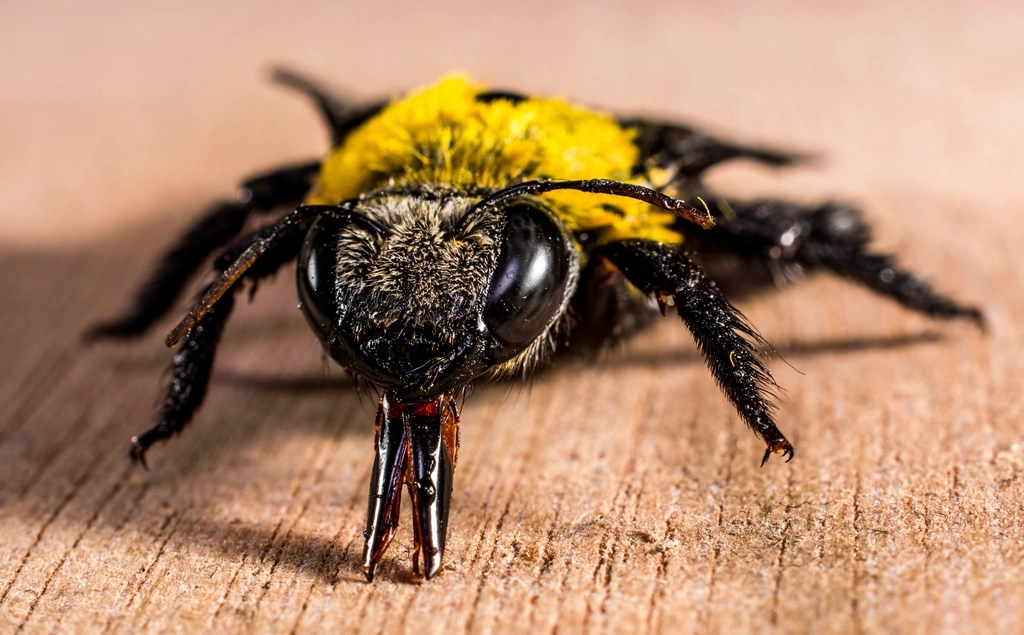 Photo Credit: Rawpixel
In the vibrant world of nature, few creatures are as captivating as the honeybee, scientifically known as Apis mellifera. Picture a sunlit meadow, where colorful flowers bloom in abundance, their petals swaying gently in the breeze. Amidst this floral paradise, honeybees flit from blossom to blossom, their fuzzy bodies dusted with golden pollen. With their striking black and yellow stripes, these small yet industrious insects are not just a delightful sight; they play a crucial role in our ecosystem as pollinators, helping plants reproduce and ensuring the growth of fruits and vegetables that we rely on.
Honeybees are fascinating not only for their beauty but also for their complex social structures and behaviors. Living in colonies that can number in the thousands, they work together in a remarkable display of teamwork. Each bee has a specific role, from the queen, who lays eggs, to the worker bees that gather nectar and pollen. Scientists and nature enthusiasts alike are drawn to their intricate communication methods, including the famous “waggle dance,” which helps bees share information about the best foraging spots. As we explore the world of honeybees, we will uncover their vital contributions to our environment, the challenges they face, and the ways we can help protect these essential pollinators.
Bees hold a special place in the tree of life, showcasing a remarkable blend of traits that set them apart in the animal kingdom. Classified under the Kingdom Animalia, they belong to the Phylum Arthropoda, which includes all arthropods like insects, spiders, and crustaceans. Within this vast group, bees are part of the Class Insecta, the largest class of animals on Earth. Their order, Hymenoptera, is known for its members with two pairs of wings and complex social structures, including ants and wasps. What makes bees particularly fascinating is their role in pollination, a critical process for the reproduction of many plants, which in turn supports entire ecosystems.
| Taxonomic Rank | Scientific Name | Meaning & Significance |
|---|---|---|
| Kingdom | Animalia | The name means “animals” in Latin, highlighting the diverse group of multicellular organisms that are primarily heterotrophic, meaning they consume organic material for energy. |
| Phylum | Arthropoda | This term comes from Greek, meaning “jointed feet,” which refers to the segmented bodies and jointed limbs of these invertebrates, including bees. |
| Class | Insecta | Derived from the Latin word for “cut into sections,” this name reflects the segmented body structure of insects, which includes bees with their three-part bodies: head, thorax, and abdomen. |
| Order | Hymenoptera | This name means “membrane wings” in Greek, referring to the thin, transparent wings of bees and their relatives, which are essential for flight. |
| Family | Andrenidae | Named after the genus Andrena, this family includes solitary bees, emphasizing their unique nesting behaviors compared to social bees. |
| Genus | Apis | This Latin word means “bee,” directly linking the genus to the well-known honeybee and its relatives, which are vital for pollination and honey production. |
Understanding the taxonomic classification of bees reveals much about their evolutionary journey. As members of the Hymenoptera order, bees have developed intricate relationships with flowering plants, evolving alongside them for millions of years. This co-evolution has not only shaped their physical characteristics, such as their specialized mouthparts for nectar extraction, but also their social behaviors, which are crucial for their survival and the health of ecosystems. By studying their classification, we gain insight into the complex web of life that connects all living organisms, highlighting the importance of bees in maintaining biodiversity and ecological balance.
The evolutionary journey of bees stretches back millions of years, weaving through the tapestry of life on Earth. These industrious insects first appeared around 100 million years ago, during the Cretaceous period, a time when flowering plants began to flourish. As these plants evolved, so too did the bees, forming a crucial partnership that would shape ecosystems and agriculture for ages to come.
Bees are believed to have descended from wasp-like ancestors, which were primarily predators. Over time, some of these early wasps transitioned to a more plant-based diet, leading to the development of traits that would define modern bees. This shift marked a significant evolutionary transition, as these insects began to collect pollen and nectar, which are vital for their survival and reproduction. The emergence of social behavior in some bee species, particularly honeybees, further transformed their role in nature, allowing them to thrive in colonies and work together to gather food and care for their young.
The adaptations that bees have developed over time have been crucial for their survival in a changing world. Their ability to pollinate plants not only supports their own life cycle but also sustains countless other species, including humans. The social structures and communication methods they employ allow them to work together effectively, maximizing their chances of finding food and protecting their hives. As they continue to adapt to new challenges, bees remain vital players in the health of our ecosystems, showcasing the power of evolution in action.
Bees are small yet captivating insects that play a vital role in our ecosystem. Their bodies are designed for efficiency and survival, showcasing a blend of strength and delicacy. With a compact form, bees typically have a rounded abdomen, a narrow waist, and two pairs of wings that allow them to zip through the air with agility. Their exoskeleton, a hard outer shell, provides protection while also supporting their intricate internal systems.
| Feature | Description |
|---|---|
| Size | Most bees range from about 0.5 to 2 inches long, depending on the species. |
| Color | Bees often display vibrant colors, including yellow, black, and sometimes even metallic hues. |
| Skin Type | Bees have an exoskeleton, which is a hard outer covering that protects their bodies. |
| Wings | They possess two pairs of wings that are transparent and allow for rapid flight. |
| Distinctive Feature | Some bees can produce honey and beeswax, which are essential for their survival and hive structure. |
These physical features work together harmoniously to enhance the bee’s survival. The exoskeleton shields them from predators and environmental hazards, while their size allows them to navigate through flowers with ease. Their colorful bodies not only attract mates but also serve as a warning to potential threats about their ability to sting. The wings enable them to travel great distances in search of nectar, which is crucial for making honey. This combination of traits makes bees not just fascinating to observe, but essential players in the health of our planet.
Bees thrive in a variety of habitats, but they are most commonly found in areas rich with flowering plants. Imagine a sun-drenched meadow bursting with vibrant colors, where blossoms sway gently in the breeze. This is the perfect playground for bees, as they flit from flower to flower, collecting nectar and pollen. Whether in lush gardens, sprawling fields, or even urban parks, bees are drawn to places where they can find food and shelter.
Bees prefer climates that offer a mix of warmth and moisture, which helps flowers bloom and thrive. They are often found in temperate regions, where the seasons change, providing a continuous supply of food throughout spring and summer. However, they can also adapt to tropical environments, where the climate is warm year-round. These insects need a stable environment with plenty of sunlight, as it helps flowers produce nectar, their primary food source.
To survive in their diverse habitats, bees have developed several clever adaptations. Their fuzzy bodies are perfect for collecting pollen, which sticks to them as they move from flower to flower. This not only helps them gather food but also plays a crucial role in pollination, allowing plants to reproduce. Additionally, bees have excellent navigation skills, using the sun’s position and landmarks to find their way back to their hives. These adaptations ensure that bees can thrive in various environments, making them essential players in the health of ecosystems around the world.
As the sun rises, bees begin their daily dance of activity, buzzing from flower to flower in search of nectar and pollen. Each day is a whirlwind of movement, where these tiny powerhouses work tirelessly to gather food and support their colony. Depending on the species, some bees are solitary, while others thrive in large groups, known as colonies. In a colony, worker bees take on various roles, from foraging to caring for the queen and her brood. This daily routine is not just about survival; it’s a well-orchestrated performance that ensures the health and productivity of the hive.
Social behavior among bees is a captivating aspect of their lives. In a colony, bees communicate through intricate dances and pheromones, which are chemical signals that convey important information. For example, when a worker bee discovers a rich source of nectar, she performs a waggle dance, wiggling her body to indicate the direction and distance of the food source. This teamwork is essential, as it allows the colony to efficiently gather resources and maintain a strong community. The social structure is hierarchical, with a queen at the top, surrounded by workers and drones, each playing a vital role in the colony’s success.
| Behavior Type | Description |
|---|---|
| Foraging | Bees search for nectar and pollen, visiting flowers to collect food for themselves and the colony. |
| Communication | Bees use dances and pheromones to share information about food sources and hive conditions. |
| Colony Structure | A colony consists of a queen, worker bees, and drones, each with specific roles that support the hive. |
| Brood Care | Worker bees tend to the queen’s eggs and larvae, ensuring the next generation is healthy and well-fed. |
The behaviors of bees are not just fascinating; they are crucial for their survival. By working together, bees can efficiently gather food, protect their hive, and raise new generations. This cooperative lifestyle allows them to thrive in various environments, ensuring that they continue to play their vital role in pollination and maintaining the balance of ecosystems. In essence, the daily life of a bee is a testament to the power of teamwork and communication in the natural world.
Bees are omnivores, which means they eat a variety of foods, primarily nectar and pollen from flowers. Their feeding behavior is a fascinating blend of foraging and social interaction. When a bee visits a flower, it uses its long tongue, called a proboscis, to sip up the sweet nectar. At the same time, pollen sticks to its fuzzy body, which the bee later collects and brings back to the hive. This process not only nourishes the bee but also helps in pollination, allowing plants to reproduce.
| Dietary Aspect | Details |
|---|---|
| Diet Type | Omnivore |
| Favorite Foods | Nectar and pollen from flowers |
| Prey Items | None, as bees primarily feed on plant materials |
| Hunting/Foraging Strategies | Foraging from flower to flower, using their proboscis to extract nectar |
This diverse diet is crucial for the ecology of bees and shapes their daily routines. By collecting nectar and pollen, bees not only sustain themselves but also support the growth of plants, which in turn provides food and habitat for countless other species. Their role as pollinators is vital for many crops and wild plants, making their foraging activities essential for maintaining healthy ecosystems. Each day, as they buzz from bloom to bloom, bees contribute to the intricate web of life that surrounds us.
When it comes to reproduction, bees have a captivating mating ritual that takes place during the warmer months. The queen bee, the heart of the hive, takes flight to mate with several male drones in a spectacular aerial dance. This breeding season is crucial, as it ensures the hive has enough new bees to thrive. After mating, the queen returns to the hive, where she will lay thousands of eggs, ensuring the continuation of her colony.
| Reproductive Aspect | Details |
|---|---|
| Gestation Period | Three days |
| Litter Size | Thousands of eggs |
| Age of Maturity | About 3 weeks |
| Name of Young | Larva, grub |
Once the eggs hatch, the young bees, known as larvae or grubs, enter a nurturing phase. Worker bees take on the role of caregivers, feeding the larvae a special diet of royal jelly, pollen, and honey. This diet is essential for their growth and development. Over the course of about three weeks, the larvae grow rapidly, eventually spinning themselves into a cocoon. Inside this protective casing, they undergo metamorphosis, transforming into adult bees ready to join the bustling hive. This incredible journey from egg to adult showcases the intricate social structure and teamwork that defines bee life.
Bees are essential players in the food web, acting as both pollinators and prey. Their role in pollination helps plants reproduce, which in turn supports a wide range of other animals, including humans. However, despite their importance, bees face numerous dangers that threaten their survival and, by extension, the health of ecosystems.
To defend themselves against these threats, bees have developed several survival strategies. For instance, many species can sting, delivering a painful reminder to potential predators. Additionally, bees often work together in colonies, providing safety in numbers. They also communicate through dances to alert fellow bees about dangers, ensuring that their hive remains vigilant. These behaviors highlight the resilience of bees as they navigate a world filled with challenges.
A keystone species is an organism that has a disproportionately large impact on its environment relative to its abundance. In simpler terms, if you remove a keystone species, the entire ecosystem can change dramatically. Bees certainly qualify as a keystone species due to their crucial role in pollination, which supports the growth of many plants and, by extension, the animals that rely on those plants for food and shelter.
Bees are nature’s little gardeners, tirelessly buzzing from flower to flower, transferring pollen as they go. This process of pollination is vital for many plants, including fruits, vegetables, and nuts that humans and other animals depend on for nourishment. For example, without bees, crops like apples, almonds, and blueberries would struggle to reproduce, leading to lower yields and even extinction of some plant species. This would not only affect the plants themselves but also the entire food web that relies on them.
Moreover, bees contribute to the health of ecosystems by promoting biodiversity. When they pollinate a variety of plants, they help maintain a rich tapestry of life. This diversity is essential for resilience against diseases and environmental changes. For instance, a diverse plant community can better withstand droughts or pests, ensuring that food sources remain available for various animals, including humans.
If bees were to disappear, the consequences would be dire. Many plants would fail to reproduce, leading to a significant decline in food availability for both humans and wildlife. This would trigger a cascade of effects throughout the ecosystem, as animals that rely on these plants for food would also face starvation. The loss of bees would not only diminish the beauty of our landscapes but could also threaten the very fabric of life on Earth, highlighting just how vital these tiny insects are to our world.
Bees occupy a crucial ecological niche as pollinators, meaning they help plants reproduce by transferring pollen from one flower to another. This process is essential for the growth of many fruits, vegetables, and nuts that we rely on for food. Without bees, many of these plants would struggle to produce seeds and fruits, leading to a decline in plant diversity and food availability. Their role in the ecosystem is not just about food; it also supports the habitats of countless other species, making bees vital for maintaining healthy ecosystems.
| Ecosystem Service | Impact |
|---|---|
| Pollination | Enables plant reproduction, leading to fruit and seed production. |
| Food Source | Provides nectar and pollen for other animals, including birds and mammals. |
| Biodiversity Support | Helps maintain diverse plant communities, which support various wildlife. |
| Soil Health | Encourages the growth of plants that prevent soil erosion and improve soil quality. |
Bees influence their environment in many specific ways. For instance, when they visit flowers to collect nectar, they inadvertently pick up pollen and carry it to other blooms. This not only helps those plants reproduce but also encourages a variety of flowering species to thrive. In agricultural settings, bees are responsible for pollinating crops like apples, almonds, and blueberries, which are essential for both human diets and local economies. Their activity can even enhance the growth of wildflowers, creating vibrant landscapes that support other wildlife, from butterflies to small mammals.
The broader ecological importance of bees cannot be overstated. As keystone species, their presence is vital for the health of ecosystems. If bee populations decline, the ripple effects can be devastating, leading to reduced plant diversity and the collapse of food webs. This interconnectedness highlights the need to protect these industrious insects and their habitats. By ensuring that bees thrive, we not only support their survival but also the myriad of life forms that depend on the rich tapestry of plant life they help sustain.
In the intricate web of life, symbiosis plays a vital role, connecting different species in various ways. Symbiosis refers to the close and often long-term interactions between two different biological species. These relationships can be mutualistic, where both species benefit; parasitic, where one benefits at the expense of the other; or commensal, where one benefits while the other is neither helped nor harmed. Bees, with their essential role in pollination, engage in fascinating partnerships that highlight the interconnectedness of nature.
| Species/Type | Relationship Type | Description |
|---|---|---|
| Flowers | Mutualistic | Bees collect nectar and pollen from flowers, aiding in their reproduction by transferring pollen between blooms. |
| Bees and certain fungi (like yeast) | Mutualistic | Bees use yeast to ferment nectar into honey, while the yeast benefits from the sugars in the nectar. |
| Bees and mites (like Varroa destructor) | Parasitic | These mites attach to bees, feeding on their bodily fluids, which can weaken or even kill the bees. |
| Bees and birds (like honeyguides) | Commensal | Honeyguides lead bees to wild honey, benefiting from the bees’ work while the bees are unaffected. |
These relationships have evolved over millions of years, shaped by the needs and adaptations of each species involved. Mutualistic partnerships, like those between bees and flowers, are particularly important as they enhance the survival of both parties. Flowers provide bees with food, while bees ensure the plants can reproduce. On the other hand, parasitic relationships, such as those with mites, can pose significant threats to bee populations. Understanding these connections helps us appreciate the delicate balance of ecosystems and the importance of protecting these remarkable insects and their partners.
Bees are not just buzzing around; they are fascinating creatures with a wealth of surprising traits that make them essential to our world. Here are some intriguing facts that showcase their remarkable abilities and behaviors.
Bees have been intertwined with human history for thousands of years, serving as symbols of hard work and community. Ancient civilizations revered these tiny pollinators, often associating them with deities and fertility. Honey, produced by bees, was not only a sweet treat but also a valuable resource for medicinal purposes and rituals. From the hieroglyphs of ancient Egypt to the honeycombs found in archaeological sites, bees have left an indelible mark on our cultural heritage. Their presence in folklore and art highlights the deep respect humans have had for these industrious insects throughout the ages.
Today, our relationship with bees is more complex than ever. As we face environmental challenges, bees are at the forefront of conservation efforts. Their role as pollinators is crucial for the growth of many crops, making them essential for food production. However, this relationship is not without conflict. Urbanization and pesticide use threaten bee populations, leading to a decline that could impact global food security. In response, many communities are embracing beekeeping, fostering a deeper understanding of these creatures and their needs. This domestication allows us to work alongside bees, ensuring their survival while benefiting from their honey and pollination services.
Looking ahead, the future of our relationship with bees hinges on our ability to adapt and protect these vital insects. As we learn more about their needs and the challenges they face, we can create environments that support their populations. By fostering a culture of respect and stewardship, we can ensure that bees continue to thrive alongside us. Together, we can build a world where humans and bees coexist harmoniously, celebrating the essential role they play in our ecosystems and our lives.
Bees are currently facing a complex conservation landscape. While they are not officially listed as endangered, their populations are under significant pressure from various environmental factors. Estimates suggest there are at least two trillion bees worldwide, but this number is not as reassuring as it seems. Many species are experiencing declines, and the overall health of bee populations is a growing concern for scientists and conservationists alike.
| Conservation Factor | Status/Details |
|---|---|
| IUCN Status | Not Listed |
| Estimated Population Size | At least two trillion |
| Population Trend | Declining in many species |
The main threats to bees are numerous and interconnected. Habitat loss due to urbanization and agricultural expansion reduces the availability of flowers and nesting sites. Pesticides, particularly neonicotinoids, are harmful chemicals that can disrupt bees’ nervous systems, making it difficult for them to forage and navigate. Climate change also plays a role, altering flowering times and disrupting the delicate balance between bees and the plants they pollinate. These challenges create a perfect storm that threatens the survival of many bee species.
Despite these challenges, there are concerted conservation efforts underway to protect bees and their habitats. Initiatives include creating pollinator-friendly gardens, reducing pesticide use, and restoring natural habitats. Educating communities about the importance of bees is also crucial, as it fosters a sense of stewardship for these vital pollinators. With continued efforts and awareness, there is hope for improving the outlook for bees, ensuring they can thrive in our ecosystems for generations to come.
| Question | Answer |
|---|---|
| Where do bees live? | Bees can be found in almost any habitat where there are flowering plants. This includes gardens, forests, meadows, and even urban areas. They build their nests in hollow trees, underground, or in man-made structures. |
| What do bees eat? | Bees are omnivores, which means they eat a variety of foods. Their diet mainly consists of nectar from flowers, which they turn into honey, and pollen, which provides protein. Some bees also consume honey and other sugary substances. |
| How do bees behave in a colony? | Bees are social insects that live in colonies, often consisting of thousands of individuals. Each bee has a specific role, such as foraging for food, caring for the young, or protecting the hive. They communicate through dances and pheromones, which are chemical signals. |
| How do bees reproduce? | In a bee colony, reproduction is primarily the job of the queen bee. She lays eggs that develop into new bees. Worker bees care for the larvae, feeding them and ensuring they grow into healthy adults. |
| What threats do bees face? | Bees are facing several threats, including habitat loss, pesticides, and climate change. These factors can reduce their food sources and nesting sites. Additionally, diseases and parasites, like the Varroa mite, can harm bee populations. |
| What is a unique characteristic of bees? | One of the most distinctive features of some bees is their ability to make honey and beeswax. Honey is a sweet substance that serves as food for the colony, while beeswax is used to build honeycombs for storing honey and raising young bees. |
| Why are bees important to the environment? | Bees play a crucial role in pollination, which is the process of transferring pollen from one flower to another. This helps plants reproduce and is essential for producing many fruits, vegetables, and nuts. Without bees, our food supply would be greatly affected. |