Taxonomy & Classification
- Kingdom
- Animalia
- Phylum
- Arthropoda
- Class
- Insecta
- Order
- Hymenoptera
- Family
- Crabronidae
- Genus
- Philanthus

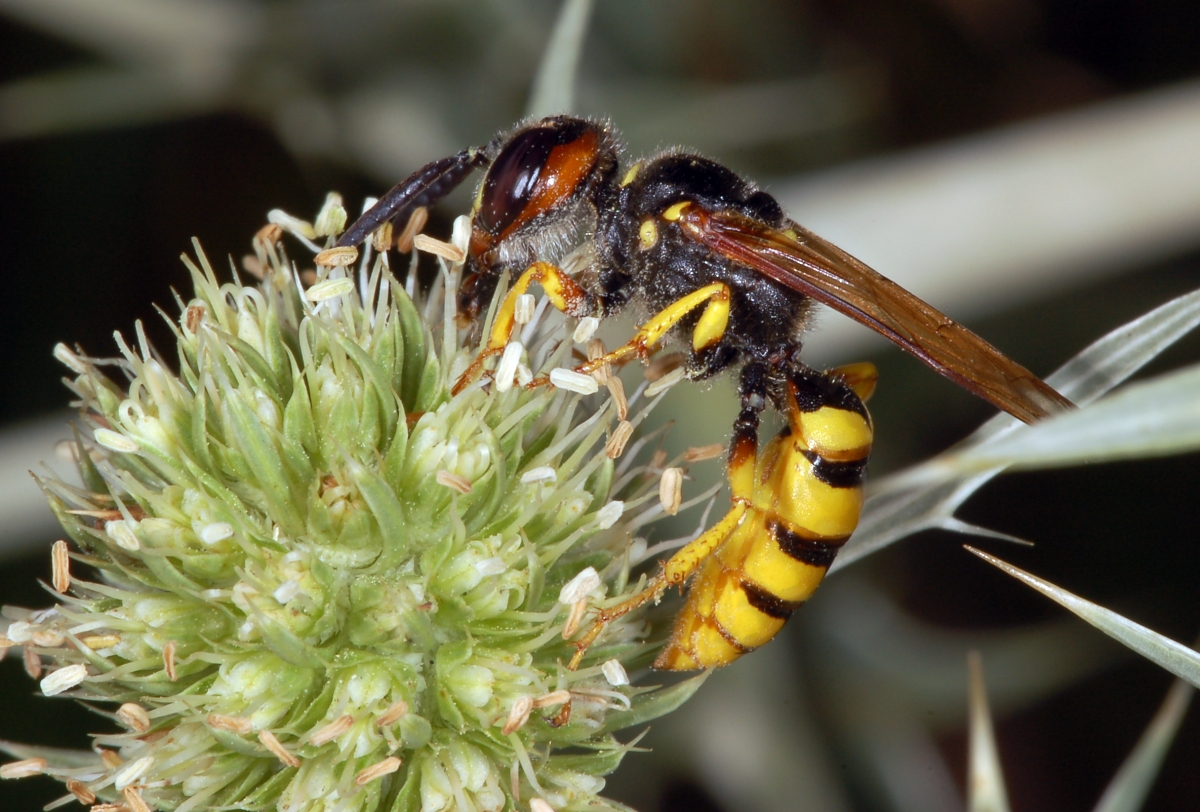 Photo Credit: Dysmachus / Wikimedia Commons
In the sun-drenched meadows and sandy patches of the world, the Beewolf wasp, scientifically known as Philanthus, emerges as a striking figure of nature’s design. With its sleek, streamlined body and powerful wings, this wasp is not just a beautiful sight; it is a masterful hunter. The Beewolf is particularly known for its unique hunting strategy, targeting bees with precision and skill. This fascinating behavior has captured the attention of scientists and nature enthusiasts alike, as it reveals the intricate balance of predator and prey in the ecosystem.
Imagine a warm afternoon where the air buzzes with life. The Beewolf wasp flits from flower to flower, its keen eyes scanning for unsuspecting bees. Once it spots its target, it springs into action, showcasing agility and speed that leave onlookers in awe. But the Beewolf’s story doesn’t end with the hunt. After capturing a bee, it meticulously digs a burrow in the ground, creating a safe haven for its future offspring. This remarkable insect not only plays a vital role in controlling bee populations but also contributes to the delicate web of life that sustains its habitat. As we delve deeper into the world of the Beewolf wasp, we uncover the secrets of its life cycle, behavior, and the essential role it plays in our environment.
The Beewolf wasp, belonging to the genus Philanthus, occupies a distinctive niche in the animal kingdom. This remarkable insect is part of the order Hymenoptera, which includes bees, ants, and other wasps. What sets the Beewolf apart is its unique hunting behavior; it preys on bees, particularly honeybees, and uses them to feed its larvae. This predatory lifestyle not only showcases the Beewolf’s adaptability but also highlights its role in the ecosystem as both a hunter and a provider for its young.
| Taxonomic Rank | Scientific Name | Meaning & Significance |
|---|---|---|
| Kingdom | Animalia | This name signifies that Beewolf wasps are part of the vast group of multicellular organisms that are primarily heterotrophic, meaning they consume other organisms for energy. |
| Phylum | Arthropoda | Arthropoda means “jointed legs,” which refers to the Beewolf’s segmented body and jointed appendages, a characteristic feature of this diverse phylum. |
| Class | Insecta | Insecta, or insects, highlights the Beewolf’s six-legged structure and its exoskeleton, which is a hard outer covering that protects its body. |
| Order | Hymenoptera | This order name translates to “membranous wings,” describing the Beewolf’s delicate wings that are essential for flight and hunting. |
| Family | Crabronidae | The name Crabronidae is derived from the Latin word for “wasp,” indicating the wasp’s predatory nature and its close relationship to other wasps. |
| Genus | Philanthus | Philanthus means “loving bees,” a nod to the Beewolf’s behavior of hunting bees, which it uses to nourish its offspring. |
The classification of the Beewolf wasp reveals much about its evolutionary journey. As a member of the Hymenoptera order, it shares a common ancestry with bees and ants, showcasing the intricate relationships within the insect world. Its predatory habits and specialized adaptations for hunting bees illustrate how evolution shapes behaviors and physical traits to thrive in specific environments. Understanding where the Beewolf sits in the tree of life not only enriches our knowledge of biodiversity but also emphasizes the interconnectedness of all living things.
The evolutionary journey of the Beewolf wasp, a member of the genus Philanthus, stretches back millions of years, intertwining with the history of its prey, bees. This fascinating wasp has adapted over time to become a skilled hunter, showcasing a remarkable evolutionary path that highlights the intricate relationships within ecosystems. As the world changed, so did the Beewolf, evolving traits that allowed it to thrive in various environments.
Ancestral forms of the Beewolf were likely similar to other early wasps, which were primarily solitary and focused on hunting or scavenging. Over time, these ancestors developed specialized hunting techniques, particularly targeting bees. This shift marked a significant evolutionary transition, as the Beewolf began to rely on its prey not just for food but also for nurturing its young. The ability to paralyze bees with a venomous sting allowed the Beewolf to transport them back to its burrow, where the female would lay her eggs inside the still-living bee, providing a fresh food source for the hatching larvae.
These evolutionary adaptations have been crucial for the survival of the Beewolf wasp. By honing its hunting skills and developing specialized traits, it has carved out a niche that allows it to thrive in diverse environments. The ability to paralyze its prey and create secure nests ensures that the next generation has the best chance of survival, showcasing the intricate dance of evolution that continues to shape life on Earth.
The Beewolf wasp presents an intriguing sight, embodying a blend of elegance and ferocity. With a streamlined body that showcases both strength and agility, this wasp is designed for a life of hunting and survival. Its exoskeleton glistens in the sunlight, revealing a hard, protective outer layer that shields it from predators and environmental challenges. The Beewolf’s form is not just for show; it is a finely tuned instrument of nature, built for efficiency in its role as a predator.
| Feature | Description |
|---|---|
| Size | Typically ranges from 1 to 2 inches in length |
| Color | Often features a striking combination of black and yellow or brown |
| Skin Type | Exoskeleton, providing protection and support |
| Most Distinctive Feature | Venomous stinger, used for subduing prey |
The Beewolf wasp’s features work in harmony to enhance its survival. The exoskeleton not only protects it from harm but also aids in its hunting prowess, allowing it to navigate through various environments with ease. Its venomous stinger is a critical tool, enabling the wasp to immobilize bees, its primary prey, ensuring a steady food supply. The striking coloration serves a dual purpose: it can either warn potential predators of its venomous capabilities or help it blend into its surroundings, depending on the situation. Together, these characteristics make the Beewolf wasp a masterful hunter in the insect world.
The Beewolf wasp thrives in a variety of environments, often found in sandy or loose soil where it can dig its burrows. Picture a sun-drenched landscape, perhaps a meadow or a garden, where the ground is soft and easy to excavate. These wasps prefer areas that are not too densely vegetated, allowing them to hunt for their favorite prey—bees—without too much obstruction. The warm sun and open spaces create the perfect backdrop for their energetic lifestyle.
To flourish, Beewolf wasps require specific climate conditions. They are most active in warm, sunny environments, as these conditions help them regulate their body temperature. The ideal habitat is often dry, with minimal rainfall, allowing the soil to remain loose and easy to dig. This climate not only supports their hunting activities but also aids in the development of their young, as the warmth helps to incubate the eggs laid in their underground nests.
Adaptation is key to the Beewolf wasp’s success in these habitats. Their ability to dig deep burrows protects them from predators and harsh weather. Additionally, their hunting strategy, which involves capturing bees and storing them in their nests, ensures a steady food supply for their larvae. This clever behavior showcases their remarkable ability to thrive in diverse environments, turning challenges into opportunities for survival.
The Beewolf wasp leads a life filled with action and purpose, primarily during the daylight hours. As a diurnal insect, it rises with the sun, ready to embark on its daily adventures. The day often begins with a search for food, specifically bees, which are the Beewolf’s favorite meal. With keen eyesight and impressive agility, these wasps hunt for their prey, darting through the air with precision. After capturing a bee, the Beewolf will carry it back to its burrow, where it prepares for the next stage of its life cycle.
While Beewolf wasps are mostly solitary creatures, they do come together during mating season. This brief social interaction is crucial for reproduction, as males and females seek each other out to ensure the continuation of their species. Outside of this time, Beewolves prefer to live alone, each focusing on their own hunting and nesting activities. Their solitary nature allows them to be efficient hunters, as they do not have to compete for resources with others. However, they communicate through pheromones, which are chemical signals that can convey information about territory and readiness to mate.
| Behavior Type | Description |
|---|---|
| Hunting | Beewolf wasps actively hunt bees during the day, using their sharp eyesight and speed to capture prey. |
| Nesting | They dig burrows in sandy soil to store their captured bees and lay eggs, ensuring a safe environment for their young. |
| Social Interaction | Outside of mating season, Beewolves are solitary, but they communicate through pheromones to signal territory and mating readiness. |
The behaviors of the Beewolf wasp are finely tuned to ensure their survival in a competitive world. By hunting efficiently and nesting strategically, they maximize their chances of raising healthy offspring. Their solitary lifestyle, combined with brief social interactions during mating, allows them to thrive in their environments. Each day is a testament to their adaptability and instinct, showcasing the intricate balance of life in the natural world.
The Beewolf wasp has a diet that is both specialized and strategic, primarily focusing on bees. As an omnivore, it doesn’t just eat one type of food; it has a taste for various nutrients. However, its favorite meal is undoubtedly the bees it hunts. The Beewolf employs a clever hunting strategy, capturing bees and then paralyzing them with its sting. This allows the wasp to transport its prey back to its burrow, where it lays eggs on the immobilized bee. The larvae then have a fresh meal waiting for them when they hatch, ensuring their survival.
| Dietary Aspect | Details |
|---|---|
| Diet Type | Omnivore |
| Favorite Foods | Bees |
| Prey Items | Primarily bees |
| Hunting/Foraging Strategies | Paralyzes bees with a sting and transports them to burrows |
This specialized diet not only shapes the Beewolf’s daily routine but also plays a crucial role in its ecological niche. By preying on bees, the Beewolf helps regulate bee populations, which can be beneficial for the environment. The wasp’s hunting behavior and the way it raises its young are finely tuned to ensure that both the adult and larval stages thrive. This intricate relationship with its prey highlights the delicate balance of nature, where each species plays a part in the larger ecosystem.
The Beewolf wasp’s mating behavior is as intriguing as its hunting skills. During the breeding season, which typically occurs in late spring to early summer, males engage in a competitive dance to attract females. They perform aerial displays, showcasing their strength and agility. Once a female selects a mate, the pair will mate, and the female will begin her remarkable journey of reproduction.
| Reproductive Aspect | Details |
|---|---|
| Gestation Period | Approximately 2 to 3 weeks |
| Litter Size | 1 to 5 larvae per burrow |
| Age of Maturity | About 4 to 6 weeks |
| Name of Young | Larvae |
After mating, the female Beewolf wasp sets out to hunt for bees, which she paralyzes and stores in her burrow. She lays her eggs on these captured bees, providing a fresh food source for her young once they hatch. The larvae develop inside the burrow, feeding on the bees until they are ready to pupate. This nurturing behavior ensures that the young have everything they need to grow strong and healthy, eventually emerging as adult wasps ready to continue the cycle of life.
The Beewolf wasp plays a vital role in its ecosystem, primarily as a predator of bees. This unique position places it in the middle of the food web, where it helps control bee populations while also serving as prey for various other animals. The balance it maintains is crucial for the health of its environment, but this also means it faces numerous dangers that threaten its survival.
To defend itself against these threats, the Beewolf wasp has developed several clever survival strategies. It relies on its speed and agility to evade predators, darting away quickly when danger approaches. Additionally, its burrowing behavior provides a safe haven, allowing it to hide from larger animals. The Beewolf also employs a unique method of hunting, paralyzing its bee prey to store them in its burrow for later use, ensuring a steady food supply while minimizing the risk of being hunted itself. Through these adaptations, the Beewolf wasp continues to thrive in a world filled with challenges.
A keystone species is an organism that has a disproportionately large impact on its environment relative to its abundance. This means that if it were removed, the ecosystem would change dramatically. The Beewolf wasp, a member of the genus Philanthus, qualifies as a keystone species due to its role as a predator of bees. By controlling bee populations, it helps maintain the balance of the ecosystem in which it resides.
The Beewolf wasp’s ecological impact is significant. As a predator, it primarily hunts bees, which are crucial pollinators in many ecosystems. By preying on certain bee species, the Beewolf helps regulate their populations, preventing any one species from becoming too dominant. This balance is essential for the health of flowering plants, which rely on bees for pollination. Without the Beewolf, some bee populations could explode, leading to over-pollination of certain plants and under-pollination of others, disrupting the delicate balance of plant life.
Additionally, the Beewolf wasp contributes to soil health. By digging burrows in sandy or loose soil, it aerates the ground, allowing water and nutrients to penetrate more easily. This activity benefits other organisms in the soil, including plants and microorganisms, which thrive in well-aerated environments. The Beewolf’s hunting behavior also provides a food source for other predators, creating a ripple effect throughout the food web.
If the Beewolf wasp were to disappear, the consequences could be severe. Without this predator, bee populations might surge, leading to an imbalance in the ecosystem. Some plants could become over-pollinated, while others might suffer from a lack of pollination. This disruption could lead to a decline in plant diversity, affecting the entire food web. Other species that rely on both bees and plants for survival would also be impacted, potentially leading to a cascade of extinctions. The loss of the Beewolf would not only alter the landscape but could also diminish the richness of life in its habitat.
The Beewolf wasp, a fascinating member of the insect world, plays a crucial role in shaping its ecosystem. As a predator of bees, it occupies a unique ecological niche that helps maintain the balance of various populations. By hunting bees, the Beewolf not only regulates their numbers but also influences the dynamics of the plant life that depends on these pollinators. This intricate relationship highlights the interconnectedness of species within an ecosystem, where each organism contributes to the overall health and stability of its environment.
| Ecosystem Service | Impact |
|---|---|
| Population Control | Regulates bee populations, preventing overpopulation and promoting biodiversity. |
| Soil Aeration | Burrowing behavior helps aerate the soil, improving its quality and promoting plant growth. |
| Food Source | Serves as prey for various birds and other predators, contributing to the food web. |
| Pollination Support | Indirectly supports plant reproduction by maintaining healthy bee populations. |
The Beewolf wasp’s influence can be seen in various ways. For instance, by preying on bees, it helps prevent any single species from dominating the landscape. This balance is essential for the survival of many plants that rely on a diverse range of pollinators. Additionally, as the Beewolf digs its burrows in sandy soil, it aerates the ground, allowing water and nutrients to reach plant roots more effectively. This process not only benefits the plants but also creates a healthier habitat for other organisms living in the soil.
The broader ecological importance of the Beewolf wasp cannot be overstated. As a keystone species, its presence is vital for maintaining the health of its ecosystem. If the Beewolf were to disappear, the consequences could ripple through the food web, leading to an imbalance that affects many other species. By understanding the role of the Beewolf wasp, we gain insight into the delicate interplay of life that sustains our natural world, reminding us of the importance of every creature, no matter how small.
In the intricate web of life, symbiosis refers to the close interactions between different species, which can take on various forms. These relationships can be mutualistic, where both species benefit; parasitic, where one benefits at the expense of the other; or commensal, where one benefits while the other is neither helped nor harmed. The Beewolf wasp, a fascinating insect known for its hunting prowess, engages in several of these ecological relationships, showcasing the complexity of nature’s partnerships.
| Species/Type | Relationship Type | Description |
|---|---|---|
| Bees | Parasitic | The Beewolf wasp preys on bees, using them as a food source for its larvae. This relationship is harmful to the bees, as they are killed to provide nourishment for the next generation of wasps. |
| Soil Microorganisms | Mutualistic | As the Beewolf digs its burrows in the soil, it aerates the ground, which benefits soil microorganisms. In return, these microorganisms help decompose organic matter, enriching the soil. |
| Plants | Commensal | The burrows created by Beewolf wasps can provide shelter for various small organisms, such as insects or even small mammals, without affecting the plants around them. |
The evolution of these relationships highlights the dynamic nature of ecosystems. Over time, the Beewolf wasp has adapted to its role as a predator, honing its skills to effectively hunt bees. Meanwhile, the mutualistic interactions with soil microorganisms demonstrate how species can work together to enhance their environments. These partnerships not only benefit the Beewolf wasp but also contribute to the overall health of the ecosystem, illustrating the interconnectedness of life on our planet.
The Beewolf wasp is a captivating insect that showcases the wonders of nature through its unique behaviors and adaptations. Here are some surprising facts that will intrigue both seasoned nature enthusiasts and curious young explorers alike.
The Beewolf wasp, a member of the genus Philanthus, has a long history of interaction with humans that dates back to ancient times. In various cultures, these wasps have been both feared and admired. Their impressive hunting skills, particularly their ability to capture bees, have sparked curiosity and even inspired folklore. In some regions, people have marveled at the wasp’s tenacity and strength, viewing it as a symbol of resilience. This cultural significance highlights how humans have historically perceived the Beewolf wasp not just as a pest, but as a fascinating part of the natural world.
Today, the relationship between Beewolf wasps and humans is complex and multifaceted. While these wasps play a crucial role in controlling bee populations, their predatory nature can lead to conflict, especially among beekeepers. As pollinators, bees are vital for agriculture and ecosystems, so the presence of Beewolf wasps can be seen as a threat to honey production. However, there is also a growing interest in conservation efforts that recognize the importance of all species, including wasps, in maintaining ecological balance. This shift in perspective encourages a more harmonious coexistence, where humans can appreciate the role of Beewolf wasps in nature while managing their impact on bee populations.
As we look to the future, the relationship between Beewolf wasps and humanity may evolve further. With increasing awareness of biodiversity and the interconnectedness of all species, there is potential for greater appreciation of these wasps. By fostering understanding and respect for their ecological roles, we can work towards solutions that benefit both Beewolf wasps and the bees they prey upon. This balance is essential for sustaining healthy ecosystems, ensuring that both humans and wildlife can thrive together in harmony.
The Beewolf wasp, a fascinating member of the insect world, currently holds a conservation status of “Not Listed” according to the International Union for Conservation of Nature (IUCN). This means that there is not enough information to determine if the species is at risk of extinction. While specific population estimates are not readily available, the Beewolf wasp appears to be relatively stable in its habitats. However, ongoing changes in the environment could impact its future.
| Conservation Factor | Status/Details |
|---|---|
| IUCN Status | Not Listed |
| Population Estimates | Not available |
| Trend Direction | Stable, but uncertain |
Despite its current stability, the Beewolf wasp faces several threats that could jeopardize its future. Habitat loss is a significant concern, as urban development and agricultural expansion can destroy the sandy soils where these wasps build their burrows. Additionally, pesticide use can harm not only the Beewolf wasp but also its primary prey, bees, disrupting the delicate balance of the ecosystem. Climate change also poses a risk, as shifting weather patterns can affect the availability of food and suitable nesting sites.
Conservation efforts for the Beewolf wasp are not yet widespread, primarily due to its “Not Listed” status. However, raising awareness about the importance of all insects, including wasps, is crucial. Protecting natural habitats and promoting sustainable agricultural practices can help ensure that the Beewolf and its ecosystem remain healthy. As we learn more about this intriguing wasp, there is hope that conservation initiatives will emerge, allowing us to safeguard its future and the vital roles it plays in nature.
| Question | Answer |
|---|---|
| What is the habitat of the Beewolf wasp? | The Beewolf wasp typically makes its home in sandy or loose soil. They dig burrows where they can safely raise their young and store food. |
| What do Beewolf wasps eat? | Beewolf wasps are omnivores, meaning they eat a variety of foods. Their diet mainly consists of nectar from flowers and other insects, particularly bees, which they capture to feed their larvae. |
| How do Beewolf wasps behave? | Beewolf wasps are known for their solitary behavior. Unlike many other wasps, they do not live in colonies but instead prefer to hunt and nest alone. |
| How do Beewolf wasps reproduce? | During mating season, female Beewolf wasps search for suitable burrowing sites. After mating, they lay their eggs in the burrows along with paralyzed prey, providing food for the hatching larvae. |
| What threats do Beewolf wasps face? | Beewolf wasps are not currently listed as endangered, but they can face threats from habitat destruction and pesticide use. These factors can reduce their food sources and nesting sites. |
| What is a distinctive feature of the Beewolf wasp? | One of the most distinctive features of the Beewolf wasp is its venomous stinger. This stinger is used to paralyze prey, making it easier for the wasp to transport them back to their burrow. |
| Are Beewolf wasps aggressive towards humans? | Generally, Beewolf wasps are not aggressive towards humans unless they feel threatened. They prefer to focus on hunting and nesting rather than interacting with people. |