Taxonomy & Classification
- Kingdom
- Animalia
- Phylum
- Chordata
- Class
- Mammalia
- Order
- Carnivora
- Family
- Mustelidae
- Genus
- Mustela
- Species
- Mustela nigripes

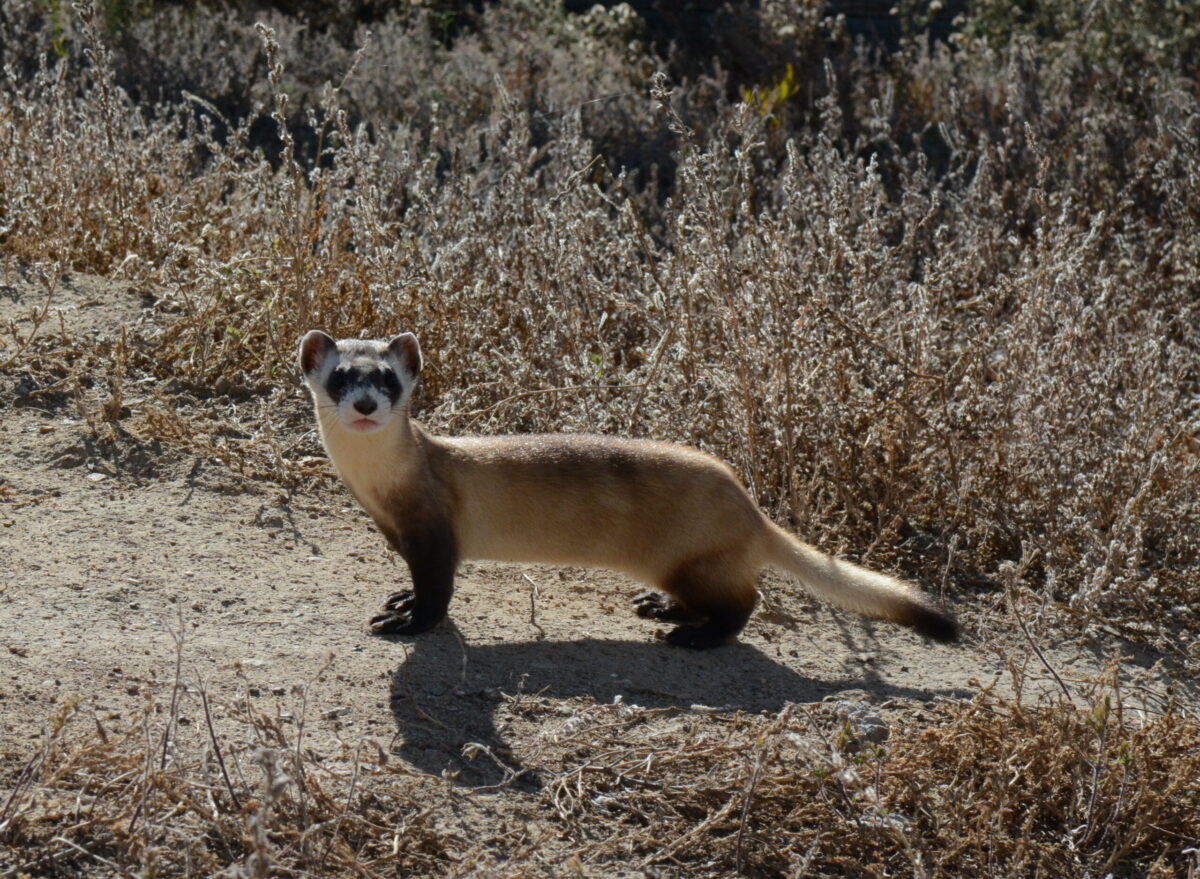 "Black-footed Ferrets in Preconditioning Pens (15519959116) (cropped)" by USFWS Mountain-Prairie is licensed under CC BY 2.0
In the sun-drenched grasslands of North America, the black-footed ferret, or Mustela nigripes, emerges as a small yet captivating marvel of nature. With its sleek, slender body and striking black markings on its feet and face, this agile creature is a master of stealth and playfulness. Imagine a world where the tall grasses sway gently in the breeze, and the soft sounds of prairie dogs echo in the distance. Here, the black-footed ferret thrives, darting through its burrowed home, a true embodiment of the wild spirit of the plains.
What makes the black-footed ferret particularly intriguing to scientists and nature lovers alike is its role as a keystone species. This means that its presence is crucial for maintaining the balance of its ecosystem. As a dedicated carnivore, it primarily feasts on prairie dogs, which are not only its favorite snack but also a vital part of the grassland community. The ferret’s playful antics and clever hunting techniques reveal a world of adaptation and survival, showcasing the delicate interconnections that sustain life in these open landscapes. As we delve deeper into the life of the black-footed ferret, we uncover the challenges it faces and the efforts being made to protect this remarkable animal from the brink of extinction.
The black-footed ferret, a small yet captivating member of the animal kingdom, holds a special place in the tree of life. Scientifically classified within the family Mustelidae, which includes weasels, otters, and badgers, this agile mammal is the only ferret native to North America. Its striking black feet and mask-like markings set it apart, making it not just visually distinctive but also a vital player in its ecosystem. As a carnivore, it primarily preys on prairie dogs, showcasing its role as a predator in the grasslands of the Great Plains. This unique lifestyle and appearance contribute to its status as an important species for conservation efforts.
| Taxonomic Rank | Scientific Name | Meaning & Significance |
|---|---|---|
| Kingdom | Animalia | This term means “animals” in Latin, highlighting that black-footed ferrets are multicellular organisms that consume organic material for energy. |
| Phylum | Chordata | Derived from the Greek word “chordē,” meaning “string,” this classification indicates that black-footed ferrets have a backbone, a key feature of vertebrates. |
| Class | Mammalia | This name comes from “mamma,” Latin for “breast,” referring to the fact that female mammals nurse their young with milk. |
| Order | Carnivora | From the Latin “carnivorus,” meaning “meat-eating,” this order includes animals that primarily consume other animals, showcasing the ferret’s predatory nature. |
| Family | Mustelidae | This name is derived from “mustela,” the Latin word for weasel, reflecting the ferret’s close relationship with other small, carnivorous mammals. |
| Genus | Mustela | Also from the Latin for weasel, this genus includes various species known for their slender bodies and sharp hunting skills, traits that the black-footed ferret embodies. |
Understanding the black-footed ferret’s classification reveals much about its evolutionary journey. As a member of the Mustelidae family, it shares a common ancestor with other mustelids, which adapted to various environments and hunting strategies over millions of years. This lineage highlights the ferret’s specialized adaptations for life in the grasslands, where it has evolved to be a skilled hunter of prairie dogs. The black-footed ferret’s unique traits and behaviors not only define its role in the ecosystem but also underscore the importance of preserving its habitat for future generations.
The evolutionary journey of the black-footed ferret stretches back millions of years, weaving through the tapestry of life on Earth. This small mammal, belonging to the Mustelidae family, has a lineage that can be traced to ancient ancestors that roamed the plains and forests long before modern humans walked the planet. As the environment changed, so did the ferret, adapting to survive in a world filled with challenges and opportunities.
The black-footed ferret’s ancestors were part of a group known as Mustela, which includes various weasels and their relatives. These early mustelids were agile and skilled hunters, traits that would be crucial for survival. Over time, they evolved to become more specialized, developing a keen ability to hunt small mammals, particularly prairie dogs, which became their primary food source. This shift in diet led to changes in their physical structure, including a more elongated body and sharp, retractable claws, perfect for digging and catching prey.
The adaptations of the black-footed ferret have been vital for its survival in the wild. Their specialized diet and physical traits allow them to thrive in the grasslands of North America, where they face threats from habitat loss and predators. By evolving to be agile hunters with excellent camouflage, these ferrets have carved out a niche in their ecosystem, showcasing the incredible power of evolution in shaping life on Earth.
The black-footed ferret is a small but striking mammal that captures the imagination with its sleek body and playful demeanor. With a length of about 24 inches, including its long, bushy tail, this agile creature is built for life on the prairie. Its slender form allows it to dart through tunnels and grasslands with ease, while its short legs are perfectly adapted for quick movements. The most eye-catching feature is its black mask, which gives it a charmingly mischievous appearance, making it look like a little bandit of the plains.
| Feature | Description |
|---|---|
| Weight | 1.5-2.5 lbs |
| Skin Type | Hair |
| Most Distinctive Feature | Black mask |
These physical traits work together to enhance the black-footed ferret’s survival in its natural habitat. The lightweight body allows for swift movements, essential for escaping predators and catching prey. Its soft, dense fur provides insulation against the elements, while the black mask not only adds to its charm but also helps with camouflage in the shadows of its burrow. Together, these features make the black-footed ferret a master of its environment, perfectly suited for life in the open grasslands and the intricate tunnels below.
The black-footed ferret thrives in the vast grasslands and open plains of North America. Picture rolling hills dotted with tufts of tall grass swaying gently in the breeze. These habitats are often home to prairie dog colonies, which are essential for the ferret’s survival. The ferret’s agile body allows it to navigate through the tall grasses and burrows, making it a skilled hunter in this expansive landscape.
This small mammal prefers areas with a dry climate, where the sun shines brightly and the temperatures can vary widely between day and night. The grasslands provide not only shelter but also a rich source of food. The black-footed ferret relies heavily on prairie dogs, which dig extensive burrow systems. These burrows offer both a hunting ground and a safe haven from predators and harsh weather.
Adaptations have finely tuned the black-footed ferret to its environment. Its slender body allows it to slip easily into the narrow tunnels of prairie dogs, while its keen sense of smell helps it locate prey. The ferret’s fur, with its distinctive black markings, provides camouflage among the grasses, making it less visible to both predators and prey. These traits are vital for survival in the open plains, where every advantage counts.
The black-footed ferret leads a life filled with activity, primarily during the twilight hours of dawn and dusk. These small mammals are crepuscular, meaning they are most active during the early morning and late evening. As they emerge from their burrows, they embark on a quest for food, hunting small mammals like prairie dogs, which make up a significant part of their diet. Their agile bodies allow them to dart through the grasslands, using their keen sense of smell to locate prey. Throughout the day, they retreat to their burrows to rest and avoid the heat, ensuring they conserve energy for their nightly adventures.
While black-footed ferrets are primarily solitary creatures, they do exhibit interesting social behaviors during mating season. Males will often roam in search of females, and during this time, they communicate through a series of vocalizations, including chirps and growls. These sounds help them establish territory and attract potential mates. Outside of the breeding season, however, they tend to keep to themselves, marking their territory with scent to ward off others. This solitary lifestyle allows them to be stealthy hunters, but it also means they must rely on their own skills for survival.
| Behavior Type | Description |
|---|---|
| Activity Patterns | Black-footed ferrets are crepuscular, meaning they are most active during dawn and dusk, hunting for food and exploring their territory. |
| Social Structure | Primarily solitary, they come together during mating season, where males seek out females and establish temporary bonds. |
| Communication Methods | They use vocalizations like chirps and growls to communicate, especially during mating season, and mark their territory with scent. |
The behaviors of black-footed ferrets are finely tuned to their environment, ensuring their survival in the wild. By being active during the cooler parts of the day, they avoid the heat and can hunt more effectively. Their solitary nature allows them to be stealthy and resourceful, relying on their instincts to navigate the challenges of their habitat. Through their unique social interactions during mating season, they ensure the continuation of their species, demonstrating that even solitary animals have their moments of connection.
The black-footed ferret is a dedicated carnivore, meaning it primarily eats meat. Its diet mainly consists of small mammals, particularly prairie dogs, which are its favorite food. These agile hunters are well-adapted to catching their prey, using their sharp senses and quick reflexes to navigate through the grasslands. Black-footed ferrets often hunt in the burrows of prairie dogs, where they can find not only their main meal but also other small animals like ground squirrels and even birds and insects.
| Dietary Aspect | Details |
|---|---|
| Diet Type | Carnivore |
| Favorite Foods | Prairie dogs |
| Prey Items | Ground squirrels, birds, insects |
| Hunting/Foraging Strategies | Hunts in prairie dog burrows, uses stealth and speed |
This specialized diet plays a crucial role in the black-footed ferret’s ecology and daily routine. By primarily preying on prairie dogs, these ferrets help control the population of this key species, which in turn affects the entire grassland ecosystem. Their hunting habits also mean they are constantly on the move, exploring their surroundings during the early morning and late evening. This active lifestyle not only keeps them fit but also ensures they find enough food to thrive in their natural habitat.
The black-footed ferret’s mating season typically occurs in late winter to early spring, around February to March. During this time, males engage in spirited courtship displays, which can include playful wrestling and vocalizations. These behaviors help establish bonds and attract potential mates. Once a pair has formed, they will mate multiple times over a few days, ensuring the best chance of successful reproduction.
| Reproductive Aspect | Details |
|---|---|
| Gestation Period | 41-43 days |
| Litter Size | Typically 1-5 kits |
| Age of Maturity | 1 year |
| Name of Young | Kit |
After the kits are born, the mother takes on the primary role of caring for them. She will nurse them for about eight weeks, during which they grow rapidly. The kits are born blind and helpless, relying entirely on their mother for warmth and food. As they mature, they begin to explore their surroundings and learn essential survival skills. By the time they reach one year of age, they are ready to venture out on their own, continuing the cycle of life in the vast grasslands they call home.
The black-footed ferret occupies a crucial role in the food web of North America’s grasslands. As a carnivore, it primarily preys on small mammals, especially prairie dogs. This relationship is vital, as it helps control the population of these burrowing creatures. However, the black-footed ferret is also preyed upon by larger animals, making it an important link in the balance of its ecosystem.
To survive against these threats, black-footed ferrets have developed several clever strategies. They are agile and quick, allowing them to dart into their burrows when danger approaches. Their dark coloration helps them blend into the shadows of their environment, making it harder for predators to spot them. Additionally, they are known to be quite social, often living in small family groups, which can provide safety in numbers. These behaviors, combined with their keen senses, help them navigate the challenges of their wild home.
A keystone species is an organism that plays a critical role in maintaining the structure of its ecosystem. Its presence or absence can significantly impact the environment and the other species that inhabit it. The black-footed ferret qualifies as a keystone species due to its unique relationship with prairie dogs, which are its primary prey. By controlling prairie dog populations, black-footed ferrets help maintain the balance of their grassland habitats.
The ecological impact of the black-footed ferret is profound. As a carnivore, it preys mainly on prairie dogs, which are social animals that create extensive burrow systems. These burrows provide shelter for many other species, including birds, reptiles, and insects. When black-footed ferrets hunt prairie dogs, they help regulate their numbers, preventing overpopulation that could lead to habitat degradation. This balance is essential for the health of the grassland ecosystem.
Moreover, the presence of black-footed ferrets encourages biodiversity. By keeping prairie dog colonies in check, they allow other plant and animal species to thrive. For instance, the burrowing activities of prairie dogs aerate the soil, promoting plant growth. This, in turn, supports a variety of herbivores and the predators that rely on them. The black-footed ferret, therefore, indirectly supports a web of life that extends far beyond its immediate diet.
If the black-footed ferret were to disappear, the consequences could be dire. Without this small mammal to keep prairie dog populations in check, these rodents could overpopulate, leading to the destruction of grasslands. This would not only affect the plants and animals that depend on these habitats but could also disrupt the entire ecosystem. The loss of the black-footed ferret would ripple through the food web, highlighting just how interconnected life is in the natural world.
The black-footed ferret occupies a vital ecological niche in the grasslands and plains of North America. As a keystone species, it plays a crucial role in maintaining the balance of its ecosystem. By preying primarily on prairie dogs, these small mammals help regulate the population of their prey, which in turn influences the health of the grassland habitat. This dynamic relationship showcases how the black-footed ferret is not just a solitary hunter but a key player in the intricate web of life that sustains its environment.
| Ecosystem Service | Impact |
|---|---|
| Population Control | Regulates prairie dog numbers, preventing overpopulation. |
| Soil Aeration | Prairie dog burrows, maintained by ferret predation, aerate the soil. |
| Habitat Creation | Burrowing activities of prairie dogs create habitats for other species. |
| Food Source | Serves as prey for larger predators, contributing to the food web. |
The influence of the black-footed ferret extends beyond its immediate hunting habits. By keeping prairie dog populations in check, these ferrets help maintain the health of the grasslands. When prairie dog colonies thrive, they create extensive burrow systems that aerate the soil, allowing water and nutrients to penetrate deeper. This process benefits a variety of plants and other animals, fostering a rich and diverse ecosystem. Additionally, the presence of black-footed ferrets attracts larger predators, such as hawks and coyotes, which rely on them as a food source, further intertwining the web of life in these habitats.
The broader ecological importance of the black-footed ferret cannot be overstated. As a keystone species, its presence supports a multitude of other organisms, from the plants that grow in the grasslands to the predators that hunt in the area. The health of the entire ecosystem hinges on the balance maintained by these small yet mighty mammals. Protecting the black-footed ferret is not just about saving one species; it is about preserving the intricate connections that sustain life in the grasslands of North America. By understanding and valuing their role, we can work towards a healthier planet for all living beings.
In the intricate web of life, symbiosis refers to the close relationships between different species, where they interact in various ways. These ecological partnerships can be mutualistic, where both species benefit, parasitic, where one benefits at the other’s expense, or commensal, where one benefits while the other is neither helped nor harmed. The black-footed ferret, a small carnivore native to North America’s grasslands, engages in several fascinating relationships with other species that highlight the complexity of nature.
| Species/Type | Relationship Type | Description |
|---|---|---|
| Prairie Dogs | Mutualistic | Black-footed ferrets rely on prairie dogs for food, while prairie dog colonies benefit from the ferrets’ hunting, which helps control their population and reduces disease spread. |
| Ticks | Parasitic | Ticks can latch onto black-footed ferrets, feeding on their blood and potentially transmitting diseases, which can harm the ferrets’ health. |
| Burrowing Owls | Commensal | Burrowing owls often share the burrows made by prairie dogs, which black-footed ferrets also use. The owls benefit from the shelter, while the ferrets are unaffected. |
These relationships have evolved over time, shaped by the needs and behaviors of the species involved. The black-footed ferret’s dependence on prairie dogs for food illustrates a mutualistic bond that supports both species’ survival. Meanwhile, the presence of parasites like ticks highlights the challenges ferrets face in their environment. Commensal relationships, such as those with burrowing owls, show how different species can coexist and utilize the same resources without direct competition. Understanding these connections helps us appreciate the delicate balance of ecosystems and the importance of each species in maintaining that balance.
The black-footed ferret is a small but mighty mammal that captures the hearts of nature enthusiasts with its playful antics and intriguing behaviors. Here are some surprising facts that showcase just how special this little creature truly is.
The black-footed ferret has a rich history intertwined with human culture, particularly among Native American tribes. These small mammals were often seen as symbols of agility and cunning, embodying the spirit of the wild. Historically, they roamed the vast grasslands of North America, where they were sometimes hunted for their fur. As settlers expanded westward, the ferret’s habitat began to shrink, leading to a decline in their population. This shift not only affected the ferrets but also altered the balance of the ecosystems they inhabited, showcasing the deep connection between this species and the land.
Today, the relationship between black-footed ferrets and humans has evolved into one of conservation and collaboration. Once on the brink of extinction, these ferrets have become a symbol of successful wildlife recovery efforts. Conservationists have worked tirelessly to restore their populations through breeding programs and habitat protection. However, conflicts still arise, particularly with farmers and ranchers who view prairie dogs— the ferrets’ primary food source— as pests. This ongoing struggle highlights the complexities of coexisting with wildlife in a rapidly changing world.
Looking ahead, the future of the black-footed ferret and humanity’s relationship holds promise, but it requires ongoing commitment and understanding. As we learn more about these fascinating creatures and their role in the ecosystem, we can foster a deeper appreciation for their existence. By working together—conservationists, farmers, and communities—we can ensure that the black-footed ferret not only survives but thrives in the wild, enriching our natural world for generations to come.
The black-footed ferret is currently classified as endangered, a status that reflects the challenges this small mammal faces in the wild. With an estimated population of only 206 mature individuals, the black-footed ferret has seen significant declines over the years. Once thought to be extinct, dedicated conservation efforts have helped to stabilize and even increase their numbers slightly, but they remain critically low. The future of this species hangs in the balance, making ongoing conservation work essential.
| Conservation Factor | Status/Details |
|---|---|
| IUCN Status | Endangered |
| Estimated Population Size | 206 mature individuals |
| Population Trend | Increasing, but still critically low |
The main threats to the black-footed ferret stem from habitat loss and the decline of their primary food source, prairie dogs. As grasslands are converted for agriculture and urban development, the ferrets lose their homes and hunting grounds. Additionally, diseases such as sylvatic plague can decimate prairie dog colonies, further reducing the food supply for these agile hunters. Without sufficient prey and suitable habitats, the survival of the black-footed ferret becomes increasingly precarious.
Conservation efforts for the black-footed ferret have been both innovative and inspiring. Programs focused on breeding in captivity have successfully reintroduced ferrets into their natural habitats. These initiatives aim to create self-sustaining populations in the wild. Organizations and wildlife agencies are also working to protect prairie dog colonies and restore grassland ecosystems. While challenges remain, the commitment to preserving the black-footed ferret offers hope for a brighter future for this remarkable species.
| Question | Answer |
|---|---|
| What is the habitat of the Black-Footed Ferret? | Black-Footed Ferrets primarily live in grasslands and plains. These open areas provide them with the space they need to hunt and burrow, as they often make their homes in the abandoned burrows of prairie dogs. |
| What do Black-Footed Ferrets eat? | As carnivores, Black-Footed Ferrets mainly eat prairie dogs, which are their favorite food. They are skilled hunters and can also consume other small mammals and birds when necessary. |
| How do Black-Footed Ferrets behave? | These ferrets are known for their playful and curious nature. They are mostly nocturnal, meaning they are active at night, and they often engage in social behaviors, especially when living in groups. |
| How do Black-Footed Ferrets reproduce? | Black-Footed Ferrets typically mate in late winter or early spring. After a gestation period of about 42 days, the female gives birth to a litter of 2 to 5 kits, which are born blind and helpless. |
| What threats do Black-Footed Ferrets face? | These ferrets are classified as endangered, primarily due to habitat loss and a decline in prairie dog populations. Diseases like sylvatic plague also pose significant threats to their survival. |
| What is a distinctive feature of the Black-Footed Ferret? | The most distinctive feature of the Black-Footed Ferret is its black mask, which stands out against its light-colored fur. This mask helps to give them a unique appearance and may also play a role in communication with other ferrets. |
| Are Black-Footed Ferrets social animals? | Yes, Black-Footed Ferrets can be quite social, especially when they live in colonies. They often engage in playful interactions and grooming behaviors, which help strengthen their social bonds. |