Taxonomy & Classification
- Kingdom
- Animalia
- Phylum
- Arthropoda
- Class
- Insecta
- Order
- Lepidoptera
- Family
- Papilionidae
- Genus
- Papilio
- Species
- Papilio polyxenes

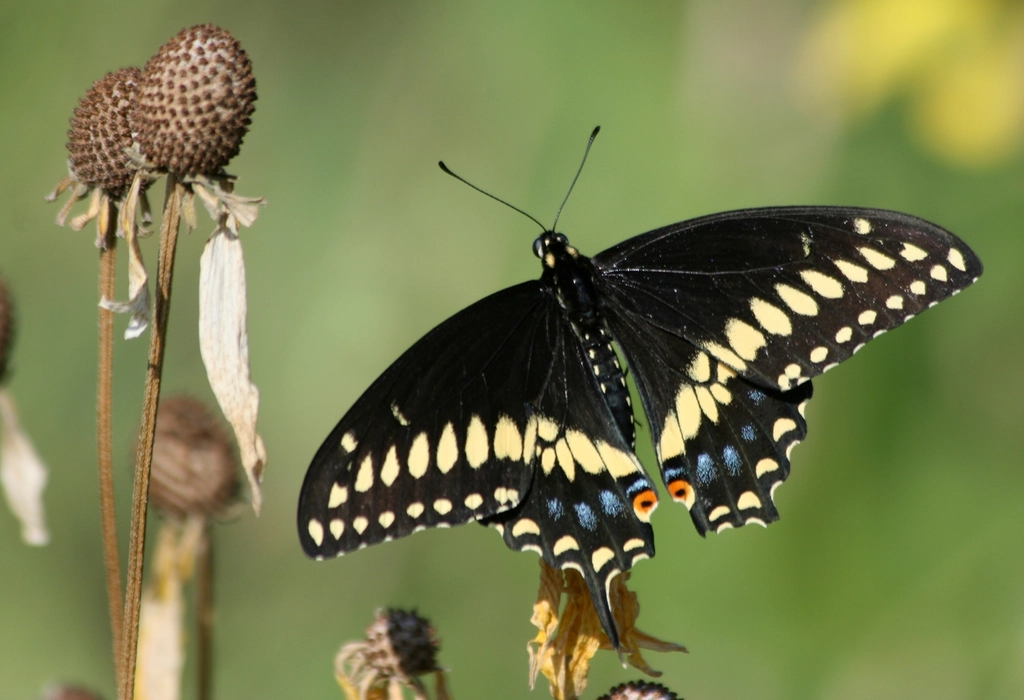 Photo Credit: Rawpixel
In the sunlit meadows and lush gardens of North America, the Black Swallowtail, or Papilio polytes, flutters gracefully, captivating all who catch a glimpse of its vibrant beauty. With a wingspan that can stretch up to four inches, this butterfly showcases a stunning palette of deep black adorned with striking blue and yellow splashes along its edges. As it dances from flower to flower, sipping nectar with its long, straw-like proboscis, it plays a vital role in the ecosystem, pollinating plants and contributing to the rich tapestry of life around it.
What makes the Black Swallowtail particularly intriguing to scientists and nature enthusiasts alike is not just its dazzling appearance but also its fascinating behaviors and life cycle. These butterflies are diurnal, meaning they are most active during the day, engaging in a lively display of courtship and feeding. Their ability to mimic other species for protection adds another layer of intrigue, showcasing the wonders of evolution and adaptation. As we explore the world of the Black Swallowtail, we will uncover the secrets of its habitat, diet, and the essential role it plays in maintaining the balance of nature. Join us on this adventure to learn more about this enchanting insect and the vibrant ecosystems it inhabits.
The Black Swallowtail, scientifically known as Papilio polytes, occupies a special place in the tree of life. This butterfly belongs to the Kingdom Animalia, which includes all animals, and is part of the Phylum Arthropoda, known for its jointed limbs and exoskeletons. Within the Class Insecta, it showcases the incredible diversity of insects, and as a member of the Order Lepidoptera, it shares its family with moths and other butterflies. The Black Swallowtail is particularly notable for its striking black and yellow coloration, which not only makes it a visual delight but also serves as a warning to predators about its potential toxicity. This combination of beauty and survival strategy makes it a captivating subject for both scientists and nature enthusiasts alike.
| Taxonomic Rank | Scientific Name | Meaning & Significance |
|---|---|---|
| Kingdom | Animalia | The name means “animals” in Latin, highlighting the diverse group of multicellular organisms that share certain characteristics, such as the ability to move and consume organic material. |
| Phylum | Arthropoda | This term translates to “jointed feet,” referring to the segmented bodies and jointed appendages that are hallmarks of this vast group, which includes insects, arachnids, and crustaceans. |
| Class | Insecta | Derived from the Latin word for “cut,” this class encompasses insects, which are characterized by their three-part bodies, compound eyes, and typically two pairs of wings. |
| Order | Lepidoptera | This name means “scale wings,” which describes the tiny, overlapping scales that cover the wings of butterflies and moths, giving them their vibrant colors and patterns. |
| Family | Papilionidae | Commonly known as swallowtail butterflies, this family name comes from the Latin word “papilio,” meaning “butterfly,” and refers to the distinctive tail-like extensions on their hindwings. |
| Genus | Papilio | This genus name also means “butterfly” in Latin, emphasizing the beauty and grace of these insects, which are often admired for their colorful appearances. |
| Species | polytes | The species name comes from the Greek word “polytēs,” meaning “many,” possibly referring to the butterfly’s varied forms and mimicry of other species for protection. |
The classification of the Black Swallowtail reveals much about its evolutionary journey. As a member of the Papilionidae family, it shares a lineage with other swallowtail butterflies, which have adapted over millions of years to thrive in diverse environments. The unique features of the Black Swallowtail, such as its mimicry and striking coloration, are not just for show; they are evolutionary adaptations that enhance its survival. By understanding its taxonomic position, we gain insight into the intricate web of life and the fascinating ways in which species evolve and interact with their surroundings.
The evolutionary journey of the Black Swallowtail butterfly, known scientifically as Papilio polytes, stretches back millions of years. This vibrant insect is part of the Papilionidae family, which has been fluttering through the skies since the late Cretaceous period, around 100 million years ago. As the Earth transformed, so did the ancestors of the Black Swallowtail, adapting to changing climates and environments, leading to the beautiful forms we see today.
The ancestors of the Black Swallowtail were likely similar to other early butterflies, with simple wing structures and muted colors. Over time, as flowering plants evolved, these butterflies began to diversify. One major transition was the development of more intricate wing patterns and colors, which not only made them more visually appealing but also helped them blend into their surroundings. This camouflage was crucial for avoiding predators. Another significant change was the adaptation to different host plants. The Black Swallowtail larvae, or caterpillars, learned to feed on a variety of plants, including those in the carrot family, which provided them with the nutrients needed to grow and thrive.
The adaptations of the Black Swallowtail have been vital for its survival in a world filled with challenges. The colorful wing patterns not only attract mates but also deter predators, while the ability to feed on various plants ensures that these butterflies can find food in different habitats. Their remarkable life cycle allows them to escape dangers at each stage, making them resilient and successful in their quest to thrive in nature. Through millions of years of evolution, the Black Swallowtail has become a symbol of beauty and adaptability in the butterfly world.
The Black Swallowtail butterfly is a dazzling spectacle of nature, captivating anyone lucky enough to spot it. With a wingspan that can reach up to 4 inches, this butterfly boasts a graceful, elongated body that flutters elegantly through gardens and meadows. Its striking black wings are adorned with vibrant blue and yellow splashes, particularly at the edges, creating a stunning contrast that catches the eye. The delicate structure of its exoskeleton, which is the hard outer covering that protects its body, adds to its allure, making it not just beautiful but also resilient.
| Feature | Description |
|---|---|
| Weight | Less than 1 ounce |
| Skin Type | Exoskeleton |
| Wingspan | Up to 4 inches |
| Coloration | Black wings with blue and yellow splashes |
| Distinctive Features | Colorful edges on wings and tail |
The combination of its lightweight body and vibrant colors serves multiple purposes in the wild. The Black Swallowtail’s exoskeleton not only provides protection from predators but also helps it maintain its shape during flight. The bright blue and yellow markings are not just for show; they can confuse potential threats and signal to other butterflies about its identity. Together, these features create a butterfly that is not only a joy to behold but also a master of survival in its natural habitat.
The Black Swallowtail butterfly thrives in a vibrant tapestry of open fields and gardens, often near shimmering water sources. Picture a sun-drenched meadow, where wildflowers sway gently in the breeze, and the air is filled with the sweet scent of blooming plants. These butterflies flit gracefully among the blossoms, their striking colors contrasting beautifully with the greens and yellows of their surroundings. The presence of water, whether a pond, stream, or even a garden fountain, adds to the allure of their habitat, providing essential moisture and attracting a variety of nectar-rich flowers.
To flourish, the Black Swallowtail requires a climate that balances warmth and moisture. They are often found in areas where the sun shines brightly, as these butterflies are cold-blooded, meaning they rely on external heat sources to warm their bodies. The ideal environment includes rich, fertile soil that supports a diverse array of plants, particularly those in the carrot family, which serve as food for their caterpillars. These butterflies thrive in regions with mild to warm temperatures, making them a common sight during the spring and summer months.
Adaptation is key to the Black Swallowtail’s success in its chosen habitats. Their striking coloration not only dazzles the eye but also serves as a clever form of camouflage against predators. The dark wings help them blend into the shadows of their surroundings, while the bright spots mimic the appearance of other, more dangerous species. Additionally, their life cycle is finely tuned to the availability of food sources, allowing them to emerge when flowers are in bloom and caterpillar host plants are plentiful. This remarkable ability to adapt ensures that the Black Swallowtail continues to thrive in its sunny, floral homes.
The Black Swallowtail butterfly, known for its striking beauty, leads a lively and active life during the day. As a diurnal creature, it flits about in the warm sunlight, engaging in various activities that include feeding, mating, and basking. In the early hours, you might find it sipping nectar from colorful flowers, using its long, straw-like tongue called a proboscis to reach deep into blossoms. This feeding ritual not only provides essential energy but also plays a crucial role in pollination, helping plants reproduce. As the sun rises higher, these butterflies often take breaks to warm their wings, ensuring they are ready for flight.
While the Black Swallowtail is primarily solitary, it does exhibit interesting social behaviors during mating season. Males often engage in aerial displays to attract females, showcasing their vibrant colors and graceful flight patterns. These displays can be quite a sight, as they flutter and dance in the air, vying for the attention of potential mates. Once a female chooses a mate, they may briefly share a space, but they quickly return to their independent ways. This solitary lifestyle allows them to focus on their individual survival, seeking out the best feeding spots and avoiding predators.
| Behavior Type | Description |
|---|---|
| Feeding | Black Swallowtails use their proboscis to sip nectar from flowers, providing energy and aiding in pollination. |
| Mating Displays | Males perform aerial dances to attract females, showcasing their vibrant colors and agility. |
| Solitary Lifestyle | These butterflies prefer to live alone, focusing on individual survival and resource gathering. |
| Communication | Visual signals during mating and territorial displays are key methods of communication among Black Swallowtails. |
The behaviors of the Black Swallowtail are finely tuned to ensure their survival in a world filled with challenges. By feeding on nectar, they not only sustain themselves but also contribute to the health of their ecosystems. Their solitary nature allows them to be agile and adaptable, seeking out the best resources while minimizing competition. The vibrant displays during mating season help ensure the continuation of their species, as they attract mates and pass on their genes. In this delicate balance of independence and reproduction, the Black Swallowtail thrives, embodying the beauty and complexity of nature.
The Black Swallowtail butterfly primarily feeds on nectar from a variety of flowering plants. As a herbivore, it has a specialized mouthpart called a proboscis, which is like a long straw. This allows the butterfly to sip sweet nectar from flowers, providing the energy it needs to flutter gracefully through its habitat. The Black Swallowtail is particularly attracted to flowers that are rich in nectar, making it an important pollinator in its ecosystem.
| Dietary Aspect | Details |
|---|---|
| Diet Type | Herbivore |
| Favorite Foods | Nectar from various flowering plants |
| Prey Items | None, as it does not consume other animals |
| Hunting/Foraging Strategies | Uses proboscis to sip nectar from flowers |
This diet not only fuels the Black Swallowtail’s daily activities but also plays a crucial role in the health of its environment. By feeding on nectar, these butterflies help pollinate plants, which is essential for plant reproduction. This interaction supports the growth of flowers and other plants, creating a vibrant ecosystem that benefits many other species. As the Black Swallowtail flits from flower to flower, it weaves a vital thread in the tapestry of life, showcasing the interconnectedness of nature.
The Black Swallowtail butterfly has a captivating mating ritual that takes place during the warm months of spring and summer. Males often engage in a dance-like display to attract females, fluttering around and showcasing their vibrant colors. Once a female is impressed, she will mate with the male, and together they will begin the process of reproduction. This enchanting courtship leads to the laying of eggs, which is a crucial step in the life cycle of these beautiful insects.
| Reproductive Aspect | Details |
|---|---|
| Gestation Period | Eggs hatch in 3-5 days |
| Average Litter Size | 300 |
| Age of Sexual Maturity | 1 week |
| Name of Young | Larvae, pupa |
After the eggs hatch, the young Black Swallowtails emerge as tiny larvae, commonly known as caterpillars. These caterpillars are voracious eaters, munching on the leaves of host plants to fuel their growth. As they grow, they will shed their skin several times, a process called molting. Eventually, they will form a protective casing around themselves, known as a pupa or chrysalis, where they undergo a magical transformation into adult butterflies. This remarkable journey from egg to caterpillar to pupa and finally to a stunning butterfly showcases the incredible life cycle of the Black Swallowtail, highlighting the wonders of nature’s design.
The Black Swallowtail butterfly plays a vital role in its ecosystem, serving as both a pollinator and a food source for various predators. Positioned in the food web, it helps maintain the balance of plant life by transferring pollen from flower to flower while also being a tasty treat for animals higher up the chain. This delicate balance is crucial for the health of its environment, but it also means that the Black Swallowtail faces numerous dangers.
To survive these threats, the Black Swallowtail employs several clever strategies. One of its most fascinating defenses is mimicry; it can resemble other toxic butterflies, tricking predators into thinking it is poisonous. Additionally, when threatened, it may release a foul-smelling chemical to deter attackers. The caterpillars also blend in with their surroundings, using camouflage to avoid detection. These survival tactics, combined with their ability to adapt to changing environments, help ensure that the Black Swallowtail continues to flutter through our gardens and fields.
A keystone species is an organism that has a disproportionately large impact on its environment relative to its abundance. These species play a crucial role in maintaining the structure of an ecological community. The Black Swallowtail butterfly, or Papilio polytes, is not typically classified as a keystone species. However, it does contribute significantly to its ecosystem, particularly through its roles as a pollinator and a food source.
The Black Swallowtail butterfly primarily feeds on nectar from various flowering plants, which makes it an important pollinator. As it flits from flower to flower, it helps plants reproduce by transferring pollen, allowing them to produce seeds and fruit. This process is vital for the health of many ecosystems, as it supports plant diversity and the food web that relies on these plants. Without the Black Swallowtail and other pollinators, many plants would struggle to reproduce, leading to a decline in plant populations.
Additionally, the Black Swallowtail serves as a food source for various predators, including birds and other insects. By being part of the food web, it helps sustain the populations of these predators. The presence of the Black Swallowtail can indicate a healthy environment, as it thrives in areas with abundant flowering plants and clean water sources. Its life cycle, which includes both larval and adult stages, also supports different ecological niches, as the caterpillars feed on specific host plants, further linking it to the ecosystem.
If the Black Swallowtail were to disappear, the effects could ripple through its ecosystem. Many plants that rely on it for pollination might see a decline in their populations, which could lead to reduced food sources for other animals. Predators that depend on the Black Swallowtail for sustenance would also face challenges, potentially leading to a decline in their numbers. Overall, the absence of this butterfly could disrupt the delicate balance of its habitat, highlighting the interconnectedness of all species within an ecosystem.
The Black Swallowtail butterfly, known scientifically as Papilio polytes, plays a vital role in its ecosystem, acting as both a pollinator and a food source. This beautiful insect thrives in open fields and gardens, often near water sources, where it flits from flower to flower. By feeding on nectar, it helps plants reproduce, ensuring that flowers continue to bloom and provide food for other creatures. This interaction highlights the butterfly’s ecological niche, where it supports the growth of diverse plant life while also benefiting from their resources.
| Ecosystem Service | Impact |
|---|---|
| Pollination | Helps plants reproduce by transferring pollen, leading to fruit and seed production. |
| Food Source | Serves as a meal for birds and other predators, contributing to the food web. |
| Habitat Indicator | Indicates the health of ecosystems, as they thrive in well-maintained environments. |
| Soil Health | Encourages plant diversity, which can improve soil quality and stability. |
The influence of the Black Swallowtail extends beyond its immediate actions. For instance, as it pollinates various flowering plants, it supports the growth of fruits and vegetables that many animals, including humans, rely on for food. Additionally, the presence of these butterflies can signal a healthy ecosystem, as they thrive in areas rich in biodiversity. Their life cycle, which includes stages as eggs, caterpillars, and adults, also provides food for other species, creating a dynamic web of life that connects many organisms.
In a broader sense, the Black Swallowtail’s role in the ecosystem underscores the importance of biodiversity. By supporting plant life and serving as a food source, this butterfly helps maintain the balance of its environment. Protecting such species is crucial, as their decline can lead to a ripple effect, impacting not just the plants they pollinate but also the animals that depend on those plants. In this way, the Black Swallowtail is not just a beautiful sight in gardens and fields; it is a key player in the intricate dance of life that sustains our natural world.
In the intricate web of life, symbiosis refers to the close interactions between different species, which can take on various forms. These relationships can be mutualistic, where both species benefit, parasitic, where one benefits at the other’s expense, or commensal, where one benefits while the other is neither helped nor harmed. The Black Swallowtail butterfly, known scientifically as Papilio polytes, engages in several fascinating partnerships that illustrate the complexity of ecological relationships.
| Species/Type | Relationship Type | Description |
|---|---|---|
| Milkweed plants | Mutualistic | The Black Swallowtail caterpillars feed on milkweed, which provides them with nutrients. In return, the caterpillars help the plants by spreading their seeds as they move around. |
| Predatory wasps | Parasitic | Some wasps lay their eggs on or inside Black Swallowtail caterpillars. The wasp larvae consume the caterpillar, benefiting the wasp while harming the butterfly. |
| Flowering plants | Mutualistic | As the Black Swallowtail feeds on nectar from various flowers, it inadvertently pollinates them, helping the plants reproduce while enjoying a meal. |
These relationships have evolved over time, shaped by the needs and behaviors of the species involved. The mutualistic interactions, like those with milkweed and flowering plants, highlight how cooperation can enhance survival for both parties. Meanwhile, the parasitic relationship with wasps demonstrates the darker side of nature, where one species can exploit another. Understanding these connections not only enriches our appreciation of the Black Swallowtail but also emphasizes the delicate balance of ecosystems, where every species plays a role in the grand tapestry of life.
The Black Swallowtail butterfly is not just a pretty face; it has some surprising traits that make it truly special in the world of insects. Here are a few intriguing facts that will spark your curiosity about this vibrant butterfly.
The Black Swallowtail butterfly, known scientifically as Papilio polytes, has danced through human history, captivating our imaginations and inspiring countless stories. In many cultures, this butterfly symbolizes transformation and beauty, often associated with the arrival of spring. Ancient civilizations revered butterflies as messengers of the gods, while in modern times, they have become popular subjects in art and literature. Their striking colors and graceful flight have made them a symbol of nature’s delicate balance, reminding us of the beauty that exists in our world.
Today, our interactions with the Black Swallowtail are multifaceted, reflecting both admiration and concern. As urbanization expands, these butterflies face habitat loss, which threatens their populations. However, conservation efforts are underway to protect their natural environments. Gardeners and nature enthusiasts often plant butterfly-friendly flowers to attract these beautiful insects, creating sanctuaries in their backyards. In some regions, educational programs aim to raise awareness about the importance of butterflies in pollination and ecosystem health, fostering a deeper connection between people and these enchanting creatures.
As we look to the future, the relationship between humans and the Black Swallowtail butterfly holds promise. By fostering a greater understanding of their ecological importance, we can work together to create environments where these butterflies can thrive. With continued efforts in conservation and education, we can ensure that future generations will not only witness the beauty of the Black Swallowtail but also appreciate its vital role in our ecosystems. Together, we can nurture a world where both humans and butterflies flourish side by side.
The Black Swallowtail butterfly, or Papilio polytes, currently enjoys a stable conservation status. While specific population estimates are undetermined, this species is not considered endangered or threatened. Observations suggest that its populations are relatively stable across its range, which includes various habitats in North America. This butterfly’s adaptability to different environments contributes to its resilience, allowing it to thrive in gardens, fields, and near water sources.
| Conservation Factor | Status/Details |
|---|---|
| IUCN Status | Least Concern |
| Population Estimates | Undetermined |
| Trend Direction | Stable |
Despite its current stable status, the Black Swallowtail faces several threats that could impact its future. Habitat loss is a significant concern, as urban development and agricultural expansion reduce the availability of open fields and gardens where these butterflies thrive. Additionally, pesticide use can harm not only the Black Swallowtail but also the plants it relies on for nectar and as host plants for its larvae. Climate change also poses a risk, as shifting weather patterns can alter the habitats and food sources that these butterflies depend on.
Conservation efforts are underway to ensure the continued survival of the Black Swallowtail. Many organizations are working to protect and restore habitats, promoting the planting of native flowers that provide essential nectar. Educational programs aim to raise awareness about the importance of butterflies in ecosystems and encourage practices that support their populations. With these efforts, the outlook for the Black Swallowtail remains hopeful, as communities come together to safeguard this beautiful butterfly for future generations to enjoy.
| Question | Answer |
|---|---|
| What is the habitat of the Black Swallowtail? | The Black Swallowtail is commonly found in open fields and gardens, especially near water sources. These areas provide the plants they need for food and places to lay their eggs. |
| What do Black Swallowtails eat? | Black Swallowtails are herbivores, meaning they primarily eat plants. Their diet includes a variety of flowers and herbs, particularly those in the carrot family, like parsley and dill. |
| How do Black Swallowtails behave? | These butterflies are known for their graceful flight and vibrant colors. They often bask in the sun and can be seen fluttering around flowers, where they feed on nectar. |
| How do Black Swallowtails reproduce? | Black Swallowtails lay their eggs on specific host plants, which provide food for the caterpillars once they hatch. After a few weeks, the caterpillars pupate and eventually emerge as adult butterflies. |
| What threats do Black Swallowtails face? | Black Swallowtails face threats from habitat loss, pesticides, and predators. Birds and other insects often prey on their eggs and caterpillars, making survival a challenge. |
| What are some interesting characteristics of Black Swallowtails? | One of the most distinctive features of the Black Swallowtail is the beautiful blue and yellow splashes of color on their wings and tail edges. This striking appearance helps them attract mates and can also confuse predators. |
| How long do Black Swallowtails live? | The lifespan of a Black Swallowtail can vary, but adults typically live for about two weeks to a month. However, those that hibernate as pupae can survive through the winter and emerge in spring. |