Taxonomy & Classification
- Kingdom
- Animalia
- Phylum
- Arthropoda
- Class
- Arachnida
- Order
- Araneae
- Family
- Theridiidae
- Genus
- Latrodectus
- Species
- Latrodectus

In the warm embrace of a sunlit garden or the shadowy corners of a rustic shed, the Black Widow Spider, known scientifically as Latrodectus, weaves its intricate web, a masterpiece of silk and strategy. With its glossy black body and the unmistakable red hourglass marking on its abdomen, this spider is both beautiful and formidable. Its striking appearance has captivated the imaginations of scientists and nature enthusiasts alike, sparking curiosity about its behavior, habitat, and role in the ecosystem.
As the sun rises, the Black Widow begins its day with a blend of patience and precision. It inspects its web, a delicate trap designed to ensnare unsuspecting insects. This spider is not just a predator; it plays a vital role in controlling insect populations, helping to maintain the balance of its environment. While many fear the Black Widow due to its venomous bite, there is so much more to discover about this remarkable arachnid. From its complex mating rituals to its fascinating evolutionary history, the world of the Black Widow Spider is a captivating journey into the heart of nature’s wonders.
The Black Widow Spider, known scientifically as Latrodectus, occupies a fascinating niche in the tree of life. This spider belongs to the kingdom Animalia, which includes all animals, and is part of the phylum Arthropoda, the largest group of animals on Earth that features jointed limbs and exoskeletons. What sets the Black Widow apart is its potent venom, which contains neurotoxins that can cause severe reactions in humans. This unique adaptation not only aids in capturing prey but also serves as a defense mechanism against predators. The striking appearance of the female, with her glossy black body and distinctive red hourglass marking, adds to her notoriety and allure.
| Taxonomic Rank | Scientific Name | Meaning & Significance |
|---|---|---|
| Kingdom | Animalia | This name means “animals” in Latin, highlighting the diverse group of multicellular organisms that share certain characteristics, such as the ability to move and respond to their environment. |
| Phylum | Arthropoda | Derived from Greek, meaning “jointed feet,” this name reflects the jointed appendages that are a hallmark of this vast group, which includes insects, arachnids, and crustaceans. |
| Class | Arachnida | This term comes from the Greek word for “spider,” emphasizing the eight-legged nature of this class, which also includes scorpions and ticks. |
| Order | Araneae | Simply meaning “spiders,” this name highlights the unique characteristics of these eight-legged arachnids, including their ability to produce silk. |
| Family | Theridiidae | This family name means “cobweb spiders,” referring to the tangled webs many members create, which are often used to trap prey. |
| Genus | Latrodectus | From Greek, meaning “bitter,” this name likely refers to the venomous nature of these spiders, which can cause painful bites. |
Understanding the Black Widow’s classification reveals much about its evolutionary history. As a member of the Theridiidae family, it shares common ancestry with other cobweb spiders, showcasing adaptations that have allowed it to thrive in various environments. The development of venomous capabilities is a significant evolutionary trait that has enabled the Black Widow to become a successful predator. This lineage illustrates the intricate connections between species and how they have evolved over millions of years, adapting to their surroundings while maintaining their unique identities within the vast tapestry of life.
The evolutionary journey of the Black Widow Spider, scientifically known as Latrodectus, stretches back millions of years, tracing its lineage through the complex web of life. This spider is part of a larger family called Theridiidae, which includes many other fascinating spiders. The ancestors of modern spiders first appeared over 400 million years ago, during the Silurian period. As they evolved, they adapted to various environments, leading to the diverse array of spiders we see today, including the infamous Black Widow.
The ancestors of the Black Widow were likely small, web-weaving spiders that lived in the shadows of ancient forests. Over time, they developed specialized traits that helped them thrive in their environments. One major transition was the evolution of their venom, which became more potent and targeted specific prey. This adaptation allowed them to immobilize insects quickly, making hunting more efficient. Additionally, the development of their distinctive black coloration, often marked with red hourglass shapes, served as a warning to potential predators. This bright warning coloration is known as aposematism, a strategy that signals danger and deters would-be attackers.
These evolutionary adaptations have played a crucial role in the survival of the Black Widow Spider. Their potent venom allows them to capture prey efficiently, while their warning colors help them avoid becoming a meal themselves. The ability to weave intricate webs provides both shelter and a means to catch food, ensuring they can thrive in various habitats. Together, these traits have made the Black Widow a successful and enduring species in the ever-changing tapestry of life on Earth.
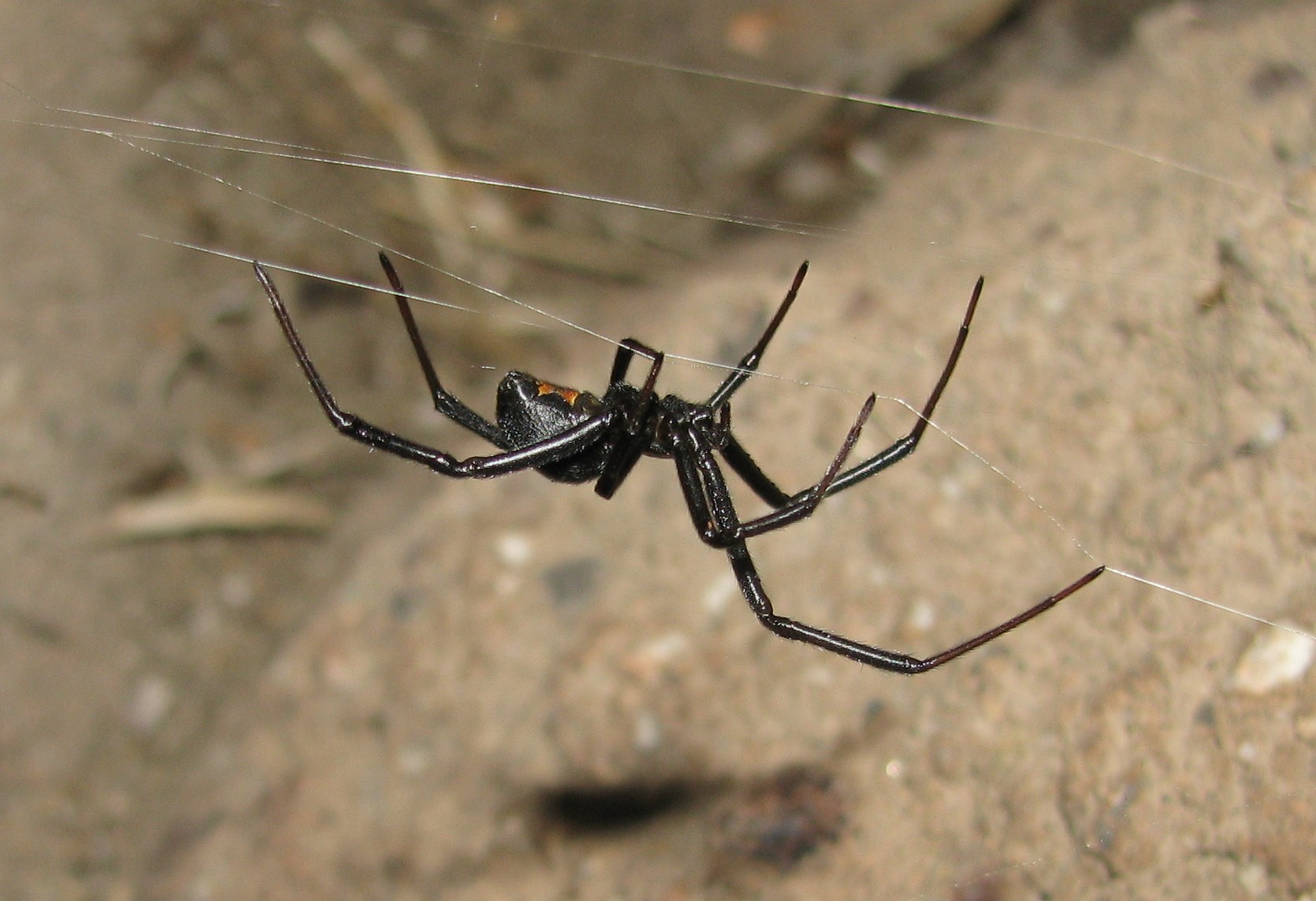
The Black Widow Spider is a striking figure in the world of arachnids. With its glossy, black body and distinctive hourglass marking, it commands attention. This spider’s body is sleek and rounded, giving it a somewhat elegant appearance despite its fearsome reputation. Its long, spindly legs extend outward, allowing it to move with surprising agility. When you spot one, the contrast between its dark form and the bright red or orange marking on its abdomen creates a vivid image that is both beautiful and a little bit intimidating.
| Feature | Description |
|---|---|
| Size | Typically 1.5 inches (3.8 cm) in length, including legs |
| Color | Shiny black body with a bright red or orange hourglass marking |
| Skin Type | Smooth, shell-like exoskeleton that provides protection |
| Legs | Long and slender, allowing for quick movement |
These features work together to create a creature that is both beautiful and deadly. The glossy black skin not only helps with camouflage in dark environments but also serves as a protective shell against predators. The vivid hourglass marking acts as a warning signal, alerting potential threats to its venomous nature. This combination of striking appearance and effective survival adaptations makes the Black Widow Spider a master of its domain, thriving in various habitats while captivating the curiosity of those who encounter it.
The Black Widow Spider thrives in a variety of environments, often weaving its intricate webs in places where humans and nature intersect. Picture a warm, sunlit corner of a garden, or the shadowy recesses of a wooden shed. These spiders prefer areas that offer both shelter and a steady supply of food, making urban settings, forests, and woodlands ideal homes. Their webs can often be found tucked away in undisturbed spots, where they can catch unsuspecting insects.
The Black Widow Spider is particularly fond of temperate climates, which are characterized by moderate temperatures and distinct seasons. These spiders enjoy warm weather, as it helps them stay active and hunt for food. They often seek out sheltered areas that provide protection from harsh weather conditions, such as rain or extreme cold. This adaptability allows them to thrive in both urban environments and natural landscapes.
In order to survive in these specific habitats, the Black Widow has developed several clever adaptations. Its ability to spin strong, sticky webs is crucial for capturing prey, while its dark coloration helps it blend into the shadows, making it less visible to both predators and potential meals. By choosing locations that offer both safety and food, the Black Widow Spider has become a master of its domain, showcasing the incredible ways in which life can adapt to its surroundings.
The daily life of a Black Widow Spider is a blend of patience and precision. As the sun rises, these spiders begin their day by inspecting their silk webs, which they meticulously weave to catch unsuspecting prey. Their webs are not just traps; they are also homes, providing shelter and a place to rest. Throughout the day, Black Widows remain mostly still, waiting for insects to wander into their sticky snares. When a meal does arrive, they spring into action, using their venom to subdue their catch before enjoying a well-earned feast.
While Black Widow Spiders are often solitary, they do exhibit interesting social behaviors, especially during mating season. Males will approach females cautiously, aware that they could become a meal themselves. This dance of courtship is delicate, as the male must communicate his intentions clearly to avoid being mistaken for prey. After mating, females may consume the males, a behavior that has sparked much curiosity and debate among scientists. This complex interaction highlights the balance between survival and reproduction in the spider’s life.
| Behavior Type | Description |
|---|---|
| Web Building | Black Widows create intricate webs that serve as both traps for prey and protective shelters. |
| Hunting | They remain still, waiting for insects to get caught in their webs, then quickly immobilize them with venom. |
| Mating Rituals | Males perform cautious courtship dances to avoid being eaten by females, showcasing their awareness of danger. |
| Communication | They use vibrations and body movements to signal intentions, especially during mating. |
The behaviors of Black Widow Spiders are finely tuned to ensure their survival in a world filled with challenges. Their ability to construct effective webs allows them to catch food efficiently, while their cautious mating strategies help them reproduce without falling victim to their partners. By balancing these behaviors, Black Widows navigate their environment with skill, ensuring they thrive in both solitary and social situations.
The Black Widow Spider is a carnivore, meaning it primarily eats other animals. Its diet mainly consists of insects, which it skillfully captures using its web. This spider is known for its patient hunting style, waiting for unsuspecting prey to wander into its sticky silk traps. Once an insect is ensnared, the Black Widow quickly immobilizes it with a venomous bite, allowing it to feast on its meal without much struggle.
| Dietary Aspect | Details |
|---|---|
| Diet Type | Carnivore |
| Favorite Foods | Insects, Woodlice, Beetles |
| Prey Items | Common insects like flies, mosquitoes, and other small arthropods |
| Hunting/Foraging Strategies | Uses silk webs to trap prey and relies on stealth and patience |
This diet plays a crucial role in the Black Widow’s ecology and daily routine. By preying on various insects, it helps control their populations, contributing to a balanced ecosystem. The spider’s ability to catch and consume its prey efficiently allows it to thrive in diverse environments, ensuring its survival and the continuation of its fascinating life cycle.
The mating behavior of the Black Widow Spider is as intriguing as it is complex. During the warmer months, typically in late spring to early summer, male Black Widows seek out females to mate. This courtship can be quite risky for the males, as females are known to sometimes eat their partners after mating. This behavior, known as sexual cannibalism, may seem harsh, but it plays a role in ensuring that the strongest genes are passed on to the next generation.
| Reproductive Aspect | Details |
|---|---|
| Gestation Period | About 30 days |
| Litter Size | Average of 250 |
| Age of Maturity | Approximately 2 months |
| Name of Young | Spiderlings |
After mating, the female Black Widow lays her eggs in a silken egg sac, which she carefully guards. Once the eggs hatch, the tiny spiderlings emerge and are initially independent, meaning they must fend for themselves right away. These young spiders are vulnerable and face many dangers, including predators and environmental challenges. As they grow, they undergo a process called molting, where they shed their exoskeleton to accommodate their increasing size. Over time, these spiderlings develop into adults, eventually taking on the striking appearance of their parents, ready to continue the cycle of life.
The Black Widow Spider, known for its glossy black body and iconic red hourglass marking, plays a crucial role in its ecosystem. As a predator, it helps control insect populations, keeping the balance in the food web. However, this spider is not without its challenges. It faces various threats from other animals that see it as a meal, as well as environmental dangers that can disrupt its habitat.
To survive these threats, the Black Widow Spider has developed several clever defensive strategies. Its venom, while dangerous to humans, is a powerful tool against predators, deterring them from taking a bite. Additionally, the spider’s dark coloration allows it to blend into its surroundings, making it harder for potential threats to spot it. When threatened, it may also retreat into the safety of its web or a hidden crevice, using its silk to create a secure environment where it can remain undetected. These adaptations help ensure that the Black Widow can continue to thrive in its diverse habitats.
A keystone species is an organism that has a disproportionately large impact on its environment relative to its abundance. In simpler terms, if you remove a keystone species from an ecosystem, it can cause significant changes or even collapse. The Black Widow Spider, known scientifically as Latrodectus, qualifies as a keystone species due to its role in controlling insect populations and influencing the dynamics of its habitat.
Black Widow Spiders are carnivores, primarily preying on insects. By keeping insect populations in check, they help maintain a balance in their ecosystem. For example, without these spiders, certain insect species could multiply unchecked, leading to overgrazing of plants and disrupting the food web. This balance is crucial not only for the plants but also for other animals that rely on those plants for food and shelter.
Moreover, the webs of Black Widow Spiders serve as a habitat for various smaller organisms. These webs can catch not only prey but also provide a microhabitat for other tiny creatures, contributing to the overall biodiversity of their environment. The presence of Black Widow Spiders can also deter larger predators, as many animals instinctively avoid them due to their venomous reputation.
If Black Widow Spiders were to disappear from their ecosystems, the consequences could be severe. Insect populations would likely surge, leading to increased competition for resources among other species. This could result in the decline of plant life, which many animals depend on for food and shelter. The ripple effects would extend throughout the food web, potentially leading to the decline of various species and a less stable ecosystem overall. The Black Widow Spider, while small, plays a vital role in keeping the natural world in balance.
The Black Widow Spider, scientifically known as Latrodectus, plays a vital role in its ecosystem, particularly in urban and temperate forest environments. As a carnivore, it primarily preys on insects, helping to regulate their populations. This spider’s presence indicates a healthy ecosystem, as it thrives in areas where food sources are abundant. By maintaining the balance of insect life, the Black Widow contributes to the overall health of its habitat, making it an important player in the web of life.
| Ecosystem Service | Impact |
|---|---|
| Insect Population Control | Reduces the number of pests, which can benefit plants and other animals. |
| Food Source for Other Animals | Serves as prey for birds and other predators, supporting the food chain. |
| Soil Health | By controlling insect populations, it helps maintain soil quality and plant health. |
The influence of the Black Widow Spider extends beyond just its immediate surroundings. For instance, by preying on common garden pests, such as aphids and beetles, it helps protect plants from damage. This natural pest control can lead to healthier gardens and crops, benefiting both wildlife and humans. Additionally, the spider’s silk, which it uses to construct its webs, can capture not only insects but also dust and debris, contributing to cleaner environments. This web-building behavior showcases how the Black Widow actively shapes its habitat.
The broader ecological importance of the Black Widow Spider cannot be overstated. As a keystone species, its role in controlling insect populations helps maintain the balance of various ecosystems. Without these spiders, certain insect populations could explode, leading to overgrazing of plants and a decline in biodiversity. By understanding and appreciating the Black Widow’s contributions, we can better recognize the intricate connections that sustain life in our world.
In the intricate web of life, symbiosis refers to the close and often long-term interactions between different species. These relationships can take many forms, including mutualism, where both species benefit, parasitism, where one benefits at the expense of the other, and commensalism, where one benefits while the other is neither helped nor harmed. The Black Widow Spider, known for its striking appearance and potent venom, engages in various ecological relationships that highlight the complexity of nature.
| Species/Type | Relationship Type | Description |
|---|---|---|
| Ants | Mutualistic | Some species of ants protect Black Widow Spiders from predators in exchange for a safe place to nest near the spider’s web. |
| Parasitoid Wasps | Parasitic | These wasps lay their eggs in or on the Black Widow, using it as a host for their larvae, which can harm the spider. |
| Fungi | Commensal | Certain fungi can grow on the remains of Black Widow Spiders, breaking down their bodies and enriching the soil without affecting the spider. |
The evolution of these relationships showcases the dynamic interactions that shape ecosystems. Over time, the Black Widow Spider has adapted to form partnerships that enhance its survival and reproductive success. For instance, the mutualistic relationship with ants not only provides protection but also helps maintain a balance in the local ecosystem. Meanwhile, the parasitic wasps remind us that life is a delicate dance, where one species’ gain can lead to another’s decline. These connections illustrate the intricate tapestry of life, where every thread plays a role in the grand design of nature.
The Black Widow Spider is often misunderstood, but there’s so much more to this intriguing arachnid than its fearsome reputation. Let’s dive into some surprising facts that reveal the hidden wonders of this remarkable spider.
Throughout history, the Black Widow Spider has woven itself into the fabric of human culture and folklore. Often depicted as a symbol of danger and mystery, this spider has sparked both fear and fascination. Ancient stories and myths have portrayed it as a creature of ill omen, while in some cultures, it has been revered for its role in controlling pest populations. The striking appearance of the Black Widow, with its glossy black body and vivid red hourglass marking, has made it a subject of intrigue in art and literature, further cementing its place in human imagination.
In modern times, interactions between humans and Black Widow Spiders have evolved. While many people still fear these spiders due to their venomous bite, which can be harmful to humans, awareness and education have led to a more nuanced understanding. Conservation efforts focus on preserving their habitats, recognizing their ecological importance in controlling insect populations. However, conflicts arise when these spiders invade human spaces, such as basements or garages, leading to attempts at extermination. Interestingly, some researchers are exploring the potential of Black Widow venom in medicine, which could transform our relationship with this misunderstood arachnid.
As we look to the future, the relationship between humans and Black Widow Spiders may continue to shift. With increased understanding and respect for their ecological role, we might see a move towards coexistence rather than conflict. Education will play a crucial role in dispelling myths and fears, allowing people to appreciate these spiders for their contributions to the environment. As science uncovers more about their biology and potential benefits, the Black Widow may transform from a figure of fear into a symbol of nature’s complexity and resilience.
The Black Widow Spider, scientifically known as Latrodectus, currently holds a conservation status of “Least Concern” according to the International Union for Conservation of Nature (IUCN). This means that, as of now, the species is not facing any immediate threat of extinction. Population estimates are stable, and while they can fluctuate based on environmental conditions, overall trends indicate that these spiders are thriving in their habitats. Their adaptability to various environments, including urban areas, has contributed to their resilience.
| Conservation Factor | Status/Details |
|---|---|
| IUCN Status | Least Concern |
| Population Estimates | Stable |
| Trend Direction | Stable |
Despite their current stable status, Black Widow Spiders face several threats that could impact their populations in the future. Habitat destruction, primarily due to urban development and agricultural expansion, can reduce the natural spaces where these spiders thrive. Additionally, pesticide use poses a significant risk, as it can kill not only the insects they prey upon but also the spiders themselves. Climate change may also alter their habitats, affecting their survival and reproduction rates.
Conservation efforts for the Black Widow Spider are not as prominent as those for more endangered species, but awareness of their ecological role is growing. Educating the public about the importance of spiders in controlling insect populations can help foster a more positive perception of these often-misunderstood arachnids. As long as their habitats remain protected and people learn to coexist with them, the outlook for the Black Widow Spider remains bright. By understanding and respecting these fascinating creatures, we can ensure they continue to thrive in our world.
| Question | Answer |
|---|---|
| Where do Black Widow Spiders live? | Black Widow Spiders are commonly found in urban areas, as well as in temperate forests and woodlands. They prefer dark, sheltered places like woodpiles, sheds, and under rocks, where they can build their webs and stay hidden from predators. |
| What do Black Widow Spiders eat? | As carnivores, Black Widow Spiders primarily feed on insects and other small arthropods. They use their strong silk webs to trap their prey, which they then immobilize with their venom before consuming. |
| How do Black Widow Spiders behave? | Black Widow Spiders are generally reclusive and prefer to avoid confrontation. They are more active at night and tend to stay in their webs, waiting for unsuspecting prey to wander by. |
| How do Black Widow Spiders reproduce? | During mating, the male Black Widow may be at risk of being eaten by the female, which is a behavior known as sexual cannibalism. After mating, the female lays around 250 eggs in a silk sac, which she guards until they hatch. |
| What are the threats to Black Widow Spiders? | While Black Widow Spiders are classified as Least Concern in terms of conservation status, they face threats from habitat destruction and pesticide use. These factors can reduce their populations and disrupt their natural habitats. |
| What makes Black Widow Spiders interesting? | One of the most fascinating features of Black Widow Spiders is their distinctive hourglass marking on the underside of their abdomens, which is usually red or orange. This warning coloration signals to potential predators that they are venomous, helping them avoid danger. |
| Are Black Widow Spiders dangerous to humans? | Black Widow Spiders are known for their potent venom, which can cause serious symptoms in humans, including muscle pain and cramping. However, bites are rare, and fatalities are extremely uncommon, especially with prompt medical treatment. |