Taxonomy & Classification
- Kingdom
- Animalia
- Phylum
- Arthropoda
- Class
- Insecta
- Order
- Lepidoptera
- Family
- Erebidae
- Genus
- Ascalapha
- Species
- Ascalapha odorata

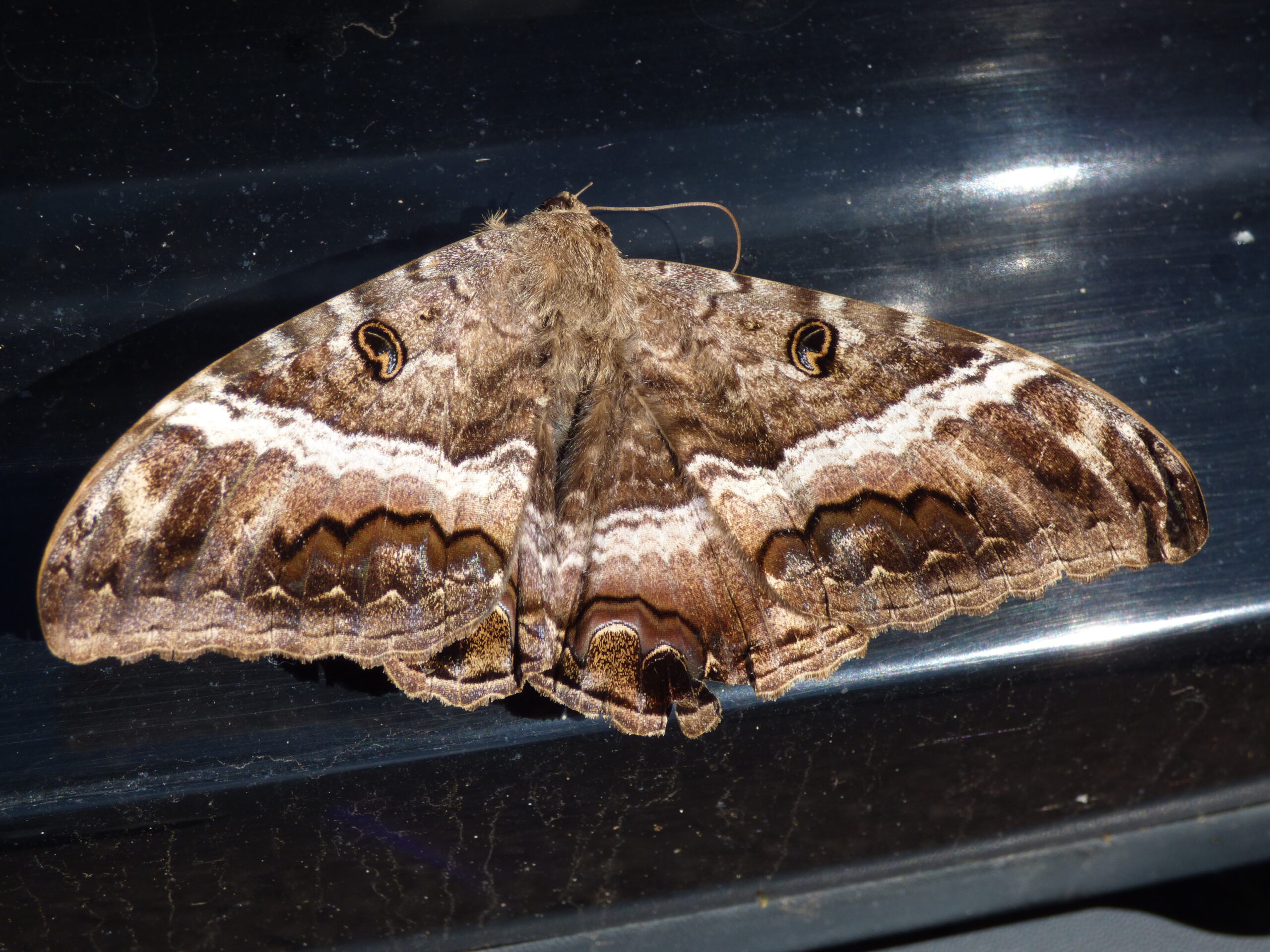 Photo Credit: Forest and Kim Starr / Wikimedia
In the warm embrace of twilight, the Black Witch Moth, or Ascalapha odorata, emerges from its daytime retreat, ready to dance through the dusky air. With a wingspan that can stretch up to an impressive seven inches, this nocturnal marvel is one of the largest moths in the Americas. Its velvety black wings, adorned with striking patterns of deep browns and subtle grays, create a stunning contrast against the lush greens of its tropical and subtropical habitats. As it flutters gracefully from flower to flower, the Black Witch Moth captivates the hearts of nature enthusiasts and scientists alike, drawing them into its mysterious world.
What makes the Black Witch Moth particularly intriguing is not just its size and beauty, but also its role in the ecosystem. As a pollinator, it helps various plants reproduce, ensuring the continuation of vibrant flora in its environment. This moth is also a vital food source for many predators, weaving it into the intricate web of life. With its fascinating behaviors and significant ecological contributions, the Black Witch Moth invites us to explore the wonders of the natural world, reminding us of the delicate balance that sustains life on our planet.
The Black Witch Moth, scientifically known as Ascalapha odorata, holds a special place in the tree of life. This intriguing insect belongs to the Kingdom Animalia, which includes all animals, and is part of the Phylum Arthropoda, known for its jointed limbs and exoskeletons. As a member of the Class Insecta, it shares the world with millions of other insects. What sets the Black Witch Moth apart is its impressive wingspan, which can reach up to 7 inches, making it one of the largest moths in the Americas. Its striking dark coloration and unique patterns not only help it blend into its surroundings but also play a role in its life cycle and behavior.
| Taxonomic Rank | Scientific Name | Meaning & Significance |
|---|---|---|
| Kingdom | Animalia | This name signifies that the Black Witch Moth is part of the vast group of multicellular organisms that are primarily heterotrophic, meaning they consume other organisms for energy. |
| Phylum | Arthropoda | Derived from Greek words meaning “jointed feet,” this classification highlights the moth’s segmented body and jointed appendages, which are characteristic of all arthropods. |
| Class | Insecta | This term comes from the Latin word for “cut,” referring to the segmented body structure of insects, which includes three main parts: the head, thorax, and abdomen. |
| Order | Lepidoptera | Meaning “scale wings,” this name reflects the tiny scales that cover the wings of moths and butterflies, giving them their vibrant colors and patterns. |
| Family | Erebidae | This name is derived from the Greek word “erebus,” meaning darkness, which is fitting for a family that includes many nocturnal species like the Black Witch Moth. |
| Genus | Ascalapha | The name is thought to be derived from a combination of Greek and Latin roots, possibly referring to the moth’s mysterious and elusive nature. |
The classification of the Black Witch Moth reveals much about its evolutionary journey. As a member of the Lepidoptera order, it shares a common ancestor with butterflies and other moths, showcasing the incredible diversity of life that has evolved over millions of years. Its position within the Erebidae family indicates adaptations to a nocturnal lifestyle, allowing it to thrive in various habitats across the Americas. Understanding its taxonomic position not only highlights its unique characteristics but also connects it to the broader web of life, illustrating the intricate relationships that exist within ecosystems.
The evolutionary journey of the Black Witch Moth, or Ascalapha odorata, stretches back millions of years, weaving through the rich tapestry of life on Earth. This moth belongs to the family Erebidae, a diverse group that has adapted to various environments. The story of the Black Witch Moth is one of survival, transformation, and the remarkable ability to thrive in changing ecosystems.
Ancestral forms of the Black Witch Moth can be traced to early moths that emerged during the Jurassic period, around 150 million years ago. These primitive moths were likely small and drab, relying on camouflage to evade predators. Over time, as flowering plants began to diversify, moths evolved alongside them, developing specialized traits. The Black Witch Moth’s ancestors adapted to nocturnal lifestyles, becoming more active at night when competition for food was less intense. This shift allowed them to exploit new food sources, such as nectar from night-blooming flowers.
These adaptations have played a crucial role in the survival of the Black Witch Moth. Its large wingspan and camouflage help it evade predators, while its behavioral strategies allow it to deter threats effectively. The ability to thrive in diverse habitats and reproduce frequently ensures that this moth can continue to flourish in a world that is constantly changing. The Black Witch Moth’s evolutionary story is a testament to the resilience and ingenuity of life on Earth.
The Black Witch Moth is an impressive sight, boasting a wingspan that can reach up to 7 inches, making it one of the largest moths in the Americas. Its body is robust and sturdy, with a velvety texture that adds to its striking appearance. The wings are broad and elongated, creating a silhouette that captures attention as it flutters through the night. The overall coloration is a deep, rich brown, often adorned with intricate patterns that resemble the bark of a tree, allowing it to blend seamlessly into its surroundings.
| Feature | Description |
|---|---|
| Size | Wingspan can reach up to 7 inches, making it one of the largest moths in the Americas. |
| Color | Deep brown with intricate patterns that mimic tree bark. |
| Skin Type | Velvety texture that enhances its camouflage. |
| Body Structure | Robust and sturdy, designed for stability in flight. |
The combination of size, color, and texture serves a vital purpose in the Black Witch Moth’s survival. Its large wings allow for powerful flight, while the dark, mottled patterns provide excellent camouflage against predators, especially during the day when it rests on tree trunks. This clever disguise helps it avoid detection, ensuring that it can thrive in its natural habitat. The velvety skin not only adds to its beauty but also aids in reducing the noise of its flight, making it a stealthy nocturnal traveler. Together, these features create a masterful blend of form and function, allowing the Black Witch Moth to navigate the challenges of its environment with grace and skill.
The Black Witch Moth thrives in a variety of habitats that paint a picture of lush greenery and warm climates. You can often find it fluttering through tropical and subtropical regions, where the air is thick with humidity and the sun shines brightly. These moths are drawn to areas rich in vegetation, such as forests, gardens, and even agricultural fields. Their presence adds a touch of mystery to the night, as they are primarily nocturnal, coming alive under the moonlight.
The Black Witch Moth prefers warm climates, typically found in areas where temperatures remain mild to hot throughout the year. These moths thrive in environments with high humidity, which helps them maintain their delicate wings and supports their life cycle. They are often seen in regions that experience seasonal rains, as these conditions provide ample food sources for their caterpillars, which feed on a variety of plants.
Adaptation is key to the survival of the Black Witch Moth in its chosen habitats. Its dark coloration helps it blend into the shadows of the night, making it less visible to predators. Additionally, the moth’s large wings allow for graceful flight, enabling it to navigate through dense foliage with ease. By choosing habitats that offer both food and shelter, the Black Witch Moth has become a master of its environment, showcasing the beauty of nature’s design.
As the sun sets and the world begins to dim, the Black Witch Moth stirs from its daytime slumber. This nocturnal marvel, known scientifically as Ascalapha odorata, comes alive under the cover of darkness. Its typical day involves resting on tree trunks or foliage, blending seamlessly into its surroundings. As night falls, it takes to the skies, fluttering gracefully in search of nectar from night-blooming flowers. The moth’s activities peak during the warm, humid nights, where it engages in feeding, mating, and exploring its territory.
Socially, the Black Witch Moth is a solitary creature, often seen alone as it navigates the night. However, during mating season, males may gather in areas where females are likely to appear, creating a temporary social dynamic. These gatherings can be quite lively, with males displaying their impressive wings to attract potential mates. While they do not form long-lasting bonds, these interactions are crucial for reproduction. Communication among moths primarily occurs through pheromones, which are chemical signals that help them find each other in the dark.
| Behavior Type | Description |
|---|---|
| Feeding | The Black Witch Moth feeds on nectar from night-blooming flowers, using its long proboscis to reach deep into blossoms. |
| Mating | Males gather in specific areas to attract females, using visual displays and pheromones to communicate their presence. |
| Resting | During the day, these moths rest on tree trunks or leaves, camouflaging themselves to avoid predators. |
| Exploration | At night, they actively explore their territory, searching for food and potential mates. |
The behaviors of the Black Witch Moth are finely tuned to ensure its survival in a world filled with challenges. By being nocturnal, it avoids many daytime predators, while its ability to blend into its environment provides an extra layer of protection. The social interactions during mating season are vital for the continuation of the species, ensuring that these magnificent moths can thrive in their lush habitats. Each night, as they dance through the moonlit skies, they play a crucial role in the ecosystem, pollinating flowers and contributing to the vibrant tapestry of life.
The Black Witch Moth, or Ascalapha odorata, has a diverse diet that reflects its adaptability. As an omnivore, it enjoys a mix of plant materials and other organic matter. This moth primarily feeds on nectar from flowers, which provides essential sugars for energy. It also consumes decaying fruit and plant matter, making it a key player in its ecosystem by helping to break down organic materials. The moth uses its long proboscis, a tube-like mouthpart, to reach deep into flowers and sip nectar, showcasing its role as a pollinator while it feeds.
| Dietary Aspect | Details |
|---|---|
| Diet Type | Omnivore |
| Favorite Foods | Nectar from flowers, decaying fruit, and plant matter |
| Prey Items | Primarily plant-based materials |
| Hunting/Foraging Strategies | Uses long proboscis to sip nectar; attracted to flowers at night |
This varied diet not only sustains the Black Witch Moth but also influences its ecological role. By feeding on nectar, it aids in pollination, helping plants reproduce and thrive. Its consumption of decaying organic matter contributes to nutrient cycling in the environment, enriching the soil. The moth’s feeding habits shape its daily routine, as it actively seeks out flowers during the night, making it an essential part of the nocturnal ecosystem. Through its diet, the Black Witch Moth connects with the intricate web of life, showcasing the importance of every species in maintaining balance in nature.
The mating behavior of the Black Witch Moth is a captivating spectacle, especially during the warm months when they are most active. Males are known to attract females with their pheromones, which are chemical signals that can travel through the air. Once a female is drawn in, the pair engages in a courtship dance, fluttering around each other in a delicate ballet. This enchanting display often leads to mating, which typically occurs at night, aligning with their nocturnal lifestyle. After mating, the female lays her eggs on suitable host plants, ensuring that her future caterpillars will have plenty to eat once they hatch.
| Reproductive Aspect | Details |
|---|---|
| Gestation Period | Approximately 10 days |
| Litter Size | Up to 200 eggs |
| Age of Maturity | About 2 months |
| Name of Young | Caterpillars |
Once the eggs hatch, the young caterpillars emerge, ready to begin their journey of growth. These caterpillars are voracious eaters, munching on the leaves of their host plants to fuel their development. As they grow, they will shed their skin several times, a process known as molting, allowing them to accommodate their increasing size. After a few weeks of feasting and growing, they will eventually pupate, transforming into chrysalises. Inside these protective cases, they undergo a remarkable metamorphosis, emerging later as adult Black Witch Moths, ready to continue the cycle of life. This fascinating journey from egg to adult showcases the incredible resilience and adaptability of these moths in the natural world.
The Black Witch Moth, known scientifically as Ascalapha odorata, plays a significant role in its ecosystem. As a large nocturnal insect, it occupies a unique position in the food web, serving as both a pollinator and a potential meal for various predators. Its presence helps maintain the balance of plant life, while also providing sustenance for animals higher up the food chain.
To defend itself against these threats, the Black Witch Moth has developed several clever survival strategies. One of its most fascinating tactics is its ability to blend into its surroundings, thanks to its dark coloration and intricate wing patterns. This camouflage helps it evade predators during the day when it rests. Additionally, when threatened, the moth can display its large wings, which may startle or confuse attackers. By using these defensive behaviors, the Black Witch Moth increases its chances of survival in a world filled with hungry eyes.
A keystone species is an organism that has a disproportionately large impact on its environment relative to its abundance. This means that if it were removed, the ecosystem would change dramatically. The Black Witch Moth, or Ascalapha odorata, does not fit the traditional definition of a keystone species, but it plays an important role in its ecosystem nonetheless. While it may not be the most dominant species, its presence contributes to the balance of life in its habitat.
The Black Witch Moth influences its ecosystem in several ways. As an omnivore, it feeds on a variety of plant materials and organic matter, helping to break down and recycle nutrients back into the soil. This process is vital for plant growth, as it enriches the earth with essential nutrients. Additionally, the moth serves as a food source for various predators, including birds and bats. By being part of the food web, it supports the survival of these animals, which in turn helps maintain the balance of the ecosystem.
Moreover, the Black Witch Moth is a pollinator, albeit not as well-known as bees or butterflies. While feeding on nectar, it inadvertently transfers pollen from one flower to another, aiding in plant reproduction. This is crucial for the health of many plant species, which rely on pollinators to produce fruits and seeds. The moth’s nocturnal activity also means it can pollinate plants that bloom at night, further enhancing biodiversity.
If the Black Witch Moth were to disappear, the effects could ripple through its ecosystem. Without this moth, the plants that rely on it for pollination might struggle to reproduce, leading to a decline in plant diversity. This, in turn, would affect the animals that depend on those plants for food and shelter. The loss of a food source for predators could lead to their decline as well, creating an imbalance that could alter the entire ecosystem. While the Black Witch Moth may not be a classic keystone species, its absence would certainly be felt, highlighting the interconnectedness of all living things.
The Black Witch Moth, known scientifically as Ascalapha odorata, plays a vital role in its ecosystem, acting as both a pollinator and a food source for various animals. This large, nocturnal moth thrives in tropical and subtropical regions, where it flits among flowers and plants, helping to transfer pollen from one bloom to another. This process is essential for many plants to reproduce, making the Black Witch Moth an important player in maintaining plant diversity and health.
| Ecosystem Service | Impact |
|---|---|
| Pollination | Helps plants reproduce by transferring pollen, which is crucial for plant diversity. |
| Food Source | Serves as a meal for birds, bats, and other nocturnal predators, supporting the food web. |
| Organic Matter Recycling | Feeds on decaying plant material, aiding in nutrient cycling within the ecosystem. |
The influence of the Black Witch Moth extends beyond its immediate actions. For instance, as it visits flowers at night, it not only gathers nectar but also inadvertently spreads pollen, which is vital for the growth of many plants. This nocturnal activity supports the life cycles of various flowering species, ensuring that they can produce seeds and continue their existence. Additionally, the moth’s presence attracts predators like bats and certain birds, which rely on it as a food source. This connection highlights the intricate web of life where each species, including the Black Witch Moth, contributes to the balance of the ecosystem.
The broader ecological importance of the Black Witch Moth cannot be overstated. By facilitating pollination and serving as a food source, it helps maintain the health and stability of its environment. The loss of this moth could lead to a decline in plant diversity and disrupt the food chain, affecting many other species. In this way, the Black Witch Moth exemplifies how even the smallest creatures can have a significant impact on the world around them, reminding us of the interconnectedness of all living things.
In the intricate web of life, symbiosis refers to the close and often long-term interactions between different species. These relationships can take many forms, including mutualism, where both species benefit, parasitism, where one benefits at the expense of the other, and commensalism, where one benefits while the other is neither helped nor harmed. The Black Witch Moth, known scientifically as Ascalapha odorata, engages in various ecological relationships that highlight the interconnectedness of life in its habitat.
| Species/Type | Relationship Type | Description |
|---|---|---|
| Plants (e.g., flowering plants) | Mutualistic | The Black Witch Moth acts as a pollinator, helping plants reproduce while feeding on their nectar. |
| Predators (e.g., bats) | Parasitic | While not a direct parasite, the moth is preyed upon by bats, which benefit from the moth as a food source. |
| Other insects (e.g., ants) | Commensal | Some ants may protect the moth’s larvae from predators, benefiting from the presence of the larvae without harming them. |
These relationships have evolved over time, shaped by the needs and behaviors of the species involved. The Black Witch Moth’s role as a pollinator not only aids in the reproduction of plants but also ensures a steady food supply for itself. Meanwhile, its position in the food web highlights the delicate balance of predator and prey. Understanding these connections helps us appreciate the complexity of ecosystems and the importance of every species, no matter how small, in maintaining the health of our planet.
The Black Witch Moth, known scientifically as Ascalapha odorata, is a captivating insect that enchants nature lovers with its size and mysterious behaviors. This remarkable moth is not just a pretty face; it has a wealth of surprising traits that make it stand out in the insect world.
The Black Witch Moth, or Ascalapha odorata, has long captured the imagination of people across the Americas. Historically, this striking moth has been woven into the cultural fabric of various societies. In some regions, it is seen as a symbol of transformation and change, while in others, it is associated with superstitions and folklore. For instance, in parts of Central America, the appearance of a Black Witch Moth is thought to herald significant life events, such as death or major transitions. This deep-rooted connection between the moth and humanity highlights how our lives are intertwined with the natural world, often reflecting our beliefs and traditions.
In contemporary times, the relationship between humans and the Black Witch Moth has evolved, particularly in the realms of conservation and education. As habitats face threats from urbanization and climate change, efforts are underway to protect the ecosystems where these moths thrive. Conservationists recognize the Black Witch Moth’s role as a pollinator, helping to sustain plant life that is crucial for both wildlife and human agriculture. However, conflicts can arise when these moths are mistaken for pests, leading to misguided attempts to control their populations. Education initiatives aim to foster a better understanding of the moth’s ecological importance, encouraging people to appreciate rather than fear these magnificent insects.
Looking ahead, the future of the relationship between the Black Witch Moth and humanity holds promise. As awareness of environmental issues grows, more people are likely to appreciate the vital roles that moths and other insects play in our ecosystems. By fostering a sense of stewardship, we can ensure that these remarkable creatures continue to thrive alongside us. Through education, conservation, and a deeper understanding of our interconnectedness, we can build a future where the Black Witch Moth is celebrated not just for its beauty, but for its essential contributions to the world we share.
The conservation status of the Black Witch Moth, or Ascalapha odorata, is currently not classified as endangered or threatened. This large moth is relatively common across its range, which includes tropical and subtropical regions of the Americas. While specific population estimates are hard to come by, the general trend appears stable, suggesting that these moths are not facing immediate threats to their survival.
| Conservation Factor | Status/Details |
|---|---|
| IUCN Status | Not Evaluated |
| Population Estimates | Common in suitable habitats |
| Trend Direction | Stable |
The main threats to the Black Witch Moth include habitat loss due to deforestation and urbanization. As human activities expand into natural areas, the lush environments that these moths rely on for food and shelter are diminished. Additionally, pesticide use can pose a risk, as these chemicals can harm not only the moths but also the plants they depend on for nourishment. Climate change may also impact their habitats, altering the delicate balance of ecosystems where they thrive.
Conservation efforts for the Black Witch Moth are not currently widespread, mainly because it is not considered at risk. However, protecting its natural habitats is crucial for maintaining healthy populations. Initiatives aimed at preserving tropical and subtropical ecosystems can indirectly benefit this species. As awareness grows about the importance of biodiversity, there is hope that more people will recognize the value of all creatures, including the Black Witch Moth, and work towards ensuring their continued presence in our world.
| Question | Answer |
|---|---|
| What is the habitat of the Black Witch Moth? | The Black Witch Moth is commonly found in tropical and subtropical regions, particularly in Central and South America. They prefer areas with plenty of vegetation, such as forests and gardens, where they can easily find food and shelter. |
| What do Black Witch Moths eat? | Black Witch Moths are omnivores, meaning they eat a variety of foods. Their diet mainly consists of nectar from flowers, but they also consume tree sap and decaying fruit, which provide essential nutrients. |
| What are some interesting behaviors of the Black Witch Moth? | These moths are known for their impressive size, with wingspans that can reach up to 7 inches! They are mostly nocturnal, meaning they are active at night, and they often rest during the day, camouflaging themselves against tree bark. |
| How do Black Witch Moths reproduce? | During mating season, female Black Witch Moths release pheromones, which are chemical signals that attract males. After mating, females lay their eggs on the leaves of host plants, where the caterpillars will later feed and grow. |
| What threats do Black Witch Moths face? | Black Witch Moths face several threats, including habitat loss due to deforestation and urban development. Additionally, they are vulnerable to predators like birds and other insects that may prey on them during their life cycle. |
| What is the most distinctive feature of the Black Witch Moth? | The most distinctive feature of the Black Witch Moth is its large size, making it one of the largest moths in the Americas. Its dark, mottled wings also help it blend into its surroundings, providing excellent camouflage. |
| Are Black Witch Moths harmful to humans? | No, Black Witch Moths are not harmful to humans. They do not bite or sting, and they are generally harmless, making them a fascinating part of the ecosystem. |