Taxonomy & Classification
- Kingdom
- Animalia
- Phylum
- Chordata
- Class
- Actinopterygii
- Order
- Scombriformes
- Family
- Scombridae
- Genus
- Thunnus

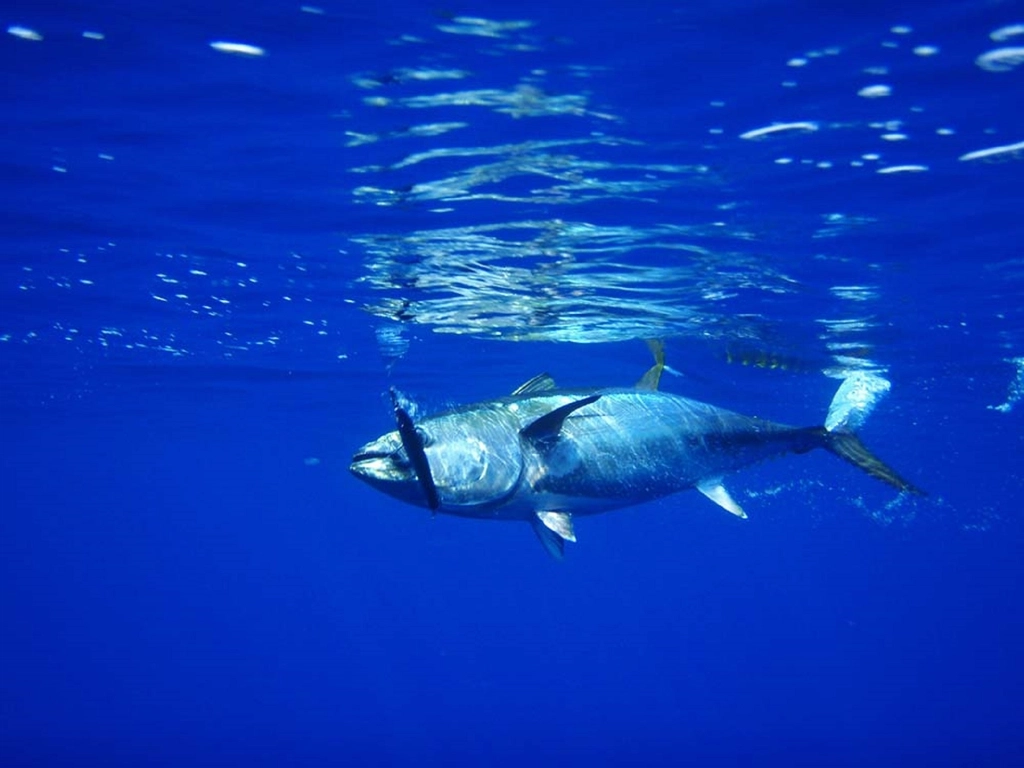 Photo Credit: Rawpixel
In the vast, shimmering blue of the ocean, the Bluefin Tuna, scientifically known as Thunnus thynnus, glides through the water with grace and power. This magnificent fish, often reaching lengths of up to 10 feet and weighing as much as 1,500 pounds, is a true marvel of the marine world. With its sleek, torpedo-shaped body and striking metallic blue back, the Bluefin Tuna is not just a sight to behold; it is a symbol of the ocean’s wild beauty. As it swims through the sun-dappled waters, it embodies the spirit of adventure, captivating both scientists and nature enthusiasts alike.
What makes the Bluefin Tuna so intriguing is not just its impressive size but also its remarkable adaptations. These fish are built for speed, capable of reaching up to 45 miles per hour, making them one of the fastest swimmers in the ocean. Their ability to maintain a warm body temperature, even in chilly waters, allows them to thrive in diverse environments. This endothermic trait, meaning they generate their own body heat, gives them a competitive edge when hunting for prey. As they dart through schools of smaller fish and squid, the Bluefin Tuna plays a vital role in the ocean’s ecosystem, acting as both predator and prey. Join us as we dive deeper into the world of the Bluefin Tuna, exploring its habitat, behavior, and the challenges it faces in our ever-changing oceans.
The Bluefin Tuna, a magnificent fish known for its speed and size, occupies a significant position in the tree of life. Scientifically classified within the Kingdom Animalia, it belongs to the Phylum Chordata, which includes all animals with a backbone. This powerful swimmer is part of the Class Actinopterygii, the ray-finned fishes, which are characterized by their bony fins. The Bluefin Tuna is not just any fish; it is a member of the Order Scombriformes and the Family Scombridae, which encompasses the fast and agile tunas and mackerels. Its scientific name, Thunnus, reflects its impressive adaptations and evolutionary history, making it a standout in the aquatic world.
| Taxonomic Rank | Scientific Name | Meaning & Significance |
|---|---|---|
| Kingdom | Animalia | This name comes from the Latin word “animalis,” meaning “having breath” or “living.” It signifies all living organisms that are not plants or fungi. |
| Phylum | Chordata | Derived from the Greek word “chordē,” meaning “string,” this name refers to animals with a notochord, a flexible rod that supports the body, which in vertebrates becomes the backbone. |
| Class | Actinopterygii | This term means “ray-finned fishes” in Greek, highlighting the structure of their fins, which are supported by bony rays rather than fleshy lobes. |
| Order | Scombriformes | From the Latin “scomber,” meaning “mackerel,” this name indicates a group of fast-swimming fish known for their streamlined bodies and speed. |
| Family | Scombridae | This family name is derived from the same Latin root as the order, emphasizing the close relationship among tunas and mackerels, which are all built for speed. |
| Genus | Thunnus | This name comes from the Latin word for tuna, which is believed to be derived from the Greek “thynnos,” reflecting the fish’s importance in ancient cultures and its culinary value. |
The classification of Bluefin Tuna reveals much about its evolutionary journey. As a member of the Chordata phylum, it shares a common ancestry with all vertebrates, showcasing the remarkable adaptations that have allowed it to thrive in the ocean. Its position within the Actinopterygii class highlights its evolutionary success as a ray-finned fish, which has diversified into many forms over millions of years. The Bluefin Tuna’s streamlined body and powerful muscles, essential for its predatory lifestyle, are a testament to the evolutionary pressures that have shaped its lineage. Understanding its taxonomic position not only enriches our knowledge of this incredible fish but also connects us to the broader tapestry of life in our oceans.
The evolutionary journey of the Bluefin Tuna stretches back millions of years, tracing its lineage through the vast oceans of the world. This remarkable fish belongs to the family Scombridae and the genus Thunnus, which includes several species of tuna. The ancestors of modern tunas began to emerge during the late Cretaceous period, around 100 million years ago, when the oceans were teeming with diverse marine life. Over time, these early fish adapted to their environments, leading to the swift and powerful Bluefin Tuna we know today.
The ancestors of Bluefin Tuna were likely smaller, less streamlined fish that inhabited warm, shallow waters. As they evolved, they developed key adaptations that allowed them to thrive in the open ocean. One major transition was the development of a more torpedo-shaped body, which enhances hydrodynamics, allowing them to swim faster and more efficiently. This shape is crucial for escaping predators and catching prey. Additionally, the evolution of a specialized circulatory system enables Bluefin Tuna to maintain a higher body temperature than the surrounding water, a trait known as endothermy. This ability to generate body heat gives them an advantage in hunting, as they can be more active in cooler waters.
The adaptations of the Bluefin Tuna have been vital for its survival in the competitive marine environment. Their streamlined bodies and powerful muscles allow them to chase down fast-moving prey, while their endothermic nature enables them to thrive in various temperatures. With keen eyesight and the ability to school, they can effectively hunt and evade threats. These evolutionary traits not only highlight the Bluefin Tuna’s resilience but also its role as a key player in the ocean’s ecosystem, showcasing the intricate balance of life beneath the waves.
The Bluefin Tuna is a stunning marvel of the ocean, instantly recognizable by its sleek, torpedo-shaped body that glides effortlessly through the water. This impressive fish can grow to astonishing sizes, reaching weights of up to 2,000 pounds. Its streamlined form is not just for show; it allows the Bluefin Tuna to swim at incredible speeds, making it one of the fastest fish in the sea. With a powerful tail and a muscular build, this fish is built for both agility and endurance, embodying the essence of oceanic grace.
| Feature | Description |
|---|---|
| Weight | Up to 2,000 lbs |
| Skin Type | Smooth |
| Most Distinctive Feature | Torpedo-shaped body |
The combination of its smooth skin and streamlined shape plays a crucial role in the Bluefin Tuna’s survival. The smooth texture reduces drag as it swims, allowing it to dart through the water with remarkable speed. This agility helps it evade predators and catch prey, such as smaller fish and squid. The powerful body structure not only supports its impressive weight but also enables it to travel long distances across the ocean, making the Bluefin Tuna a true champion of the deep blue sea.
The Bluefin Tuna thrives in the vast, open waters of the world’s oceans, where it finds both food and freedom. Picture a shimmering expanse of blue, where sunlight dances on the surface and the currents create a dynamic playground. These powerful fish prefer the deeper parts of the ocean, often swimming in the pelagic zone, which is the area of the ocean that is not close to the bottom or the shore. Here, they can chase schools of smaller fish, their favorite meals, while enjoying the freedom of the open sea.
Bluefin Tuna are highly adaptable and can be found in a range of temperatures, but they generally prefer warmer waters. They thrive in areas where the water temperature is between 10 to 30 degrees Celsius (50 to 86 degrees Fahrenheit). These fish are also sensitive to changes in their environment, such as salinity, which is the amount of salt in the water. They often migrate long distances to find the ideal conditions for feeding and spawning, demonstrating their need for specific habitats that support their life cycle.
To survive in these diverse oceanic environments, Bluefin Tuna have developed several impressive adaptations. Their streamlined bodies allow them to swim at incredible speeds, reaching up to 75 kilometers per hour (about 47 miles per hour). This speed helps them catch prey and evade predators. Additionally, they are endothermic, meaning they can regulate their body temperature, allowing them to thrive in cooler waters than many other fish. This unique ability gives them an edge in hunting and helps them occupy a variety of habitats across the oceans.
The daily life of a Bluefin Tuna is a thrilling adventure in the open ocean. These powerful fish are known for their incredible speed, often reaching up to 45 miles per hour. As they swim through the vast blue waters, they engage in a variety of activities that keep them active and alert. Bluefin Tuna spend their days hunting for food, which primarily consists of smaller fish like herring and mackerel. They are also known to dive deep into the ocean, sometimes reaching depths of over 3,000 feet, to find cooler waters or to escape predators.
Socially, Bluefin Tuna are not solitary creatures. They often form schools, which are groups of fish that swim together. This behavior provides safety in numbers, as there is strength in a large group. Within these schools, Bluefin Tuna communicate through body language and movements, signaling to each other when it’s time to hunt or when danger is near. Their social structure is fluid, meaning they can join or leave schools as they please, adapting to their environment and the availability of food.
| Behavior Type | Description |
|---|---|
| Hunting | Bluefin Tuna actively chase and capture smaller fish, using their speed and agility to outmaneuver prey. |
| Schooling | They swim in groups, which helps protect them from predators and increases their chances of finding food. |
| Communication | They use body movements and positioning to signal to each other, coordinating their actions during hunts. |
The behaviors of Bluefin Tuna are essential for their survival in the wild. By hunting in schools, they increase their efficiency in capturing prey, ensuring they have enough food to thrive. Their ability to communicate and adapt to their surroundings allows them to respond quickly to threats, making them formidable inhabitants of the ocean. Each day is a testament to their resilience and the intricate balance of life beneath the waves.
The Bluefin Tuna is a carnivore, meaning it primarily eats other animals. This impressive fish has a diet that includes a variety of prey, such as smaller fish, crustaceans, cephalopods (like squid), and mollusks. Bluefin Tuna are skilled hunters, using their speed and agility to chase down their meals. They often hunt in schools, which allows them to work together to corral their prey, making it easier to catch.
| Dietary Aspect | Details |
|---|---|
| Diet Type | Carnivore |
| Favorite Foods | Smaller fish, crustaceans, cephalopods, and mollusks |
| Prey Items | Herring, mackerel, squid, and shrimp |
| Hunting/Foraging Strategies | Hunts in schools, uses speed and agility to chase prey |
The diet of the Bluefin Tuna plays a crucial role in its ecology and daily routine. By feeding on a variety of marine life, it helps maintain the balance of the ocean ecosystem. The Bluefin Tuna’s hunting strategies not only ensure its survival but also influence the populations of its prey. This dynamic relationship highlights the interconnectedness of ocean life, where each species plays a part in the grand tapestry of the marine environment.
When it comes to mating, Bluefin Tuna engage in a fascinating ritual during their breeding season, which typically occurs in the warmer months. As the water temperature rises, these fish gather in specific spawning grounds, often in the open ocean. Males and females perform a spectacular dance, swimming together in tight circles. This courtship behavior helps them find suitable partners for reproduction. Once they are ready, females release their eggs into the water, while males simultaneously release sperm, ensuring fertilization happens in the vastness of the ocean.
| Reproductive Aspect | Details |
|---|---|
| Gestation Period | A few days |
| Litter Size | Up to 30 million eggs |
| Age of Maturity | 3 to 5 years |
| Name of Young | Fry |
After the eggs are fertilized, they drift in the ocean currents, where they hatch into tiny fry. These young Bluefin Tuna are on their own from the moment they emerge, as there is no parental care provided. Instead, they must rely on their instincts to survive in the vast ocean. As they grow, they face numerous challenges, including predators and competition for food. Over the next few years, these fry will develop into mature adults, capable of reaching impressive sizes and continuing the cycle of life in the ocean. The journey from a tiny fry to a powerful Bluefin Tuna is a testament to the resilience and adaptability of these incredible fish.
The Bluefin Tuna is a vital player in the ocean’s food web, serving as both predator and prey. These magnificent fish are at the top of their game, feasting on smaller fish and squid while also being a target for larger predators. Their impressive size and speed make them formidable hunters, but they are not invincible.
To survive against these threats, Bluefin Tuna have developed several defensive behaviors. Their incredible speed allows them to dart away from danger, making it hard for predators to catch them. Additionally, they can dive to great depths, escaping the warmer waters where many threats lurk. While they may not have armor or sharp spines, their agility and strength are their best defenses in the vast ocean.
A keystone species is an organism that plays a crucial role in maintaining the structure of its ecosystem. Its presence and activities significantly influence the types and numbers of other species in that environment. The Bluefin Tuna qualifies as a keystone species due to its position in the marine food web and its impact on the populations of various marine organisms.
Bluefin Tuna are powerful predators that primarily feed on smaller fish, squid, and crustaceans. By preying on these species, they help regulate their populations, preventing any one group from becoming too dominant. This balance is essential for maintaining the health of the ocean ecosystem. For example, if Bluefin Tuna were to decline, the populations of their prey could explode, leading to overgrazing of plankton and other vital resources. This could disrupt the entire food web, affecting not just the fish but also the larger marine mammals and birds that rely on a balanced ecosystem.
Moreover, Bluefin Tuna are known to travel in schools, which can influence the behavior of other fish species. Their movement patterns can create opportunities for other predators to hunt, showcasing a dynamic interaction within the ocean. Additionally, as a highly sought-after species for commercial fishing, their population health can reflect the overall state of the marine environment, serving as an indicator of ecological well-being.
If Bluefin Tuna were to disappear, the consequences would ripple through the ocean. Without these apex predators, smaller fish populations could surge, leading to overconsumption of plankton and other essential resources. This imbalance could result in a decline in biodiversity, affecting not only marine life but also the human communities that depend on healthy oceans for food and livelihood. The loss of Bluefin Tuna would signify a troubling shift in the marine ecosystem, highlighting the interconnectedness of all species within it.
The Bluefin Tuna plays a vital role in its oceanic ecosystem, acting as both a predator and a prey. This powerful fish is a carnivore, meaning it primarily feeds on smaller fish, squid, and crustaceans. By hunting these species, Bluefin Tuna help regulate their populations, ensuring that no single species dominates the ecosystem. This balance is crucial for maintaining the health of marine environments, as it allows for a diverse array of life to thrive.
| Ecosystem Service | Impact |
|---|---|
| Predation | Controls populations of smaller fish and squid, preventing overpopulation. |
| Prey for larger species | Serves as a food source for larger marine animals, including sharks and orcas. |
| Nutrient cycling | Contributes to nutrient distribution in the ocean through its feeding and excretion. |
| Economic value | Supports fishing industries, providing livelihoods and food for many communities. |
The influence of Bluefin Tuna extends beyond their immediate predatory actions. For instance, when they hunt, they often target schools of smaller fish, which can lead to a more balanced distribution of these species across the ocean. This hunting behavior not only helps maintain the health of fish populations but also encourages a dynamic food web. Additionally, as they are preyed upon by larger marine animals, Bluefin Tuna contribute to the diets of apex predators, further intertwining their role in the ecosystem.
The broader ecological importance of Bluefin Tuna cannot be overstated. As a keystone species, their presence is essential for the stability of marine ecosystems. By regulating the populations of their prey and serving as a food source for larger predators, they help maintain a delicate balance that supports biodiversity. Protecting Bluefin Tuna is crucial, not just for their survival, but for the health of the oceans they inhabit, ensuring that future generations can continue to marvel at the wonders of marine life.
In the intricate web of ocean life, symbiosis plays a vital role in shaping the relationships between species. Symbiosis refers to the close interactions between different organisms, which can be beneficial, harmful, or neutral. These relationships can be mutualistic, where both species gain advantages; parasitic, where one benefits at the other’s expense; or commensal, where one benefits while the other is neither helped nor harmed. Understanding these connections helps us appreciate the delicate balance of marine ecosystems, where every creature, including the Bluefin Tuna, has its part to play.
| Species/Type | Relationship Type | Description |
|---|---|---|
| Remora Fish | Mutualistic | Remoras attach themselves to the Bluefin Tuna, gaining protection and transportation while helping to keep the tuna’s skin clean by eating parasites. |
| Sea Lice | Parasitic | These tiny crustaceans attach to the Bluefin Tuna, feeding on its blood and tissue, which can weaken the fish over time. |
| Cleaner Wrasse | Mutualistic | These small fish clean parasites and dead skin off the Bluefin Tuna, benefiting from a meal while helping the tuna stay healthy. |
These relationships have evolved over time, shaped by the needs and behaviors of the species involved. The mutualistic partnerships, like those with remora fish and cleaner wrasse, highlight how cooperation can enhance survival for both parties. Meanwhile, parasitic relationships, such as those with sea lice, remind us that not all interactions are beneficial. Understanding these dynamics not only enriches our knowledge of the Bluefin Tuna but also emphasizes the importance of preserving the delicate balance of marine ecosystems, where every interaction counts.
The Bluefin Tuna is not just a fish; it’s a marvel of the ocean, showcasing incredible adaptations and behaviors that make it truly special. Here are some surprising facts that will captivate nature enthusiasts of all ages.
The Bluefin Tuna has long been a symbol of the ocean’s bounty, captivating cultures around the world for centuries. Ancient civilizations, such as the Greeks and Romans, revered this magnificent fish, often featuring it in art and literature. In Japan, Bluefin Tuna is celebrated as a delicacy, especially in sushi and sashimi, where its rich flavor and tender texture are highly prized. This cultural significance has woven the Bluefin Tuna into the fabric of human history, making it not just a fish, but a vital part of culinary traditions and economic livelihoods.
Today, the relationship between Bluefin Tuna and humanity is complex and often fraught with challenges. Overfishing has led to significant declines in their populations, prompting conservation efforts to protect these majestic fish. Organizations and governments are working together to establish sustainable fishing practices, aiming to balance human demand with the need to preserve this species. However, conflicts arise as fishermen and conservationists navigate the delicate balance between economic interests and ecological responsibility. Some innovative approaches, like aquaculture, are being explored to domesticate Bluefin Tuna, providing an alternative to wild capture while reducing pressure on their natural populations.
As we look to the future, the relationship between Bluefin Tuna and humanity hangs in the balance. With continued efforts in conservation and sustainable practices, there is hope for the recovery of Bluefin Tuna populations. By fostering a deeper understanding of these incredible fish and their role in the ocean ecosystem, we can ensure that future generations will not only enjoy the culinary delights they offer but also appreciate their importance in maintaining the health of our oceans. Together, we can create a harmonious relationship that respects both the needs of humanity and the wonders of the natural world.
The Bluefin Tuna is currently classified as Endangered, a status that reflects the serious challenges this magnificent fish faces in the wild. Once abundant in the oceans, its population has seen significant declines due to overfishing and habitat loss. While estimates suggest that there are still more than a million Bluefin Tuna swimming in the seas, their numbers are not what they used to be. Conservationists are working hard to reverse this trend, but the road ahead is filled with obstacles.
| Conservation Factor | Status/Details |
|---|---|
| IUCN Status | Endangered |
| Estimated Population Size | More than a million |
| Population Trend | Declining |
The main threats to Bluefin Tuna are primarily human-induced. Overfishing is the most significant issue, as these fish are highly sought after for their rich, fatty meat, especially in sushi and sashimi dishes. Unsustainable fishing practices, including illegal fishing and the use of large nets, have further exacerbated the problem. Additionally, climate change is altering ocean temperatures and currents, which can disrupt the Bluefin Tuna’s breeding and feeding patterns. These factors combined create a challenging environment for the species to thrive.
Despite these challenges, there is hope for the Bluefin Tuna. Conservation efforts are underway, focusing on sustainable fishing practices and habitat protection. Organizations are working with governments and fishing communities to establish quotas and promote responsible fishing. Awareness campaigns are also educating consumers about the importance of choosing sustainably sourced seafood. With continued efforts and global cooperation, there is a chance to restore the Bluefin Tuna population and ensure its survival for future generations.
| Question | Answer |
|---|---|
| Where do Bluefin Tuna live? | Bluefin Tuna are found in the open oceans, particularly in the Atlantic and Pacific Oceans. They prefer warmer waters but can also be found in cooler areas during certain times of the year. |
| What do Bluefin Tuna eat? | As carnivores, Bluefin Tuna primarily feed on smaller fish, squid, and crustaceans. Their diet helps them grow large and strong, making them one of the fastest fish in the ocean. |
| How do Bluefin Tuna behave? | Bluefin Tuna are known for their incredible speed and agility in the water. They often travel in schools, but they can also be solitary, especially when hunting for food. |
| How do Bluefin Tuna reproduce? | Bluefin Tuna spawn in warm waters, where females release millions of eggs. The eggs are fertilized by males in the water, and the young tuna, called larvae, hatch and begin their journey in the ocean. |
| What threats do Bluefin Tuna face? | Bluefin Tuna are currently classified as endangered due to overfishing and habitat loss. Their popularity in sushi and sashimi has led to unsustainable fishing practices, putting their populations at risk. |
| What is a distinctive feature of Bluefin Tuna? | One of the most distinctive features of Bluefin Tuna is their torpedo-shaped body, which helps them swim quickly through the water. This streamlined shape is perfect for catching prey and escaping predators. |
| Why are Bluefin Tuna important to the ecosystem? | Bluefin Tuna play a crucial role in marine ecosystems as both predators and prey. They help maintain the balance of fish populations and are an important food source for larger marine animals, including sharks and whales. |