Taxonomy & Classification
- Kingdom
- Animalia
- Phylum
- Chordata
- Class
- Mammalia
- Order
- Carnivora
- Family
- Felidae
- Genus
- Lynx
- Species
- Lynx rufus

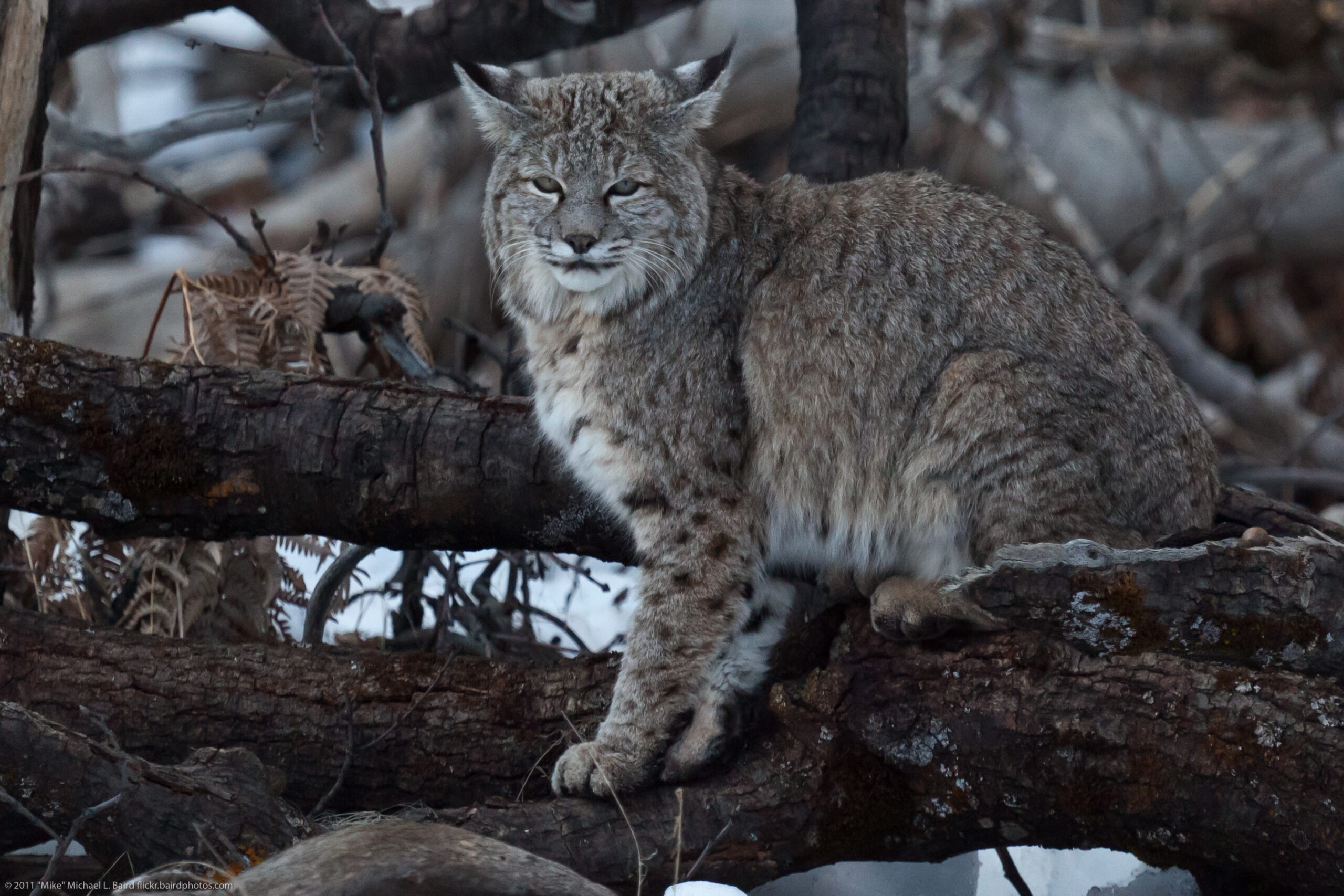 Photo Credit: Mike Baird from Morro Bay, USA / Wikimedia
In the heart of North America’s diverse landscapes roams the bobcat, known scientifically as Lynx rufus. This agile feline is a master of stealth, blending seamlessly into its surroundings, whether it’s the rugged mountains, dense forests, or open fields. With its tufted ears, short tail, and striking spotted coat, the bobcat is a visual marvel that captures the imagination of both scientists and nature lovers alike. Its keen hunting skills and adaptability make it a fascinating subject of study, revealing the intricate balance of life in the wild.
Imagine a quiet evening as the sun dips below the horizon, casting a golden glow over the landscape. The bobcat emerges from its hidden lair, its sharp eyes scanning the terrain for movement. With a graceful leap, it navigates through the underbrush, showcasing its powerful legs and keen senses. This nocturnal hunter is most active during twilight, when the world is alive with the sounds of rustling leaves and distant calls. As it prowls through its territory, the bobcat plays a vital role in its ecosystem, helping to control populations of small mammals and maintaining the delicate balance of nature. Join us as we explore the life of the bobcat, uncovering its behaviors, diet, and the unique role it plays in the wild.
The bobcat, a captivating member of the animal kingdom, holds a special place in the tree of life. Scientifically classified within the Kingdom Animalia, Phylum Chordata, Class Mammalia, Order Carnivora, Family Felidae, and Genus Lynx, this agile feline is known for its adaptability and keen hunting skills. With its tufted ears, short tail, and striking coat, the bobcat is not just another wild cat; it embodies the essence of wilderness in North America. Its ability to thrive in diverse habitats—from dense forests to arid deserts—makes it a true survivor, showcasing the incredible diversity of life on our planet.
| Taxonomic Rank | Scientific Name | Meaning & Significance |
|---|---|---|
| Kingdom | Animalia | This name signifies that bobcats are part of the vast group of multicellular organisms that are heterotrophic, meaning they consume other organisms for energy. |
| Phylum | Chordata | Chordata refers to animals that have a notochord, a flexible rod that supports the body. In bobcats, this structure is present during early development, highlighting their vertebrate lineage. |
| Class | Mammalia | Mammalia indicates that bobcats are warm-blooded animals with fur or hair and mammary glands, which allow females to nurse their young. |
| Order | Carnivora | Carnivora means “meat-eaters,” a fitting name for bobcats, as they primarily hunt small mammals and birds, showcasing their role as predators in the ecosystem. |
| Family | Felidae | Felidae is the family of cats, which includes all true cats. This name reflects their shared characteristics, such as retractable claws and keen senses. |
| Genus | Lynx | The genus name Lynx is derived from the Greek word for “light,” possibly referring to the cat’s keen eyesight or its elusive nature in the wild. |
The classification of the bobcat reveals much about its evolutionary journey. As a member of the Felidae family, it shares a common ancestor with other cats, which dates back millions of years. This lineage has equipped the bobcat with specialized traits for hunting and survival, such as sharp retractable claws and acute senses. Understanding its taxonomic position not only highlights its unique adaptations but also connects it to a broader narrative of evolution, illustrating how species have diversified and adapted to their environments over time. The bobcat stands as a testament to the resilience and ingenuity of life on Earth.
The evolutionary journey of the bobcat, a member of the Felidae family, stretches back millions of years. This agile feline, scientifically known as Lynx rufus, shares a common ancestor with other wild cats that roamed the Earth during the late Miocene epoch, around 10 million years ago. As the climate and landscapes changed, so did the ancestors of the bobcat, leading to adaptations that would help them thrive in diverse environments.
The bobcat’s lineage can be traced to early felids that were larger and more generalized hunters. Over time, these ancestors adapted to various habitats, leading to the emergence of the Lynx genus. This transition marked a significant shift, as these cats developed traits suited for colder climates, such as tufted ears and thick fur. The bobcat itself evolved around 2 million years ago, adapting to North America’s varied ecosystems, from forests to deserts.
These adaptations have been vital for the bobcat’s survival. The ability to hunt effectively in various environments has allowed them to thrive across North America. Their keen senses and physical traits enable them to be stealthy predators, while their camouflage helps them avoid detection by both prey and potential threats. As a result, the bobcat remains a resilient and adaptable species, perfectly suited to its ever-changing habitat.
The bobcat is a striking animal that captures the imagination with its sleek, muscular body and agile movements. This medium-sized feline boasts a compact frame, typically weighing between 9 and 33 pounds. Its powerful legs and sharp claws make it an adept hunter, while its short, bobbed tail adds a distinctive flair to its appearance. With a keen gaze and a confident stance, the bobcat embodies both grace and strength, making it a true marvel of the wild.
| Feature | Description |
|---|---|
| Weight | 4.1 kg – 15.3 kg (9 lbs – 33 lbs) |
| Skin Type | Fur |
| Most Distinctive Feature | Short ear tufts and bobbed tail |
The bobcat’s physical features are not just for show; they play vital roles in its survival. The short ear tufts help enhance its hearing, allowing it to detect the faintest sounds of prey in the underbrush. Meanwhile, the bobbed tail serves as a communication tool, signaling to other bobcats during social interactions. Together, these characteristics, along with its powerful build and keen senses, make the bobcat a formidable predator in its natural habitat, perfectly adapted to thrive in diverse environments.
The bobcat thrives in a variety of habitats that showcase its adaptability and resourcefulness. Picture a landscape where rugged mountains meet dense forests, where swamps teem with life, and where arid deserts stretch under the sun. These diverse environments provide the bobcat with ample opportunities to hunt and hide, making it a master of its domain. Whether it’s the cool shade of a pine tree or the open expanse of a desert, the bobcat is perfectly at home.
Bobcats prefer regions that offer a mix of cover and open space. They are often found in mountainous forests, where the trees provide shelter and the underbrush offers plenty of hiding spots. Swamps are another favorite, as the wetlands are rich in prey like rabbits and birds. In addition, they can adapt to desert areas, where they rely on their keen senses to locate food and water. These habitats typically experience a range of temperatures, from chilly winters to warm summers, allowing bobcats to thrive in various climates.
The bobcat’s ability to adapt to such diverse environments is truly impressive. With its keen eyesight and acute hearing, it can hunt effectively in both dense forests and open fields. Its short tail and tufted ears help it blend into its surroundings, making it a stealthy predator. Additionally, bobcats are skilled climbers and can easily navigate rocky terrains or dense thickets. This versatility not only aids in their survival but also showcases their remarkable ability to thrive in the wild.
The bobcat’s daily life is a blend of stealth, skill, and survival. As a nocturnal and crepuscular hunter, this feline is most active during the twilight hours of dawn and dusk. During these times, it prowls through its territory, which can span several square miles, searching for food. Bobcats are expert stalkers, using their keen senses to detect movement and sounds in the underbrush. They rely on their sharp eyesight and acute hearing to locate prey, which includes rabbits, rodents, and even birds. When the sun rises high, bobcats often retreat to their dens or hidden spots to rest, conserving energy for their next hunt.
In terms of social behavior, bobcats are solitary animals. Unlike some other big cats that form groups, bobcats prefer to live alone, marking their territory with scent markings to communicate their presence to others. This solitary lifestyle allows them to be stealthy hunters, as they do not have to compete with others for food. While they may occasionally cross paths with other bobcats, these encounters are usually brief and non-aggressive. Communication among bobcats happens through vocalizations, such as growls and yowls, as well as through body language and scent markings.
| Behavior Type | Description |
|---|---|
| Activity Patterns | Nocturnal and crepuscular, primarily active during dawn and dusk. |
| Social Structure | Solitary, with each bobcat maintaining its own territory. |
| Communication Methods | Vocalizations like growls and yowls, along with scent marking. |
The behaviors of bobcats are finely tuned to ensure their survival in the wild. By being active during twilight hours, they can take advantage of the cover of darkness to hunt effectively. Their solitary nature reduces competition for food, allowing them to thrive in diverse habitats. Through their keen communication methods, they maintain their territories and avoid unnecessary confrontations. All these traits work together, making the bobcat a successful predator in its environment.
The bobcat is a carnivore, which means it primarily eats meat. This agile feline has a varied diet that includes a range of prey, but it particularly enjoys feasting on rabbits and mice. Bobcats are skilled hunters, using their keen senses and stealthy movements to stalk and ambush their meals. They often hunt alone, relying on their sharp eyesight and acute hearing to detect potential prey. With a combination of patience and speed, they can pounce on unsuspecting animals, making them effective predators in their environment.
| Dietary Aspect | Details |
|---|---|
| Diet Type | Carnivore |
| Favorite Foods | Rabbits, mice, and occasionally deer |
| Prey Items | Small mammals, birds, and sometimes larger animals like deer |
| Hunting Strategies | Stalking and ambushing, often hunting alone |
The bobcat’s diet plays a crucial role in shaping its ecology and daily routine. By preying on small mammals, it helps control their populations, which in turn supports the balance of the ecosystem. This feline’s hunting habits also dictate its movements and territory, as it needs to find areas rich in prey to thrive. As a result, the bobcat is not just a solitary hunter; it is an integral part of its habitat, influencing the lives of many other species around it.
When it comes to bobcats, the mating season is an exciting time filled with courtship rituals. Typically, this occurs from late winter to early spring, around February to March. During this period, male bobcats will roam their territories, searching for females. They communicate through vocalizations, scent markings, and even playful chases. Once a female is ready to mate, she will signal her interest, and the pair will engage in a series of brief mating sessions. After a successful courtship, the female will prepare for the arrival of her young.
| Reproductive Aspect | Details |
|---|---|
| Gestation Period | 60 – 70 days |
| Average Litter Size | 3 |
| Age of Sexual Maturity | 1 – 2 years |
| Name of Young | Kitten |
Once the kittens are born, they are completely dependent on their mother for survival. Bobcat mothers are incredibly attentive, nursing their young and keeping them safe in a secluded den, often hidden in dense vegetation or rocky crevices. The kittens are born blind and helpless, but they grow quickly. By the time they are about two months old, they begin to explore their surroundings and learn essential survival skills. As they approach maturity at one to two years, these young bobcats will start to venture out on their own, ready to establish their own territories and continue the cycle of life in the wild.
The bobcat occupies a vital role in its ecosystem, acting as both predator and prey within the food web. As a skilled hunter, it helps control populations of small mammals, such as rabbits and rodents, which in turn supports the balance of plant life. However, bobcats face various dangers that threaten their survival, making their existence a delicate balancing act in nature.
To navigate these threats, bobcats have developed several defensive behaviors and survival strategies. They are masters of camouflage, blending seamlessly into their surroundings to avoid detection. When threatened, a bobcat may freeze in place or retreat to dense cover, using its agility to escape danger. Additionally, their keen senses allow them to detect potential threats from a distance, giving them a head start in evading predators. Through these clever adaptations, bobcats continue to thrive in the wild, showcasing their resilience in the face of challenges.
A keystone species is an organism that plays a crucial role in maintaining the structure of its ecosystem. Its presence or absence can significantly impact the environment and the other species living there. The bobcat, known scientifically as Lynx rufus, qualifies as a keystone species due to its role as a predator in various habitats, including mountainous forests, swamps, and deserts. By regulating prey populations, bobcats help maintain a balanced ecosystem.
Bobcats are skilled hunters, primarily preying on small mammals like rabbits and rodents. This predation is vital because it prevents these populations from exploding, which could lead to overgrazing and depletion of vegetation. For instance, if rabbit numbers were to surge unchecked, they could consume large amounts of plant life, disrupting the habitat for other species. By keeping these populations in check, bobcats indirectly support the health of their environment.
Moreover, bobcats also serve as prey for larger predators, such as coyotes and mountain lions. This dynamic creates a complex food web where energy flows through various levels of the ecosystem. When bobcats thrive, they provide a food source for these larger carnivores, which in turn helps regulate their populations. This interconnectedness highlights the bobcat’s importance in maintaining ecological balance.
In addition to their role as predators, bobcats contribute to the biodiversity of their habitats. Their hunting habits can influence the distribution of other species, allowing a variety of plants and animals to coexist. This diversity is essential for a resilient ecosystem, as it can better withstand environmental changes and disturbances.
If bobcats were to disappear from their ecosystems, the consequences could be severe. Without these skilled hunters, populations of small mammals would likely explode, leading to overgrazing and habitat degradation. This could result in a decline in plant diversity and health, which would affect other animals that rely on those plants for food and shelter. The ripple effects would extend throughout the ecosystem, demonstrating just how vital bobcats are to the balance of nature.
The bobcat is a fascinating player in its ecosystem, serving as a keystone species that helps maintain the balance of nature. This adaptable feline thrives in diverse habitats, from mountainous forests to swamps and deserts. By preying on small mammals, the bobcat regulates their populations, ensuring that no single species overwhelms the environment. Its presence influences the entire food web, making it a vital component of the ecosystems it inhabits.
| Ecosystem Service | Impact |
|---|---|
| Population Control | Regulates numbers of small mammals, preventing overpopulation. |
| Prey Availability | Maintains a balance of prey species, which supports other predators. |
| Habitat Diversity | Encourages a variety of plant and animal life through its hunting habits. |
| Scavenger Support | Provides food for scavengers by leaving behind remains of its kills. |
Bobcats influence their surroundings in many ways. For instance, by hunting rabbits and rodents, they help keep these populations in check. If rabbit numbers were to soar, they could overgraze vegetation, leading to habitat degradation. Additionally, the bobcat’s hunting patterns create opportunities for other predators, like hawks and foxes, to thrive. When bobcats leave behind scraps from their meals, they also support scavengers such as vultures and raccoons, contributing to a healthy ecosystem.
The broader ecological importance of the bobcat cannot be overstated. As a keystone species, its role extends beyond mere predation. By shaping the populations of its prey, the bobcat helps maintain the health of the entire ecosystem. This balance fosters biodiversity, allowing various species to coexist and thrive. In essence, the bobcat is not just a solitary hunter; it is a vital architect of its environment, ensuring that life continues to flourish in the wild.
In the intricate web of nature, symbiosis plays a vital role in the survival and success of many species, including the bobcat. Symbiosis refers to the close interactions between different species, which can be beneficial, harmful, or neutral. These relationships can take many forms, such as mutualism, where both species gain advantages, parasitism, where one benefits at the other’s expense, and commensalism, where one species benefits while the other is neither helped nor harmed. Understanding these connections helps us appreciate the delicate balance of ecosystems and the roles that various animals, like the bobcat, play within them.
| Species/Type | Relationship Type | Description |
|---|---|---|
| Rabbits | Mutualistic | Bobcats help control rabbit populations, which can prevent overgrazing and promote healthy vegetation growth. |
| Ticks | Parasitic | Ticks feed on bobcats’ blood, which can weaken the animal and transmit diseases. |
| Birds of Prey | Commensal | Birds may follow bobcats to scavenge leftovers from their kills, benefiting from the bobcat’s hunting success without affecting it. |
These relationships have evolved over time, shaped by the needs and behaviors of the species involved. The bobcat’s role as a predator helps maintain the balance of its ecosystem, ensuring that prey populations, like rabbits, do not explode and disrupt plant life. Meanwhile, the presence of parasites like ticks highlights the challenges bobcats face in the wild. Commensal relationships, such as those with birds of prey, showcase how different species can coexist and benefit from one another without direct competition. Together, these interactions illustrate the complexity of nature and the importance of every species in maintaining ecological harmony.
The bobcat is a fascinating feline that often goes unnoticed in the wild, yet it possesses some truly surprising traits that make it a remarkable part of our ecosystem.
Throughout history, bobcats have woven themselves into the fabric of human culture and folklore. Native American tribes often revered these agile felines, seeing them as symbols of stealth and cunning. Stories and legends featuring bobcats highlight their role as skilled hunters, embodying the spirit of the wild. In some cultures, they were even thought to possess mystical qualities, representing a connection between the earthly and the spiritual. As settlers expanded across North America, encounters with bobcats became more common, leading to a mix of admiration and fear. These encounters shaped perceptions of the bobcat, influencing art, literature, and local traditions.
In modern times, the relationship between bobcats and humans has evolved significantly. Conservation efforts have gained momentum as people recognize the importance of preserving natural habitats for these elusive creatures. However, conflicts can arise, especially in suburban areas where bobcats may prey on pets or livestock. While some people view them as a threat, others appreciate their role in controlling rodent populations. Interestingly, there are also efforts to educate communities about coexisting with bobcats, emphasizing their ecological importance. Unlike domesticated cats, bobcats remain wild and independent, but their presence in urban areas sparks curiosity and concern alike.
Looking ahead, the future of the bobcat and humanity’s relationship holds promise. As awareness of environmental issues grows, more people are advocating for the protection of natural habitats that support bobcat populations. By fostering a sense of respect and understanding, we can learn to appreciate these magnificent animals while ensuring their survival. With continued education and conservation efforts, bobcats can thrive alongside humans, reminding us of the wild beauty that exists just beyond our doorsteps.
The bobcat, a resilient and adaptable feline, currently holds a conservation status of “Least Concern” according to the International Union for Conservation of Nature (IUCN). This means that, overall, the species is not facing immediate threats of extinction. With an estimated population size of around 1,000,000 individuals, bobcats are thriving in various habitats across North America. Their numbers have remained stable, showcasing their ability to adapt to changing environments and human encroachment.
| Conservation Factor | Status/Details |
|---|---|
| IUCN Status | Least Concern |
| Estimated Population Size | 1,000,000 |
| Population Trend | Stable |
Despite their stable status, bobcats face several challenges that threaten their habitats and populations. Urban development, agriculture, and deforestation can fragment their living spaces, making it harder for them to find food and mates. Additionally, road accidents pose a significant risk, as these agile hunters often cross roads in search of prey. Climate change also looms as a potential threat, altering the ecosystems that bobcats rely on for survival.
Conservation efforts are underway to ensure the continued success of bobcats in the wild. Many organizations are working to protect their habitats through land preservation and restoration projects. Education programs help raise awareness about the importance of bobcats in maintaining ecological balance. With ongoing efforts and a stable population, the outlook for bobcats remains positive, allowing future generations to appreciate these incredible animals in their natural environments.
| Question | Answer |
|---|---|
| What is the habitat of a Bobcat? | Bobcats are incredibly adaptable and can be found in a variety of habitats. They thrive in mountainous forests, swamps, and even deserts, showcasing their ability to live in diverse environments. |
| What do Bobcats eat? | As carnivores, Bobcats primarily hunt small mammals like rabbits and rodents. They are skilled hunters and will also eat birds and even the occasional deer if the opportunity arises. |
| How do Bobcats behave? | Bobcats are solitary animals, meaning they prefer to live and hunt alone. They are most active during dawn and dusk, a behavior known as crepuscular, which helps them avoid larger predators. |
| How do Bobcats reproduce? | Bobcats typically mate in late winter or early spring. After a gestation period of about two months, the female gives birth to a litter of one to six kittens, which she raises alone. |
| What threats do Bobcats face? | While Bobcats are currently classified as Least Concern, they still face threats from habitat loss and hunting. Human activities can disrupt their natural habitats, making it harder for them to find food and shelter. |
| What are some interesting characteristics of Bobcats? | One of the most distinctive features of Bobcats is their short ear tufts and bobbed tail, which give them their name. They also have excellent night vision, allowing them to hunt effectively in low light. |
| How do Bobcats communicate? | Bobcats communicate through a variety of vocalizations, including growls, hisses, and meows. They also use scent marking to establish territory and communicate with other Bobcats. |