
Taxonomy & Classification
- Kingdom
- Animalia
- Phylum
- Chordata
- Class
- Mammalia
- Order
- Primates
- Family
- Hominidae
- Genus
- Pongo
- Species
- Pongo pygmaeus

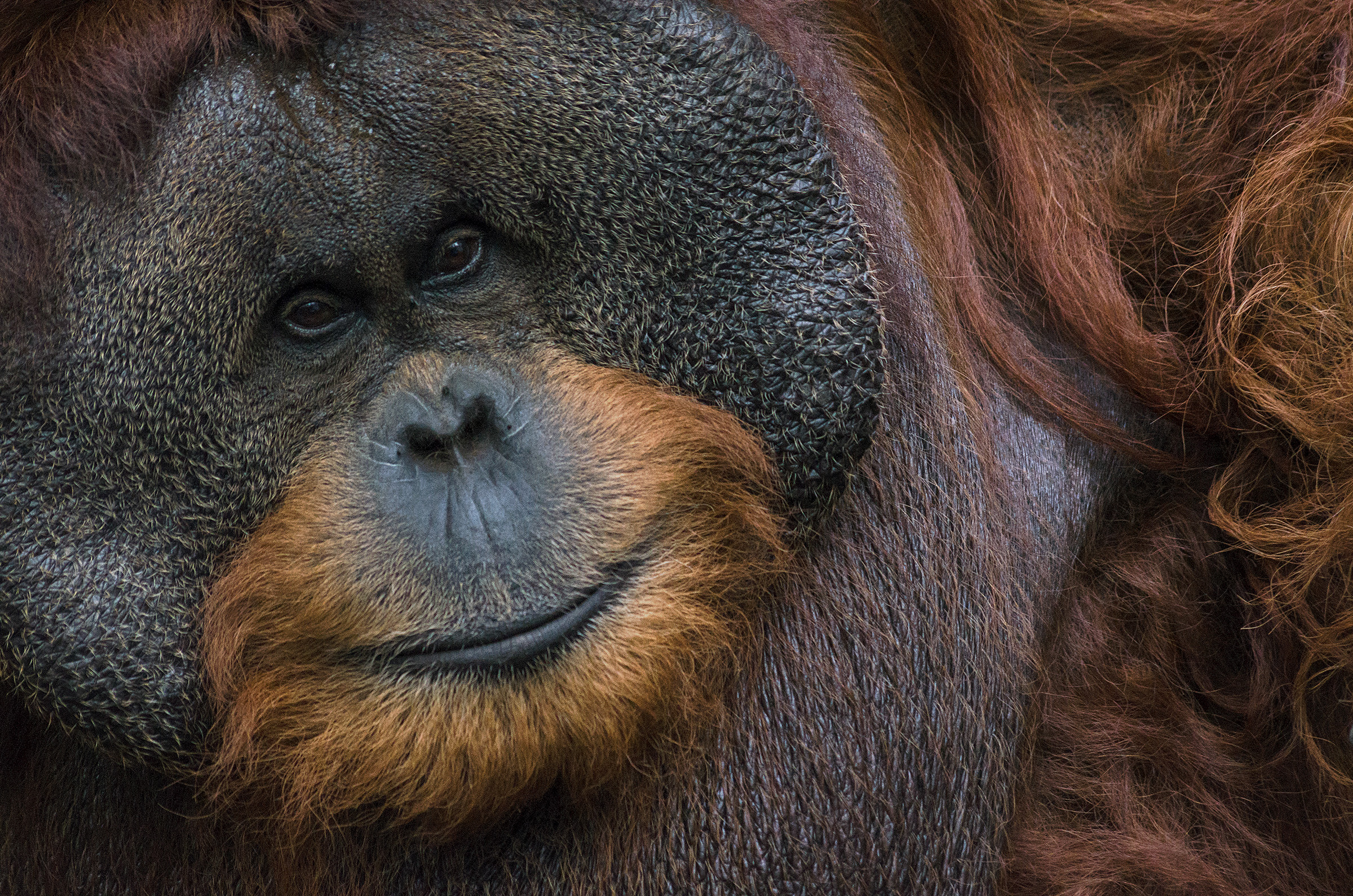 Photo Credit: Ridwan0810 / Wikipedia
In the heart of Borneo’s lush rainforests, the Bornean orangutan, known scientifically as Pongo pygmaeus, swings gracefully from branch to branch, embodying the spirit of the wild. With its long, powerful arms and striking reddish-brown fur, this great ape is a master of the treetops, where it spends most of its life. As the sunlight filters through the dense canopy, illuminating the vibrant greens and browns of its habitat, the orangutan forages for ripe fruits, showcasing its keen intelligence and adaptability. This remarkable creature is not just a sight to behold; it captivates scientists and nature enthusiasts alike with its complex behaviors and social structures.
The Bornean orangutan is often referred to as the “red ape” or the “forest people,” names that reflect its deep connection to the rainforest ecosystem. These gentle giants are known for their solitary nature, yet they exhibit fascinating social interactions, especially during mating season. Their role as a frugivore, meaning they primarily eat fruits, makes them vital for seed dispersal, helping to maintain the health of their forest home. As we delve deeper into the world of Pongo pygmaeus, we will explore its unique adaptations, the challenges it faces in a rapidly changing environment, and the crucial conservation efforts needed to protect this incredible species. Join us on this adventure to uncover the secrets of the Bornean orangutan and the enchanting rainforest it calls home.
The Bornean orangutan, a captivating member of the animal kingdom, holds a special place in the tree of life. Scientifically classified as Pongo pygmaeus, this great ape is part of the Hominidae family, which includes humans, gorillas, and chimpanzees. What sets the Bornean orangutan apart is not just its striking reddish-brown fur and long, swinging arms, but also its remarkable intelligence and complex social behaviors. These traits make it a vital part of its rainforest habitat, where it plays a crucial role in seed dispersal and forest regeneration.
| Taxonomic Rank | Scientific Name | Meaning & Significance |
|---|---|---|
| Kingdom | Animalia | This name signifies that orangutans are part of the vast group of multicellular organisms that are capable of movement and responsive to their environment. |
| Phylum | Chordata | Chordata refers to animals that have a notochord, a flexible rod that supports the body. In orangutans, this structure is present during early development, highlighting their vertebrate lineage. |
| Class | Mammalia | Mammalia indicates that orangutans are warm-blooded animals with fur and mammary glands, which allow mothers to nurse their young, a key feature of their nurturing behavior. |
| Order | Primates | Primates are characterized by their flexible limbs and large brains. This order includes species known for their social structures and problem-solving abilities, traits that are evident in the orangutan’s behavior. |
| Family | Hominidae | The Hominidae family, often called the “great apes,” includes species that share a close evolutionary relationship with humans, emphasizing the orangutan’s advanced cognitive abilities. |
| Genus | Pongo | Pongo is derived from the Malay word for “ape,” reflecting the orangutan’s arboreal lifestyle and its adaptation to life in the trees of Southeast Asia. |
Understanding the Bornean orangutan’s classification reveals much about its evolutionary history. As a member of the Hominidae family, it shares a common ancestor with humans, which dates back millions of years. This connection not only highlights the orangutan’s advanced cognitive skills but also underscores the importance of conserving its rainforest habitat. By protecting these incredible animals, we are also safeguarding a piece of our own evolutionary story.
The evolutionary journey of the Bornean orangutan, known scientifically as Pongo pygmaeus, stretches back millions of years. This great ape shares a common ancestor with humans and other great apes, tracing its lineage to a time when the world was a very different place. The story of the Bornean orangutan is one of adaptation and survival, shaped by the lush rainforests of Borneo, where it has thrived for thousands of years.
The ancestors of the Bornean orangutan diverged from other great apes around 14 to 16 million years ago. During this time, they began to develop traits that would help them navigate their arboreal (tree-dwelling) lifestyle. As they adapted to life in the trees, their limbs became longer and more flexible, allowing them to swing gracefully from branch to branch. Over time, these early ancestors also developed a more pronounced grasping ability in their hands and feet, which is essential for climbing and holding onto branches securely.
The Bornean orangutan’s evolutionary path also saw the development of a highly intelligent brain, which is crucial for problem-solving and social interactions. This intelligence is reflected in their ability to use tools, such as sticks to extract insects or leaves to collect water. As they evolved, they also adapted to a diet primarily consisting of fruit, which required them to have strong jaws and teeth capable of processing tough plant material.
These adaptations have been vital for the survival of the Bornean orangutan in the dense rainforests of Borneo. Their long arms and grasping limbs allow them to move effortlessly through the treetops, while their intelligence helps them find food and avoid dangers. As they continue to face threats from habitat loss and climate change, these remarkable adaptations will be crucial in helping them navigate the challenges of their environment and ensure their survival for generations to come.
The Bornean orangutan is a striking figure in the lush rainforests of Borneo. With its long, powerful arms and a body built for life among the treetops, this great ape commands attention. Its overall appearance is both robust and graceful, showcasing a blend of strength and agility. The orangutan’s limbs are exceptionally long, allowing it to swing effortlessly from branch to branch, while its large, expressive face reveals a depth of intelligence and curiosity.
| Feature | Description |
|---|---|
| Weight | 30kg – 90kg (66lbs – 200lbs) |
| Skin Type | Hair |
| Most Distinctive Feature | Highly intelligent with very long arms |
These physical traits are not just for show; they play crucial roles in the orangutan’s survival. The long arms are perfect for reaching out to grab fruit and leaves, which make up a large part of their diet. Their hair provides insulation and protection from the elements, while their impressive weight helps them navigate the branches without fear of falling. Together, these features create a remarkable adaptation to life in the treetops, allowing the Bornean orangutan to thrive in its vibrant, green world.
The Bornean orangutan thrives in the enchanting rainforests of Borneo, where towering trees stretch high into the sky, creating a vibrant canopy filled with life. This lush habitat is a tapestry of green, with vines and ferns weaving through the underbrush. The air is thick with humidity, and the sounds of chirping birds and rustling leaves create a symphony of nature. Here, the orangutans swing gracefully from branch to branch, expertly navigating their arboreal world, which is rich in fruits and leaves that provide their primary diet.
The climate in Borneo is tropical, characterized by warm temperatures and heavy rainfall throughout the year. This environment is essential for the growth of the dense forests that the orangutans call home. The average temperature hovers around 27 degrees Celsius (81 degrees Fahrenheit), and the region receives about 2,500 to 4,000 millimeters (98 to 157 inches) of rain annually. Such conditions create a lush, green paradise, perfect for the diverse plant life that supports the orangutans’ diet and lifestyle.
To thrive in this specific habitat, Bornean orangutans have developed remarkable adaptations. Their long arms and strong hands allow them to swing effortlessly through the trees, while their keen sense of spatial awareness helps them navigate the complex forest structure. They are also excellent climbers, using their powerful limbs to reach high branches where they find their favorite fruits. Additionally, their reddish-brown fur provides camouflage among the leaves, helping them stay hidden from potential predators. These adaptations ensure that the orangutans not only survive but flourish in their vibrant rainforest home.
The Bornean orangutan leads a life that is both fascinating and complex, filled with daily activities that revolve around the lush canopies of its rainforest home. As a diurnal species, these great apes are most active during the day. Their mornings often begin with a leisurely breakfast, munching on a variety of fruits, leaves, and occasionally insects. After satisfying their hunger, they spend hours swinging gracefully from branch to branch, using their long arms to navigate the treetops. This playful exploration is not just for fun; it helps them develop the skills needed for survival in their arboreal environment.
Socially, Bornean orangutans are known for their solitary nature. Unlike many other primates that thrive in groups, these great apes prefer to live alone, except for mothers with their young. This solitary lifestyle allows them to avoid competition for food and resources. However, they do engage in social interactions, especially during mating season. Males will often communicate with one another through loud calls that echo through the forest, signaling their presence and attracting potential mates. While they may not form tight-knit groups, these interactions are crucial for their reproductive success.
| Behavior Type | Description |
|---|---|
| Activity Patterns | Active during the day, Bornean orangutans spend their time foraging for food, climbing trees, and resting in nests they build each night. |
| Social Structure | Primarily solitary, with adult males and females living independently, except for mothers with their offspring. |
| Communication Methods | Use vocalizations, such as loud calls, to communicate with others, especially during mating season. |
The behaviors of Bornean orangutans are finely tuned to ensure their survival in the wild. Their solitary lifestyle reduces competition for food, allowing them to thrive in a habitat where resources can be scarce. By mastering the art of climbing and foraging, they can access a diverse diet that supports their health and well-being. Their unique communication methods also play a vital role in their reproductive success, ensuring that they can find mates when the time is right. In this way, the daily life of the Bornean orangutan is a beautiful dance of adaptation and survival in the heart of the rainforest.
The Bornean orangutan has a diverse diet that primarily consists of fruits, making it an omnivore. These intelligent apes are expert foragers, using their keen sense of smell and impressive climbing skills to locate food high in the treetops. They spend a significant portion of their day searching for ripe fruits, which are not only delicious but also packed with nutrients. In addition to fruits, they also consume bark and insects, showcasing their adaptability in the lush rainforest environment.
| Dietary Aspect | Details |
|---|---|
| Diet Type | Omnivore |
| Favorite Foods | Fruits, especially figs and durians |
| Prey Items | Bark, insects |
| Hunting/Foraging Strategies | Climbing trees, using tools to extract insects |
This varied diet plays a crucial role in the ecology of the Bornean orangutan. By consuming fruits and dispersing seeds, they help maintain the health of their rainforest habitat. Their foraging habits also influence the growth patterns of trees and plants, creating a dynamic relationship between the orangutans and their environment. As they navigate the treetops in search of food, they shape their daily routines around the availability of different food sources, making them vital players in the ecosystem of Borneo’s rainforests.
The mating behavior of Bornean orangutans is as intriguing as their lush rainforest home. These great apes typically engage in a unique courtship ritual, where males display their strength and agility to attract females. Breeding season can vary, but it often peaks during times when food is abundant, ensuring that mothers have enough resources to support their young. Males may compete for the attention of females, showcasing their impressive size and vocalizations, which can echo through the trees.
| Reproductive Aspect | Details |
|---|---|
| Gestation Period | 9 months |
| Average Litter Size | 1 |
| Age of Sexual Maturity | 12 – 15 years |
| Name of Young | Infant |
Once an infant is born, the journey of growth and development begins. Bornean orangutan mothers are incredibly devoted, providing constant care and nurturing. They carry their infants on their bodies for the first few years, allowing them to bond closely. As the young orangutans grow, they learn essential survival skills by observing their mothers. This includes foraging for food and navigating the treetops. The bond between mother and child is vital, as it not only ensures the infant’s survival but also helps shape the future of these intelligent beings as they transition into adulthood.
The Bornean orangutan plays a vital role in its ecosystem, primarily as a frugivore, meaning it mainly eats fruits. This diet helps in seed dispersal, which is crucial for the health of the rainforest. However, despite being at the top of its food web, the Bornean orangutan faces numerous dangers that threaten its survival.
To defend themselves against these threats, Bornean orangutans have developed several survival strategies. They are incredibly agile climbers, using their long arms to navigate the treetops swiftly, which helps them escape from potential predators. Additionally, they are known for their intelligence, often using tools to access food or create shelters. Their solitary nature also allows them to avoid confrontations, as they prefer to stay hidden among the leaves and branches of their forest home.
A keystone species is an organism that has a disproportionately large impact on its environment relative to its abundance. In the case of the Bornean orangutan, this great ape certainly qualifies as a keystone species. Its presence in the rainforest of Borneo is crucial for maintaining the health and balance of its ecosystem. By playing a vital role in seed dispersal and influencing the structure of the forest, the Bornean orangutan helps sustain the rich biodiversity that thrives in its habitat.
One of the most significant ways the Bornean orangutan impacts its ecosystem is through its diet. As an omnivore, it primarily feeds on fruits, which means it plays a key role in seed dispersal. When these orangutans consume fruits, they often travel long distances before excreting the seeds. This process helps to spread various plant species throughout the forest, promoting plant diversity and ensuring that new trees can grow. Without the orangutan’s foraging habits, many tree species would struggle to reproduce, leading to a less diverse and less resilient forest.
Additionally, the Bornean orangutan’s solitary lifestyle allows it to occupy a unique niche in the ecosystem. By foraging in different areas, these apes help to maintain the balance of plant populations. Their selective feeding habits can prevent any one species from dominating the landscape, which is essential for the overall health of the forest. This balance supports a wide range of other species, from insects to birds, all of which rely on the diverse plant life for food and shelter.
Moreover, the Bornean orangutan’s presence influences the behavior of other animals in the forest. For example, the sounds and movements of these great apes can alert other species to potential dangers, such as predators. This interaction creates a dynamic web of relationships that enhances the stability of the ecosystem.
If the Bornean orangutan were to disappear, the consequences would be dire. The loss of this keystone species would disrupt the delicate balance of the rainforest. Without their seed dispersal, many tree species would decline, leading to a less diverse forest. This decline would not only affect the orangutans but also countless other species that depend on the trees for food and habitat. The vibrant ecosystem of Borneo would face significant challenges, potentially leading to a collapse of the intricate relationships that sustain life in this remarkable rainforest.
The Bornean orangutan, a vital inhabitant of the rainforests of Borneo, plays a crucial role in shaping its ecosystem. As a frugivore, meaning it primarily eats fruits, this great ape influences the growth and health of the forest. By foraging for food high in the trees, the orangutan helps maintain the balance of plant life, ensuring that various species thrive. Its presence in the lowland forests and peat-swamps creates a dynamic interplay between the animal and its environment, making it an essential part of the ecological community.
| Ecosystem Service | Impact |
|---|---|
| Seed Dispersal | Orangutans eat fruits and then excrete the seeds, helping new plants grow in different areas. |
| Forest Regeneration | By consuming fruits, they promote the growth of various tree species, contributing to a diverse ecosystem. |
| Habitat Creation | As they move through the trees, orangutans create pathways that other animals can use, enhancing biodiversity. |
| Soil Enrichment | Their waste adds nutrients to the soil, supporting plant growth and overall forest health. |
The influence of the Bornean orangutan extends beyond just eating fruits. For instance, when they consume the fruit of the durian tree, they help spread its seeds across the forest. This not only aids in the growth of new durian trees but also supports other species that rely on these trees for food and shelter. Additionally, as they swing from branch to branch, they create openings in the canopy, allowing sunlight to reach the forest floor. This light encourages the growth of smaller plants and shrubs, which in turn provide food and habitat for countless other creatures.
The broader ecological importance of the Bornean orangutan cannot be overstated. As a keystone species, their activities have a ripple effect throughout the rainforest ecosystem. Without them, the delicate balance of plant and animal life would be disrupted, leading to a decline in biodiversity. Protecting these incredible apes is not just about saving a single species; it’s about preserving the entire rainforest ecosystem that relies on their presence. By understanding and valuing the role of the Bornean orangutan, we can better appreciate the intricate web of life that sustains our planet.
In the intricate web of life, symbiosis refers to the close and often long-term interactions between different species. These relationships can take many forms, including mutualism, where both species benefit, commensalism, where one benefits while the other is neither helped nor harmed, and parasitism, where one species benefits at the expense of another. The Bornean orangutan, a solitary yet vital inhabitant of the rainforests of Borneo, engages in various ecological partnerships that highlight the interconnectedness of life in its lush habitat.
| Species/Type | Relationship Type | Description |
|---|---|---|
| Fruit Trees | Mutualistic | The Bornean orangutan helps disperse seeds from the fruits it eats, promoting the growth of new trees, while the trees provide food for the orangutans. |
| Epiphytic Plants | Commensal | These plants grow on the branches of trees without harming them, benefiting from the height and light while the trees remain unaffected. |
| Parasites (e.g., ticks) | Parasitic | Ticks and other parasites feed on the orangutan’s blood, benefiting at the orangutan’s expense, which can lead to health issues for the ape. |
The evolution of these relationships showcases the dynamic nature of ecosystems. Over time, Bornean orangutans have adapted to their environment, forming partnerships that enhance their survival and that of other species. By dispersing seeds, they not only ensure their own food supply but also contribute to the health of the rainforest. Meanwhile, the presence of epiphytic plants adds to the biodiversity of the canopy, creating a rich habitat for many organisms. Understanding these connections helps us appreciate the delicate balance of nature and the importance of protecting these magnificent creatures and their homes.
The Bornean orangutan is a captivating creature that showcases the wonders of evolution and adaptation in the lush rainforests of Borneo. These great apes are not just remarkable for their appearance but also for their surprising behaviors and ecological significance.
The relationship between Bornean orangutans and humanity has deep historical roots, woven into the cultural fabric of the regions they inhabit. For centuries, these magnificent apes have been revered in local folklore and traditions. Indigenous communities often view them as symbols of strength and wisdom, reflecting a profound respect for the natural world. Early encounters between humans and orangutans were marked by curiosity and awe, as these intelligent creatures displayed behaviors that mirrored our own. This connection has fostered a sense of kinship, reminding us of our shared ancestry and the importance of preserving the delicate balance of our ecosystems.
In contemporary times, the interactions between Bornean orangutans and humans have become increasingly complex. As deforestation and habitat destruction escalate due to logging and agriculture, orangutans face significant threats to their survival. Conservation efforts are underway, with organizations working tirelessly to protect their habitats and promote sustainable practices. However, conflicts often arise when orangutans venture into agricultural areas in search of food, leading to tensions between local farmers and these great apes. While some communities have embraced ecotourism as a way to support conservation, others struggle with the challenges of coexistence, highlighting the need for innovative solutions that benefit both humans and orangutans.
As we look to the future, the relationship between Bornean orangutans and humanity hangs in a delicate balance. The choices we make today will shape the fate of these incredible apes and their rainforest homes. By fostering a deeper understanding of their ecological role and promoting sustainable practices, we can create a harmonious coexistence that benefits both species. The journey ahead requires collaboration, compassion, and a commitment to preserving the rich biodiversity of our planet, ensuring that future generations can marvel at the wonders of the Bornean orangutan.
The Bornean orangutan is currently classified as Critically Endangered, a status that highlights the urgent need for conservation efforts. With an estimated population of around 13,500 individuals remaining in the wild, these incredible apes are facing significant challenges. The population trend is alarming, as numbers continue to decline due to various threats, making the future of the Bornean orangutan precarious.
| Conservation Factor | Status/Details |
|---|---|
| IUCN Status | Critically Endangered |
| Estimated Population Size | Approximately 13,500 |
| Population Trend | Declining |
The main threats to the Bornean orangutan are primarily linked to human activities. Deforestation, driven by logging and agricultural expansion, is the most significant danger. As forests are cleared for palm oil plantations and other agricultural uses, orangutans lose their natural habitat, which is essential for their survival. Additionally, illegal hunting and the pet trade pose serious risks, further endangering these magnificent apes.
Conservation efforts are underway to protect the Bornean orangutan and its habitat. Organizations are working to establish protected areas and promote sustainable land-use practices that benefit both wildlife and local communities. Rehabilitation programs for orphaned orangutans are also crucial, helping to reintroduce them into the wild. While the outlook remains challenging, the dedication of conservationists and the growing awareness of the species’ plight offer hope for a brighter future for the Bornean orangutan.
| Question | Answer |
|---|---|
| What is the natural habitat of the Bornean orangutan? | Bornean orangutans live in lowland forests and peat-swamps. These areas are rich in biodiversity and provide the trees they need for climbing and nesting. |
| What do Bornean orangutans eat? | They are omnivores, which means they eat both plants and animals. Their diet mainly consists of fruits, leaves, and insects, but they can also consume small animals when the opportunity arises. |
| How do Bornean orangutans behave in the wild? | Bornean orangutans are known for their intelligence and solitary nature. They often spend their time alone or with their young, using tools to help them access food and build nests in trees for sleeping. |
| How do Bornean orangutans reproduce? | Female orangutans typically give birth to one baby every 6 to 8 years after a gestation period of about 8.5 months. The young stay with their mothers for several years, learning essential survival skills. |
| What are the main threats to Bornean orangutans? | Bornean orangutans face significant threats from habitat loss due to deforestation and palm oil plantations. They are also hunted and captured for the illegal pet trade, which further endangers their population. |
| What is a unique characteristic of Bornean orangutans? | One of their most distinctive features is their long arms, which help them swing gracefully through the trees. They are also highly intelligent, capable of using tools and solving complex problems. |
| Why are Bornean orangutans considered critically endangered? | They are classified as critically endangered due to their rapidly declining population, primarily caused by habitat destruction and poaching. Conservation efforts are crucial to protect these remarkable creatures and their environment. |