Taxonomy & Classification
- Kingdom
- Animalia
- Phylum
- Cnidaria
- Class
- Cubozoa
- Family
- Chirodropidae, Carybdeidae
- Genus
- Chironex

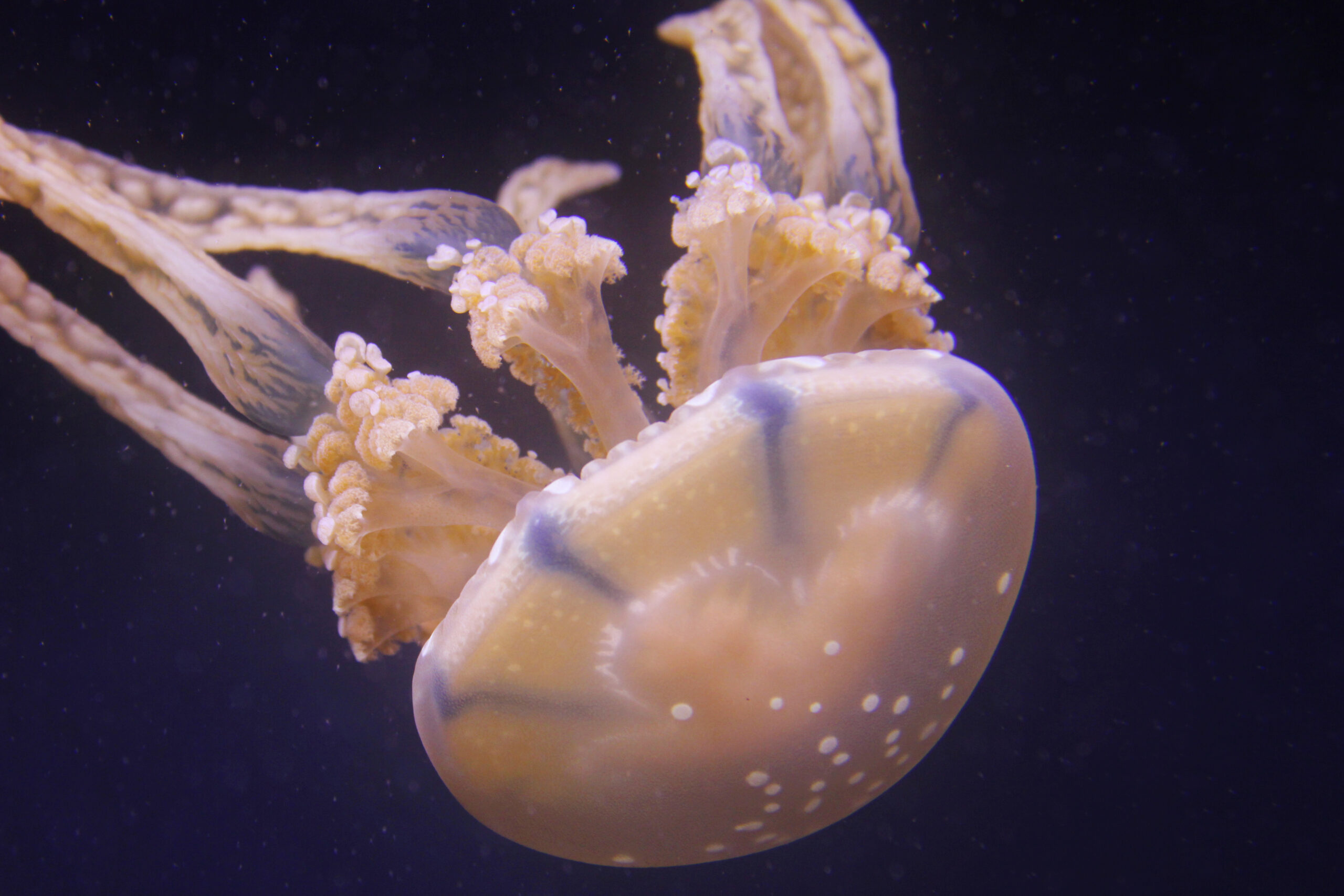 Photo Credit: Will Fisher from Richmond, VA, United States / Wikimedia
In the shimmering waters of the tropical oceans, the Box Jellyfish, scientifically known as Chironex, glides gracefully through the currents. With its distinctive cube-shaped bell, which can reach up to 30 centimeters across, this mesmerizing creature captures the imagination of both scientists and nature lovers alike. Its translucent body, adorned with delicate, trailing tentacles, creates a stunning visual display as it moves, almost like a ghostly apparition in the sunlit sea. But beneath this ethereal beauty lies a powerful secret: the Box Jellyfish is one of the most venomous animals on the planet, capable of delivering a sting that can be fatal to humans.
As it drifts through warm, shallow waters, the Box Jellyfish plays a vital role in its ecosystem, helping to maintain the balance of marine life. It feeds on small fish, crustaceans, and other tiny creatures, using its tentacles to capture prey with remarkable efficiency. This jellyfish’s long evolutionary history, stretching back over 500 million years, makes it a living link to the ancient oceans of our planet. With its unique adaptations and intriguing behaviors, the Box Jellyfish continues to be a subject of fascination, drawing researchers eager to unlock the mysteries of its life and the role it plays in the underwater world. Join us as we dive deeper into the life of Chironex, exploring its habitat, diet, and the delicate balance it maintains in the ocean’s vibrant tapestry.
The Box Jellyfish, scientifically known as Chironex, occupies a fascinating position in the tree of life. It belongs to the Kingdom Animalia, which includes all animals, and is classified under the Phylum Cnidaria. This phylum is known for its members having specialized cells called cnidocytes, which contain stinging structures used for capturing prey. What sets the Box Jellyfish apart is its cube-shaped body and its potent venom, making it one of the most dangerous marine animals. Its unique morphology and behavior not only capture the attention of scientists but also highlight its evolutionary adaptations for survival in the ocean.
| Taxonomic Rank | Scientific Name | Meaning & Significance |
|---|---|---|
| Kingdom | Animalia | The name means “animals” in Latin, representing all multicellular organisms that are not plants, fungi, or bacteria. |
| Phylum | Cnidaria | This term comes from the Greek word “knide,” meaning “nettle,” referring to the stinging cells that characterize this group. |
| Class | Cubozoa | The name “Cubozoa” is derived from “cubo,” meaning “cube,” which describes the jellyfish’s distinctive cube-like shape. |
| Family | Chirodropidae, Carybdeidae | Chirodropidae comes from “chiro,” meaning “hand,” and “drop,” referring to the shape of the jellyfish’s tentacles. Carybdeidae is named after “Carybdis,” a sea monster from Greek mythology, highlighting the danger these jellyfish pose. |
| Genus | Chironex | This name combines “chiron,” meaning “hand,” and “nex,” meaning “death,” reflecting the lethal nature of its sting. |
Understanding the Box Jellyfish’s classification reveals much about its evolutionary history. As a member of the Cnidaria phylum, it shares a common ancestor with other jellyfish, corals, and sea anemones, dating back hundreds of millions of years. The adaptations that have led to its cube shape and potent venom are examples of how this species has evolved to thrive in its marine environment. This classification not only highlights its biological relationships but also underscores the intricate web of life that connects all organisms in the ocean.
The evolutionary journey of the Box Jellyfish, belonging to the genus Chironex, stretches back over 500 million years. This timeline places them among some of the oldest living organisms on Earth, with ancestors that swam in ancient oceans long before dinosaurs roamed the land. These gelatinous beings have adapted and evolved through various environmental changes, showcasing a remarkable ability to survive in diverse marine habitats.
The ancestors of modern jellyfish were simple, soft-bodied creatures that floated in the water, relying on currents for movement. Over time, these early forms developed more complex structures, including specialized cells for stinging, known as cnidocytes. This adaptation allowed them to capture prey more effectively. As they evolved, jellyfish began to exhibit different body shapes and sizes, leading to the emergence of the Box Jellyfish. This species is particularly notable for its cube-shaped bell, which is a significant departure from the traditional round shape of many jellyfish. The Box Jellyfish also developed advanced sensory structures called rhopalia, which help them navigate their environment and detect threats.
The adaptations of the Box Jellyfish have played a crucial role in its survival. The unique shape and advanced sensory capabilities enable it to thrive in competitive marine environments, while its powerful venom ensures it can capture prey and defend itself against larger predators. These evolutionary traits not only highlight the resilience of the Box Jellyfish but also illustrate the intricate dance of life in our oceans, where every adaptation tells a story of survival and success.
The Box Jellyfish is a mesmerizing sight, with its distinctive box-shaped bell that sets it apart from other jellyfish. This bell, which can measure up to 30 centimeters across, gives it a unique silhouette that floats gracefully through the water. Its translucent body shimmers in shades of blue and pink, creating an ethereal appearance that can be both beautiful and eerie. Long, trailing tentacles extend from each corner of the bell, often reaching lengths of up to three meters. These tentacles are not just for show; they are equipped with specialized cells that can deliver a potent sting to unsuspecting prey.
| Feature | Description |
|---|---|
| Size | Up to 30 centimeters across the bell |
| Color | Translucent, often appearing blue or pink |
| Skin Type | Soft, gelatinous body |
| Tentacle Length | Can reach up to 3 meters |
| Distinctive Feature | Box-shaped bell |
The Box Jellyfish’s physical features are not just for aesthetics; they play crucial roles in its survival. The box-shaped bell allows for efficient movement through the water, helping it to navigate its environment with ease. The translucent skin provides camouflage, making it harder for predators to spot. Meanwhile, the long tentacles, armed with stinging cells, are essential for capturing prey and defending against threats. Together, these characteristics create a perfect blend of beauty and danger, allowing the Box Jellyfish to thrive in its ocean habitat.
The Box Jellyfish thrives in warm, shallow waters, often found gliding gracefully through the ocean’s currents. Picture a sunlit sea, where the water sparkles like diamonds and the sandy floor is dotted with colorful corals. This jellyfish prefers coastal areas, where it can easily navigate through the waves, making its home in the vibrant ecosystems of the ocean. Its cube-shaped body floats effortlessly, blending into the shimmering blue, while its long tentacles trail behind, ready to capture unsuspecting prey.
This fascinating creature flourishes in tropical and subtropical climates, where the water temperature is warm and inviting. Box Jellyfish are particularly fond of areas with calm waters, as these conditions allow them to drift and hunt more effectively. They thrive in environments where sunlight penetrates the surface, supporting the growth of plankton, which serves as a food source for many marine animals, including the Box Jellyfish itself.
Adapted to its specific habitats, the Box Jellyfish has developed remarkable features that enhance its survival. Its transparent body allows it to remain nearly invisible in the water, providing an excellent defense against predators. Additionally, its tentacles are equipped with specialized cells called nematocysts, which contain tiny harpoons that can deliver a painful sting to potential threats or prey. This combination of camouflage and powerful stinging cells makes the Box Jellyfish a master of its watery domain.
The daily life of a Box Jellyfish is a blend of graceful movement and strategic survival. These intriguing animals spend their time drifting through warm, shallow waters, where they can be found gliding with the currents. Their day typically involves searching for food, which consists mainly of small fish and plankton. As they float along, they use their long, trailing tentacles to capture prey, relying on their specialized stinging cells to immobilize it. This process is both efficient and essential, as it provides the energy they need to thrive in their aquatic environment.
While Box Jellyfish are often seen alone, they can also form groups known as “smacks.” These gatherings are not permanent social structures but rather temporary associations that occur when conditions are favorable, such as during feeding times. In these smacks, individuals may benefit from the presence of others, as they can increase their chances of encountering prey. However, Box Jellyfish do not communicate in the same way that many other animals do. Instead, they rely on their sensory cells to detect changes in their environment, helping them navigate and respond to potential threats.
| Behavior Type | Description |
|---|---|
| Feeding | Box Jellyfish use their tentacles to capture small fish and plankton, employing stinging cells to immobilize their prey. |
| Group Dynamics | They can form temporary groups called smacks, which help increase feeding opportunities but are not permanent social structures. |
| Communication | Box Jellyfish do not communicate verbally; instead, they use sensory cells to detect environmental changes and navigate their surroundings. |
The behaviors of Box Jellyfish are finely tuned to ensure their survival in a dynamic ocean environment. By drifting with the currents and occasionally gathering in groups, they maximize their chances of finding food while minimizing the risks of predation. Their unique adaptations, from their stinging tentacles to their ability to sense their surroundings, allow them to thrive in a world that is both beautiful and perilous. Each day is a delicate balance of movement, feeding, and survival, showcasing the intricate dance of life beneath the waves.
The Box Jellyfish is a carnivore, meaning it primarily eats other animals. Its diet mainly consists of small fish, worms, and crustaceans. This jellyfish has a fascinating way of obtaining food, using its long, trailing tentacles equipped with specialized cells called nematocysts. These cells contain tiny, stinging structures that can paralyze or kill its prey, making it easier for the jellyfish to consume its meal.
| Dietary Aspect | Details |
|---|---|
| Diet Type | Carnivore |
| Favorite Foods | Small fish, worms, crustaceans |
| Prey Items | Small fish, various marine worms, and tiny crustaceans |
| Hunting/Foraging Strategies | Uses stinging tentacles to paralyze prey and then brings it to its mouth |
This diet plays a crucial role in the Box Jellyfish’s ecology and daily routine. By feeding on small fish and other marine life, it helps maintain the balance of the ocean ecosystem. The jellyfish’s ability to capture prey efficiently allows it to thrive in its warm, shallow habitat, ensuring it has the energy needed for movement and reproduction. As it drifts through the water, the Box Jellyfish not only sustains itself but also contributes to the intricate web of life beneath the waves.
The mating behavior of Box Jellyfish is a captivating spectacle that occurs during specific breeding seasons, often triggered by environmental factors like temperature and moon phases. During these times, male jellyfish release sperm into the water, while females release eggs. This process can create a beautiful dance of life in the ocean, as the sperm and eggs mingle in the water, leading to the formation of new jellyfish.
| Reproductive Aspect | Details |
|---|---|
| Gestation Period | Approximately 24 hours |
| Litter Size | Thousands of eggs |
| Age of Maturity | 2 months |
| Name of Young | Planula |
Once the eggs are fertilized, they develop into tiny larvae called planulae. These planulae are free-swimming and will eventually settle on the ocean floor, where they transform into polyps. This stage is crucial for their growth, as they will eventually bud off into new jellyfish. Interestingly, Box Jellyfish do not provide parental care after the eggs are laid. Instead, the young rely on their instincts and the rich marine environment to grow and thrive until they reach maturity, becoming the graceful adults that drift through the ocean’s waters.
The Box Jellyfish, known scientifically as Chironex, plays a crucial role in the marine food web. As a carnivore, it feeds on small fish, crustaceans, and other tiny creatures, helping to maintain the balance of ocean ecosystems. However, despite its position as a predator, the Box Jellyfish faces various dangers that threaten its survival.
To defend itself against these threats, the Box Jellyfish has developed some impressive survival strategies. Its tentacles are lined with specialized cells called nematocysts, which can deliver a painful sting to potential predators. This powerful defense mechanism deters many animals from making a meal out of it. Additionally, the Box Jellyfish’s transparent body helps it blend into the water, making it harder for predators to spot. By combining these tactics, the Box Jellyfish navigates the challenges of its underwater world with a mix of caution and cleverness.
A keystone species is an organism that has a disproportionately large impact on its environment relative to its abundance. This means that if it were removed, the ecosystem would change dramatically. The Box Jellyfish, known scientifically as Chironex, does play a keystone role in its ecosystem, particularly in the marine environments where it resides. Its presence influences the population dynamics of various marine species, making it a vital player in the ocean’s intricate web of life.
The Box Jellyfish is a carnivore, primarily feeding on small fish, crustaceans, and other tiny marine creatures. By preying on these animals, it helps regulate their populations, preventing any one species from becoming too dominant. This balance is crucial for maintaining biodiversity in the ecosystem. For example, if the Box Jellyfish were to decline in numbers, the populations of its prey could explode, leading to overgrazing of algae and other plants, which in turn could harm the entire marine habitat.
Moreover, the Box Jellyfish serves as a food source for larger predators, such as sea turtles. These turtles rely on jellyfish as a significant part of their diet. The presence of Box Jellyfish thus supports the survival of these larger animals, creating a ripple effect throughout the food web. Additionally, the jellyfish’s unique life cycle and reproductive strategies contribute to the genetic diversity of marine life, which is essential for resilience against environmental changes.
If the Box Jellyfish were to disappear, the consequences could be severe. The unchecked growth of its prey species could lead to imbalances in the ecosystem, resulting in the decline of important plant life and the overall health of the marine environment. This could also affect other species that rely on the same food sources, leading to a cascading effect that disrupts the entire food web. In essence, the loss of the Box Jellyfish would not only impact its immediate surroundings but could also threaten the stability of the broader ocean ecosystem.
The Box Jellyfish, known scientifically as Chironex, plays a vital role in its marine ecosystem. As a keystone species, it helps maintain the balance of life in the waters it inhabits. This jellyfish, with its unique cube-shaped body, is not just a mesmerizing sight; it influences the populations of various marine organisms and contributes to the overall health of its environment. By preying on small fish and crustaceans, the Box Jellyfish helps regulate these populations, ensuring that no single species dominates the ecosystem.
| Ecosystem Service | Impact |
|---|---|
| Predation | Controls populations of small fish and crustaceans |
| Food Source | Serves as prey for larger marine animals like sea turtles |
| Nutrient Cycling | Contributes to nutrient distribution in the water |
| Habitat Structure | Influences the distribution of other marine species |
The influence of the Box Jellyfish extends beyond its immediate predation. For instance, its presence in the ocean can affect the behavior and distribution of other marine animals. Larger predators, such as sea turtles, rely on Box Jellyfish as a food source, creating a link in the food web. Additionally, the jellyfish’s movement through the water helps mix nutrients, promoting a healthy environment for various marine life. This interaction showcases the interconnectedness of ocean ecosystems, where each species plays a role in maintaining balance.
Understanding the broader ecological importance of the Box Jellyfish reveals how vital it is to marine health. By regulating prey populations and serving as a food source for larger animals, it supports a diverse range of life in the ocean. The Box Jellyfish exemplifies how even the most seemingly simple organisms can have profound effects on their ecosystems. Protecting these creatures and their habitats is essential for preserving the intricate web of life beneath the waves.
In the intricate web of life beneath the waves, symbiosis plays a crucial role in shaping ecosystems. Symbiosis refers to the close and often long-term interactions between different species. These relationships can be mutualistic, where both species benefit; parasitic, where one benefits at the expense of the other; or commensal, where one benefits while the other is neither helped nor harmed. The Box Jellyfish, known for its stunning appearance and potent sting, engages in various ecological relationships that highlight the complexity of marine life.
| Species/Type | Relationship Type | Description |
|---|---|---|
| Clownfish | Mutualistic | Clownfish find refuge among the tentacles of the Box Jellyfish, gaining protection from predators while the jellyfish benefits from the clownfish’s presence, which can help deter other potential threats. |
| Sea Anemones | Commensal | Some small fish and invertebrates may take shelter in the tentacles of Box Jellyfish, gaining safety without affecting the jellyfish. |
| Parasitic Worms | Parasitic | Certain parasitic worms may attach themselves to the Box Jellyfish, feeding off its tissues, which can weaken the jellyfish over time. |
These relationships have evolved over millions of years, showcasing the adaptability and interconnectedness of marine species. The mutualistic interactions, like those with clownfish, highlight how species can thrive together, while parasitic relationships remind us of the challenges that come with survival. Each connection, whether beneficial or harmful, contributes to the rich tapestry of life in the ocean, demonstrating that every creature, including the Box Jellyfish, plays a vital role in maintaining the balance of its ecosystem.
The Box Jellyfish, known scientifically as Chironex, is not just another jellyfish drifting through the ocean. This fascinating creature has some surprising traits that make it stand out in the underwater world.
The Box Jellyfish, or Chironex, has a long and storied relationship with humanity that dates back centuries. In many coastal cultures, these ethereal creatures have inspired both awe and fear. Ancient mariners often spoke of their stings, which can be incredibly painful and even fatal. In some regions, the Box Jellyfish has become a symbol of the ocean’s beauty and danger, appearing in folklore and art. Its translucent body, gliding through the water, has captivated the imagination of many, making it a subject of fascination in various cultures.
Today, our interactions with Box Jellyfish are complex and multifaceted. While they are often viewed as dangerous due to their potent venom, efforts are underway to understand and conserve their populations. Researchers study their biology and behavior to better predict their movements and mitigate risks to beachgoers. In some areas, conservationists are working to protect their habitats, recognizing that these jellyfish play a vital role in marine ecosystems. However, conflicts arise when human activities, such as fishing and coastal development, threaten their natural environments.
Looking ahead, the future of the relationship between Box Jellyfish and humanity will likely hinge on our ability to balance safety with conservation. As climate change alters ocean conditions, understanding how these jellyfish adapt will be crucial. By fostering a sense of respect and curiosity about these remarkable creatures, we can work towards a future where humans and Box Jellyfish coexist harmoniously, appreciating the delicate balance of life in our oceans.
The conservation status of the Box Jellyfish, scientifically known as Chironex, is currently classified as “Not Listed” by the International Union for Conservation of Nature (IUCN). This means that there is not enough information to determine whether their populations are declining or stable. While they are not considered endangered, ongoing research is essential to monitor their numbers and understand their ecological role better.
| Conservation Factor | Status/Details |
|---|---|
| IUCN Status | Not Listed |
| Population Estimates | Unknown |
| Trend Direction | Unknown |
Despite their current status, Box Jellyfish face several threats that could impact their populations in the future. Climate change is a significant concern, as rising ocean temperatures can alter their habitats and food sources. Additionally, pollution and habitat destruction from coastal development can disrupt their life cycles. Overfishing can also affect the balance of marine ecosystems, potentially leading to changes in the availability of prey for these jellyfish.
Conservation efforts for the Box Jellyfish are still in the early stages, primarily focusing on research and monitoring. Scientists are working to gather more data on their populations and habitats to better understand their ecological importance. Public awareness campaigns are also crucial, as educating coastal communities about the Box Jellyfish can help promote responsible behaviors that protect marine environments. With continued research and conservation initiatives, there is hope for a better understanding of this intriguing species and its role in the ocean’s delicate balance.
| Question | Answer |
|---|---|
| What is the habitat of the Box Jellyfish? | Box Jellyfish are typically found in warm coastal waters, especially in the Indo-Pacific region. They prefer shallow waters near the shore, where they can easily hunt for prey. |
| What do Box Jellyfish eat? | Box Jellyfish are carnivores, meaning they primarily eat other animals. Their diet mainly consists of small fish and plankton, which they capture using their long, stinging tentacles. |
| How do Box Jellyfish behave? | Box Jellyfish are known for their unique swimming style, which involves pulsating their bell-shaped bodies to move through the water. They are not aggressive but can be dangerous if provoked due to their potent venom. |
| How do Box Jellyfish reproduce? | Box Jellyfish reproduce through a process called sexual reproduction, where males and females release sperm and eggs into the water. After fertilization, the eggs develop into larvae that eventually settle and grow into adult jellyfish. |
| What threats do Box Jellyfish face? | While Box Jellyfish are not currently listed as endangered, they face threats from pollution and habitat destruction. Changes in ocean temperature and salinity can also impact their populations. |
| What is an interesting characteristic of Box Jellyfish? | One of the most distinctive features of Box Jellyfish is their cube-shaped bell, which sets them apart from other jellyfish. They also have complex eyes that can detect light and movement, helping them navigate their environment. |
| Are Box Jellyfish dangerous to humans? | Yes, Box Jellyfish are considered one of the most venomous creatures in the world. Their stings can cause severe pain, heart failure, and even death in some cases, making it important to exercise caution in areas where they are found. |