Taxonomy & Classification
- Kingdom
- Animalia
- Phylum
- Arthropoda
- Class
- Insecta
- Order
- Lepidoptera
- Family
- Crambidae
- Genus
- Cydalima
- Species
- Cydalima perspectalis

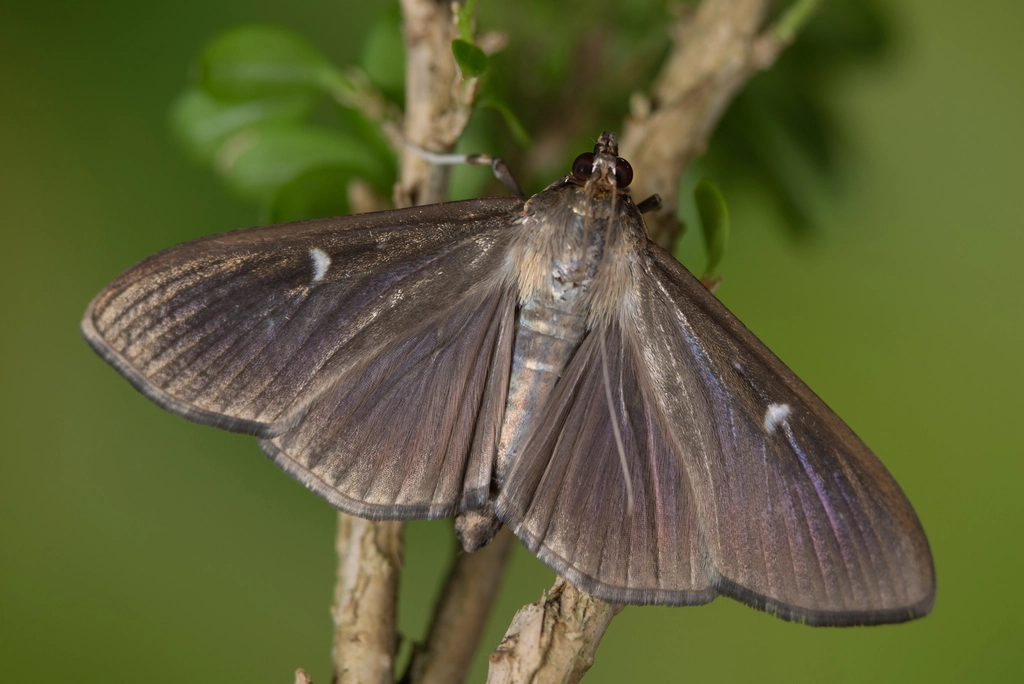 Photo Credit: U.S. Department of Agriculture / Rawpixel
In the lush, green corners of gardens and parks, the Box Tree Moth, scientifically known as Cydalima perspectalis, flits gracefully among the boxwood plants it calls home. With its delicate wings adorned in a stunning mix of creamy white and rich brown, this small moth captures the eye and sparks curiosity. As the sun rises, the Box Tree Moth emerges from its resting spot, ready to embark on a day filled with exploration and feeding. Its presence is not just a delight for the eyes; it plays a vital role in the ecosystem, shaping the very environment it inhabits.
What makes the Box Tree Moth particularly intriguing to scientists and nature lovers alike is its unique relationship with boxwood plants. These moths are not just beautiful; they are also herbivores, meaning they primarily feed on the leaves of these shrubs. This feeding behavior places them in the middle of the food web, where they contribute to the health of their ecosystem. As they munch on the tender foliage, they help maintain the balance of plant life, making them essential players in their habitats. With their fascinating life cycle and the intricate connections they share with their environment, the Box Tree Moth invites us to look closer and appreciate the wonders of nature.
The Box Tree Moth, scientifically known as Cydalima perspectalis, occupies a distinctive position in the animal kingdom. It belongs to the phylum Arthropoda, which includes all insects, spiders, and crustaceans. This moth is part of the order Lepidoptera, the group that encompasses butterflies and moths, known for their beautiful wings covered in tiny scales. What sets the Box Tree Moth apart is its specific diet; it primarily feeds on boxwood plants, making it a significant pest in gardens and landscapes where these shrubs are cultivated. Its ability to thrive in various environments and its rapid reproduction rate contribute to its status as an invasive species in some regions.
| Taxonomic Rank | Scientific Name | Meaning & Significance |
|---|---|---|
| Kingdom | Animalia | This name signifies that the Box Tree Moth is part of the animal kingdom, which includes all multicellular organisms that are not plants or fungi. |
| Phylum | Arthropoda | Derived from Greek, meaning “jointed feet,” this classification highlights the Box Tree Moth’s segmented body and jointed limbs, typical of insects. |
| Class | Insecta | This term comes from the Latin word for “cut,” referring to the segmented body structure of insects, including the Box Tree Moth. |
| Order | Lepidoptera | From Greek, meaning “scale wing,” this name describes the moth’s wings, which are covered in tiny, colorful scales that create stunning patterns. |
| Family | Crambidae | This family name is derived from the Greek word for “to gnaw,” reflecting the feeding habits of many members, including the Box Tree Moth. |
| Genus | Cydalima | This name is thought to be derived from a combination of Greek and Latin roots, possibly referring to the moth’s unique characteristics and behaviors. |
| Species | perspectalis | This species name suggests a connection to its distinctive appearance, as “perspectalis” can imply a certain perspective or view, possibly alluding to its notable coloration. |
Understanding the Box Tree Moth’s classification reveals much about its evolutionary journey. As a member of the Lepidoptera order, it shares a common ancestry with butterflies and other moths, showcasing the incredible diversity within this group. Its specific adaptations, such as its specialized diet and ability to thrive in various habitats, highlight how it has evolved to fill a particular ecological niche. This classification not only helps scientists study its behavior and impact on ecosystems but also provides insight into the broader evolutionary processes that shape life on Earth.
The evolutionary journey of the Box Tree Moth, or Cydalima perspectalis, stretches back millions of years, intertwining with the history of its plant hosts and the changing landscapes of the Earth. This moth, a member of the Crambidae family, has adapted over time to thrive in various environments, showcasing the incredible power of evolution. Its story is one of survival, adaptation, and the intricate relationships between species.
The ancestors of the Box Tree Moth likely emerged during the late Cretaceous period, around 100 million years ago, when flowering plants began to diversify. These early moths were probably small, nocturnal insects that fed on a variety of plants. As the world changed, so did the moths. They developed specialized feeding habits, honing in on specific plants like boxwoods, which are part of the Buxaceae family. This specialization allowed them to exploit a niche that few other insects occupied, leading to a significant evolutionary transition. Over time, they evolved traits that enhanced their ability to camouflage and evade predators, ensuring their survival in a world filled with challenges.
The adaptations of the Box Tree Moth have been crucial for its survival in a dynamic environment. By blending in with its surroundings, it avoids becoming a meal for hungry birds and other predators. Its specialized diet means it can thrive where other insects might struggle, while its quick reproduction allows it to maintain healthy populations even in the face of challenges. Together, these traits illustrate the remarkable ways in which evolution shapes life, enabling species to adapt and flourish in their ever-changing worlds.
The Box Tree Moth is a small yet striking insect that captures attention with its delicate form and vibrant colors. Its wings, when spread, reveal a beautiful blend of creamy white and rich brown hues, creating a stunning contrast that can easily be mistaken for a piece of art. The body is slender and elongated, measuring about 3 to 4 centimeters in length, making it a petite but noticeable presence in gardens and parks. With its smooth, velvety texture, the moth’s skin glistens softly in the sunlight, adding to its allure.
| Feature | Description |
|---|---|
| Size | Approximately 3 to 4 centimeters in length |
| Color | Creamy white with rich brown patterns |
| Skin Type | Smooth and velvety texture |
| Wingspan | About 5 to 6 centimeters when fully extended |
| Body Shape | Slender and elongated |
The Box Tree Moth’s physical features are not just for show; they play vital roles in its survival. The coloration helps it blend into its surroundings, making it less visible to predators. This camouflage is especially important as it flits among the boxwood plants it favors. The smooth texture of its wings allows for quiet flight, which is crucial for avoiding detection. Together, these characteristics create a perfect package for a creature that thrives in the shadows of lush greenery, showcasing the beauty and complexity of nature’s designs.
The Box Tree Moth thrives in a variety of environments, often found in gardens, parks, and urban areas where its favorite food, boxwood plants, flourish. These areas are typically well-maintained, with neatly trimmed hedges and lush greenery. The moth’s presence adds a touch of life to these spaces, fluttering among the leaves and blending in with the foliage. Imagine walking through a serene garden, where the air is filled with the sweet scent of blooming flowers and the gentle rustle of leaves, and you might just spot this charming little moth at work.
The Box Tree Moth prefers climates that are temperate, meaning they enjoy mild weather with distinct seasons. These moths thrive in areas where the temperature is neither too hot nor too cold, allowing them to remain active throughout the spring and summer months. They are particularly fond of regions with moderate rainfall, which helps keep their boxwood food sources healthy and lush. This balance of warmth and moisture creates the perfect environment for their life cycle, from egg to caterpillar to adult moth.
Adaptation is key to the Box Tree Moth’s success in its chosen habitats. Over time, it has developed a keen ability to camouflage itself among the leaves of boxwood plants, making it harder for predators to spot. Its life cycle is synchronized with the growth patterns of its host plants, ensuring that there is always food available. This clever strategy not only helps the moth survive but also allows it to thrive in gardens and parks, where it plays a role in the local ecosystem. By blending in and timing its life stages perfectly, the Box Tree Moth has become a delightful part of the natural world around us.
The Box Tree Moth leads a life filled with activity and purpose, primarily focused on feeding and reproduction. As the sun rises, these small moths emerge from their resting spots, often nestled among the leaves of boxwood plants. Their day is spent fluttering around, searching for tender leaves to munch on. This feeding behavior is crucial, as it provides the energy they need for their busy lives. As dusk approaches, they become more active, taking advantage of the cooler temperatures to engage in mating rituals.
Socially, Box Tree Moths are generally solitary creatures, but they do exhibit some interesting group dynamics during certain times of the year. When conditions are right, such as during mating season, males may gather in small groups to attract females. This behavior can create a lively atmosphere, with males displaying their vibrant colors and fluttering their wings to catch the attention of potential mates. Communication among these moths is primarily visual, relying on their striking patterns and movements to convey messages to one another.
| Behavior Type | Description |
|---|---|
| Feeding | Box Tree Moths primarily feed on the leaves of boxwood plants, which provide essential nutrients for their growth and energy. |
| Mating Rituals | During mating season, males gather to display their colors and attract females, creating a vibrant social scene. |
| Communication | These moths communicate visually through their wing patterns and movements, signaling readiness to mate or establish territory. |
The behaviors of the Box Tree Moth are finely tuned to ensure their survival in a world filled with challenges. By feeding on boxwood plants, they not only sustain themselves but also play a role in the ecosystem by influencing plant health. Their mating rituals and social interactions help maintain genetic diversity, which is vital for adapting to changing environments. Through these daily activities, the Box Tree Moth continues its journey, contributing to the rich tapestry of life in gardens and parks.
The Box Tree Moth has a diverse diet that primarily consists of the leaves of boxwood plants. As an omnivore, it enjoys a variety of foods, but its favorite is definitely the tender foliage of these shrubs. The moth uses its specialized mouthparts, called proboscis, to suck up the nutrients from the leaves. This feeding behavior is crucial for its growth and reproduction, as the nutrients help fuel its life cycle.
| Dietary Aspect | Details |
|---|---|
| Diet Type | Omnivore |
| Favorite Foods | Boxwood leaves |
| Prey Items | Primarily plant material |
| Hunting/Foraging Strategies | Feeding on leaves using proboscis |
This diet not only supports the Box Tree Moth’s growth but also plays a significant role in its ecological interactions. By feeding on boxwood plants, these moths can influence the health of their host plants and the surrounding ecosystem. Their daily routine revolves around finding fresh leaves to munch on, which helps them gather energy for mating and laying eggs. In this way, the Box Tree Moth is an important player in its environment, connecting the plant life with the broader web of life around it.
The Box Tree Moth, or Cydalima perspectalis, has a fascinating mating ritual that takes place during the warmer months, typically from late spring to early summer. Males are known to be quite the romantics, using pheromones—chemical signals that attract females—to find their partners. Once a male locates a female, they engage in a courtship dance, fluttering around each other in a delicate display. This enchanting behavior sets the stage for reproduction, as the female lays her eggs shortly after mating.
| Reproductive Aspect | Details |
|---|---|
| Gestation Period | Approximately 10 days |
| Litter Size | Up to 200 eggs |
| Age of Maturity | About 4 to 6 weeks |
| Name of Young | Larvae or caterpillars |
After the female lays her eggs, the young emerge as tiny larvae, commonly known as caterpillars. These caterpillars are voracious eaters, primarily feasting on the leaves of boxwood plants. As they grow, they undergo several molts, shedding their skin to accommodate their increasing size. This growth phase is crucial, as it prepares them for their transformation into adult moths. Once they reach maturity, they will eventually pupate, entering a cocoon stage before emerging as fully developed Box Tree Moths, ready to continue the cycle of life. The journey from egg to adult is a remarkable transformation, showcasing the resilience and adaptability of these intriguing insects.
The Box Tree Moth, or Cydalima perspectalis, plays a crucial role in its ecosystem, primarily as a herbivore that feeds on boxwood plants. This feeding behavior places it in the middle of the food web, where it serves as a food source for various predators. By munching on these plants, the moth helps maintain the balance of its environment, but it also makes itself vulnerable to a range of threats.
To survive these dangers, the Box Tree Moth has developed several defensive strategies. One of its primary tactics is camouflage; its coloration allows it to blend in with the leaves of boxwood plants, making it harder for predators to spot. Additionally, when threatened, the moth can exhibit erratic flight patterns, which can confuse attackers. These adaptations help the Box Tree Moth navigate the challenges of its environment, ensuring its survival in a world filled with hungry eyes.
A keystone species is an organism that has a disproportionately large impact on its environment relative to its abundance. This means that if it were to disappear, the entire ecosystem could change dramatically. The Box Tree Moth, known scientifically as Cydalima perspectalis, does not fit the traditional definition of a keystone species. While it plays a role in its ecosystem, particularly in relation to its host plants, its absence would not lead to the same level of disruption as that of true keystone species like wolves or sea otters.
The Box Tree Moth primarily feeds on boxwood plants, which are popular in gardens and landscaping. By consuming these plants, the moth influences their growth and health. In turn, this feeding behavior can affect the insects and animals that rely on boxwoods for shelter and food. For example, if the moth population increases significantly, it can lead to overconsumption of boxwood leaves, potentially harming the plants and the various species that depend on them.
Additionally, the Box Tree Moth serves as a food source for various predators, including birds and other insects. This connection helps maintain the balance of the food web, where each species plays a role in supporting others. The moth’s presence can also attract other insects, which may contribute to pollination in the area, further enhancing the ecosystem’s diversity.
If the Box Tree Moth were to vanish, the immediate effects might not be catastrophic, but the ripple effects could be significant over time. Boxwood plants could thrive without the moth’s feeding pressure, potentially leading to overgrowth that could crowd out other plant species. This change could disrupt the balance of the local ecosystem, affecting not only the plants but also the animals that rely on them for food and shelter. In essence, while the Box Tree Moth may not be a keystone species, its presence contributes to the intricate web of life in its habitat.
The Box Tree Moth, known scientifically as Cydalima perspectalis, plays a vital role in shaping its ecosystem, particularly in areas where boxwood plants thrive. This small moth is not just a pretty sight fluttering around gardens; it is a key player in the balance of its environment. By feeding on boxwood leaves, the Box Tree Moth influences plant health and growth, which in turn affects the entire community of organisms that depend on these plants for survival.
| Ecosystem Service | Impact |
|---|---|
| Herbivory | Controls boxwood plant growth and health |
| Food Source | Provides nourishment for predators like birds and other insects |
| Pollination | Contributes to the pollination of nearby plants |
| Soil Health | Helps in nutrient cycling through its life cycle |
The influence of the Box Tree Moth extends beyond its immediate feeding habits. For instance, as it munches on boxwood leaves, it can stimulate new growth, which may attract other herbivores and insects. This creates a bustling microhabitat where various species interact. Additionally, the moth serves as a food source for birds and other predators, forming an essential link in the food web. Without the Box Tree Moth, the balance of this ecosystem could shift dramatically, affecting not just the plants but also the animals that rely on them.
Understanding the broader ecological importance of the Box Tree Moth reveals its role as a keystone species. This means that its presence is crucial for maintaining the structure of its ecosystem. If the Box Tree Moth were to disappear, the consequences could ripple through the food web, leading to declines in plant health and the animals that depend on them. By supporting biodiversity and contributing to the health of boxwood plants, the Box Tree Moth helps sustain a vibrant and interconnected community of life.
In the intricate web of life, symbiosis refers to the close and often long-term interactions between different species. These relationships can take many forms, including mutualism, where both species benefit, parasitism, where one benefits at the expense of the other, and commensalism, where one benefits while the other is neither helped nor harmed. The Box Tree Moth, or Cydalima perspectalis, engages in various ecological relationships that highlight the complexity of its existence and the interconnectedness of life in its habitat.
| Species/Type | Relationship Type | Description |
|---|---|---|
| Boxwood plants | Mutualistic | The Box Tree Moth feeds on the leaves of boxwood plants, which helps control their growth. In return, the moth benefits from a reliable food source. |
| Predatory birds | Parasitic | Predatory birds, such as sparrows, prey on Box Tree Moths, benefiting from an easy meal while the moths face a threat to their survival. |
| Parasitoid wasps | Parasitic | Parasitoid wasps lay their eggs inside Box Tree Moth larvae. The wasp larvae consume the moth from the inside, benefiting the wasps while harming the moths. |
The relationships that the Box Tree Moth has developed with other species are a testament to the evolutionary pressures that shape life on Earth. Over time, these interactions have led to adaptations that benefit both the moth and its partners. For instance, the mutualistic relationship with boxwood plants allows the moth to thrive while helping to maintain the health of its food source. Meanwhile, the presence of predators and parasitoids keeps the moth population in check, ensuring a balanced ecosystem. These dynamic connections illustrate how every species plays a role in the grand tapestry of nature, influencing one another in ways that are both subtle and profound.
The Box Tree Moth, known scientifically as Cydalima perspectalis, is a small but captivating insect that has intrigued nature enthusiasts around the world. Here are some surprising facts that showcase its unique characteristics and behaviors.
The Box Tree Moth, or Cydalima perspectalis, has a rich history intertwined with human culture, particularly in regions where boxwood plants are cherished. These moths have been admired for their delicate beauty and have often been featured in gardens and landscapes. In some cultures, the presence of the Box Tree Moth is seen as a sign of a healthy ecosystem, as they thrive in well-maintained areas. However, their relationship with humanity has not always been harmonious. As these moths became more prevalent, they also began to attract attention for their potential to damage boxwood plants, leading to a complex mix of admiration and concern.
Today, interactions between the Box Tree Moth and humans are marked by both conflict and conservation efforts. As these moths have spread beyond their native range, particularly in Europe, they have become a significant pest for gardeners and landscapers. Their voracious appetite for boxwood leaves can lead to severe damage, prompting many to seek ways to control their populations. On the flip side, some conservationists advocate for a balanced approach, emphasizing the importance of these moths in the ecosystem. They play a role in the food web, serving as prey for various birds and other predators, which highlights the need for thoughtful management rather than outright eradication.
Looking ahead, the future of the relationship between the Box Tree Moth and humanity will likely hinge on our ability to find a balance. As we learn more about their role in ecosystems, we may discover innovative ways to coexist with these moths while protecting our beloved boxwood plants. By fostering an understanding of their ecological importance, we can appreciate the beauty of the Box Tree Moth while also addressing the challenges they present. This journey of discovery and adaptation will shape how we interact with this intriguing species for generations to come.
The Box Tree Moth, or Cydalima perspectalis, currently holds a conservation status of “Not Listed” according to the International Union for Conservation of Nature (IUCN). This means that there is not enough information to determine if the species is at risk of extinction. While its population trends are not well-documented, the moth has been observed in various regions, particularly in Europe and parts of Asia. However, the lack of comprehensive data makes it challenging to assess whether its numbers are increasing, stable, or declining.
| Conservation Factor | Status/Details |
|---|---|
| IUCN Status | Not Listed |
| Population Estimates | Not well-documented |
| Trend Direction | Unknown |
Despite its current status, the Box Tree Moth faces several significant threats. One of the primary concerns is habitat loss due to urban development and changes in land use. As gardens and parks are altered or replaced, the availability of boxwood plants, which are essential for the moth’s survival, diminishes. Additionally, the use of pesticides in agriculture and gardening can pose a direct threat to the moth population, as these chemicals can kill not only the pests they target but also beneficial insects like the Box Tree Moth.
Conservation efforts for the Box Tree Moth are still in their infancy, largely due to the lack of detailed research on its population dynamics and ecology. However, raising awareness about the importance of preserving boxwood habitats can help protect this species. Encouraging organic gardening practices and reducing pesticide use can also create a safer environment for the moth. As more people become aware of the Box Tree Moth and its role in the ecosystem, there is hope that conservation initiatives will emerge, ensuring a brighter future for this intriguing insect.
| Question | Answer |
|---|---|
| What is the habitat of the Box Tree Moth? | The Box Tree Moth is commonly found in gardens, parks, and wooded areas where its preferred food source, boxwood plants, are abundant. These moths thrive in temperate climates, making them well-suited for regions with distinct seasons. |
| What does the Box Tree Moth eat? | This moth is an omnivore, meaning it has a varied diet. Its primary food source consists of the leaves of boxwood plants, but it may also feed on other types of foliage when necessary. |
| What are the behaviors of the Box Tree Moth? | Box Tree Moths are mostly nocturnal, which means they are active at night. During the day, they often rest on the undersides of leaves, camouflaging themselves to avoid predators. |
| How does the Box Tree Moth reproduce? | The female Box Tree Moth lays her eggs on the leaves of boxwood plants. After a few days, the eggs hatch into caterpillars, which then begin to feed on the leaves, growing rapidly before pupating into adult moths. |
| What threats does the Box Tree Moth face? | While the Box Tree Moth is not currently listed as endangered, it can face threats from habitat loss and pesticide use. Additionally, its populations can be affected by natural predators and diseases. |
| What are some interesting characteristics of the Box Tree Moth? | One fascinating feature of the Box Tree Moth is its striking appearance, with a wingspan that can reach up to 2 inches. The moth's wings are often marked with beautiful patterns that help it blend into its surroundings. |
| How does the Box Tree Moth impact its environment? | The Box Tree Moth plays a role in its ecosystem by serving as a food source for various predators, including birds and other insects. However, its feeding habits can also lead to damage in boxwood plants, which can affect garden aesthetics and health. |