Taxonomy & Classification
- Kingdom
- Animalia
- Phylum
- Chordata
- Class
- Actinopterygii
- Order
- Tetraodontiformes
- Family
- Ostraciidae
- Genus
- Ostracion
- Species
- Ostracion cubicus

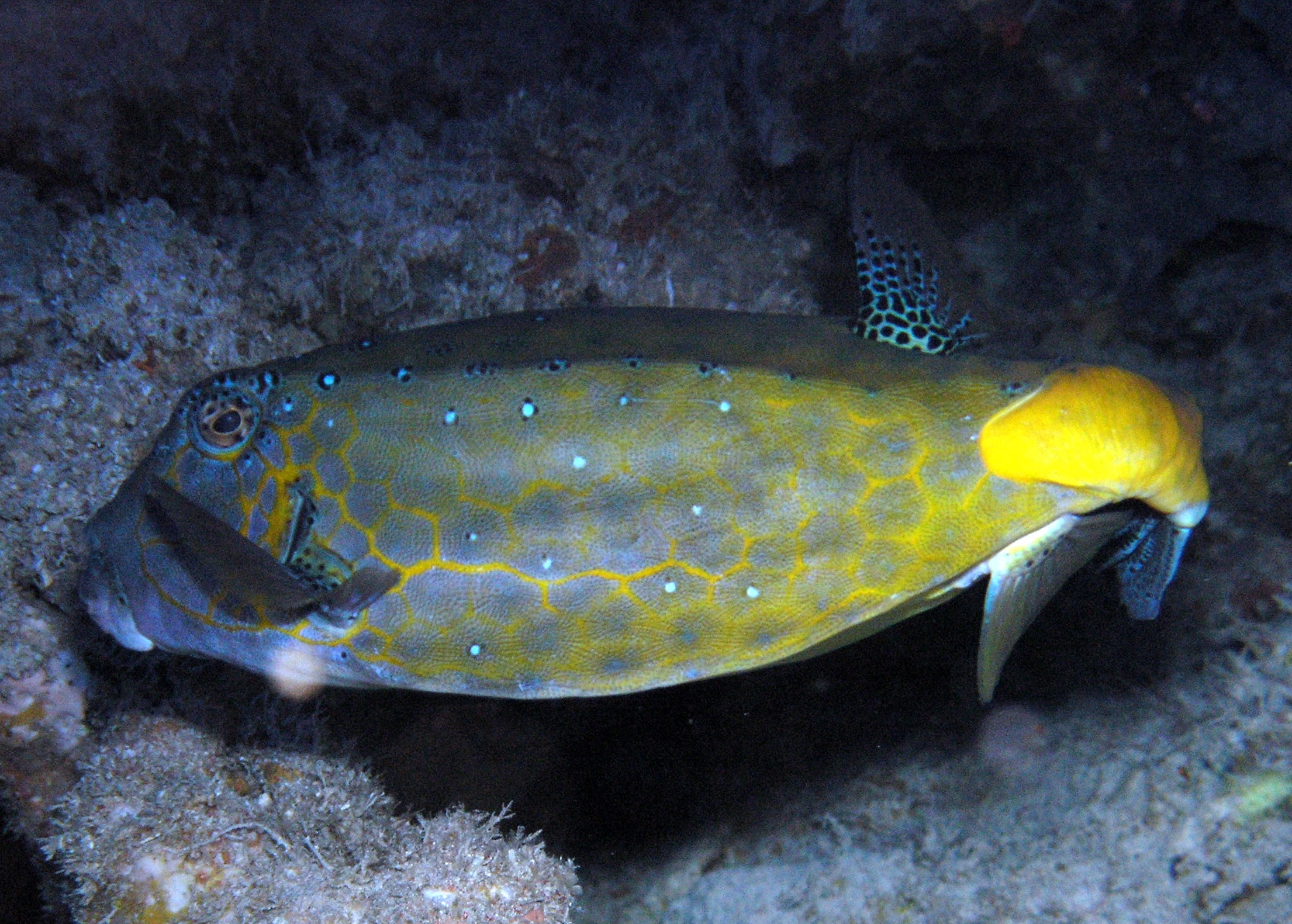 Photo Credit: J. Petersen / Wikimedia
In the shimmering waters of tropical and subtropical oceans, the boxfish, scientifically known as Ostraciidae, glides gracefully through vibrant coral reefs. With its distinctive box-like shape and bright, colorful patterns, this marine marvel captures the attention of divers and snorkelers alike. Imagine a small, quirky cube adorned with splashes of yellow, blue, and green, moving effortlessly among swaying corals and darting schools of fish. The boxfish’s unique form not only makes it a visual delight but also serves a purpose; its rigid, bony shell provides protection from predators, making it a fascinating subject for scientists and nature enthusiasts.
Boxfish are not just pretty faces in the ocean; they play a vital role in their ecosystems. As they forage for algae, worms, and small fish, they help maintain the health of coral reefs, which are crucial habitats for countless marine species. Their intriguing behaviors, such as the elaborate courtship displays during breeding season, add to their charm and complexity. With a history that stretches back millions of years, boxfish are a living link to the past, reminding us of the wonders of evolution and the delicate balance of life beneath the waves. Join us as we dive deeper into the world of boxfish, exploring their habits, habitats, and the important roles they play in our oceans.
The boxfish, a captivating member of the animal kingdom, holds a special place in the tree of life. Scientifically classified within the phylum Chordata, which includes all animals with a backbone, the boxfish belongs to the class Actinopterygii, known for its bony fish. What sets the boxfish apart is its distinctive, box-like shape and a hard, bony shell that provides protection. This unique body structure not only makes it visually striking but also plays a crucial role in its survival, allowing it to navigate through coral reefs with ease while deterring potential predators.
| Taxonomic Rank | Scientific Name | Meaning & Significance |
|---|---|---|
| Kingdom | Animalia | The name “Animalia” comes from the Latin word “animalis,” meaning “having breath” or “living.” This reflects the vital characteristic of all animals: the ability to breathe and move. |
| Phylum | Chordata | “Chordata” is derived from the Latin word “chorda,” meaning “string” or “cord.” This refers to the notochord, a flexible rod that provides support in the early stages of development, a feature all chordates share. |
| Class | Actinopterygii | The term “Actinopterygii” comes from Greek, meaning “ray-finned fish.” This class is characterized by fins supported by bony rays, which are crucial for swimming and maneuvering in water. |
| Order | Tetraodontiformes | “Tetraodontiformes” translates to “four-toothed,” referring to the unique dental structure of many species in this order, including the boxfish, which has fused teeth that resemble a beak. |
| Family | Ostraciidae | The name “Ostraciidae” comes from the Greek word “ostrakon,” meaning “shell.” This family includes boxfish and is known for their hard, protective shells that resemble a box or cube. |
| Genus | Ostracion | “Ostracion” is derived from the same Greek root as the family name, emphasizing the box-like shape and the hard shell that characterizes these fish. |
Understanding the boxfish’s classification reveals much about its evolutionary journey. As a member of the Tetraodontiformes order, it shares a lineage with other fascinating fish like pufferfish and triggerfish, showcasing a remarkable adaptation to marine environments. The boxfish’s unique morphology and protective features have evolved over millions of years, allowing it to thrive in diverse habitats. This evolutionary history not only highlights the boxfish’s role in the ecosystem but also underscores the intricate connections among various species in the vast tapestry of life.
The evolutionary journey of the boxfish stretches back millions of years, tracing its origins to the late Cretaceous period, around 100 million years ago. This time frame places them among some of the earliest bony fish, a group that has adapted and thrived in diverse aquatic environments. As the oceans changed, so too did the boxfish, evolving unique features that would help them navigate the challenges of their underwater world.
Ancestral forms of boxfish were likely more streamlined and less armored than their modern descendants. Over time, these fish underwent significant changes, developing a distinctive boxy shape that is both a marvel of nature and a clever survival strategy. This transformation allowed them to reduce drag while swimming, making them more agile in the water. Additionally, their hard, bony outer shell evolved as a protective measure against predators, providing a sturdy defense that few other fish possess. The boxfish’s unique body plan is a prime example of how evolution can lead to specialized adaptations that enhance survival in specific environments.
These adaptations have been crucial for the boxfish’s survival in the ever-changing marine environment. Their boxy shape and hard shell not only deter predators but also allow them to thrive in complex habitats like coral reefs. The vibrant colors and patterns serve as both a warning to would-be attackers and a means of blending in with their surroundings. Through millions of years of evolution, the boxfish has become a master of its underwater realm, showcasing the incredible power of nature’s design.
The boxfish is a striking marine inhabitant that captures attention with its unusual, box-like body shape. This distinctive form gives it a somewhat quirky appearance, resembling a small, colorful cube gliding through the water. Its rigid, angular structure is not just for show; it provides a unique defense mechanism against predators. The boxfish’s body is covered in small, hard scales that add to its sturdy look, making it a true standout in the vibrant underwater world.
| Feature | Description |
|---|---|
| Size | Typically ranges from 6 to 12 inches long |
| Color | Often bright yellow or blue, with intricate patterns |
| Skin Type | Covered in small, hard scales that provide protection |
| Body Shape | Box-like, giving it a distinctive and compact appearance |
The boxfish’s unique features work together to enhance its survival in the ocean. Its boxy shape not only makes it less appealing to predators but also allows it to maneuver through tight spaces among coral reefs. The vibrant colors and patterns serve as a warning to potential threats, signaling that it may be toxic if consumed. Together, these characteristics create a fascinating blend of beauty and practicality, ensuring that the boxfish thrives in its underwater habitat.
The boxfish thrives in the vibrant underwater world of tropical and subtropical oceans. Picture a sun-drenched reef, where colorful corals sway gently with the currents and schools of fish dart playfully among the rocks. This lively environment is where boxfish find their home, often nestled among coral formations or hiding in the nooks and crannies of rocky substrates. Their unique shape and coloration help them blend seamlessly into this bustling habitat, making them both a part of the scenery and a delightful surprise for those who spot them.
Boxfish prefer warm waters, typically found in areas where the temperature ranges from 20 to 28 degrees Celsius (68 to 82 degrees Fahrenheit). They thrive in environments with plenty of sunlight, which supports the growth of the algae and corals they depend on for shelter and food. These fish are often found in shallow waters, usually at depths of up to 30 meters (about 100 feet), where they can easily access the rich biodiversity of the reef ecosystem. The clear, warm waters provide the perfect backdrop for their daily activities, from foraging to socializing.
Adaptation is key to the boxfish’s survival in these dynamic habitats. Their hard, bony outer shell not only protects them from predators but also helps them navigate through tight spaces among corals and rocks. This unique body shape reduces drag as they swim, allowing them to move gracefully despite their seemingly clunky appearance. Additionally, boxfish have developed a specialized way of swimming, using their fins to maneuver with precision, which is essential for evading larger fish and finding food. These adaptations make them well-suited to life in the bustling underwater neighborhoods they call home.
The daily life of a boxfish is a blend of leisurely swimming and careful foraging. These fish often glide through their coral reef homes, using their unique boxy shape to navigate tight spaces among rocks and corals. Boxfish are not the fastest swimmers, but they make up for it with their ability to maneuver skillfully. They spend their days searching for food, which mainly consists of algae, small invertebrates, and plankton. With their small mouths, they nibble delicately at their meals, ensuring they get the nutrients they need to thrive in their vibrant underwater environment.
While boxfish are primarily solitary creatures, they do exhibit interesting social behaviors during certain times. They may be seen swimming near other fish, but this is often more about finding food than forming friendships. When they do come together, it’s usually in a loose association rather than a tight-knit group. Boxfish communicate through body language and subtle movements, signaling their intentions to others in the area. This can be crucial for avoiding predators and finding mates, even if they prefer to keep to themselves most of the time.
| Behavior Type | Description |
|---|---|
| Activity Patterns | Boxfish spend their days foraging for food, swimming slowly and carefully through their reef habitats. |
| Social Structure | Primarily solitary, boxfish may occasionally associate with others, especially when foraging. |
| Communication Methods | They use body language and movements to communicate with nearby fish, signaling their intentions. |
The behaviors of boxfish are finely tuned to ensure their survival in the bustling underwater world. By being solitary, they reduce competition for food and minimize the risk of attracting predators. Their unique swimming style and communication methods help them navigate their environment effectively, allowing them to thrive in the colorful tapestry of coral reefs. Each day is a new adventure, filled with the challenges and wonders of ocean life, where every movement counts in the quest for survival.
The boxfish has a diverse diet that reflects its omnivorous nature, meaning it enjoys both plant and animal foods. This fascinating fish primarily feeds on algae, worms, and small fish, making it a versatile eater in its vibrant reef habitat. Boxfish are known for their unique feeding behavior, which involves grazing on algae and using their specialized mouths to suck up small prey. Their boxy shape allows them to maneuver skillfully among the corals, where they can find tasty morsels hidden in crevices.
| Dietary Aspect | Details |
|---|---|
| Diet Type | Omnivore |
| Favorite Foods | Algae, worms, small fish |
| Prey Items | Worms, small fish |
| Hunting/Foraging Strategies | Grazing on algae and sucking up small prey |
The boxfish’s diet plays a crucial role in its ecological niche, helping to maintain the health of coral reefs. By consuming algae, they help prevent overgrowth that can smother corals, allowing these vital structures to thrive. Their foraging habits also influence the population dynamics of small fish and invertebrates in their environment. This daily routine of grazing and hunting not only sustains the boxfish but also contributes to the overall balance of life in the colorful underwater world they inhabit.
When it comes to reproduction, boxfish have some intriguing behaviors. During the breeding season, which typically occurs in warmer months, males engage in a captivating courtship display. They often swim around females, showcasing their vibrant colors and unique shapes. This dance is not just for show; it helps the female choose a mate based on the male’s health and vitality. Once a pair has formed, they will spawn, releasing eggs and sperm into the water simultaneously, a process that can be quite a spectacle in the bustling reef environment.
| Reproductive Aspect | Details |
|---|---|
| Gestation Period | Boxfish do not have a gestation period as they lay eggs, which develop externally. |
| Litter Size | Females can lay hundreds to thousands of eggs at once. |
| Age of Maturity | Boxfish typically reach maturity at about 1 to 2 years of age. |
| Name of Young | The young are called fry. |
After the eggs are laid, they float in the water, where they will hatch into tiny fry. These young boxfish are quite vulnerable at this stage, relying on the currents to carry them to safer areas among the coral reefs. Interestingly, parental care is minimal; once the eggs are fertilized, the adult boxfish do not stay to protect them. Instead, the fry must fend for themselves, gradually developing into adults as they learn to navigate their colorful underwater world. As they grow, they will adopt the distinctive boxy shape that makes them so recognizable, continuing the cycle of life in the vibrant ocean ecosystem.
The boxfish occupies a unique position in the marine food web, often serving as both prey and predator. These colorful fish are typically found in coral reefs, where they play a vital role in maintaining the balance of their ecosystem. While they may not be the largest fish in the sea, their distinctive shape and vibrant colors can attract attention from various predators lurking nearby.
To defend themselves against these threats, boxfish have developed some clever survival strategies. Their hard, bony exterior acts like armor, making it difficult for predators to take a bite. Additionally, when threatened, boxfish can release a toxic substance from their skin, which can deter would-be attackers. This combination of physical and chemical defenses helps them navigate the dangers of their underwater world, allowing them to thrive despite the challenges they face.
A keystone species is an organism that has a disproportionately large impact on its environment relative to its abundance. This means that if a keystone species were to disappear, the entire ecosystem could change dramatically. The boxfish, with its unique role in the marine world, can be considered a keystone species in certain reef ecosystems. Its presence helps maintain the balance of life in these vibrant underwater communities.
Boxfish play a significant role in their habitats, particularly in coral reefs. As omnivores, they consume a variety of foods, including algae and small invertebrates. By feeding on algae, boxfish help control its growth, preventing it from overwhelming coral reefs. This is crucial because excessive algae can smother corals, blocking sunlight and disrupting the delicate balance of the reef ecosystem. Additionally, boxfish are known to be prey for larger fish, contributing to the food web and supporting the survival of various marine species.
Moreover, boxfish have a unique way of interacting with their environment. Their boxy shape allows them to navigate through tight spaces in coral formations, which helps them access food sources that other fish might not reach. This behavior not only benefits the boxfish but also promotes biodiversity by allowing other species to thrive in the areas they forage. Their presence can also influence the behavior of other fish, as the boxfish’s distinctive appearance and swimming style can deter potential predators.
If boxfish were to vanish from their ecosystems, the consequences could be severe. Without their algae-eating habits, coral reefs could become overrun with algae, leading to a decline in coral health and biodiversity. This shift would not only affect the boxfish but also countless other marine organisms that rely on healthy reefs for shelter and food. The intricate web of life in these underwater environments would unravel, demonstrating just how vital the boxfish is to the health of its ecosystem.
The boxfish plays a vital role in its marine ecosystem, acting as both a forager and a prey species. Found in the colorful realms of tropical and subtropical oceans, these fish contribute to the health of coral reefs. Their unique box-like shape allows them to navigate through tight spaces, where they can graze on algae and small invertebrates. By doing so, they help control algal growth, which is essential for maintaining the balance of their underwater environment.
| Ecosystem Service | Impact |
|---|---|
| Algal Control | Prevents overgrowth of algae, promoting coral health |
| Prey for Predators | Serves as a food source for larger fish and marine animals |
| Habitat Structure | Contributes to the complexity of reef ecosystems |
| Nutrient Cycling | Helps recycle nutrients through its feeding habits |
Boxfish influence their surroundings in several ways. For instance, by feeding on algae, they help keep coral reefs vibrant and healthy. This is crucial because healthy corals provide shelter and breeding grounds for many marine species. Additionally, boxfish themselves become a food source for larger predators, such as groupers and sharks, thus linking different levels of the food web. Their presence helps maintain the balance of life in the reef, showcasing their importance in the ecosystem.
The broader ecological significance of boxfish cannot be overstated. As a keystone species, their activities support a diverse array of marine life. If boxfish were to disappear, the consequences could ripple through the ecosystem, leading to algal overgrowth and a decline in coral health. This highlights the interconnectedness of marine species and the delicate balance that sustains life in our oceans. By understanding the role of boxfish, we gain insight into the intricate web of life that thrives beneath the waves.
In the intricate web of life beneath the waves, boxfish engage in various partnerships with other marine species. These relationships can be classified into three main types: mutualism, parasitism, and commensalism. Each type plays a crucial role in the health of the ecosystem, showcasing how interconnected life can be. Symbiosis, which means living together, allows different species to benefit from one another in ways that enhance their survival and well-being.
| Species/Type | Relationship Type | Description |
|---|---|---|
| Cleaner Shrimp | Mutualistic | Boxfish often host cleaner shrimp, which remove parasites and dead skin from their bodies. In return, the shrimp get a meal and protection. |
| Sea Anemones | Commensal | Boxfish may seek shelter among sea anemones. The anemones provide protection, while the boxfish do not harm them, benefiting from the safety without affecting the anemones. |
| Predatory Fish | Parasitic | In some cases, larger predatory fish may prey on boxfish. This relationship is harmful to the boxfish, as it can lead to injury or death. |
These relationships have evolved over time, shaped by the needs and behaviors of the species involved. Mutualistic partnerships, like that with cleaner shrimp, highlight how cooperation can lead to greater health and survival for both parties. Meanwhile, commensal relationships, such as those with sea anemones, demonstrate how some species can thrive without causing harm to others. On the flip side, parasitic interactions remind us that not all relationships are beneficial. Understanding these dynamics helps us appreciate the delicate balance of marine ecosystems and the vital roles that boxfish and their partners play in maintaining it.
Boxfish are truly captivating marine animals that often surprise those who take the time to learn about them. With their unique shape and vibrant colors, they are not just a pretty sight; they have some remarkable traits that set them apart in the underwater world.
Throughout history, boxfish have intrigued humans with their striking appearance and unique behaviors. These colorful marine animals have often found their way into cultural stories and art, symbolizing the beauty and mystery of ocean life. In some coastal communities, boxfish are celebrated for their role in local ecosystems, while in others, they are featured in traditional crafts and decorations. Their unusual shape and vibrant colors have made them a favorite among aquarium enthusiasts, further solidifying their place in human culture.
In modern times, the relationship between boxfish and humanity has evolved, particularly in the realms of conservation and environmental awareness. As coral reefs face threats from climate change and pollution, efforts to protect these ecosystems have become increasingly important. Boxfish, as key players in their habitats, are often included in conservation initiatives. However, they also face challenges from fishing practices and habitat destruction. Some people have even attempted to domesticate boxfish for aquariums, but their specific care needs can make this a complex endeavor.
As we look to the future, the relationship between boxfish and humanity holds promise and challenges. With increased awareness of marine conservation, there is hope that more people will recognize the importance of protecting these fascinating fish and their habitats. By fostering a deeper understanding of the role boxfish play in their ecosystems, we can work together to ensure their survival and the health of our oceans. The journey ahead will require collaboration, education, and a commitment to preserving the wonders of the underwater world.
The conservation status of boxfish remains a topic of interest among marine biologists and conservationists. Currently, boxfish have not been formally evaluated by the International Union for Conservation of Nature (IUCN), which means there is no official status assigned to them. This lack of evaluation makes it challenging to determine their population trends, but it is widely acknowledged that their numbers are not well-documented. As a result, understanding their conservation needs is crucial for ensuring their survival in the wild.
| Conservation Factor | Status/Details |
|---|---|
| IUCN Status | Not Evaluated |
| Estimated Population Size | Unknown |
| Population Trend | Unknown |
Despite their intriguing nature, boxfish face several threats that could impact their populations. One of the primary concerns is habitat degradation, particularly in coral reefs where they reside. Coral reefs are under pressure from climate change, pollution, and overfishing, which can disrupt the delicate balance of these ecosystems. Additionally, boxfish are sometimes caught unintentionally in fishing nets, which can further reduce their numbers. As they are not well-studied, the full extent of these threats remains uncertain.
Conservation efforts for boxfish are still in the early stages, primarily because their status is not yet defined. However, raising awareness about the importance of coral reef ecosystems can indirectly benefit boxfish. Protecting these habitats through marine reserves and sustainable fishing practices can help ensure that boxfish and other marine species thrive. As researchers continue to study these fascinating fish, there is hope that more targeted conservation strategies will emerge, allowing us to safeguard their future in our oceans.
| Question | Answer |
|---|---|
| What is the habitat of Boxfish? | Boxfish are typically found in warm, shallow waters of the ocean. They prefer coral reefs and sandy bottoms where they can hide from predators and find food. |
| What do Boxfish eat? | Boxfish are omnivores, which means they eat both plants and animals. Their diet includes algae, small crustaceans, and other tiny marine creatures, making them versatile feeders in their environment. |
| How do Boxfish behave? | Boxfish are known for their unique swimming style, which involves moving their fins in a way that looks almost like gliding. They are generally shy and prefer to stay hidden among corals and rocks, but they can be curious and will approach divers. |
| How do Boxfish reproduce? | Boxfish reproduce by laying eggs, which are often found in shallow waters. The eggs are usually laid in clusters, and once they hatch, the young fish are left to fend for themselves. |
| What threats do Boxfish face? | Boxfish face threats from habitat destruction, pollution, and overfishing. Their unique body shape makes them vulnerable to being caught in nets, and their habitats are often damaged by human activities. |
| What is an interesting characteristic of Boxfish? | One of the most distinctive features of Boxfish is their box-like body shape, which helps them blend into their surroundings. This shape also provides them with a form of protection, as their hard outer shell makes them less appealing to predators. |
| Are Boxfish endangered? | Boxfish are currently listed as "Not Evaluated" in terms of conservation status. This means that there is not enough data to determine their population trends, but they are not considered endangered at this time. |