Taxonomy & Classification
- Kingdom
- Animalia
- Phylum
- Chordata
- Class
- Aves
- Order
- Passeriformes
- Family
- Parulidae
- Genus
- Cardellina
- Species
- Cardellina canadensis

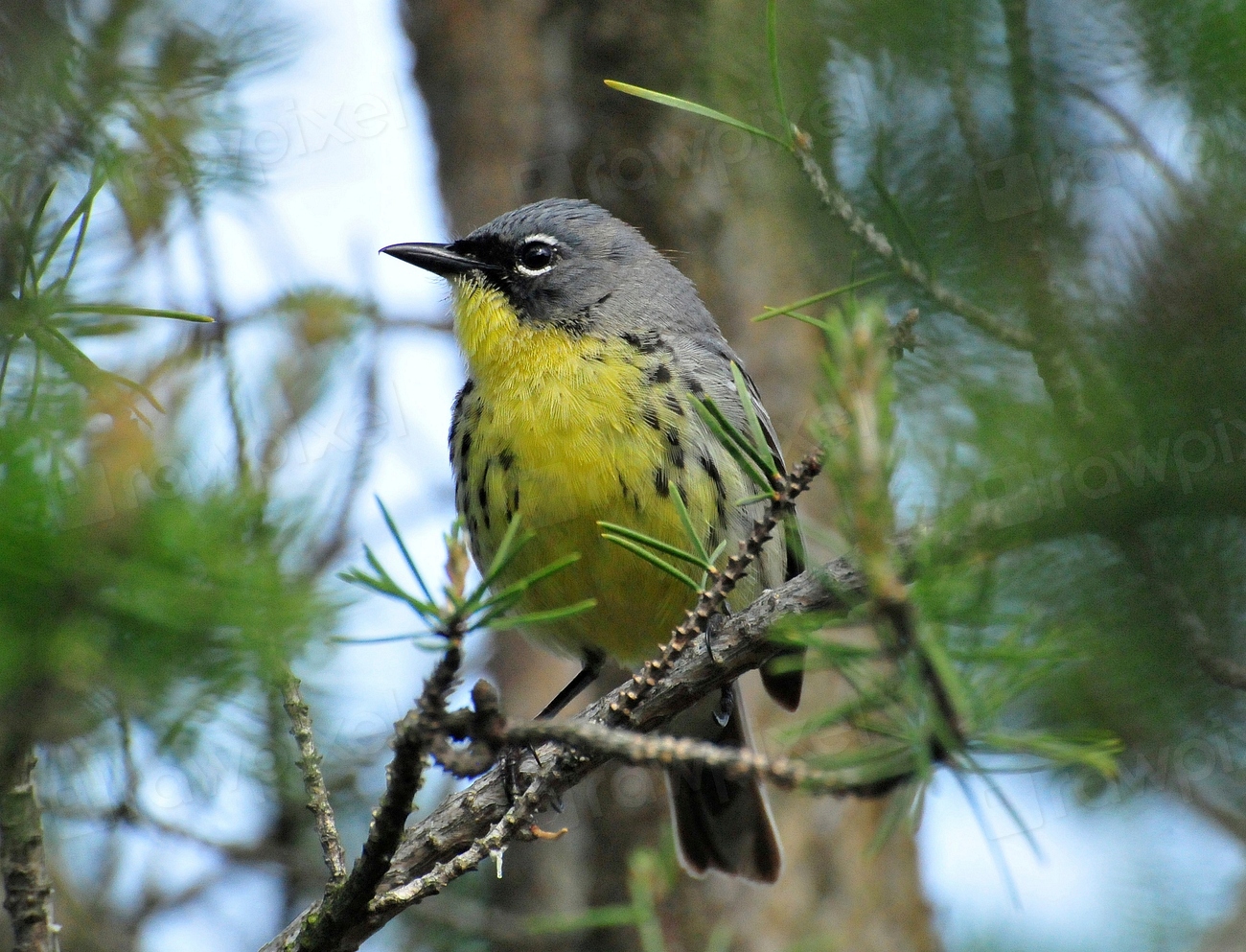 Photo Credit: U.S. Fish and Wildlife Service / Rawpixel
In the heart of North America’s lush forests, the Canada Warbler, scientifically known as Wilsonia canadensis, flits gracefully among the branches, a vibrant splash of color against the green backdrop. This small songbird, measuring about five to six inches in length, is easily recognized by its striking yellow belly and distinctive gray back. As it moves through the underbrush, its lively presence brings the forest to life, captivating the attention of both seasoned birdwatchers and curious nature enthusiasts alike. The Canada Warbler’s melodious song, a sweet and cheerful tune, echoes through the trees, adding a musical layer to the serene woodland atmosphere.
What makes the Canada Warbler particularly intriguing to scientists is its role in the ecosystem and its fascinating migratory patterns. Each spring, these birds embark on an incredible journey from their wintering grounds in Central America to their breeding territories in Canada and the northern United States. Along the way, they play a vital role in controlling insect populations, feasting on a variety of bugs that could otherwise overwhelm their habitats. As we explore the life of the Canada Warbler, we will uncover the secrets of its behavior, diet, and the challenges it faces in a changing world, revealing why this small bird holds such a significant place in the tapestry of nature.
The Canada Warbler is a small, vibrant bird that holds a special place in the tree of life. Taxonomically, it belongs to the Kingdom Animalia, which includes all animals, and is classified under the Phylum Chordata, known for animals with a backbone. This charming songbird is part of the Class Aves, which encompasses all birds, and it falls within the Order Passeriformes, the largest group of birds that are often referred to as perching birds or songbirds. What makes the Canada Warbler particularly interesting is its family, Parulidae, commonly known as the wood-warblers. These birds are celebrated for their bright colors and melodious songs, and the Canada Warbler is no exception, showcasing a striking yellow belly and a distinctive grayish-blue back.
| Taxonomic Rank | Scientific Name | Meaning & Significance |
|---|---|---|
| Kingdom | Animalia | This name comes from the Latin word “animalis,” meaning “having breath” or “living.” It signifies all living creatures that breathe and move. |
| Phylum | Chordata | Derived from the Greek word “chordē,” meaning “string,” this name refers to animals with a notochord, a flexible rod that supports the body, which in vertebrates becomes the backbone. |
| Class | Aves | This term comes from the Latin word for “bird.” It highlights the unique characteristics of birds, such as feathers and beaks, that set them apart from other animals. |
| Order | Passeriformes | From the Latin “passer,” meaning “sparrow,” this name refers to the diverse group of songbirds known for their perching habits and vocal abilities. |
| Family | Parulidae | This name is derived from the Latin “parula,” which means “small.” It reflects the generally small size of these colorful warblers. |
| Genus | Cardellina | From the Latin “carduelis,” meaning “goldfinch,” this name connects the Canada Warbler to its relatives in the finch family, emphasizing its vibrant coloration. |
Understanding the Canada Warbler’s classification reveals much about its evolutionary journey. As a member of the Parulidae family, it shares a lineage with other wood-warblers, which have adapted to various habitats across North America. This classification not only highlights its physical traits and behaviors but also underscores the intricate relationships among species in the avian world. The Canada Warbler’s vibrant colors and melodious songs are not just beautiful; they are the result of millions of years of evolution, showcasing the dynamic interplay between environment and adaptation.
The evolutionary journey of the Canada Warbler, a small yet striking bird, stretches back millions of years. This journey is part of a larger narrative that traces the development of the Parulidae family, which includes many of the warblers we see today. The Canada Warbler, scientifically known as Cardellina canadensis, has adapted to its environment through a series of significant changes that have allowed it to thrive in the forests and wetlands of North America.
The ancestors of the Canada Warbler were likely small, insect-eating birds that inhabited dense forests. Over time, these early warblers began to develop traits that would help them navigate their habitats more effectively. One major transition was the evolution of their vibrant plumage, which not only attracts mates but also plays a role in camouflage among the foliage. As these birds adapted to their environments, they also developed specialized feeding habits, allowing them to exploit a variety of food sources, from insects to berries.
The adaptations of the Canada Warbler have been essential for its survival in a changing world. Its vibrant colors not only enhance its mating success but also provide a level of camouflage against predators. The ability to communicate effectively through song ensures that these birds can find mates and defend their territories. With a diet that allows them to thrive in various environments, and the capability to migrate long distances, the Canada Warbler exemplifies how evolutionary changes can lead to resilience and success in the wild.
The Canada Warbler is a small, lively bird that captures attention with its striking appearance. Measuring about five to six inches in length, it has a compact body that is both agile and graceful. Its most distinctive feature is a necklace of black feathers that adorns its throat, creating a bold contrast against its bright yellow belly. This vibrant coloration, combined with its slender form, gives the Canada Warbler an air of elegance as it flits through the underbrush of its forest habitat.
| Feature | Description |
|---|---|
| Size | Approximately 5 to 6 inches in length |
| Weight | 0.32 to 0.46 ounces |
| Color | Bright yellow belly with a distinctive black throat “necklace” |
| Skin Type | Feathers, providing insulation and waterproofing |
| Bill | Short and conical, ideal for catching insects |
The Canada Warbler’s vibrant colors and unique features serve important survival purposes. The bright yellow belly helps it blend into the dappled sunlight filtering through the leaves, while the black throat “necklace” may play a role in attracting mates. Its lightweight body allows for quick movements, essential for catching insects and evading predators. Together, these characteristics create a bird that is not only beautiful but also perfectly adapted to thrive in its woodland environment.
The Canada Warbler thrives in lush, vibrant habitats that are rich in vegetation. Picture a serene forest, where sunlight filters through the leaves, creating a dappled pattern on the forest floor. These birds prefer areas with dense underbrush, often found near streams or wetlands. The combination of trees, shrubs, and open spaces provides the perfect setting for their lively songs and energetic movements.
The Canada Warbler enjoys a climate that offers a mix of warm summers and cool, moist conditions. These birds are often found in areas where the temperature can fluctuate, but they thrive best in environments that provide ample rainfall. This moisture supports the growth of the dense foliage they rely on for nesting and foraging. The combination of these elements creates a rich ecosystem that supports a variety of insects, which are a primary food source for the warbler.
Adapted to their specific habitats, Canada Warblers have developed behaviors that help them navigate and thrive in these environments. Their ability to camouflage among the leaves and branches protects them from predators. Additionally, their songs resonate through the forest, allowing them to communicate effectively with one another. This adaptability not only aids in their survival but also enhances their role in the ecosystem, as they help control insect populations while spreading seeds through their foraging activities.
The Canada Warbler leads a lively daily life filled with activity and purpose. As dawn breaks, this small bird begins its day with a burst of energy, flitting from branch to branch in search of breakfast. Its diet mainly consists of insects and berries, which it skillfully hunts among the foliage. Throughout the day, the Canada Warbler engages in a variety of behaviors, from foraging to singing. Its cheerful, melodic song fills the air, serving both as a way to communicate and to establish territory. As the sun sets, the warbler finds a safe spot to roost, resting up for another busy day ahead.
Socially, Canada Warblers are often seen alone or in small groups, especially during migration. They are not particularly social birds, but they do engage in some interesting interactions. During the breeding season, males can be quite territorial, singing loudly to ward off rivals. However, they also come together during migration, forming loose flocks that help them navigate their journey. These gatherings provide safety in numbers, allowing them to watch for predators while they travel.
| Behavior Type | Description |
|---|---|
| Foraging | Canada Warblers search for insects and berries among the leaves, using their sharp eyesight to spot food. |
| Singing | Their melodic songs serve to attract mates and defend territory, creating a lively atmosphere in their habitat. |
| Territoriality | Males establish and defend their territory during breeding season, often engaging in vocal displays to assert dominance. |
| Migration | During migration, they form loose flocks, which helps them stay safe from predators and navigate long distances. |
These behaviors are crucial for the Canada Warbler’s survival. By foraging effectively, they ensure they have enough energy to thrive. Their songs not only attract mates but also help maintain their territory, which is vital for breeding success. During migration, traveling in groups reduces the risk of predation, allowing them to reach their wintering grounds safely. Each of these activities plays a key role in their life cycle, helping them adapt and flourish in their ever-changing environment.
The Canada Warbler has a diverse diet that primarily consists of insects, making it an omnivore. This small bird is particularly fond of feasting on a variety of bugs, including caterpillars, beetles, and flies. With its keen eyesight and agile movements, the Canada Warbler skillfully hunts for food among the leaves and branches of trees. It often forages by hopping along branches or flitting through dense foliage, using its sharp beak to snatch up tasty morsels. This feeding behavior not only provides the bird with essential nutrients but also plays a crucial role in controlling insect populations in its habitat.
| Dietary Aspect | Details |
|---|---|
| Diet Type | Omnivore |
| Favorite Foods | Insects, including caterpillars, beetles, and flies |
| Prey Items | Various insects found in forested areas |
| Hunting/Foraging Strategies | Flitting through foliage and hopping along branches to catch insects |
The Canada Warbler’s diet significantly influences its ecological role and daily activities. By consuming a wide range of insects, it helps maintain a balance in the ecosystem, preventing any one species from becoming too dominant. This not only supports the health of the forest but also ensures that the Canada Warbler has a steady supply of food throughout the seasons. As it forages, the bird contributes to the intricate web of life in its habitat, showcasing the interconnectedness of nature and the importance of each species in maintaining ecological harmony.
As spring arrives, the Canada Warbler begins its enchanting courtship rituals. Males sing melodious tunes to attract females, showcasing their vibrant plumage and energetic displays. This breeding season typically spans from late May to early July, when the birds return to their preferred habitats in dense, shrubby areas. Once a pair forms, they work together to build a cozy nest, often hidden among the foliage, providing a safe haven for their future offspring.
| Reproductive Aspect | Details |
|---|---|
| Gestation Period | About 12-14 days |
| Litter Size | 3-5 eggs |
| Age of Maturity | 1 year |
| Name of Young | Chicks |
After the eggs hatch, both parents take on the important role of caregivers. They tirelessly feed their chicks a diet rich in insects, which helps them grow strong and healthy. The young warblers develop quickly, leaving the nest about 10-12 days after hatching. Once they fledge, they continue to rely on their parents for food and protection as they learn to navigate the world around them. This nurturing process is crucial, as it equips the young Canada Warblers with the skills they need to thrive in their vibrant forest homes.
The Canada Warbler plays a vital role in its ecosystem, primarily as an insect-eater. By consuming a variety of bugs, it helps control insect populations, which can otherwise grow out of balance. This small bird is also a food source for larger predators, making it an important link in the food web. However, like many species, the Canada Warbler faces several dangers that threaten its survival.
To defend itself against these threats, the Canada Warbler employs a variety of survival strategies. It often chooses dense, shrubby areas for nesting, which provides cover from predators. When alarmed, it can quickly dart away, using its agility to evade danger. Additionally, its vibrant plumage helps it blend into the foliage, making it less visible to those looking for a meal. By adapting to its environment and using clever tactics, the Canada Warbler continues to thrive despite the challenges it faces.
A keystone species is an organism that has a disproportionately large impact on its environment relative to its abundance. These species play critical roles in maintaining the structure of an ecosystem. The Canada Warbler, with its vibrant presence in North American forests, qualifies as a keystone species due to its significant influence on insect populations and the overall health of its habitat.
The Canada Warbler primarily feeds on insects, including caterpillars and beetles, which helps regulate these populations. By keeping insect numbers in check, this small bird prevents overgrazing of plants and maintains the balance of the ecosystem. For instance, if the Canada Warbler were to decline, the insects it preys upon could multiply unchecked, leading to potential damage to vegetation. This, in turn, would affect other species that rely on those plants for food and shelter.
Moreover, the Canada Warbler’s nesting habits contribute to the ecosystem’s complexity. By building nests in dense underbrush, it provides a safe haven for its young while also creating microhabitats that benefit other small creatures. The presence of these nests can encourage a variety of insects and other wildlife to thrive in the area, enhancing biodiversity.
The Canada Warbler also serves as an important food source for predators, such as hawks and snakes. Its role in the food web illustrates how interconnected species are within an ecosystem. The loss of the Canada Warbler would ripple through the food chain, affecting not just its immediate predators but also the plants and animals that depend on the same resources.
If the Canada Warbler were to disappear, the consequences would be significant. Insect populations could surge, leading to overconsumption of vegetation and a decline in plant health. This would not only affect the warbler’s habitat but also the myriad of other species that rely on those plants for survival. The delicate balance of the ecosystem would be disrupted, showcasing just how vital the Canada Warbler is to the health and stability of its environment.
The Canada Warbler occupies a crucial ecological niche in its forest habitat, acting as both a predator and a prey species. This small bird, with its vibrant yellow belly and distinctive gray back, thrives in dense underbrush where it forages for insects and other small invertebrates. By feeding on these creatures, the Canada Warbler helps regulate insect populations, ensuring a balanced ecosystem. Its presence indicates a healthy environment, as it relies on rich vegetation and clean waterways for breeding and feeding.
| Ecosystem Service | Impact |
|---|---|
| Insect Control | Reduces populations of harmful insects, preventing overpopulation and damage to plants. |
| Food Source | Serves as prey for larger birds and mammals, contributing to the food web. |
| Seed Dispersal | Assists in the spread of plant seeds through its droppings, promoting plant diversity. |
| Indicator Species | Reflects the health of forest ecosystems, signaling changes in environmental conditions. |
The Canada Warbler’s influence extends beyond its immediate feeding habits. For instance, by consuming a variety of insects, it helps maintain the balance of the ecosystem, preventing any one species from dominating. This is particularly important in forested areas where an overabundance of certain insects can lead to defoliation and habitat degradation. Additionally, as the Canada Warbler moves through its habitat, it inadvertently aids in seed dispersal, allowing new plants to grow and thrive, which in turn supports other wildlife.
The broader ecological importance of the Canada Warbler cannot be overstated. As a keystone species, its role in controlling insect populations and promoting plant diversity helps maintain the overall health of its ecosystem. When Canada Warblers thrive, it often indicates a robust environment, rich in biodiversity. Protecting their habitats not only benefits these charming birds but also supports countless other species that share their forest home, creating a vibrant and interconnected web of life.
In the intricate web of nature, symbiosis refers to the close relationships between different species that can benefit one or both parties involved. These ecological partnerships can take many forms, including mutualism, where both species gain advantages; parasitism, where one benefits at the expense of the other; and commensalism, where one species benefits while the other is neither helped nor harmed. The Canada Warbler, a vibrant little bird, engages in various relationships that highlight the interconnectedness of life in its forest habitat.
| Species/Type | Relationship Type | Description |
|---|---|---|
| Insects (e.g., caterpillars) | Mutualistic | The Canada Warbler feeds on insects, helping to control their populations while benefiting from a nutritious diet. |
| Brood parasites (e.g., Brown-headed Cowbird) | Parasitic | Brown-headed Cowbirds lay their eggs in Canada Warbler nests, leading to competition for resources and potential harm to the warbler’s young. |
| Forest plants | Commensal | The Canada Warbler nests in dense vegetation, which provides shelter and safety without affecting the plants. |
These relationships have evolved over time, shaped by the needs and behaviors of the species involved. The Canada Warbler’s role as an insect predator not only supports its survival but also helps maintain a balanced ecosystem by controlling insect populations. Meanwhile, the challenges posed by brood parasites like the Brown-headed Cowbird have led to adaptations in nesting behavior and parental care. Each interaction, whether beneficial or challenging, contributes to the rich tapestry of life in the forests, illustrating how interconnected and dynamic our natural world truly is.
The Canada Warbler is a small but striking bird that enchants birdwatchers and nature lovers alike. With its vibrant colors and lively behavior, this little songbird has some surprising traits that make it truly special.
The Canada Warbler has long captured the imagination of people living in its range, which stretches from Canada to parts of the United States. Historically, Indigenous peoples have recognized the beauty and significance of this small bird, often incorporating it into their cultural narratives and art. The Canada Warbler’s melodious song and vibrant plumage have made it a symbol of the natural world, inspiring stories and songs that celebrate the changing seasons and the interconnectedness of life. As settlers arrived in North America, they too were enchanted by the warbler, often documenting their encounters in journals and field notes, further embedding this bird into the fabric of human culture.
Today, the relationship between the Canada Warbler and humanity is increasingly focused on conservation efforts. As habitats are threatened by urban development and climate change, this small bird faces challenges that require human intervention. Conservationists are working diligently to protect the warbler’s breeding grounds, which are primarily found in dense, moist forests. These efforts include habitat restoration and public education campaigns to raise awareness about the importance of preserving natural spaces. However, conflicts can arise when human activities encroach on these habitats, leading to a delicate balance between development and conservation.
As we look to the future, the relationship between the Canada Warbler and humanity holds both promise and responsibility. With continued efforts in conservation and education, we can ensure that this vibrant songbird not only survives but thrives in its natural habitat. By fostering a deeper understanding of the interconnectedness of all living things, we can create a world where the Canada Warbler continues to inspire future generations, reminding us of the beauty and fragility of nature. Together, we can be stewards of the environment, ensuring that the melodies of the Canada Warbler fill our forests for years to come.
The Canada Warbler, a small and vibrant songbird, currently holds a conservation status of “Least Concern.” This means that, overall, the species is not facing immediate threats of extinction. However, its population is estimated to be around 2.6 million individuals, and while this number seems stable, ongoing monitoring is essential to ensure that it remains healthy.
| Conservation Factor | Status/Details |
|---|---|
| IUCN Status | Least Concern |
| Estimated Population Size | 2,600,000 |
| Population Trend | Stable |
Despite its current status, the Canada Warbler faces several threats that could impact its future. Habitat loss is a significant concern, primarily due to deforestation and land development. As forests are cleared for agriculture or urban expansion, the lush environments that these birds rely on for nesting and feeding are diminished. Additionally, climate change poses a risk by altering the habitats and food availability for the Canada Warbler, potentially disrupting its migratory patterns.
Conservation efforts are underway to protect the Canada Warbler and its habitats. Organizations are working to preserve forested areas and promote sustainable land use practices. By raising awareness about the importance of these birds and their ecosystems, conservationists hope to ensure that the Canada Warbler continues to thrive. With ongoing efforts and community involvement, the outlook for this lively songbird remains hopeful, reminding us of the beauty and complexity of our natural world.
| Question | Answer |
|---|---|
| What is the habitat of the Canada Warbler? | The Canada Warbler prefers dense, shrubby areas, often found in wet woodlands and along the edges of streams. They are commonly seen in the boreal forests of Canada and the northeastern United States during the breeding season. |
| What does the Canada Warbler eat? | This little bird is an omnivore, meaning it eats a variety of foods. Its diet mainly consists of insects, such as caterpillars and beetles, as well as berries and other fruits, especially during migration. |
| How does the Canada Warbler behave? | The Canada Warbler is known for its lively and energetic behavior. It often flits about in the underbrush, making it a bit tricky to spot, but its cheerful song can be heard during the breeding season, adding a delightful soundtrack to its habitat. |
| How does the Canada Warbler reproduce? | During the breeding season, female Canada Warblers build their nests on or near the ground, usually in dense vegetation. They lay about 3 to 5 eggs, which they incubate for around 12 to 13 days before the chicks hatch. |
| What are the main threats to the Canada Warbler? | While the Canada Warbler is currently listed as Least Concern, it faces threats from habitat loss due to logging and land development. Climate change also poses a risk, as it can alter the habitats these birds rely on for breeding and feeding. |
| What is a distinctive feature of the Canada Warbler? | One of the most distinctive features of the Canada Warbler is its "necklace" of black feathers that contrasts beautifully with its yellow belly. This striking appearance makes it a favorite among birdwatchers and nature enthusiasts. |
| Are Canada Warblers migratory? | Yes, Canada Warblers are migratory birds. They travel long distances from their breeding grounds in Canada and the northern United States to winter in Central America and northern South America, showcasing their impressive endurance. |