Taxonomy & Classification
- Kingdom
- Animalia
- Phylum
- Arthropoda
- Class
- Arachnida
- Order
- Araneae
- Family
- Sparassidae
- Genus
- Heteropoda
- Species
- Heteropoda venatoria

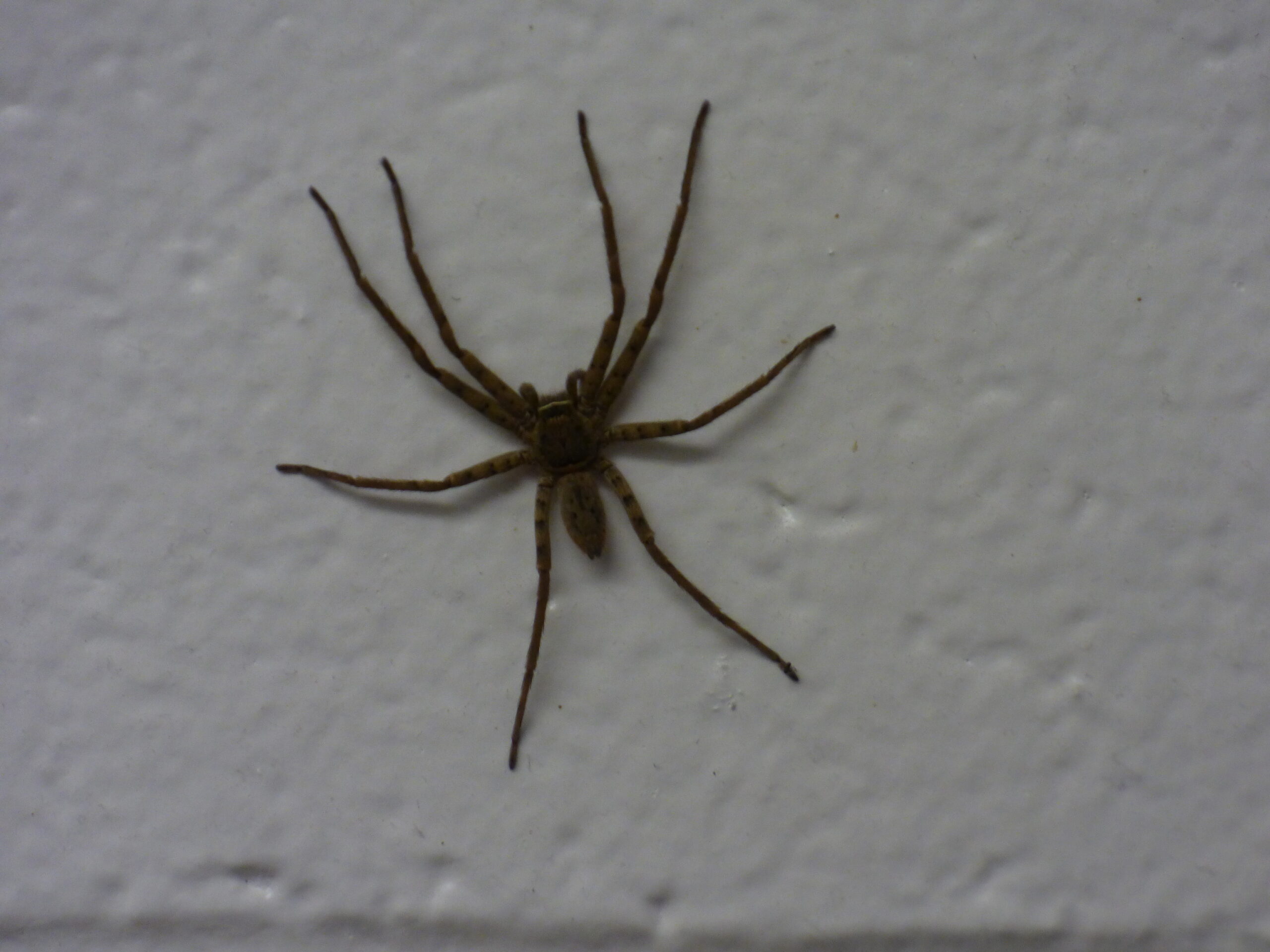 Photo Credit: Forest and Kim Starr / Wikimedia
In the warm embrace of tropical nights, the Cane Spider, scientifically known as Heteropoda, emerges as a masterful predator. Picture a vast sugarcane field, where the tall, green stalks sway gently in the breeze, their leaves whispering secrets of the night. Here, the Cane Spider stretches its long, spindly legs, poised and ready for action. With a body that can reach up to four inches across, this arachnid is not just large; it is a marvel of agility and grace, darting across the ground and climbing effortlessly up the stalks in search of its next meal.
What makes the Cane Spider particularly captivating to scientists and nature lovers alike is its remarkable hunting technique. Unlike many of its web-spinning relatives, Heteropoda is a skilled ambush predator, relying on speed and stealth to catch its prey. As night falls, it becomes a shadowy figure, blending seamlessly into its surroundings. This nocturnal lifestyle allows it to hunt insects and even small arachnids, playing a crucial role in maintaining the balance of its ecosystem. With its fascinating behaviors and impressive adaptations, the Cane Spider invites us to explore the intricate web of life that thrives in the world around us.
The Cane Spider, scientifically known as Heteropoda, occupies a distinctive position in the tree of life. This intriguing arachnid belongs to the family Sparassidae, which is often referred to as the huntsman spiders. What sets the Cane Spider apart is its impressive speed and size, making it one of the largest spiders in its habitat. With its long legs and agile movements, it is a masterful predator, capable of catching prey with remarkable efficiency. This unique combination of traits not only helps it thrive in various environments but also highlights its evolutionary adaptations.
| Taxonomic Rank | Scientific Name | Meaning & Significance |
|---|---|---|
| Kingdom | Animalia | This name signifies that Cane Spiders are part of the vast group of multicellular organisms that are primarily heterotrophic, meaning they obtain their food by consuming other organisms. |
| Phylum | Arthropoda | Arthropoda means “jointed legs,” which refers to the Cane Spider’s segmented body and its jointed appendages, a characteristic feature of this diverse group that includes insects and crustaceans. |
| Class | Arachnida | Arachnida translates to “spider,” highlighting that Cane Spiders are part of the class that includes spiders, scorpions, and ticks, all known for having eight legs and two main body segments. |
| Order | Araneae | This order encompasses all true spiders, emphasizing the Cane Spider’s role as a web-weaving or hunting predator within the larger spider family. |
| Family | Sparassidae | Sparassidae, or huntsman spiders, reflects their hunting style, as these spiders are known for their speed and agility, often hunting down prey rather than spinning webs. |
| Genus | Heteropoda | Heteropoda means “different foot,” which refers to the varying sizes and shapes of the Cane Spider’s legs, aiding in its swift movements and hunting prowess. |
Understanding the Cane Spider’s classification reveals much about its evolutionary journey. As a member of the Arachnida class, it shares common ancestry with other spiders, yet its unique adaptations, such as its speed and hunting techniques, showcase how it has evolved to thrive in its environment. The Cane Spider’s position in the family Sparassidae further emphasizes its specialized role as a predator, illustrating the diverse strategies that arachnids have developed over millions of years to survive and flourish in various ecosystems.
The evolutionary journey of the Cane Spider, belonging to the genus Heteropoda and the family Sparassidae, stretches back millions of years. These agile hunters have adapted to various environments, showcasing a remarkable ability to thrive in diverse habitats. Their lineage can be traced to ancient arachnids that roamed the Earth long before the dinosaurs, evolving through significant changes that have shaped their current form.
The ancestors of Cane Spiders were likely small, web-weaving spiders that relied on silk to catch prey. Over time, as they adapted to their surroundings, they transitioned from a web-based lifestyle to a more active hunting strategy. This shift allowed them to pursue and capture prey directly, leading to the development of their long legs and keen eyesight. These adaptations were crucial as they began to inhabit a variety of environments, from tropical forests to urban areas, where agility and speed became essential for survival.
The adaptations of the Cane Spider have been vital for its survival in a world filled with challenges. Their long legs and keen eyesight allow them to be agile hunters, while their camouflage helps them avoid predators. By being versatile in their diet, they can take advantage of whatever food is available, ensuring they can thrive in different environments. These evolutionary traits not only highlight their adaptability but also underscore the intricate connections between species and their habitats throughout time.
The Cane Spider is an impressive sight, with a body that commands attention. Its long, spindly legs stretch out like the arms of a dancer, giving it an air of grace and agility. The body is relatively flat, allowing it to navigate through tight spaces with ease. This arachnid’s overall appearance is both intriguing and slightly intimidating, making it a true marvel of the natural world.
| Feature | Description |
|---|---|
| Size | Cane Spiders can grow quite large, with leg spans reaching up to 10 inches (25 centimeters) across. |
| Color | They typically exhibit a brownish hue, which helps them blend into their surroundings. |
| Skin Type | Like all spiders, they have an exoskeleton, a hard outer structure that protects their body. |
| Distinctive Feature | Dark spots adorn their legs, adding to their striking appearance and aiding in camouflage. |
These features work together to create a highly effective predator. The Cane Spider’s large size and flat body allow it to ambush prey with surprising speed. Its brown coloration and dark spots help it blend seamlessly into the environment, making it less visible to both predators and potential meals. The exoskeleton not only provides protection but also supports its agile movements, enabling it to thrive in various habitats. In the world of spiders, the Cane Spider stands out as a master of survival, perfectly adapted to its role in the ecosystem.
The Cane Spider thrives in vibrant, sun-drenched environments, often weaving its web in the lush expanses of sugarcane fields and other plantations. Picture a sprawling landscape where tall, green stalks sway gently in the breeze, creating a perfect backdrop for this agile arachnid. These habitats are not just visually striking; they provide the ideal conditions for the Cane Spider to hunt and thrive, surrounded by the rich biodiversity of tropical ecosystems.
This spider prefers warm, humid climates that are characteristic of tropical regions. The temperatures in these areas typically range from 70 to 90 degrees Fahrenheit, creating a cozy environment for the Cane Spider. The humidity levels are often high, which helps keep its delicate body hydrated. These conditions are essential for its survival, as they support the growth of the insects it preys upon, ensuring a steady food supply.
Over time, the Cane Spider has developed remarkable adaptations to thrive in its chosen habitats. Its long legs allow it to navigate swiftly through dense vegetation, while its excellent camouflage helps it blend into the surroundings, making it less visible to both predators and prey. This combination of speed and stealth is crucial for hunting in the bustling life of sugarcane fields, where every day is a new adventure in survival.
As the sun sets and darkness blankets the landscape, the Cane Spider begins its nightly adventures. This nocturnal hunter, known scientifically as Heteropoda, comes alive under the cover of night. With its long legs and keen eyesight, it scours the ground and nearby vegetation for prey. The Cane Spider is a master of stealth, using its agility to navigate through the shadows. Its primary activities include hunting for insects and exploring its territory, all while avoiding potential predators.
While Cane Spiders are primarily solitary creatures, they do exhibit interesting behaviors when it comes to their interactions with others of their kind. Typically, they prefer to live alone, which helps them avoid competition for food. However, during mating season, males will seek out females, showcasing their courtship skills. Communication between Cane Spiders is subtle, often involving body language and pheromones—chemical signals that convey information about their readiness to mate or their territory.
| Behavior Type | Description |
|---|---|
| Activity Patterns | Nocturnal hunting, primarily at night, focusing on insects and other small prey. |
| Social Structure | Solitary lifestyle, with brief interactions during mating season. |
| Communication Methods | Body language and pheromones used to signal readiness to mate or establish territory. |
The Cane Spider’s behaviors are finely tuned for survival in its environment. By being active at night, it reduces the risk of encountering daytime predators. Its solitary nature allows it to efficiently hunt without competition, while its ability to communicate during mating ensures the continuation of its species. Each aspect of its daily life is a testament to the delicate balance of nature, where every action plays a crucial role in the spider’s survival.
The Cane Spider, or Heteropoda, is primarily an insectivore, meaning it mainly feeds on insects. This agile predator has a diverse diet that includes not only insects but also arachnids and even small mammals. With its keen eyesight and swift movements, the Cane Spider is a master at hunting. It uses its speed and stealth to ambush prey, often waiting patiently until the perfect moment to strike. This hunting strategy allows it to capture a variety of creatures, making it a versatile and effective forager in its environment.
| Dietary Aspect | Details |
|---|---|
| Diet Type | Insectivore |
| Favorite Foods | Insects, arachnids, and small mammals |
| Prey Items | Flies, beetles, and other small invertebrates |
| Hunting/Foraging Strategies | Ambush predator; uses speed and stealth to capture prey |
The Cane Spider’s diet plays a crucial role in its ecology and daily routine. By preying on a variety of insects and small animals, it helps control their populations, contributing to the balance of its ecosystem. This spider’s nocturnal lifestyle aligns perfectly with its hunting habits, allowing it to take advantage of the cover of darkness to stalk its prey. As a result, the Cane Spider not only thrives in its environment but also plays an important part in the intricate web of life around it.
The mating behavior of the Cane Spider is a captivating spectacle, especially during the breeding season, which typically occurs in warmer months. Males engage in a courtship dance, showcasing their agility and strength to attract females. This dance often involves intricate movements and vibrations, which help the male signal his readiness to mate. Once a female is receptive, the male will carefully approach her, ensuring he does not appear threatening. After mating, the female lays her eggs in a silk sac, providing a safe environment for the developing young.
| Reproductive Aspect | Details |
|---|---|
| Gestation Period | Approximately 2 to 3 weeks |
| Litter Size | Up to 100 eggs |
| Age of Maturity | About 2 to 3 months |
| Name of Young | Caterpillar |
Once the eggs hatch, the young Cane Spiders, known as caterpillars, emerge and begin their journey into the world. These tiny spiders are initially vulnerable and rely on their instincts to survive. They undergo several molts, shedding their exoskeletons as they grow. During this time, they learn to hunt and navigate their environment, gradually developing the skills needed to thrive as adults. Parental care is minimal, as the female does not stay with her young after laying the eggs. However, the silk sac provides essential protection until the caterpillars are ready to venture out on their own, marking the beginning of their independent lives.
The Cane Spider, known scientifically as Heteropoda, plays a vital role in its ecosystem as both a predator and prey. Positioned within the food web, it helps control insect populations while also being a target for various predators. This delicate balance is crucial for maintaining the health of its environment, particularly in the sugarcane fields and plantations where it resides.
To survive against these threats, the Cane Spider employs several clever strategies. Its ability to blend into its surroundings makes it a master of camouflage, allowing it to evade predators. When threatened, it can also make quick, agile movements to escape danger. Additionally, its speed and keen senses help it detect potential threats before they get too close. By using these defensive behaviors, the Cane Spider continues to thrive in its vibrant habitat, showcasing the wonders of adaptation in the natural world.
A keystone species is a vital part of its ecosystem, meaning its presence and activities have a significant impact on the environment and other living things. The Cane Spider, scientifically known as Heteropoda, qualifies as a keystone species due to its role as a predator in sugarcane fields and plantations. By controlling insect populations, it helps maintain the balance of its ecosystem, making it an essential player in the web of life.
The Cane Spider primarily feeds on insects, which means it helps regulate the numbers of these creatures. For example, by preying on pests that might otherwise damage crops, the Cane Spider contributes to healthier plants and more productive agricultural systems. This natural pest control reduces the need for chemical pesticides, which can harm other wildlife and the environment. Additionally, the Cane Spider’s presence can influence the behavior of other species, as they may avoid areas where these skilled hunters are active.
Moreover, the Cane Spider serves as a food source for larger predators, such as birds and small mammals. This connection highlights its role in the food web, where energy and nutrients flow from one organism to another. By supporting these higher-level predators, the Cane Spider helps sustain biodiversity in its habitat. Its solitary lifestyle also means that it occupies a unique niche, allowing it to thrive without competing for resources with other spiders.
If the Cane Spider were to disappear, the consequences could be significant. Without this predator, insect populations could explode, leading to increased crop damage and a decline in plant health. Farmers might then resort to using more pesticides, which could harm beneficial insects and other wildlife. The loss of the Cane Spider would ripple through the ecosystem, potentially disrupting the balance of life and diminishing biodiversity. In essence, this remarkable arachnid plays a crucial role in keeping its environment healthy and thriving.
The Cane Spider, scientifically known as Heteropoda, plays a crucial role in its ecosystem, particularly in sugarcane fields and other plantations. As a nocturnal predator, it helps maintain the balance of insect populations, ensuring that no single species overwhelms the environment. By controlling these populations, the Cane Spider contributes to the health of its habitat, allowing plants and other animals to thrive. Its presence is a testament to the interconnectedness of life, where each species, no matter how small, has a part to play.
| Ecosystem Service | Impact |
|---|---|
| Insect population control | Prevents overpopulation of pests, protecting crops |
| Food source for other animals | Serves as prey for birds and larger insects |
| Soil health | Contributes to nutrient cycling through decomposition of prey |
| Pollination support | Indirectly aids in pollination by maintaining healthy insect populations |
The Cane Spider’s influence extends beyond just hunting insects. For instance, by preying on pests that threaten crops, it helps farmers reduce the need for chemical pesticides, promoting a healthier environment. This natural pest control not only benefits the crops but also supports the overall biodiversity of the area. Additionally, as it captures and consumes various insects, it contributes to the nutrient cycle, enriching the soil and fostering plant growth. This interconnected web of life showcases how the Cane Spider is more than just a predator; it is a vital player in the ecosystem.
Understanding the broader ecological importance of the Cane Spider reveals its role as a keystone species. By regulating insect populations and supporting the food web, it helps maintain the delicate balance of its environment. The health of sugarcane fields and plantations relies on the presence of these spiders, illustrating how even the smallest creatures can have a significant impact on their surroundings. In essence, the Cane Spider is a reminder of nature’s intricate design, where every organism contributes to the tapestry of life.
In the intricate web of life, symbiosis refers to the close interactions between different species, which can take many forms. These relationships can be mutualistic, where both species benefit, parasitic, where one benefits at the other’s expense, or commensal, where one benefits while the other is neither helped nor harmed. The Cane Spider, known scientifically as Heteropoda, engages in various ecological relationships that highlight the complexity of its interactions with other organisms in its environment.
| Species/Type | Relationship Type | Description |
|---|---|---|
| Insects (various species) | Mutualistic | The Cane Spider helps control insect populations, benefiting crops in sugarcane fields by reducing pest numbers. |
| Small birds | Parasitic | Some small birds may prey on Cane Spiders, benefiting from the spider as a food source. |
| Plants (sugarcane) | Commensal | The Cane Spider resides in sugarcane fields, where it finds shelter and hunting grounds without affecting the plants. |
These relationships have evolved over time, shaped by the needs and behaviors of the species involved. The Cane Spider’s role as a predator helps maintain a balance in its ecosystem, particularly in agricultural settings like sugarcane fields. By controlling pest populations, it indirectly supports the health of the crops, showcasing a mutualistic relationship with the plants. Meanwhile, its interactions with birds highlight the delicate balance of predator and prey. Understanding these connections not only reveals the Cane Spider’s ecological importance but also emphasizes the intricate dance of life that sustains our natural world.
The Cane Spider, known scientifically as Heteropoda, is a captivating arachnid that often surprises those who encounter it. With its impressive size and unique behaviors, this spider is more than just a common sight in sugarcane fields. Here are some intriguing facts that showcase the Cane Spider’s remarkable adaptations and lifestyle.
The Cane Spider, or Heteropoda, has woven itself into the fabric of human history and culture, particularly in regions where it thrives, such as sugarcane fields. Historically, these spiders have been both feared and revered. In many cultures, they symbolize strength and resilience, often appearing in folklore and local tales. Their impressive size and swift movements can evoke awe, while their predatory nature has led to a reputation that sometimes borders on superstition. As humans have interacted with these arachnids over the years, the Cane Spider has become a part of the narrative that connects us to the natural world.
In contemporary times, the relationship between Cane Spiders and humans is complex. While some people view them as pests, especially when they invade homes, others recognize their ecological importance. Cane Spiders play a crucial role in controlling insect populations, which can be beneficial for agriculture. Conservation efforts are increasingly focusing on understanding these spiders and their habitats, promoting coexistence rather than conflict. In some areas, educational programs aim to dispel myths and encourage appreciation for these remarkable hunters, highlighting their role in maintaining a balanced ecosystem.
As we look to the future, the relationship between Cane Spiders and humanity holds promise. With growing awareness of biodiversity and the importance of every species, there is potential for a more harmonious coexistence. By fostering understanding and respect for these incredible arachnids, we can ensure that they continue to thrive alongside us. Embracing the Cane Spider as a vital part of our ecosystem may lead to innovative approaches in agriculture and conservation, ultimately benefiting both humans and the natural world.
The Cane Spider, scientifically known as Heteropoda, currently holds a conservation status of “Not Listed” according to the International Union for Conservation of Nature (IUCN). This means that there is not enough information to determine if the species is facing significant threats or if its population is declining. While specific population estimates are not available, the Cane Spider is generally considered to be widespread in its preferred habitats, such as sugarcane fields and plantations. However, ongoing changes in land use and agricultural practices could impact its future.
| Conservation Factor | Status/Details |
|---|---|
| IUCN Status | Not Listed |
| Population Estimates | Not available |
| Trend Direction | Unknown |
The main threats to the Cane Spider arise from habitat loss and pesticide use. As agricultural practices evolve, large areas of sugarcane fields may be converted to other types of crops or urban development. This transformation can lead to a decrease in suitable habitats for the Cane Spider. Additionally, the use of pesticides in farming can directly harm these spiders, as they may ingest toxic chemicals while hunting or through contaminated prey.
Conservation efforts for the Cane Spider are still in their infancy, primarily because its conservation status is not formally recognized. However, raising awareness about the importance of maintaining healthy ecosystems can help protect this species. Encouraging sustainable agricultural practices and minimizing pesticide use are vital steps that can benefit not only the Cane Spider but also the broader environment. With continued attention and care, there is hope that this fascinating arachnid will thrive in its natural habitats for years to come.
| Question | Answer |
|---|---|
| Where do Cane Spiders live? | Cane spiders are commonly found in sugarcane fields and other plantations. They thrive in warm, humid environments, which provide plenty of insects for them to eat. |
| What do Cane Spiders eat? | Cane spiders are insectivores, meaning they primarily eat insects. Their diet includes a variety of bugs, which they catch using their quick reflexes and web-spinning skills. |
| How do Cane Spiders behave? | Cane spiders are known for their agility and speed. They are mostly nocturnal, meaning they are active at night, and they often hunt alone rather than in groups. |
| How do Cane Spiders reproduce? | Cane spiders reproduce by laying eggs, which they often protect in silk sacs. After a few weeks, the eggs hatch, and the young spiders emerge, ready to start their own lives. |
| What threats do Cane Spiders face? | While Cane Spiders are not currently listed as endangered, they face threats from habitat loss due to agricultural practices. Pesticides used in farming can also harm their populations. |
| What is a distinctive feature of Cane Spiders? | One of the most distinctive features of Cane Spiders is the dark spots on their legs. These markings help them blend into their surroundings, making it easier to catch prey and avoid predators. |
| Are Cane Spiders dangerous to humans? | Cane spiders are not considered dangerous to humans. While they can bite if threatened, their venom is not harmful, and they generally prefer to avoid contact with people. |