Taxonomy & Classification
- Kingdom
- Animalia
- Phylum
- Chordata
- Class
- Mammalia
- Order
- Primates
- Family
- Cebidae
- Genus
- Cebus

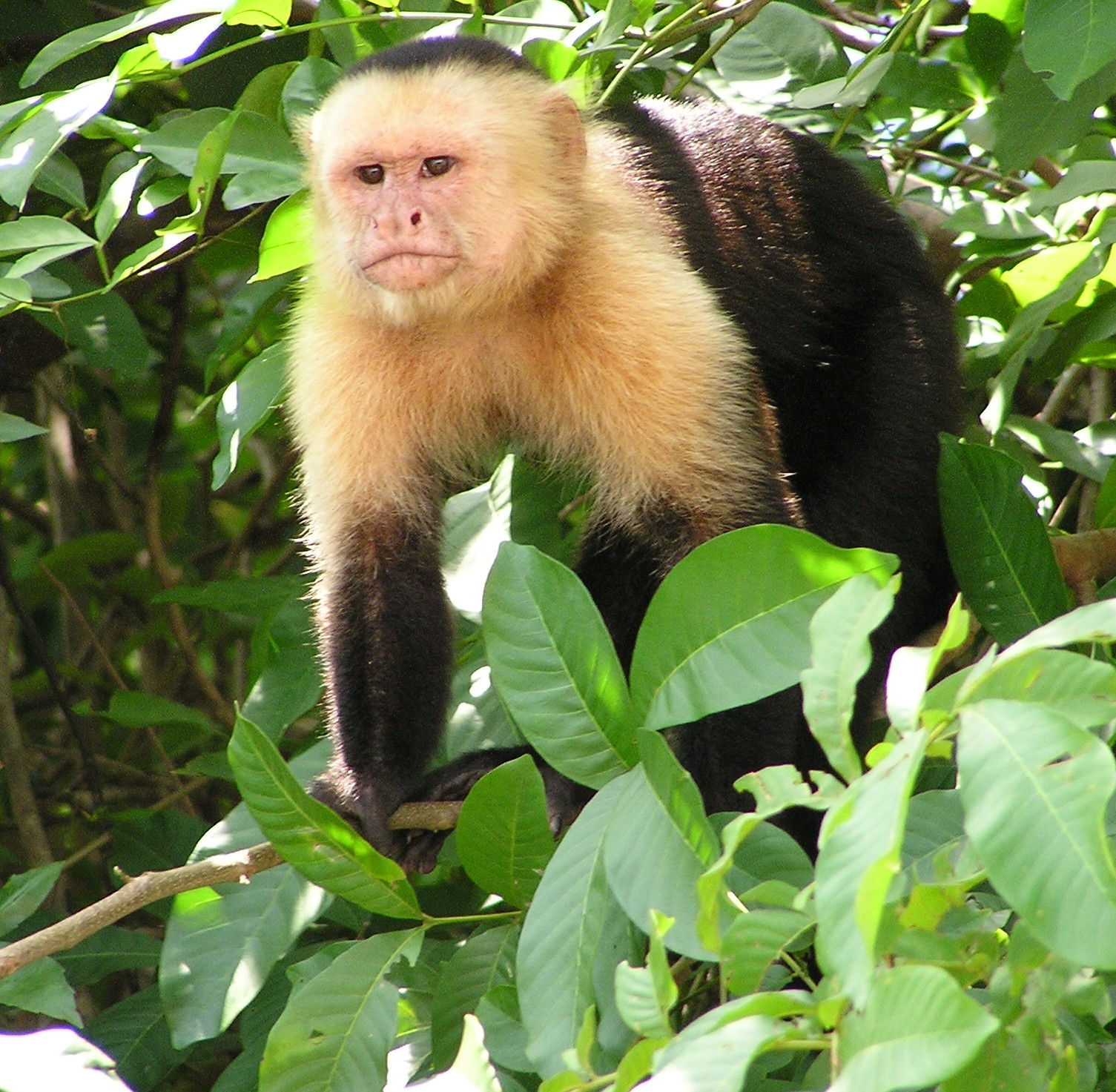 Photo Credit: David M. Jensen (Storkk) / Wikimedia
In the heart of the lush tropical forests of South America, the Capuchin monkey, scientifically known as Cebus apella, swings gracefully from branch to branch. With its striking black and white face and expressive eyes, this small primate captures the imagination of anyone lucky enough to spot it. Capuchins are known for their playful antics and remarkable intelligence, making them a favorite among scientists and nature enthusiasts alike. Their agile bodies and long tails help them navigate the dense canopy, where they spend their days foraging for fruits, insects, and even small animals.
As the sun filters through the vibrant green leaves, the sounds of the forest come alive with the chatter of Capuchins communicating with one another. These social creatures live in tight-knit groups, showcasing complex behaviors that reveal their advanced cognitive abilities. From using tools to crack open nuts to engaging in playful wrestling matches, Capuchins demonstrate a level of problem-solving and social interaction that fascinates researchers. Their role in the ecosystem is equally important, as they help disperse seeds and maintain the health of their forest home. Join us as we explore the captivating world of Capuchin monkeys, uncovering their behaviors, habitats, and the challenges they face in a rapidly changing environment.
Capuchins are intriguing members of the animal kingdom, sitting comfortably within the primate family tree. They belong to the order Primates, which includes all monkeys, apes, and humans. Capuchins are part of the family Cebidae, known for their intelligence and dexterity. These small, agile monkeys are often recognized for their expressive faces and social behaviors, making them a favorite in both the wild and in popular culture. Their ability to use tools and communicate with one another showcases their advanced cognitive skills, setting them apart from many other animals.
| Taxonomic Rank | Scientific Name | Meaning & Significance |
|---|---|---|
| Kingdom | Animalia | This name signifies that capuchins are part of the vast group of multicellular organisms that are heterotrophic, meaning they consume organic material for energy. |
| Phylum | Chordata | Chordata refers to animals that have a notochord, a flexible rod that supports the body. In capuchins, this structure is present during their development, highlighting their vertebrate lineage. |
| Class | Mammalia | Mammalia indicates that capuchins are warm-blooded animals with fur or hair and mammary glands, which allow females to nurse their young. |
| Order | Primates | The term Primates comes from the Latin word for “first,” reflecting their complex brains and social structures, which are often seen as advanced among animals. |
| Family | Cebidae | Cebidae is derived from the Latin word “cebus,” which refers to a type of monkey. This family includes capuchins and squirrel monkeys, known for their playful nature. |
| Genus | Cebus | The genus name Cebus is linked to the physical characteristics of these monkeys, particularly their long limbs and prehensile tails, which help them navigate their arboreal habitats. |
Understanding the taxonomic classification of capuchins reveals much about their evolutionary journey. As primates, they share a common ancestor with humans, which explains some of their social behaviors and intelligence. Their place in the family Cebidae highlights their adaptability and evolutionary success in various environments, particularly in the lush canopies of Central and South America. This classification not only connects them to other primates but also emphasizes their unique adaptations that have allowed them to thrive in diverse habitats.
The evolutionary journey of Capuchin monkeys stretches back millions of years, tracing their lineage to the early primates that roamed the forests of South America. These agile and intelligent creatures belong to the family Cebidae and the genus Cebus. Their ancestors began to diverge from other primates around 30 million years ago, adapting to the lush, tropical environments that would shape their development.
The Capuchin’s evolutionary story is marked by significant transitions that allowed them to thrive in their habitats. Early primates were small, tree-dwelling animals that relied heavily on their sense of smell. Over time, as they adapted to life in the trees, their reliance shifted towards enhanced vision and dexterity. This transition led to the development of grasping hands and feet, which are essential for climbing and manipulating objects. As they evolved, Capuchins also developed complex social structures, allowing them to communicate and cooperate effectively within their groups.
The adaptations that Capuchins have developed over time have been crucial for their survival. Their dexterous hands allow them to use tools, such as stones to crack open nuts, giving them access to a wider range of food sources. Their social intelligence helps them navigate the complexities of living in groups, providing safety in numbers and enhancing their ability to find food. With their keen color vision, they can spot ripe fruits among the foliage, ensuring they get the nutrition they need. Together, these traits have made Capuchins not just survivors, but thriving members of their ecosystems.
Capuchin monkeys are small, lively primates that capture attention with their playful demeanor and striking appearance. Their bodies are compact and agile, perfectly designed for life in the trees. With a weight ranging from 3 to 9 pounds, they are light enough to leap between branches with ease. Their most distinctive feature is the white or light-colored hair that frames their faces and necks, creating a striking contrast against their darker fur. This combination of features gives them a charming and expressive look, making them one of the most recognizable monkeys in the wild.
| Feature | Description |
|---|---|
| Weight | 3-9 pounds |
| Skin Type | Hair |
| Most Distinctive Feature | White or light hair around the face and neck |
The Capuchin’s physical traits are not just for show; they serve important survival purposes. Their lightweight bodies allow them to navigate the treetops with agility, while the contrasting facial hair helps them communicate with one another through expressions. This combination of features enhances their social interactions and aids in their ability to thrive in the complex environments of South American forests. With their playful nature and keen intelligence, Capuchins are perfectly adapted to their vibrant habitats.
Capuchin monkeys thrive in the lush, vibrant world of tropical forests, where the air is thick with humidity and the canopy is alive with the sounds of chirping birds and rustling leaves. These lively primates swing gracefully from branch to branch, expertly navigating the dense foliage that provides both food and shelter. The dappled sunlight filters through the leaves, creating a warm, inviting atmosphere that is perfect for their playful antics.
To flourish in their environment, Capuchins prefer warm climates with plenty of rainfall. Tropical forests typically experience high temperatures year-round, often ranging from 70 to 90 degrees Fahrenheit. These regions also boast rich biodiversity, offering a variety of fruits, nuts, and insects that are essential to the Capuchin diet. The consistent warmth and moisture create a thriving ecosystem, making it an ideal home for these intelligent monkeys.
Capuchins have developed several clever adaptations to make the most of their tropical habitats. Their strong limbs and prehensile tails allow them to grasp branches securely, making it easy to move through the treetops. They are also highly social animals, living in groups that help them find food and protect each other from predators. Their keen intelligence enables them to use tools, like rocks to crack open nuts, showcasing their ability to thrive in a complex environment.
Capuchin monkeys lead an active and engaging daily life, filled with exploration and social interaction. As diurnal animals, they rise with the sun and spend their days foraging for food, playing, and grooming one another. Their diet consists of fruits, nuts, seeds, and insects, which they skillfully find among the branches of their forest homes. These lively primates are known for their intelligence, often using tools like sticks to extract insects from crevices or cracking open hard-shelled nuts. Their days are a blend of adventure and camaraderie, making every moment in the treetops an opportunity for learning and fun.
Social behavior is a cornerstone of Capuchin life. They live in troops, which can range from a few individuals to over 30 members. This social structure fosters strong bonds among the monkeys, as they engage in grooming rituals that help maintain relationships and reduce stress. Communication is key in these groups, with a variety of vocalizations, facial expressions, and body language used to convey messages. Whether warning of danger or inviting others to play, Capuchins are masters of social interaction, ensuring that their troop remains cohesive and supportive.
| Behavior Type | Description |
|---|---|
| Activity Patterns | Capuchins are diurnal, meaning they are active during the day, engaging in foraging, playing, and grooming. |
| Social Structure | They live in troops, which can include a few to over 30 individuals, fostering strong social bonds. |
| Communication Methods | Capuchins use vocalizations, facial expressions, and body language to communicate with each other. |
The behaviors of Capuchin monkeys are not just for fun; they play a vital role in their survival. By living in troops, they can better protect each other from predators and share knowledge about food sources. Their social interactions help them build strong alliances, which are crucial for navigating the challenges of their environment. Through teamwork and communication, Capuchins thrive in the wild, showcasing the importance of community in the animal kingdom.
Capuchin monkeys are omnivores, which means they enjoy a varied diet that includes both plant and animal matter. These clever primates are known for their resourcefulness when it comes to finding food. They use their keen intelligence and dexterous hands to forage for fruits, nuts, and seeds, while also hunting for insects, mollusks, and even small vertebrates. Their ability to adapt their feeding strategies to the changing environment allows them to thrive in the diverse ecosystems of tropical forests.
| Dietary Aspect | Details |
|---|---|
| Diet Type | Omnivore |
| Favorite Foods | Fruits, nuts, seeds, and insects |
| Prey Items | Insects, mollusks, small vertebrates |
| Hunting/Foraging Strategies | Using intelligence and dexterous hands to search for food |
The diverse diet of Capuchin monkeys plays a crucial role in their ecology and daily routine. By consuming a wide range of foods, they help to disperse seeds throughout their habitat, promoting plant growth and maintaining the health of their forest ecosystem. Their foraging behavior not only keeps them active and engaged but also strengthens social bonds within their groups as they often forage together. This dynamic lifestyle ensures that Capuchins remain vital players in their environment, contributing to the balance of life in the tropical forests they call home.
Capuchin monkeys have a fascinating approach to mating and reproduction. Their breeding season can vary depending on environmental conditions, but it often peaks during the rainy season when food is more abundant. Males engage in displays of strength and agility to attract females, showcasing their fitness. Once a female is receptive, she may mate with multiple males, which can help ensure genetic diversity among the young.
| Reproductive Aspect | Details |
|---|---|
| Gestation Period | 160-180 days |
| Litter Size | 1 (rarely 2) |
| Age of Maturity | 4 years (females), 8 years (males) |
| Name of Young | Infant |
Once the infant is born, parental care becomes crucial for its survival. Capuchin mothers are attentive and nurturing, often carrying their young on their backs as they navigate through the trees. This close bond allows the infant to learn essential skills, such as foraging and social interaction, by observing their mother and other group members. As they grow, young Capuchins gradually gain independence, but they remain part of their social group, learning from their peers until they reach adulthood. This supportive environment helps them develop into well-rounded, social animals ready to face the challenges of life in the wild.
Capuchin monkeys play a vital role in their ecosystem, acting as both prey and foragers. Positioned in the food web, they are an important source of food for various predators while also helping to disperse seeds and maintain the health of their forest habitats. This dual role highlights their significance in the intricate balance of nature.
To defend themselves against these threats, Capuchins have developed a range of survival strategies. They are highly social animals, often living in groups that provide safety in numbers. When danger approaches, they communicate with alarm calls, alerting others to potential predators. Their agility and intelligence also allow them to escape quickly into the treetops, where they can navigate the branches with ease. By staying vigilant and working together, Capuchins enhance their chances of survival in a world filled with challenges.
A keystone species is a vital part of its ecosystem, meaning its presence and activities have a significant impact on the environment and other living things. Capuchin monkeys, with their playful nature and social behavior, can indeed be considered a keystone species in their tropical forest habitats. Their actions help shape the ecosystem, influencing the lives of many other plants and animals around them.
Capuchins are omnivores, which means they eat both plants and animals. This diverse diet allows them to play a crucial role in seed dispersal. When they consume fruits, they often travel far and wide, leaving behind seeds in their droppings. This process helps new plants grow in different areas, promoting biodiversity. For example, a single capuchin can help spread the seeds of various tree species, ensuring that the forest remains healthy and vibrant.
Additionally, capuchins are known for their foraging behavior, which can impact the populations of insects and small animals. By searching for food, they help control these populations, preventing any one species from becoming too dominant. This balance is essential for maintaining a healthy ecosystem. Their social structure also contributes to their ecological role; living in troops allows them to work together to find food and protect each other from predators, which can influence the dynamics of the entire forest community.
If capuchin monkeys were to disappear from their ecosystem, the effects would be profound. Without their seed dispersal, many plant species could struggle to reproduce, leading to a decline in forest diversity. This loss would ripple through the ecosystem, affecting other animals that rely on those plants for food and shelter. Additionally, the balance of insect populations could shift, potentially leading to overpopulation and the disruption of other species. In essence, the absence of capuchins would create a domino effect, altering the entire tropical forest ecosystem and diminishing its richness and resilience.
Capuchin monkeys occupy a crucial ecological niche in tropical forests, where they serve as both foragers and seed dispersers. Their playful and intelligent nature allows them to interact with their environment in ways that significantly influence the ecosystem. By foraging for fruits, nuts, and insects, they help maintain the balance of plant and animal life, ensuring that the forest remains vibrant and diverse. Their activities not only support their own survival but also contribute to the health of the entire ecosystem.
| Ecosystem Service | Impact |
|---|---|
| Seed Dispersal | Capuchins eat fruits and then excrete the seeds, helping new plants grow in different areas. |
| Foraging | By searching for food, they help control insect populations and promote plant growth. |
| Soil Aeration | Their digging activities help aerate the soil, improving its quality for plant life. |
| Food Source | Capuchins are prey for larger predators, contributing to the food web’s balance. |
Capuchins are particularly influential in their role as seed dispersers. When they consume fruits, they often travel considerable distances before excreting the seeds. This process allows plants to spread and grow in new locations, which is vital for forest regeneration. Additionally, their foraging habits help control insect populations, as they consume various insects while searching for food. This natural pest control is essential for maintaining the health of the forest ecosystem. Their digging also aerates the soil, which enhances its quality and promotes the growth of other plants.
The broader ecological importance of Capuchin monkeys cannot be overstated. As a keystone species, their presence and activities are fundamental to the health of tropical forests. By facilitating plant growth and providing a food source for predators, they help maintain the delicate balance of their ecosystem. Without Capuchins, the forest would not only lose a vibrant and engaging species but also face disruptions that could ripple through the entire food web. Their playful antics and essential roles remind us of the interconnectedness of life in the wild.
In the intricate web of life, symbiosis plays a vital role, connecting different species in various ways. Symbiosis refers to the close and often long-term interactions between two different biological species. These relationships can be mutualistic, where both species benefit; parasitic, where one benefits at the expense of the other; or commensal, where one benefits while the other is neither helped nor harmed. Capuchin monkeys, with their lively personalities and social structures, engage in several fascinating partnerships with other species in their tropical forest habitats.
| Species/Type | Relationship Type | Description |
|---|---|---|
| Birds (e.g., Toucans) | Mutualistic | Capuchins often disturb insects while foraging, which attracts birds that feed on these insects. In return, the birds help alert the monkeys to potential predators. |
| Fungi | Mutualistic | Capuchins may help disperse fungal spores while foraging for food, benefiting the fungi by spreading their reproductive structures across the forest floor. |
| Ticks | Parasitic | Ticks attach to Capuchins, feeding on their blood. This relationship is harmful to the monkeys, as it can lead to health issues. |
| Epiphytic plants (e.g., orchids) | Commensal | These plants grow on Capuchin habitats without harming them. They benefit from the height and sunlight provided by the trees where Capuchins live. |
The evolution of these relationships showcases the dynamic nature of ecosystems. Over time, Capuchins have adapted to their surroundings, forming partnerships that enhance their survival and well-being. Mutualistic relationships, like those with birds and fungi, highlight the importance of cooperation in nature, while parasitic interactions remind us of the challenges that come with living in a shared environment. These connections not only benefit the Capuchins but also contribute to the health and balance of the tropical forest ecosystem, illustrating the intricate dance of life that sustains all its inhabitants.
Capuchin monkeys are not just adorable; they are also full of surprises that make them stand out in the animal kingdom. Here are some intriguing facts that showcase their remarkable abilities and behaviors.
Capuchin monkeys have a long and storied history with humanity, dating back to the time of early explorers in South America. These lively primates were often observed by European settlers, who marveled at their intelligence and playful antics. In many cultures, Capuchins have been seen as symbols of mischief and cleverness, often appearing in folklore and art. Their striking appearance and engaging behavior have made them popular in various forms of media, from cartoons to documentaries, highlighting their cultural significance across generations.
Today, the relationship between Capuchins and humans is complex and multifaceted. On one hand, these monkeys are involved in conservation efforts aimed at protecting their natural habitats, which are increasingly threatened by deforestation and human encroachment. On the other hand, conflicts arise when Capuchins venture into agricultural areas, leading to competition for resources. Some people have even attempted to domesticate Capuchins, drawn by their intelligence and social nature, but this often leads to ethical concerns about their well-being and the impact on wild populations.
As we look to the future, the relationship between Capuchin monkeys and humanity will likely continue to evolve. With growing awareness of conservation issues, there is hope that more people will advocate for the protection of these intelligent primates and their habitats. By fostering a deeper understanding of their ecological role and the challenges they face, we can work together to ensure that Capuchins thrive in the wild, while also respecting their place in our shared world. The journey ahead will require collaboration, compassion, and a commitment to preserving the rich tapestry of life on our planet.
The conservation status of Capuchin monkeys is currently classified as Critically Endangered. This alarming designation indicates that these primates face an extremely high risk of extinction in the wild. While specific population estimates can vary by species, the overall trend shows a decline in numbers due to various threats. The urgency of their situation calls for immediate attention and action to ensure their survival.
| Conservation Factor | Status/Details |
|---|---|
| IUCN Status | Critically Endangered |
| Estimated Population Size | Varies by species |
| Trend Direction | Declining |
One of the main threats to Capuchin monkeys is habitat loss, primarily due to deforestation. As forests are cleared for agriculture, logging, and urban development, these agile primates lose their homes and food sources. Additionally, illegal hunting and the pet trade pose significant risks, as some people capture Capuchins for personal ownership, further diminishing their wild populations. Climate change also plays a role, altering their habitats and food availability, making survival even more challenging.
Conservation efforts are underway to protect Capuchin monkeys and their habitats. Organizations are working to establish protected areas and promote sustainable land-use practices that benefit both wildlife and local communities. Education programs aim to raise awareness about the importance of preserving these primates and their ecosystems. With continued dedication and support, there is hope for a brighter future for Capuchin monkeys, allowing them to thrive in the wild once again.
| Question | Answer |
|---|---|
| What is the natural habitat of Capuchin monkeys? | Capuchin monkeys thrive in tropical forests, which are warm and filled with diverse plant and animal life. These forests provide them with plenty of food and places to climb and play. |
| What do Capuchin monkeys eat? | Capuchin monkeys are omnivores, meaning they eat both plants and animals. Their diet includes fruits, nuts, seeds, insects, and small animals, allowing them to adapt to different food sources in their environment. |
| How do Capuchin monkeys behave in the wild? | Capuchin monkeys are known for their social behavior, often living in groups called troops. They communicate with each other using a variety of sounds and gestures, and they are very playful, which helps strengthen their social bonds. |
| How do Capuchin monkeys reproduce? | Capuchin monkeys typically have a gestation period of about five months, after which a single baby is born. The mother is very caring, and the young stay close to her for several months, learning important skills for survival. |
| What threats do Capuchin monkeys face? | Capuchin monkeys are critically endangered due to habitat loss from deforestation and hunting. As their forest homes disappear, they struggle to find food and shelter, making conservation efforts crucial for their survival. |
| What is a distinctive feature of Capuchin monkeys? | One of the most distinctive features of Capuchin monkeys is the white or light-colored hair around their face and neck. This unique appearance helps them stand out and is part of what makes them so recognizable. |
| Are Capuchin monkeys intelligent? | Yes, Capuchin monkeys are known for their intelligence. They can use tools, such as stones to crack open nuts, and they exhibit problem-solving skills that show their ability to think and adapt to their surroundings. |