Taxonomy & Classification
- Kingdom
- Animalia
- Phylum
- Chordata
- Class
- Mammalia
- Order
- Carnivora
- Family
- Felidae
- Genus
- Panthera

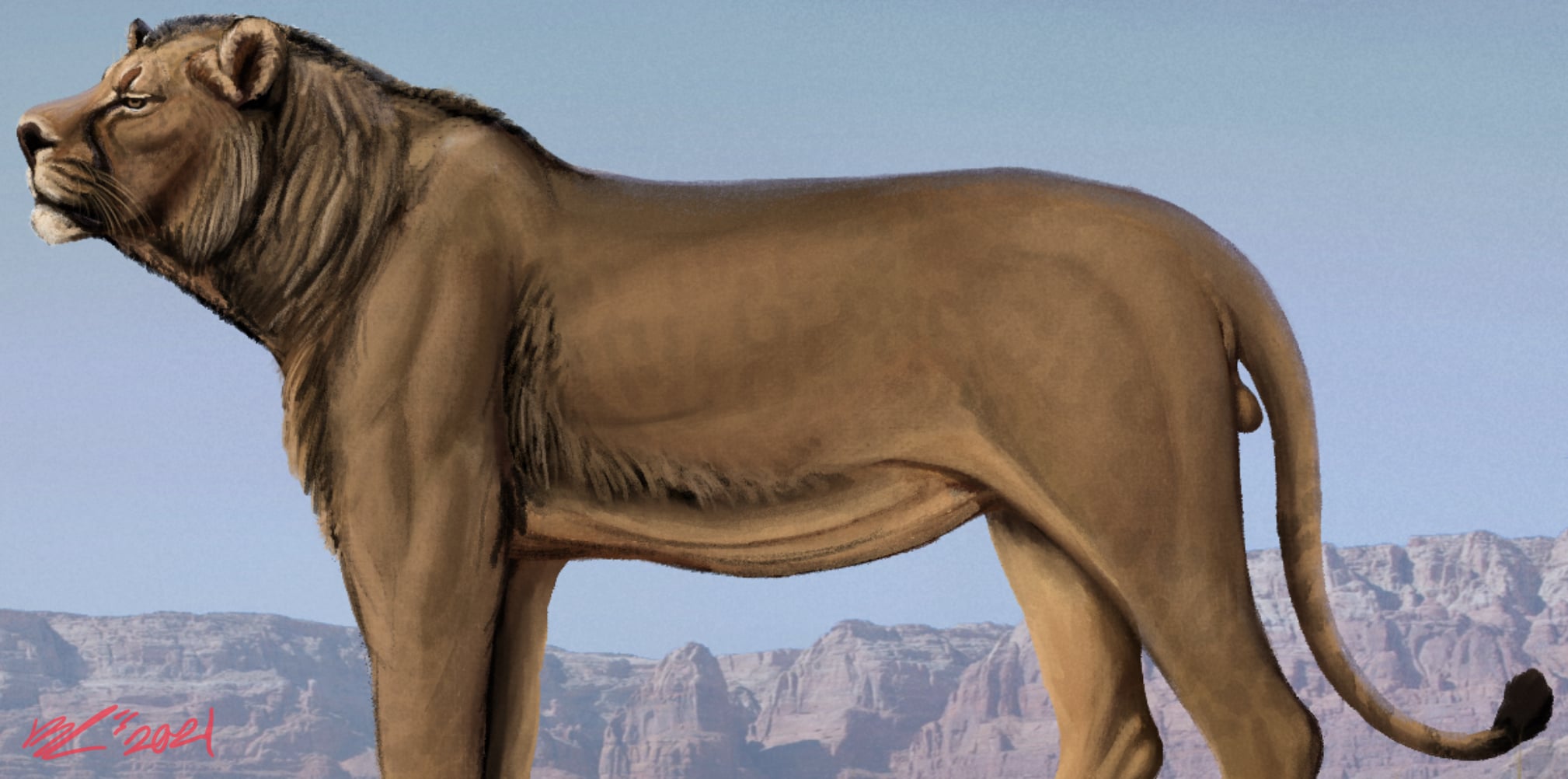 Photo Credit: Mr Langlois10 / Wikimedia Commons
In the shadowy depths of ancient caves and the sprawling grasslands of the Pleistocene epoch, the Cave Lion, scientifically known as Panthera spelaea, once ruled as a majestic predator. Imagine a lion that was not just larger than the ones we see today, but truly colossal, with powerful muscles rippling beneath a thick, tawny coat. Its impressive size, often weighing over 700 pounds, made it a formidable presence in its environment. With a broad skull and strong jaws, the Cave Lion was perfectly designed for hunting the massive herbivores that roamed its territory, such as mammoths and reindeer.
What makes Panthera spelaea particularly captivating to scientists and nature enthusiasts alike is its role as a top predator in a world that was both harsh and beautiful. Picture a landscape where these magnificent beasts prowled under the cover of night, their golden eyes glinting in the moonlight as they stalked their prey. The Cave Lion was not just a solitary hunter; it likely lived in social groups, sharing the spoils of its hunts and raising young together. This social behavior, combined with its impressive hunting skills, paints a vivid picture of a creature that was both powerful and complex, leaving behind a legacy that continues to intrigue us today. As we explore the life and times of the Cave Lion, we uncover not just the story of a magnificent animal, but also the intricate web of life it was a part of, shaping ecosystems and influencing the early humans who shared its world.
The Cave Lion, scientifically known as Panthera spelaea, holds a significant place in the animal kingdom’s taxonomic hierarchy. This majestic feline roamed the Earth during the Pleistocene epoch, a time when large mammals thrived in diverse habitats. What sets the Cave Lion apart is not just its impressive size and strength, but also its fascinating adaptations that allowed it to survive in the harsh conditions of prehistoric Europe and Asia. As a member of the Felidae family, which includes modern big cats like lions and tigers, the Cave Lion showcases the evolutionary journey of these powerful predators.
| Taxonomic Rank | Scientific Name | Meaning & Significance |
|---|---|---|
| Kingdom | Animalia | This name signifies that the Cave Lion belongs to the broad group of multicellular organisms that are heterotrophic, meaning they consume organic material for energy. |
| Phylum | Chordata | Chordata refers to animals that have a notochord, a flexible rod that supports the body. This group includes all vertebrates, like the Cave Lion, which has a backbone. |
| Class | Mammalia | Mammalia indicates that the Cave Lion is a mammal, characterized by features such as fur and the ability to nurse its young with milk. |
| Order | Carnivora | Carnivora is the order that includes meat-eating mammals. The Cave Lion, like its modern relatives, was a skilled hunter, relying on its sharp teeth and powerful build. |
| Family | Felidae | Felidae is the family of cats, which encompasses both big cats and small cats. The Cave Lion shares this family with the modern lion, highlighting its close evolutionary ties. |
| Genus | Panthera | Panthera means “the great cats” in Greek, a fitting name for the Cave Lion, which was one of the largest felines of its time, known for its strength and hunting prowess. |
| Species | Panthera spelaea | The species name “spelaea” comes from the Latin word for “cave,” reflecting its association with cave habitats where its remains have often been found. |
Understanding the Cave Lion’s classification reveals much about its evolutionary history. As a member of the Panthera genus, it shares a lineage with modern big cats, showcasing how these powerful predators have adapted over time. The adaptations that allowed the Cave Lion to thrive in its environment, such as its size and hunting techniques, provide insight into the ecological roles these animals played. By studying its taxonomic position, we can appreciate the intricate web of life that connects all species, past and present, and how they have evolved to survive in a constantly changing world.
The evolutionary journey of the Cave Lion, or Panthera spelaea, unfolds over a vast timeline, stretching back to the Pleistocene epoch, which began around 2.6 million years ago and lasted until about 11,700 years ago. This period was marked by dramatic climate changes and the rise and fall of ice ages, creating a dynamic environment that shaped the lives of many species, including the ancestors of modern big cats. The Cave Lion emerged as a powerful predator, adapting to the challenges of its time and leaving a lasting legacy in the fossil record.
The ancestors of the Cave Lion can be traced back to the common lineage of modern lions and tigers, which diverged from other felids around 6 to 10 million years ago. As these early felids evolved, they developed traits that would help them thrive in diverse habitats. The Cave Lion itself is believed to have evolved from the Eurasian Lion, adapting to the colder climates of Europe and Asia. This adaptation included a larger body size, which helped retain heat, and a robust build that made it a formidable hunter. Over time, these lions became specialized for life in the harsh, icy environments of the Pleistocene, where they hunted large herbivores like mammoths and reindeer.
These adaptations were vital for the Cave Lion’s survival in a world filled with challenges. Their size and strength allowed them to dominate the food chain, while their thick fur kept them warm during harsh winters. By possibly hunting in groups, they could tackle larger prey, ensuring a steady food supply. Their ability to adapt their diet meant they could thrive even when conditions changed, showcasing their resilience. Ultimately, the Cave Lion’s evolutionary story is one of survival and adaptation, illustrating how species can evolve to meet the demands of their environment.
The Cave Lion, or Panthera spelaea, commands attention with its powerful physique and striking presence. Imagine a lion that is not just large but truly colossal, weighing over 700 pounds. Its robust body is built for strength, with muscular limbs that suggest both agility and raw power. The broad head, adorned with a prominent mane, gives it a regal appearance, while its strong jaws are equipped with sharp teeth designed for gripping and tearing flesh. This ancient predator was not just a sight to behold; it was a master of its environment, perfectly adapted to the challenges of its time.
| Feature | Description |
|---|---|
| Size | Over 700 pounds, making it one of the largest known lion species. |
| Color | Typically a tawny or light brown coat, which helped it blend into its surroundings. |
| Skin Type | Covered in fur, providing insulation against cold climates. |
| Mane | A thick, impressive mane that framed its face, likely used for display and protection. |
| Eyes | Large and forward-facing, offering excellent depth perception for hunting. |
The combination of these features made the Cave Lion a formidable hunter in its icy habitats. Its massive size and strength allowed it to take down large prey, while the tawny coat provided camouflage in the grasslands and rocky terrains. The thick fur not only kept it warm during harsh winters but also protected its skin during fierce battles with rivals. The impressive mane served a dual purpose, enhancing its appearance to attract mates and providing some defense against the bites of other predators. Together, these characteristics painted a picture of a creature perfectly suited for survival in a challenging world.
The Cave Lion, known scientifically as Panthera spelaea, once roamed vast and varied landscapes across Europe and Asia. Picture a world where these magnificent beasts prowled through open grasslands, rocky outcrops, and even the fringes of dense forests. Their habitats were often marked by dramatic scenery, with towering cliffs and expansive plains that provided both shelter and hunting grounds. The Cave Lion thrived in these environments, where the interplay of light and shadow created a perfect stage for their regal presence.
To flourish in these habitats, the Cave Lion required a climate that was both cool and temperate. During the Pleistocene epoch, the Earth experienced significant climate fluctuations, with ice ages creating colder conditions. These lions thrived in environments that offered a mix of open spaces for hunting and sheltered areas for resting. The presence of large herbivores, such as mammoths and reindeer, was crucial, as they provided the food source that sustained these powerful predators.
Adaptation was key to the survival of the Cave Lion in its chosen habitats. With a robust build and powerful limbs, it was well-equipped for hunting in diverse terrains. Its thick fur helped insulate against the cold, while its keen senses allowed it to detect prey from a distance. The Cave Lion’s ability to navigate both open plains and rocky landscapes made it a formidable hunter, ensuring its place at the top of the food chain in the ecosystems it inhabited.
The daily life of the Cave Lion, or Panthera spelaea, was a blend of hunting, resting, and socializing. These magnificent animals were primarily nocturnal, meaning they were most active during the night. As dusk fell, they would emerge from their rocky dens or caves, ready to hunt for food. Their keen senses, especially their sharp eyesight, helped them navigate the dark as they stalked prey like large herbivores, including mammoths and reindeer. After a successful hunt, they would feast, often sharing their meal with others in their group. During the day, they would rest, basking in the sun or finding shade, conserving energy for their nighttime activities.
Cave Lions were social animals, often living in small groups called prides. These prides typically consisted of related females and their young, while males would roam between groups. This social structure allowed them to work together during hunts, increasing their chances of catching prey. Communication was key in their interactions; they used a variety of vocalizations, body language, and scent marking to convey messages. For instance, a deep roar could signal territory, while softer growls might indicate comfort or playfulness among pride members. This social behavior not only strengthened bonds within the group but also enhanced their survival skills.
| Behavior Type | Description |
|---|---|
| Hunting | Cave Lions hunted primarily at night, using their excellent night vision to stalk large herbivores. |
| Social Structure | They lived in prides, usually made up of related females and their young, with males often moving between groups. |
| Communication | They communicated through vocalizations like roars and growls, as well as body language and scent marking. |
| Resting | During the day, they would rest in shaded areas or caves to conserve energy for nighttime activities. |
The behaviors of the Cave Lion were finely tuned to ensure their survival in a challenging environment. By hunting in groups, they could take down larger prey, while their social bonds provided support and protection. Their ability to communicate effectively helped maintain group cohesion, allowing them to coordinate during hunts and share resources. This combination of social interaction and strategic hunting made the Cave Lion a formidable predator in its time, showcasing the intricate balance of life in the Pleistocene world.
The Cave Lion, or Panthera spelaea, had a diet that primarily consisted of large herbivores, making it a formidable predator in its environment. These powerful cats were skilled hunters, using their strength and agility to take down prey. They often targeted animals like reindeer, which were abundant in their icy habitats. Young bear cubs also fell victim to their hunting prowess, showcasing their adaptability and opportunistic feeding behavior.
| Dietary Aspect | Details |
|---|---|
| Diet Type | Carnivorous |
| Favorite Foods | Reindeer and young bear cubs |
| Prey Items | Large herbivores, particularly reindeer |
| Hunting Strategies | Ambush and pack hunting |
The diet of the Cave Lion played a crucial role in shaping its ecology and daily routine. By preying on large herbivores, these lions helped maintain the balance of their ecosystems, preventing overgrazing and promoting biodiversity. Their hunting strategies, often involving teamwork, allowed them to efficiently secure food, which was essential for their survival in the harsh climates they inhabited. This not only influenced their social structures but also determined their movements and territories, as they followed the migratory patterns of their prey.
The mating behavior of the Cave Lion, or Panthera spelaea, is a captivating aspect of its life cycle. During the breeding season, which likely occurred in late winter to early spring, males would engage in displays of strength and dominance to attract females. These displays could include roaring, scent marking, and physical confrontations with rival males. Once a female is receptive, she and the male will mate multiple times over a period of several days, ensuring the best chance of successful fertilization.
| Reproductive Aspect | Details |
|---|---|
| Gestation Period | Approximately 100 to 110 days |
| Litter Size | Typically 1 to 4 cubs |
| Age of Maturity | About 2 to 3 years |
| Name of Young | Cubs |
After the cubs are born, the mother takes on the crucial role of caregiver. She will find a secluded den, often in caves or rocky outcrops, to keep her young safe from predators. The cubs are born blind and helpless, relying entirely on their mother for warmth, food, and protection. As they grow, the mother will nurse them for several months, gradually introducing them to solid food as they begin to explore their surroundings. This nurturing phase is vital, as it helps the cubs develop the skills they need to survive in the wild. By the time they reach maturity, they will have learned essential hunting techniques and social behaviors, preparing them to thrive in the challenging world of the Pleistocene.
The Cave Lion, or Panthera spelaea, held a prominent position in the Pleistocene food web as a top predator. This powerful feline hunted large herbivores, such as mammoths and reindeer, asserting its dominance in the ecosystem. However, being at the top of the food chain does not mean it faced no dangers. Even the mightiest can encounter threats that challenge their survival.
To defend against these threats, the Cave Lion relied on a combination of strength, agility, and social behavior. When hunting in groups, they could coordinate their attacks, increasing their chances of a successful kill. Their powerful bodies allowed them to take down large prey, while their keen senses helped them detect danger. Additionally, they likely used their impressive roars to communicate with one another, warning of potential threats or rallying their pride. These survival strategies were essential for navigating the challenges of their harsh environment.
A keystone species is an organism that plays a critical role in maintaining the structure of its ecosystem. Its presence and activities significantly influence the types and numbers of other species in that environment. The Cave Lion, or Panthera spelaea, certainly qualifies as a keystone species during its time. As a top predator, it helped regulate populations of large herbivores, which in turn shaped the vegetation and overall health of its habitat.
The ecological impact of the Cave Lion was profound. By preying on large herbivores like mammoths and reindeer, it kept these populations in check. Without the Cave Lion, these herbivores could have overgrazed their environments, leading to a decline in plant diversity. This decline would have affected not only the plants but also the many other species that relied on them for food and shelter. The Cave Lion’s hunting strategies also likely influenced the behavior of its prey, creating a dynamic balance in the ecosystem.
Additionally, the presence of the Cave Lion would have provided scavengers with opportunities for food. When a Cave Lion made a kill, other animals, such as hyenas and vultures, would benefit from the leftovers. This interaction highlights the interconnectedness of species within the ecosystem, where the actions of one can ripple through the community, affecting many others.
If the Cave Lion were to disappear, the consequences would be significant. Without this apex predator, herbivore populations could surge, leading to overgrazing and habitat degradation. This would not only threaten the plants but also the myriad of species that depend on those plants for survival. The balance of the ecosystem would be disrupted, potentially leading to a decline in biodiversity and altering the landscape for generations to come. The Cave Lion’s absence would echo through the food web, illustrating just how vital it was to its environment.
The Cave Lion, or Panthera spelaea, played a vital role in shaping its ecosystem during the Pleistocene epoch. As a top predator, it occupied a unique ecological niche, meaning it had a specific role that helped maintain the balance of its environment. By hunting large herbivores, the Cave Lion influenced the population dynamics of these animals, which in turn affected the vegetation and overall health of the ecosystem. This intricate web of interactions highlights how one species can significantly impact its surroundings.
| Ecosystem Service | Impact |
|---|---|
| Predation | Controls herbivore populations, preventing overgrazing and promoting plant diversity. |
| Scavenging | Provides food for other scavengers, such as hyenas and vultures, by leaving behind remains. |
| Habitat Creation | Influences the structure of habitats by maintaining open spaces through herbivore control. |
| Genetic Diversity | Contributes to the genetic health of prey species by selecting for the strongest individuals. |
The Cave Lion’s influence on its ecosystem can be seen in various ways. For instance, by preying on large herbivores like mammoths and reindeer, it helped regulate their populations. This predation prevented these animals from overgrazing the landscape, allowing a diverse array of plant species to thrive. In turn, this plant diversity supported a variety of other animals, creating a rich and balanced ecosystem. Additionally, when the Cave Lion left behind remains of its kills, it provided essential nutrients for scavengers, ensuring that the cycle of life continued.
The broader ecological importance of the Cave Lion extends beyond its immediate interactions. As a keystone species, its presence was crucial for maintaining the structure and health of its ecosystem. The balance it created among herbivores and plants allowed for a thriving community of species, each playing its part in the intricate web of life. The extinction of the Cave Lion likely led to significant changes in its environment, demonstrating just how interconnected all living things are. Understanding these relationships helps us appreciate the delicate balance of nature and the roles that each species plays in sustaining it.
In the intricate web of life, symbiosis refers to the close relationships between different species that can benefit one or both parties involved. These ecological partnerships can take various forms, including mutualism, where both species gain advantages; commensalism, where one benefits while the other is neither helped nor harmed; and parasitism, where one species benefits at the expense of the other. Understanding these relationships helps us appreciate how species like the Cave Lion interacted with their environment and other organisms during the Pleistocene epoch.
| Species/Type | Relationship Type | Description |
|---|---|---|
| Wolves | Mutualistic | Cave Lions and wolves may have shared hunting grounds, benefiting from each other’s presence. While lions hunted larger prey, wolves could scavenge leftovers, ensuring both species had access to food. |
| Scavengers (like vultures) | Commensal | Vultures and other scavengers would follow Cave Lions to feed on the remains of their kills. The lions provided a food source without affecting the lions themselves. |
| Parasites (like ticks) | Parasitic | Ticks and other parasites would latch onto Cave Lions, feeding on their blood. This relationship harmed the lions, as it could lead to health issues, but the parasites thrived. |
The evolution of these relationships showcases the dynamic interactions that shaped the lives of the Cave Lion and its companions. Over time, these partnerships likely developed as species adapted to their environments and learned to exploit available resources. The mutualistic relationships helped enhance survival rates, while commensal and parasitic interactions illustrate the complexity of life in the Pleistocene. By understanding these connections, we gain insight into the delicate balance of ecosystems and the roles that each species plays in maintaining that balance.
The Cave Lion, or Panthera spelaea, is a fascinating creature that once roamed the Earth during the Pleistocene epoch. This magnificent feline was not just a larger version of today’s lions; it had its own unique traits and behaviors that make it a captivating subject for nature enthusiasts.
The Cave Lion, or Panthera spelaea, has long captivated the imagination of humanity. These majestic creatures roamed the Earth alongside early humans, leaving a profound mark on our history and culture. Evidence of their existence can be found in ancient cave paintings, where they are depicted with a sense of awe and reverence. These artworks suggest that early humans viewed Cave Lions not just as fearsome predators, but also as symbols of strength and power. The relationship between these great cats and our ancestors was complex, filled with both admiration and fear, as they shared the same landscapes and sometimes competed for the same prey.
Today, the Cave Lion is extinct, but its legacy continues to influence our interactions with big cats and wildlife conservation. While we no longer encounter these magnificent beasts, their story reminds us of the importance of protecting the habitats of modern big cats, like lions and tigers. Conservation efforts aim to mitigate human-wildlife conflict, which can arise when big cats venture into human territories in search of food. Additionally, understanding the past helps us learn how to coexist with these powerful animals, ensuring that future generations can appreciate their beauty and role in the ecosystem.
As we look to the future, the relationship between humanity and the legacy of the Cave Lion serves as a powerful reminder of our responsibility to the natural world. By learning from the past, we can foster a deeper understanding of the delicate balance between humans and wildlife. Protecting the habitats of modern big cats and respecting their role in the ecosystem is crucial. In doing so, we honor the memory of the Cave Lion and ensure that the stories of these magnificent creatures continue to inspire curiosity and respect for the wild.
The Cave Lion, known scientifically as Panthera spelaea, is classified as extinct. This means that there are no living individuals of this species left on Earth. Once a dominant predator during the Pleistocene epoch, the Cave Lion’s population dwindled due to various factors, leading to its eventual disappearance. While it thrived in its time, the last of these magnificent felines vanished thousands of years ago, leaving behind only fossils and a legacy that continues to intrigue scientists and enthusiasts alike.
| Conservation Factor | Status/Details |
|---|---|
| IUCN Status | Extinct |
| Population Estimates | None (extinct) |
| Trend Direction | Declining to extinct |
The main threats that led to the extinction of the Cave Lion were a combination of climate change and human activities. As the Ice Age came to an end, the habitats that supported these large predators began to change dramatically. The warming climate reduced the availability of their prey, such as mammoths and reindeer. Additionally, early humans hunted these lions, contributing to their decline. The pressures of a changing environment and competition with humans ultimately sealed the fate of this once-mighty species.
Despite the Cave Lion’s extinction, its story is not entirely lost. Scientists continue to study its fossils and the ecosystems it inhabited to understand better the factors that led to its demise. Conservation efforts today focus on protecting existing big cat species and their habitats, ensuring that history does not repeat itself. By learning from the past, we can work towards a future where our planet’s wildlife thrives, and the lessons of the Cave Lion inspire us to safeguard the natural world for generations to come.
| Question | Answer |
|---|---|
| What was the habitat of the Cave Lion? | The Cave Lion lived in a variety of habitats, primarily in the cold, open grasslands and rocky areas of Europe, Asia, and North America during the Pleistocene epoch. These environments provided ample space for hunting and shelter in caves, which is how they got their name. |
| What did Cave Lions eat? | Cave Lions were carnivorous, meaning they primarily ate meat. Their diet likely included large herbivores like mammoths, reindeer, and bison, which they hunted in packs, similar to modern lions. |
| How did Cave Lions behave? | Cave Lions are believed to have been social animals, often hunting in groups. This pack behavior would have helped them take down larger prey and protect their young from other predators. |
| How did Cave Lions reproduce? | Cave Lions likely had similar reproductive habits to modern lions, with females giving birth to a litter of cubs after a gestation period of about 110 days. The cubs would have relied on their mothers for food and protection during their early months. |
| What were the main threats to Cave Lions? | The primary threats to Cave Lions included climate change and the decline of their prey species. As the Ice Age ended, their habitats changed, and competition with humans for food and territory likely contributed to their extinction. |
| What are some interesting characteristics of Cave Lions? | Cave Lions were larger than modern lions, with some estimates suggesting they weighed up to 600 pounds. They also had distinctive features, such as a more robust build and possibly a thicker mane, which may have helped them survive in colder climates. |
| When did Cave Lions go extinct? | Cave Lions are believed to have gone extinct around 14,000 years ago, likely due to a combination of environmental changes and human activities. Their disappearance marks a significant moment in the history of large mammals during the late Pleistocene. |