Taxonomy & Classification
- Kingdom
- Animalia
- Phylum
- Arthropoda
- Class
- Insecta
- Order
- Lepidoptera
- Family
- Saturniidae
- Genus
- Hyalophora
- Species
- Hyalophora cecropia

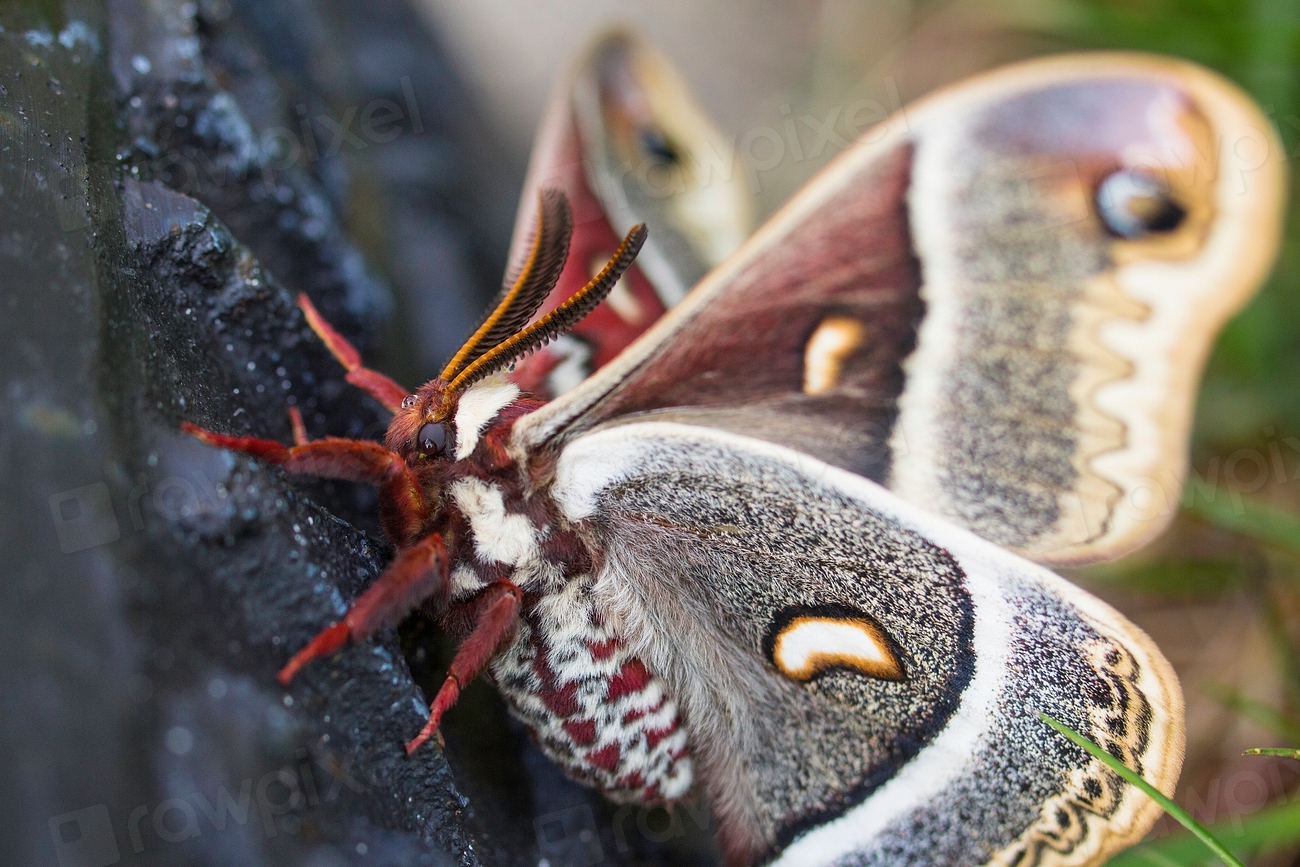 Photo Credit: National Park Service / Rawpixel
In the heart of North America’s lush woodlands, the Cecropia moth, scientifically known as Hyalophora cecropia, flutters gracefully through the dappled sunlight. With a wingspan that can reach an impressive six inches, this giant among moths is a sight to behold. Its wings are adorned with rich hues of deep red, orange, and brown, accented by striking eye spots that resemble the eyes of a predator. This dazzling display not only captivates the eyes of nature enthusiasts but also serves a purpose: to confuse and deter potential threats.
As the sun sets and the forest comes alive with the sounds of chirping crickets and rustling leaves, the Cecropia moth emerges from its daytime hiding spot, often resting on tree trunks or leaves. This nocturnal creature is not just a pretty face; it plays a vital role in its ecosystem. The Cecropia moth is a pollinator, helping to fertilize plants as it flits from flower to flower in search of nectar. Scientists and nature lovers alike are drawn to this magnificent moth, not only for its beauty but also for its fascinating life cycle and the intricate relationships it forms within its habitat. Join us as we explore the enchanting world of the Cecropia moth, uncovering the secrets of its life, diet, and the vital role it plays in the natural world.
The Cecropia moth, scientifically known as Hyalophora cecropia, holds a special place in the animal kingdom due to its impressive size and striking appearance. As one of the largest moths in North America, it can boast a wingspan of up to six inches! This magnificent insect belongs to the family Saturniidae, which is known for its large, colorful moths. What sets the Cecropia moth apart is not just its size but also its life cycle, which includes a remarkable transformation from a caterpillar to a stunning adult moth. This metamorphosis is a captivating example of nature’s artistry and complexity.
| Taxonomic Rank | Scientific Name | Meaning & Significance |
|---|---|---|
| Kingdom | Animalia | This name signifies that the Cecropia moth is part of the vast group of multicellular organisms that are primarily heterotrophic, meaning they consume organic material for energy. |
| Phylum | Arthropoda | Arthropoda means “jointed legs,” highlighting the moth’s segmented body and jointed appendages, which are characteristic of this diverse group that includes insects, arachnids, and crustaceans. |
| Class | Insecta | This classification indicates that the Cecropia moth is an insect, a group defined by having three main body parts: the head, thorax, and abdomen, along with six legs and often wings. |
| Order | Lepidoptera | Lepidoptera translates to “scale wings,” referring to the tiny scales that cover the wings of moths and butterflies, giving them their vibrant colors and patterns. |
| Family | Saturniidae | This family name is derived from Saturn, the Roman god of agriculture, reflecting the moth’s association with the natural world and its role in ecosystems. |
| Genus | Hyalophora | The name Hyalophora means “glass bearer,” which may refer to the translucent quality of the moth’s wings, allowing light to pass through and create a shimmering effect. |
| Species | cecropia | This species name is likely derived from the mythological figure Cecrops, a half-man, half-serpent, symbolizing the moth’s unique and striking appearance. |
The classification of the Cecropia moth reveals much about its evolutionary journey. As a member of the Lepidoptera order, it shares a lineage with butterflies and other moths, showcasing the incredible diversity of adaptations that have evolved over millions of years. Its large size and beautiful coloration are not just for show; they play vital roles in its survival, from attracting mates to deterring predators. Understanding where the Cecropia moth fits in the tree of life helps us appreciate the intricate connections between species and the environments they inhabit, reminding us of the wonders of evolution and the delicate balance of ecosystems.
The evolutionary journey of the Cecropia moth, or Hyalophora cecropia, stretches back millions of years, intertwining with the rich tapestry of life on Earth. This magnificent moth belongs to the Saturniidae family, which has been around since the late Jurassic period, roughly 150 million years ago. As the world changed, so did the ancestors of the Cecropia moth, adapting to new environments and challenges.
The ancestors of the Cecropia moth were likely smaller and less colorful than their modern descendants. Over time, these moths underwent significant changes, including the development of larger wings and vibrant patterns. These adaptations not only made them more visually striking but also helped them blend into their surroundings, a clever trick to evade predators. The transition from a more drab appearance to the bold colors we see today reflects a shift in survival strategies, as these moths learned to use their beauty as both camouflage and a warning signal to potential threats.
The adaptations of the Cecropia moth have played a crucial role in its survival across generations. Their impressive size and vibrant colors not only deter predators but also allow them to thrive in various habitats. By evolving a complex life cycle and nocturnal habits, these moths have successfully navigated the challenges of their environment. Each adaptation tells a story of resilience and ingenuity, showcasing the wonders of evolution in action.
The Cecropia moth is a breathtaking sight, capturing the imagination with its grand size and vibrant colors. With a wingspan that can reach up to six inches, this moth is a true giant among its peers. Its body is robust and covered in a hard exoskeleton, which provides protection and support. The wings are adorned with intricate patterns that resemble a painter’s palette, showcasing a blend of rich browns, deep reds, and soft creams. When it spreads its wings, the Cecropia moth reveals eye-catching markings that can mimic the eyes of a larger predator, a clever trick to ward off potential threats.
| Feature | Description |
|---|---|
| Weight | 0.1 pound |
| Skin Type | Exoskeleton |
| Most Distinctive Feature | Its size |
These striking features work together to enhance the Cecropia moth’s survival in the wild. Its impressive size not only makes it a standout in the forest but also helps it evade smaller predators. The exoskeleton serves as a protective armor, shielding the moth from harm while allowing it to navigate through its leafy habitat. The vibrant colors and patterns on its wings are not just for show; they play a crucial role in camouflage and mimicry, helping the moth blend into its surroundings or appear more intimidating to would-be attackers. Together, these characteristics create a perfect blend of beauty and practicality, ensuring the Cecropia moth thrives in its environment.
The Cecropia moth thrives in lush, wooded areas where the air is filled with the sweet scent of blooming trees. Picture a serene forest, dappled with sunlight filtering through the leaves, where towering maple, birch, and cherry trees create a perfect canopy. These trees not only provide shelter but also serve as a vital food source for the caterpillars of this magnificent moth. The moist, rich soil beneath supports a vibrant ecosystem, making it an ideal home for the Cecropia moth.
The Cecropia moth prefers a climate that is warm and humid, which is why it is often found in regions with plenty of rainfall. These conditions help maintain the lush foliage that the moth relies on for both food and camouflage. The caterpillars, which are the larval stage of the moth, need specific trees to munch on, and they thrive best in environments where these trees flourish. The combination of moisture and warmth creates a perfect habitat for their growth and development.
To survive in these specific habitats, the Cecropia moth has developed some clever adaptations. Its caterpillars are excellent at blending in with the leaves, thanks to their green and brown coloration, which helps them avoid hungry predators. As adults, the moths have large, colorful wings that not only attract mates but also serve as a form of camouflage when resting on tree bark. This ability to adapt to their environment ensures that the Cecropia moth continues to thrive in the forests of North America.
The Cecropia moth leads a life that is both tranquil and purposeful, primarily focused on the search for food and the quest for mates. During the day, these magnificent moths rest on tree trunks or leaves, blending seamlessly into their surroundings thanks to their camouflaged wings. As night falls, they become more active, taking to the skies in search of nectar from flowers. Their large, feathery antennae help them navigate through the dark, detecting scents and locating food sources. This nocturnal lifestyle is essential for their survival, allowing them to avoid many daytime predators.
While Cecropia moths are generally solitary creatures, they do exhibit interesting behaviors when it comes to mating. Males are known to be particularly active in the evening, using their keen sense of smell to detect pheromones, which are chemical signals released by females. Once a male finds a female, he may engage in a courtship display, fluttering around her to attract her attention. This social interaction, though brief, is crucial for reproduction and ensures the continuation of their species.
| Behavior Type | Description |
|---|---|
| Activity Patterns | Cecropia moths are primarily nocturnal, resting during the day and becoming active at night to feed on nectar. |
| Social Structure | These moths are mostly solitary, with interactions primarily occurring during mating season. |
| Communication Methods | Males use pheromones to attract females, while courtship involves visual displays and fluttering. |
The behaviors of the Cecropia moth are finely tuned to enhance their chances of survival. By resting during the day, they avoid many predators that hunt in daylight. Their nocturnal feeding habits allow them to access food sources while minimizing risk. Additionally, their solitary nature helps them conserve energy, while their mating rituals ensure that they can reproduce effectively. Each aspect of their daily life is a testament to the delicate balance of nature, where every action plays a role in the survival of the species.
The Cecropia moth, known scientifically as Hyalophora cecropia, has a diet that is primarily omnivorous, meaning it enjoys a variety of foods from both plant and animal sources. As caterpillars, they feast on the leaves of trees such as maple, birch, and cherry, which provide the essential nutrients they need to grow. Once they transform into adults, their feeding habits change significantly. Adult Cecropia moths do not eat solid food; instead, they rely on the sugars found in nectar from flowers. This nectar is a sweet liquid that provides energy, allowing them to fly and search for mates.
| Dietary Aspect | Details |
|---|---|
| Diet Type | Omnivore |
| Favorite Foods | Tree leaves (as caterpillars), flower nectar (as adults) |
| Prey Items | None; primarily herbivorous |
| Hunting/Foraging Strategies | Caterpillars consume leaves, adults sip nectar from flowers |
The diet of the Cecropia moth plays a crucial role in its ecology and daily activities. As caterpillars, their leaf-eating habits help shape the plant community by controlling leaf growth and promoting new foliage. This interaction is vital for the health of the forest ecosystem. Once they become adults, their role shifts to that of pollinators, as they visit flowers to drink nectar. This not only sustains their energy needs but also aids in the reproduction of many plants, creating a beautiful cycle of life that connects them to their environment.
The Cecropia moth’s mating rituals are a captivating spectacle of nature. During the warm months of late spring to early summer, male moths take to the skies, using their keen sense of smell to locate females. The males release pheromones, which are chemical signals that attract potential mates from great distances. Once a female is found, the pair engages in a courtship dance, fluttering around each other before mating. This enchanting behavior sets the stage for the next generation of these magnificent moths.
| Reproductive Aspect | Details |
|---|---|
| Gestation Period | Two weeks |
| Litter Size | Varies, typically dozens of eggs |
| Age of Maturity | Shortly after eclosion |
| Name of Young | Larva, caterpillar |
After mating, the female lays her eggs on the leaves of suitable host plants, which serve as food for the hatching larvae. Once the eggs hatch, the tiny caterpillars emerge, ready to feast on the leaves around them. This early stage is crucial, as the caterpillars grow rapidly, shedding their skin multiple times in a process called molting. As they develop, they become larger and more vibrant, eventually transforming into the stunning adults we admire. While the Cecropia moth does not provide direct parental care, the choice of host plant is vital for the survival of the young, ensuring they have the nourishment needed to thrive and complete their life cycle.
The Cecropia moth occupies a fascinating position in the food web, serving as both a prey and a pollinator. As a large and colorful moth, it attracts various predators while also playing a role in the ecosystem by helping to pollinate plants. However, this beautiful creature faces numerous dangers that threaten its survival.
To defend against these threats, the Cecropia moth has developed several survival strategies. For instance, its large size and vibrant colors can startle potential predators, making them think twice before attacking. Additionally, the moth’s caterpillars are known to blend in with their surroundings, using camouflage to avoid detection. When threatened, adult moths can also release a foul-smelling chemical to deter predators. These clever adaptations help the Cecropia moth navigate the challenges of its environment, ensuring its place in the intricate web of life.
A keystone species is an organism that plays a critical role in maintaining the structure of its ecosystem. This means that its presence or absence can significantly impact the environment and the other species living there. The Cecropia moth, or Hyalophora cecropia, while not a traditional keystone species like wolves or sea otters, does contribute to its ecosystem in meaningful ways, particularly through its interactions with plants and other animals.
The Cecropia moth primarily inhabits areas with maple, birch, and cherry trees, where it thrives in moist environments. As a caterpillar, it feeds on the leaves of these trees, helping to control plant growth and contributing to the health of the forest. By munching on leaves, these caterpillars can stimulate new growth, which benefits the trees and the entire ecosystem. Additionally, the moth serves as a food source for various predators, including birds and small mammals, thus playing a role in the food web.
Moreover, the adult Cecropia moth is known for its nocturnal activities, which include pollination. While sipping nectar from flowers, it inadvertently transfers pollen from one bloom to another, aiding in plant reproduction. This process is vital for the survival of many plant species, which rely on pollinators to produce seeds and fruits. The Cecropia moth’s life cycle, from caterpillar to adult, also provides a fascinating example of how different life stages can impact the ecosystem in various ways.
If the Cecropia moth were to disappear, the effects could ripple through its ecosystem. Without its caterpillars, trees might experience unchecked growth, leading to imbalances in the forest structure. This could affect other species that rely on those trees for food and habitat. Additionally, the loss of this moth would mean fewer pollinators, which could hinder the reproduction of various plants, ultimately impacting the entire food web. The Cecropia moth, while not a classic keystone species, plays a vital role in maintaining the health and balance of its environment.
The Cecropia moth, known scientifically as Hyalophora cecropia, plays a vital role in its ecosystem, particularly in the lush, wooded areas where it resides. This magnificent moth thrives in habitats filled with maple, birch, and cherry trees, primarily found east of the Rocky Mountains in Canada and the United States. As a keystone species, the Cecropia moth influences its environment in various ways, shaping the dynamics of the forest ecosystem and supporting a diverse range of life.
| Ecosystem Service | Impact |
|---|---|
| Pollination | Helps in the reproduction of flowering plants by transferring pollen. |
| Food Source | Serves as a meal for birds and other predators, contributing to the food web. |
| Soil Enrichment | As caterpillars, they contribute organic matter to the soil when they pupate. |
| Habitat Structure | Supports the growth of specific plants that thrive in their presence. |
The Cecropia moth’s influence is particularly evident during its life cycle. As caterpillars, they munch on the leaves of their host trees, which can help control plant growth and promote biodiversity. By feeding on these trees, they create a balance in the ecosystem, allowing sunlight to reach the forest floor and encouraging the growth of various understory plants. Additionally, when they pupate, their discarded remains enrich the soil, providing nutrients that benefit other plants and organisms in the area.
The broader ecological importance of the Cecropia moth cannot be overstated. By serving as both a pollinator and a food source, it supports a complex web of life in its habitat. Birds and other predators rely on the moth for sustenance, while the plants that benefit from its pollination thrive, creating a vibrant and diverse ecosystem. The Cecropia moth exemplifies how interconnected life is in the natural world, reminding us that even the smallest creatures can have a significant impact on their environment.
In the intricate web of life, symbiosis refers to the close and often long-term interactions between different species. These relationships can take many forms, including mutualism, where both species benefit, parasitism, where one benefits at the expense of the other, and commensalism, where one benefits while the other is neither helped nor harmed. The Cecropia moth, with its striking appearance and fascinating life cycle, engages in various ecological relationships that highlight the interconnectedness of nature.
| Species/Type | Relationship Type | Description |
|---|---|---|
| Maple Trees | Mutualistic | The Cecropia moth caterpillars feed on the leaves of maple trees, which helps the moth grow and develop. In return, the moths can help pollinate the trees, benefiting both species. |
| Birds (e.g., Blue Jays) | Parasitic | Birds may prey on Cecropia moths, taking advantage of their size and visibility. This relationship is harmful to the moths but provides food for the birds. |
| Fungi | Commensal | Fungi growing on decaying wood may provide a habitat for Cecropia moth larvae. The larvae benefit from the shelter, while the fungi are unaffected. |
The evolution of these relationships showcases the dynamic nature of ecosystems. Over time, the Cecropia moth has adapted to thrive in environments rich with maple, birch, and cherry trees, forming beneficial partnerships that enhance its survival. These interactions not only support the moth’s life cycle but also contribute to the health of the forest ecosystem. By understanding these connections, we gain insight into the delicate balance of nature and the importance of every species, no matter how small or large.
The Cecropia moth, known scientifically as Hyalophora cecropia, is not just a beautiful sight in the forest; it’s also full of surprises that make it truly special. Here are some intriguing facts that will captivate nature lovers of all ages.
The Cecropia moth, or Hyalophora cecropia, has long captivated human imagination, weaving its way into various cultures and histories. Native American tribes often viewed this magnificent moth as a symbol of transformation and renewal, reflecting its stunning metamorphosis from a humble caterpillar into a breathtaking adult. In folklore, the moth’s vibrant colors and large size have inspired stories and art, making it a cherished figure in many communities. Its presence in the natural world has sparked curiosity and admiration, leading to a deeper appreciation of the intricate connections between humans and wildlife.
Today, the relationship between the Cecropia moth and humanity is evolving, particularly in the realms of conservation and education. As habitats are threatened by urban development and climate change, efforts are underway to protect the moth’s natural environments. Conservationists are working to raise awareness about the importance of preserving these beautiful creatures, which play a role in pollination and serve as indicators of ecosystem health. However, conflicts can arise when these moths are seen as pests, particularly in gardens where their caterpillars may munch on prized plants. Understanding and managing these interactions is crucial for fostering a harmonious coexistence.
Looking ahead, the future of the Cecropia moth and its relationship with humanity holds promise. As awareness of environmental issues grows, more people are likely to appreciate the beauty and ecological significance of this remarkable moth. By fostering a sense of stewardship and encouraging sustainable practices, we can ensure that the Cecropia moth continues to thrive alongside us. Together, we can celebrate the wonders of nature and work towards a future where both humans and wildlife flourish in harmony.
The Cecropia moth, known scientifically as Hyalophora cecropia, currently holds a conservation status of “Not Evaluated” according to the International Union for Conservation of Nature (IUCN). This means that there hasn’t been enough research to determine its population trends or overall health. While specific population estimates are unknown, the lack of evaluation suggests that more studies are needed to understand how many of these magnificent moths are out there and whether their numbers are increasing or decreasing.
| Conservation Factor | Status/Details |
|---|---|
| IUCN Status | Not Evaluated |
| Estimated Population Size | Unknown |
| Population Trend | Unknown |
Despite their captivating beauty, Cecropia moths face several threats that could impact their survival. Habitat loss is a significant concern, as forests are cleared for agriculture and urban development. This diminishes the lush environments they rely on for food and shelter. Additionally, climate change poses a risk by altering the ecosystems where these moths thrive, potentially affecting their life cycles and food sources. Pesticides used in agriculture can also harm them, as these chemicals can be toxic to moths and their caterpillars.
Conservation efforts for the Cecropia moth are still in their infancy, but there is hope for the future. Raising awareness about the importance of preserving their habitats is crucial. Encouraging the planting of native trees, which serve as food sources for the caterpillars, can help support their populations. As more research is conducted, we can better understand the needs of the Cecropia moth and implement effective strategies to protect this stunning species. With continued efforts, there is potential for a brighter future for these enchanting moths in the wild.
| Question | Answer |
|---|---|
| What is the habitat of the Cecropia Moth? | Cecropia Moths are commonly found in moist areas, particularly in forests where maple, birch, and cherry trees grow. These trees provide the perfect environment for their larvae to feed and develop. |
| What do Cecropia Moths eat? | As omnivores, Cecropia Moths primarily feed on the leaves of various trees, including maple and cherry. Adult moths do not eat much, but they may sip nectar from flowers to gain energy. |
| What are some interesting behaviors of Cecropia Moths? | Cecropia Moths are known for their impressive size and beautiful coloration, which helps them blend into their surroundings. They are mostly nocturnal, meaning they are active at night, and they use their keen sense of smell to find mates. |
| How do Cecropia Moths reproduce? | During mating season, male Cecropia Moths use their strong sense of smell to locate females. After mating, females lay their eggs on the leaves of host trees, where the caterpillars will hatch and begin to feed. |
| What threats do Cecropia Moths face? | While Cecropia Moths are not currently evaluated for conservation status, they can face threats from habitat loss and predators. Birds and other animals may prey on their eggs and caterpillars, impacting their populations. |
| What is the most distinctive feature of the Cecropia Moth? | The Cecropia Moth is one of the largest moths in North America, with a wingspan that can reach up to 6 inches. Its striking patterns and colors, including reddish-brown and cream, make it a standout in the insect world. |
| How long do Cecropia Moths live? | The adult Cecropia Moth has a relatively short lifespan, typically living only about one to two weeks. This brief time is mainly spent mating and laying eggs before they die. |