Taxonomy & Classification
- Kingdom
- Animalia
- Phylum
- Arthropoda
- Class
- Chilopoda

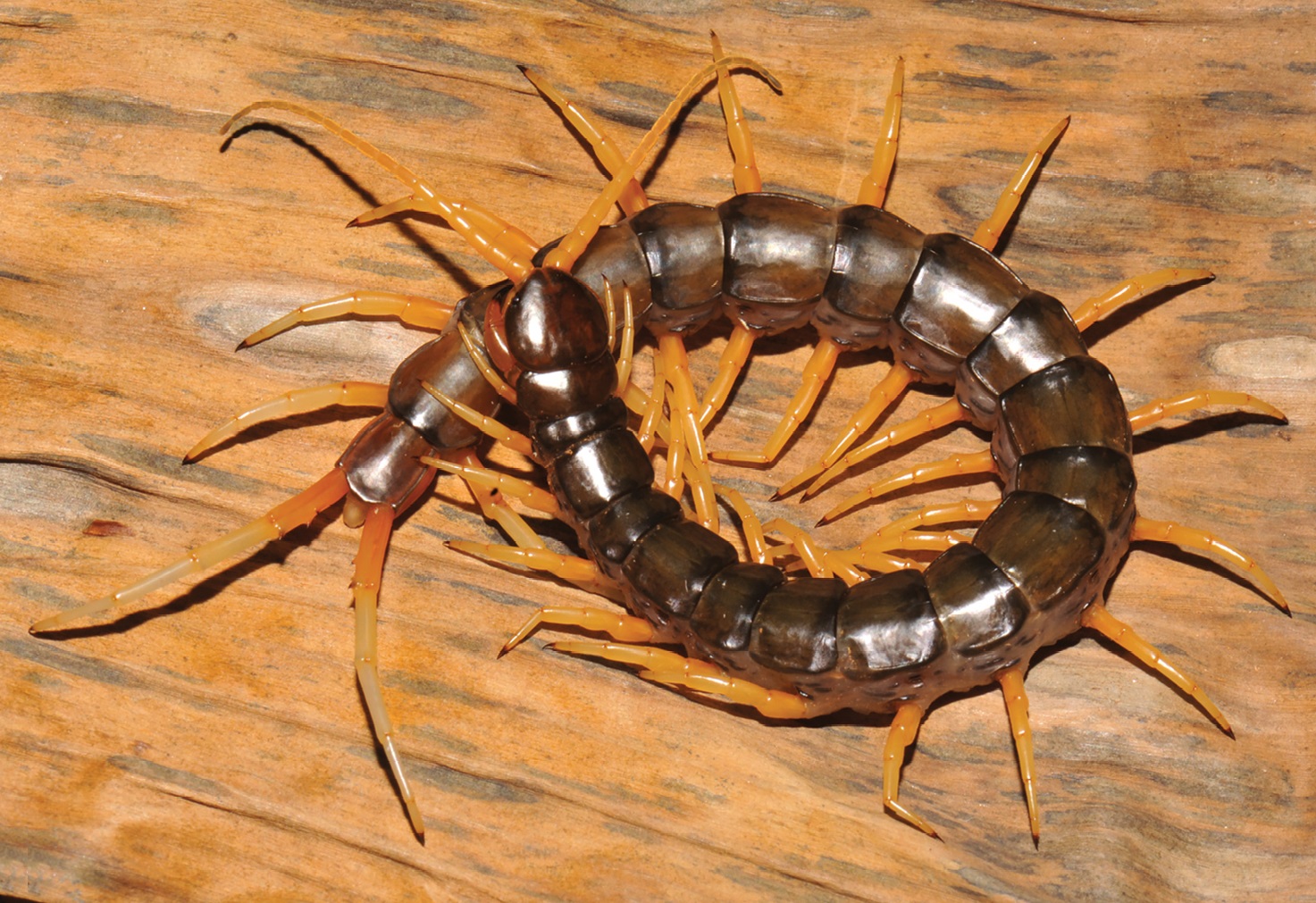 Photo Credit: Original image: Warut Siriwut, Gregory D. Edgecombe, Chirasak Sutcharit, Piyoros Tongkerd, Somsak Panha; crop by EdChem / Wikimedia
In the shadowy underbrush of a lush forest, the centipede, scientifically known as Scolopendra, weaves its way through the damp earth, a living ribbon of movement. With its long, segmented body and a multitude of legs—sometimes numbering over a hundred—this remarkable creature captures the imagination of both scientists and nature lovers alike. Its vibrant colors, ranging from earthy browns to striking greens, help it blend seamlessly into its surroundings, making it a master of camouflage. But don’t let its delicate appearance fool you; the centipede is a fierce predator, equipped with venomous fangs that allow it to swiftly subdue its prey.
As night falls, the forest transforms into a bustling stage for the centipede’s nocturnal adventures. Emerging from its hidden crevices, it scuttles across the forest floor, hunting insects and other small creatures with remarkable agility. This ancient arthropod has been roaming the Earth for over 400 million years, making it one of the oldest land-dwelling invertebrates. Its evolutionary history is a testament to its adaptability and resilience, fascinating researchers who study its role in the ecosystem. By controlling insect populations, centipedes play a vital part in maintaining the balance of their habitats, proving that even the smallest creatures can have a significant impact on the world around us.
Centipedes are intriguing members of the animal kingdom, classified under the phylum Arthropoda, which includes all invertebrates with jointed legs, like insects and spiders. Within this phylum, centipedes belong to the class Chilopoda. What sets them apart is their elongated bodies, which can have anywhere from 15 to over 300 pairs of legs, depending on the species. This unique feature, along with their predatory nature, makes them fascinating subjects of study in the world of invertebrates. Centipedes are not just creepy-crawlies; they play a vital role in their ecosystems as hunters of insects and other small creatures.
| Taxonomic Rank | Scientific Name | Meaning & Significance |
|---|---|---|
| Kingdom | Animalia | The name “Animalia” comes from the Latin word “animalis,” meaning “having breath” or “living.” This reflects the vital, breathing nature of all animals, including centipedes. |
| Phylum | Arthropoda | “Arthropoda” means “jointed feet” in Greek, highlighting the jointed appendages that are a hallmark of this diverse group, which includes centipedes, insects, and crustaceans. |
| Class | Chilopoda | The term “Chilopoda” is derived from Greek, meaning “lip foot.” This refers to the first pair of legs, which are modified into venomous fangs used for capturing prey, giving them a distinct advantage as hunters. |
Understanding where centipedes fit in the tree of life reveals much about their evolutionary journey. As ancient arthropods, they have adapted over millions of years to become efficient predators, showcasing the incredible diversity of life forms that have emerged from common ancestors. Their unique adaptations, such as their segmented bodies and specialized legs, illustrate how evolution shapes organisms to thrive in various environments. By studying centipedes, we gain insights into the complex web of life and the intricate relationships that bind all living things together.
Centipedes have a long and winding evolutionary history that stretches back over 400 million years, making them some of the oldest land-dwelling arthropods. These fascinating animals first appeared during the Silurian period, a time when the Earth was teeming with new life forms. As they evolved, centipedes adapted to various environments, becoming skilled hunters and survivors in a world filled with competition.
The ancestors of modern centipedes were likely similar to other early arthropods, with segmented bodies and jointed legs. Over time, they underwent significant changes, including the development of specialized appendages. One of the most notable transitions was the evolution of venomous claws, known as forcipules, which allowed them to subdue prey more effectively. This adaptation marked a shift from scavenging to active predation, enhancing their role as efficient hunters in their ecosystems.
These evolutionary adaptations have played a vital role in the survival of centipedes. Their segmented bodies and numerous legs enable them to be agile hunters, while their venomous forcipules provide a powerful means of capturing prey. By being adaptable and nocturnal, centipedes can exploit a wide range of habitats and food sources, ensuring their continued success in the ever-changing tapestry of life on Earth.
Centipedes are captivating creatures that evoke a sense of both wonder and a little bit of fear. With their elongated bodies and numerous legs, they can appear almost like living ribbons of movement. Their segmented bodies, which can range from a few centimeters to over a foot long, are adorned with a hard shell that provides protection. This shell, combined with their swift, sinuous movements, gives them an air of agility and stealth, making them effective hunters in their environments.
| Feature | Description |
|---|---|
| Size | Varies from 1 inch to over 12 inches long, depending on the species. |
| Color | Typically brown or reddish-brown, but can also be yellow or greenish. |
| Skin Type | Hard shell that protects their body and helps retain moisture. |
| Legs | Each centipede has a pair of legs for each body segment, totaling anywhere from 15 to 177 pairs. |
The combination of their hard shell and numerous legs serves vital purposes in the wild. The shell acts as armor, shielding them from predators and environmental hazards, while their many legs allow for quick and agile movement. This agility is crucial for both hunting prey and escaping danger. With their keen senses and swift reflexes, centipedes are well-equipped to thrive in diverse habitats, from damp forest floors to arid deserts, showcasing the incredible adaptability of life on Earth.
Centipedes thrive in a variety of habitats, but they are particularly fond of the damp, dark corners of the forest floor. Imagine a lush woodland, where sunlight filters through the leaves, creating a patchwork of light and shadow. Here, among the decaying leaves and rich soil, centipedes find their perfect home. They burrow into the ground or hide under logs and stones, where they can stay moist and protected from predators. This environment is not just a cozy nook; it’s a bustling ecosystem teeming with life, where centipedes play a vital role in breaking down organic matter.
Centipedes prefer environments that are humid and rich in organic material. They thrive in areas where decomposing matter is abundant, as this provides them with food and shelter. The moisture in these habitats is crucial because it helps them maintain their body’s water balance. Without enough humidity, centipedes can dry out quickly, which is why they often seek refuge in the cool, dark places of the forest or under the damp soil of gardens.
To survive in these specific habitats, centipedes have developed some clever adaptations. Their elongated bodies allow them to navigate through tight spaces, while their many legs help them move swiftly across the forest floor. They are also equipped with venomous claws, called forcipules, which they use to capture prey and defend themselves. This combination of physical traits and behavioral strategies enables centipedes to thrive in environments that might seem inhospitable to other creatures, making them expert survivors in the wild.
Centipedes lead a life filled with activity and purpose, primarily during the night when they emerge from their hidden spots to hunt. As nocturnal predators, they spend their evenings scuttling across the forest floor, searching for food. Their diet mainly consists of insects, worms, and other small invertebrates, which they capture using their swift movements and venomous claws. These claws, called forcipules, are not only used for hunting but also for defense against potential threats. During the day, centipedes retreat to moist, dark places, like under rocks or in leaf litter, where they can rest and avoid the heat of the sun.
Socially, centipedes are generally solitary creatures, preferring to live alone rather than in groups. However, they do exhibit some interesting behaviors when it comes to mating. During the breeding season, males will perform a courtship dance to attract females, showcasing their agility and strength. This dance often involves intricate movements and the release of pheromones, which are chemical signals that help communicate their readiness to mate. After mating, the female lays her eggs in a safe environment, ensuring the next generation has a good start in life.
| Behavior Type | Description |
|---|---|
| Activity Patterns | Nocturnal hunting, resting during the day in dark, moist environments. |
| Social Structure | Primarily solitary, with brief social interactions during mating. |
| Communication Methods | Courtship dances and pheromone release to attract mates. |
These behaviors are crucial for the survival of centipedes. By being active at night, they avoid many daytime predators and can hunt more effectively in the cooler temperatures. Their solitary nature helps them reduce competition for food, while their unique mating rituals ensure they can reproduce successfully. Each aspect of their daily life is finely tuned to help them thrive in their environment, showcasing the incredible adaptability of these ancient arthropods.
Centipedes are carnivorous hunters, meaning they primarily eat other animals. Their diet mainly consists of insects, spiders, and worms, which they skillfully capture using their swift movements and venomous bite. When a centipede spots its prey, it quickly pounces, injecting venom to immobilize its meal. This hunting strategy allows them to thrive in their environments, where they play a crucial role in controlling insect populations.
| Dietary Aspect | Details |
|---|---|
| Diet Type | Carnivore |
| Favorite Foods | Insects, spiders, and worms |
| Prey Items | Various small invertebrates |
| Hunting/Foraging Strategies | Quick pounce and venom injection |
The diet of centipedes significantly influences their role in the ecosystem. By preying on insects and other small creatures, they help maintain a balance in their habitats. This predatory lifestyle also shapes their daily routines, as they are primarily nocturnal, venturing out at night to hunt. Their ability to adapt to various environments and their efficient hunting techniques make them essential players in the web of life.
When it comes to reproduction, centipedes have some intriguing behaviors. Mating typically occurs in the spring and summer months, when conditions are just right for their young to thrive. During this time, male centipedes perform a fascinating courtship dance, which involves intricate movements to attract a female. Once a pair has successfully mated, the female will prepare to lay her eggs, often seeking out a safe, moist environment to ensure the best chances for her offspring.
| Reproductive Aspect | Details |
|---|---|
| Gestation Period | Approximately 2 to 3 weeks |
| Litter Size | Average of 60 eggs |
| Age of Maturity | About 1 year |
| Name of Young | Hatchlings |
After the eggs hatch, the young centipedes, known as hatchlings, emerge ready to face the world. These tiny creatures are miniature versions of their parents, equipped with a set of legs and a keen instinct for survival. Interestingly, centipedes do not provide extensive parental care; instead, the hatchlings must fend for themselves almost immediately. As they grow, they will molt several times, shedding their exoskeletons to accommodate their increasing size. This process allows them to develop into the agile, predatory adults they are destined to become, continuing the cycle of life in the fascinating world of centipedes.
Centipedes play a vital role in their ecosystems, acting as both predators and prey. Positioned in the middle of the food web, they help control insect populations while also serving as a meal for various larger animals. This balance is crucial for maintaining healthy habitats, as it ensures that no single species dominates the environment.
To survive against these threats, centipedes have developed a range of defensive behaviors. Their quick movements allow them to escape predators swiftly, while their venomous bite can deter many would-be attackers. This venom, which they use to subdue their prey, can also cause pain to larger animals, making them think twice before taking a bite. Additionally, their ability to hide in dark, damp places provides them with a safe haven from predators, allowing them to thrive in their environments.
A keystone species is a vital part of its ecosystem, meaning its presence and activities have a significant impact on the environment and other living things. Centipedes can be considered a keystone species due to their role as predators and their influence on the populations of other organisms in their habitat. By controlling insect populations, they help maintain a balance in the ecosystem, which is crucial for the health of the environment.
Centipedes primarily inhabit the damp, dark corners of the forest floor, where they thrive among decomposing matter. This habitat is rich in organic material, providing a perfect hunting ground for these carnivorous creatures. By preying on insects, spiders, and worms, centipedes help regulate these populations, preventing any one species from becoming too dominant. For example, if centipedes were to disappear, the number of insects could explode, leading to overgrazing of plants and a decline in plant diversity.
Moreover, centipedes contribute to nutrient cycling in their ecosystems. As they hunt and consume other organisms, they break down organic matter, which enriches the soil. This process supports plant growth, which in turn provides food and shelter for countless other species. Their presence helps create a thriving community of life, where each organism plays its part in the intricate web of nature.
If centipedes were to vanish from their ecosystems, the consequences could be severe. Without these predators, insect populations would likely surge, leading to increased competition for resources among plants. This could result in a decline in plant health and diversity, which would ripple through the food web, affecting everything from small mammals to birds. The delicate balance of the forest floor would be disrupted, showcasing just how crucial centipedes are to the health of their environment.
Centipedes occupy a crucial ecological niche as nocturnal predators in the forest ecosystem. They thrive in damp, dark environments, often found among decomposing matter on the forest floor. This habitat is rich in organic material, providing centipedes with ample opportunities to hunt and contribute to the balance of their ecosystem. By preying on various insects and other small invertebrates, centipedes help regulate populations, ensuring that no single species overwhelms the environment. Their presence is a testament to the intricate web of life that sustains the health of forests.
| Ecosystem Service | Impact |
|---|---|
| Predation | Controls insect populations, preventing overpopulation and promoting biodiversity. |
| Decomposition | Facilitates the breakdown of organic matter, enriching the soil and supporting plant growth. |
| Food Source | Serves as prey for various animals, contributing to the food web. |
Centipedes influence their environment in several specific ways. As they hunt, they consume a variety of insects, including pests that could otherwise damage plants. This predatory behavior not only keeps insect populations in check but also supports the health of the vegetation around them. Additionally, as centipedes move through the leaf litter and soil, they help aerate the ground, allowing water and nutrients to reach plant roots more effectively. Their role in decomposition is equally important; by breaking down organic matter, they contribute to nutrient cycling, which is essential for the growth of new plants.
The broader ecological importance of centipedes cannot be overstated. As a keystone species, their activities have a ripple effect throughout the ecosystem. By maintaining the balance of insect populations and enhancing soil health, centipedes support a diverse range of life forms, from plants to larger predators. Their presence indicates a healthy ecosystem, where each organism plays a part in the intricate dance of life. Understanding the role of centipedes helps us appreciate the delicate connections that sustain our natural world.
In the intricate web of life, symbiosis plays a vital role, connecting different species in various ways. Symbiosis refers to the close and often long-term interactions between two different biological species. These relationships can be mutualistic, where both species benefit; parasitic, where one benefits at the expense of the other; or commensal, where one benefits while the other is neither helped nor harmed. Understanding these relationships helps us appreciate the complexity of ecosystems and the interdependence of life forms.
| Species/Type | Relationship Type | Description |
|---|---|---|
| Fungi | Mutualistic | Centipedes often share their habitat with fungi, which break down organic matter. In return, centipedes help disperse fungal spores, aiding in their reproduction. |
| Parasites (like nematodes) | Parasitic | Some centipedes can host parasitic nematodes, which live inside them. While the nematodes benefit from the centipede’s body, this can weaken the centipede over time. |
| Microorganisms | Commensal | Centipedes often carry various microorganisms on their bodies. These tiny organisms benefit from the centipede’s movement and habitat without affecting the centipede. |
These relationships have evolved over millions of years, shaped by the needs and behaviors of the species involved. Mutualistic partnerships, like those with fungi, enhance nutrient cycling in the ecosystem, while parasitic relationships can drive adaptations in centipedes, making them more resilient. Commensal relationships highlight the interconnectedness of life, showing how even the smallest organisms can play a role in the survival of larger species. By studying these interactions, we gain insight into the delicate balance of nature and the importance of every creature, no matter how small.
Centipedes are often misunderstood creatures that play a vital role in our ecosystems. With their many legs and swift movements, they can seem a bit intimidating, but there’s so much more to these fascinating arthropods than meets the eye.
Centipedes have danced through the pages of human history, often evoking a mix of fascination and fear. In many cultures, these multi-legged creatures have been woven into folklore and mythology. For instance, in some Asian traditions, centipedes symbolize strength and resilience, while in others, they are seen as omens of misfortune. Ancient texts even mention their medicinal uses, as some cultures believed that centipede extracts could cure ailments. This rich tapestry of historical encounters highlights how humans have long been intrigued by these swift, segmented beings.
Today, our interactions with centipedes are more complex. While many people view them as pests, especially when they invade homes, others recognize their ecological importance. Centipedes are natural pest controllers, helping to keep insect populations in check. In some regions, conservation efforts aim to protect their habitats, emphasizing the need for biodiversity. However, conflicts arise when humans inadvertently destroy their environments through urban development or pesticide use. Unlike domesticated animals, centipedes have not been tamed, but they continue to play a vital role in the ecosystems they inhabit.
Looking ahead, the relationship between centipedes and humanity is poised for evolution. As we become more aware of the delicate balance within ecosystems, there is hope for a greater appreciation of these creatures. By fostering understanding and respect, we can learn to coexist with centipedes, recognizing their role as both predators and prey. The future may hold new opportunities for conservation and education, allowing us to celebrate the wonders of the natural world, including the often-overlooked centipede.
Centipedes, with their ancient lineage and diverse habitats, currently hold a conservation status of “Least Concern” according to the International Union for Conservation of Nature (IUCN). This means that, overall, they are not facing immediate threats of extinction. Their populations are stable in many areas, allowing them to continue playing their essential roles in ecosystems around the world. However, this does not mean that all species of centipedes are thriving equally, as local populations can vary widely based on environmental conditions.
| Conservation Factor | Status/Details |
|---|---|
| IUCN Status | Least Concern |
| Population Estimates | Stable in many regions |
| Trend Direction | Stable |
Despite their overall stable status, centipedes face several threats that can impact local populations. Habitat destruction is a significant concern, as urban development and agricultural expansion can lead to the loss of the damp, dark environments they prefer. Additionally, pesticide use can reduce their food sources and directly harm them. Climate change also poses a risk, as shifting temperatures and weather patterns can alter their habitats and the availability of prey.
Conservation efforts for centipedes are not as prominent as for more charismatic species, but awareness is growing. Protecting their habitats through sustainable land use practices is crucial. Educating communities about the importance of these creatures can help foster a sense of appreciation and encourage conservation. As we learn more about centipedes and their roles in ecosystems, there is hope that we can ensure their continued presence in our world, allowing them to thrive alongside us.
| Question | Answer |
|---|---|
| Where do centipedes live? | Centipedes are commonly found in moist environments, often hiding under rocks, logs, or leaf litter. They thrive in decomposing matter on the forest floor, where they can easily find food and shelter. |
| What do centipedes eat? | Centipedes are carnivores, meaning they primarily eat other animals. Their diet consists of insects, spiders, and even small vertebrates, which they capture using their venomous claws called forcipules. |
| How do centipedes behave? | Centipedes are nocturnal hunters, meaning they are most active at night. They are quick and agile, using their many legs to scuttle across the ground in search of prey. |
| How do centipedes reproduce? | Centipedes reproduce by laying eggs, which can be found in moist soil or decaying plant matter. After hatching, the young centipedes resemble miniature adults and will grow by molting, shedding their exoskeletons several times as they mature. |
| What threats do centipedes face? | While centipedes are generally not endangered and are classified as Least Concern, they can face threats from habitat destruction and pesticide use. These factors can reduce their populations by eliminating their natural habitats and food sources. |
| What are some interesting characteristics of centipedes? | Centipedes have a unique body structure with one pair of legs per body segment, which allows them to move quickly. They also possess venom that helps them subdue their prey, making them effective hunters in their ecosystems. |
| Can centipedes be harmful to humans? | While centipede bites can be painful and cause swelling, they are rarely dangerous to humans. Most centipedes are not aggressive and will only bite in self-defense when threatened. |