Taxonomy & Classification
- Kingdom
- Animalia
- Phylum
- Chordata
- Class
- Osteostraci
- Family
- Cephalaspidae
- Genus
- Cephalaspis
- Species
- Cephalaspis lleyli

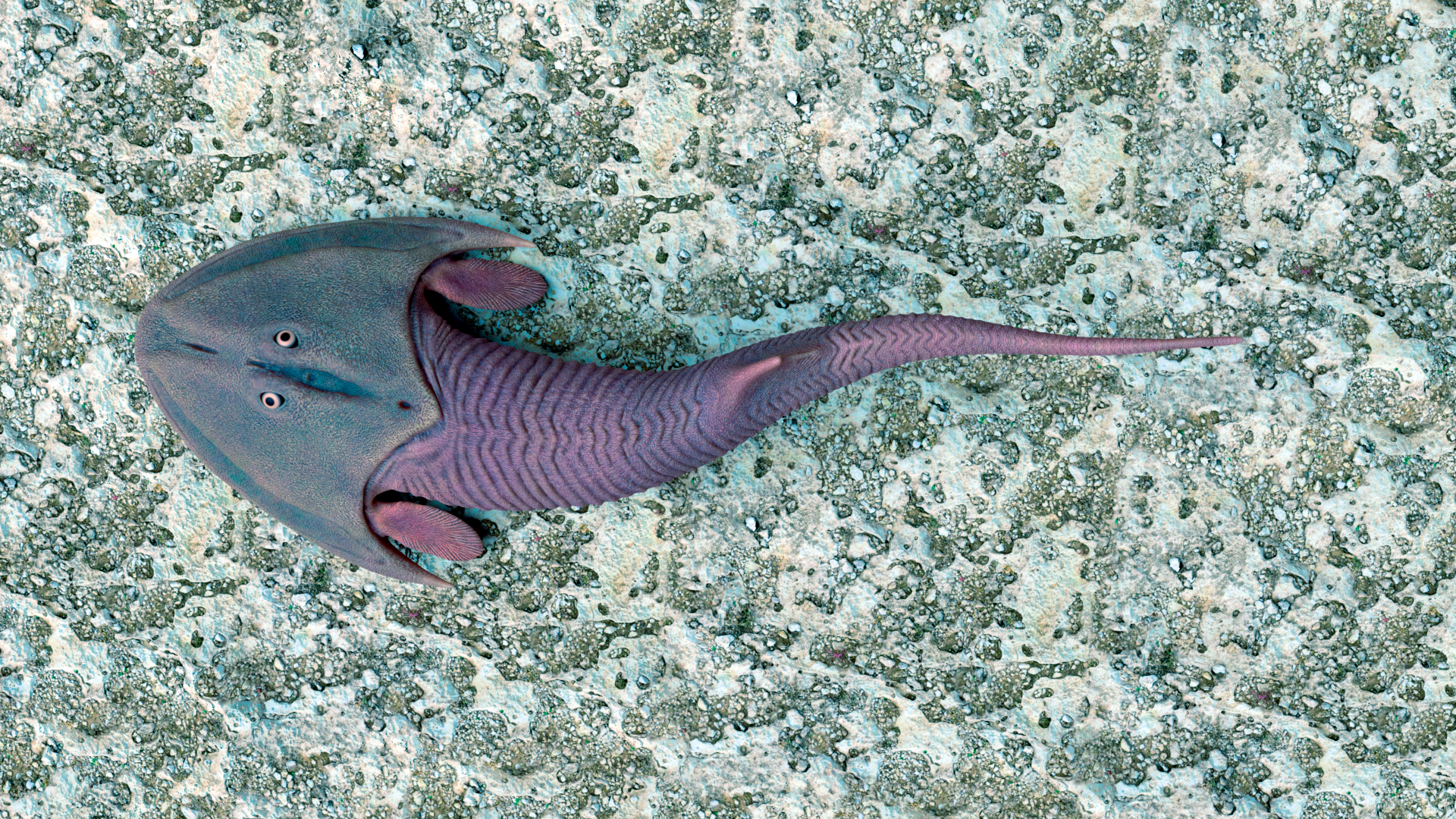 Photo Credit: Sittaco / Wikimedia Commons
In the warm, shallow seas of the Silurian period, around 430 million years ago, a remarkable fish named Cephalaspis, or Cephalaspis, glided gracefully through the water. With its flattened body and broad, shield-like head, this ancient creature was a sight to behold. Imagine a world where sunlight sparkled on the surface, illuminating vibrant coral reefs and schools of colorful fish. Cephalaspis, with its unique design, was perfectly adapted to navigate this bustling underwater paradise, making it a fascinating subject for scientists and nature lovers alike.
What truly sets Cephalaspis apart is its distinctive appearance. Its broad head, resembling a helmet, not only provided protection but also housed specialized sensory organs that helped it detect food and navigate its environment. This ancient fish was an omnivore, meaning it dined on both plant and animal matter, allowing it to thrive in a world rich with diverse life. As we explore the life of Cephalaspis, we uncover the secrets of its behavior, diet, and the vital role it played in its ecosystem, painting a vivid picture of a time when the oceans were teeming with life and adventure.
Cephalaspis is a captivating member of the animal kingdom, nestled within the phylum Chordata, which includes all animals with a backbone. This ancient fish, belonging to the class Osteostraci, is particularly intriguing because it showcases some of the earliest adaptations seen in vertebrates. With its distinctive head shield and paired eyes, Cephalaspis offers a glimpse into the evolutionary journey of jawless fish, highlighting the transition from simple to more complex life forms. Its unique features not only set it apart from modern fish but also provide valuable insights into the development of early vertebrate anatomy.
| Taxonomic Rank | Scientific Name | Meaning & Significance |
|---|---|---|
| Kingdom | Animalia | This name signifies the broad group of multicellular organisms that are primarily heterotrophic, meaning they consume organic material for energy. |
| Phylum | Chordata | Derived from the Latin word “chorda,” meaning “string,” this name refers to animals that possess a notochord, a flexible rod that supports the body during development. |
| Class | Osteostraci | This term comes from Greek roots meaning “bony shell,” highlighting the characteristic bony armor that protects these ancient fish. |
| Family | Cephalaspidae | Named for the genus Cephalaspis, this family name emphasizes the head structure, with “cephalo” meaning “head” and “aspis” meaning “shield.” |
| Genus | Cephalaspis | This name combines “cephalo,” referring to the head, and “aspis,” meaning shield, which perfectly describes the fish’s prominent head shield that offers protection. |
The classification of Cephalaspis reveals much about its evolutionary history and the environment in which it thrived. As a member of the Osteostraci class, it represents a crucial stage in the development of vertebrates, showcasing features that would eventually lead to the evolution of jawed fish and, ultimately, all terrestrial vertebrates. By studying Cephalaspis and its relatives, scientists can better understand the adaptations that allowed early vertebrates to flourish in diverse habitats, paving the way for the rich tapestry of life we see today.
The evolutionary journey of Cephalaspis takes us back to the Silurian period, around 430 million years ago. This was a time when life was beginning to flourish in the oceans, and the first vertebrates were making their mark. Cephalaspis, a jawless fish, emerged during this era, showcasing the early stages of vertebrate evolution. Its story is one of adaptation and survival, reflecting the dynamic changes in Earth’s environments.
Cephalaspis belonged to a group known as the Osteostraci, which were among the first vertebrates to develop a bony head shield. This adaptation provided protection against predators in the ancient seas. The ancestors of Cephalaspis were likely soft-bodied and lacked the hard structures that would later define many fish. As they evolved, they transitioned from these primitive forms to more complex organisms, developing features like paired eyes and a more streamlined body shape. These changes allowed them to navigate their aquatic habitats more effectively, enhancing their ability to find food and avoid danger.
These evolutionary adaptations were vital for the survival of Cephalaspis in the ever-changing marine landscape. The protective head shield allowed it to withstand attacks from larger predators, while paired eyes and a streamlined body improved its hunting efficiency. Enhanced sensory organs further equipped Cephalaspis to navigate its environment, ensuring it could find food and avoid danger. Together, these features illustrate how this ancient fish not only survived but thrived in a world teeming with life.
Cephalaspis presents a striking silhouette that captures the imagination. This ancient fish, with its flattened body and broad, shield-like head, glides through the waters of its time with an air of elegance. Its head is adorned with large, prominent eyes, giving it a keen sense of its surroundings. The body tapers into a narrow tail, allowing for agile movements in the aquatic environment. The overall impression is one of a creature perfectly adapted to life in the Silurian seas, where it navigated through both light and shadow.
| Feature | Description |
|---|---|
| Size | Approximately 30 centimeters long, making it a modest-sized fish in its era. |
| Color | Likely a muted palette of browns and greens, providing camouflage against the ocean floor. |
| Skin Type | Covered in bony plates, offering protection from predators and environmental hazards. |
| Eyes | Large and well-positioned, enhancing its ability to spot prey and avoid danger. |
| Body Shape | Flattened and disc-like, ideal for gliding through water and resting on the seabed. |
These features work in harmony to create a creature that is both resilient and efficient in its environment. The bony plates not only shield Cephalaspis from potential threats but also help it blend into the ocean floor, making it less visible to predators. Its streamlined shape allows for swift movement, while the large eyes ensure it can detect both food and danger in the murky depths. Together, these adaptations illustrate how Cephalaspis thrived in a world teeming with life, showcasing the wonders of evolution in action.
Cephalaspis thrived in the shallow, warm waters of ancient seas, where sunlight danced on the surface and vibrant marine life flourished. Picture a world filled with coral reefs and lush underwater vegetation, where this prehistoric fish navigated through a landscape teeming with life. The gentle currents of these shallow seas provided a perfect environment for Cephalaspis to hunt and explore, making it a vital part of its ecosystem.
The climate of Cephalaspis’s habitat was typically warm and temperate, with water temperatures that encouraged a rich diversity of marine organisms. These conditions allowed for plenty of food sources, such as small invertebrates and algae, which were essential for its survival. The shallow waters also meant that sunlight could penetrate deeply, promoting the growth of plants and providing shelter for various marine species.
To thrive in these specific habitats, Cephalaspis developed several adaptations. Its flattened body shape allowed it to maneuver easily among rocks and coral, while its broad head helped it to forage effectively for food. Additionally, the protective bony plates on its head provided defense against predators, ensuring that this ancient fish could navigate its vibrant world with both grace and safety.
As the sun rises over the ancient seas, Cephalaspis begins its day in a world teeming with life. This early fish, with its distinctive flattened body and broad head, spends its time gliding gracefully through the warm, shallow waters. Its daily activities include foraging for food, which primarily consists of small invertebrates and algae. Cephalaspis uses its unique head structure to sift through the sandy ocean floor, searching for tasty morsels. Throughout the day, it may also engage in gentle swimming, using its paired fins to navigate the currents and avoid potential predators.
Socially, Cephalaspis exhibits intriguing group dynamics. These fish often gather in small schools, which provides safety in numbers. By swimming together, they can confuse predators and increase their chances of survival. Within these groups, Cephalaspis communicates through subtle movements and body language, signaling to one another when danger is near or when it’s time to move to a new feeding area. This social behavior not only strengthens their bonds but also enhances their ability to thrive in a competitive environment.
| Behavior Type | Description |
|---|---|
| Foraging | Cephalaspis uses its broad head to sift through sand and mud, searching for small invertebrates and algae. |
| Schooling | These fish often swim in small groups, which helps protect them from predators. |
| Communication | Cephalaspis communicates through body movements and positioning, signaling to others about threats or feeding opportunities. |
In this vibrant underwater world, the behaviors of Cephalaspis are crucial for its survival. By foraging effectively and maintaining social connections within schools, these ancient fish can navigate the challenges of their environment. Their ability to communicate and work together not only enhances their chances of finding food but also provides a layer of protection against predators. In the ever-changing seas, these behaviors are key to thriving in a world filled with both beauty and danger.
Cephalaspis, an ancient fish from the Silurian period, had a diverse diet that made it quite adaptable in its underwater world. As an omnivore, it enjoyed a mix of plant and animal matter, allowing it to thrive in various environments. This feeding behavior was crucial for its survival, as it could take advantage of whatever food sources were available, whether they were small invertebrates or algae drifting in the currents.
| Dietary Aspect | Details |
|---|---|
| Diet Type | Omnivore |
| Favorite Foods | Small invertebrates, algae |
| Prey Items | Crustaceans, tiny fish |
| Hunting/Foraging Strategies | Grazing on algae and ambushing small prey |
The diet of Cephalaspis played a significant role in shaping its ecology and daily routine. By being an omnivore, it could adapt to changes in food availability, which was essential in the dynamic marine environments of its time. This flexibility not only allowed Cephalaspis to find food more easily but also influenced its interactions with other species, contributing to the rich tapestry of life in ancient seas.
When it comes to reproduction, Cephalaspis engages in a fascinating mating ritual during specific breeding seasons. These ancient fish likely sought out shallow waters, where they could find safety and ample food for their young. Males would display their vibrant colors and perform intricate movements to attract females, creating a captivating underwater dance. This courtship behavior was essential for ensuring successful mating and the continuation of their lineage.
| Reproductive Aspect | Details |
|---|---|
| Gestation Period | Approximately 2 to 3 months |
| Litter Size | Up to 20 young |
| Age of Maturity | 1 to 2 years |
| Name of Young | Fry |
Once the fry hatch, they begin their journey in the vast ocean. Parental care in Cephalaspis is believed to be minimal, as these young fish must quickly learn to fend for themselves. They rely on their instincts to find food and avoid predators. As they grow, the fry undergo significant changes, developing the features that will help them thrive in their environment. Over time, they transition from vulnerable young fish into mature adults, ready to continue the cycle of life in the ancient seas.
Cephalaspis occupies a crucial role in the ancient marine food web, serving as both predator and prey. This early fish, with its unique adaptations, thrived in the shallow seas of the Silurian period. While it feasted on a variety of plant and animal matter, it also found itself on the menu for larger marine creatures. Understanding its position in the food web helps us appreciate the delicate balance of life in ancient oceans.
To survive against these formidable threats, Cephalaspis developed several defensive strategies. Its flattened body and broad head provided a natural shield, making it harder for predators to catch. Additionally, it likely relied on its ability to swiftly maneuver through the water, darting away from danger when necessary. By blending into its surroundings and using its agility, Cephalaspis could evade many of the predators lurking in the ancient seas, ensuring its survival in a world filled with challenges.
A keystone species is a vital part of its ecosystem, playing a role that is crucial for maintaining the structure and balance of that environment. If removed, the entire ecosystem could change dramatically. Cephalaspis, an ancient fish from the Silurian period, can be considered a keystone species due to its significant impact on the marine life around it. Its presence helped shape the community of organisms in its habitat, influencing both the food web and the overall health of the ecosystem.
Cephalaspis was an omnivore, meaning it fed on both plant and animal matter. This diverse diet allowed it to occupy a unique niche in its environment, helping to control populations of various organisms. For example, by consuming algae and small invertebrates, Cephalaspis contributed to the balance of these populations, preventing any one group from overwhelming the ecosystem. Additionally, as both predator and prey, it played a dual role in the food web, supporting larger predators while also being a food source for smaller creatures.
The ecological impact of Cephalaspis extended beyond its diet. Its feeding habits likely influenced the distribution of plant life in its habitat. By grazing on algae, it helped maintain healthy underwater vegetation, which in turn provided shelter and food for other marine organisms. Furthermore, the physical presence of Cephalaspis, with its unique body shape, may have created microhabitats for smaller species, promoting biodiversity in the ancient seas.
If Cephalaspis were to disappear from its ecosystem, the consequences could be severe. Without this ancient fish, algae and small invertebrate populations might explode, leading to overgrowth that could suffocate other marine life. Larger predators would lose a crucial food source, potentially leading to their decline as well. The delicate balance of the ecosystem would be disrupted, resulting in a ripple effect that could change the entire marine community. In essence, the loss of Cephalaspis would not just affect one species, but could lead to a cascade of changes that would reshape the ancient seas forever.
Cephalaspis, an ancient fish from the Silurian period, played a significant role in shaping its ecosystem. As an omnivore, it fed on a variety of plant and animal matter, which allowed it to thrive in the diverse marine environments of its time. This adaptability not only helped Cephalaspis survive but also influenced the populations of other species in its habitat. By consuming both plants and smaller animals, it helped maintain a balance in the food web, ensuring that no single species dominated the ecosystem.
| Ecosystem Service | Impact |
|---|---|
| Food Source | Served as prey for larger marine animals, supporting higher trophic levels. |
| Nutrient Cycling | Contributed to the breakdown of organic matter, enriching the sediment. |
| Habitat Structure | Influenced the growth of aquatic plants by grazing, promoting biodiversity. |
| Population Control | Helped regulate the numbers of smaller species, preventing overpopulation. |
Cephalaspis had a profound influence on its environment through its feeding habits and interactions with other species. By consuming a mix of algae and small invertebrates, it not only sustained itself but also affected the growth of these organisms. For instance, its grazing on algae could prevent overgrowth, allowing for a diverse array of plant life to flourish. This, in turn, provided habitats for other marine creatures, creating a rich tapestry of life in the shallow seas. Additionally, as a prey item for larger predators, Cephalaspis was integral in supporting the food chain, ensuring that energy flowed through the ecosystem.
The broader ecological importance of Cephalaspis cannot be overstated. As a keystone species, its presence helped maintain the balance of its marine environment. If Cephalaspis had disappeared, the consequences would have rippled through the ecosystem, potentially leading to the decline of various species and altering the habitat itself. By understanding the role of Cephalaspis, we gain insight into the intricate connections that define ecosystems, reminding us of the delicate balance that sustains life in our oceans, both past and present.
In the intricate web of life, symbiosis refers to the close and often long-term interactions between different species. These relationships can take many forms, including mutualism, where both species benefit, parasitism, where one benefits at the expense of the other, and commensalism, where one benefits while the other is neither helped nor harmed. Understanding these ecological relationships helps us appreciate how species like Cephalaspis interact with their environment and other organisms, creating a dynamic balance in ancient marine ecosystems.
| Species/Type | Relationship Type | Description |
|---|---|---|
| Coral Polyps | Mutualistic | Cephalaspis may have benefited from the shelter provided by coral reefs, while the corals received nutrients from the waste produced by the fish. |
| Small Crustaceans | Commensal | These tiny creatures could have lived on or around Cephalaspis, gaining protection while the fish remained unaffected. |
| Predatory Fish | Parasitic | While not a direct parasite, larger predatory fish could have preyed on Cephalaspis, impacting its population and survival. |
The evolution of these relationships is a testament to the adaptability of species like Cephalaspis. Over millions of years, these interactions have shaped not only the lives of individual organisms but also the structure of entire ecosystems. By forming partnerships, whether beneficial or neutral, Cephalaspis and its companions contributed to a rich tapestry of life in the ancient seas, demonstrating the interconnectedness of all living things.
Cephalaspis is an extraordinary ancient fish that swam the seas over 430 million years ago. Its unique features and adaptations make it a fascinating subject for nature enthusiasts of all ages.
Cephalaspis, an ancient fish that swam the seas over 430 million years ago, has intrigued humanity since the first fossils were discovered. These fossils, often found in sedimentary rocks, have provided a window into a world long gone, capturing the imagination of scientists and enthusiasts alike. In various cultures, Cephalaspis has been a symbol of the mysteries of evolution and the deep history of life on Earth. Its unique features, such as its flattened body and broad head, have inspired stories and artistic representations, making it a significant part of our understanding of prehistoric marine life.
Today, the relationship between Cephalaspis and humanity is primarily one of scientific interest rather than direct interaction. Researchers study its fossils to learn about the evolution of vertebrates and the ancient ecosystems in which they lived. While Cephalaspis itself is extinct, its lineage has contributed to the development of modern fish and other vertebrates. Conservation efforts focus on protecting the habitats of living relatives, ensuring that the lessons learned from ancient species like Cephalaspis continue to inform our understanding of biodiversity and ecosystem health. However, the ongoing challenges of habitat destruction and climate change pose threats to many aquatic species, reminding us of the delicate balance we must maintain.
Looking ahead, the future of our relationship with the legacy of Cephalaspis is filled with potential. As we continue to uncover more about this ancient fish and its role in the history of life, we can better appreciate the intricate connections between past and present. By studying Cephalaspis and its environment, we gain valuable insights that can guide our conservation efforts today. This knowledge not only enriches our understanding of evolution but also inspires a sense of responsibility to protect the diverse life forms that share our planet. The story of Cephalaspis is a reminder that every species, ancient or modern, plays a part in the grand tapestry of life.
Cephalaspis, an ancient fish that roamed the seas over 430 million years ago, is classified as extinct. This means that there are no living members of this fascinating species today. The population trends for Cephalaspis are not applicable, as it has not existed for millions of years. However, its fossils provide valuable insights into the evolution of early vertebrates and the ecosystems of the Silurian period.
| Conservation Factor | Status/Details |
|---|---|
| IUCN Status | Extinct |
| Population Estimates | Not applicable |
| Trend Direction | N/A |
The main threats to Cephalaspis were not human-related, as it lived in a time long before our species existed. Instead, it faced challenges from natural events and environmental changes. The Silurian seas were dynamic, with shifting climates and geological changes that could have altered habitats. These factors likely contributed to the eventual decline of many marine species, including Cephalaspis.
While Cephalaspis itself is no longer around, its legacy continues through the study of its fossils. Paleontologists work diligently to uncover more about this ancient fish and its environment. By understanding the past, scientists can gain insights into how current marine ecosystems function and how they might be affected by modern threats. The story of Cephalaspis reminds us of the importance of preserving biodiversity today, as we learn from the ancient past to protect the future of our planet’s wildlife.
| Question | Answer |
|---|---|
| What is Cephalaspis? | Cephalaspis is an extinct genus of jawless fish that lived during the Devonian period, around 400 million years ago. These fascinating creatures are known for their unique head shield and flat bodies, which made them quite different from modern fish. |
| What was the habitat of Cephalaspis? | Cephalaspis thrived in shallow, freshwater environments like rivers and lakes. They preferred areas with plenty of vegetation, which provided both shelter and food. |
| What did Cephalaspis eat? | Cephalaspis was an omnivore, meaning it ate both plants and small animals. Its diet likely included algae, tiny invertebrates, and other organic matter found in its aquatic habitat. |
| How did Cephalaspis behave? | While we can't observe Cephalaspis directly, scientists believe it was a bottom-dweller, using its flat body to navigate along the riverbed. It likely used its keen sense of smell to find food and avoid predators. |
| How did Cephalaspis reproduce? | Cephalaspis likely reproduced by laying eggs in shallow waters, similar to many fish today. The eggs would have been protected by the surrounding vegetation, providing a safe environment for the developing young. |
| What were the threats to Cephalaspis? | As an extinct species, Cephalaspis faced threats from environmental changes and competition with other species during its time. Factors like habitat loss and predation from larger fish may have contributed to its decline. |
| What is an interesting characteristic of Cephalaspis? | One of the most interesting features of Cephalaspis is its head shield, which is made of bony plates. This unique adaptation not only provided protection but also helped it to navigate its environment more effectively. |