Taxonomy & Classification
- Kingdom
- Animalia
- Phylum
- Chordata
- Class
- Mammalia
- Order
- Primates
- Family
- Hominidae
- Genus
- Pan
- Species
- Pan troglodytes

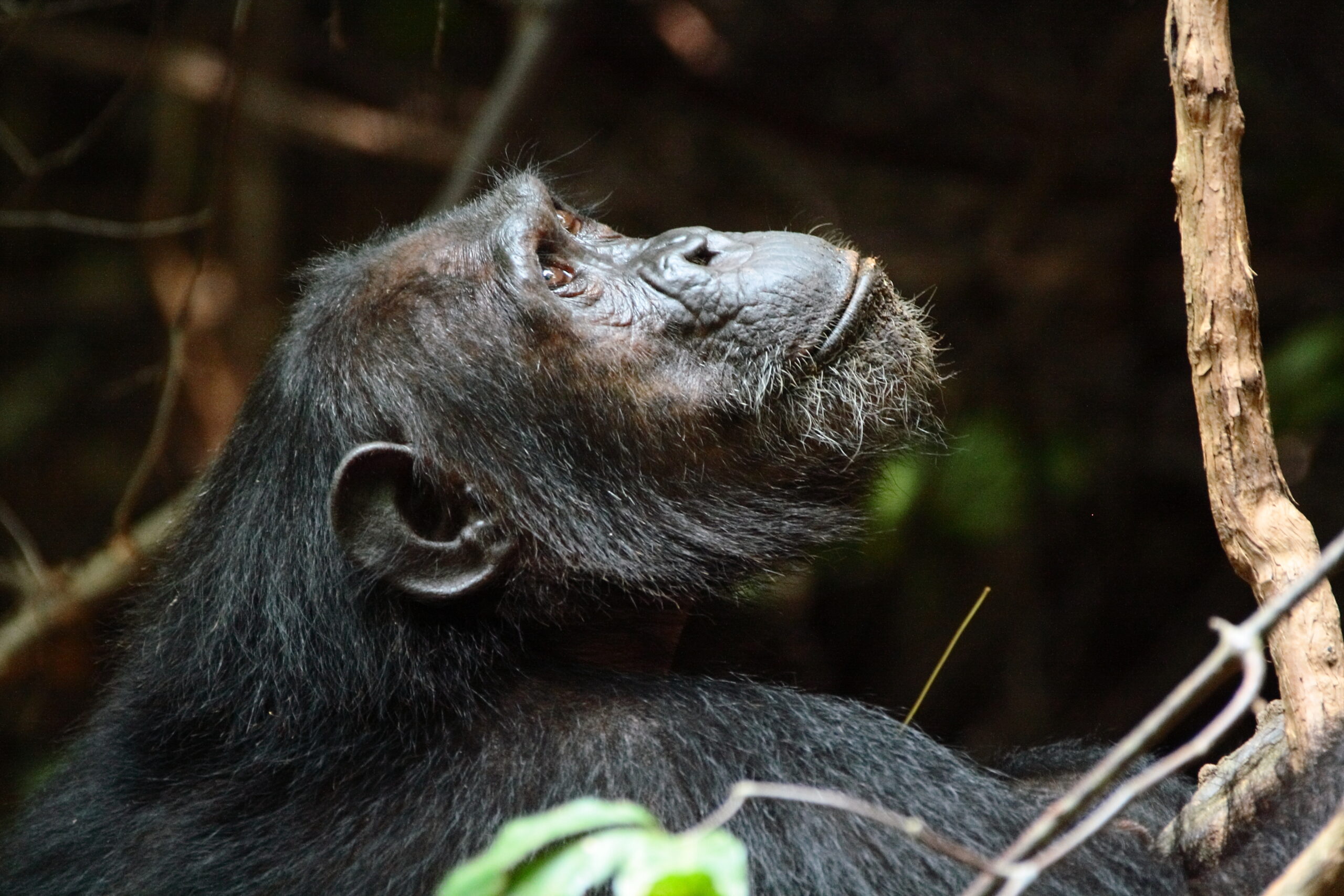 Photo Credit: D.G.Kulakov / Wikimedia
In the heart of Africa’s lush tropical forests, the common chimpanzee, or Pan troglodytes, swings gracefully from branch to branch, a master of its arboreal domain. With its expressive face and nimble limbs, this remarkable primate captivates anyone lucky enough to witness its playful antics. Chimpanzees are not just known for their agility; they possess a rich tapestry of social behaviors and intelligence that draws the attention of scientists and nature lovers alike. Their ability to use tools, communicate with complex vocalizations, and form intricate social bonds makes them a window into our own evolutionary past.
Imagine a sunny afternoon where the air is filled with the sounds of rustling leaves and excited chatter. A troop of chimpanzees gathers, their dark fur contrasting against the vibrant greens of the forest. They engage in grooming, a behavior that strengthens friendships and builds community ties. As they share fruits and play, it becomes clear that these animals are not just surviving; they are thriving in a world that demands cooperation and cleverness. This social complexity, combined with their close genetic relationship to humans, makes chimpanzees a fascinating subject of study, revealing insights into our own behaviors and the importance of preserving their habitats for future generations.
Chimpanzees hold a special place in the tree of life, showcasing a fascinating blend of traits that connect them closely to humans. As members of the family Hominidae, which includes great apes, they share a remarkable genetic similarity with us—about 98% of their DNA is identical to that of humans! This genetic kinship, along with their complex social structures and advanced problem-solving abilities, makes chimpanzees not just intriguing animals but also vital to understanding our own evolution.
| Taxonomic Rank | Scientific Name | Meaning & Significance |
|---|---|---|
| Kingdom | Animalia | This name comes from the Latin word “animalis,” meaning “having breath” or “living.” It signifies all living organisms that are not plants, fungi, or bacteria. |
| Phylum | Chordata | Derived from the Greek word “chordē,” meaning “string,” this classification includes animals with a backbone, highlighting the structural support that allows for complex movement. |
| Class | Mammalia | This term comes from the Latin “mamma,” meaning “breast.” It refers to animals that nurse their young with milk, a key feature of mammals. |
| Order | Primates | From the Latin “primus,” meaning “first,” this order includes humans, apes, monkeys, and prosimians, emphasizing their advanced traits like large brains and social behaviors. |
| Family | Hominidae | This name is derived from “homo,” meaning “man,” and “idae,” a suffix used in taxonomy. It signifies the family of great apes, including humans, gorillas, and orangutans. |
| Genus | Pan | From the Greek word for “all,” this genus includes chimpanzees and bonobos, highlighting their shared characteristics and behaviors. |
Understanding the taxonomic classification of chimpanzees reveals much about their evolutionary journey. As part of the Homininae subfamily, they are closely related to humans, sharing a common ancestor that lived millions of years ago. This connection not only sheds light on the traits we share, such as social interaction and tool use, but also emphasizes the importance of conserving these incredible animals. By studying chimpanzees, we gain insights into our own species and the evolutionary processes that have shaped life on Earth.
The evolutionary journey of chimpanzees stretches back millions of years, intertwining with the story of our own species. Chimpanzees, belonging to the genus Pan, share a common ancestor with humans that lived around 6 to 7 million years ago. This timeline places them in the family Hominidae, which includes other great apes like gorillas and orangutans. As we explore their evolutionary path, we uncover a series of remarkable adaptations that have shaped their survival in diverse environments.
The ancestors of chimpanzees were small, tree-dwelling primates that roamed the forests of Africa. Over time, these early primates underwent significant changes, adapting to their surroundings. One major transition was the development of bipedalism, which allowed them to walk on two legs. This adaptation freed their hands for tool use and foraging. As they evolved, their social structures became more complex, leading to the formation of tight-knit communities. This social behavior is crucial for survival, as it enhances cooperation and communication among individuals.
These adaptations have been vital for the survival of chimpanzees in the wild. Their ability to use tools not only aids in finding food but also demonstrates their cognitive abilities. The complex social structures they form provide safety in numbers, allowing them to thrive in challenging environments. Communication skills enhance their social interactions, fostering cooperation and strengthening group dynamics. Lastly, their flexible diet enables them to exploit various food sources, ensuring they can adapt to changing conditions. Together, these traits illustrate how chimpanzees have successfully navigated the challenges of their environment, making them one of our closest living relatives.
Chimpanzees are striking animals that capture our attention with their lively expressions and agile movements. Standing between 1 meter and 1.7 meters tall, they can reach heights of about 3.25 to 5.5 feet when fully upright. Their bodies are muscular and robust, designed for both climbing and walking. With a weight range of 32 to 59 kilograms, or 71 to 130 pounds, they possess a strong build that supports their active lifestyle. Their skin is covered in hair, which varies in color from dark brown to black, giving them a distinctive appearance that is both familiar and captivating.
| Feature | Description |
|---|---|
| Height | 1m – 1.7m (3.25ft – 5.5ft) |
| Weight | 32-59kg (71-130lbs) |
| Skin Type | Hair |
| Most Distinctive Feature | Dexterous hands and feet, complex communication |
These physical traits work together to create a highly adaptable and intelligent primate. Their dexterous hands and feet allow them to grasp branches and manipulate objects with incredible precision, making them excellent climbers and foragers. The thick hair covering their bodies not only provides warmth but also offers protection from the elements. Together, these features enable chimpanzees to thrive in their forest habitats, where they use their communication skills to interact with one another, forming complex social bonds that are essential for their survival.
In the heart of Africa, chimpanzees find their home in lush tropical forests and open woody savannas. Imagine towering trees draped in vibrant green leaves, where sunlight filters through the canopy, creating a dappled effect on the forest floor. These lively environments are filled with the sounds of rustling leaves and the calls of various birds, making it a bustling hub of life. The rich biodiversity of these habitats provides chimpanzees with everything they need, from food to shelter, allowing them to thrive in their natural surroundings.
Chimpanzees prefer warm climates, typically found in areas where temperatures range from 20 to 30 degrees Celsius (68 to 86 degrees Fahrenheit). They thrive in regions that receive ample rainfall, which helps sustain the dense vegetation they rely on for food and shelter. These environments are often humid, creating a perfect setting for the diverse plant life that supports their diet, which includes fruits, leaves, and occasionally insects.
To adapt to their specific habitats, chimpanzees have developed remarkable skills. Their strong limbs and prehensile hands allow them to swing gracefully from branch to branch, making it easy to navigate the treetops in search of food. They are also social animals, living in groups that help them protect each other and share resources. This social structure is vital for their survival, as it fosters cooperation and communication, essential traits for thriving in the complex ecosystems of their tropical and savanna homes.
Chimpanzees lead vibrant and active lives, filled with a variety of daily activities that reflect their intelligence and adaptability. As diurnal animals, they are most active during the day, rising with the sun to forage for food, socialize, and explore their surroundings. Their mornings often begin with a hearty breakfast of fruits, leaves, and nuts, which they skillfully gather using their nimble fingers. Throughout the day, they engage in playful antics, swinging from branch to branch, and sometimes even using tools, like sticks, to extract termites from their mounds. As the sun sets, they build nests high in the trees to sleep, ensuring they are safe from predators.
Social behavior is a cornerstone of chimpanzee life. They live in groups, known as communities, which can consist of 20 to over 100 individuals. These communities are not just a collection of animals; they are complex social networks where relationships are formed and maintained through grooming, playing, and vocalizations. Chimpanzees communicate using a rich array of sounds, gestures, and facial expressions, allowing them to convey emotions and intentions. Hierarchies exist within these groups, with dominant individuals often leading the way in foraging and decision-making. This social structure fosters cooperation and support, essential for their survival in the wild.
| Behavior Type | Description |
|---|---|
| Activity Patterns | Chimpanzees are diurnal, meaning they are active during the day, engaging in foraging, playing, and resting. |
| Social Structure | They live in communities with complex hierarchies, where relationships are built through grooming and social interactions. |
| Communication Methods | Chimpanzees use a variety of vocalizations, gestures, and facial expressions to communicate with one another. |
The behaviors of chimpanzees are not just fascinating; they are vital for their survival. By living in groups, they can share knowledge about food sources and protect each other from threats. Their social bonds help them navigate the challenges of their environment, ensuring that they thrive in the lush forests of Africa. Through cooperation and communication, chimpanzees exemplify the power of community, showcasing how interconnectedness can lead to success in the wild.
Chimpanzees are omnivores, which means they enjoy a diverse diet that includes both plant and animal matter. Their feeding behavior is quite dynamic, as they forage for food in the trees and on the ground. Chimpanzees are known for their intelligence and problem-solving skills, which they use to find and obtain food. They often work together in groups, sharing their discoveries and using tools, like sticks, to extract insects from their nests. This social aspect of feeding not only helps them gather food more efficiently but also strengthens their bonds with one another.
| Dietary Aspect | Details |
|---|---|
| Diet Type | Omnivore |
| Favorite Foods | Fruits, seeds, and leaves |
| Prey Items | Insects |
| Hunting/Foraging Strategies | Foraging in groups, using tools to extract insects |
The diet of chimpanzees plays a crucial role in shaping their ecology and daily routines. By consuming a variety of foods, they help disperse seeds throughout their habitat, promoting plant growth and maintaining the health of their forest ecosystems. Their foraging habits also influence their social structures, as they often gather in groups to share food, fostering cooperation and communication among individuals. This intricate relationship between diet and behavior highlights the importance of chimpanzees in their environment, showcasing how their daily activities contribute to the balance of their ecosystems.
Chimpanzees have a fascinating mating behavior that is influenced by social dynamics within their groups. They do not have a specific breeding season, which means they can mate throughout the year. Males often engage in displays of strength and agility to attract females, showcasing their fitness. Courtship can involve grooming and playful interactions, helping to strengthen bonds between potential mates. This social aspect is crucial, as chimpanzees are known for their complex relationships and social structures.
| Reproductive Aspect | Details |
|---|---|
| Gestation Period | 8 months |
| Average Litter Size | 1 |
| Age of Sexual Maturity | 13 – 16 years |
| Name of Young | Infant |
Once a chimpanzee infant is born, it relies heavily on its mother for care and protection. The bond between mother and child is incredibly strong, with mothers often carrying their infants on their backs for several months. This close contact not only keeps the young safe but also helps them learn essential skills. As they grow, infants begin to explore their surroundings, play with other young chimps, and gradually learn the social rules of their community. By the time they reach sexual maturity, they are well-equipped to navigate the complexities of chimpanzee society, continuing the cycle of life in their vibrant world.
Chimpanzees play a vital role in their ecosystem, sitting near the top of the food web in their forest habitats. While they are not the apex predators, they are highly intelligent and social animals that can defend themselves against many threats. However, they face dangers from both natural predators and human activities that disrupt their lives.
To survive these threats, chimpanzees have developed a range of defensive behaviors. They often live in groups, which provides safety in numbers. When danger approaches, they can communicate through vocalizations and gestures to alert each other. Chimpanzees are also known to use tools, such as sticks, to defend themselves or to distract predators. Their intelligence allows them to adapt to changing environments, making them resilient in the face of challenges.
A keystone species is an organism that has a disproportionately large impact on its environment relative to its abundance. In other words, these species play a crucial role in maintaining the structure of an ecosystem. Chimpanzees certainly qualify as a keystone species due to their significant influence on the tropical forests and woody savannas they inhabit. Their behaviors and interactions with other species help shape their ecosystem in vital ways.
Chimpanzees are known for their complex social structures and foraging habits, which have a ripple effect on their environment. As omnivores, they consume a wide variety of foods, including fruits, leaves, and insects. This feeding behavior not only helps control plant populations but also aids in seed dispersal. When chimpanzees eat fruits, they often travel long distances before excreting the seeds, which can lead to the growth of new plants in different areas. This process is essential for maintaining plant diversity and forest health.
Moreover, chimpanzees are social animals that live in groups, which fosters cooperation and learning among individuals. Their social interactions can influence the behavior of other species in their habitat. For example, their presence can deter smaller herbivores from overgrazing certain plants, allowing for a balanced ecosystem. Additionally, their nesting habits create habitats for other organisms, such as insects and birds, further enhancing biodiversity.
If chimpanzees were to disappear from their habitats, the consequences would be profound. The loss of this keystone species would likely lead to a decline in plant diversity, as fewer seeds would be dispersed. This could result in overpopulation of certain plant species, which might choke out others and disrupt the balance of the ecosystem. Additionally, the absence of chimpanzees would affect the social dynamics of other animals, potentially leading to increased competition for resources. In essence, the disappearance of chimpanzees would create a domino effect, altering the entire landscape of their ecosystem and diminishing its health and resilience.
Chimpanzees are vital players in their ecosystems, particularly in the tropical forests and woody savannas of Africa. As omnivores, they consume a wide variety of foods, including fruits, leaves, and insects. This diverse diet not only sustains them but also shapes their environment. By foraging for food, chimpanzees help disperse seeds and promote plant growth, making them essential for maintaining the health of their habitats. Their social structures and behaviors further influence the dynamics of their communities, showcasing their role as both consumers and caretakers of their ecosystems.
| Ecosystem Service | Impact |
|---|---|
| Seed Dispersal | Chimpanzees eat fruits and excrete seeds, helping new plants grow in different areas. |
| Soil Aeration | As they dig for roots and insects, they loosen the soil, which improves water absorption. |
| Food Web Dynamics | They serve as prey for larger predators, contributing to the balance of the food web. |
| Social Structure Influence | Their complex social interactions can affect the behavior of other species in their habitat. |
Chimpanzees influence their environment in many specific ways. For instance, when they consume fruits from trees, they often travel long distances, dropping seeds in new locations. This process helps to create new plant populations, which can lead to greater biodiversity. Additionally, their foraging activities can disturb the ground, allowing nutrients to circulate more freely in the soil. This not only benefits the plants they consume but also supports a variety of other organisms that rely on healthy soil for survival.
The broader ecological importance of chimpanzees cannot be overstated. As a keystone species, their presence and activities help maintain the structure and function of their ecosystems. Without them, the balance of plant and animal life could be disrupted, leading to a decline in biodiversity. By shaping their environment, chimpanzees play a crucial role in ensuring the health of their habitats, which in turn supports countless other species, including humans. Their story is a reminder of the interconnectedness of life and the importance of protecting these intelligent primates and their homes.
In the intricate web of life, chimpanzees engage in various partnerships with other species, showcasing the beauty of symbiosis. Symbiosis refers to the close interactions between different species, which can be beneficial, harmful, or neutral. These relationships can take many forms, such as mutualism, where both species gain advantages, parasitism, where one benefits at the other’s expense, and commensalism, where one species benefits while the other is neither helped nor harmed. Understanding these connections helps us appreciate the delicate balance of ecosystems and the roles that different species play within them.
| Species/Type | Relationship Type | Description |
|---|---|---|
| Birds (e.g., oxpeckers) | Mutualistic | Oxpeckers perch on chimpanzees to eat ticks and parasites from their skin, providing the chimps with relief from pests while the birds get a meal. |
| Fruit Trees | Mutualistic | Chimpanzees help disperse seeds from the fruits they eat, aiding in the growth of new trees, while benefiting from the nutritious food source. |
| Fungi | Commensal | Fungi can grow on the remains of chimpanzee food scraps, benefiting from the nutrients without affecting the chimps. |
These relationships have evolved over time, shaped by the needs and behaviors of the species involved. Mutualistic partnerships, like those with oxpeckers and fruit trees, highlight how cooperation can enhance survival for both parties. As chimpanzees forage and interact with their environment, they inadvertently support other species, creating a network of interdependence. This interconnectedness not only enriches the lives of chimpanzees but also contributes to the health of their ecosystems, demonstrating the importance of every species in maintaining the balance of nature.
Chimpanzees are not just our closest living relatives; they are also full of surprises that reveal their intelligence and social complexity. Here are some intriguing facts that showcase the remarkable lives of these incredible primates.
Chimpanzees have long captivated human imagination, serving as symbols of our shared ancestry and cultural significance. Historical encounters between humans and these intelligent primates date back centuries, with early explorers and scientists marveling at their complex behaviors and social structures. In many cultures, chimpanzees have been depicted in art and folklore, often representing the wildness of nature and the kinship we share with the animal kingdom. Their expressive faces and social interactions remind us of our own emotions and relationships, making them a powerful emblem of the connection between humanity and the natural world.
Today, the relationship between chimpanzees and humans is multifaceted, marked by both cooperation and conflict. Conservation efforts are underway to protect their habitats from deforestation and poaching, as these threats endanger their populations. However, human activities often lead to conflicts, especially when chimpanzees venture into agricultural areas in search of food. While some people have sought to domesticate chimpanzees for entertainment or research, this practice raises ethical concerns about their welfare and the impact on their natural behaviors. The balance between protecting these remarkable animals and addressing human needs is a delicate one, requiring thoughtful solutions.
Looking ahead, the future of the relationship between chimpanzees and humanity hinges on our ability to foster understanding and respect for these incredible beings. As we learn more about their intelligence and social structures, we can better appreciate their role in our ecosystems. By prioritizing conservation and ethical treatment, we can ensure that future generations will not only witness the beauty of chimpanzees in the wild but also recognize the profound connection we share with them. Together, we can create a world where both humans and chimpanzees thrive in harmony.
Chimpanzees are currently classified as endangered, a status that highlights the urgent need for conservation efforts. Their population is estimated to be between 150,000 and 250,000 individuals, but this number is not stable. In fact, the overall trend is declining, which raises concerns about their future in the wild. As our closest living relatives, chimpanzees share about 98% of their DNA with humans, making their plight even more significant for conservationists and animal lovers alike.
| Conservation Factor | Status/Details |
|---|---|
| IUCN Status | Endangered |
| Estimated Population Size | 150,000 – 250,000 |
| Population Trend | Declining |
The main threats to chimpanzees stem from human activities. Habitat destruction is a significant issue, as forests are cleared for agriculture, logging, and urban development. This loss of habitat not only reduces the space where chimpanzees can live and find food, but it also fragments their populations, making it harder for them to interact and breed. Additionally, poaching and illegal wildlife trade pose serious risks, as some individuals are hunted for bushmeat or captured for the exotic pet trade. These pressures create a challenging environment for chimpanzees, pushing them closer to extinction.
Despite these challenges, there are ongoing conservation efforts aimed at protecting chimpanzees and their habitats. Organizations are working tirelessly to establish protected areas, promote sustainable land use, and raise awareness about the importance of these incredible primates. Community-based initiatives are also crucial, as they involve local people in conservation efforts, helping them understand the value of preserving chimpanzees and their ecosystems. With continued dedication and support, there is hope that chimpanzees can thrive once again in the wild, ensuring that future generations can appreciate their intelligence and social complexity.
| Question | Answer |
|---|---|
| Where do chimpanzees live? | Chimpanzees are found in tropical forests and woody savannas across West and Central Africa. They prefer areas with plenty of trees, which provide food and shelter. |
| What do chimpanzees eat? | Chimpanzees are omnivores, meaning they eat both plants and animals. Their diet includes fruits, leaves, seeds, and occasionally insects or small mammals. |
| How do chimpanzees behave in the wild? | Chimpanzees are highly social animals that live in groups called communities. They communicate using a variety of vocalizations, gestures, and facial expressions, showing complex social interactions. |
| How do chimpanzees reproduce? | Chimpanzees have a gestation period of about 230 days, after which a single infant is born. Mothers are very nurturing, often carrying their babies for several years and teaching them essential survival skills. |
| What threats do chimpanzees face? | Chimpanzees are currently classified as endangered due to habitat loss, poaching, and the illegal wildlife trade. Deforestation for agriculture and logging also significantly impacts their populations. |
| What is a unique characteristic of chimpanzees? | One of the most distinctive features of chimpanzees is their dexterous hands and feet, which allow them to grasp branches and use tools. They are also known for their complex communication skills, which include vocalizations and body language. |
| Can chimpanzees use tools? | Yes, chimpanzees are known for their ability to use tools. They have been observed using sticks to fish for termites or stones to crack open nuts, showcasing their intelligence and problem-solving skills. |