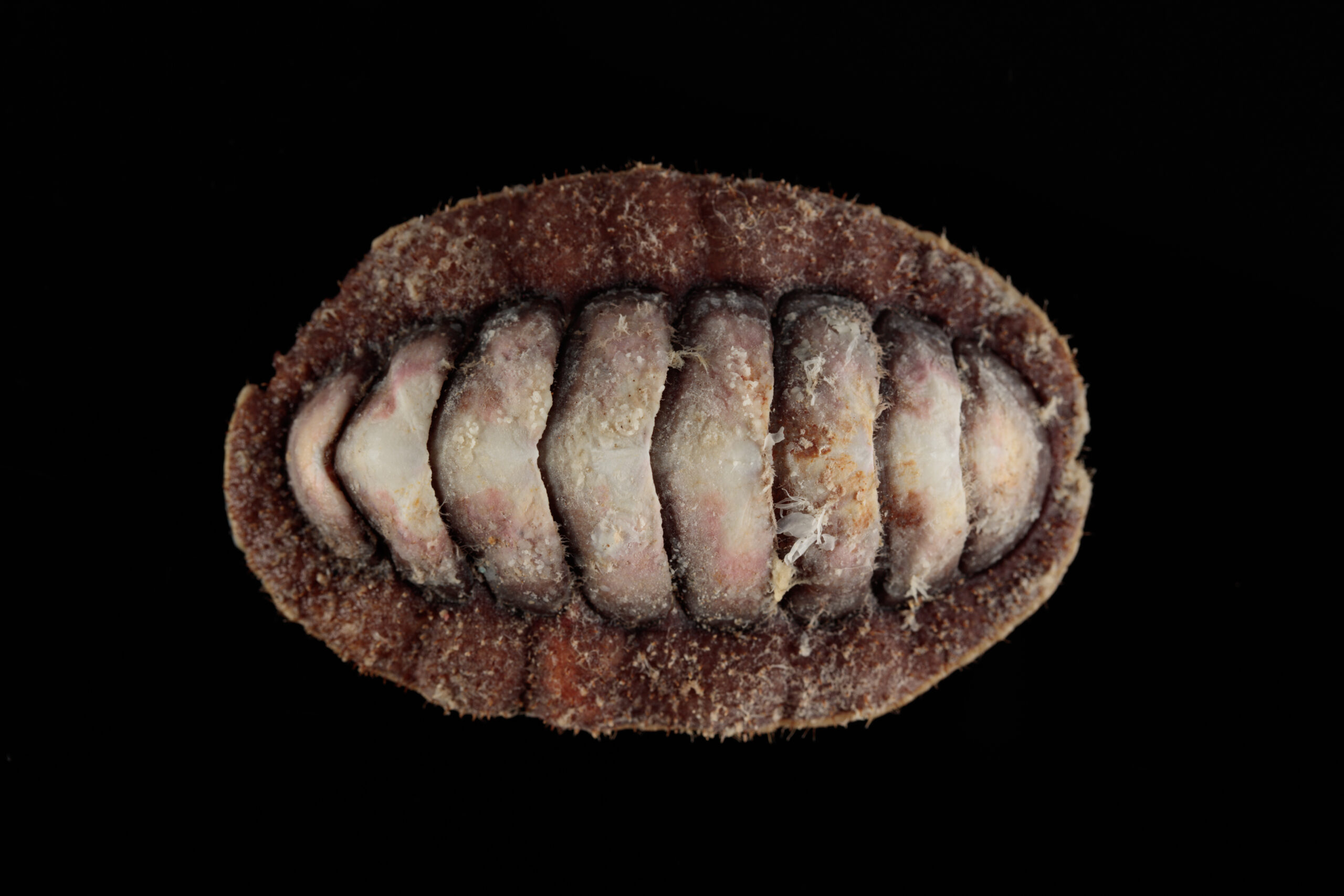
Taxonomy & Classification
- Kingdom
- Animalia
- Phylum
- Mollusca
- Class
- Polyplacophora
- Order
- Chitonida
- Family
- Chitonidae
- Genus
- Chiton
- Species
- Chiton tuberculatus

In the vibrant intertidal zones of the world’s coastlines, the chiton, scientifically known as Polyplacophora, clings tenaciously to rocky surfaces, embodying a living piece of armor. With its flat, oval body adorned by eight overlapping plates, this ancient mollusk resembles a miniature tank, perfectly adapted to withstand the relentless waves and harsh conditions of its habitat. As the tide ebbs and flows, chitons emerge from their rocky homes, revealing their fascinating ability to scrape algae off surfaces with a specialized tongue-like organ called a radula. This unique feeding method not only sustains them but also plays a crucial role in maintaining the balance of their ecosystem.
Chitons have been roaming the oceans for over 500 million years, making them some of the oldest living animals on Earth. Their evolutionary history captivates scientists and nature enthusiasts alike, as they offer a glimpse into the past and the resilience of life. These remarkable creatures are not just survivors; they are keystone species, meaning their presence significantly impacts their environment. By grazing on algae, chitons help control its growth, ensuring that the rocky shores remain healthy and vibrant. As we explore the world of chitons, we uncover the secrets of their lifestyle, their role in marine ecosystems, and the fascinating adaptations that have allowed them to thrive in the ever-changing tides of the ocean.
Chitons are intriguing marine animals that belong to the phylum Mollusca, which is home to snails, clams, and octopuses. Specifically, chitons are classified under the class Polyplacophora, a name that means “many plates.” This refers to their distinctive eight overlapping shell plates that protect their soft bodies. Unlike many other mollusks, chitons have a unique ability to cling tightly to rocks in intertidal zones, making them well-adapted to life in turbulent ocean environments. Their tough, flexible bodies and specialized radula—a tongue-like organ with tiny teeth—allow them to scrape algae off surfaces, showcasing their remarkable adaptations to their habitats.
| Taxonomic Rank | Scientific Name | Meaning & Significance |
|---|---|---|
| Kingdom | Animalia | This name signifies that chitons are part of the animal kingdom, which includes all multicellular organisms that are not plants, fungi, or bacteria. |
| Phylum | Mollusca | The term “Mollusca” comes from the Latin word “mollis,” meaning soft, highlighting the soft-bodied nature of these animals. |
| Class | Polyplacophora | This name means “bearing many plates,” which directly refers to the eight separate shell plates that protect the chiton’s body. |
| Order | Chitonida | The name “Chitonida” is derived from the Greek word “chiton,” meaning tunic or coat, reflecting the protective nature of their shell structure. |
| Family | Chitonidae | This family name is simply a plural form of “chiton,” indicating a group of related species within the order. |
| Genus | Chiton | The genus name “Chiton” also comes from the Greek word for tunic, emphasizing the protective shell that characterizes these animals. |
The classification of chitons reveals a rich evolutionary history that connects them to other mollusks and highlights their unique adaptations. As members of the Lophotrochozoa group, chitons share common ancestry with a diverse range of organisms, from earthworms to squid. Their specialized features, such as the ability to cling to rocky surfaces and their unique shell structure, showcase how evolution has shaped their survival strategies in the ever-changing marine environment. Understanding where chitons fit in the tree of life not only deepens our appreciation for these fascinating animals but also illustrates the intricate web of life that connects all living beings.
The evolutionary journey of chitons stretches back over 500 million years, making them some of the oldest living animals on Earth. These fascinating marine mollusks first appeared during the Cambrian period, a time when life was just beginning to flourish in the oceans. As the world changed, so did chitons, adapting to various environments and challenges, which has allowed them to thrive in diverse marine habitats.
Chitons are part of a larger group known as mollusks, which includes snails and clams. Their ancestors were likely soft-bodied creatures that gradually developed protective shells. Over time, chitons evolved a unique shell made up of eight overlapping plates, a feature that sets them apart from other mollusks. This design not only provides protection from predators but also allows them to cling tightly to rocky surfaces, a crucial adaptation for life in turbulent coastal waters. As they evolved, chitons also developed a specialized feeding structure called a radula, which is like a tiny tongue covered in teeth. This helps them scrape algae and other food off rocks, making them efficient grazers.
These evolutionary adaptations have been vital for chitons’ survival in the ever-changing marine world. Their ability to cling to rocks and feed efficiently allows them to thrive in environments where other animals might struggle. With their ancient lineage and remarkable adaptations, chitons continue to be a testament to the resilience of life on Earth, showcasing how evolution shapes the creatures that inhabit our planet.
Chitons present a captivating sight, resembling living armor as they cling to rocks in intertidal zones. Their bodies are flat and oval-shaped, covered by a series of eight overlapping plates, which give them a distinctive, segmented appearance. This unique structure allows them to flex and conform to the surfaces they inhabit, making them well-suited for life in rugged coastal environments. With a tough exterior and a soft underside, chitons are both resilient and adaptable, showcasing nature’s ingenuity.
| Feature | Description |
|---|---|
| Size | Chitons can range from a few centimeters to over 30 centimeters in length, depending on the species. |
| Color | They display a variety of colors, including shades of brown, gray, and even vibrant hues like red and green, often blending with their rocky surroundings. |
| Skin Type | Their skin is protected by a hard shell made up of eight calcareous plates, which are tough and help shield them from predators. |
The combination of their flexible body and protective shell plates serves multiple survival purposes. The overlapping plates not only provide defense against hungry sea stars and crabs but also allow chitons to cling tightly to rocks during strong waves. Their ability to blend into their environment with various colors helps them avoid detection, making them masters of camouflage in the vibrant underwater world. Together, these features create a well-rounded strategy for thriving in the challenging marine landscape.
Chitons thrive in the rugged embrace of rocky shorelines, where the land meets the sea. Picture a vibrant intertidal zone, where waves crash against jagged cliffs and tide pools shimmer under the sun. These resilient mollusks cling tightly to rocks, using their muscular foot to anchor themselves against the relentless surf. Their homes are often found in areas that experience both the gentle caress of calm waters and the fierce power of crashing waves, creating a dynamic environment that is both challenging and rich in life.
Chitons prefer environments that offer a mix of exposure and shelter. They are typically found in areas with strong wave action, which helps to keep their surroundings clean and free from sediment. The temperature in these habitats can vary widely, but chitons are well-suited to withstand the cooler waters of the northern Pacific. They thrive in both shallow tidal pools and deeper rocky areas, often residing at depths of up to 365 feet. This adaptability allows them to survive in a range of conditions, from sunny days to stormy weather.
To navigate their challenging habitats, chitons have developed several clever adaptations. Their tough, armored plates protect them from predators and harsh environmental conditions. When the tide recedes, they can seal themselves to the rock, preventing desiccation, or drying out. This ability to cling tightly to surfaces not only keeps them safe but also allows them to feed on algae and other small organisms that grow on the rocks. With their unique adaptations, chitons are perfectly equipped to thrive in the ever-changing world of the intertidal zone.
Chitons lead a life that is both simple and captivating, primarily focused on their daily activities in the intertidal zones. As the tide rises and falls, these armored mollusks emerge from their rocky homes to graze on algae and other plant life. They use their muscular foot, which acts like a suction cup, to cling tightly to surfaces, ensuring they don’t get swept away by the waves. During the day, chitons are often found resting in crevices, where they can avoid predators and conserve moisture. As night falls, they become more active, venturing out to feed under the cover of darkness.
Socially, chitons are known to form colonies, which can be quite a sight to behold. These groups often consist of individuals that are closely packed together on the same rock surface. This clustering behavior not only provides protection from predators but also helps them share information about food sources. When one chiton finds a particularly tasty patch of algae, others nearby may quickly join in. Communication among chitons is subtle; they rely on chemical signals in the water to convey messages about food availability and potential threats.
| Behavior Type | Description |
|---|---|
| Feeding | Chitons graze on algae and other plant life, using their radula, a tongue-like organ with tiny teeth, to scrape food off surfaces. |
| Clinging | They use their strong foot to attach firmly to rocks, preventing them from being dislodged by waves or predators. |
| Colony Living | Chitons often gather in groups on rocks, which helps them stay safe from predators and find food more efficiently. |
| Communication | They communicate through chemical signals in the water, alerting others to food sources or dangers nearby. |
The behaviors of chitons are finely tuned to ensure their survival in a challenging environment. By forming colonies, they not only enhance their safety but also increase their chances of finding food. Their ability to cling tightly to rocks protects them from strong currents and hungry predators. Together, these daily activities and social interactions create a resilient lifestyle that has allowed chitons to thrive for millions of years in the ever-changing tides of the ocean.
Chitons are omnivores, meaning they enjoy a varied diet that includes both plant and animal matter. These fascinating creatures primarily feed on algae, which they scrape off rocks using their specialized tongues, called radulas. This unique feeding behavior allows them to thrive in their rocky intertidal habitats, where they can find plenty of food. In addition to algae, chitons also consume small invertebrates and plankton, making them adaptable feeders in their environment.
| Dietary Aspect | Details |
|---|---|
| Diet Type | Omnivore |
| Favorite Foods | Algae, small invertebrates, and plankton |
| Prey Items | Small fish and various invertebrates |
| Hunting/Foraging Strategies | Scraping algae off rocks with a radula and filtering plankton from the water |
This diverse diet plays a crucial role in the ecology of chitons. By feeding on algae, they help control algal growth on rocky surfaces, which can benefit other marine organisms. Their foraging habits also contribute to nutrient cycling in their habitats, supporting the overall health of the intertidal ecosystem. As they move with the tides, chitons not only sustain themselves but also interact with their environment in ways that promote balance and biodiversity.
Chitons have a rather interesting approach to reproduction, which typically occurs during warmer months when conditions are just right. During this breeding season, males and females engage in a unique mating ritual. They often come together in large groups, releasing their eggs and sperm into the water simultaneously. This synchronized spawning increases the chances of fertilization, as the eggs and sperm mix freely in the ocean.
| Reproductive Aspect | Details |
|---|---|
| Gestation Period | Chitons do not have a gestation period like mammals; instead, fertilization occurs externally in the water. |
| Litter Size | A single female can release thousands of eggs at once, depending on the species. |
| Age of Maturity | Chitons typically reach maturity in about 1 to 2 years. |
| Name of Young | The young chitons are called larvae, which eventually settle and develop into adults. |
Once the eggs are fertilized, they develop into free-swimming larvae. These tiny larvae drift in the ocean currents, feeding on plankton and growing until they are ready to settle on a suitable surface, like a rock. After settling, they undergo a transformation, gradually developing into the familiar armored adults we see clinging to rocks today. Interestingly, chitons do not provide parental care; instead, they rely on the ocean’s currents and their own instincts to navigate their early life stages. This fascinating life cycle showcases the resilience and adaptability of chitons in their marine environment.
Chitons play a vital role in their marine ecosystems, serving as both grazers and prey. Positioned in the food web, they help control algae populations while also providing nourishment for various predators. Their presence contributes to the health of rocky shorelines, where they thrive among the crevices and tide pools.
To defend themselves against these threats, chitons have developed several clever survival strategies. Their hard, overlapping plates act like armor, making it difficult for predators to access their soft bodies. When threatened, chitons can cling tightly to rocks, using their muscular foot to create a strong grip. This ability to hold on tight helps them avoid being dislodged by waves or pulled off by hungry sea stars and crabs. Additionally, their tough exterior can deter some predators, allowing them to survive in a world filled with dangers.
A keystone species is a vital part of its ecosystem, meaning that its presence or absence can significantly impact the environment and other living things within it. Chitons, with their unique role in rocky intertidal zones, qualify as a keystone species. By grazing on algae and serving as prey for various marine animals, they help maintain the balance of their ecosystem.
Chitons are essential grazers in their habitats, primarily feeding on algae that grow on rocks. By keeping algae populations in check, they prevent overgrowth that could smother other marine life. This grazing behavior promotes biodiversity, allowing different species to thrive in the same area. For example, when chitons feed, they create space for other organisms, such as barnacles and small invertebrates, to settle and grow.
Moreover, chitons are a food source for many predators, including sea stars, crabs, and fish. Their presence supports these predators, which rely on them for nutrition. If chitons were to disappear, these predators would face food shortages, potentially leading to declines in their populations. This ripple effect could disrupt the entire food web, affecting not just the predators but also the organisms they prey upon.
Chitons also contribute to the health of their environment by helping to recycle nutrients. As they graze, they break down algae and other organic matter, returning essential nutrients to the ecosystem. This process supports the growth of new algae and other plants, which are crucial for oxygen production and habitat stability.
If chitons were to vanish from their rocky homes, the consequences would be profound. Algae could proliferate unchecked, leading to a decline in water quality and the health of the entire ecosystem. Predators that rely on chitons for food would struggle to survive, potentially leading to their extinction. The balance of life in these intertidal zones would be disrupted, showcasing just how crucial chitons are to their environment.
Chitons occupy a crucial ecological niche in marine environments, particularly in rocky intertidal zones. These fascinating mollusks are not just passive residents; they actively shape their surroundings. By grazing on algae and other organic materials, chitons help maintain the balance of their ecosystem. Their feeding habits prevent algae from overtaking the rocky surfaces, allowing a diverse range of marine life to thrive. This makes chitons essential players in the health of their habitats, influencing both the physical landscape and the biological community.
| Ecosystem Service | Impact |
|---|---|
| Algae Grazing | Controls algae growth, promoting biodiversity |
| Food Source | Provides nourishment for various predators |
| Habitat Modification | Influences the structure of rocky shorelines |
| Bioturbation | Helps aerate sediments, benefiting other organisms |
Chitons influence their ecosystems in several specific ways. By feeding on algae, they prevent these fast-growing plants from monopolizing space and resources. This grazing behavior allows other organisms, such as barnacles and small invertebrates, to settle and thrive on the rocks. Additionally, chitons contribute to the physical environment by scraping surfaces, which can create microhabitats for smaller marine life. Their presence also supports a variety of predators, including sea stars and crabs, which rely on chitons as a food source.
The broader ecological importance of chitons cannot be overstated. As a keystone species, their role extends beyond their immediate surroundings. By regulating algae populations and providing food for predators, chitons help maintain the delicate balance of marine ecosystems. Their activities promote biodiversity, ensuring that various species can coexist in the intertidal zone. In this way, chitons are not just fascinating creatures; they are vital to the health and stability of their marine environments, showcasing the interconnectedness of life in our oceans.
In the intricate web of life, symbiosis plays a vital role, connecting different species in various ways. Symbiosis refers to the close and often long-term interactions between two different biological species. These relationships can be mutualistic, where both species benefit, parasitic, where one benefits at the other’s expense, or commensal, where one benefits while the other is neither helped nor harmed. Chitons, with their unique adaptations and ecological roles, engage in several fascinating partnerships that highlight the complexity of marine ecosystems.
| Species/Type | Relationship Type | Description |
|---|---|---|
| Algae | Mutualistic | Chitons graze on algae, helping to control its growth while benefiting from a nutritious food source. |
| Barnacles | Commensal | Barnacles often attach to the shells of chitons. The barnacles benefit from being elevated above the substrate, while chitons are generally unaffected. |
| Sea Urchins | Parasitic | Some sea urchins may feed on the softer parts of chitons, taking nutrients from them, which can weaken the chiton. |
The evolution of these relationships showcases the dynamic nature of marine life. Over time, chitons have adapted to their environments, forming partnerships that enhance their survival and the health of their ecosystems. Mutualistic relationships, like those with algae, not only provide food but also help maintain balance in their habitats. Meanwhile, interactions with barnacles and sea urchins illustrate the diverse strategies species use to thrive in the ocean. Understanding these connections deepens our appreciation for the delicate balance of life beneath the waves.
Chitons are truly captivating marine animals that often go unnoticed in the bustling intertidal zones. With their unique adaptations and ancient lineage, these mollusks have some surprising traits that will intrigue nature enthusiasts of all ages.
Chitons have a long and storied relationship with humanity, dating back to ancient times. Indigenous peoples along the Pacific Coast have utilized these unique mollusks for food, crafting tools, and even creating art. The hard plates of chitons were sometimes used as a form of currency or as decorative items. In many cultures, they symbolize the connection between land and sea, embodying the rich resources that coastal environments provide. This historical significance highlights how humans have relied on chitons not just for sustenance, but also for cultural expression.
Today, our interactions with chitons are evolving, especially as we become more aware of environmental conservation. While chitons are not commonly domesticated, they face threats from habitat destruction and climate change, which can alter their rocky homes. Conservation efforts are underway to protect these ancient creatures and their ecosystems. However, conflicts can arise, particularly in areas where coastal development or pollution threatens their habitats. Understanding the delicate balance of these interactions is crucial for ensuring that chitons continue to thrive alongside human activities.
Looking ahead, the future of the relationship between chitons and humanity hinges on our commitment to environmental stewardship. As we learn more about the vital roles these mollusks play in marine ecosystems, we can better appreciate their importance. By fostering a sense of responsibility towards our oceans, we can ensure that chitons continue to thrive, enriching both our natural world and our cultural heritage for generations to come.
Chitons currently hold a conservation status of “Least Concern,” according to the International Union for Conservation of Nature (IUCN). This means that, overall, they are not considered at immediate risk of extinction. Their populations are stable in many areas, allowing them to thrive in their rocky intertidal habitats. However, local populations can vary, and some species may face challenges depending on their specific environments.
| Conservation Factor | Status/Details |
|---|---|
| IUCN Status | Least Concern |
| Population Estimates | Stable in many regions |
| Trend Direction | Stable |
Despite their overall stable status, chitons face several threats that can impact their local populations. One of the main challenges is habitat loss due to coastal development and pollution. As human activities expand along shorelines, the rocky habitats that chitons depend on can be altered or destroyed. Additionally, climate change poses a significant risk, as rising ocean temperatures and acidification can affect their food sources and overall health.
Conservation efforts are underway to protect chitons and their habitats. Many organizations are working to raise awareness about the importance of these ancient mollusks and the ecosystems they inhabit. By promoting sustainable coastal practices and monitoring populations, scientists aim to ensure that chitons continue to thrive in our oceans. With ongoing efforts, the outlook for these resilient creatures remains hopeful, allowing future generations to appreciate their role in marine ecosystems.
| Question | Answer |
|---|---|
| What is a chiton's habitat? | Chitons are typically found in rocky areas along coastlines. They thrive in tidal pools and can live in depths of up to 365 feet, where they cling tightly to rocks to avoid being washed away by waves. |
| What do chitons eat? | Chitons are omnivores, meaning they eat both plant and animal matter. Their diet mainly consists of algae, which they scrape off rocks using their unique, tongue-like radula, a structure covered in tiny teeth. |
| How do chitons behave? | Chitons are mostly nocturnal, meaning they are active at night. During the day, they often hide under rocks to protect themselves from predators and harsh sunlight. |
| How do chitons reproduce? | Chitons reproduce by releasing eggs and sperm into the water, where fertilization occurs. This process is called external fertilization, and it allows for a greater chance of survival for the young, as they can drift away from the adult population. |
| What threats do chitons face? | While chitons are currently classified as Least Concern, they face threats from habitat destruction and pollution. Changes in ocean temperature and acidity can also impact their survival, as these factors affect the algae they depend on for food. |
| What are some interesting characteristics of chitons? | Chitons have a unique shell made up of eight overlapping plates, which gives them a distinctive appearance. They also have a strong foot that allows them to cling tightly to rocks, making it difficult for predators to dislodge them. |
| Can chitons regenerate lost parts? | Yes, chitons have the ability to regenerate lost parts, such as their foot or even some of their shell plates. This remarkable ability helps them survive in their rocky habitats, where they may encounter predators or harsh conditions. |