Taxonomy & Classification
- Kingdom
- Animalia
- Phylum
- Arthropoda
- Class
- Malacostraca
- Order
- Decapoda
- Family
- Gecarcinidae
- Genus
- Gecarcoidea
- Species
- Gecarcoidea natalis

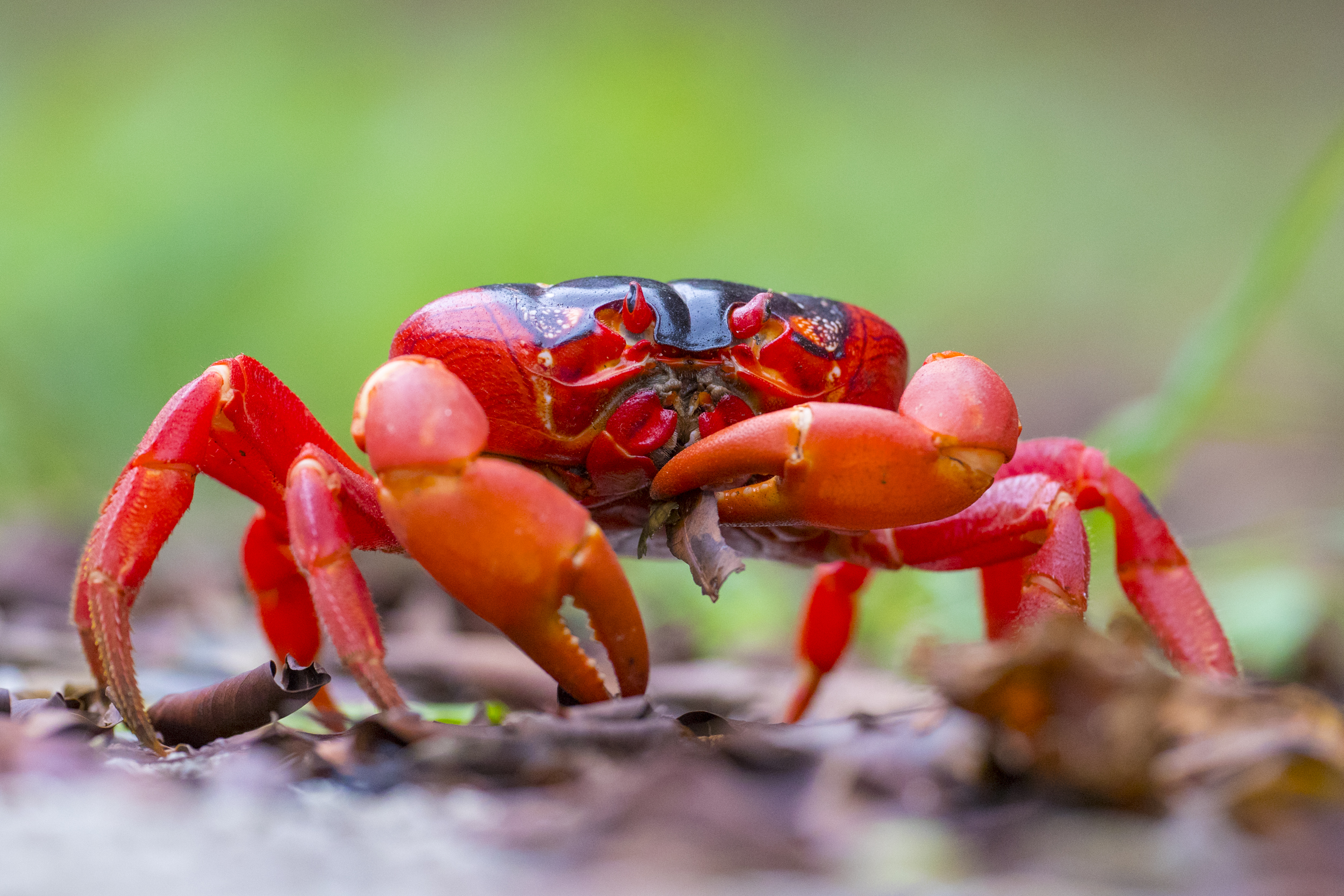 Photo Credit: ChrisBrayPhotography / Wikimedia
In the lush, emerald embrace of Christmas Island, the Christmas Island Red Crab, or Gecarcoidea natalis, scuttles across the forest floor, painting the landscape with its brilliant red hue. As the sun filters through the dense canopy, these crabs emerge from their burrows, their vibrant shells glistening like jewels against the rich, dark soil. With their robust bodies and long, spindly legs, they navigate the underbrush with surprising agility, a testament to their adaptation to this tropical paradise. Scientists and nature lovers alike are captivated by these crabs, not just for their striking appearance but also for their incredible life cycle and the vital role they play in their ecosystem.
Every year, during the rainy season, millions of these crabs embark on a remarkable journey to the sea to breed, creating a breathtaking spectacle that draws attention from around the globe. This mass migration is not just a sight to behold; it is a crucial event for the survival of their species. As they traverse the island, they help maintain the health of the rainforest by recycling nutrients and supporting the delicate balance of life around them. The Christmas Island Red Crab is more than just a colorful inhabitant of this unique habitat; it is a keystone species, meaning its presence is essential for the overall health of the ecosystem. Join us as we explore the fascinating world of Gecarcoidea natalis, uncovering the secrets of its behavior, diet, and the challenges it faces in a changing environment.
The Christmas Island Red Crab, scientifically known as Gecarcoidea natalis, holds a special place in the animal kingdom due to its vibrant red color and remarkable life cycle. This crustacean is a member of the Malacostraca class, which includes many familiar marine and freshwater animals, but it is particularly known for its extraordinary migration. Each year, millions of these crabs embark on a breathtaking journey from the forest to the ocean to breed, creating a stunning spectacle that captivates both scientists and nature lovers alike. Their unique behaviors and adaptations make them a vital part of the ecosystem on Christmas Island, where they play a crucial role in nutrient cycling.
| Taxonomic Rank | Scientific Name | Meaning & Significance |
|---|---|---|
| Kingdom | Animalia | This name signifies that the red crab belongs to the broad group of multicellular organisms that are typically motile and consume organic material. |
| Phylum | Arthropoda | Derived from Greek, meaning “jointed legs,” this classification highlights the red crab’s segmented body and jointed appendages, which are key features of arthropods. |
| Class | Malacostraca | This term means “soft shell,” referring to the crabs’ exoskeleton, which is hard but can be flexible, allowing for growth and movement. |
| Order | Decapoda | Meaning “ten-footed,” this name reflects the red crab’s ten limbs, which include pincers and walking legs, essential for its survival. |
| Family | Gecarcinidae | This family name comes from the Greek word for “crab,” emphasizing the red crab’s close relatives and its adaptations to terrestrial life. |
| Genus | Gecarcoidea | This name indicates a group of land crabs, highlighting their unique adaptation to life on land rather than in water. |
Understanding the Christmas Island Red Crab’s taxonomic classification reveals much about its evolutionary journey. As a member of the Gecarcinidae family, it showcases adaptations that allow it to thrive in a terrestrial environment, despite its aquatic ancestry. The red crab’s migration and breeding behaviors are not just fascinating; they are a testament to the evolutionary pressures that have shaped its life cycle. This journey from land to sea and back again illustrates the intricate connections between species and their habitats, reminding us of the delicate balance of life on our planet.
The evolutionary journey of the Christmas Island Red Crab, or Gecarcoidea natalis, stretches back millions of years, intertwining with the geological history of Christmas Island itself. This remote island, located in the Indian Ocean, has been shaped by volcanic activity and isolation, creating a unique environment that has influenced the development of its native species. The ancestors of the red crab adapted to the island’s specific conditions, leading to a fascinating evolutionary tale marked by significant transitions.
The story begins with the early ancestors of crabs, which emerged over 200 million years ago. These primitive crustaceans gradually evolved, adapting to life both in water and on land. As they transitioned to terrestrial habitats, they developed key features that allowed them to thrive outside of the ocean. Over time, the ancestors of the Christmas Island Red Crab became increasingly specialized for life on land, leading to the vibrant, red-hued crabs we see today. Their evolution was shaped by the island’s unique ecosystem, where they learned to navigate the challenges of a dry environment while still relying on the ocean for reproduction.
These adaptations have been vital for the survival of the Christmas Island Red Crab in its unique habitat. By developing the ability to breathe air and thrive on land, they have successfully navigated the challenges of their environment. Their vibrant coloration and strong claws provide both protection and the means to find food and shelter. The synchronized migrations for breeding ensure that their population remains stable, allowing these crabs to continue their evolutionary legacy on the beautiful shores of Christmas Island.
The Christmas Island Red Crab is a stunning sight to behold, with its vibrant red carapace that glistens in the sunlight. This crustacean has a robust body structure, characterized by a broad, rounded shell that provides both protection and a striking appearance. Its legs are long and spindly, allowing it to navigate the rocky terrain of its island home with agility. When these crabs move, they create a mesmerizing dance, their bright shells contrasting beautifully against the lush greens and browns of the forest floor.
| Feature | Description |
|---|---|
| Weight | 17 ounces |
| Skin Type | Shell |
| Most Distinctive Feature | Brilliant red carapace |
The combination of a sturdy shell and vibrant color serves multiple purposes for the Christmas Island Red Crab. The hard shell acts as armor, protecting it from predators while also helping to retain moisture in its humid environment. The bright red hue is not just for show; it plays a role in communication and mating displays, signaling health and vitality to potential mates. Together, these features create a well-adapted survivor in the unique ecosystem of Christmas Island, where beauty and function go hand in hand.
The Christmas Island Red Crab thrives in a lush, tropical rainforest environment, where the air is thick with humidity and the sounds of nature fill the atmosphere. These crabs are often found scuttling along the forest floor, navigating through dense underbrush and climbing over roots and rocks. The vibrant green foliage provides both shelter and food, creating a perfect backdrop for their striking red shells. As they move about, they play a vital role in the ecosystem, helping to break down leaf litter and recycle nutrients back into the soil.
The climate on Christmas Island is warm and humid, with temperatures typically ranging from 24 to 30 degrees Celsius (75 to 86 degrees Fahrenheit). This tropical setting experiences heavy rainfall, especially during the wet season, which is crucial for the crabs’ life cycle. The moist environment not only supports their survival but also influences their breeding patterns, as they rely on the rains to trigger their migration to the sea for spawning. The combination of warmth and moisture creates an ideal habitat for these crabs to thrive.
Over time, the Christmas Island Red Crab has developed several adaptations to flourish in its rainforest home. Their strong legs allow them to navigate the uneven terrain, while their ability to store water helps them survive during dry spells. Additionally, their vibrant coloration serves as a warning to potential predators, signaling that they are not a tasty meal. These adaptations ensure that they can not only survive but also play a crucial role in maintaining the health of their unique ecosystem.
The daily life of the Christmas Island Red Crab is a captivating blend of activity and rest, shaped by the rhythms of its tropical rainforest home. As dawn breaks, these crabs emerge from their burrows, ready to explore their surroundings. They spend their mornings foraging for food, which mainly consists of fallen leaves, fruits, and other organic matter. This scavenging behavior is crucial, as it helps keep their habitat clean while providing essential nutrients for their survival. As the sun rises higher, the crabs often retreat to the shade, conserving energy during the hottest parts of the day.
While the Christmas Island Red Crab is primarily solitary, it does exhibit interesting social behaviors during certain times of the year, especially during the breeding season. When the crabs gather to mate, they form temporary groups, creating a vibrant spectacle as they scuttle along the forest floor. Communication among these crabs is subtle yet effective; they use body movements and chemical signals to convey their intentions and establish territory. This social interaction is vital for successful reproduction, ensuring that the next generation of crabs can thrive in their lush environment.
| Behavior Type | Description |
|---|---|
| Activity Patterns | Active during the day, foraging for food in the morning and resting in the shade during peak heat. |
| Social Structure | Primarily solitary, but gathers in groups during the breeding season for mating. |
| Communication Methods | Utilizes body movements and chemical signals to communicate with others, especially during mating. |
The behaviors of the Christmas Island Red Crab are finely tuned to ensure their survival in a challenging environment. By foraging for food and retreating from the sun, they maintain their energy levels and health. Their temporary gatherings during breeding season highlight the importance of social interactions, allowing them to reproduce successfully. These daily activities and social dynamics not only support individual crabs but also contribute to the overall health of their population, ensuring that these vibrant red crabs continue to thrive on Christmas Island.
The Christmas Island Red Crab is an omnivore, which means it enjoys a varied diet that includes both plant and animal matter. These crabs primarily feed on fallen fruits, leaves, and flowers, but they also have a taste for small creatures like the African land snail. Their feeding behavior is quite interesting; they use their strong pincers to break apart food items, allowing them to access the nutritious bits inside. This scavenging and foraging strategy helps them thrive in their lush rainforest habitat.
| Dietary Aspect | Details |
|---|---|
| Diet Type | Omnivore |
| Favorite Foods | Fallen fruits, leaves, flowers |
| Prey Items | African land snail |
| Hunting/Foraging Strategies | Scavenging and using strong pincers to break apart food |
This diverse diet plays a crucial role in the ecology of Christmas Island. By consuming a variety of organic materials, the red crab helps to recycle nutrients back into the soil, supporting the growth of plants in their rainforest home. Their daily routine revolves around foraging for food, which not only sustains them but also influences the overall health of their ecosystem. As they scuttle about, they contribute to the vibrant life of the island, making them an essential part of this unique environment.
The mating rituals of the Christmas Island Red Crab are a spectacular sight, especially during the breeding season, which typically occurs around the rainy months. Males engage in a series of elaborate courtship displays, waving their claws and performing intricate dances to attract females. Once a female selects a mate, she will carry the fertilized eggs for a couple of weeks before releasing them into the ocean. This synchronized event is not just a personal affair; it’s a grand spectacle that draws thousands of crabs to the shores, creating a vibrant scene of life and color.
| Reproductive Aspect | Details |
|---|---|
| Gestation Period | Couple of weeks |
| Litter Size | Thousands of eggs |
| Age of Maturity | 4-5 years |
| Name of Young | Larva, Megalopa |
After the eggs hatch, the young crabs, known as larvae or megalopa, drift in the ocean currents. This stage is crucial for their development, as they feed on plankton and other tiny organisms. Over time, they undergo several transformations, gradually taking on the characteristics of adult crabs. Once they are ready, they make their way back to the shores of Christmas Island, where they will burrow into the sandy soil and begin their life on land. Interestingly, parental care is minimal; the young crabs must fend for themselves from the moment they are released into the sea. This independence is vital for their survival, as they learn to navigate the challenges of their environment, ultimately growing into the vibrant adults that grace the island’s landscape.
The Christmas Island Red Crab plays a vital role in its ecosystem, serving as both a herbivore and a prey species. This colorful crustacean helps maintain the health of its tropical rainforest habitat by consuming fallen fruits and leaves, which in turn supports the growth of plants. However, it is also a target for various predators, making it an important link in the food web of Christmas Island.
To survive these threats, the Christmas Island Red Crab has developed several clever defensive behaviors. When danger approaches, these crabs can quickly retreat into their burrows, which provide shelter from predators. They also rely on their bright coloration as a warning signal, indicating to potential threats that they may be toxic or unpalatable. Additionally, during the breeding season, they gather in large numbers, which can confuse predators and increase their chances of survival. Through these strategies, the Christmas Island Red Crab continues to thrive in its unique environment, despite the challenges it faces.
A keystone species is an organism that has a disproportionately large impact on its environment relative to its abundance. In the case of the Christmas Island Red Crab, or Gecarcoidea natalis, it certainly qualifies as a keystone species. This vibrant crustacean plays a crucial role in maintaining the health and balance of its tropical rainforest ecosystem on Christmas Island.
The ecological impact of the Christmas Island Red Crab is profound. As an omnivore, it feeds on a variety of organic materials, including fallen fruits, leaves, and flowers. By consuming these materials, the crabs help decompose and recycle nutrients back into the soil, promoting plant growth. This process is essential for the rainforest, as it ensures that the vegetation remains lush and vibrant, providing habitat and food for countless other species.
Moreover, the crabs are a vital food source for various predators, including birds and reptiles. Their presence supports the food web, which is the interconnected system of who-eats-who in an ecosystem. When the crabs migrate to the ocean to breed, they also contribute to the marine ecosystem, as their larvae become part of the ocean’s food chain. This migration is a spectacular event, drawing attention to the interconnectedness of life on land and sea.
If the Christmas Island Red Crab were to disappear, the consequences would be significant. The rainforest would likely experience a decline in plant health due to reduced nutrient recycling, leading to less food and habitat for other species. This could trigger a domino effect, disrupting the entire ecosystem. Predators that rely on the crabs for food would struggle to find sustenance, potentially leading to their decline as well. In essence, the loss of this vibrant crab would unravel the delicate balance of life on Christmas Island, highlighting just how vital it is to its environment.
The Christmas Island Red Crab, known scientifically as Gecarcoidea natalis, plays a crucial role in shaping its rainforest ecosystem. As a keystone species, this vibrant crustacean influences the environment in ways that extend far beyond its own population. By participating in nutrient cycling and serving as a food source for various predators, the red crab helps maintain the delicate balance of life on Christmas Island. Its activities not only support its own survival but also foster a thriving community of plants and animals.
| Ecosystem Service | Impact |
|---|---|
| Nutrient Cycling | Red crabs break down organic matter, enriching the soil and promoting plant growth. |
| Seed Dispersal | As they feed on fruits, they help spread seeds, aiding in forest regeneration. |
| Food Source | They provide sustenance for various predators, including birds and reptiles. |
| Soil Aeration | Their burrowing behavior helps aerate the soil, improving water infiltration. |
The influence of the Christmas Island Red Crab can be seen in specific examples throughout its habitat. For instance, when these crabs consume fallen fruits and leaves, they not only nourish themselves but also contribute to the decomposition process. This breakdown of organic material enriches the soil, allowing plants to thrive. Additionally, as they scuttle about, their burrowing creates channels in the earth, which helps rainwater penetrate deeper into the ground, benefiting the entire ecosystem. Their role in seed dispersal is equally vital; by moving seeds away from the parent plant, they promote genetic diversity and the growth of new vegetation.
The broader ecological importance of the Christmas Island Red Crab cannot be overstated. As a keystone species, its presence supports a web of life that includes countless other organisms. The health of the rainforest is closely tied to the activities of these crabs, making them essential for maintaining biodiversity. Without them, the delicate balance of this unique ecosystem could be disrupted, leading to a decline in plant and animal populations. In essence, the Christmas Island Red Crab is not just a colorful inhabitant of the rainforest; it is a vital architect of its environment, ensuring that life continues to flourish in this tropical paradise.
In the intricate web of life on Christmas Island, the Christmas Island Red Crab engages in various ecological relationships that highlight the beauty of symbiosis. Symbiosis refers to the close interactions between different species, which can be beneficial, harmful, or neutral. These relationships are essential for the health of ecosystems, as they help species thrive and adapt to their environments. The Christmas Island Red Crab, with its vibrant red shell and unique behaviors, forms connections with other organisms that illustrate the complexity of life in its tropical rainforest habitat.
| Species/Type | Relationship Type | Description |
|---|---|---|
| Fallen Fruits and Leaves | Mutualistic | The crabs help decompose organic matter, which enriches the soil, while benefiting from the nutrients as they feed. |
| Birds (e.g., White-tailed Tropicbird) | Commensal | Birds may feed on insects disturbed by the crabs, while the crabs are unaffected by the birds’ presence. |
| Parasites (e.g., certain worms) | Parasitic | Some parasites may attach to the crabs, drawing nutrients from them, which can weaken the crabs over time. |
The evolution of these relationships has been shaped by the need for survival and adaptation in a dynamic environment. Over time, the Christmas Island Red Crab has developed ways to interact with other species that enhance its chances of thriving. For instance, by breaking down organic matter, these crabs not only nourish themselves but also contribute to the health of their rainforest home. Meanwhile, their interactions with birds and parasites illustrate the delicate balance of life, where each species plays a role in the ecosystem. Understanding these connections helps us appreciate the complexity of nature and the importance of preserving such vibrant habitats.
The Christmas Island Red Crab is a captivating creature that showcases the wonders of nature through its vibrant colors and unique behaviors. Here are some surprising facts that will intrigue both nature enthusiasts and curious minds alike.
The Christmas Island Red Crab, known scientifically as Gecarcoidea natalis, has a rich history intertwined with human culture and exploration. Discovered by European explorers in the 19th century, these crabs quickly became a symbol of the unique biodiversity found on Christmas Island. Their vibrant red color and massive migrations have inspired stories and celebrations, making them a cultural icon for both locals and visitors. The annual migration, where millions of crabs traverse the island to reach the sea for breeding, captivates onlookers and highlights the connection between nature and human experience.
Today, the relationship between humans and the Christmas Island Red Crab is complex and multifaceted. Conservation efforts are underway to protect their habitats, especially as urban development and invasive species threaten their populations. However, conflicts arise when human activities disrupt their migration routes, leading to road fatalities and habitat loss. While there are no significant efforts to domesticate these crabs, their ecological importance as a keystone species emphasizes the need for humans to coexist harmoniously with them. Protecting their environment not only benefits the crabs but also preserves the rich biodiversity of Christmas Island.
Looking ahead, the future of the relationship between humans and the Christmas Island Red Crab hinges on our ability to balance development with conservation. As awareness grows about the ecological significance of these crabs, there is hope for more sustainable practices that protect their habitats. By fostering a deeper understanding of their role in the ecosystem, we can ensure that future generations will continue to marvel at the spectacular migrations of the Christmas Island Red Crab, celebrating both its beauty and its vital place in the natural world.
The Christmas Island Red Crab, or Gecarcoidea natalis, currently holds a conservation status of “Least Concern” according to the International Union for Conservation of Nature (IUCN). This means that, at present, the species is not facing an immediate threat of extinction. With an estimated population size of around 44 million individuals, the red crab’s numbers are relatively stable. However, ongoing monitoring is essential to ensure that this vibrant species continues to thrive in its tropical rainforest habitat.
| Conservation Factor | Status/Details |
|---|---|
| IUCN Status | Least Concern |
| Estimated Population Size | About 44 million |
| Population Trend | Stable |
Despite its current stable status, the Christmas Island Red Crab faces several threats that could impact its future. Habitat loss due to human activities, such as land development and deforestation, poses a significant risk. Additionally, climate change is altering rainfall patterns, which can affect the crabs’ breeding cycles and food availability. Invasive species, including predators that were not originally part of the ecosystem, can also disrupt the delicate balance of life on Christmas Island.
Conservation efforts are underway to protect the Christmas Island Red Crab and its habitat. Local organizations and researchers are working to monitor the population and educate the public about the importance of this species. By preserving the lush rainforests of Christmas Island and implementing measures to control invasive species, there is hope for the continued survival of these iconic crabs. With ongoing commitment and awareness, the future looks bright for the Christmas Island Red Crab, ensuring that generations to come can marvel at its vibrant presence in the wild.
| Question | Answer |
|---|---|
| Where do Christmas Island Red Crabs live? | Christmas Island Red Crabs are found primarily in the lush rainforests of Christmas Island, located in the Indian Ocean. They thrive in this humid environment, which provides plenty of shelter and food sources. |
| What do Christmas Island Red Crabs eat? | These crabs are omnivores, meaning they eat both plants and animals. Their diet includes fallen fruits, leaves, and even small insects, making them important recyclers in their ecosystem. |
| How do Christmas Island Red Crabs behave? | Christmas Island Red Crabs are known for their fascinating migration patterns. Each year, millions of them travel from the forest to the ocean to breed, creating a stunning spectacle as they cross roads and landscapes. |
| How do Christmas Island Red Crabs reproduce? | During the breeding season, female crabs release their eggs into the ocean, where they hatch into larvae. After a few weeks, the young crabs return to the shore and make their way back to the rainforest. |
| What threats do Christmas Island Red Crabs face? | While currently listed as Least Concern, these crabs face threats from habitat destruction and invasive species. Human activities, such as road construction, can also disrupt their migration routes. |
| What is a unique feature of Christmas Island Red Crabs? | The most distinctive feature of these crabs is their brilliant red carapace, which makes them stand out in their green rainforest habitat. This vibrant color helps them attract mates and can also serve as a warning to predators. |
| Why are Christmas Island Red Crabs important to their ecosystem? | These crabs play a crucial role in their ecosystem by helping to decompose organic matter. By eating fallen leaves and fruits, they contribute to nutrient cycling, which supports the health of the rainforest. |