Taxonomy & Classification
- Kingdom
- Animalia
- Phylum
- Chordata
- Class
- Actinopterygii
- Order
- Anguilliformes
- Family
- Congridae
- Genus
- Conger

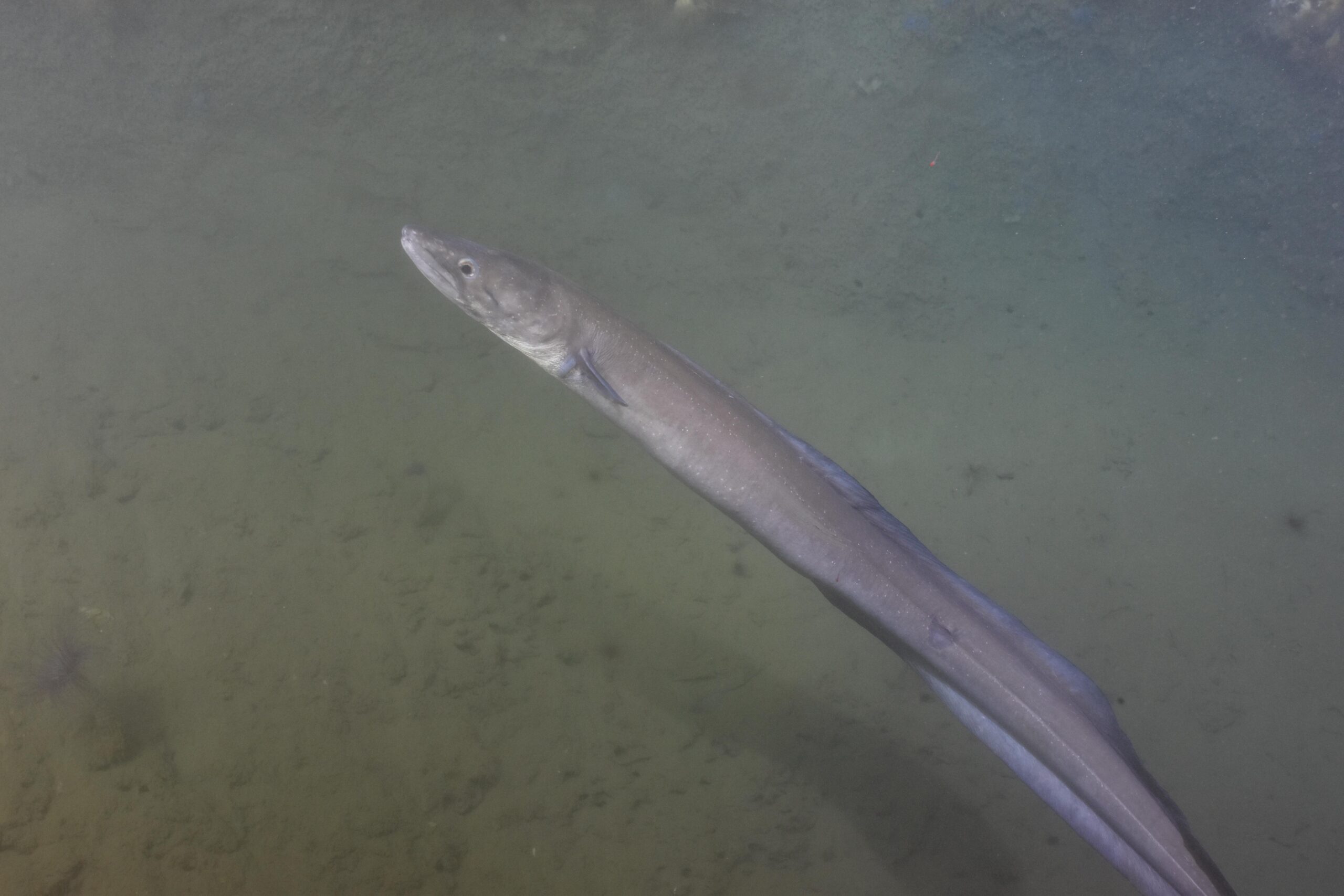 Photo Credit: Wikimedia
In the shadowy depths of the ocean, the Conger eel, scientifically known as Conger conger, glides gracefully through its underwater realm. With a body that can stretch up to 13 feet long, this remarkable fish resembles a living ribbon, undulating through rocky crevices and dark caves. Its smooth, elongated form is not just for show; it allows the Conger eel to navigate the intricate labyrinth of its habitat with ease. The eel’s skin, often a muted green or brown, helps it blend seamlessly into the ocean floor, making it a master of stealth as it hunts for its next meal.
What makes the Conger eel particularly captivating to scientists and nature enthusiasts alike is its dual role in the marine ecosystem. As a carnivore, it preys on smaller fish and crustaceans, helping to maintain the balance of life beneath the waves. Yet, it is also a vital source of food for larger predators, showcasing the interconnectedness of ocean life. The Conger eel’s nocturnal habits add another layer of intrigue; while the world above is bathed in sunlight, this creature comes alive, exploring its surroundings and hunting under the cover of darkness. Join us as we dive deeper into the fascinating world of the Conger eel, uncovering its behaviors, diet, and the vital role it plays in the ocean’s ecosystem.
The Conger eel is a captivating member of the animal kingdom, nestled within the vast tree of life. This fascinating fish belongs to the phylum Chordata, which includes all animals with a backbone. What sets Conger eels apart is their elongated, snake-like bodies and their ability to thrive in both shallow coastal waters and the deep sea. With their unique adaptations, these eels are not just masters of camouflage but also skilled hunters, using their keen senses to navigate their underwater world.
| Taxonomic Rank | Scientific Name | Meaning & Significance |
|---|---|---|
| Kingdom | Animalia | This name signifies that Conger eels are part of the animal kingdom, which includes all multicellular organisms that are heterotrophic, meaning they consume other organisms for energy. |
| Phylum | Chordata | The term “Chordata” comes from the word “chord,” referring to the notochord, a flexible rod that provides support. This feature is a key characteristic of all vertebrates, including Conger eels. |
| Class | Actinopterygii | This class name means “ray-finned fishes,” highlighting the structure of their fins, which are supported by bony rays. This adaptation allows for greater maneuverability in water. |
| Order | Anguilliformes | Derived from the Latin word “anguilla,” meaning eel, this order includes all eels, emphasizing their elongated, serpentine shape. |
| Family | Congridae | The name “Congridae” is derived from the Greek word “konkhos,” meaning “shell,” which relates to the habitat of many eels that often hide in crevices and shells. |
| Genus | Conger | This genus name is simply a Latin adaptation of the Greek word “konkhos,” again linking back to the eel’s habitat and behavior. |
Understanding the Conger eel’s classification reveals much about its evolutionary journey. As a member of the Chordata phylum, it shares a common ancestry with all vertebrates, showcasing the remarkable adaptations that have allowed it to thrive in diverse aquatic environments. Its position within the Actinopterygii class highlights the evolutionary innovations of ray-finned fishes, which have become one of the most successful groups in the ocean. The Conger eel’s unique features and behaviors are not just interesting; they are a testament to millions of years of evolution, illustrating how life has adapted to the challenges of the underwater world.
The evolutionary journey of the Conger eel stretches back millions of years, weaving through the depths of the ocean and the annals of time. These eels belong to the family Congridae and the genus Conger, with their ancestors first appearing during the late Cretaceous period, around 100 million years ago. This timeline places them among the ancient fish that swam alongside the dinosaurs, showcasing a lineage that has adapted and thrived through dramatic changes in the Earth’s environment.
The early ancestors of Conger eels were likely similar to other primitive fish, possessing a streamlined body and a simple structure. Over time, they underwent significant transformations, adapting to their marine habitats. One major transition was the development of a more elongated body shape, which allowed them to navigate through rocky crevices and coral reefs with ease. This adaptation not only improved their swimming efficiency but also helped them become effective ambush predators. As they evolved, Conger eels also developed specialized gills that enabled them to extract oxygen from the water more efficiently, a crucial adaptation for life in various oceanic environments.
These evolutionary adaptations have been vital for the survival of Conger eels in the ever-changing marine world. Their streamlined bodies and strong tails allow them to be agile hunters, while their enhanced gills ensure they can thrive in various water conditions. The ability to camouflage effectively not only aids in hunting but also provides protection from larger predators. Together, these traits have helped Conger eels persist through millions of years, showcasing the incredible power of evolution in shaping life in our oceans.
The Conger eel is an impressive sight, gliding through the ocean’s depths with a sleek and elongated form. Its body is long and thin, resembling a living ribbon that can stretch up to 13 feet in length. This streamlined shape allows it to navigate effortlessly through rocky crevices and coral reefs. With a pointed snout that tapers gracefully, the Conger eel is built for both stealth and speed, making it a master of its underwater domain.
| Feature | Description |
|---|---|
| Weight | Typically weighs between 10 to 160 pounds, with some individuals reaching up to 350 pounds. |
| Skin Type | Features smooth skin that helps reduce drag as it swims. |
| Body Shape | Long and thin, allowing for agile movement in tight spaces. |
| Snout | Pointed and tapered, enhancing its ability to hunt and navigate. |
The Conger eel’s physical features are not just for show; they play crucial roles in its survival. The smooth skin minimizes resistance in the water, allowing it to dart quickly after prey. Its long, slender body is perfect for slipping into narrow crevices where it can hide from predators or ambush unsuspecting fish. With its pointed snout, the Conger eel can easily grasp its meals, making it a formidable hunter in the underwater world. Together, these adaptations make the Conger eel a fascinating example of nature’s ingenuity.
The Conger eel calls the vast and mysterious ocean its home, thriving in the deep waters where sunlight barely penetrates. These eels prefer rocky crevices and underwater caves, where they can find shelter and ambush their prey. The ocean floor, often covered in sand and gravel, provides a perfect backdrop for their stealthy hunting techniques. As they glide through the water, their long, slender bodies allow them to navigate effortlessly among the rocks and reefs, making them masters of their underwater domain.
Conger eels thrive in a range of environmental conditions, but they particularly favor cooler waters. They are often found at depths of 200 to 1,000 feet, where the temperature is stable and the pressure is higher. These eels are adapted to life in the ocean, where they can find plenty of food, such as fish and crustaceans. The salinity, or saltiness, of the water is also crucial, as it helps maintain their bodily functions and overall health.
To survive in their oceanic habitats, Conger eels have developed several fascinating adaptations. Their elongated bodies allow them to maneuver through tight spaces, while their keen sense of smell helps them locate prey even in murky waters. Additionally, their ability to remain hidden in rocky crevices makes them effective ambush predators. With these skills, Conger eels have carved out a niche in the underwater world, showcasing the incredible diversity of life that thrives beneath the waves.
The Conger eel leads a life filled with intriguing daily activities that revolve around its underwater habitat. As a nocturnal creature, it spends the daylight hours resting in rocky crevices or hidden within caves, where it feels safe from predators. When night falls, the Conger eel becomes active, venturing out to hunt for food. Its diet mainly consists of fish, crustaceans, and other small marine animals, which it skillfully ambushes using its keen sense of smell and excellent swimming abilities. This pattern of resting during the day and hunting at night helps the Conger eel conserve energy while maximizing its chances of finding a meal.
Socially, Conger eels are generally solitary, preferring to live alone rather than in groups. However, they can sometimes be found in close proximity to one another, especially in areas rich in food. When they do encounter other eels, their interactions can be quite fascinating. They communicate through body language, using subtle movements to signal their intentions. While they are not known for forming strong social bonds, these eels can display territorial behavior, defending their chosen hiding spots from intruders. This balance of solitude and occasional social interaction helps them navigate their underwater world effectively.
| Behavior Type | Description |
|---|---|
| Activity Patterns | Nocturnal hunters that rest during the day in rocky crevices or caves. |
| Social Structure | Generally solitary but can be found near others in food-rich areas. |
| Communication Methods | Use body language and movements to signal intentions to other eels. |
The behaviors of the Conger eel are finely tuned to ensure its survival in the vast ocean. By being active at night, it reduces the risk of encounters with larger predators while taking advantage of the abundance of prey. Its solitary nature allows it to maintain control over its territory, ensuring access to food without competition. These adaptations, combined with its stealthy hunting techniques, make the Conger eel a successful predator in its underwater realm.
The Conger eel is a carnivore, meaning it primarily eats meat. This fascinating fish has a diet that mainly consists of crustaceans and small fish. With its keen sense of smell and excellent hunting skills, the Conger eel is well-equipped to find and capture its prey. It often hunts at night, using its stealthy movements to ambush unsuspecting creatures hiding in the rocky crevices of its underwater home.
| Dietary Aspect | Details |
|---|---|
| Diet Type | Carnivore |
| Favorite Foods | Crustaceans and small fish |
| Prey Items | Crabs, shrimp, and various small fish |
| Hunting/Foraging Strategies | Nocturnal ambush predator, using stealth to surprise prey |
The diet of the Conger eel plays a crucial role in its ecology and daily routine. By feeding on crustaceans and small fish, it helps maintain the balance of marine life in its habitat. This predatory behavior not only supports the Conger eel’s survival but also influences the population dynamics of its prey, showcasing the interconnectedness of ocean ecosystems. As it prowls the depths at night, the Conger eel embodies the delicate dance of predator and prey, a vital part of the underwater world.
When it comes to reproduction, Conger eels have a mysterious and intriguing process. They typically mate during the warmer months, often in the spring and summer. During this time, males and females engage in a fascinating courtship dance, which involves swimming closely together and sometimes even intertwining their bodies. This behavior helps them find a suitable partner in the vast ocean. After mating, the female lays her eggs in deep waters, where they are less likely to be disturbed by predators.
| Reproductive Aspect | Details |
|---|---|
| Gestation Period | Approximately 6 to 12 months |
| Litter Size | Up to several million eggs |
| Age of Maturity | 3 to 5 years |
| Name of Young | Leptocephalus |
Once the eggs hatch, the young Conger eels, known as leptocephali, begin their journey through the ocean. These tiny, transparent larvae drift with ocean currents, feeding on plankton and other small organisms. As they grow, they gradually transform into the more recognizable eel shape. Interestingly, Conger eels do not receive parental care after the eggs are laid. Instead, they rely on their instincts and the rich resources of the ocean to develop into adults. Over the years, they will mature and eventually return to the depths to continue the cycle of life, ensuring that the legacy of the Conger eel endures in the vast underwater world.
The Conger eel plays a vital role in the ocean’s food web, acting as both predator and prey. As a carnivorous fish, it hunts smaller creatures like crustaceans and fish, helping to maintain the balance of marine life. However, it is also a target for larger predators, making its existence a delicate dance of survival in the depths of the sea.
To defend itself against these threats, the Conger eel has developed several survival strategies. Its long, slender body allows it to hide in rocky crevices and underwater caves, providing a safe haven from predators. When threatened, it can also use its sharp teeth to bite, deterring attackers. Additionally, its dark coloration helps it blend into the shadows of the ocean floor, making it less visible to those looking for a meal. Through these clever adaptations, the Conger eel navigates the challenges of its underwater world.
A keystone species is an organism that has a disproportionately large impact on its environment relative to its abundance. This means that if it were removed, the ecosystem would change dramatically. The Conger eel, with its role as both predator and prey in the oceanic food web, qualifies as a keystone species. Its presence helps maintain the balance of marine life, influencing the populations of various organisms around it.
Conger eels are carnivores, primarily feeding on crustaceans and smaller fish. By preying on these species, they help control their populations, preventing any one group from becoming too dominant. This predatory behavior is crucial for maintaining biodiversity in their habitat. For example, if Conger eels were to decline in numbers, the populations of their prey could explode, leading to overgrazing of algae and other marine plants. This could disrupt the entire ecosystem, affecting not just the eels but many other species that rely on a balanced environment.
Additionally, Conger eels serve as a food source for larger predators, such as sharks and larger fish. Their role in the food web is vital, as they provide energy and nutrients to these apex predators. This connection helps sustain the health of the oceanic ecosystem. Furthermore, by creating burrows in rocky crevices, Conger eels can also provide shelter for smaller fish and invertebrates, contributing to the habitat complexity that many marine species depend on.
If Conger eels were to disappear from their ecosystems, the consequences would be significant. The balance of marine life would be disrupted, leading to overpopulation of certain species and the decline of others. This could result in a less diverse and less resilient ecosystem, making it more vulnerable to changes and stresses, such as climate change or pollution. The loss of Conger eels would echo throughout the food web, illustrating just how interconnected life in the ocean truly is.
The Conger eel occupies a vital ecological niche in the oceanic environment, acting as both predator and prey. This fascinating fish thrives in rocky crevices and underwater caves, where it plays a crucial role in maintaining the balance of marine ecosystems. By hunting smaller fish and crustaceans, the Conger eel helps regulate populations of these species, ensuring that no single group dominates the ecosystem. Its presence contributes to the overall health of the ocean, making it an essential player in the underwater world.
| Ecosystem Service | Impact |
|---|---|
| Population Control | Regulates the numbers of smaller fish and crustaceans, preventing overpopulation. |
| Food Source | Serves as prey for larger marine animals, supporting the food web. |
| Habitat Structure | Creates and maintains habitats in rocky crevices, benefiting other marine life. |
| Nutrient Cycling | Contributes to nutrient cycling through its feeding and waste processes. |
The Conger eel’s influence extends beyond its immediate hunting habits. For instance, by preying on crustaceans, it helps keep their populations in check, which in turn allows for a diverse array of marine life to flourish. Additionally, the eel’s burrowing behavior in rocky crevices can create spaces that other species, like small fish and invertebrates, can use for shelter. This interaction fosters a rich community of organisms, all benefiting from the Conger eel’s presence in their habitat.
The broader ecological importance of the Conger eel cannot be overstated. As a keystone species, its role in the ecosystem is critical; without it, the balance of marine life would be disrupted. The Conger eel not only supports the health of its immediate environment but also contributes to the overall biodiversity of the ocean. By maintaining the delicate web of life beneath the waves, this remarkable fish ensures that the ocean remains a vibrant and thriving ecosystem for generations to come.
In the intricate web of life beneath the waves, symbiosis plays a crucial role in shaping the relationships between species. Symbiosis refers to the close interactions between different organisms, which can be beneficial, harmful, or neutral. These ecological relationships can take many forms, such as mutualism, where both species gain from the interaction, parasitism, where one benefits at the other’s expense, and commensalism, where one species benefits while the other is neither helped nor harmed. The Conger eel, with its elusive nature and deep-sea habitat, engages in various partnerships that highlight the complexity of marine ecosystems.
| Species/Type | Relationship Type | Description |
|---|---|---|
| Cleaner fish (e.g., wrasses) | Mutualistic | Cleaner fish remove parasites and dead skin from the Conger eel, benefiting from a meal while helping the eel stay healthy. |
| Sea anemones | Commensal | Conger eels may take shelter among sea anemones, gaining protection without affecting the anemones. |
| Smaller fish | Parasitic | Some smaller fish may latch onto the Conger eel, feeding on its mucus or skin, which can harm the eel. |
These relationships have evolved over time, shaped by the needs and behaviors of the species involved. Mutualistic partnerships, like that with cleaner fish, enhance the health of the Conger eel, allowing it to thrive in its environment. Commensal relationships provide safety and shelter, while parasitic interactions remind us of the delicate balance in nature. Each connection plays a role in the ecosystem, demonstrating how species adapt and rely on one another for survival, ultimately contributing to the rich tapestry of life in the ocean.
The Conger eel is a captivating inhabitant of the ocean, known for its long, slender body and intriguing behaviors. Here are some surprising facts that showcase the wonders of this remarkable fish.
The Conger eel has a long and storied relationship with humanity, woven into the fabric of various cultures throughout history. In ancient times, these eels were often featured in folklore and mythology, symbolizing mystery and the unknown depths of the ocean. In some coastal communities, they were considered a delicacy, enjoyed for their rich, flavorful meat. This cultural significance has persisted, with Conger eels appearing in traditional dishes in countries like Japan and France, where they are celebrated for their culinary value.
Today, the interactions between Conger eels and humans are more complex, reflecting both conservation efforts and challenges. As overfishing and habitat destruction threaten their populations, many organizations are working to protect these fascinating creatures. In some regions, fishing regulations have been put in place to ensure sustainable practices. However, conflicts can arise when local fishermen rely on Conger eels for their livelihoods. Additionally, there are ongoing discussions about the potential for aquaculture, or farming, of Conger eels, which could help meet demand while reducing pressure on wild populations.
Looking ahead, the future of the Conger eel and humanity’s relationship will depend on our ability to balance cultural appreciation with environmental stewardship. As awareness of marine conservation grows, there is hope that sustainable practices will become the norm. By fostering a deeper understanding of these remarkable eels and their role in the ecosystem, we can ensure that future generations will continue to marvel at their beauty and significance in our oceans.
The Conger eel currently holds a conservation status of “Least Concern,” according to the International Union for Conservation of Nature (IUCN). This means that, at present, the species is not facing an immediate threat of extinction. Population estimates are difficult to determine precisely due to their elusive nature and deep-sea habitat, but overall trends suggest that Conger eels are stable in many regions. This is encouraging news for marine biodiversity, as these eels play an important role in their ecosystems.
| Conservation Factor | Status/Details |
|---|---|
| IUCN Status | Least Concern |
| Population Estimates | Difficult to determine; generally stable |
| Trend Direction | Stable |
Despite their current stable status, Conger eels face several threats that could impact their populations in the future. Overfishing is a significant concern, as these eels are often caught for food in various parts of the world. Additionally, habitat degradation due to pollution and climate change can disrupt their natural environments. As ocean temperatures rise and ecosystems shift, Conger eels may find it increasingly challenging to thrive in their preferred habitats.
Conservation efforts are underway to ensure the continued survival of Conger eels and their habitats. Sustainable fishing practices are being promoted to reduce the impact of overfishing, while marine protected areas are being established to safeguard critical habitats. The outlook for Conger eels remains positive, provided that these efforts continue and expand. By raising awareness and fostering responsible stewardship of marine resources, we can help ensure that these fascinating eels continue to glide through our oceans for generations to come.
| Question | Answer |
|---|---|
| Where do Conger Eels live? | Conger Eels are found in oceanic waters, often dwelling in deep sea environments. They prefer rocky crevices and caves where they can hide from predators and ambush their prey. |
| What do Conger Eels eat? | As carnivores, Conger Eels primarily feed on fish, crustaceans, and other small marine animals. Their long, thin bodies help them sneak up on their prey in the dark waters of the ocean. |
| How do Conger Eels behave? | Conger Eels are mostly nocturnal, meaning they are active at night. During the day, they often stay hidden in their rocky homes, coming out to hunt when it’s dark. |
| How do Conger Eels reproduce? | Conger Eels are known to migrate to deeper waters to spawn, or lay their eggs. After the eggs hatch, the young eels drift with ocean currents before settling into their own habitats. |
| What threats do Conger Eels face? | While Conger Eels are currently listed as Least Concern, they can still face threats from overfishing and habitat destruction. Pollution in the ocean can also impact their health and food sources. |
| What is a unique characteristic of Conger Eels? | One of the most distinctive features of Conger Eels is their long, thin body and snout. This shape allows them to navigate through tight spaces and ambush their prey effectively. |
| Can Conger Eels be dangerous? | While Conger Eels are not typically aggressive, they can bite if threatened. Their sharp teeth are designed for catching slippery fish, so it’s best to admire them from a safe distance! |